
Unit 7 The Cold War Restructuring the Postwar



- Slides: 37
Unit 7: The Cold War Restructuring the Postwar World 1945 -Present
What is Cold War? n cold war: a state of political hostility between countries characterized by threats, propaganda, and other measures short of open warfare n The Cold War: conflict between the United States and the Soviet Union in which neither nation directly confronted the other on the battlefield
Cause of the Cold War: n #2
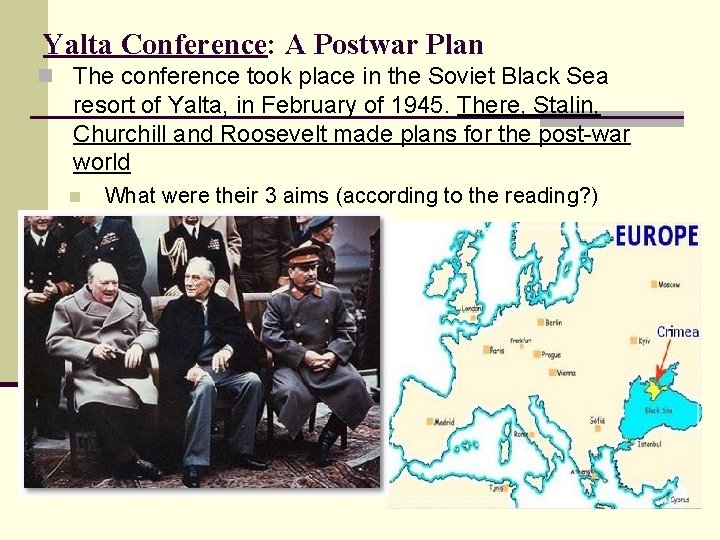
Yalta Conference: A Postwar Plan n The conference took place in the Soviet Black Sea resort of Yalta, in February of 1945. There, Stalin, Churchill and Roosevelt made plans for the post-war world n What were their 3 aims (according to the reading? )
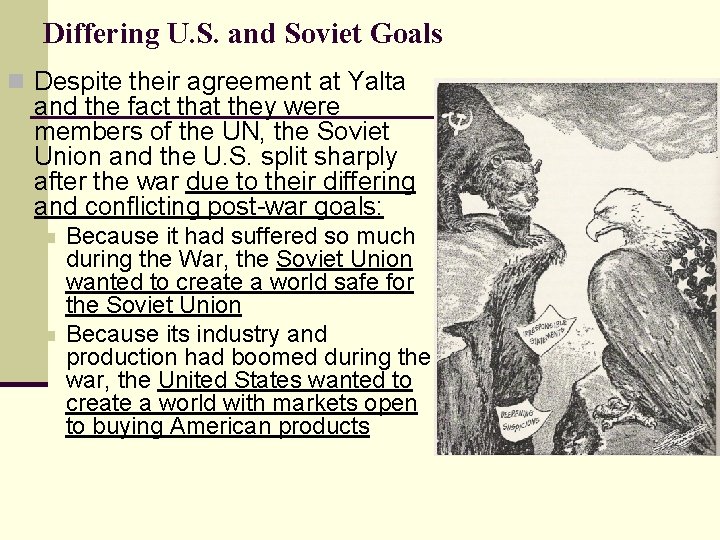
Differing U. S. and Soviet Goals n Despite their agreement at Yalta and the fact that they were members of the UN, the Soviet Union and the U. S. split sharply after the war due to their differing and conflicting post-war goals: n n Because it had suffered so much during the War, the Soviet Union wanted to create a world safe for the Soviet Union Because its industry and production had boomed during the war, the United States wanted to create a world with markets open to buying American products
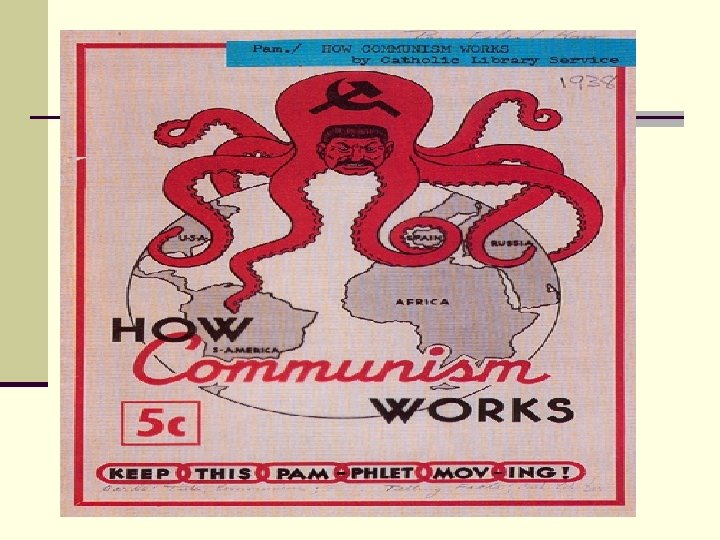
UNITED STATES TRIES TO CONTAIN SOVIETS n After the Soviet Union took over Eastern European nations, the U. S. was afraid of further spread of communism. So President Truman came up with a policy called containment: n Policy of blocking Soviet influence and stopping the expansion of communism
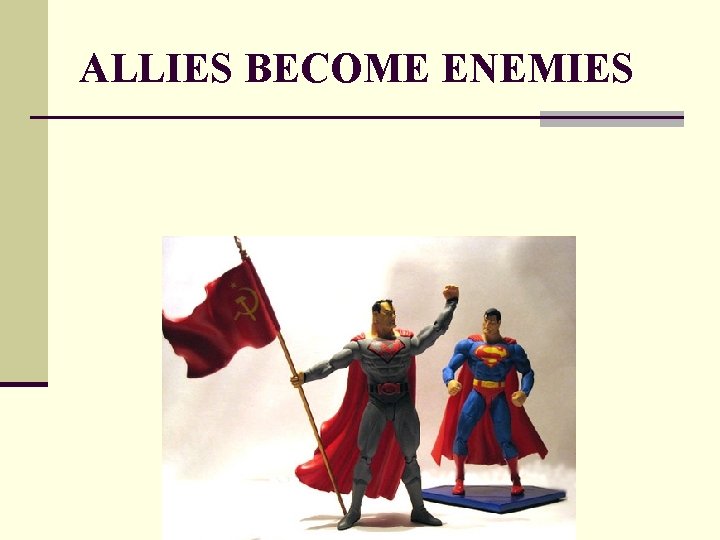
ALLIES BECOME ENEMIES
n What were Stalin’s objectives in supporting Communist governments in Eastern Europe? #3
The Soviet Union distrusts the U. S n The Soviet Union distrusted the U. S. and all other Western nations because: n n n In 1919, Britain, France and the United States joined the "White Russians" to fight off the Bolsheviks (this is Stalin’s party) following the revolution. The Western democracies did not invite the Soviet Union to participate in the World War I peace talks or the League of Nations. The Western nations did not invite the Soviets to the Munich Conference which decided the fate of Czechoslovakia in the years leading up to World War II
The U. S. distrusts the Soviet Union n The United States distrusted the Soviet Union because: The ultimate goal of the Communist Party was to secure world wide communist revolution. U. S. does not want such revolution n The Soviet Union had made a pact, the nonaggression pact, with Hitler n Stalin was open about wanting "friendly governments" in Eastern Europe to protect his country's western frontier n
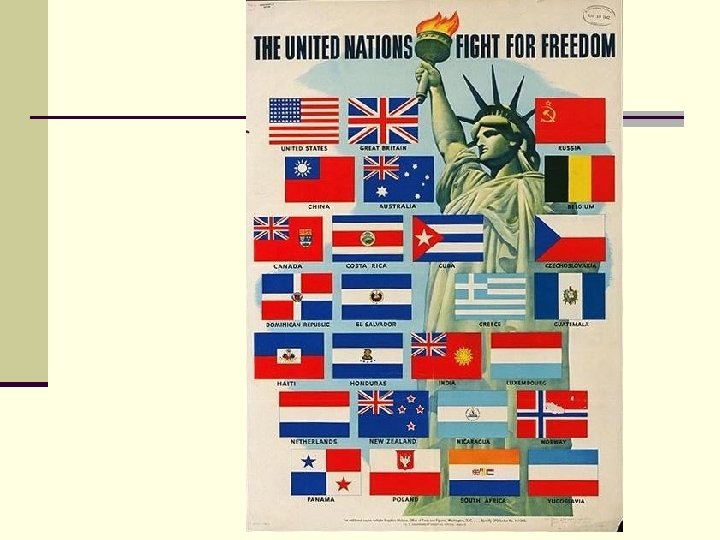
Creation of the United Nations n Despite the tensions between the two, the United States and the Soviet Union joined 48 other countries to form the United Nations (UN): to protect member countries against aggression n Created in June 1945 n Each member could cast one vote but an 11 member body called the Security Council has the real power. Of those 11, 5 are permanent members with veto power: United States, Soviet Union, Britain, China, and France
Today in 2018 n The Security Council is composed of 15 members n There are 193 members in the UN of 196 countries in the world n n Kosovo, Taiwan and Vatican City 5 permanent members: China, France, Russian Federation, the United Kingdom and the United States. n The other 10 are elected for 2 year terms
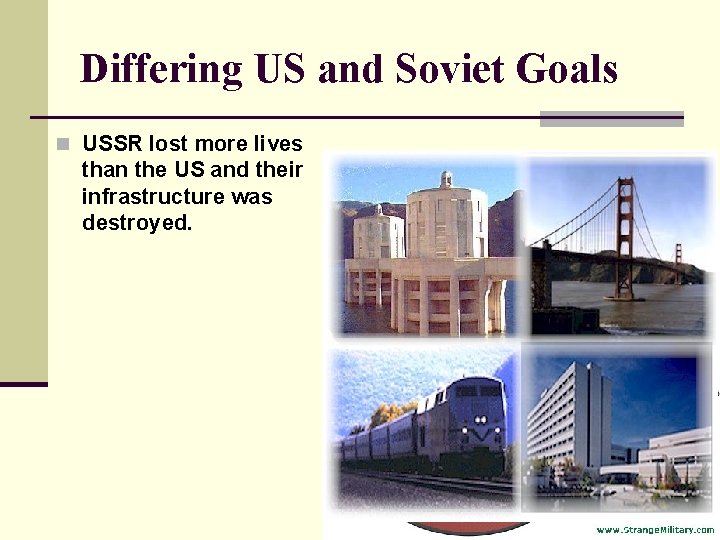
Differing US and Soviet Goals n USSR lost more lives than the US and their infrastructure was destroyed.
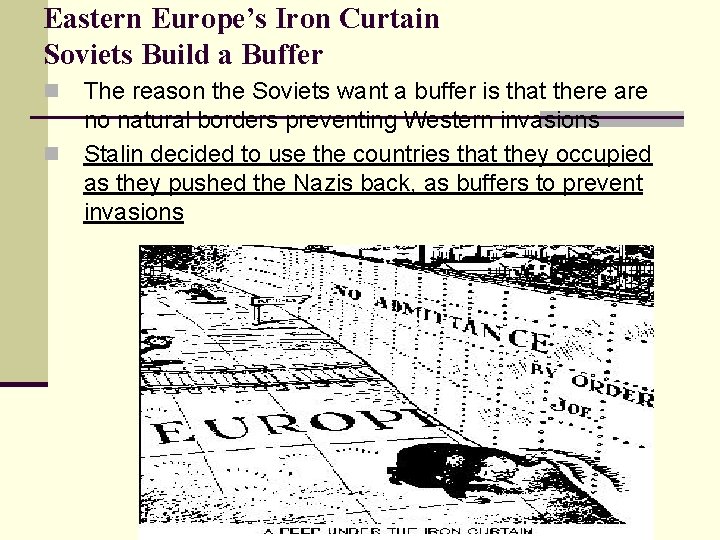
Eastern Europe’s Iron Curtain Soviets Build a Buffer n n The reason the Soviets want a buffer is that there are no natural borders preventing Western invasions Stalin decided to use the countries that they occupied as they pushed the Nazis back, as buffers to prevent invasions
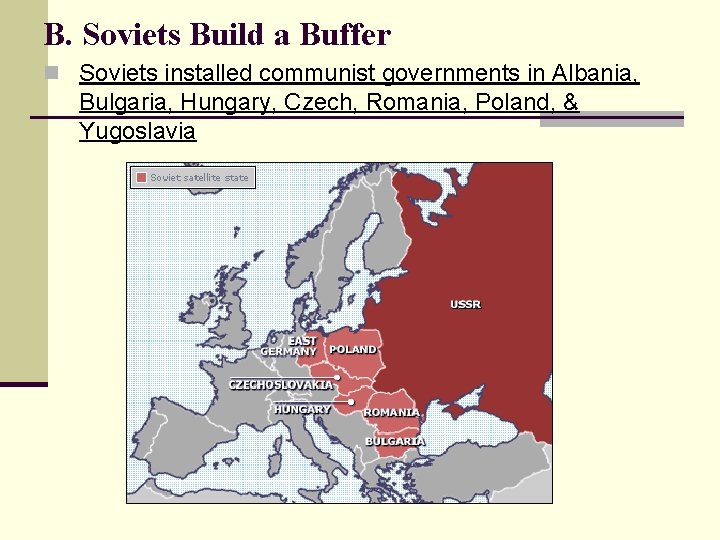
B. Soviets Build a Buffer n Soviets installed communist governments in Albania, Bulgaria, Hungary, Czech, Romania, Poland, & Yugoslavia
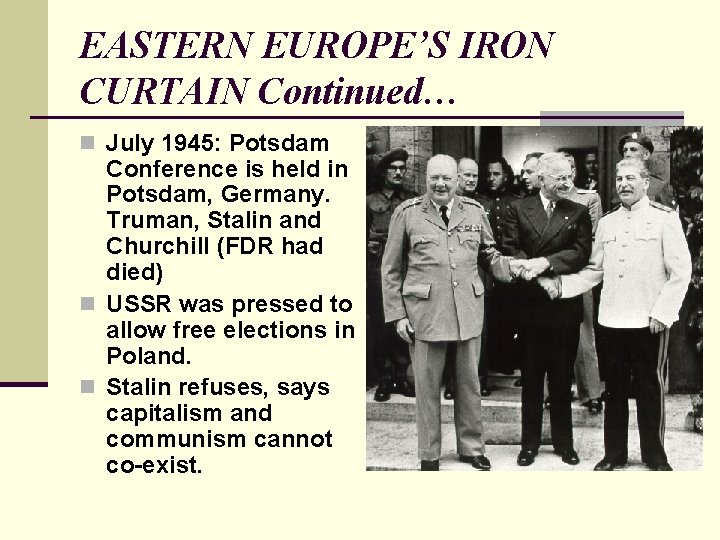
EASTERN EUROPE’S IRON CURTAIN Continued… n July 1945: Potsdam Conference is held in Potsdam, Germany. Truman, Stalin and Churchill (FDR had died) n USSR was pressed to allow free elections in Poland. n Stalin refuses, says capitalism and communism cannot co-exist.
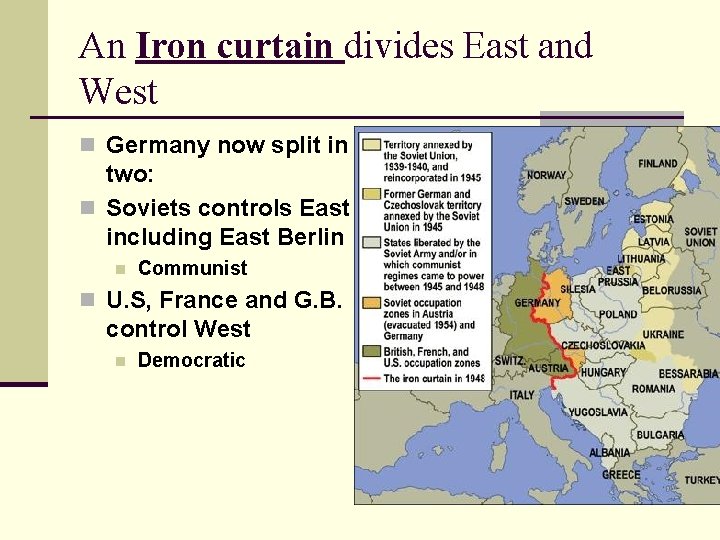
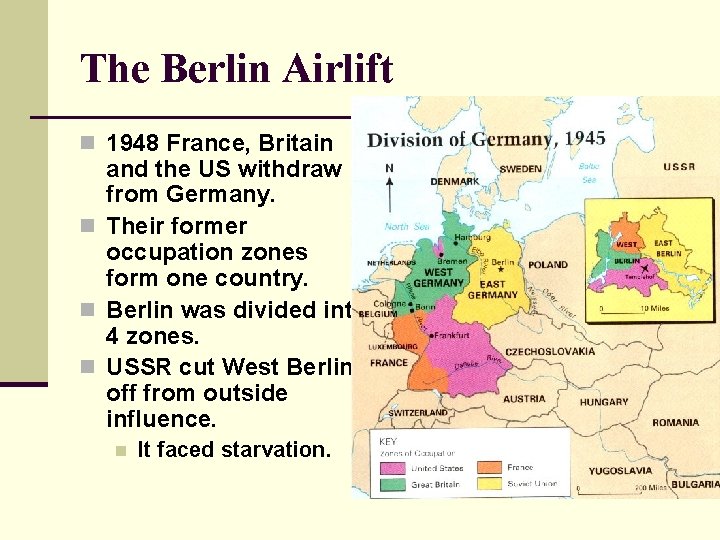
An Iron curtain divides East and West n Germany now split in two: n Soviets controls East including East Berlin n Communist n U. S, France and G. B. control West n Democratic
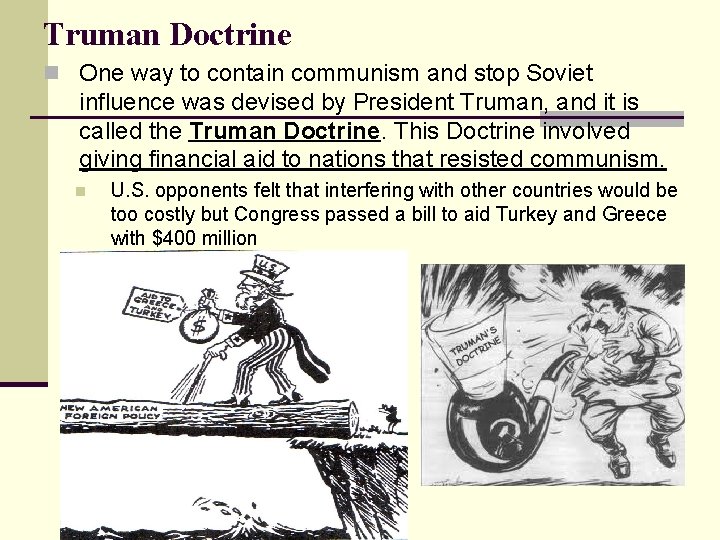
Truman Doctrine n One way to contain communism and stop Soviet influence was devised by President Truman, and it is called the Truman Doctrine. This Doctrine involved giving financial aid to nations that resisted communism. n U. S. opponents felt that interfering with other countries would be too costly but Congress passed a bill to aid Turkey and Greece with $400 million
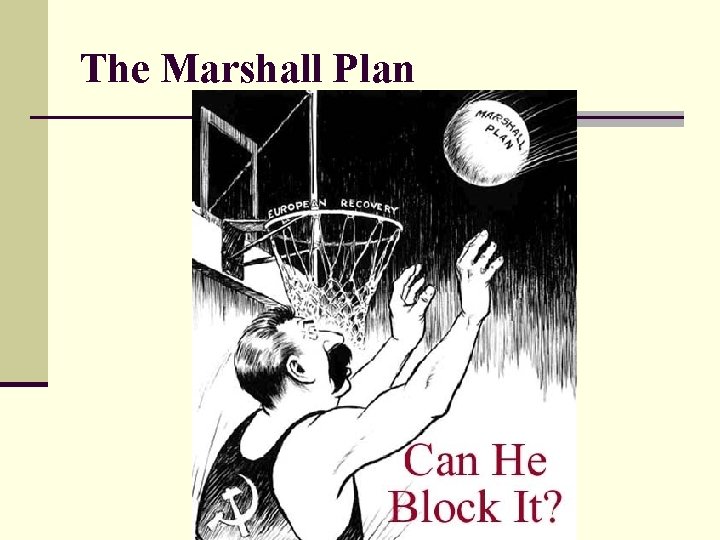
The Marshall Plan n Western Europe was in shambles after WWII n In 1947, Secretary of State George Marshall proposed that the U. S. give aid to all European nations that needed it n “not against any country or doctrine but against hunger, poverty, desperation, and chaos. ” – Marshall n His proposition was accepted by Congress and the Marshall Plan was put into effect. n the Plan was an assistance program that provided food, machinery and other materials to rebuild Western Europe n It was a 12. 5 billion dollar program that was implemented in 1948
The Marshall Plan
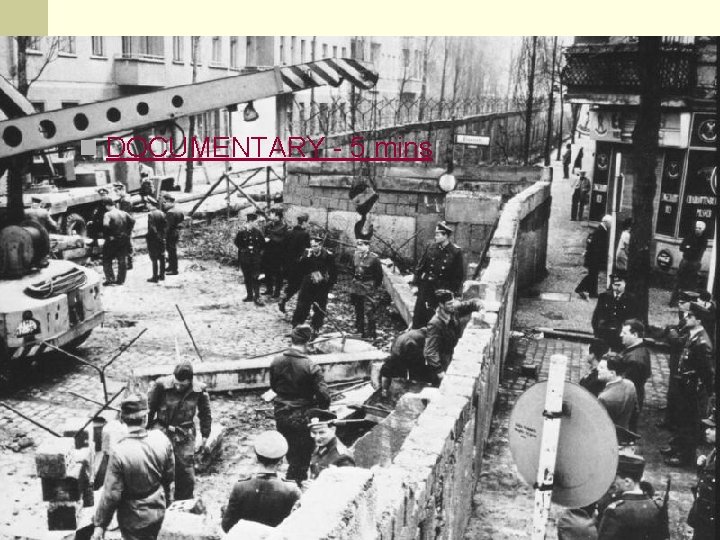
Berlin Wall On August 13, 1961, the Communist government of the German Democratic Republic (GDR, or East Germany) began to build a barbed wire and concrete “Antifascistischer Schutzwall, ” or “antifascist bulwark, ” between East and West Berlin. The official purpose of this Berlin Wall was to keep Western “fascists” from entering East Germany and undermining the socialist state, but it primarily served the objective of stemming mass defections from East to West. The Berlin Wall stood until November 9, 1989, when the head of the East German Communist Party announced that citizens of the GDR could cross the border whenever they pleased.
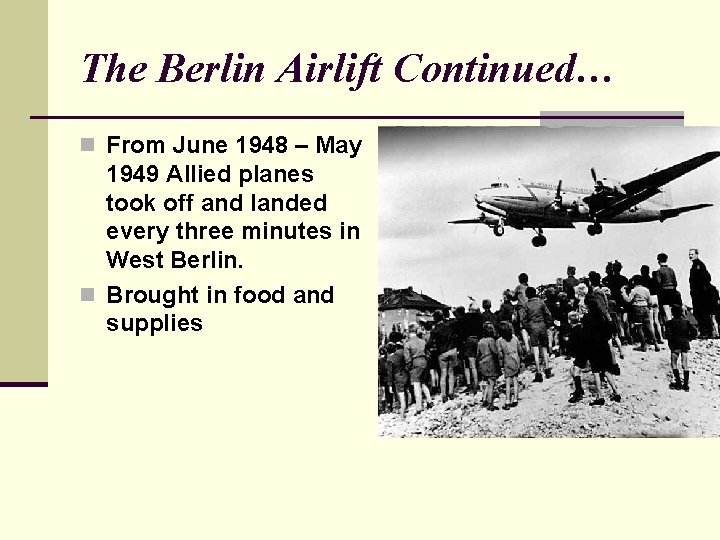
The Berlin Airlift n 1948 France, Britain and the US withdraw from Germany. n Their former occupation zones form one country. n Berlin was divided into 4 zones. n USSR cut West Berlin off from outside influence. n It faced starvation.
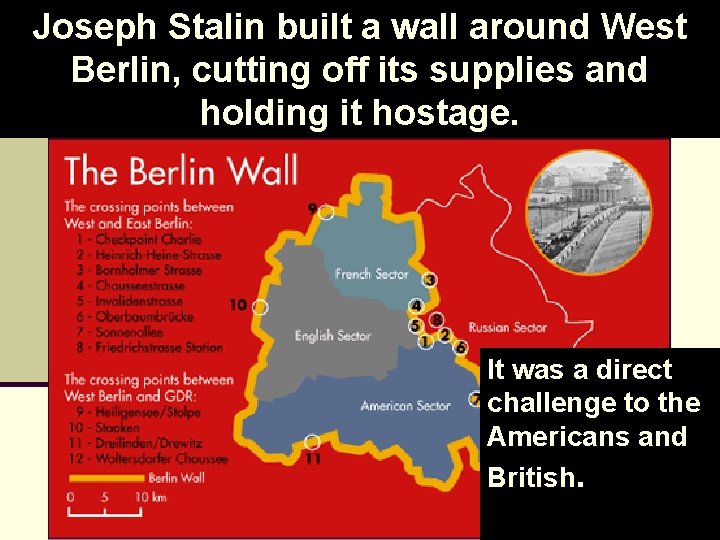
Joseph Stalin built a wall around West Berlin, cutting off its supplies and holding it hostage. It was a direct challenge to the Americans and British.
n DOCUMENTARY - 5 mins
Berlin Airlift
The Berlin Airlift Continued… n From June 1948 – May 1949 Allied planes took off and landed every three minutes in West Berlin. n Brought in food and supplies
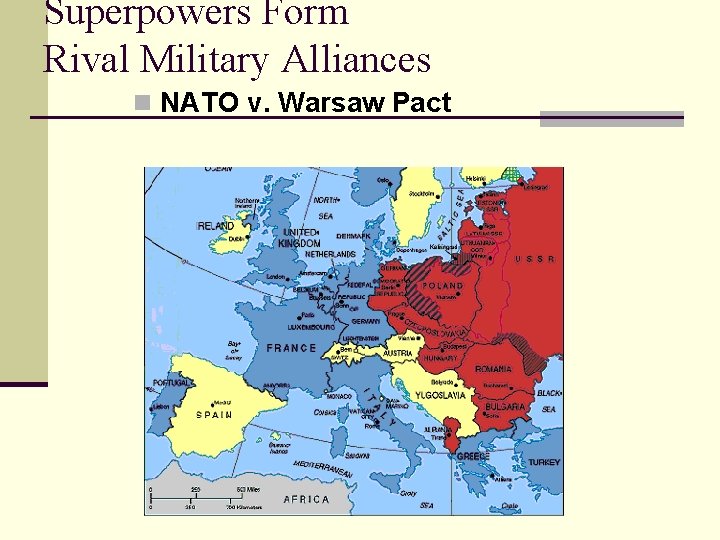
Superpowers Form Rival Military Alliances n NATO v. Warsaw Pact
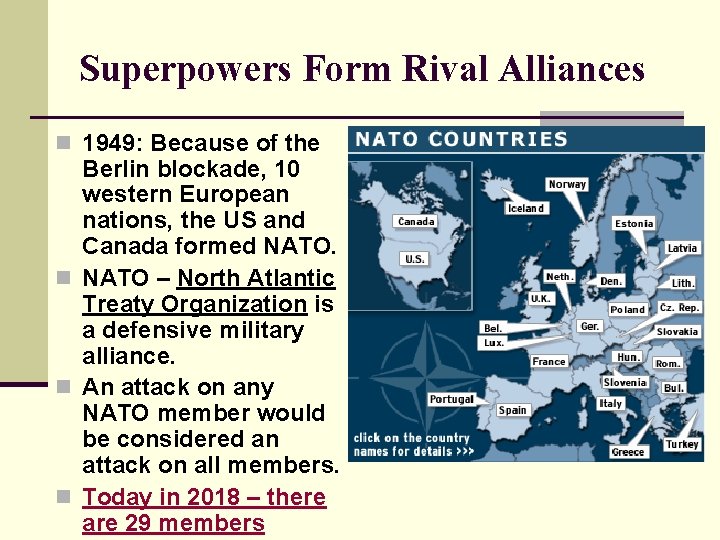
Superpowers Form Rival Alliances n 1949: Because of the Berlin blockade, 10 western European nations, the US and Canada formed NATO. n NATO – North Atlantic Treaty Organization is a defensive military alliance. n An attack on any NATO member would be considered an attack on all members. n Today in 2018 – there are 29 members
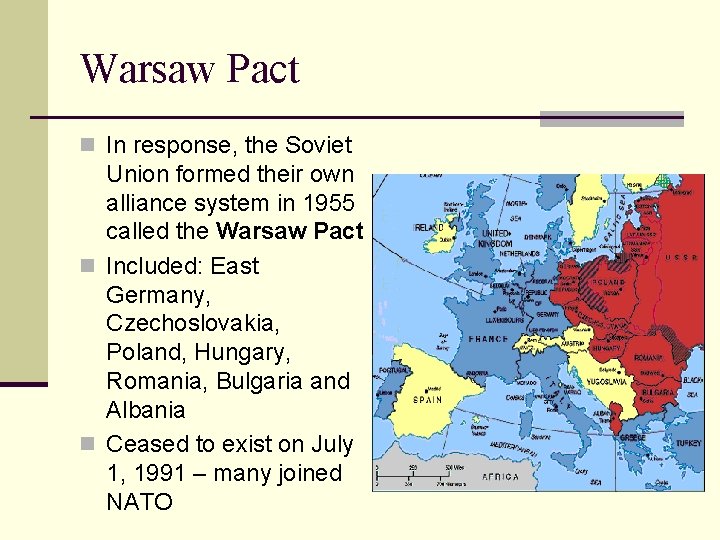
Warsaw Pact n In response, the Soviet Union formed their own alliance system in 1955 called the Warsaw Pact n Included: East Germany, Czechoslovakia, Poland, Hungary, Romania, Bulgaria and Albania n Ceased to exist on July 1, 1991 – many joined NATO
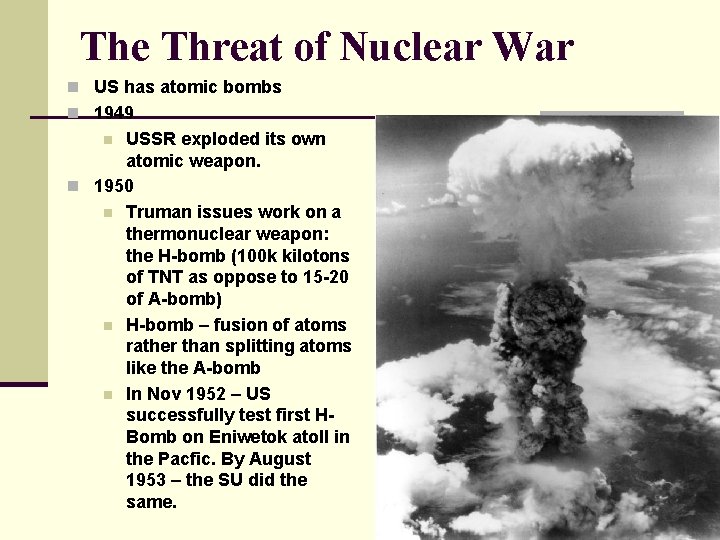
The Threat of Nuclear War n US has atomic bombs n 1949 USSR exploded its own atomic weapon. n 1950 n Truman issues work on a thermonuclear weapon: the H-bomb (100 k kilotons of TNT as oppose to 15 -20 of A-bomb) n H-bomb – fusion of atoms rather than splitting atoms like the A-bomb n In Nov 1952 – US successfully test first HBomb on Eniwetok atoll in the Pacfic. By August 1953 – the SU did the same. n
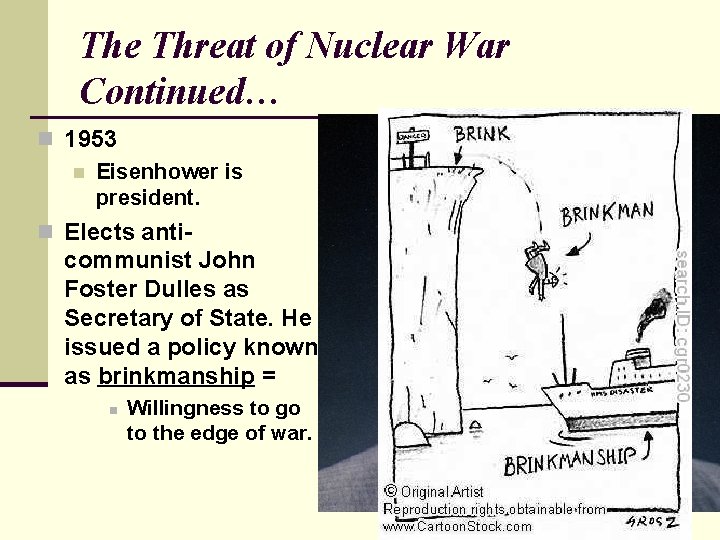
The Threat of Nuclear War Continued… n 1953 n Eisenhower is president. n Elects anti- communist John Foster Dulles as Secretary of State. He issued a policy known as brinkmanship = n Willingness to go to the edge of war.
n Dulles threatened, n U. S. strengthened its the U. S. would, “retaliate instantly, by means and at places of our own choosing. ” air force and began producing stockpiles of nuclear weapons. The Soviet responded with its own military buildup. n The arms race began.
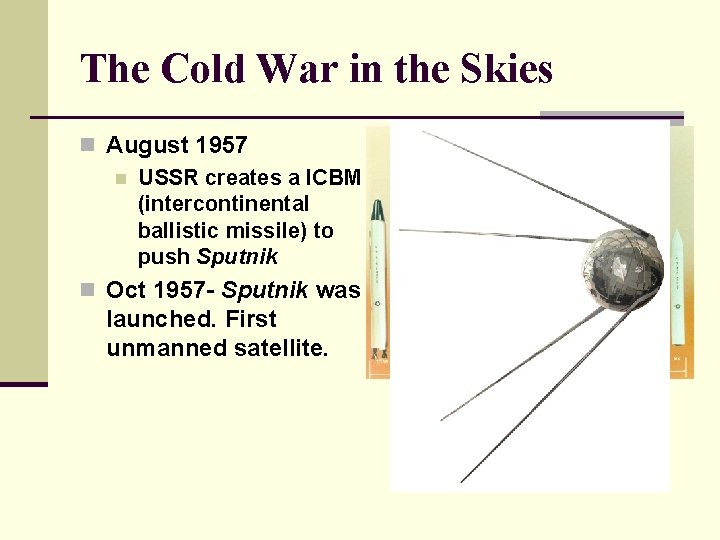
The Cold War in the Skies n August 1957 n USSR creates a ICBM (intercontinental ballistic missile) to push Sputnik n Oct 1957 - Sputnik was launched. First unmanned satellite.
n Americans felt they had fallen behind in science and technology. In turn, gov’t poured money into science education n Movie: Hidden Figures n 1958 n US sends its first missile. n 1960 n Pres. Eisenhower proposes that the US and the SU be able to fly over each other’s territory to guard against surprise nuclear attack
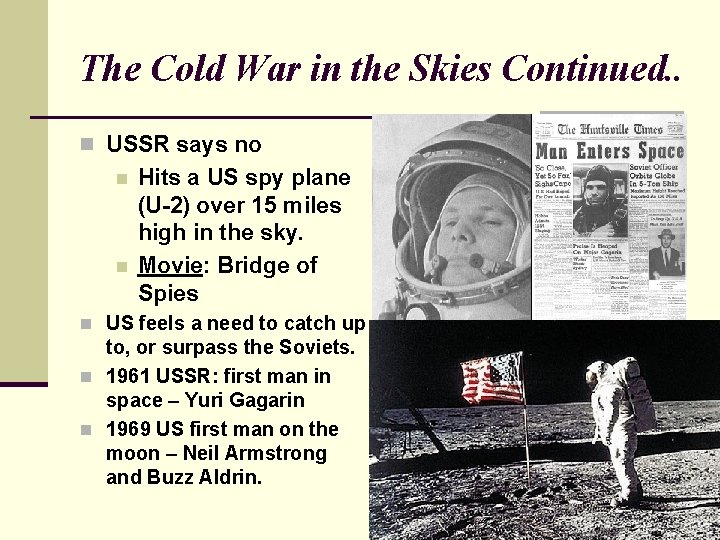
The Cold War in the Skies Continued. . n USSR says no n n Hits a US spy plane (U-2) over 15 miles high in the sky. Movie: Bridge of Spies n US feels a need to catch up to, or surpass the Soviets. n 1961 USSR: first man in space – Yuri Gagarin n 1969 US first man on the moon – Neil Armstrong and Buzz Aldrin. U-2 In Flight Khruhchev displays wreckage of the U-2 spy plane shot down over the USSR.