
Cold War Bernard Baruch coined the term cold
Cold War Bernard Baruch coined the term “cold war”
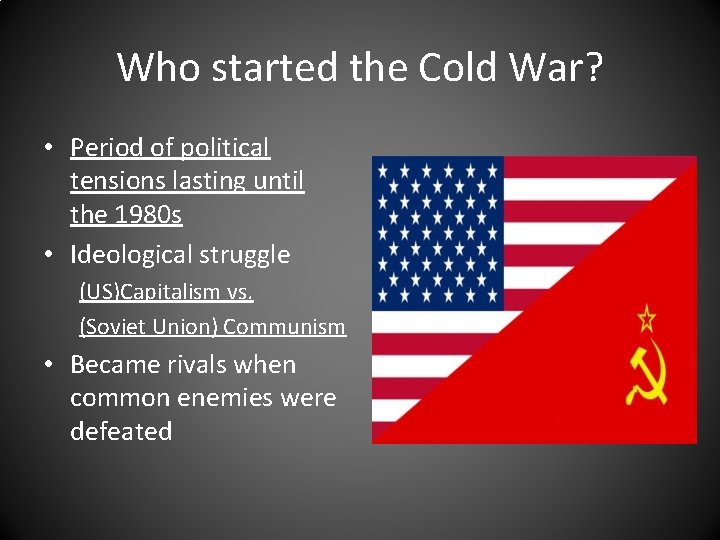
Who started the Cold War? • Period of political tensions lasting until the 1980 s • Ideological struggle (US)Capitalism vs. (Soviet Union) Communism • Became rivals when common enemies were defeated

Yalta Conference February 1945 – Stalin wanted to create a buffer zone (pro-soviet satellite states)between the Soviet Union and the West – “free elections” – US needed the Soviet Unions help against Japan

Potsdam Conference July 1945 • US/Soviet Tensions – Truman and Churchill insisted on free elections in Eastern Europe – Stalin began forming his pro-soviet buffer zone (military occupation)
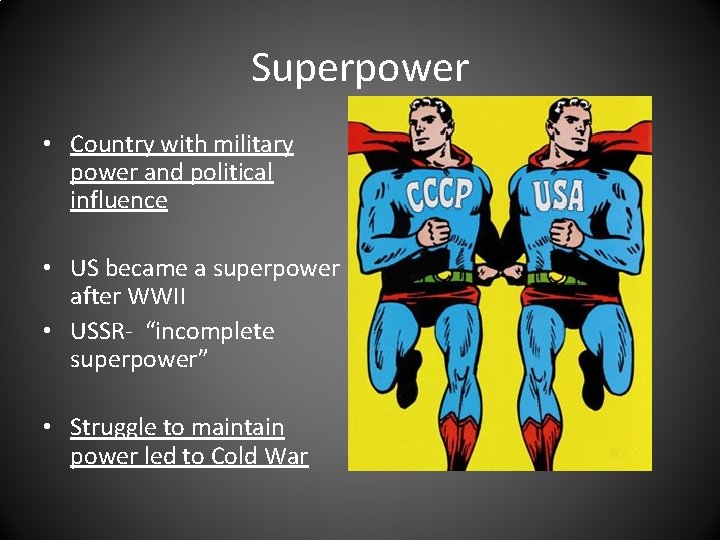
Superpower • Country with military power and political influence • US became a superpower after WWII • USSR- “incomplete superpower” • Struggle to maintain power led to Cold War
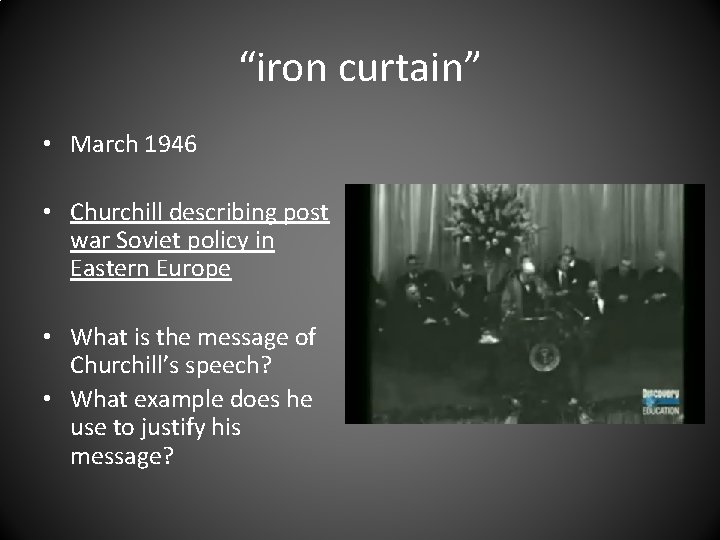
“iron curtain” • March 1946 • Churchill describing post war Soviet policy in Eastern Europe • What is the message of Churchill’s speech? • What example does he use to justify his message?
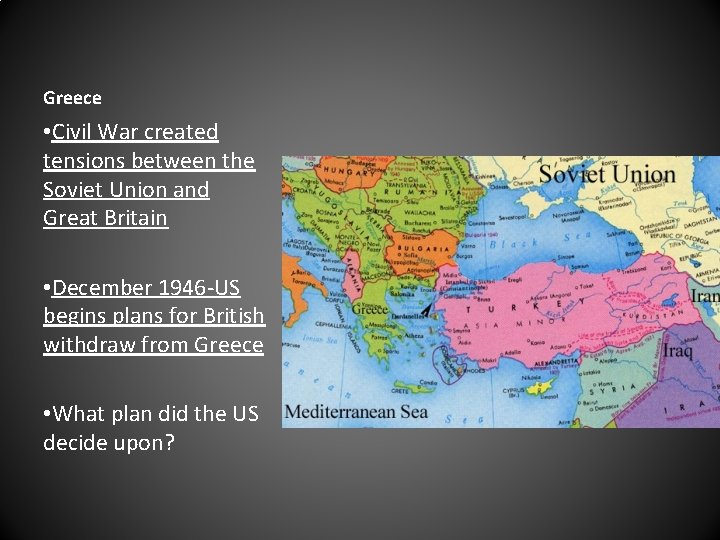
Greece • Civil War created tensions between the Soviet Union and Great Britain • December 1946 -US begins plans for British withdraw from Greece • What plan did the US decide upon?
Truman Doctrine • March 1947 • Result of Great Britain withdrawing aid from Greece • US would provide money to countries threatened by Communist expansion • Anticommunist support
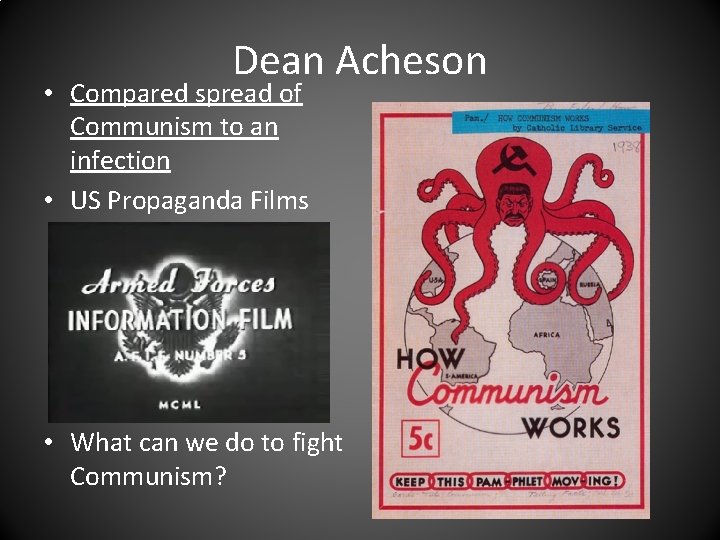
Dean Acheson • Compared spread of Communism to an infection • US Propaganda Films • What can we do to fight Communism?

Containment • Developed by US Diplomat George Kennan • “Long Telegram” • Policy adopted by the US toward the Soviets to stop the spread of Communism
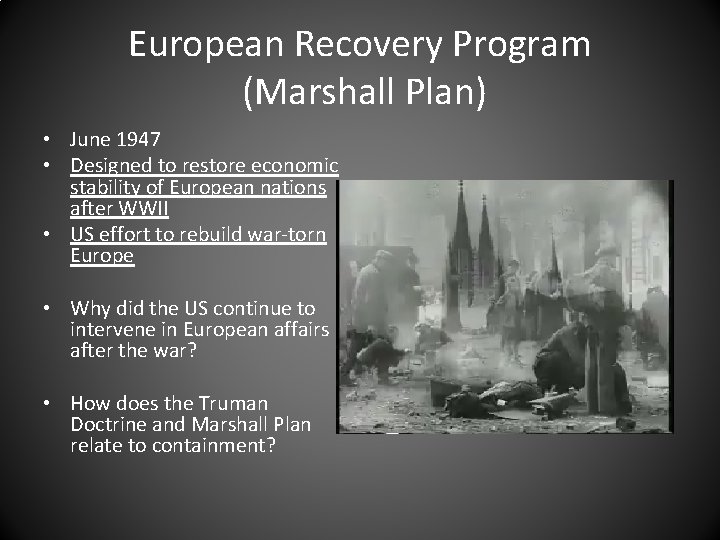
European Recovery Program (Marshall Plan) • June 1947 • Designed to restore economic stability of European nations after WWII • US effort to rebuild war-torn Europe • Why did the US continue to intervene in European affairs after the war? • How does the Truman Doctrine and Marshall Plan relate to containment?
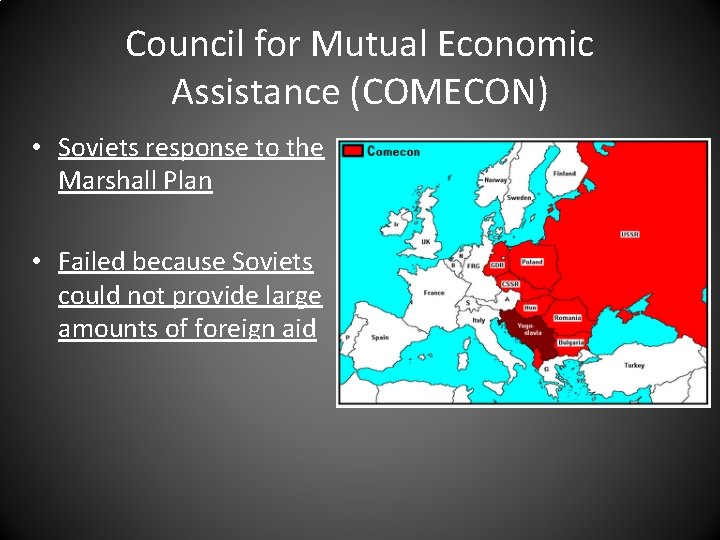
Council for Mutual Economic Assistance (COMECON) • Soviets response to the Marshall Plan • Failed because Soviets could not provide large amounts of foreign aid
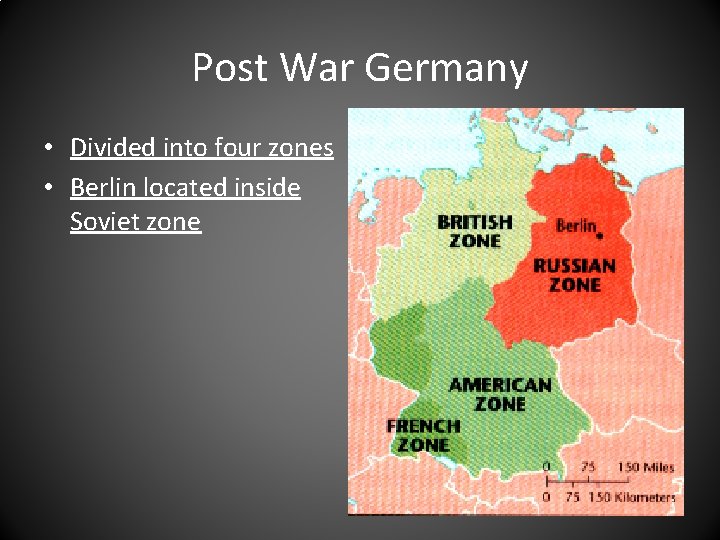
Post War Germany • Divided into four zones • Berlin located inside Soviet zone
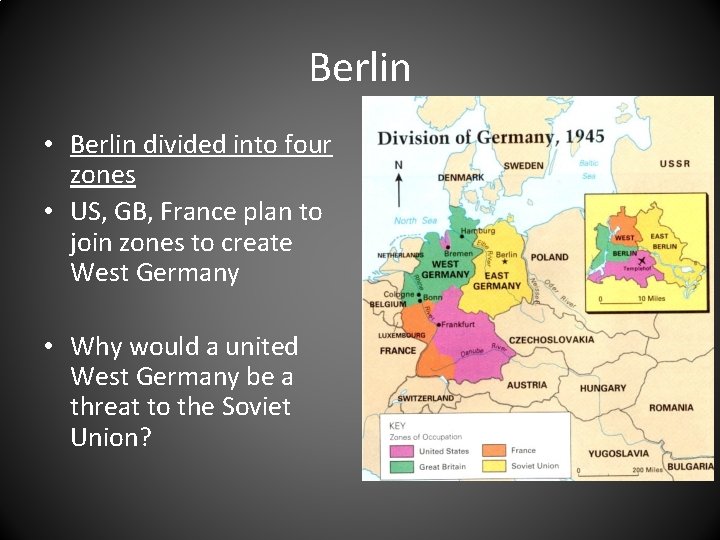
Berlin • Berlin divided into four zones • US, GB, France plan to join zones to create West Germany • Why would a united West Germany be a threat to the Soviet Union?

Berlin Airlift • 1948 -Berlin Blockade • Tactic used to overcome a Soviet blockade
West/East Germany • September 1949 • Federal Republic of Germany (West Germany) • German Democratic Republic (East Germany)
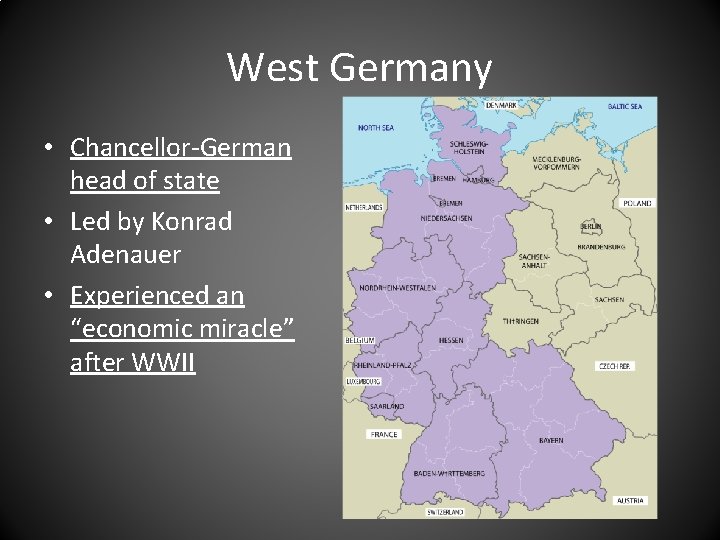
West Germany • Chancellor-German head of state • Led by Konrad Adenauer • Experienced an “economic miracle” after WWII
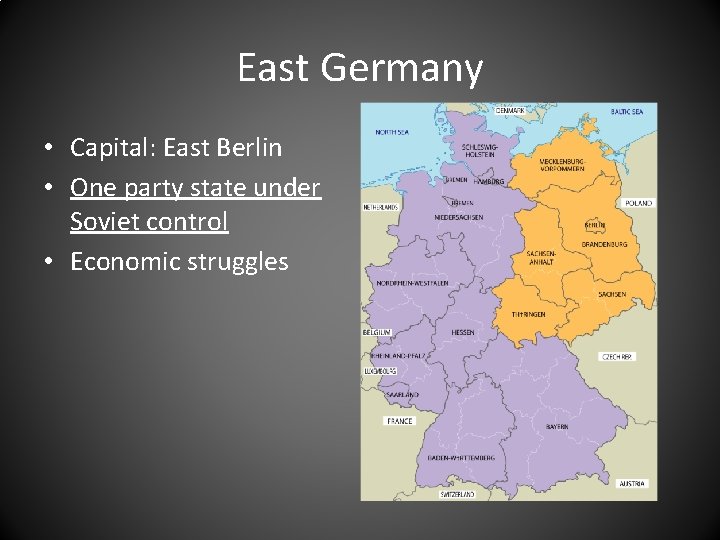
East Germany • Capital: East Berlin • One party state under Soviet control • Economic struggles
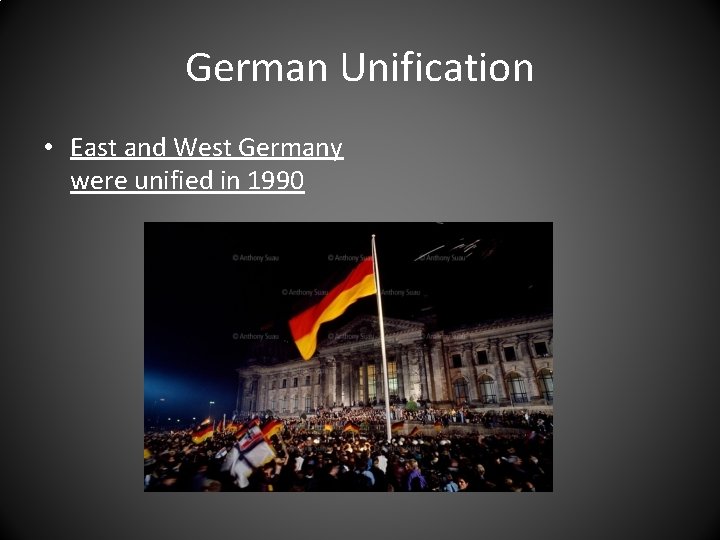
German Unification • East and West Germany were unified in 1990
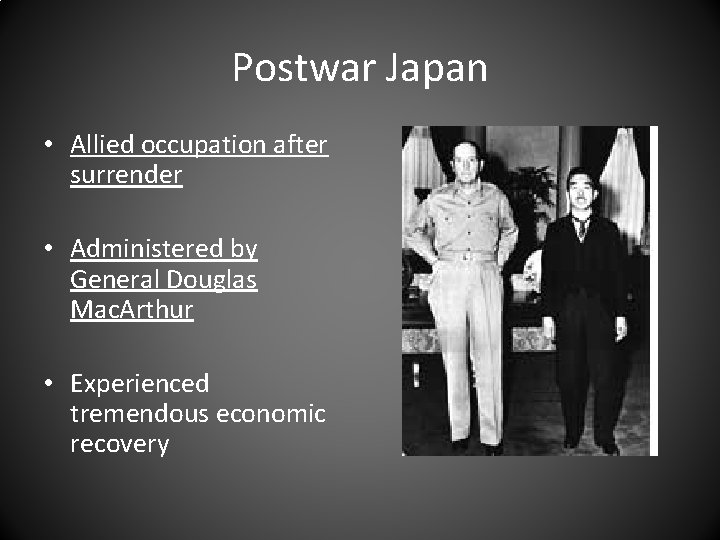
Postwar Japan • Allied occupation after surrender • Administered by General Douglas Mac. Arthur • Experienced tremendous economic recovery
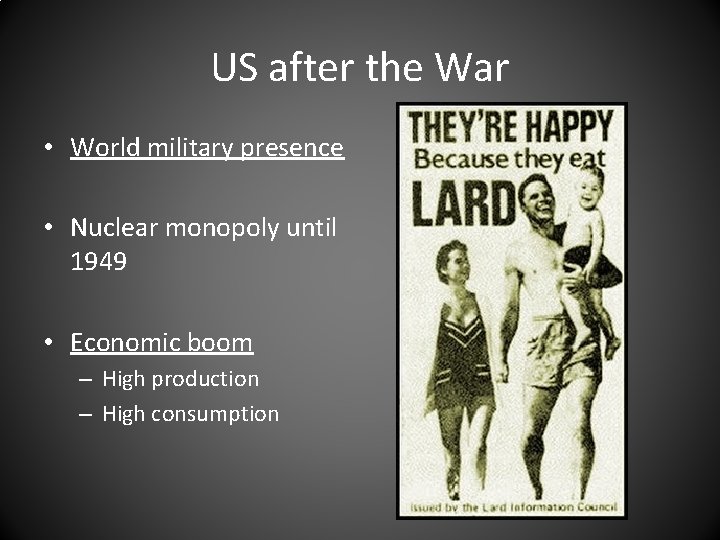
US after the War • World military presence • Nuclear monopoly until 1949 • Economic boom – High production – High consumption
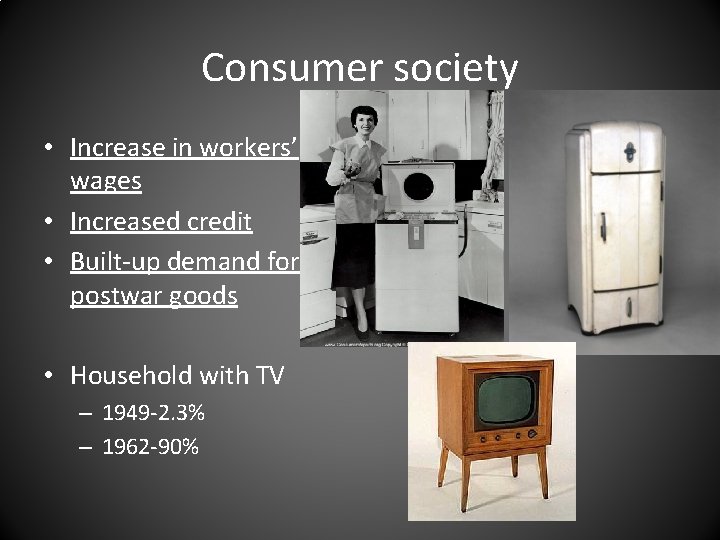
Consumer society • Increase in workers’ wages • Increased credit • Built-up demand for postwar goods • Household with TV – 1949 -2. 3% – 1962 -90%
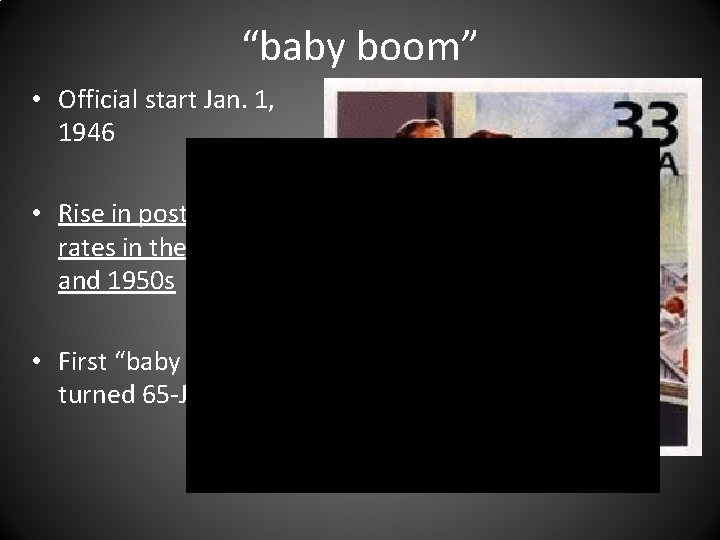
“baby boom” • Official start Jan. 1, 1946 • Rise in postwar birth rates in the late 1940 s and 1950 s • First “baby boomer” turned 65 -Jan 1, 2011
Women’s Rights Movement • Worked in factories during the war • Served in the military • Discrimination continued – Wages – Occupation • National Organization of Women (NOW)-1966
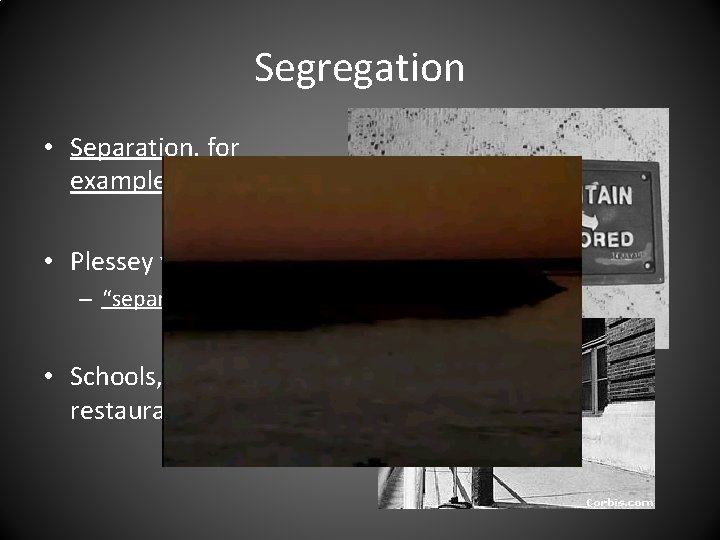
Segregation • Separation, for example, by race • Plessey v. Ferguson – “separate but equal” • Schools, bathrooms, restaurants, buses
Great Britain/France after the War • Loss of colonial power • Defeat of Axis powers • Created vacuums (voids) around the world
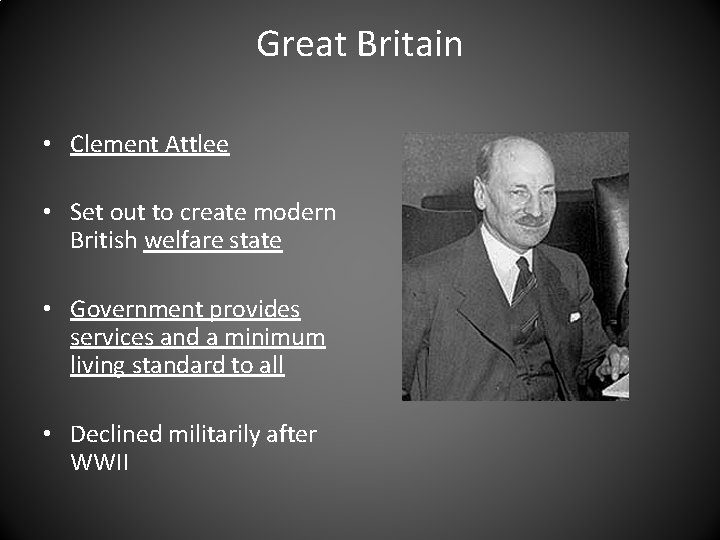
Great Britain • Clement Attlee • Set out to create modern British welfare state • Government provides services and a minimum living standard to all • Declined militarily after WWII
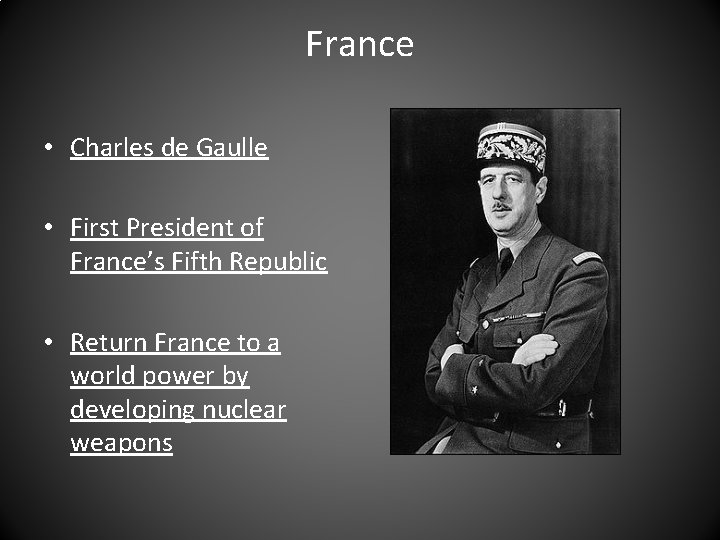
France • Charles de Gaulle • First President of France’s Fifth Republic • Return France to a world power by developing nuclear weapons
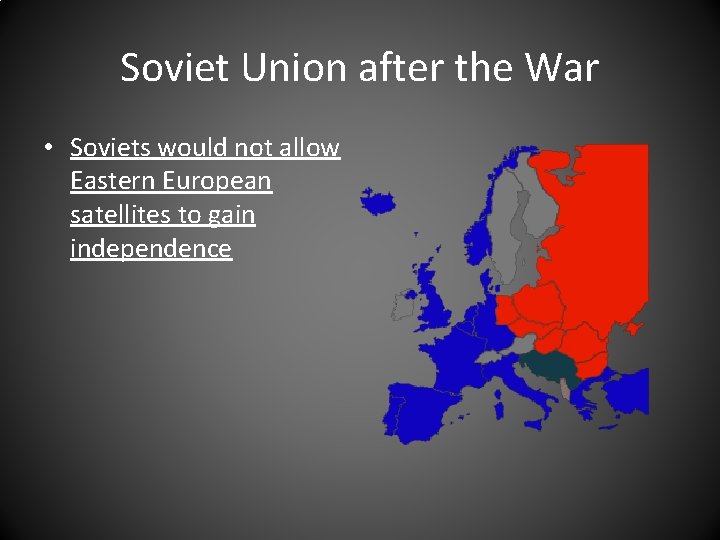
Soviet Union after the War • Soviets would not allow Eastern European satellites to gain independence
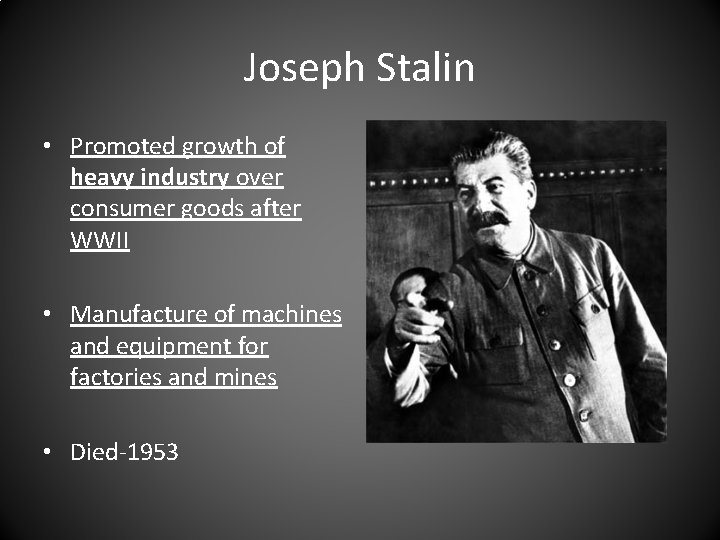
Joseph Stalin • Promoted growth of heavy industry over consumer goods after WWII • Manufacture of machines and equipment for factories and mines • Died-1953
1949
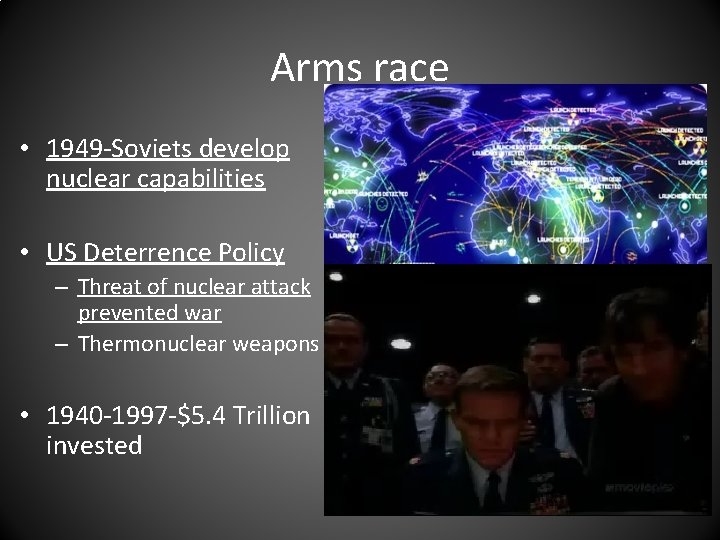
Arms race • 1949 -Soviets develop nuclear capabilities • US Deterrence Policy – Threat of nuclear attack prevented war – Thermonuclear weapons • 1940 -1997 -$5. 4 Trillion invested
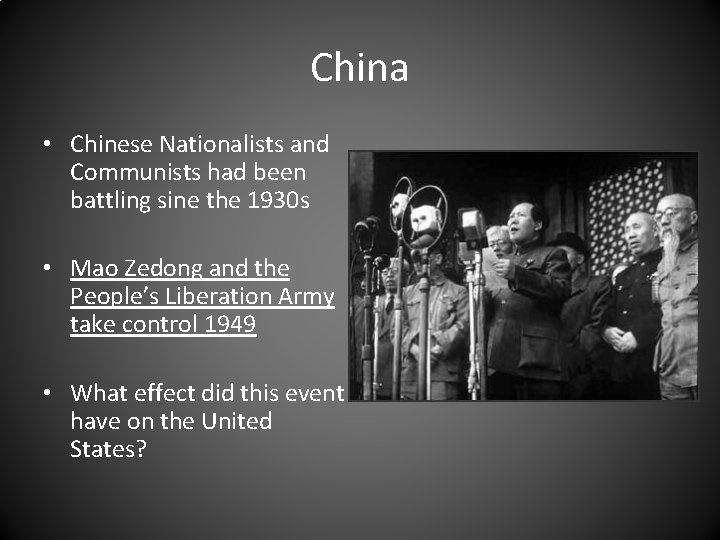
China • Chinese Nationalists and Communists had been battling sine the 1930 s • Mao Zedong and the People’s Liberation Army take control 1949 • What effect did this event have on the United States?
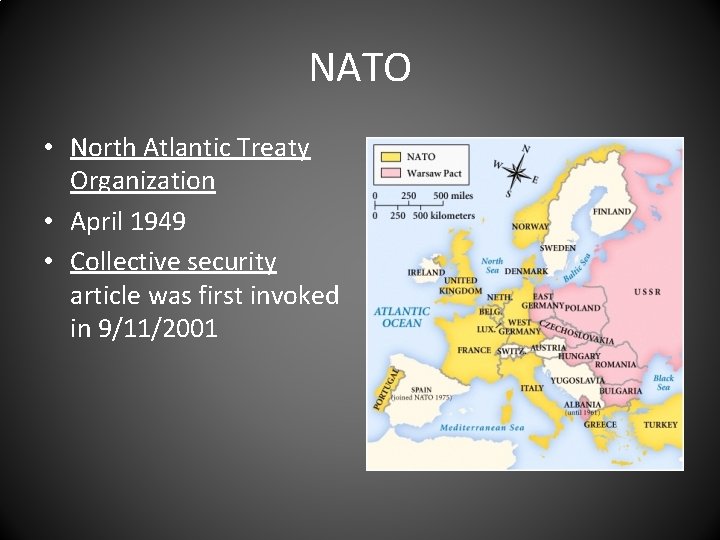
NATO • North Atlantic Treaty Organization • April 1949 • Collective security article was first invoked in 9/11/2001
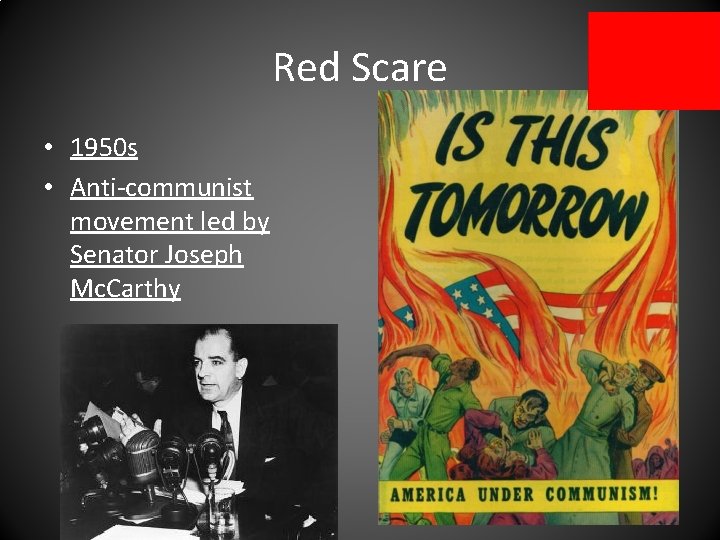
Red Scare • 1950 s • Anti-communist movement led by Senator Joseph Mc. Carthy
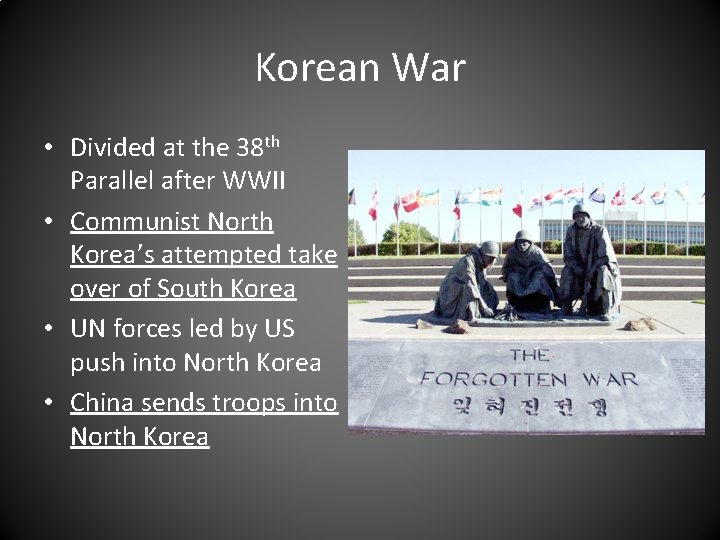
Korean War • Divided at the 38 th Parallel after WWII • Communist North Korea’s attempted take over of South Korea • UN forces led by US push into North Korea • China sends troops into North Korea
Dwight D. Eisenhower • Elected 1952
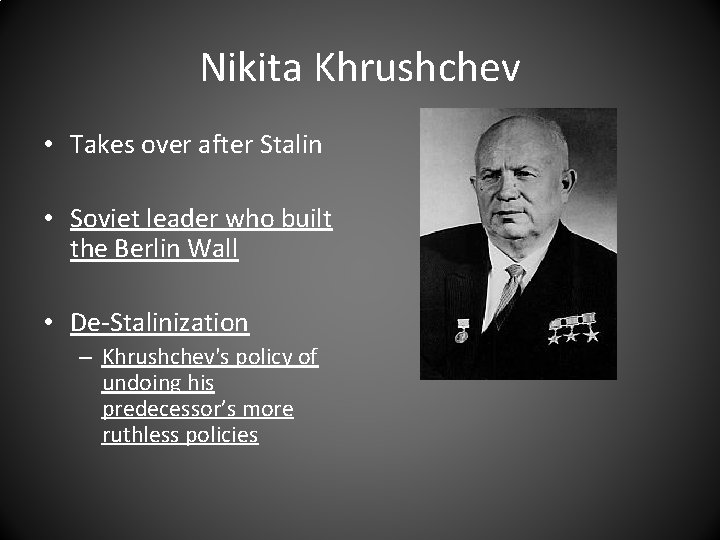
Nikita Khrushchev • Takes over after Stalin • Soviet leader who built the Berlin Wall • De-Stalinization – Khrushchev's policy of undoing his predecessor’s more ruthless policies
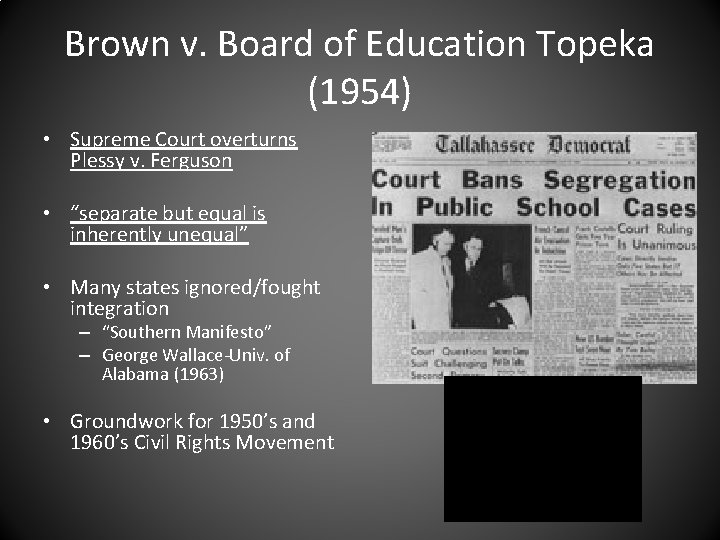
Brown v. Board of Education Topeka (1954) • Supreme Court overturns Plessy v. Ferguson • “separate but equal is inherently unequal” • Many states ignored/fought integration – “Southern Manifesto” – George Wallace-Univ. of Alabama (1963) • Groundwork for 1950’s and 1960’s Civil Rights Movement
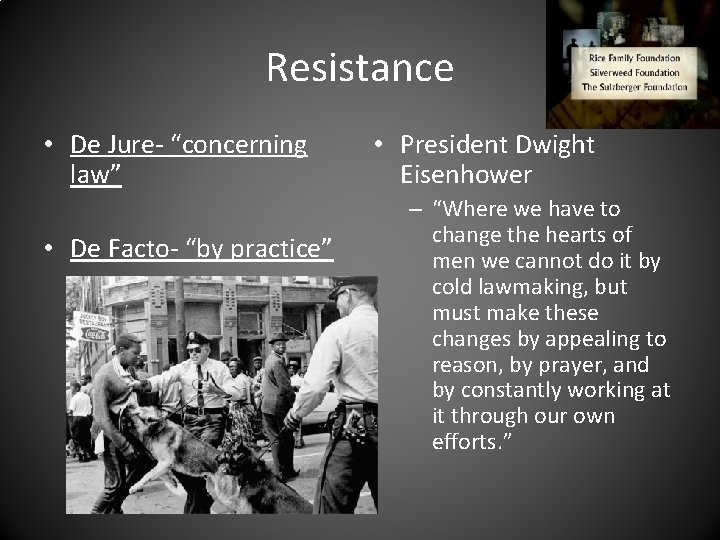
Resistance • De Jure- “concerning law” • De Facto- “by practice” • President Dwight Eisenhower – “Where we have to change the hearts of men we cannot do it by cold lawmaking, but must make these changes by appealing to reason, by prayer, and by constantly working at it through our own efforts. ”
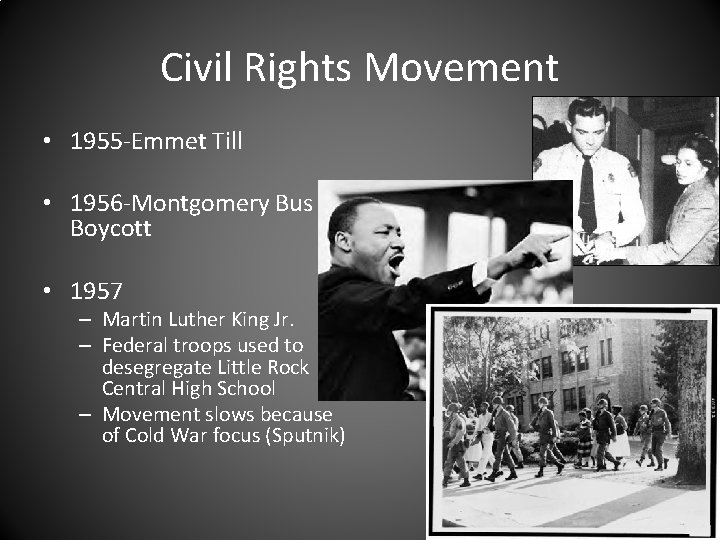
Civil Rights Movement • 1955 -Emmet Till • 1956 -Montgomery Bus Boycott • 1957 – Martin Luther King Jr. – Federal troops used to desegregate Little Rock Central High School – Movement slows because of Cold War focus (Sputnik)
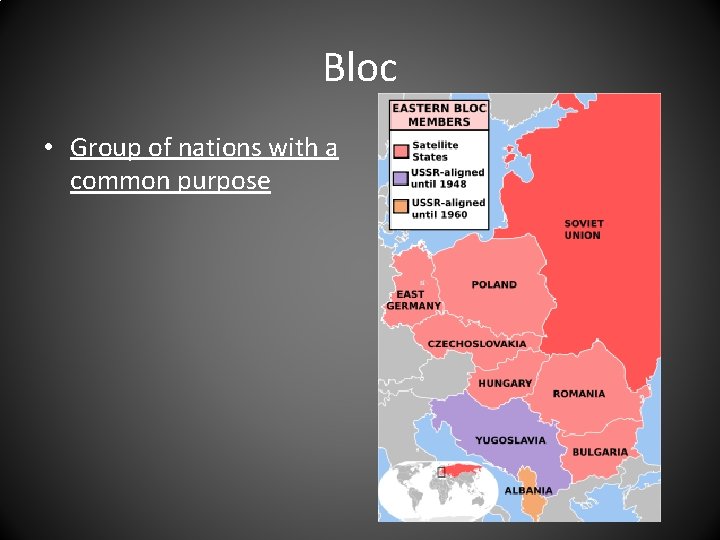
Bloc • Group of nations with a common purpose
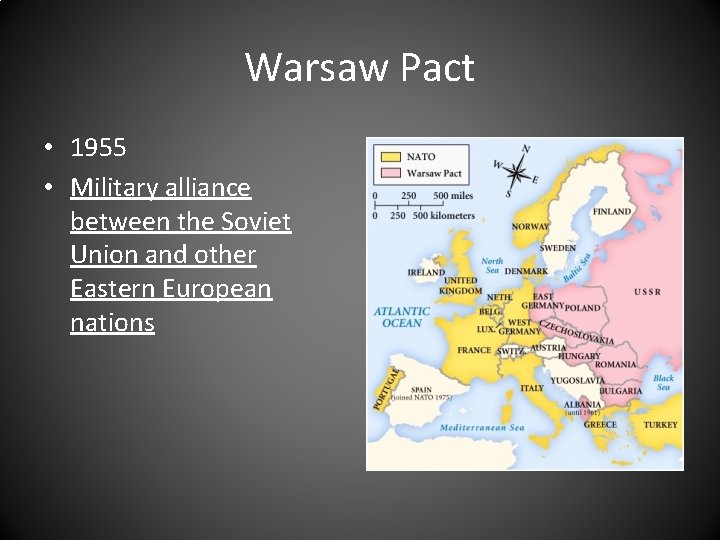
Warsaw Pact • 1955 • Military alliance between the Soviet Union and other Eastern European nations
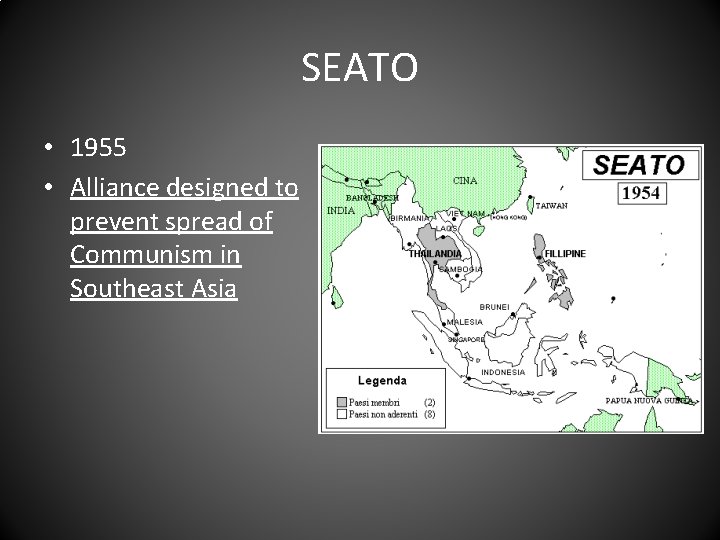
SEATO • 1955 • Alliance designed to prevent spread of Communism in Southeast Asia
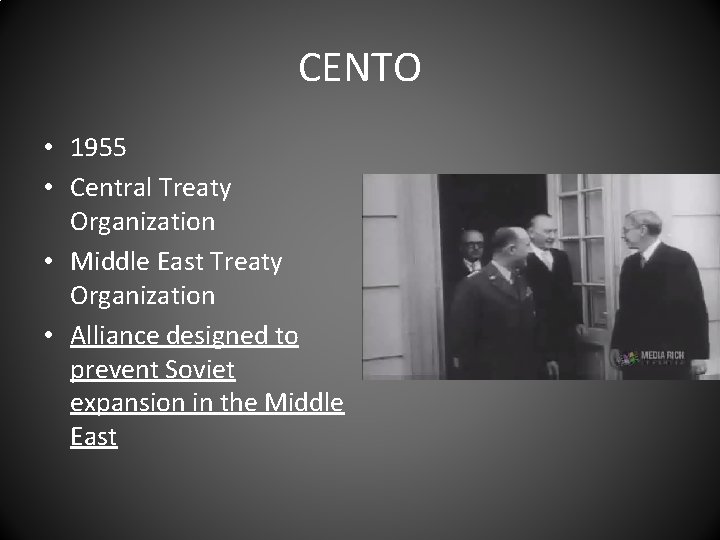
CENTO • 1955 • Central Treaty Organization • Middle East Treaty Organization • Alliance designed to prevent Soviet expansion in the Middle East
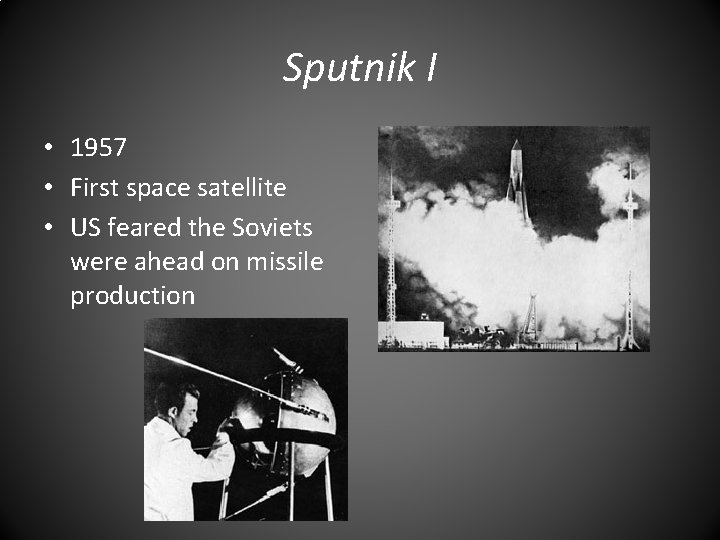
Sputnik I • 1957 • First space satellite • US feared the Soviets were ahead on missile production
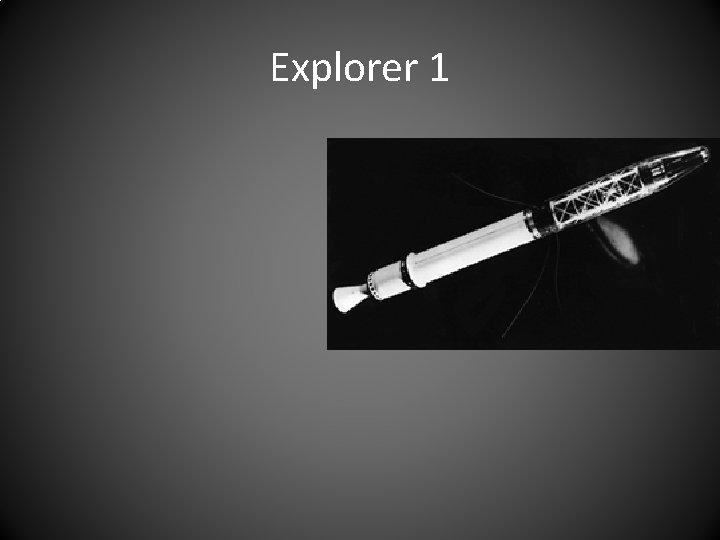
Explorer 1

EEC
Civil Rights Movement • 1960 -Greensboro, NC
John F. Kennedy • US President involved in Cuban missile crisis
Real wages • Actual purchasing power of income
Fidel Castro • Communist leader of Cuba during the Cuban Missile Crisis
Bay of Pigs • US attempt to overthrow the Cuban government
Berlin Wall • Build to prevent East Germans from defecting to West Germany
Cuban Missile Crisis
Martin Luther King Jr
Lyndon B. Johnson • Signed the Civil Rights Act 1964 and CRA 1965 • Increased troops sent to Vietnam in 1964
Domino theory
Vietnam War
Counter culture
Student protests • Were reactions to: – Vietnam War – University policies and administration – Alienation of the individual from society
Richard Nixon • Resumed relations with China after Vietnam War
Kent State University • 1970 • Four students killed by Ohio National Guard during antiwar demonstration
- Slides: 63