GROUP FINANCIAL REPORTING ACF 202 PART 3 INTERCOMPANY


- Slides: 14
GROUP FINANCIAL REPORTING ACF 202 PART 3 INTERCOMPANY CURRENT ACCOUNTS PROVISION FOR UNREALISED PROFITS (PURP) 1 Cynthia Fortin, CPA, CMA FALL 2018
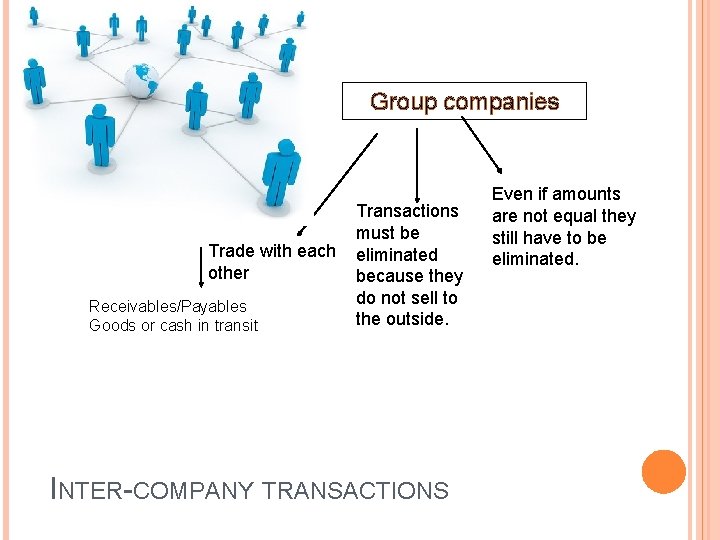
Group companies Trade with each other Receivables/Payables Goods or cash in transit Transactions must be eliminated because they do not sell to the outside. INTER-COMPANY TRANSACTIONS Even if amounts are not equal they still have to be eliminated. 2
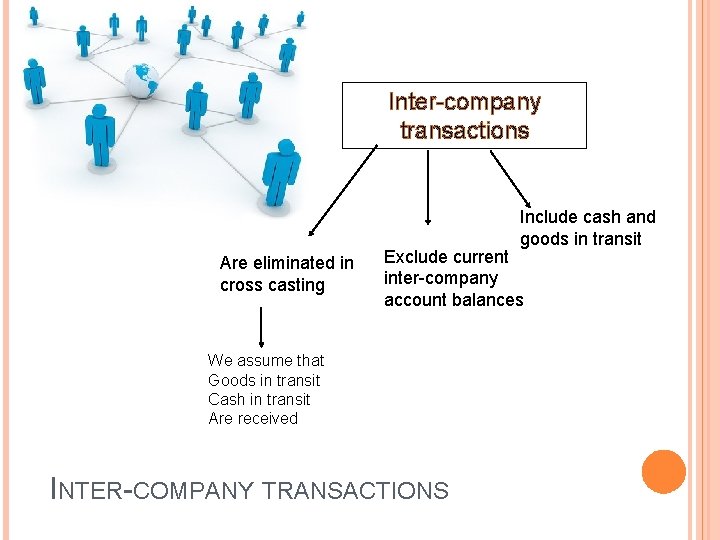
Inter-company transactions Include cash and goods in transit Are eliminated in cross casting Exclude current inter-company account balances We assume that Goods in transit Cash in transit Are received INTER-COMPANY TRANSACTIONS 3
Let’s do Vietnam, then Turkey 4
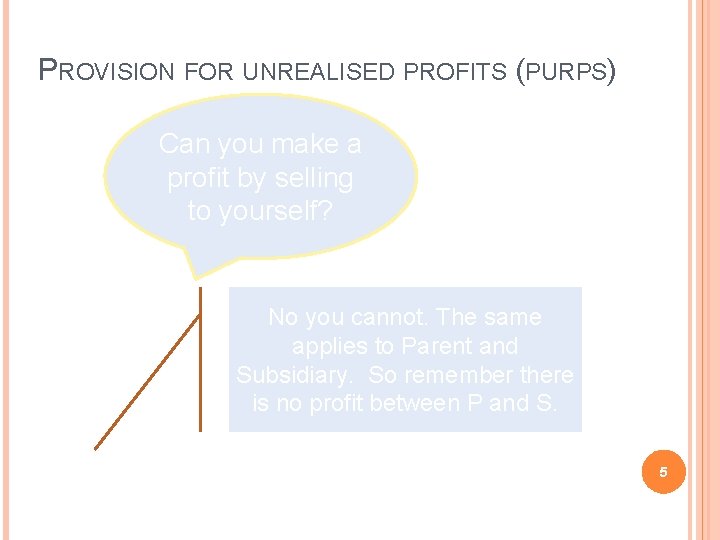
PROVISION FOR UNREALISED PROFITS (PURPS) Can you make a profit by selling to yourself? No you cannot. The same applies to Parent and Subsidiary. So remember there is no profit between P and S. 5
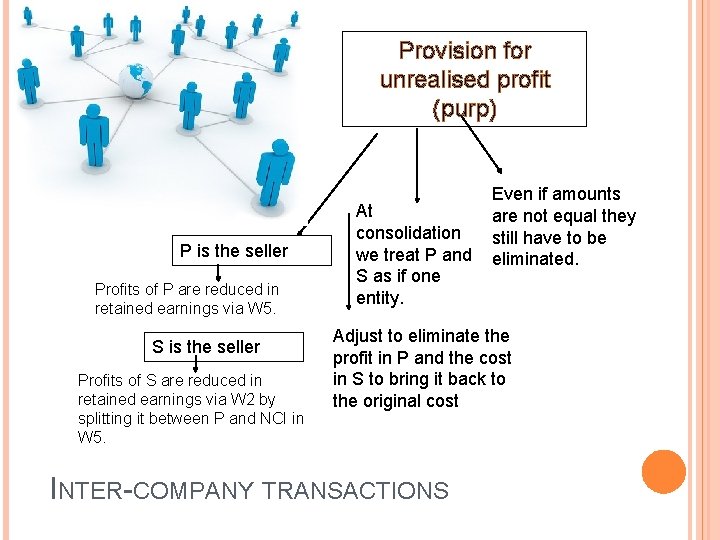
Provision for unrealised profit (purp) P is the seller Profits of P are reduced in retained earnings via W 5. S is the seller Profits of S are reduced in retained earnings via W 2 by splitting it between P and NCI in W 5. At consolidation we treat P and S as if one entity. Even if amounts are not equal they still have to be eliminated. Adjust to eliminate the profit in P and the cost in S to bring it back to the original cost INTER-COMPANY TRANSACTIONS 6
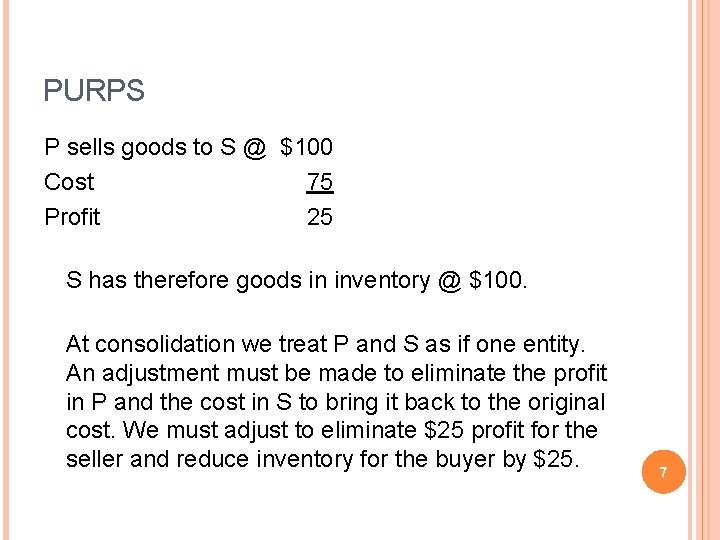
PURPS P sells goods to S @ $100 Cost 75 Profit 25 S has therefore goods in inventory @ $100. At consolidation we treat P and S as if one entity. An adjustment must be made to eliminate the profit in P and the cost in S to bring it back to the original cost. We must adjust to eliminate $25 profit for the seller and reduce inventory for the buyer by $25. 7
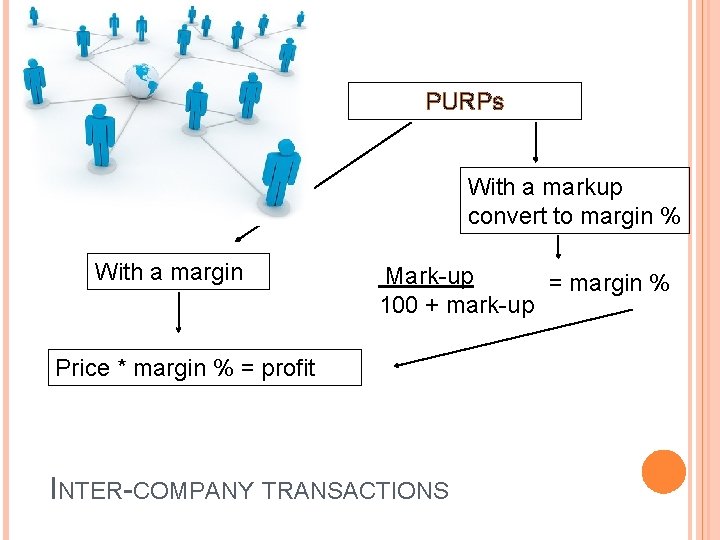
PURPs With a markup convert to margin % With a margin Mark-up = margin % 100 + mark-up Price * margin % = profit INTER-COMPANY TRANSACTIONS 8
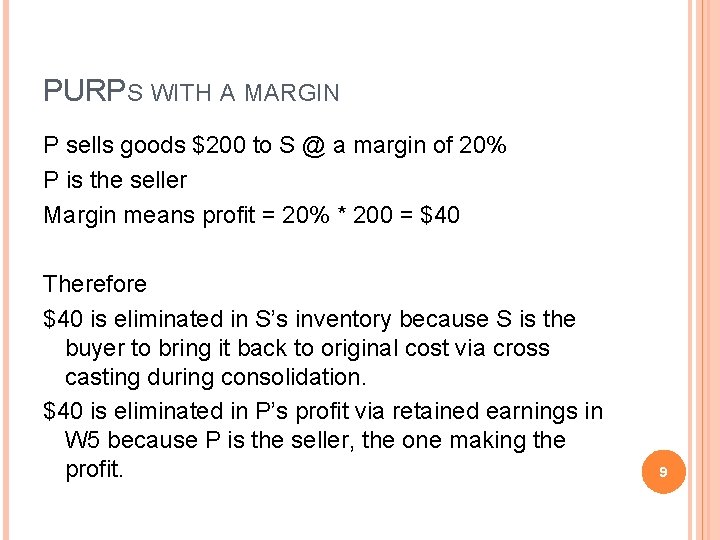
PURPS WITH A MARGIN P sells goods $200 to S @ a margin of 20% P is the seller Margin means profit = 20% * 200 = $40 Therefore $40 is eliminated in S’s inventory because S is the buyer to bring it back to original cost via cross casting during consolidation. $40 is eliminated in P’s profit via retained earnings in W 5 because P is the seller, the one making the profit. 9
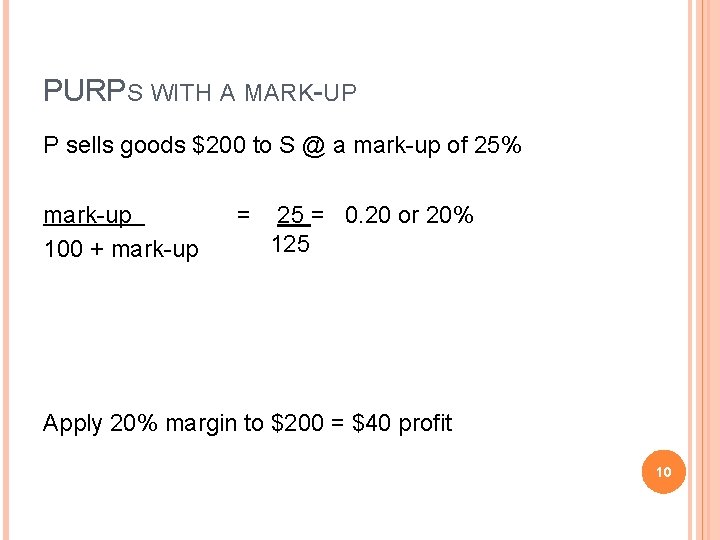
PURPS WITH A MARK-UP P sells goods $200 to S @ a mark-up of 25% mark-up 100 + mark-up = 25 = 0. 20 or 20% 125 Apply 20% margin to $200 = $40 profit 10
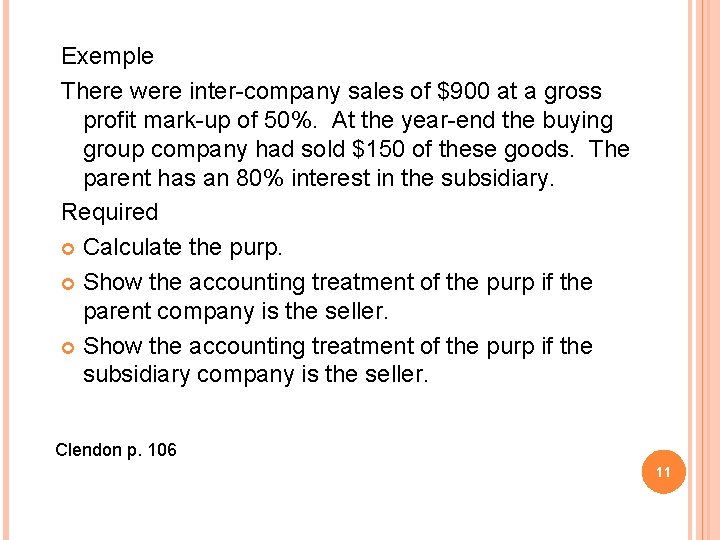
Exemple There were inter-company sales of $900 at a gross profit mark-up of 50%. At the year-end the buying group company had sold $150 of these goods. The parent has an 80% interest in the subsidiary. Required Calculate the purp. Show the accounting treatment of the purp if the parent company is the seller. Show the accounting treatment of the purp if the subsidiary company is the seller. Clendon p. 106 11
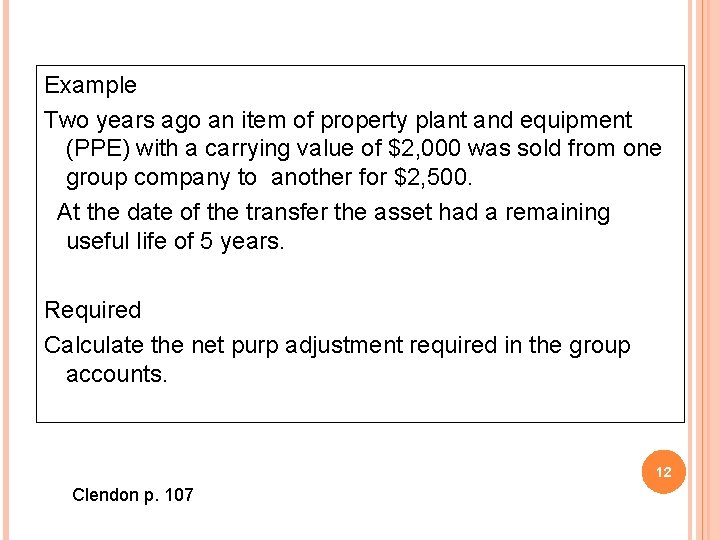
Example Two years ago an item of property plant and equipment (PPE) with a carrying value of $2, 000 was sold from one group company to another for $2, 500. At the date of the transfer the asset had a remaining useful life of 5 years. Required Calculate the net purp adjustment required in the group accounts. 12 Clendon p. 107
Let’s do Thomas Sweeney Then Wales 13
REFERENCES Clendon, Tom (2013), “A Student's Guide to Group Accounts, 2 nd Ed. ”, Kaplan Publishing UK ISBN: 9780857327642 chapters 8, 9. 14