Getting it right for e ery Child GETTING
- Slides: 21
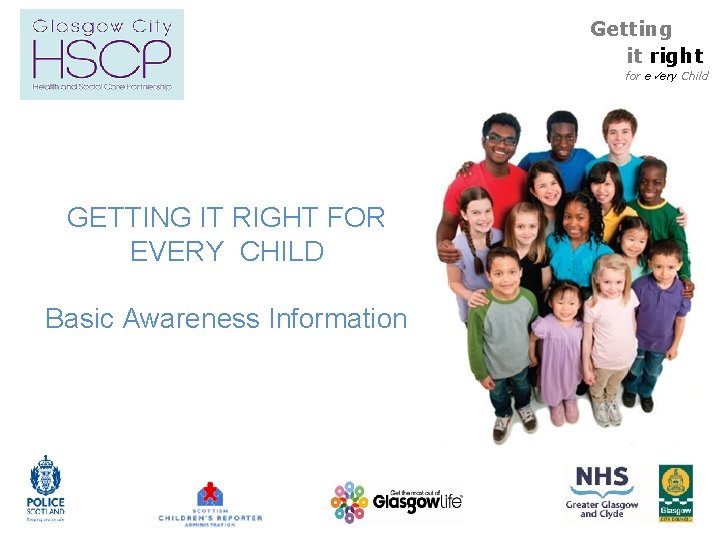
Getting it right for e ery Child GETTING IT RIGHT FOR EVERY CHILD Basic Awareness Information
Show Video Do You Know……?
Getting it right Getting It Right For Every Child (GIRFEC) for e ery Child • GIRFEC is the nation approach in Scotland to improving outcomes and support the wellbeing of our children and young people. This is reinforced by the Children and Young People (Scotland) Act 2014. • The child or young persons rights and wellbeing are at the heart of services that can support the child and family. • The GIRFEC approach is based on finding preventative solutions and support to improve outcomes for children and young people to sustain or improve their wellbeing.
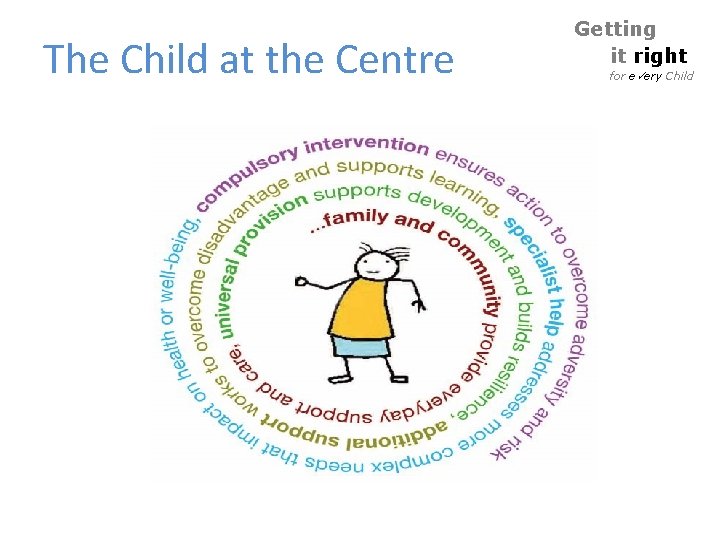
The Child at the Centre Getting it right for e ery Child
WELLBEING Getting it right for e ery Child We will support children, young people and families to ensure: § Children get the best start in life § We build on the family’s strengths to help them become more confident parents and carers § We provide assistance and support when needed to improve the child or young person’s wellbeing and development.
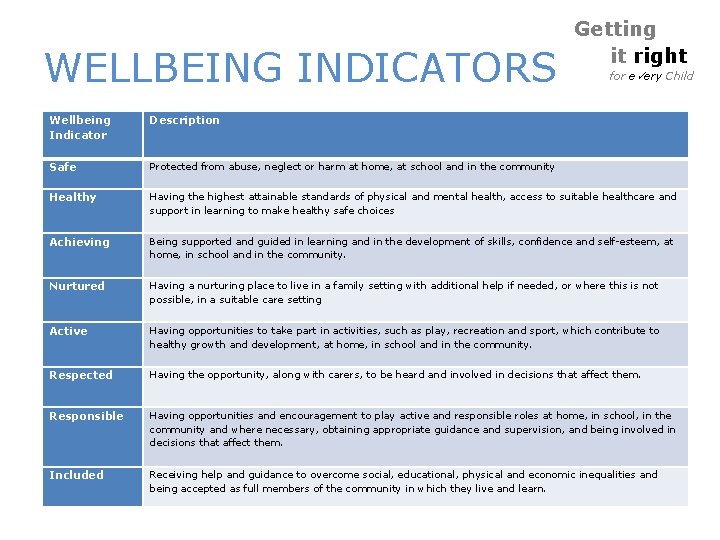
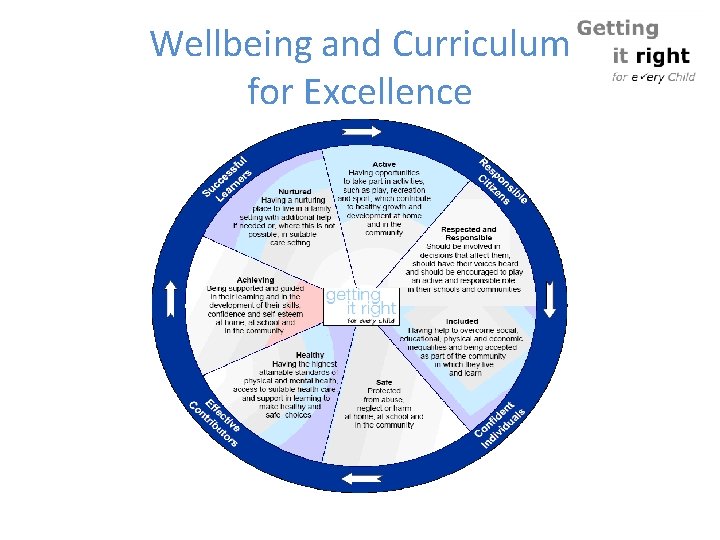
WELLBEING INDICATORS Getting it right for e ery Child Wellbeing Indicator Description Safe Protected from abuse, neglect or harm at home, at school and in the community Healthy Having the highest attainable standards of physical and mental health, access to suitable healthcare and support in learning to make healthy safe choices Achieving Being supported and guided in learning and in the development of skills, confidence and self-esteem, at home, in school and in the community. Nurtured Having a nurturing place to live in a family setting with additional help if needed, or where this is not possible, in a suitable care setting Active Having opportunities to take part in activities, such as play, recreation and sport, which contribute to healthy growth and development, at home, in school and in the community. Respected Having the opportunity, along with carers, to be heard and involved in decisions that affect them. Responsible Having opportunities and encouragement to play active and responsible roles at home, in school, in the community and where necessary, obtaining appropriate guidance and supervision, and being involved in decisions that affect them. Included Receiving help and guidance to overcome social, educational, physical and economic inequalities and being accepted as full members of the community in which they live and learn.
Wellbeing and Curriculum for Excellence
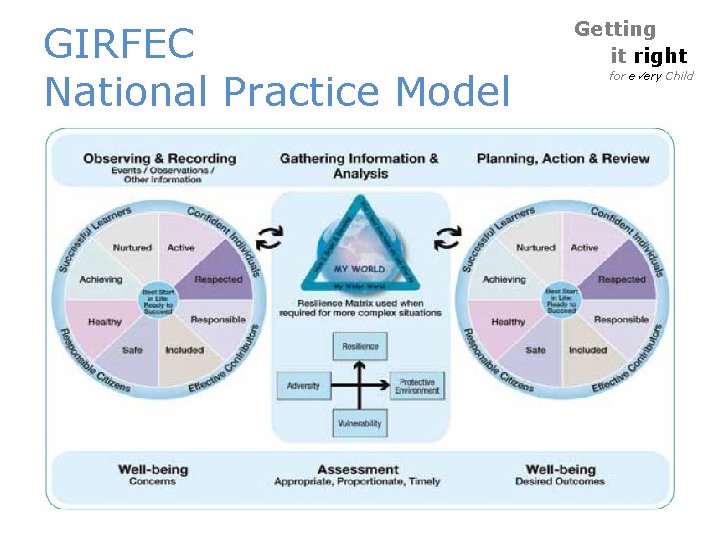
GIRFEC National Practice Model Getting it right for e ery Child
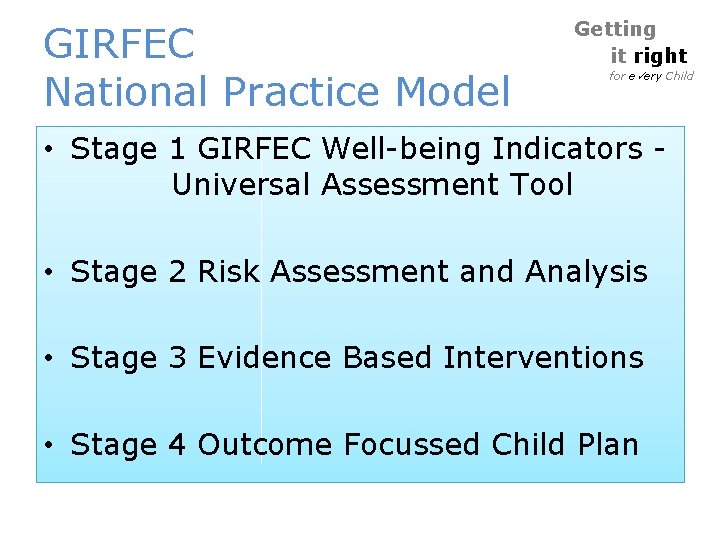
GIRFEC National Practice Model Getting it right for e ery Child • Stage 1 GIRFEC Well-being Indicators Universal Assessment Tool • Stage 2 Risk Assessment and Analysis • Stage 3 Evidence Based Interventions • Stage 4 Outcome Focussed Child Plan
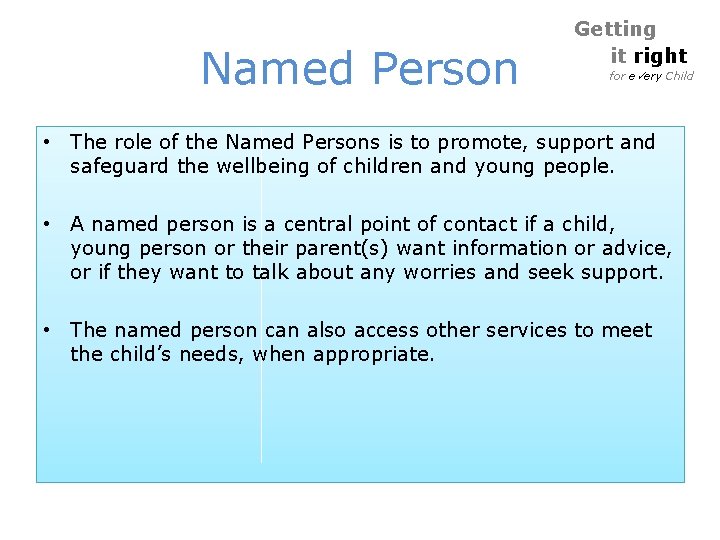
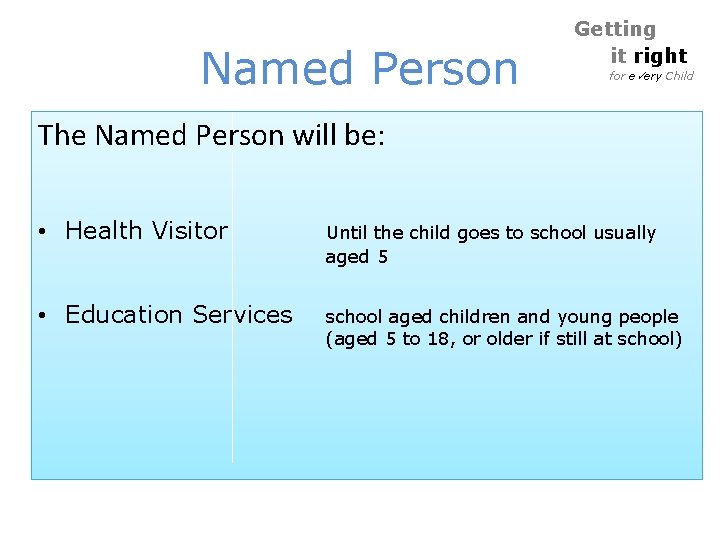
Named Person Getting it right for e ery Child • The role of the Named Persons is to promote, support and safeguard the wellbeing of children and young people. • A named person is a central point of contact if a child, young person or their parent(s) want information or advice, or if they want to talk about any worries and seek support. • The named person can also access other services to meet the child’s needs, when appropriate.
Named Person Getting it right for e ery Child The Named Person will be: • Health Visitor Until the child goes to school usually aged 5 • Education Services school aged children and young people (aged 5 to 18, or older if still at school)
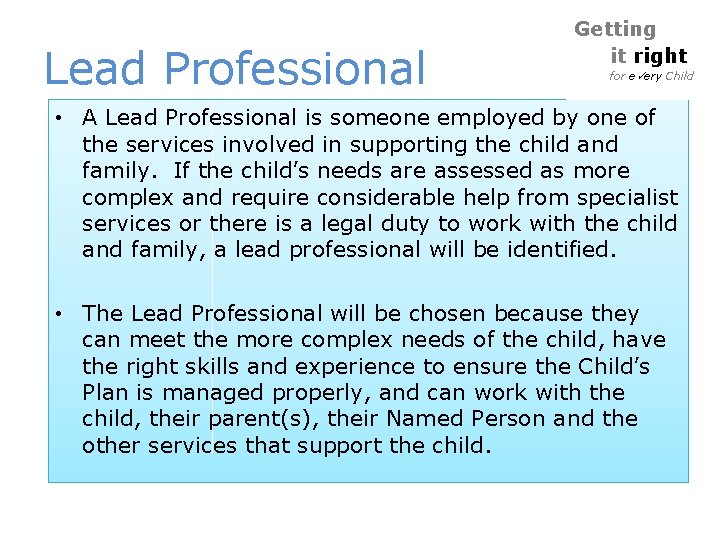
Lead Professional Getting it right for e ery Child • A Lead Professional is someone employed by one of the services involved in supporting the child and family. If the child’s needs are assessed as more complex and require considerable help from specialist services or there is a legal duty to work with the child and family, a lead professional will be identified. • The Lead Professional will be chosen because they can meet the more complex needs of the child, have the right skills and experience to ensure the Child’s Plan is managed properly, and can work with the child, their parent(s), their Named Person and the other services that support the child.
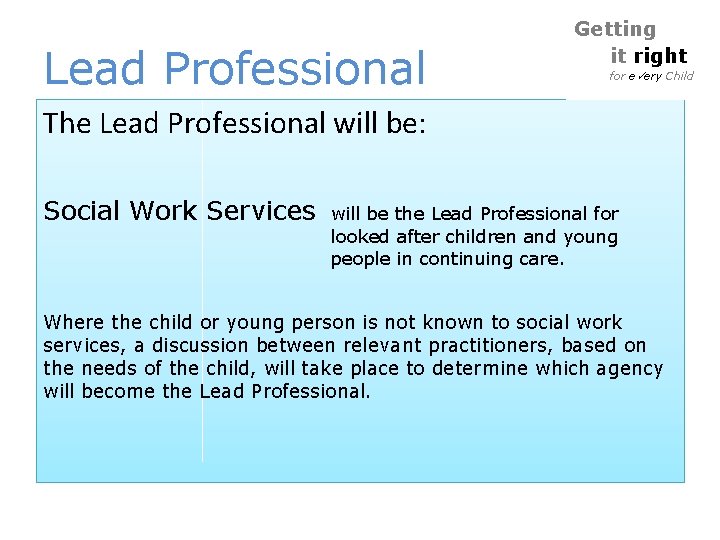
Lead Professional Getting it right for e ery Child The Lead Professional will be: Social Work Services will be the Lead Professional for looked after children and young people in continuing care. Where the child or young person is not known to social work services, a discussion between relevant practitioners, based on the needs of the child, will take place to determine which agency will become the Lead Professional.
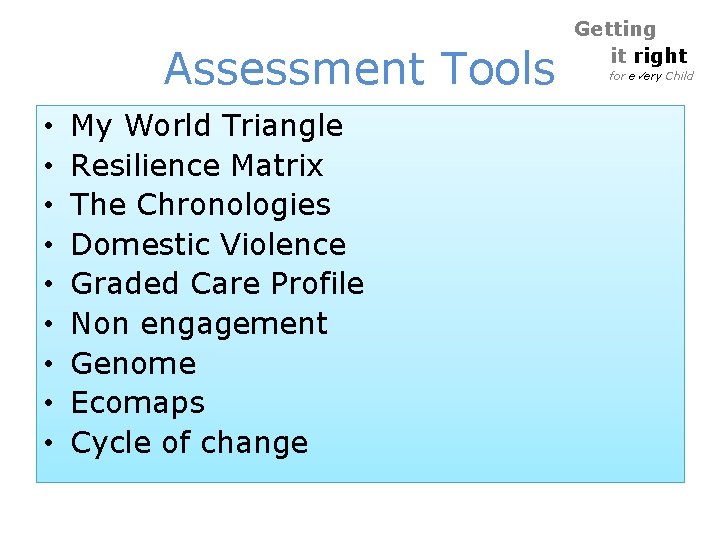
Assessment Tools • • • My World Triangle Resilience Matrix The Chronologies Domestic Violence Graded Care Profile Non engagement Genome Ecomaps Cycle of change Getting it right for e ery Child
Child’s Plan Getting it right for e ery Child • Not every child will require a Child’s Plan. • The child’s Plan is available for a child who needs extra support that is not generally available to address and improve their wellbeing. • The Child’s Plan is considered and developed in partnership with the child, their parent(s) and the services involved.
Child’s Plan Getting it right for e ery Child Every Child’s Plan should include and record: § Information about the child’s wellbeing needs including the views of the child and their parent(s) § Details of the action to be taken § The service(s) that will provide the support § The way in which the support is to be provided § The outcome that the plan aims to achieve; and § When the plan should be reviewed
Information Sharing Getting it right for e ery Child • The Children and Young People (Scotland) Act 2014 enforces a duty to share information where there are concerns about a child or young person’s wellbeing with their Named Person. • The Named Person will be fully aware of matters that may have an affect on the child or young person’s wellbeing.
Information Sharing Getting it right for e ery Child When a concern is raised, the Named Person will carefully consider the situation by asking the five questions: § What is getting in the way of this child or young person’s wellbeing? § Do I have all the information I need to help this child or young person? § What can I do now to help this child or young person? § What can my agency do to help this child or young person? § What additional help, if any, is needed from others?
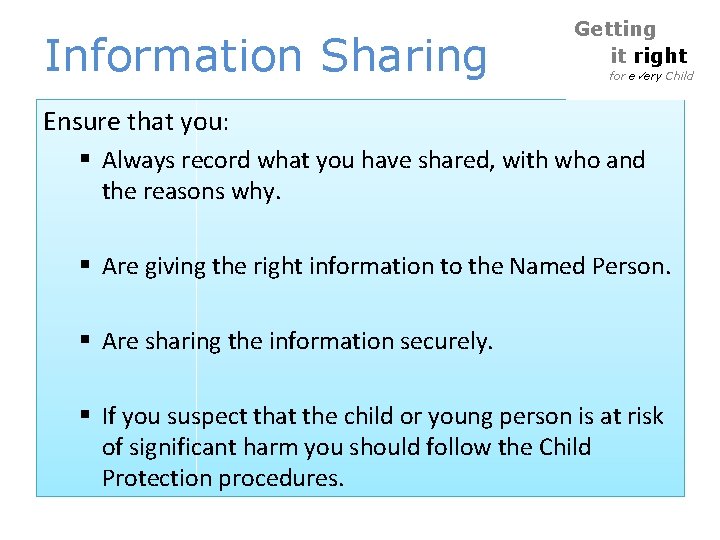
Information Sharing Getting it right for e ery Child Ensure that you: § Always record what you have shared, with who and the reasons why. § Are giving the right information to the Named Person. § Are sharing the information securely. § If you suspect that the child or young person is at risk of significant harm you should follow the Child Protection procedures.
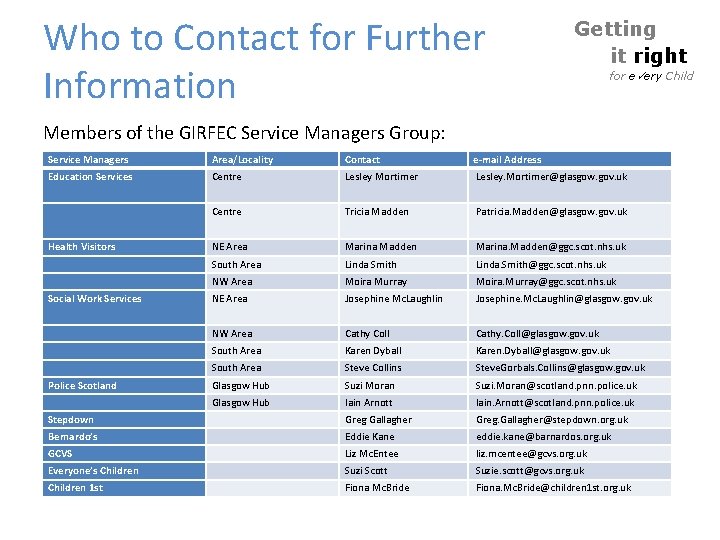
Who to Contact for Further Information Getting it right for e ery Child Members of the GIRFEC Service Managers Group: Service Managers Area/Locality Contact e-mail Address Education Services Centre Lesley Mortimer Lesley. Mortimer@glasgow. gov. uk Centre Tricia Madden Patricia. Madden@glasgow. gov. uk NE Area Marina Madden Marina. Madden@ggc. scot. nhs. uk South Area Linda Smith Linda. Smith@ggc. scot. nhs. uk NW Area Moira Murray Moira. Murray@ggc. scot. nhs. uk NE Area Josephine Mc. Laughlin Josephine. Mc. Laughlin@glasgow. gov. uk NW Area Cathy Coll Cathy. Coll@glasgow. gov. uk South Area Karen Dyball Karen. Dyball@glasgow. gov. uk South Area Steve Collins Steve. Gorbals. Collins@glasgow. gov. uk Glasgow Hub Suzi Moran Suzi. Moran@scotland. pnn. police. uk Glasgow Hub Iain Arnott Iain. Arnott@scotland. pnn. police. uk Stepdown Greg Gallagher Greg. Gallagher@stepdown. org. uk Bernardo’s Eddie Kane eddie. kane@barnardos. org. uk GCVS Liz Mc. Entee liz. mcentee@gcvs. org. uk Everyone’s Children Suzi Scott Suzie. scott@gcvs. org. uk Children 1 st Fiona Mc. Bride Fiona. Mc. Bride@children 1 st. org. uk Health Visitors Social Work Services Police Scotland
Further Information Getting it right for e ery Child Find out more information about the Implementation of the Named Person and Lead Professional on the Glasgow GIRFEC webpage: www. glasgow. gov. uk/girfec