Fumigant and nonfumigant research update Oleg Daugovish UCCEVentura


- Slides: 32
Fumigant and non-fumigant research update Oleg Daugovish, (UCCE-Ventura), Ruijun Qin, H. Ajwa, J. Gerik , S. Gao, B. Hansen, Tom Gordon (UC-Davis), and Joji Muramoto (UCSC)
Trends in Southern European strawberry • Evaluating cultivars for tolerance to pathogens • Fumigant regulations: Fewer available, Lowering rates and frequency of application FOCUS: 1) maximize efficacy (tarps, methods of application/equipment, rotation of fumigants) 2) non-fumigant technologies
For better fumigation results • Flat fumigation at high rates (85 -90% control for M. phaseolina and F. oxysporum) • Break or remove infested crowns • Using TIF
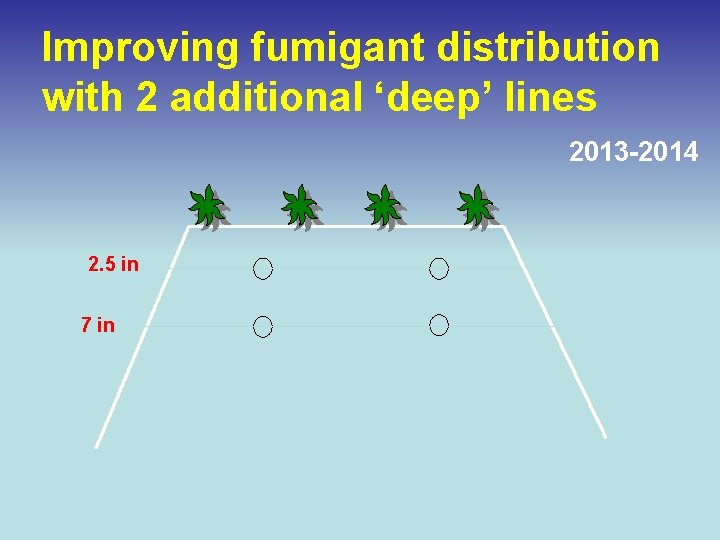
Improving fumigant distribution with 2 additional ‘deep’ lines 2013 -2014 2. 5 in 7 in
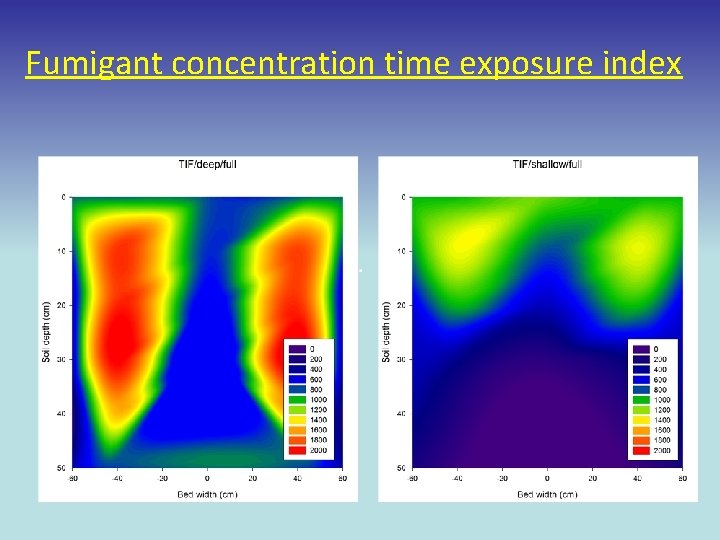
Fumigant concentration time exposure index
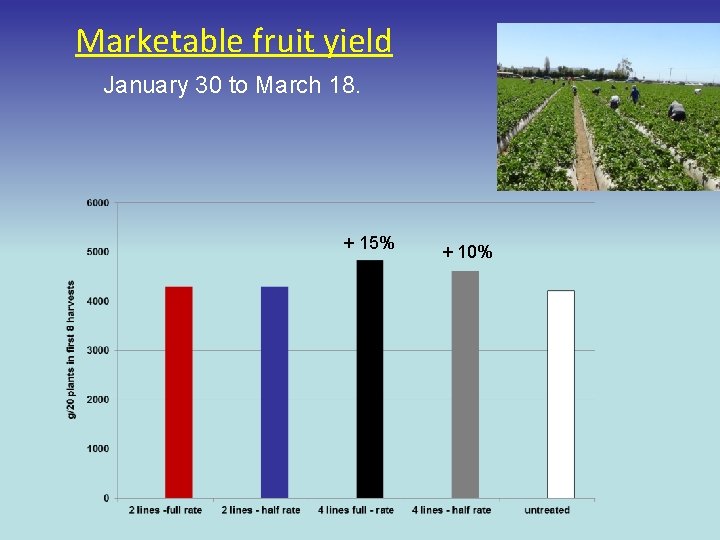
Marketable fruit yield January 30 to March 18. + 15% + 10%
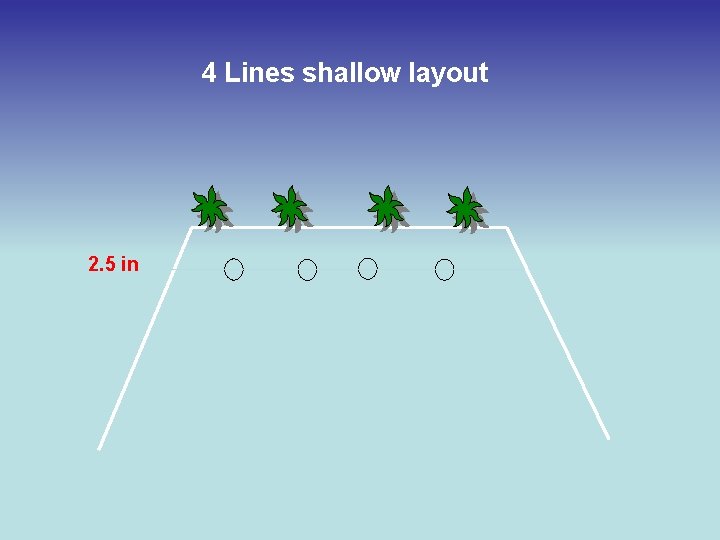
4 Lines shallow layout 2. 5 in
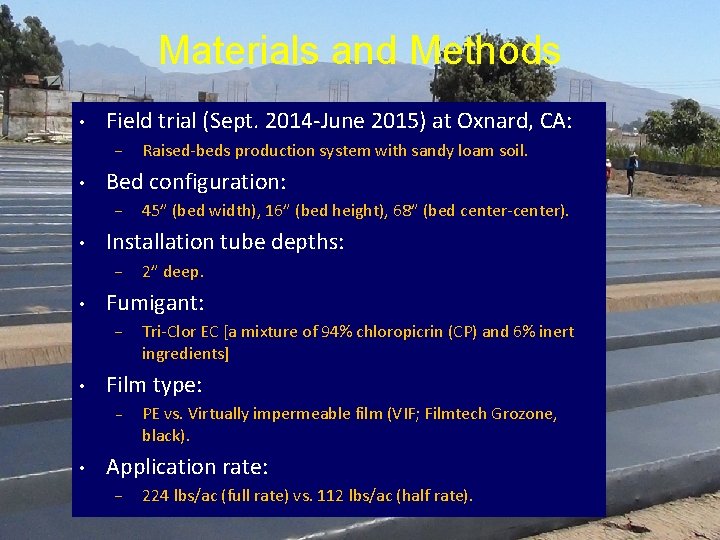
Materials and Methods • Field trial (Sept. 2014 -June 2015) at Oxnard, CA: − • Bed configuration: − • Tri-Clor EC [a mixture of 94% chloropicrin (CP) and 6% inert ingredients] Film type: − • 2” deep. Fumigant: − • 45” (bed width), 16” (bed height), 68” (bed center-center). Installation tube depths: − • Raised-beds production system with sandy loam soil. PE vs. Virtually impermeable film (VIF; Filmtech Grozone, black). Application rate: − 224 lbs/ac (full rate) vs. 112 lbs/ac (half rate).
Fumigant behavior • VIF-tarped beds had dramatically lower emission flux and much higher concentration than PE-tarped beds. • Full rates > half rates, 4 lines > 2 lines
Concentration-time exposure index ( g cm-3 h)
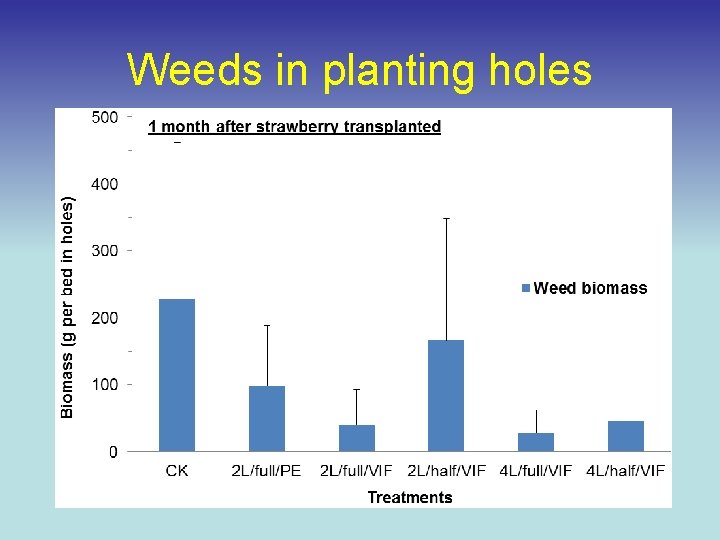
Weeds in planting holes
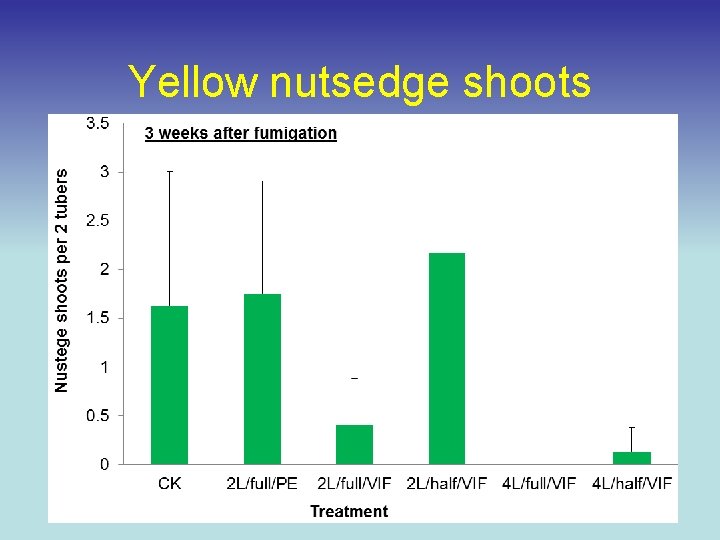
Yellow nutsedge shoots
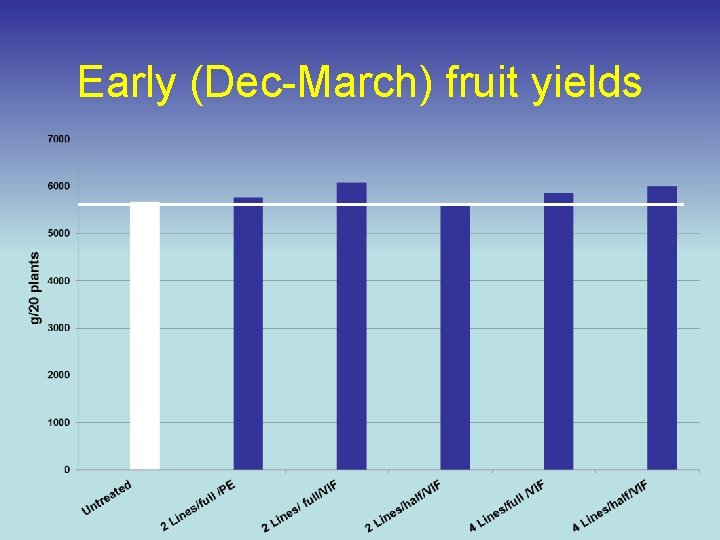
Early (Dec-March) fruit yields
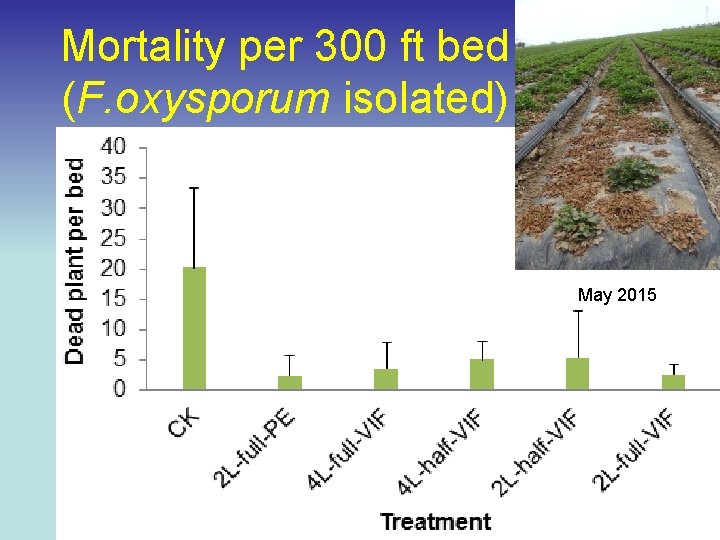
Mortality per 300 ft bed (F. oxysporum isolated) May 2015
What’s next? • Evaluate efficacy in Fusarium infested field
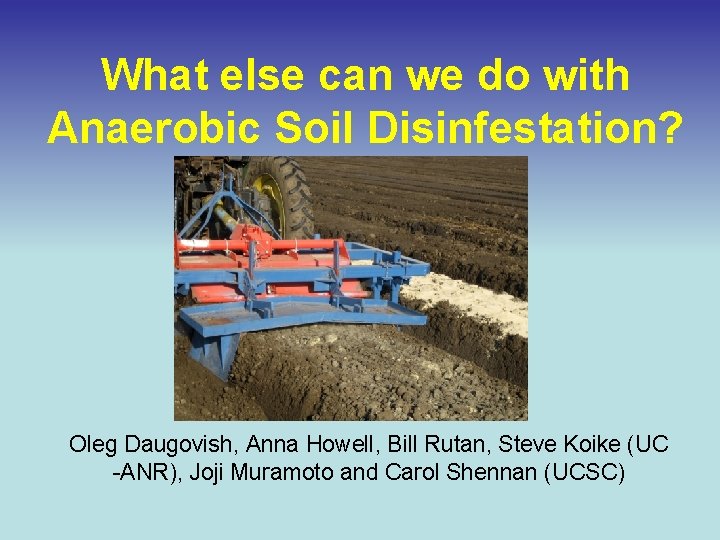
What else can we do with Anaerobic Soil Disinfestation? Oleg Daugovish, Anna Howell, Bill Rutan, Steve Koike (UC -ANR), Joji Muramoto and Carol Shennan (UCSC)
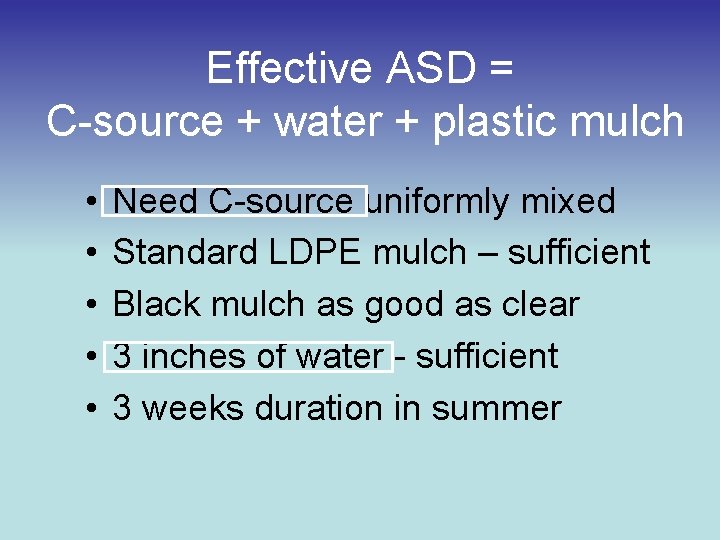
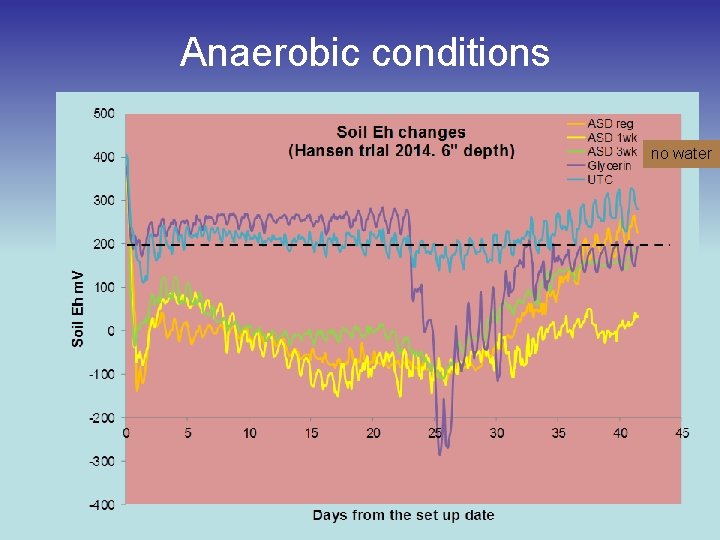
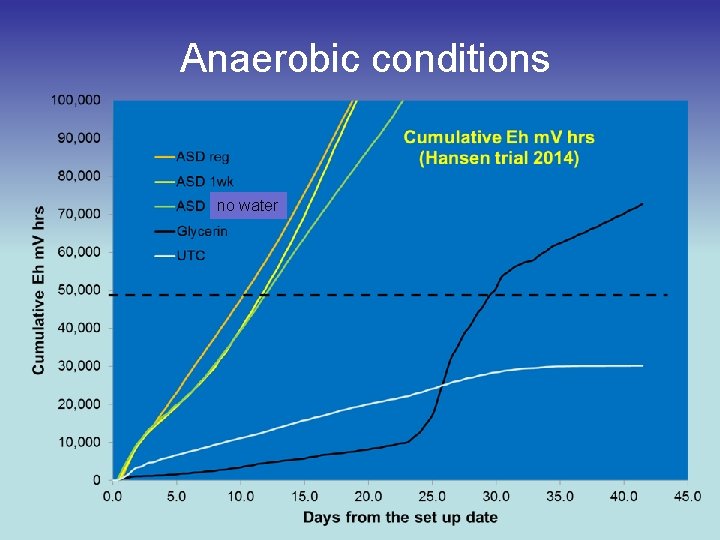
Effective ASD = C-source + water + plastic mulch • • • Need C-source uniformly mixed Standard LDPE mulch – sufficient Black mulch as good as clear 3 inches of water - sufficient 3 weeks duration in summer
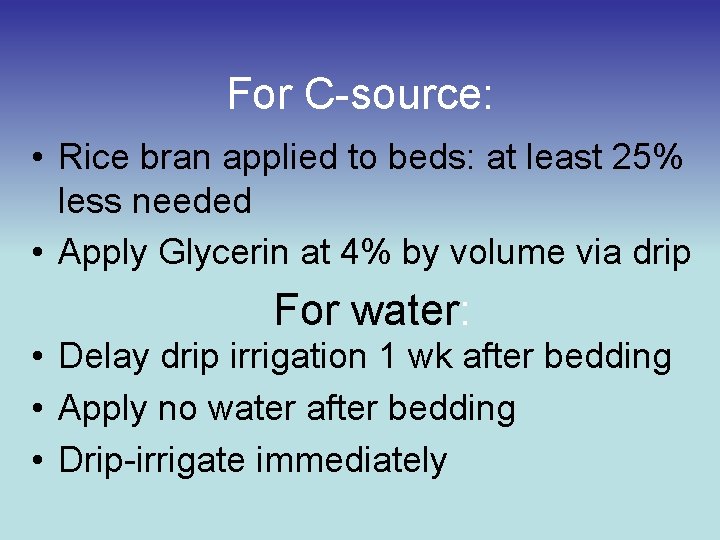
For C-source: • Rice bran applied to beds: at least 25% less needed • Apply Glycerin at 4% by volume via drip For water: • Delay drip irrigation 1 wk after bedding • Apply no water after bedding • Drip-irrigate immediately
Anaerobic conditions no water
Anaerobic conditions no water
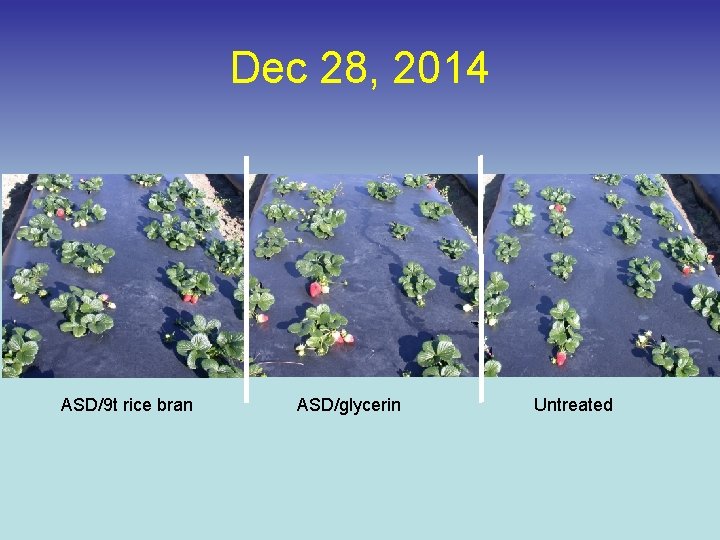
Dec 28, 2014 ASD/9 t rice bran ASD/glycerin Untreated
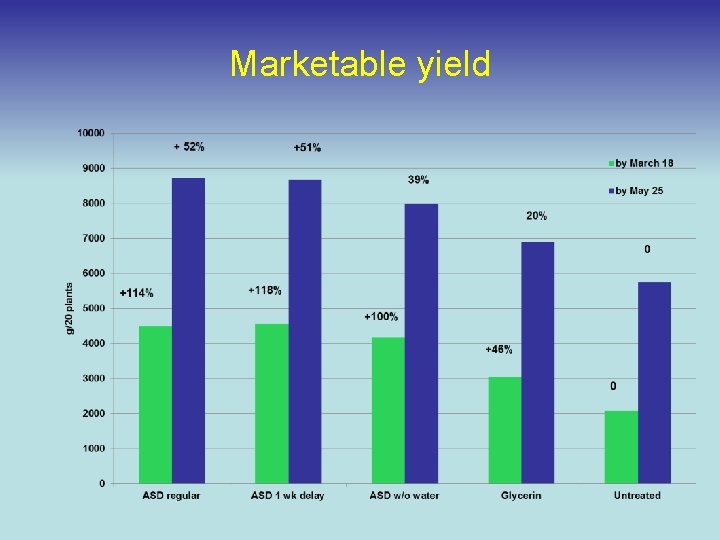
Marketable yield
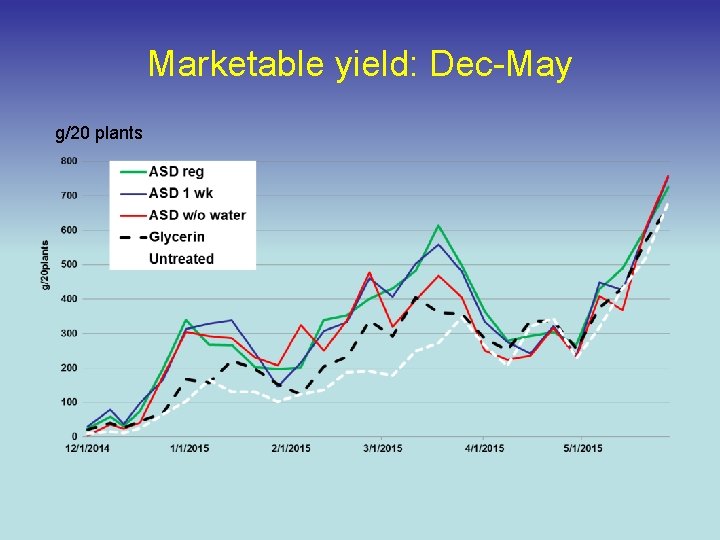
Marketable yield: Dec-May g/20 plants
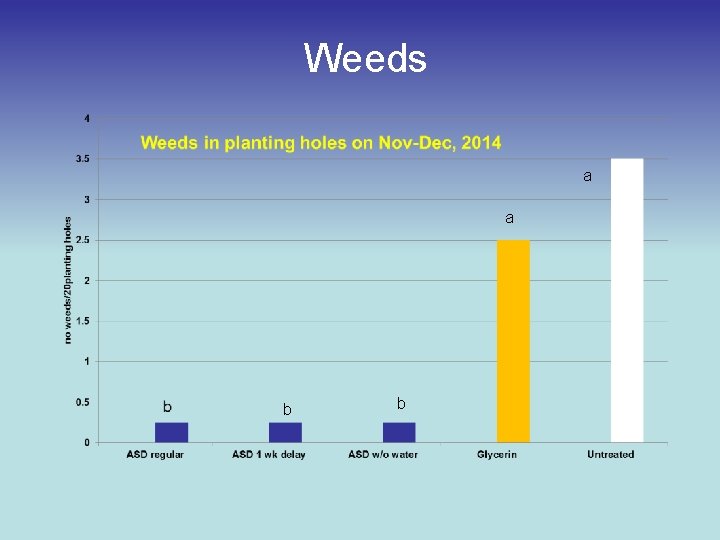
Weeds a a b b
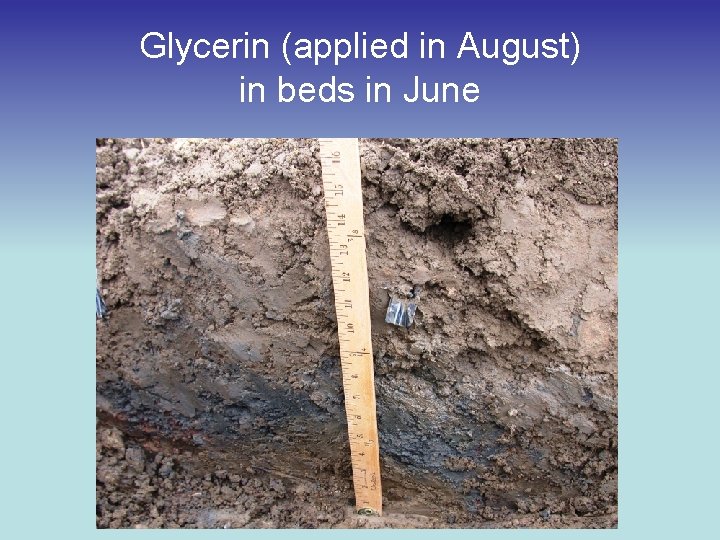
Glycerin (applied in August) in beds in June
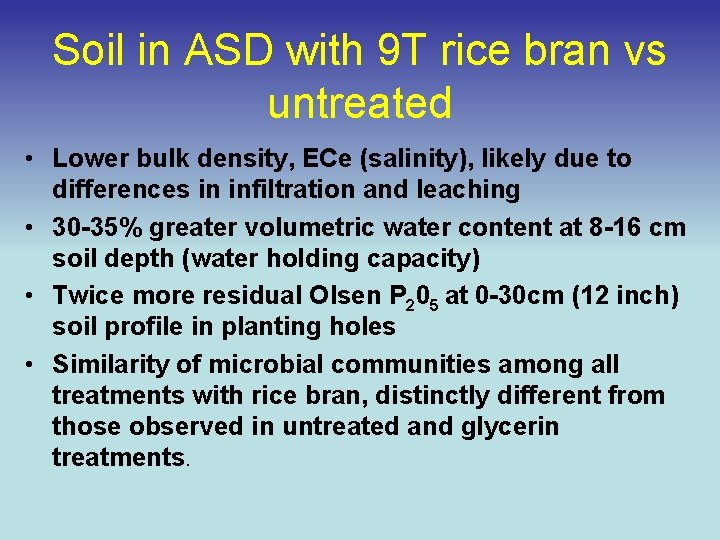
Soil in ASD with 9 T rice bran vs untreated • Lower bulk density, ECe (salinity), likely due to differences in infiltration and leaching • 30 -35% greater volumetric water content at 8 -16 cm soil depth (water holding capacity) • Twice more residual Olsen P 205 at 0 -30 cm (12 inch) soil profile in planting holes • Similarity of microbial communities among all treatments with rice bran, distinctly different from those observed in untreated and glycerin treatments.
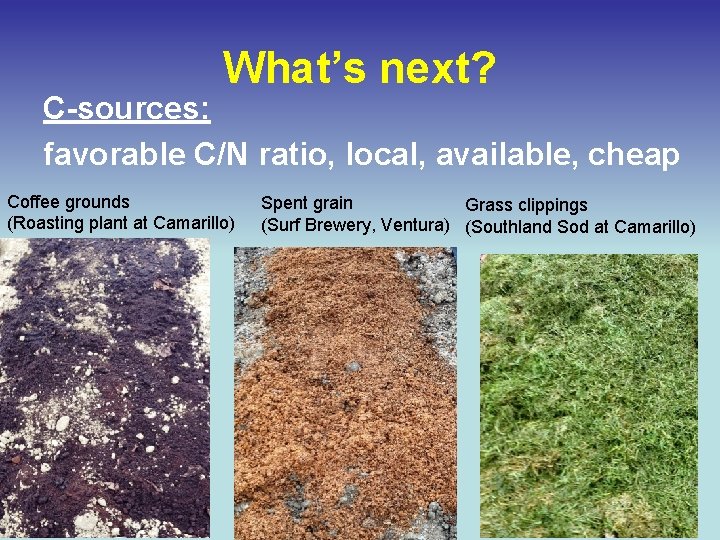
What’s next? C-sources: favorable C/N ratio, local, available, cheap Coffee grounds (Roasting plant at Camarillo) Spent grain Grass clippings (Surf Brewery, Ventura) (Southland Sod at Camarillo)
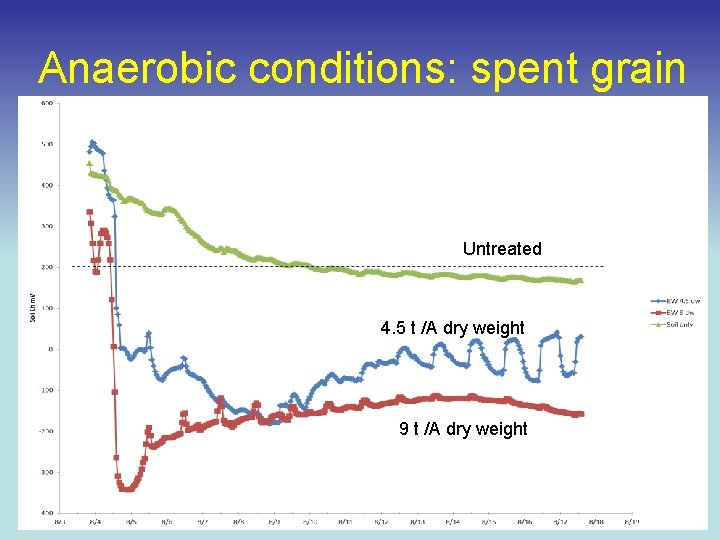
Anaerobic conditions: spent grain Untreated 4. 5 t /A dry weight 9 t /A dry weight
C-sources research support
Acknowledgements: • • • Jose Romero and Hector Gutierrez Solimar Farms Lassen Canyon nursery UC Hansen staff UCCE Master Gardeners CSC