Fiscal Federalism David Garcia UEF Secretariat Federalist Academy


- Slides: 37
Fiscal Federalism David Garcia UEF Secretariat Federalist Academy, 8 -10 July 2016, Brussels
INTRODUCTION
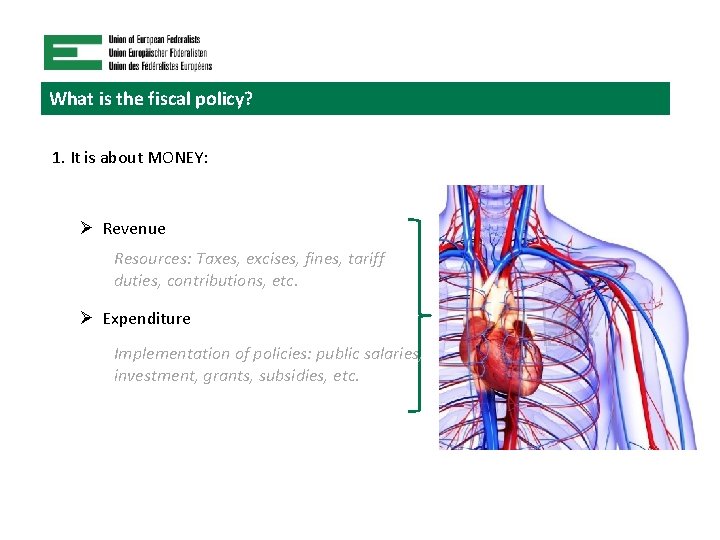
What is the fiscal policy? 1. It is about MONEY: Ø Revenue Resources: Taxes, excises, fines, tariff duties, contributions, etc. Ø Expenditure Implementation of policies: public salaries, investment, grants, subsidies, etc. Virtually every policy decision has fiscal implications!
What is fiscal federalism? “Fiscal federalism constitutes a set of guiding principles, a guiding concept that helps in designing financial relations between different levels of government” Chanchal Kumar Sharma
Today’s discussion I. Objectives of fiscal federalism a) Welfare maximisation b) Fiscal equalisation c) Market preservation II. Practical cases
OBJECTIVES OF FEDERAL FISCAL POLICIES 1. Welfare maximisation
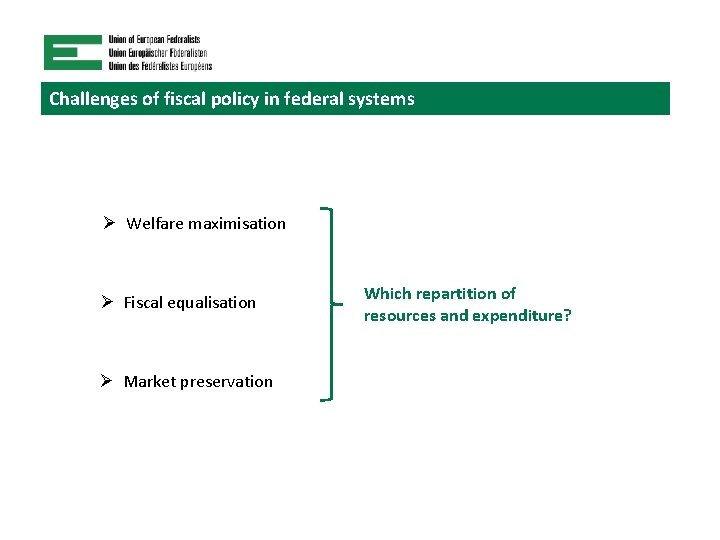
Challenges of fiscal policy in federal systems Ø Welfare maximisation Ø Fiscal equalisation Ø Market preservation Which repartition of resources and expenditure?
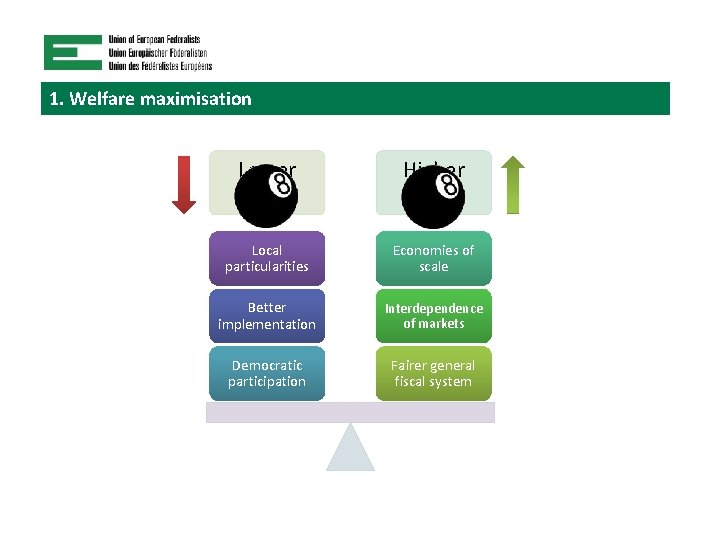
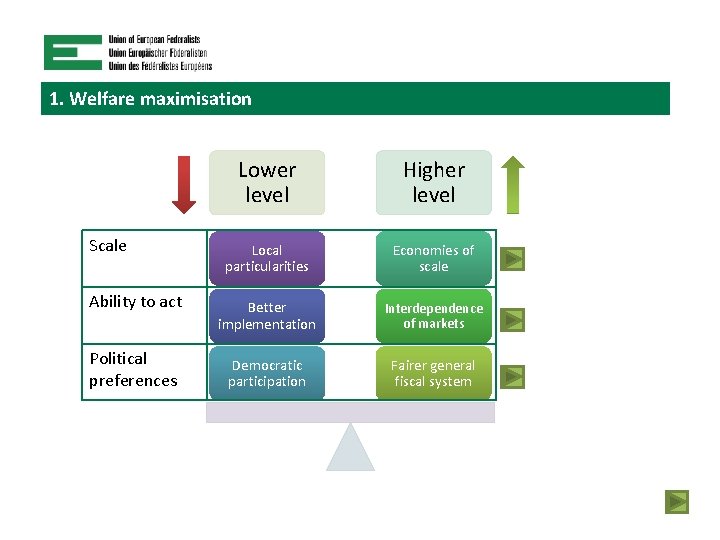
1. Welfare maximisation Lower level Higher level Local particularities Economies of scale Better implementation Interdependence of markets Democratic participation Fairer general fiscal system
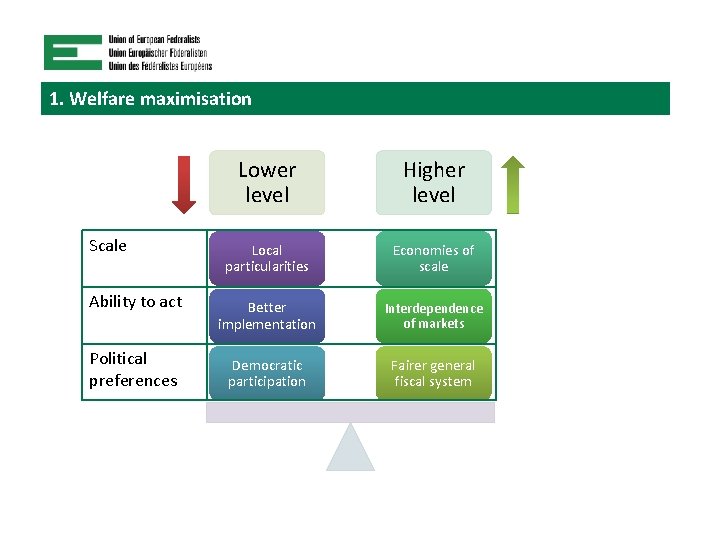
1. Welfare maximisation Scale Ability to act Political preferences Lower level Higher level Local particularities Economies of scale Better implementation Interdependence of markets Democratic participation Fairer general fiscal system
1. Welfare maximisation Scale Ability to act Political preferences Lower level Higher level Local particularities Economies of scale Better implementation Interdependence of markets Democratic participation Fairer general fiscal system
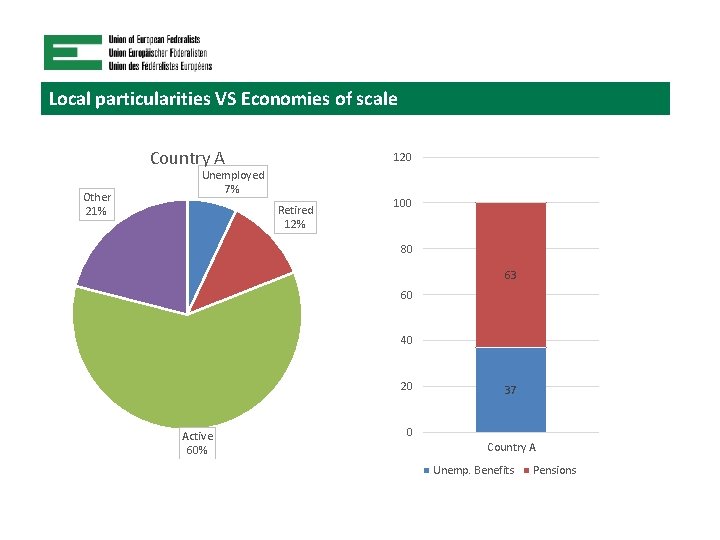
Local particularities VS Economies of scale Country A Other 21% 120 Unemployed 7% Retired 12% 100 80 63 60 40 20 Active 60% 37 0 Country A Unemp. Benefits Pensions
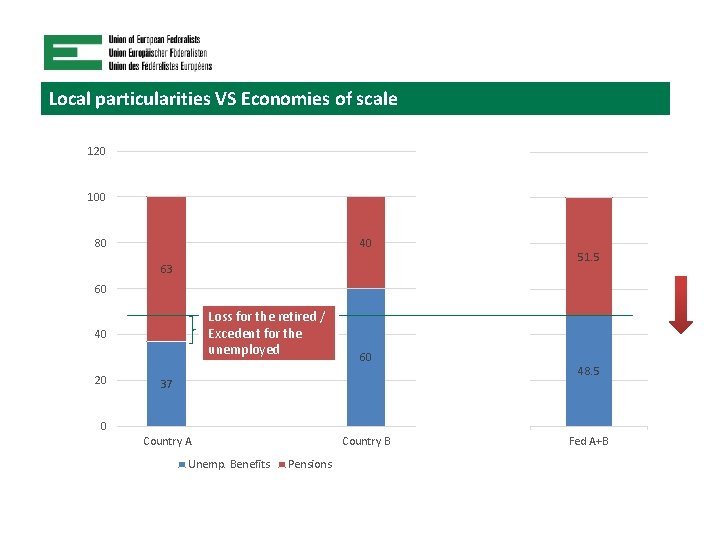
Local particularities VS Economies of scale 120 100 80 40 63 51. 5 60 Loss for the retired / Excedent for the unemployed 40 20 60 37 48. 5 0 Country A Unemp. Benefits Country B Pensions Fed A+B
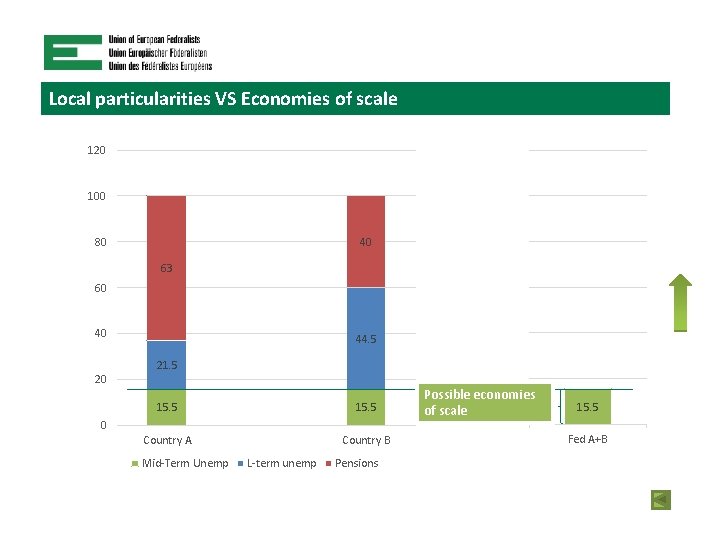
Local particularities VS Economies of scale 120 100 80 40 63 60 40 20 44. 5 21. 5 15. 5 Country A Country B 0 Mid-Term Unemp L-term unemp Pensions Possible economies of scale 15. 5 Fed A+B
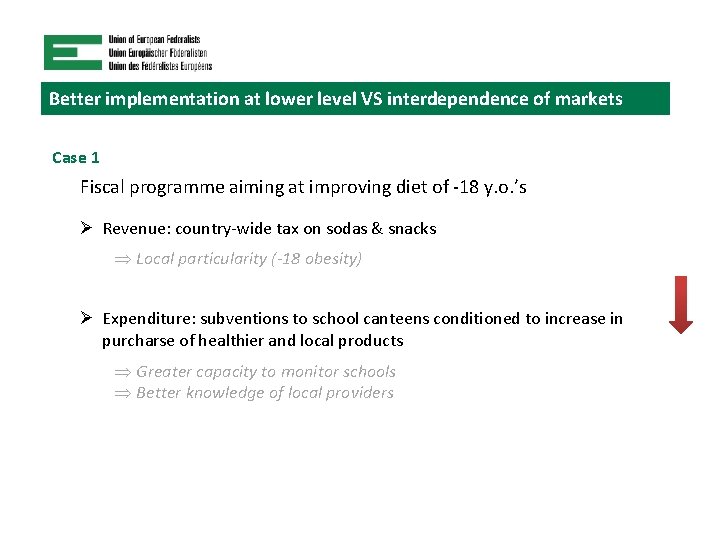
Better implementation at lower level VS interdependence of markets Case 1 Fiscal programme aiming at improving diet of -18 y. o. ’s Ø Revenue: country-wide tax on sodas & snacks Þ Local particularity (-18 obesity) Ø Expenditure: subventions to school canteens conditioned to increase in purcharse of healthier and local products Þ Greater capacity to monitor schools Þ Better knowledge of local providers
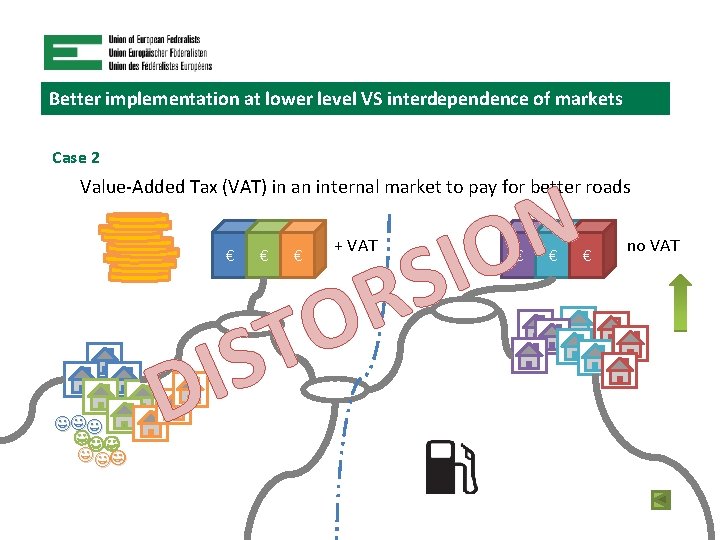
Better implementation at lower level VS interdependence of markets Case 2 N O I S R Value-Added Tax (VAT) in an internal market to pay for better roads € € € + VAT O T S I D € € € no VAT
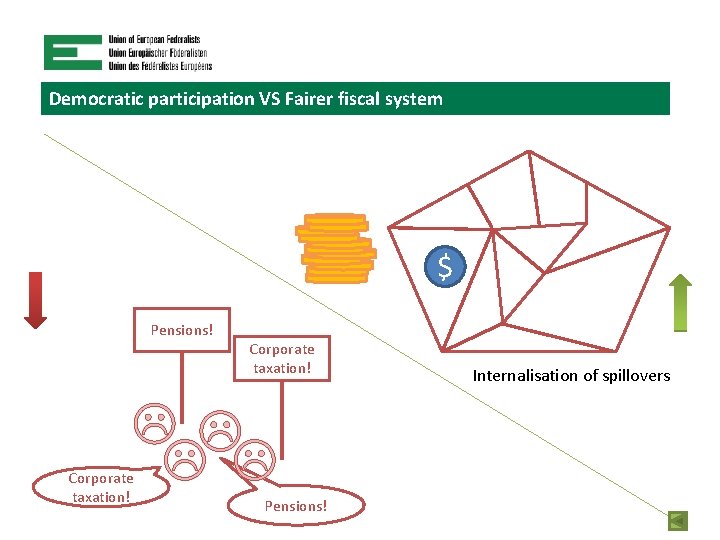
Democratic participation VS Fairer fiscal system $ Pensions! Corporate taxation! Pensions! Internalisation of spillovers
OBJECTIVES OF FEDERAL FISCAL POLICIES 2. Fiscal equalisation
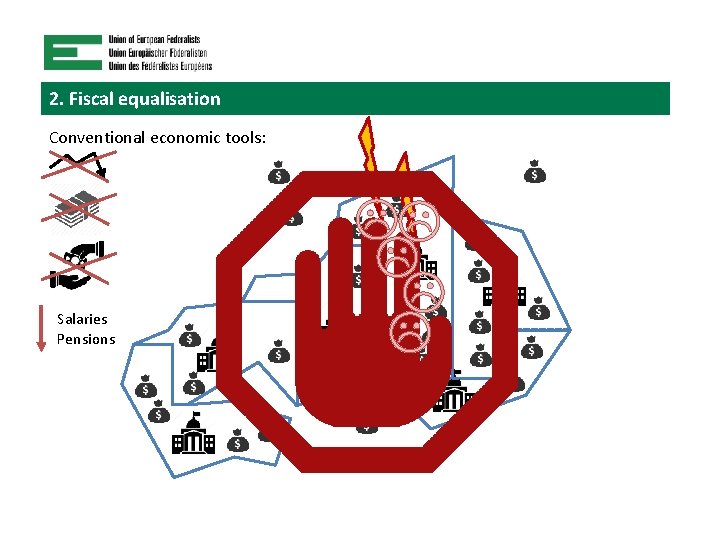
2. Fiscal equalisation Conventional economic tools: Salaries Pensions
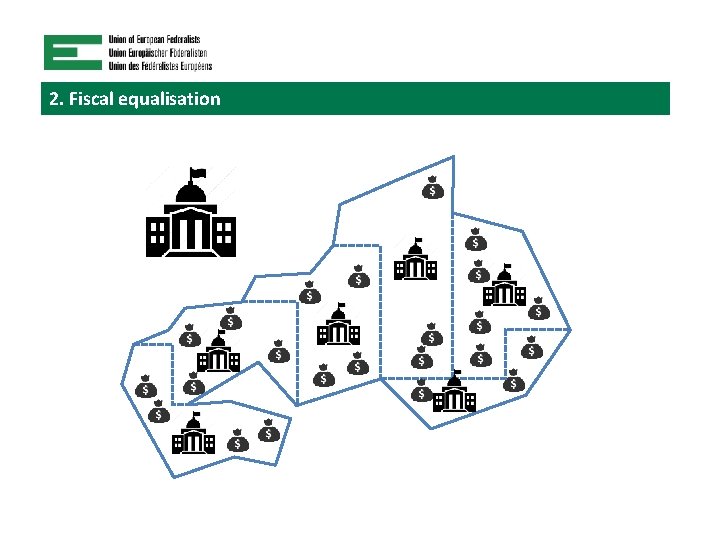
2. Fiscal equalisation
Do federations need fiscal equalization? Yes Loss of conventional economic tools Ever widening gap No Economies will converge towards optimal allocation of resources
A political choice National preferences will change! No fiscal equalization Þ Market dynamic Fiscal equalization Þ Possibility to decide on new preferences
OBJECTIVES OF FEDERAL FISCAL POLICIES 3. Market preservation
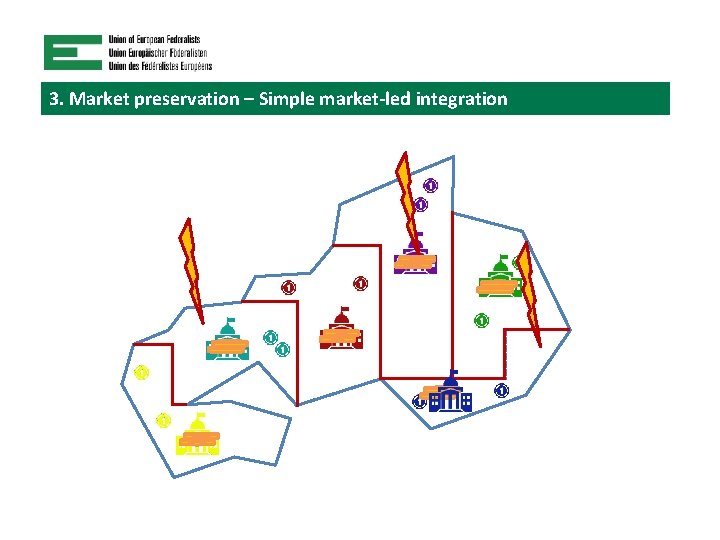
3. Market preservation – Simple market-led integration
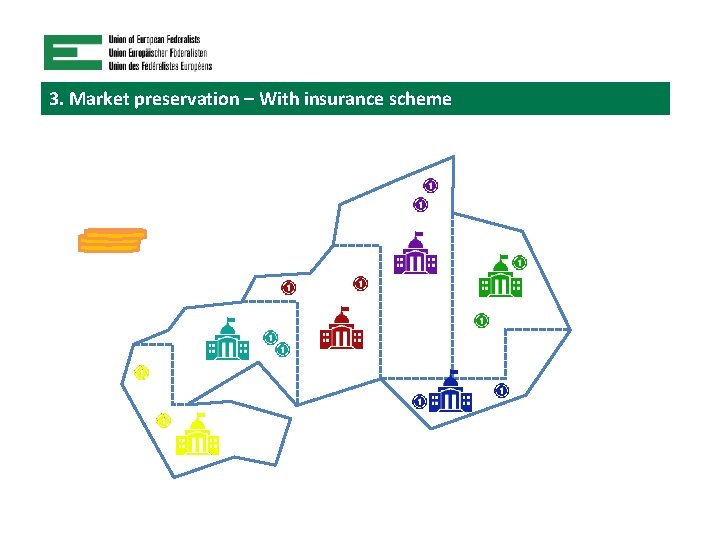
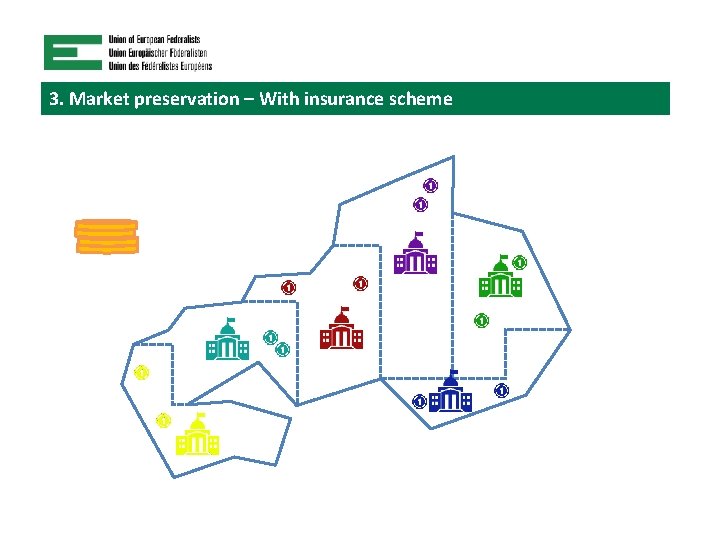
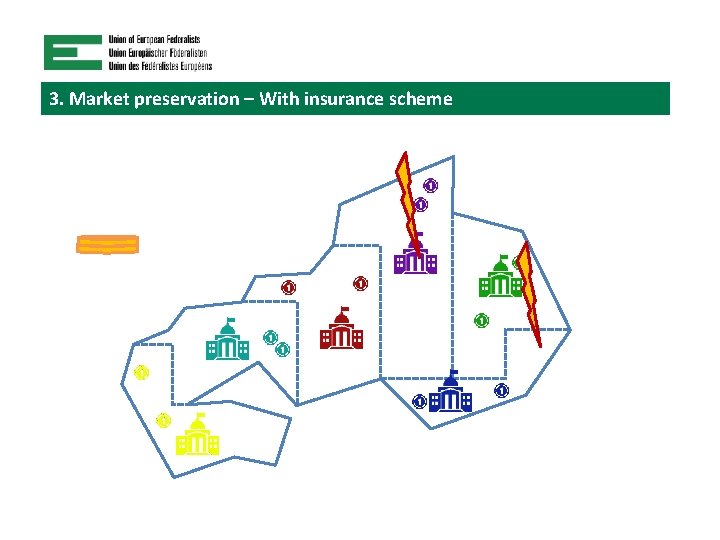
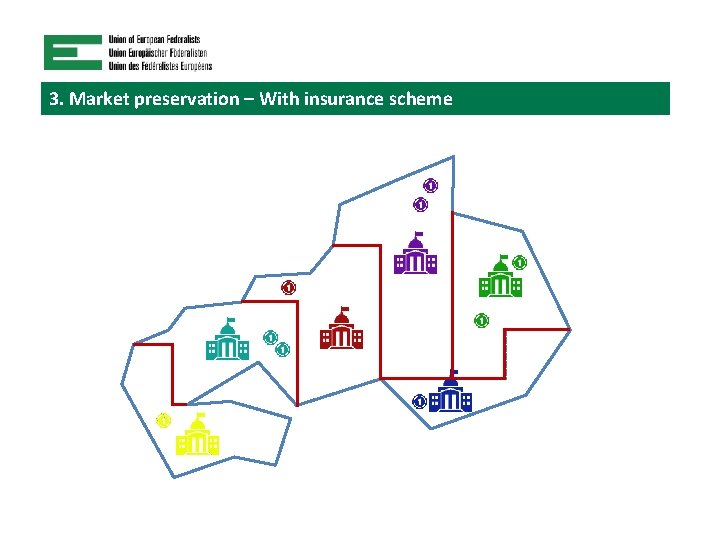
3. Market preservation – With insurance scheme
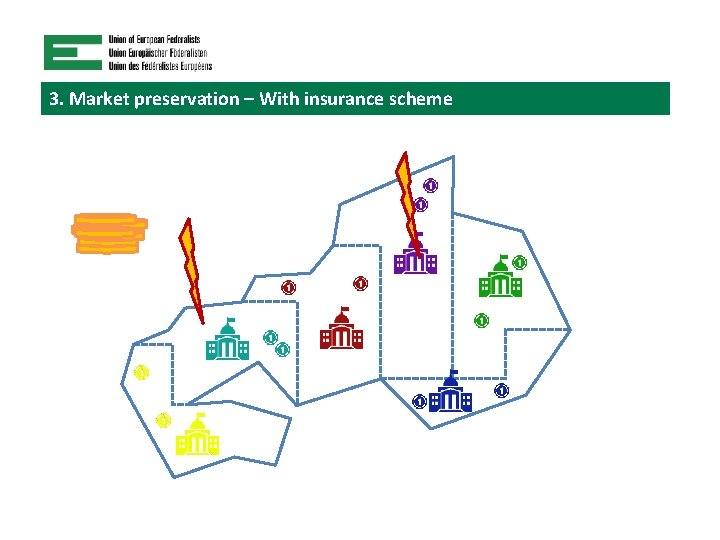
3. Market preservation – With insurance scheme
3. Market preservation – With insurance scheme
3. Market preservation – With insurance scheme
3. Market preservation – With insurance scheme
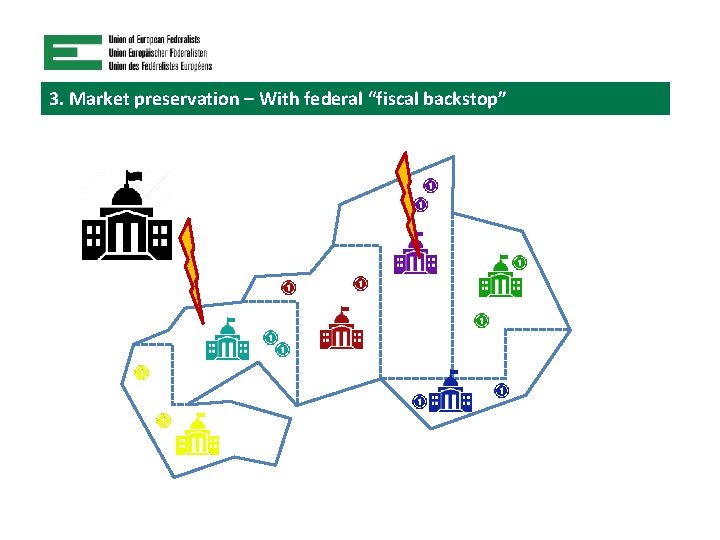
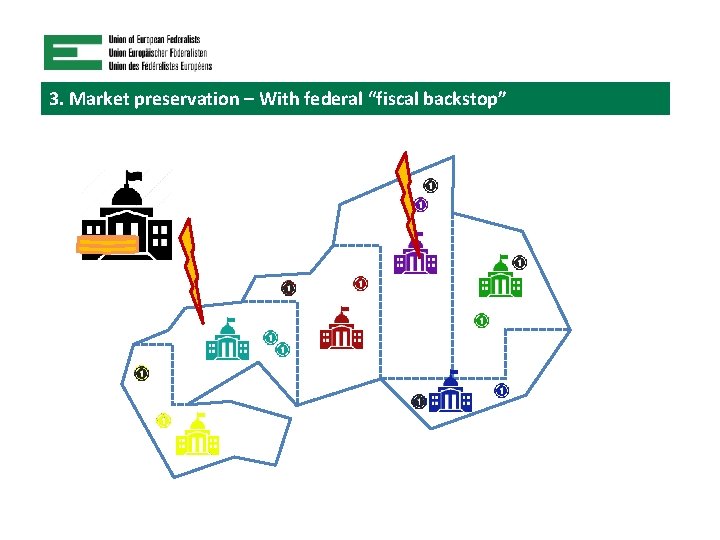
3. Market preservation – With federal “fiscal backstop”
3. Market preservation – With federal “fiscal backstop”
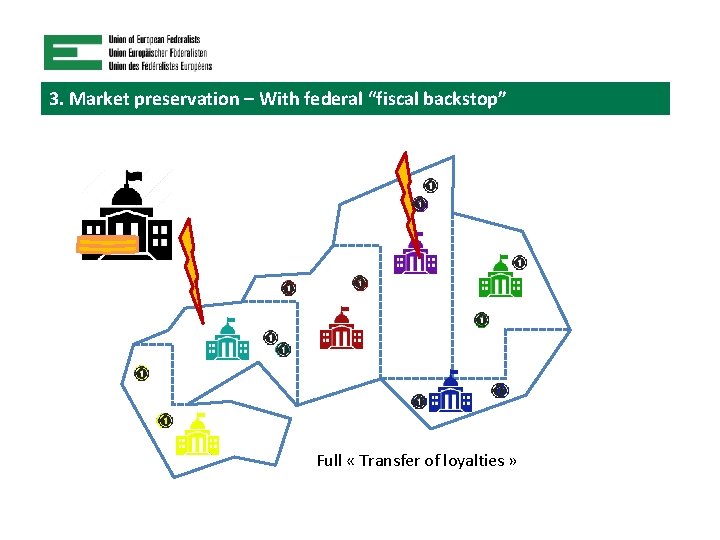
3. Market preservation – With federal “fiscal backstop” Full « Transfer of loyalties »
Challenges of fiscal federalism
Challenges of fiscal federalism Fiscal asymmetry with fiscal imbalance: VERTICAL FISCAL IMBALANCE (VFI) = Inappropriate allocation of revenue powers and spending responsibilities Þ Reassignment of revenue raising powers Fiscal asymmetry without fiscal imbalance but with a fiscal gap: VERTICAL FISCAL GAP (VFG) = desirable revenue-expenditure asymmetry but with a fiscal gap to be closed Þ re-calibration of federal transfers Fiscal asymmetry without fiscal imbalance and without fiscal gap: VERTICAL FISCAL DIFFERENCE (VFD) = desirable revenue-expenditure asymmetry without a fiscal gap Þ no remedial measure needed
Summary of concepts
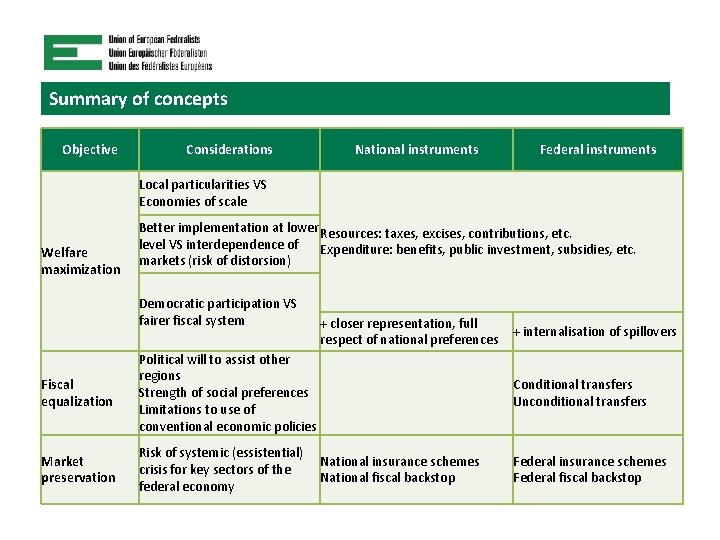
Summary of concepts Objective Considerations National instruments Federal instruments Local particularities VS Economies of scale Welfare maximization Better implementation at lower Resources: taxes, excises, contributions, etc. level VS interdependence of Expenditure: benefits, public investment, subsidies, etc. markets (risk of distorsion) Democratic participation VS fairer fiscal system Fiscal equalization Political will to assist other regions Strength of social preferences Limitations to use of conventional economic policies Market preservation Risk of systemic (essistential) crisis for key sectors of the federal economy + closer representation, full respect of national preferences + internalisation of spillovers Conditional transfers Unconditional transfers National insurance schemes National fiscal backstop Federal insurance schemes Federal fiscal backstop
Scenario: the Mandalian Union
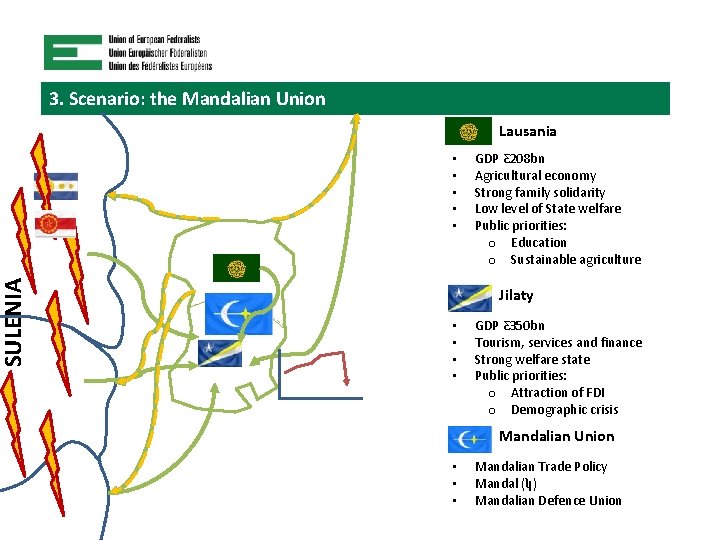
SULENIA 3. Scenario: the Mandalian Union Lausania • • • GDP Ƹ 208 bn Agricultural economy Strong family solidarity Low level of State welfare Public priorities: o Education o Sustainable agriculture Jilaty • • GDP Ƹ 350 bn Tourism, services and finance Strong welfare state Public priorities: o Attraction of FDI o Demographic crisis Mandalian Union • • • Mandalian Trade Policy Mandal (ʮ) Mandalian Defence Union