Fetal Development and Genetics Alicia Stone Ph D




- Slides: 30
Fetal Development and Genetics Alicia Stone, Ph. D, RN, FNP Associate Professor Molloy College
Genetics Provides the tools to determine the hereditary component of many diseases n Improves our ability to predict susceptibility, onset, progression, and response to treatment n A gradual shift from genetics ( single gene effect) to genomics ( functions and interactions of all genes n
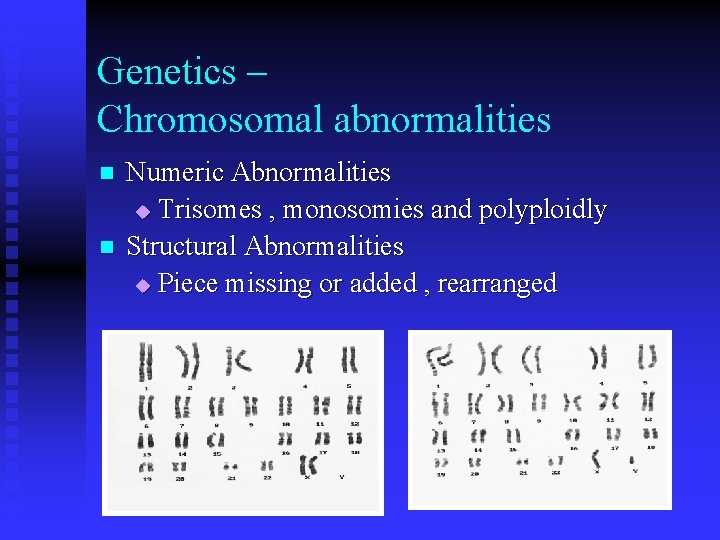
Genetics/Genomics n The study of the patterns of inheritance u Advanced by the human genome project u Chromosomes stores genetic information in DNA u Karyotype is a pictoral anaylsis
Genetics—cont’d n n Improvements in diagnostic capability have resulted in earlier diagnosis and enabled individuals who previously would have died in childhood to survive into adulthood Some disorders appear more often within ethnic groups u Tay Sachs u Sickle Cell disease u Thalassemias u Phenylketonuria (PKU) u Cystic fibrosis
Relevance of Genetics to Nursing n Genetics-related nursing activities (new roles) u Collecting, reporting, and recording genetics information u Prenatal screening and testing u Offering genetics information and resources to clients and families u Participating in informed consent process and facilitating informed decision making u Care of families who have had or lost a child to a genetic condition
Relevance of Genetics to Nursing n Essential Nursing Competencies and Curricula Guidelines for Genetics and Genomics u u u Constructs pedigree from collected family history information Develops plan of care that incorporates genetics assessment Identifies genetic information, resources, and services specific to given patients Identifies ethical, cultural, legal, and fiscal issues related to genomics Facilitates referrals for specialized services
Genetic Counseling Provides information on the occurrence or risk of reoccurrence of a genetic disorder using family history and genetic testing n Purpose of genetic counseling: n Educate individuals or families u Provide accurate information u Informed decision making (non directive) u Appropriate care for affected family members u n Is required before prenatal diagnosis
Nursing Care Identify families for referral n Help couples decide about genetic counseling n Explain the purposes of all screening and diagnostic tests with accurate information about risks/benefits; answer questions n Teach about lifestyle n Provide emotional support n Help woman/family cope with abnormal results n Recognize cultural/religious/ethical issues n 8
Genetic testing Carrier testing u Chromosome analysis u DNA analysis u Karyotype u Biochemical and other testing t Sickle cell trait u
Prenatal Diagnostic test Genetic ultrasound n Genetic amniocentesis-amniotic fluid, cells n Over 35, previous child or parent has chromosomal abnormality u Conditions identified in utero u History of neural tube defects u Chorionic Villus Sampling n Maternal serum testing n
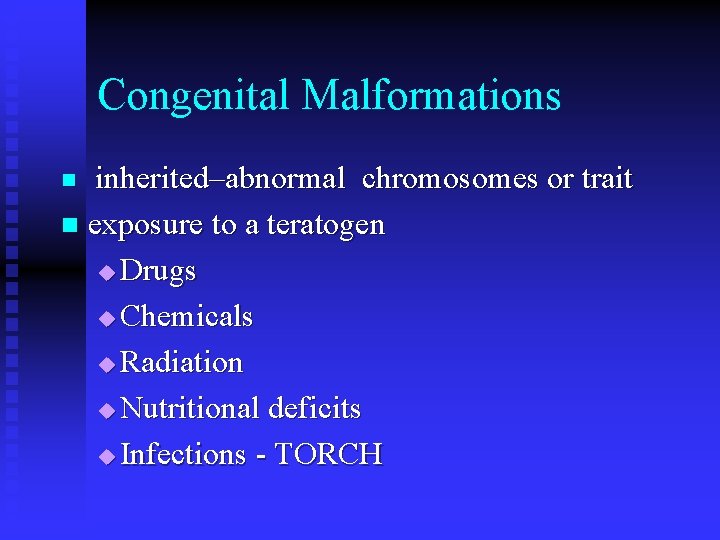
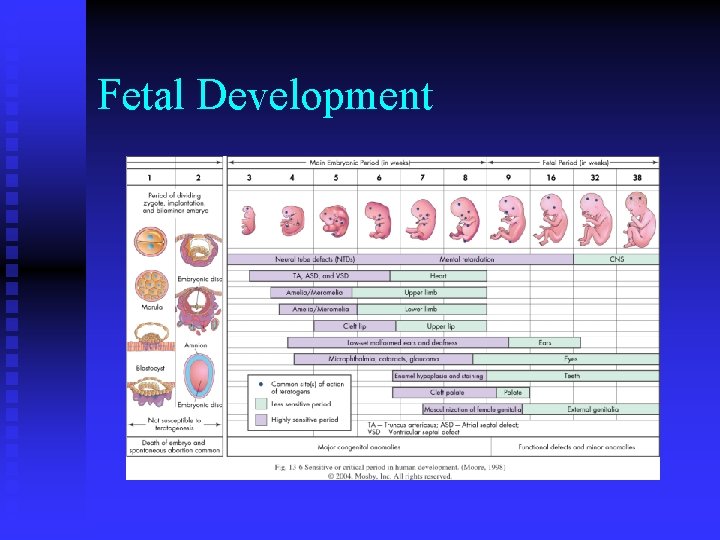
Congenital Malformations inherited–abnormal chromosomes or trait n exposure to a teratogen u Drugs u Chemicals u Radiation u Nutritional deficits u Infections - TORCH n
Genetics – Chromosomal abnormalities n n Numeric Abnormalities u Trisomes , monosomies and polyploidly Structural Abnormalities u Piece missing or added , rearranged
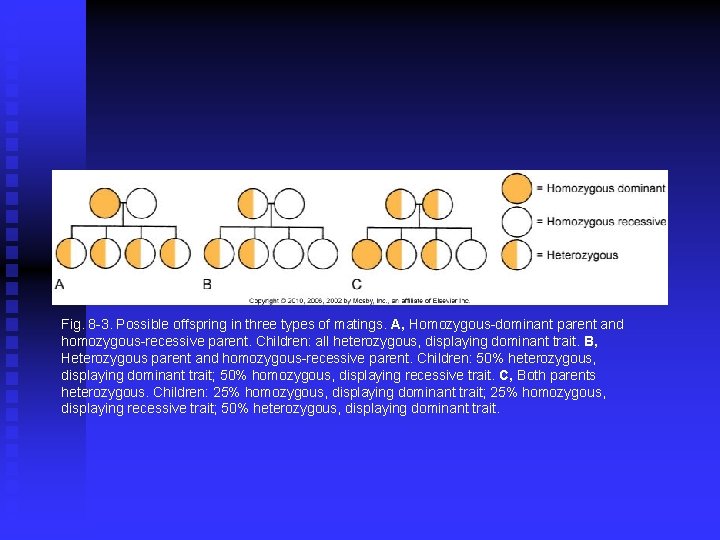
Genetics: Inherited Disorders Unifactorial -A single gene controlling a trait, disorder, or defect n Autosomal dominant –Marfan syndrome u gene from one parent n Autosomal Recessive -SSD u gene from each parent n Inborn errors of metabolism n sex-linked disorders
Fig. 8 -3. Possible offspring in three types of matings. A, Homozygous-dominant parent and homozygous-recessive parent. Children: all heterozygous, displaying dominant trait. B, Heterozygous parent and homozygous-recessive parent. Children: 50% heterozygous, displaying dominant trait; 50% homozygous, displaying recessive trait. C, Both parents heterozygous. Children: 25% homozygous, displaying dominant trait; 25% homozygous, displaying recessive trait; 50% heterozygous, displaying dominant trait.
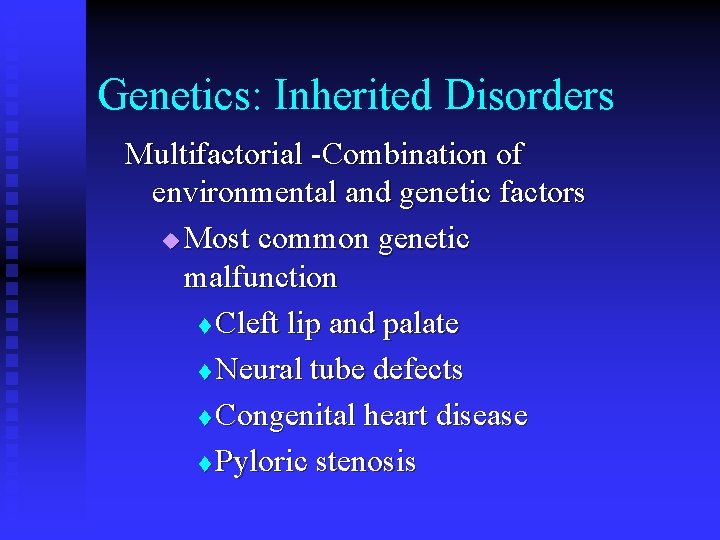
Genetics: Inherited Disorders Multifactorial -Combination of environmental and genetic factors u Most common genetic malfunction t Cleft lip and palate t Neural tube defects t Congenital heart disease t Pyloric stenosis
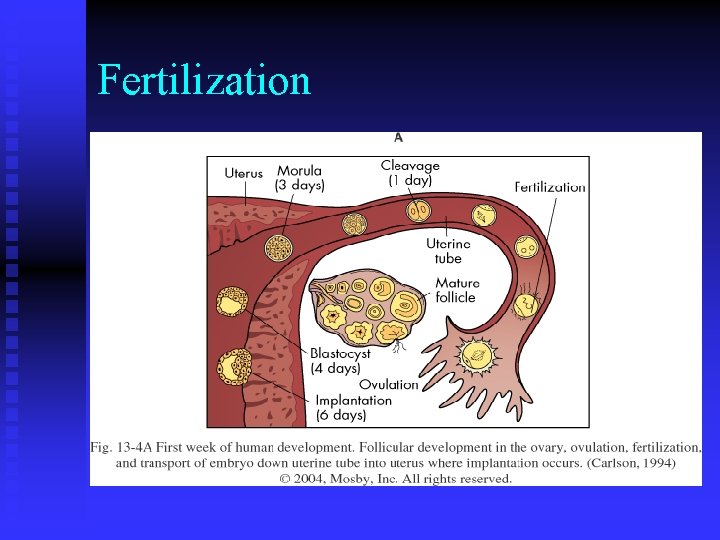
Fertilization
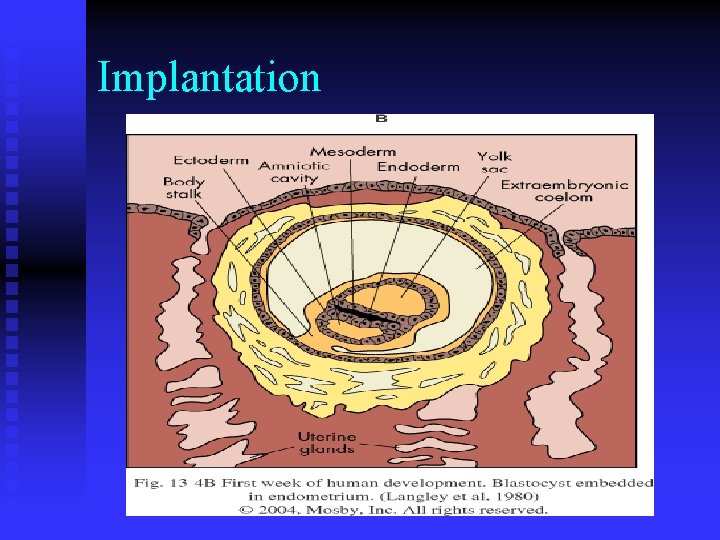
Implantation
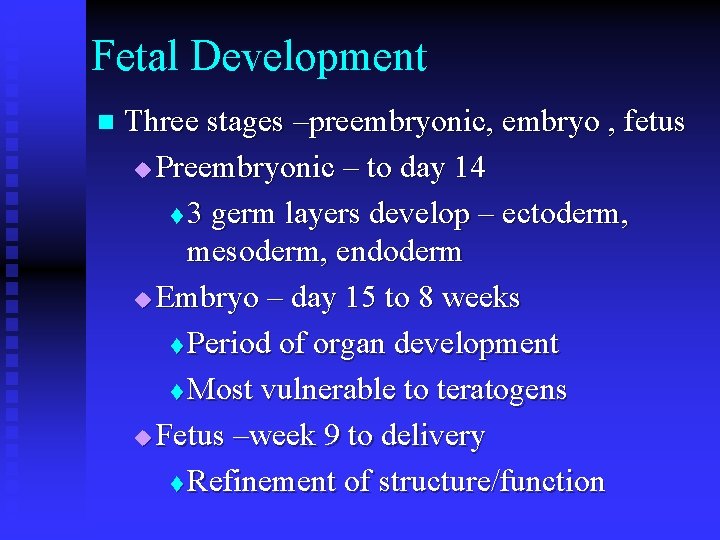
Fetal Development n Three stages –preembryonic, embryo , fetus u Preembryonic – to day 14 t 3 germ layers develop – ectoderm, mesoderm, endoderm u Embryo – day 15 to 8 weeks t Period of organ development t Most vulnerable to teratogens u Fetus –week 9 to delivery t Refinement of structure/function
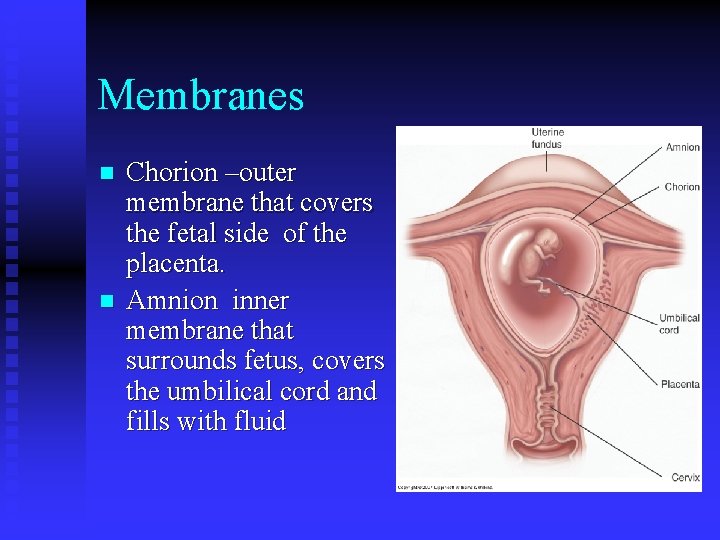
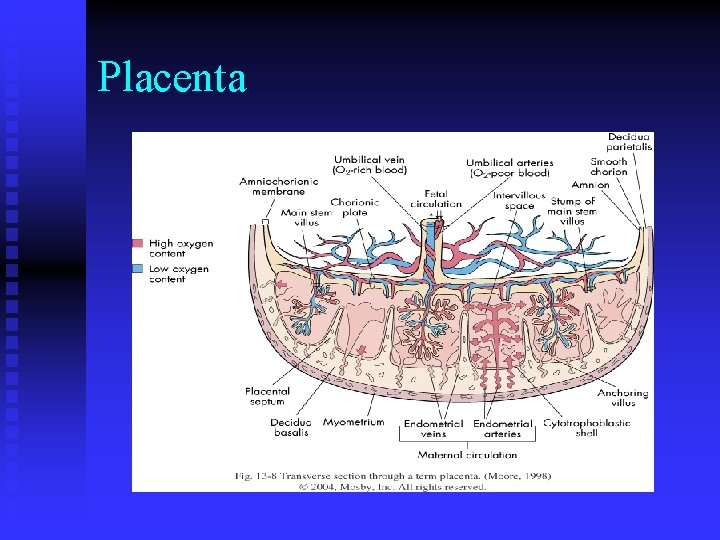
Membranes n n Chorion –outer membrane that covers the fetal side of the placenta. Amnion inner membrane that surrounds fetus, covers the umbilical cord and fills with fluid
Amniotic Fluid Initially diffused from maternal serum, later produced by fetal urine n Cushions fetus, allows for movement, prevents cord compression, provides oral fluid, maintains temperature n Volume varies -800 to 1200 ml at term u Important assessment of fetal well-being t Olioghydramnios t polyhydramnios n
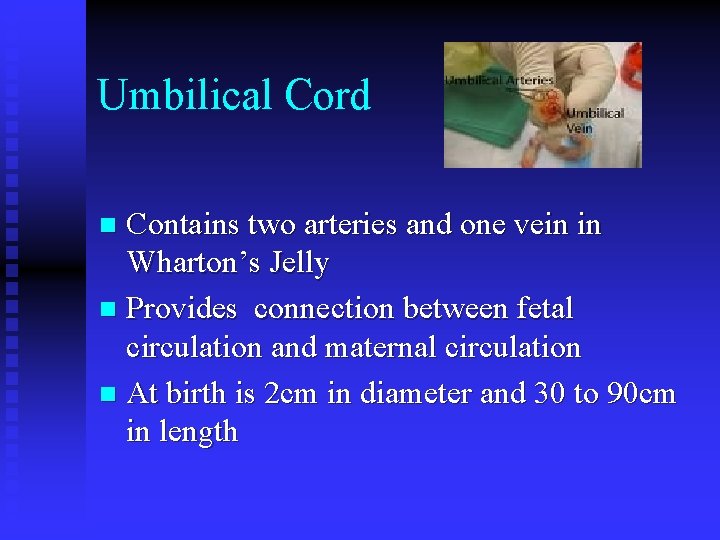
Umbilical Cord Contains two arteries and one vein in Wharton’s Jelly n Provides connection between fetal circulation and maternal circulation n At birth is 2 cm in diameter and 30 to 90 cm in length n
Placental Development Begins at implantation n Begins functioning when embryonic circulation starts (day 17) n Fully functioning by 12 weeks n Provides nutrients to and removes wastes from fetus n Produces hormones to maintain pregnancy n
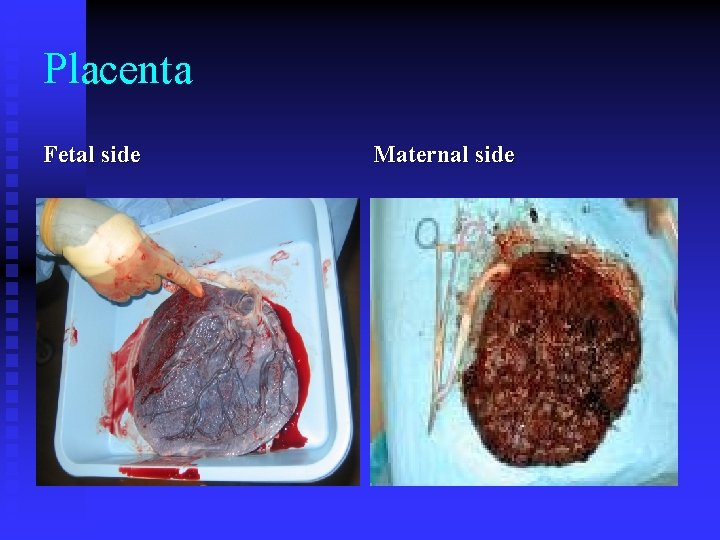
Placenta Fetal side Maternal side
Placenta
Hormones Human chorionic gonadotropin h. CG u Present by day 8 -10 to maximal level usually by day 70 then decreases u Maintains the corpus luteum u Causes positive pregnancy test n Human Placental Lactogen h. PL or chorionic somatomammotropin u Promotes glucose transport to fetus u Stimulates breast development n Relaxin -increases pelvic flexiblity n
Hormones Estrogen u Promotes uterine growth and uteroplacental blood flow u Promotes breast development (glands) u Stimulates uterine contractility n Progesterone u Maintains endometrium u Promotes breast development (aveoli) u Decreases uterine contractility n
Milestones by month (lunar) n 1 st – beginning of nervous and genitourinary system, skin, bones, lungs, heart, eyes, ears, and nose form. Arm and leg buds form. n 2 nd – fetus bent with large head. Sex differentiation begins. Ossification begins n 3 rd – Fetal fingers and toes are distinct; placental and fetal circulation are complete. n 4 th – sex is differentiated, urine production begins, nasal septum and palate close, fetal heart beat detected by doppler
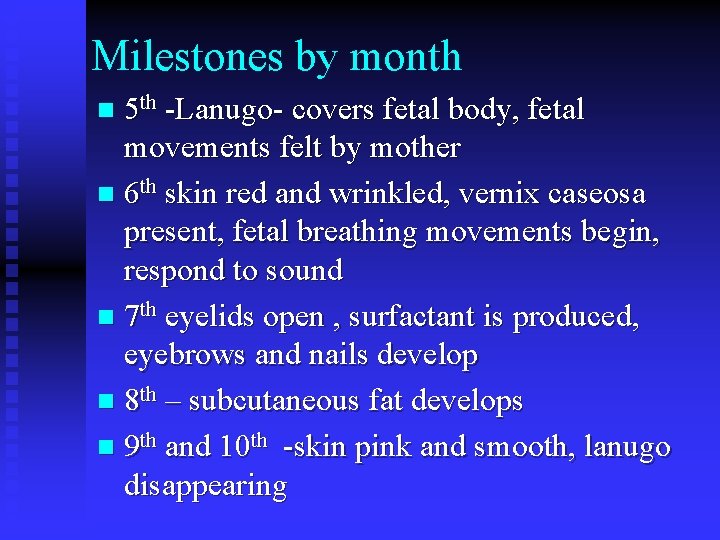
Milestones by month n 5 th -Lanugo- covers fetal body, fetal movements felt by mother n 6 th skin red and wrinkled, vernix caseosa present, fetal breathing movements begin, respond to sound n 7 th eyelids open , surfactant is produced, eyebrows and nails develop n 8 th – subcutaneous fat develops n 9 th and 10 th -skin pink and smooth, lanugo disappearing
Fetal Development
Twins