FACTORS AFFECTING DRUG ACTION Dr Megha Rani N




- Slides: 26
FACTORS AFFECTING DRUG ACTION Dr. Megha Rani N Dept of Pharmacology
FACTORS AFFECTING DRUG ACTION 1. 2. 3. 4. 5. 6. 7. 8. 9. 10. Body size 11. Age and Sex Pregnancy and lactation 12. 13. Genetics Route of administration 14. Diet, Environmental factor and time of administration Psychological factor Pathological factor Other drugs Cumulation Synergism Antagonism Tolerance Drug dependance
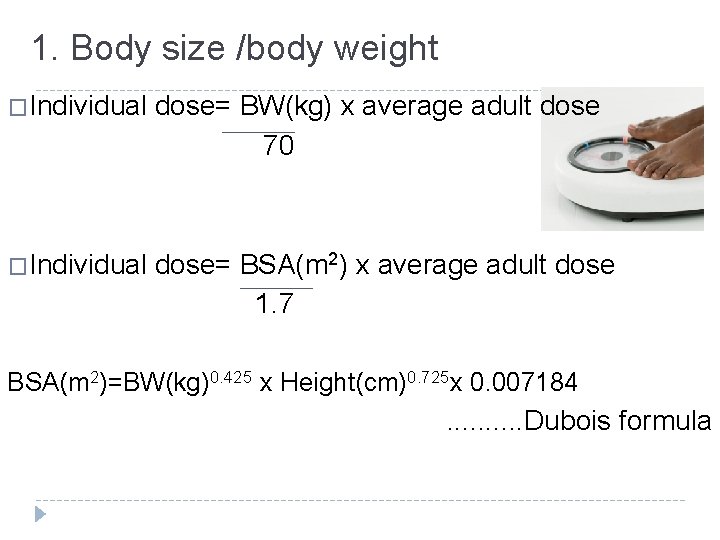
1. Body size /body weight �Individual dose= BW(kg) x average adult dose 70 �Individual dose= BSA(m 2) x average adult dose 1. 7 BSA(m 2)=BW(kg)0. 425 x Height(cm)0. 725 x 0. 007184 . . Dubois formula
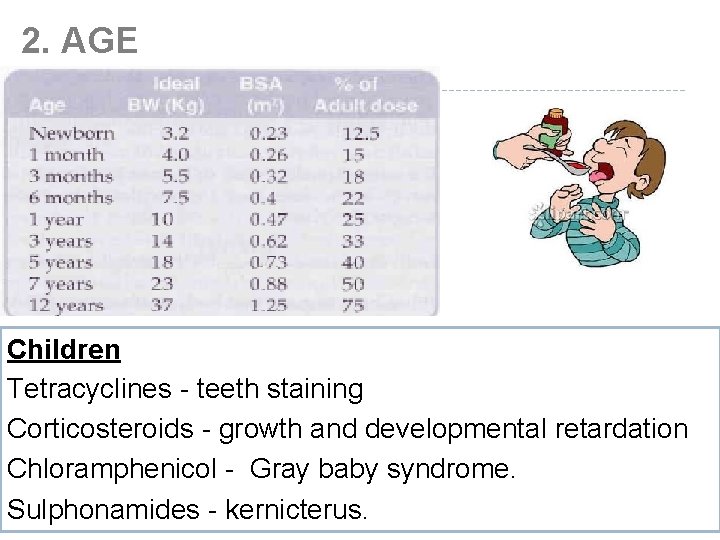
2. AGE Children Tetracyclines - teeth staining Corticosteroids - growth and developmental retardation Chloramphenicol - Gray baby syndrome. 4 Sulphonamides - kernicterus.
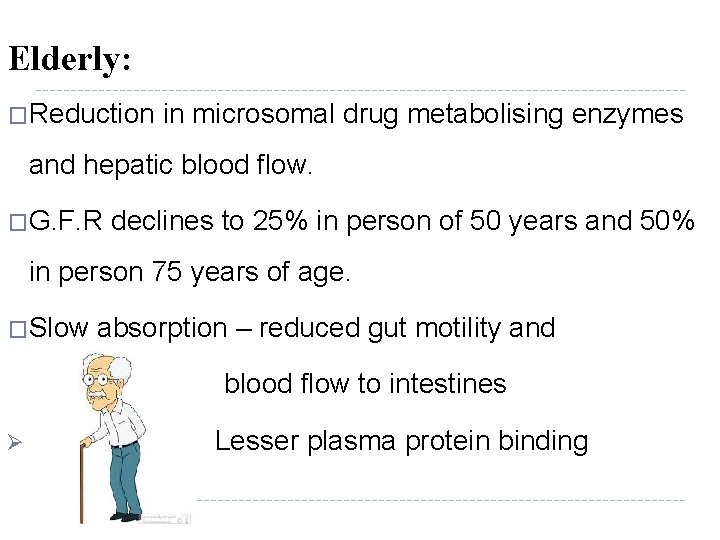
Elderly: �Reduction in microsomal drug metabolising enzymes and hepatic blood flow. �G. F. R declines to 25% in person of 50 years and 50% in person 75 years of age. �Slow absorption – reduced gut motility and blood flow to intestines Lesser plasma protein binding Ø 5
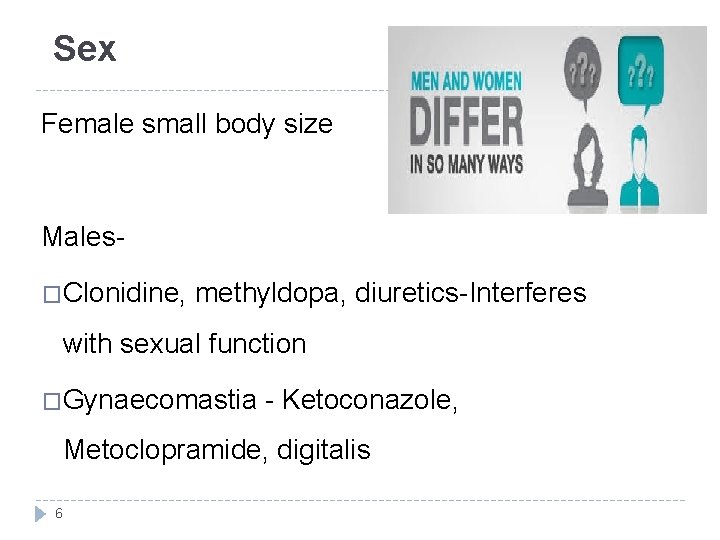
Sex Female small body size Males�Clonidine, methyldopa, diuretics-Interferes with sexual function �Gynaecomastia - Ketoconazole, Metoclopramide, digitalis 6
3. Pregnancy �GI motility - ↓ �Volume of drug distribution – ↑ �Maternal � Metabolic rate - ↑ �Renal � plasma albumin - ↓ blood flow and glomerular filtration - ↑ Lipophilic molecules readily traverse placental barrier. 7
4. Genetics �Atypical pseudocholinestrase- succinylcholine apnoea �G 6 PD deficiency- hemolysis with primaquine �Acetylator status - isoniazid Slow acetylators: peripheral neuropathy Rapid acetylators: hepatotoxicity �Acute � intermittent porphyria – ppt by barbiturates Malignant hyperthermia- halothane
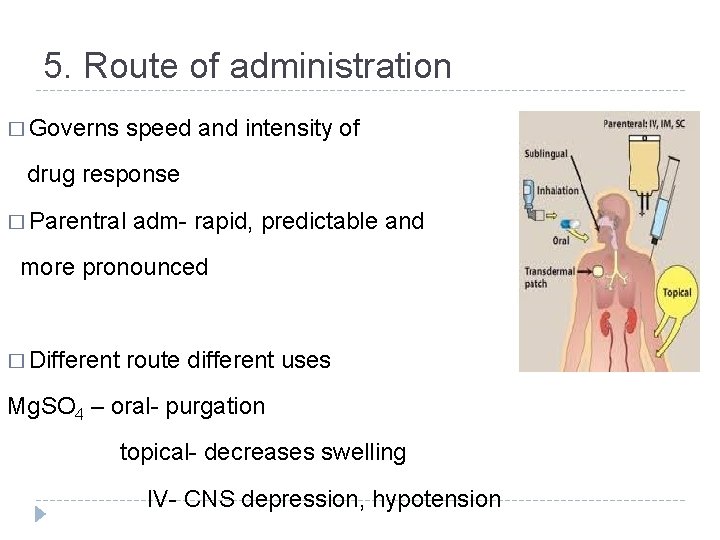
5. Route of administration � Governs speed and intensity of drug response � Parentral adm- rapid, predictable and more pronounced � Different route different uses Mg. SO 4 – oral- purgation topical- decreases swelling IV- CNS depression, hypotension
6. Environmental factor, Diet �Induce drug metabolism- Insecticides, Carcinogens, Tobacco smoke etc. �Calcium interferes with absorption of tetracyclines and iron. Presence of fatty food �Delays absorption of rifampicin and ampicillin �Enhances absorption of griseofulvin and
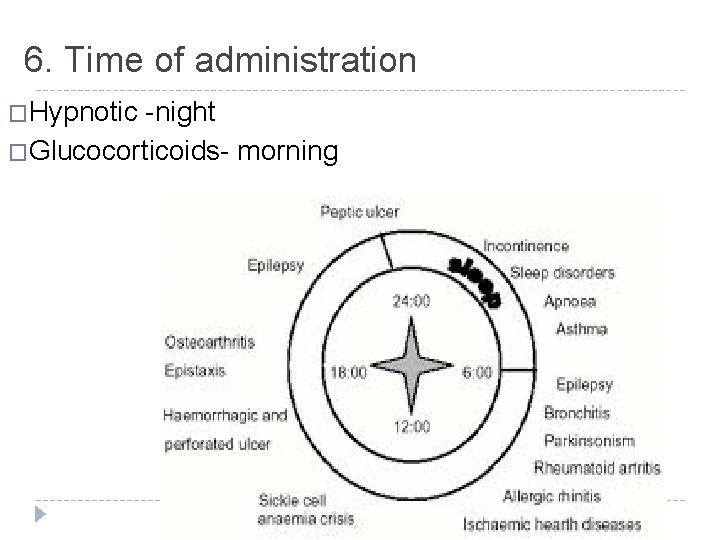
6. Time of administration �Hypnotic -night �Glucocorticoids- morning
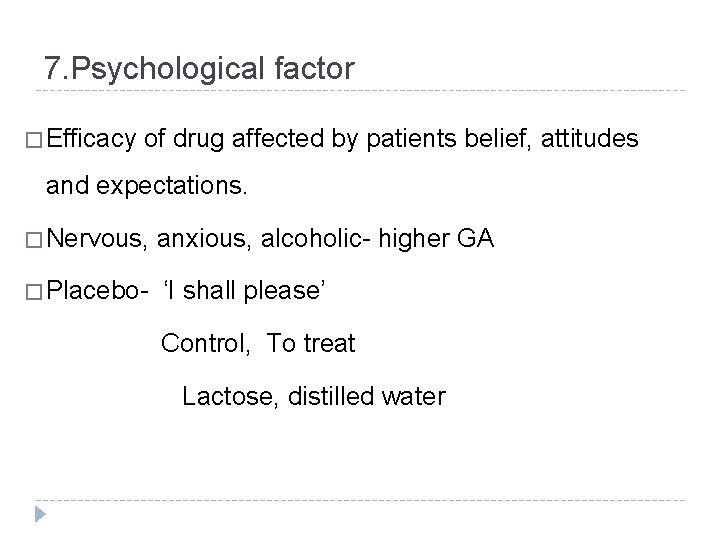
7. Psychological factor � Efficacy of drug affected by patients belief, attitudes and expectations. � Nervous, anxious, alcoholic- higher GA � Placebo- ‘I shall please’ Control, To treat Lactose, distilled water
8. Pathological factor �Gastrointestinal �Liver diseases �Congestive �Thyroid heart failure disease-
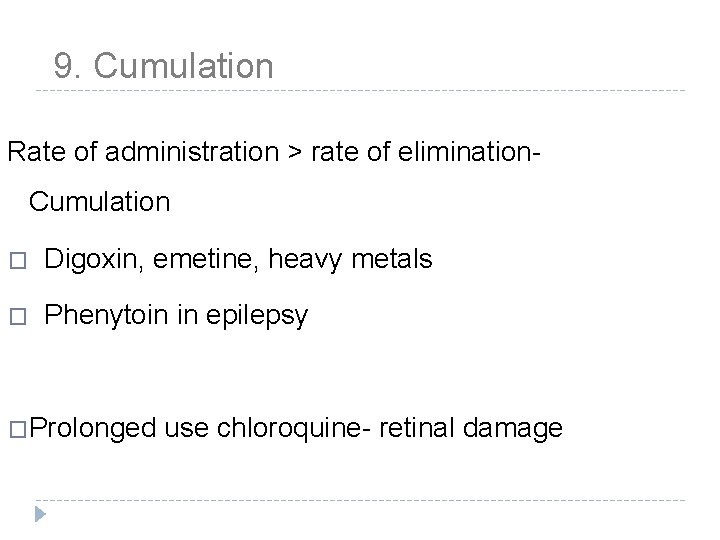
9. Cumulation Rate of administration > rate of elimination. Cumulation � Digoxin, emetine, heavy metals � Phenytoin in epilepsy �Prolonged use chloroquine- retinal damage
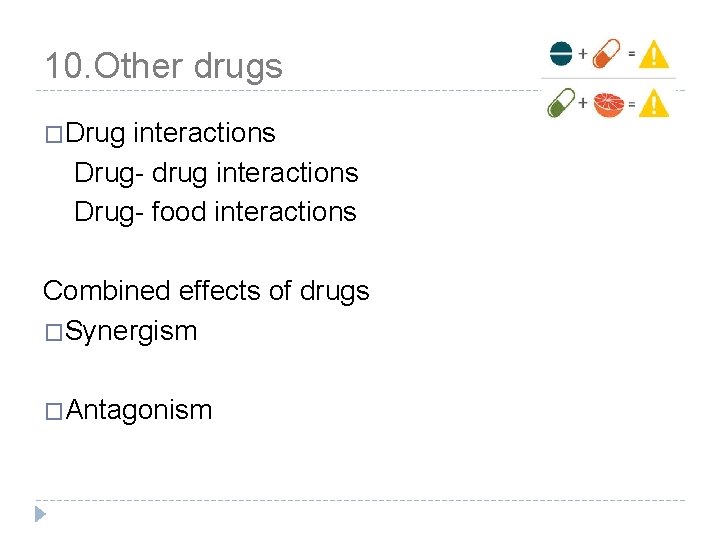
10. Other drugs �Drug interactions Drug- drug interactions Drug- food interactions Combined effects of drugs �Synergism �Antagonism
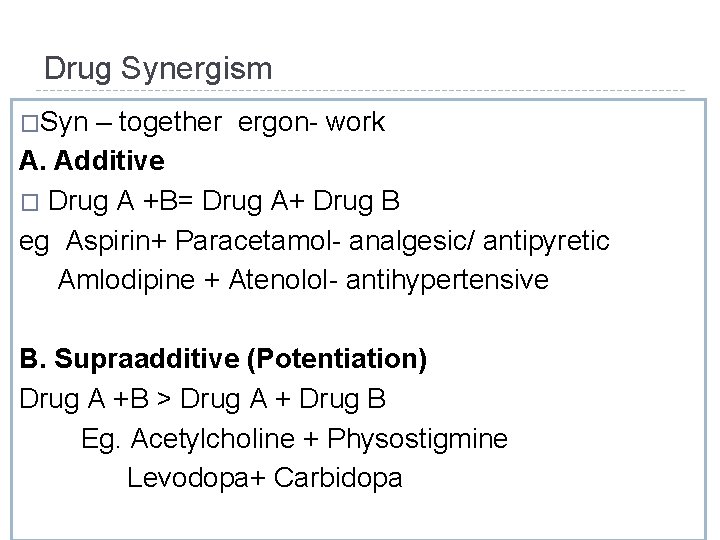
Drug Synergism �Syn – together ergon- work A. Additive � Drug A +B= Drug A+ Drug B eg Aspirin+ Paracetamol- analgesic/ antipyretic Amlodipine + Atenolol- antihypertensive B. Supraadditive (Potentiation) Drug A +B > Drug A + Drug B Eg. Acetylcholine + Physostigmine Levodopa+ Carbidopa
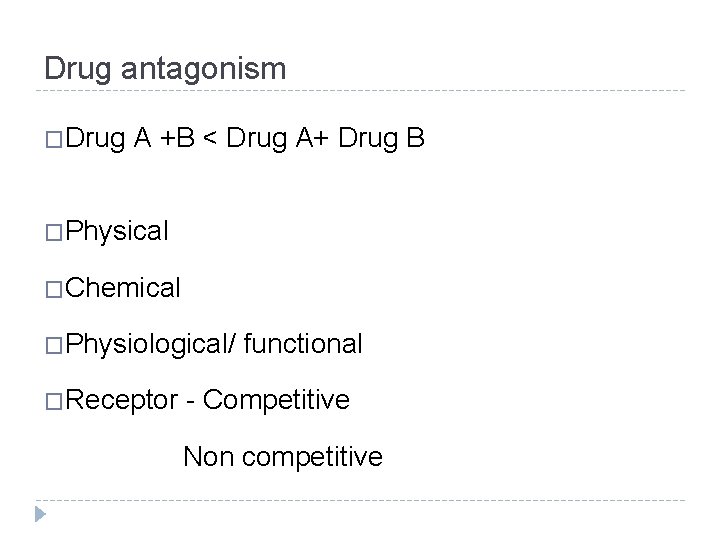
Drug antagonism �Drug A +B < Drug A+ Drug B �Physical �Chemical �Physiological/ �Receptor functional - Competitive Non competitive
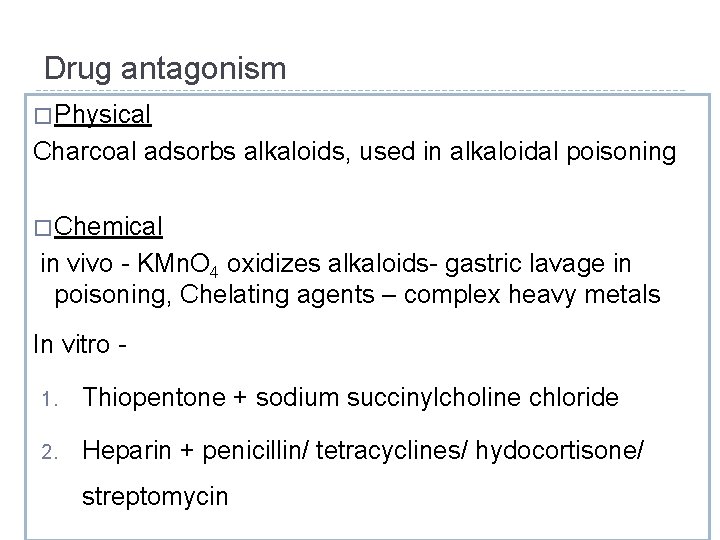
Drug antagonism � Physical Charcoal adsorbs alkaloids, used in alkaloidal poisoning � Chemical in vivo - KMn. O 4 oxidizes alkaloids- gastric lavage in poisoning, Chelating agents – complex heavy metals In vitro 1. Thiopentone + sodium succinylcholine chloride 2. Heparin + penicillin/ tetracyclines/ hydocortisone/ streptomycin
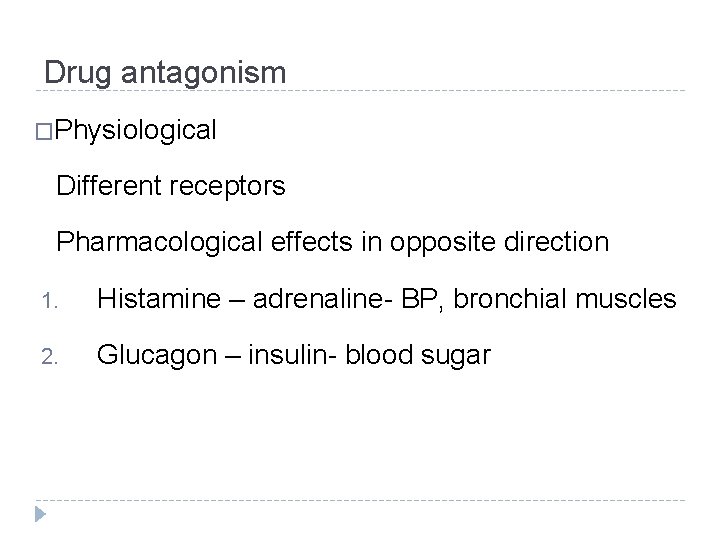
Drug antagonism �Physiological Different receptors Pharmacological effects in opposite direction 1. Histamine – adrenaline- BP, bronchial muscles 2. Glucagon – insulin- blood sugar
Drug antagonism � 1. Receptor Competitive / surmountable Antagonist chemically similar to agonist Binds to same site as agonist Antagonist has affinity, no intrinsic activity Eg. Acetylcholine- atropine Morphine- naloxone
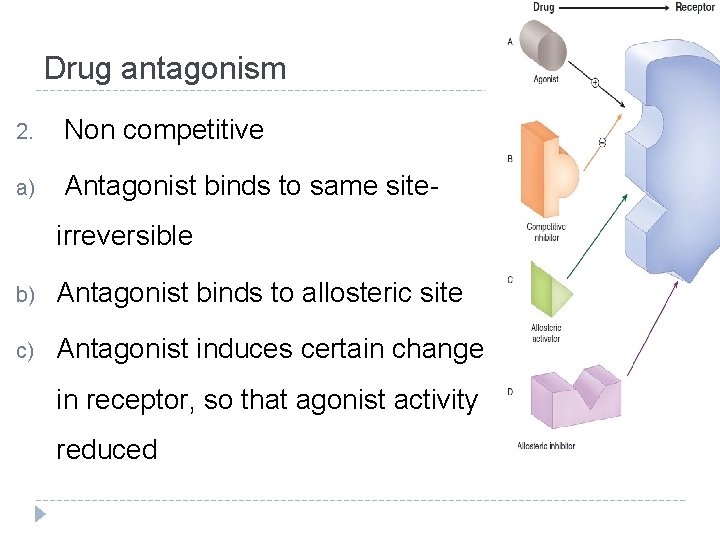
Drug antagonism 2. Non competitive a) Antagonist binds to same siteirreversible b) Antagonist binds to allosteric site c) Antagonist induces certain change in receptor, so that agonist activity is reduced
11. Tolerance �Requirement of higher dose of drug to produce a given response. Types �True tolerance �Natural- inherent �Acquired – Repeated use �Pseudotolerance / Apparent
11. Tolerance Ø Tachyphylaxis �Rapid development repeated doses �Ephedrine, �Drug / acute tolerance Tyramine, nicotine resistance- micoorganism
12. Drug Dependance �Repeated administration can lead to habit and dependance �A state in which use of drugs for personal satisfaction is accorded higher priority than other basic needs. �Known risks to health �Morphine, codiene, pethidine, ethylalcohol, barbiturates, amphetamine, cocaine, LSD etc
Drug abuse/ addiction �Overpowering �Tendency desire- compulsion to increase the dose �Withdrawal symptoms
THANK YOU