Extranuclear Inheritance Dr Shivani Gupta PGGCG11 Chandigarh Commonly
- Slides: 24
Extranuclear Inheritance Dr. Shivani Gupta, PGGCG-11, Chandigarh
Commonly defined as transmission through the cytoplasm (or things in the cytoplasm, including organelles) rather than the nucleus Generally one parent contributes
Extranuclear Inheritance • Organelle heredity – Organelles that contain chromosomes • Chloroplasts and mitochondria • Infectious heredity – Involves a symbiotic or parasitic association with a microorganism • Maternal effect – Nuclear gene products are stored in ooplasm and distributed to cells as the fertilized egg divides to form developing embryo
Chloroplasts and Mitochondria • These organelles contain DNA – First explanation for [some] maternal inheritance patterns • Endosymbiont theory • Analysis of mutant alleles in organelles can be complex because many genes for organelle components are nuclear-encoded – And even subunits of a multicomponent enzyme may be partially encoded in both locations – Heteroplasmy makes things even worse…
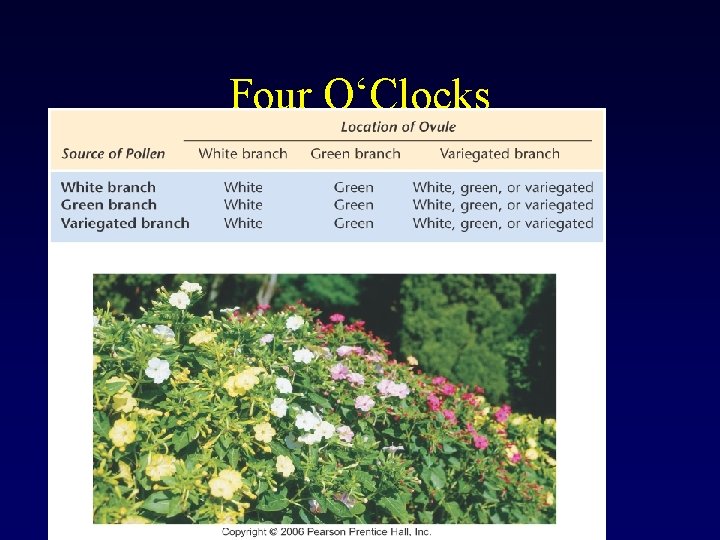
Chloroplasts • Carl Correns – A codiscoverer of Mendel’s work – Worked with four o’clock plants (Mirabilis jalapa) • Had branches with either white, green or variegated leaves • Type of offspring dependent only upon the phenotype of the branch from which the ovule was derived—not the pollen F(figure 9 -1) – Concluded that leave color was dependent upon the chloroplasts and that these or other factors were contributed through the ovule cytoplasm
Four O‘Clocks
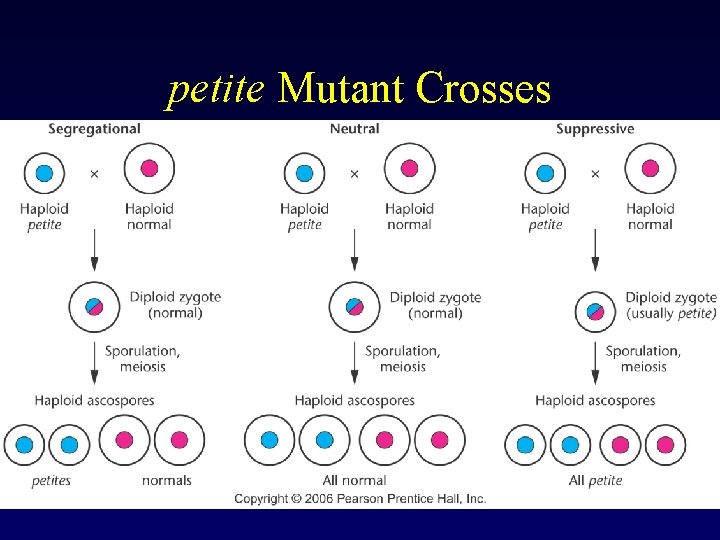
Saccharomyces petite Mutations • petite mutations give rise to small colonies – Aerobic respiration blocked – Live anaerobically • S. cerevisiae is a facultative anaerobe • Two types – Segregational petites encoded by nuclear genes showing Mendelian inheritance – cytoplasmic transmission pattern petites • Neutral petites demonstrate (give all wt offspring when crossed to wt) • Suppressive petites (behave like poky in Neurospora)
petite Mutant Crosses
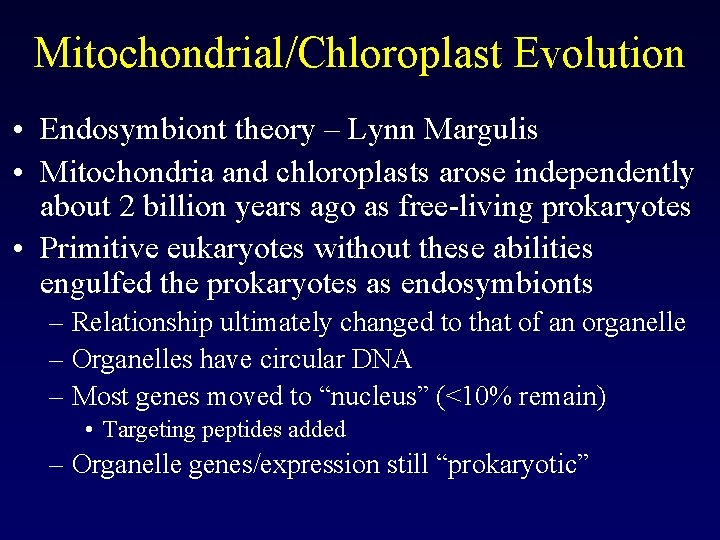
Mitochondrial/Chloroplast Evolution • Endosymbiont theory – Lynn Margulis • Mitochondria and chloroplasts arose independently about 2 billion years ago as free-living prokaryotes • Primitive eukaryotes without these abilities engulfed the prokaryotes as endosymbionts – Relationship ultimately changed to that of an organelle – Organelles have circular DNA – Most genes moved to “nucleus” (<10% remain) • Targeting peptides added – Organelle genes/expression still “prokaryotic”
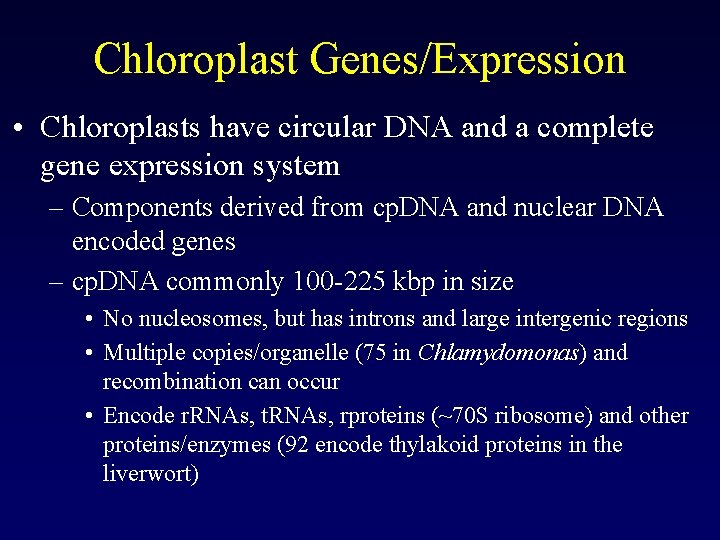
Chloroplast Genes/Expression • Chloroplasts have circular DNA and a complete gene expression system – Components derived from cp. DNA and nuclear DNA encoded genes – cp. DNA commonly 100 -225 kbp in size • No nucleosomes, but has introns and large intergenic regions • Multiple copies/organelle (75 in Chlamydomonas) and recombination can occur • Encode r. RNAs, t. RNAs, rproteins (~70 S ribosome) and other proteins/enzymes (92 encode thylakoid proteins in the liverwort)
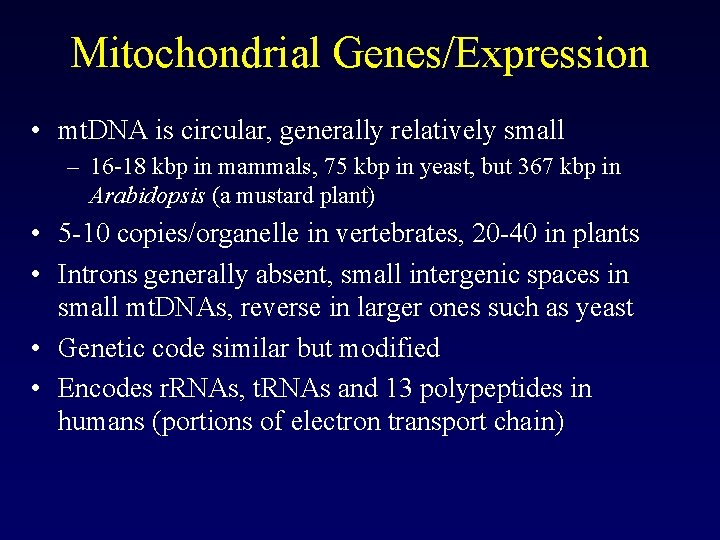
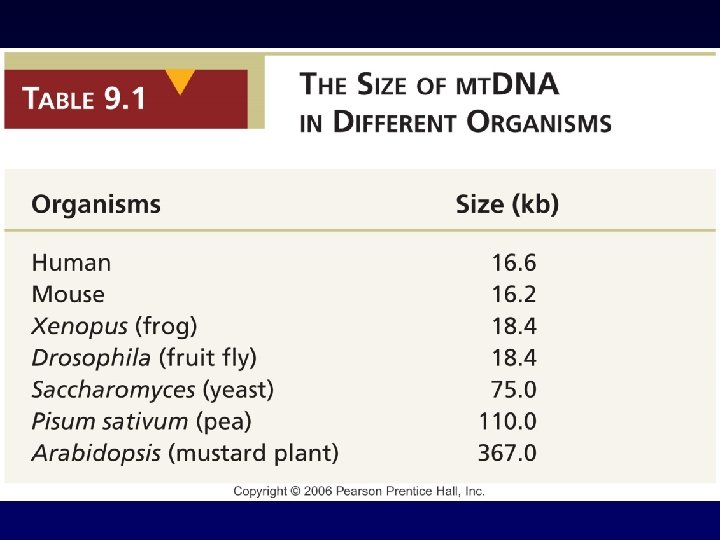
Mitochondrial Genes/Expression • mt. DNA is circular, generally relatively small – 16 -18 kbp in mammals, 75 kbp in yeast, but 367 kbp in Arabidopsis (a mustard plant) • 5 -10 copies/organelle in vertebrates, 20 -40 in plants • Introns generally absent, small intergenic spaces in small mt. DNAs, reverse in larger ones such as yeast • Genetic code similar but modified • Encodes r. RNAs, t. RNAs and 13 polypeptides in humans (portions of electron transport chain)
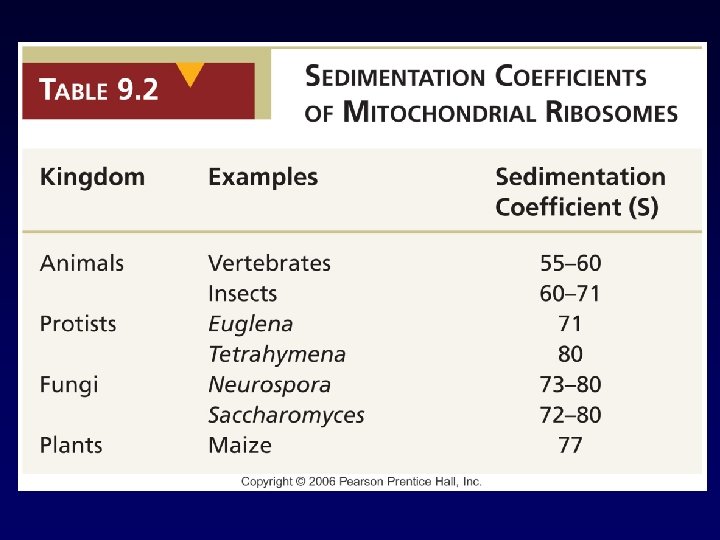
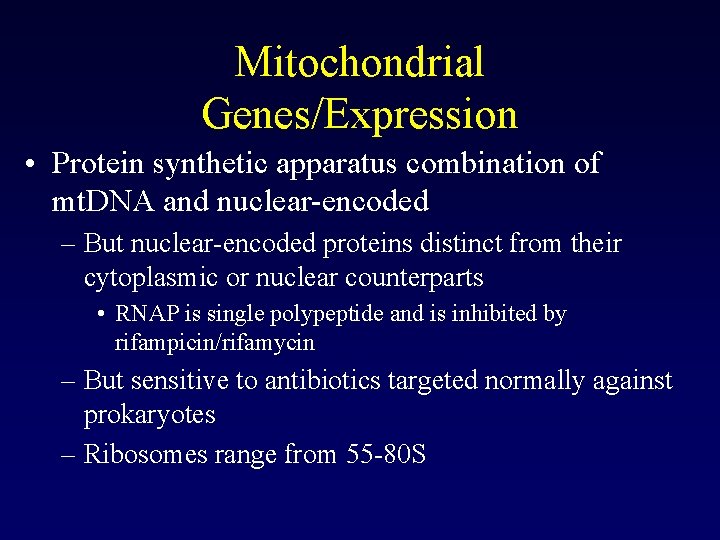
Mitochondrial Genes/Expression • Protein synthetic apparatus combination of mt. DNA and nuclear-encoded – But nuclear-encoded proteins distinct from their cytoplasmic or nuclear counterparts • RNAP is single polypeptide and is inhibited by rifampicin/rifamycin – But sensitive to antibiotics targeted normally against prokaryotes – Ribosomes range from 55 -80 S
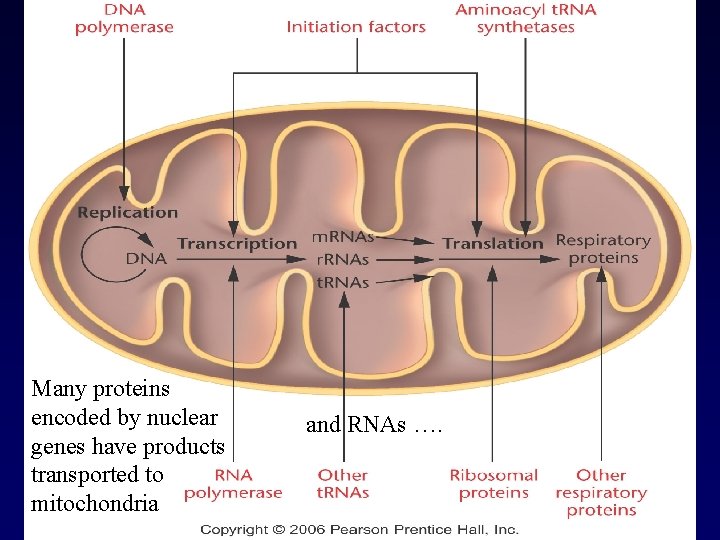
Many proteins encoded by nuclear genes have products transported to mitochondria and RNAs ….
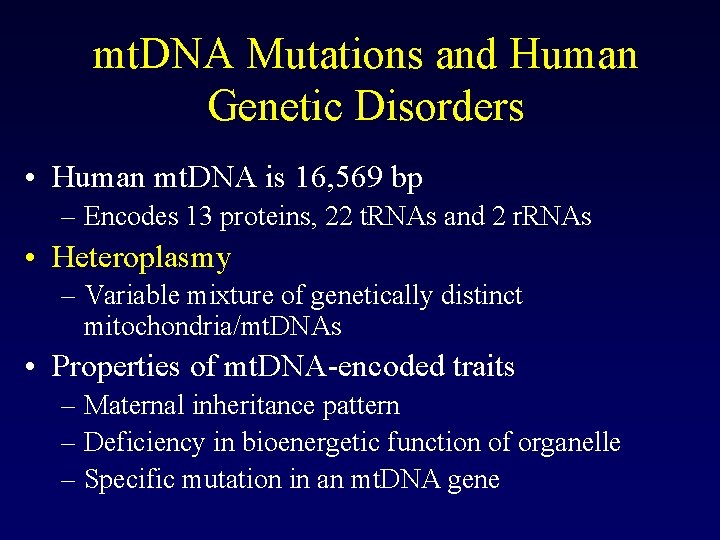
mt. DNA Mutations and Human Genetic Disorders • Human mt. DNA is 16, 569 bp – Encodes 13 proteins, 22 t. RNAs and 2 r. RNAs • Heteroplasmy – Variable mixture of genetically distinct mitochondria/mt. DNAs • Properties of mt. DNA-encoded traits – Maternal inheritance pattern – Deficiency in bioenergetic function of organelle – Specific mutation in an mt. DNA gene
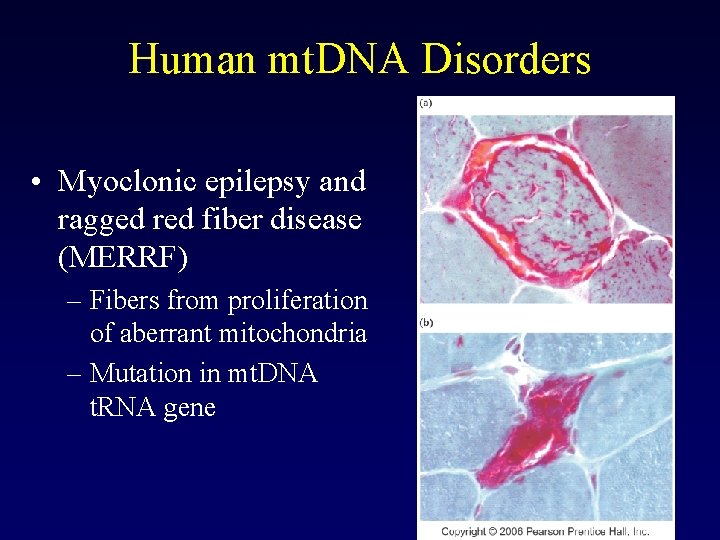
Human mt. DNA Disorders • Myoclonic epilepsy and ragged red fiber disease (MERRF) – Fibers from proliferation of aberrant mitochondria – Mutation in mt. DNA t. RNA gene
Human mt. DNA Disorders • Leber’s hereditary optic neuropathy (LHON) – Sudden bilateral blindness 9 average 27 yrs) – Most mutations in NADH dehydrogenase gene – Maternal transmission to all offspring – Many cases appear to be “new” mutations • No family history
Infectious Heredity • Cytoplasmic transmitted phenotypes in eukaryotes due to an invading microorganism or particle (e. g. virus)
Kappa in Paramecium • Certain strains of P. aurelia are called killer strains because they release paramecin, a substance toxic to sensitive strains – Paramecin produced by kappa particles (100200 per cell) that replicate in cytoplasm – Kappa particles contain DNA and protein and require a nuclear gene (K, “little k” strains are sensitive) for maintenance – Kappa particles are bacterialike and may contain temperate phage
Infective Particles in Drosophila • CO 2 sensitivity – Flies fail to recover from CO 2 anesthetization (permanently paralyzed) – Sensitivity due to presence of virus called sigma • Transfer to other insect species unsuccessful, suggesting Drosophila genes essential for its continued propagation/function • Sex ratio in D. bifasciata and D. willistoni – Some flies produce offspring at an altered sex ratio • Mostly female at below 21 degrees Celsius • Trait transmitted only to daughters • Agent shown to be a protozoan that is lethal only to males – And protozoan may have a virus that is actually responsible…
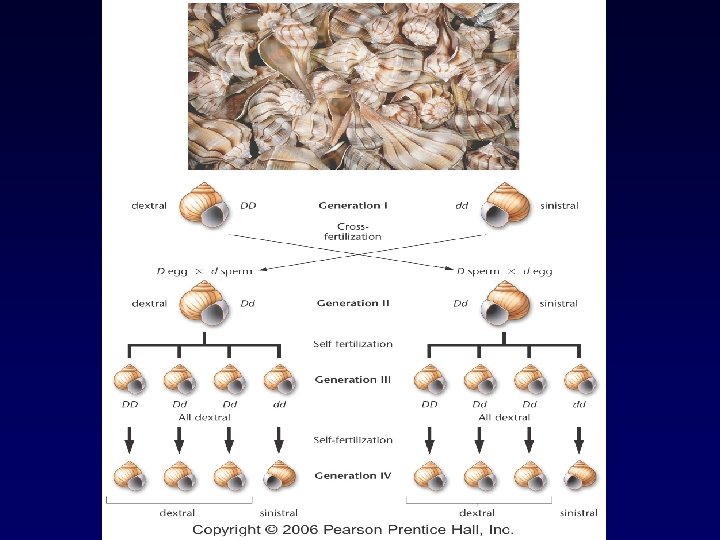
Maternal Effect/Maternal Influence • Offspring phenotype under control of nuclear gene product present in the egg – Genetic information of mother used to produce products present in the egg cytoplasm – Snail Limnaea peregra shell coiling is an example
Snail Limnaea peregra Shell Coiling • Hermaphroditic snails • Some shells have right-handed (DD or Dd) coiling while others have left-handed (dd)coiling • Reciprocal crosses (reverse mail and female genotypes) of true-breeding snails – Offspring phenotype depends upon maternal genotype—not maternal phenotype