Exceptions to the Octet Rule and Strengths of


- Slides: 14
Exceptions to the Octet Rule and Strengths of Covalent Bonds Sections 8. 7 -8. 8
Exceptions to the Octet Rule n 3 types: – Ions or molecules with: n odd number of electrons n less than an octet n more than 8 valence electrons
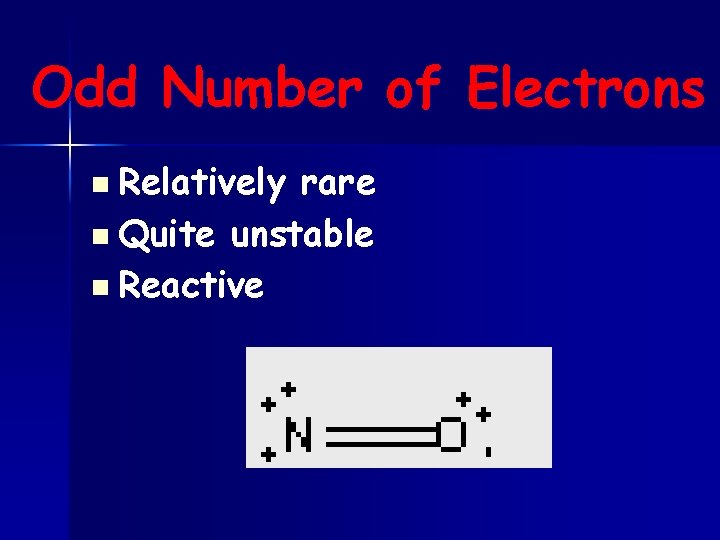
Odd Number of Electrons Relatively rare n Quite unstable n Reactive n
Fewer Than 8 n n n Rare Usually with B and Be Molecules have only 6 electrons around central atom
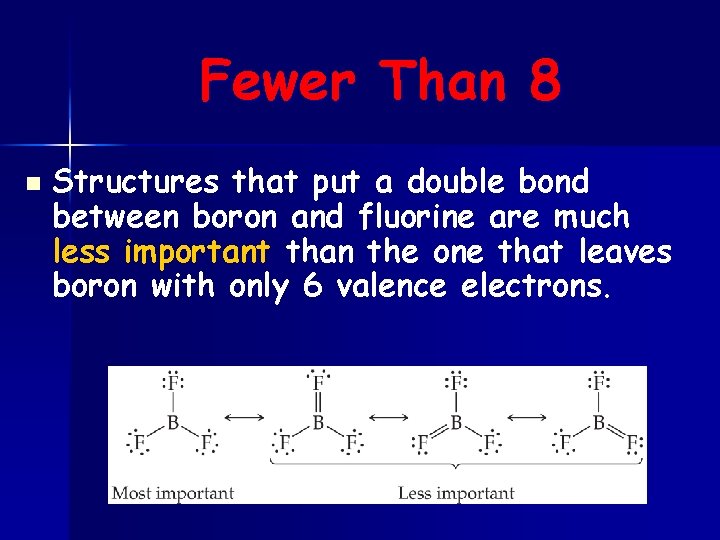
Fewer Than 8 n Structures that put a double bond between boron and fluorine are much less important than the one that leaves boron with only 6 valence electrons.
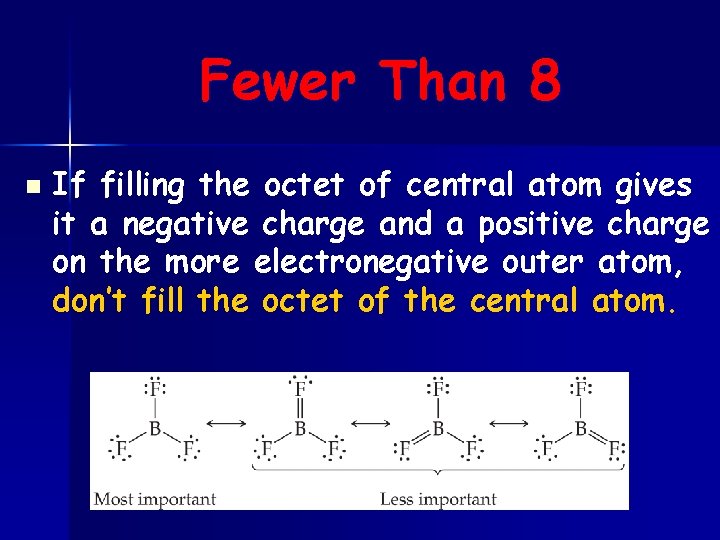
Fewer Than 8 n If filling the octet of central atom gives it a negative charge and a positive charge on the more electronegative outer atom, don’t fill the octet of the central atom.
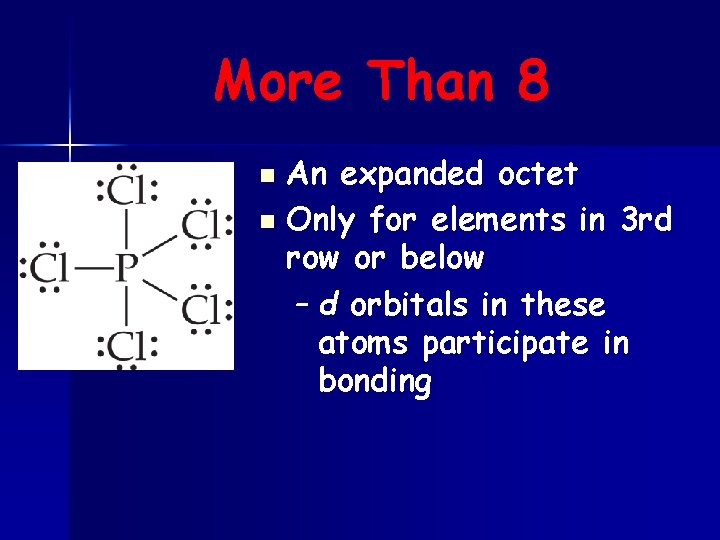
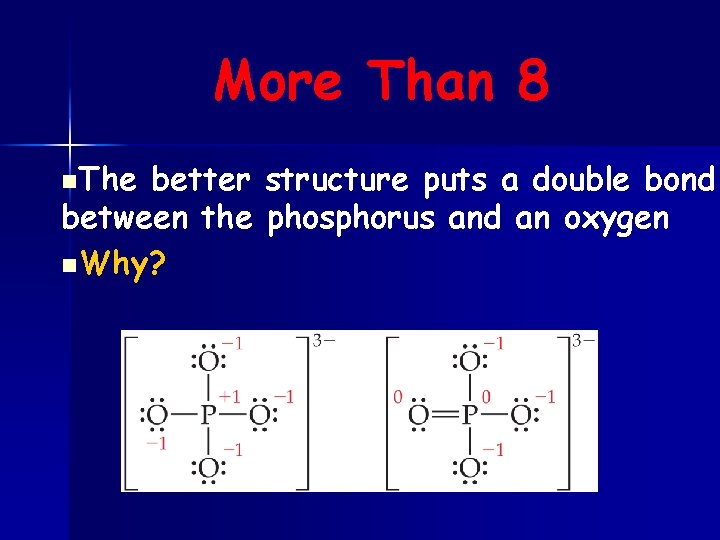
More Than 8 n n An expanded octet Only for elements in 3 rd row or below – d orbitals in these atoms participate in bonding
More Than 8 n. The better structure puts a double bond between the phosphorus and an oxygen n. Why?
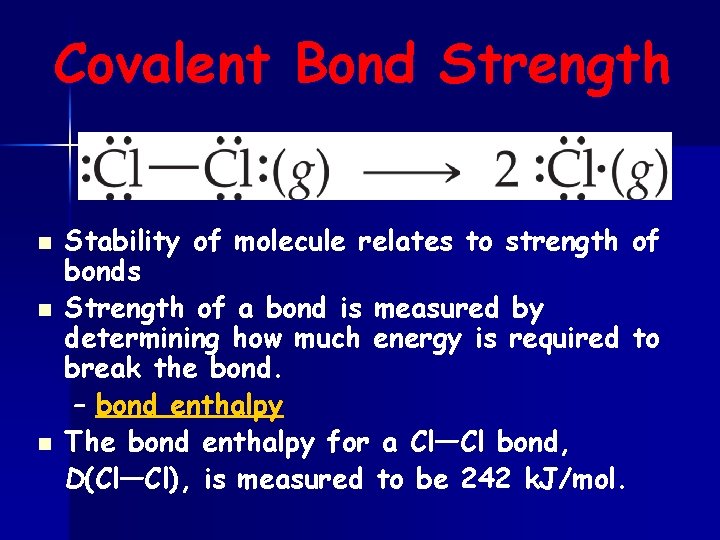
Covalent Bond Strength n n n Stability of molecule relates to strength of bonds Strength of a bond is measured by determining how much energy is required to break the bond. – bond enthalpy The bond enthalpy for a Cl—Cl bond, D(Cl—Cl), is measured to be 242 k. J/mol.
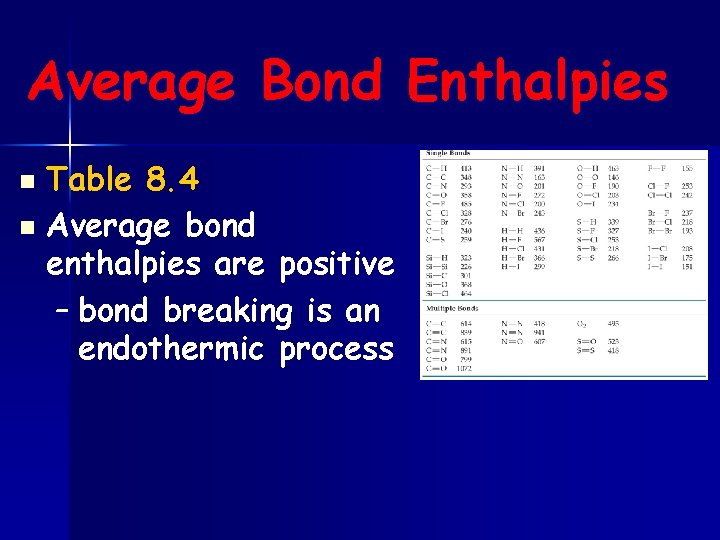
Average Bond Enthalpies n n Table 8. 4 Average bond enthalpies are positive – bond breaking is an endothermic process
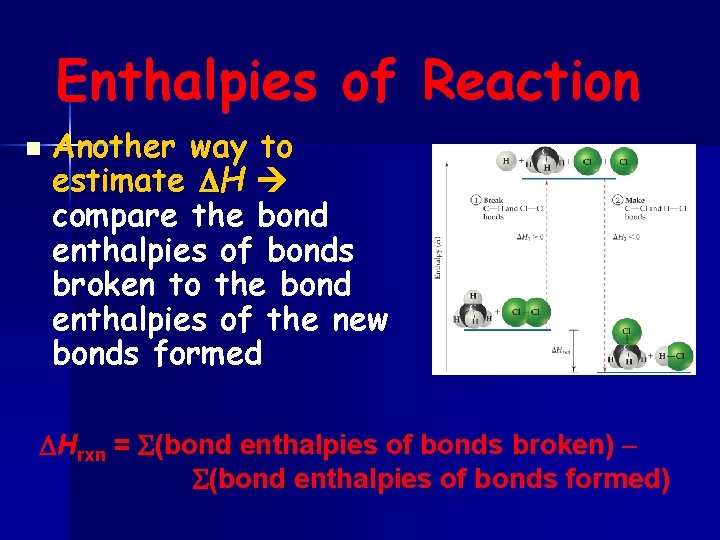
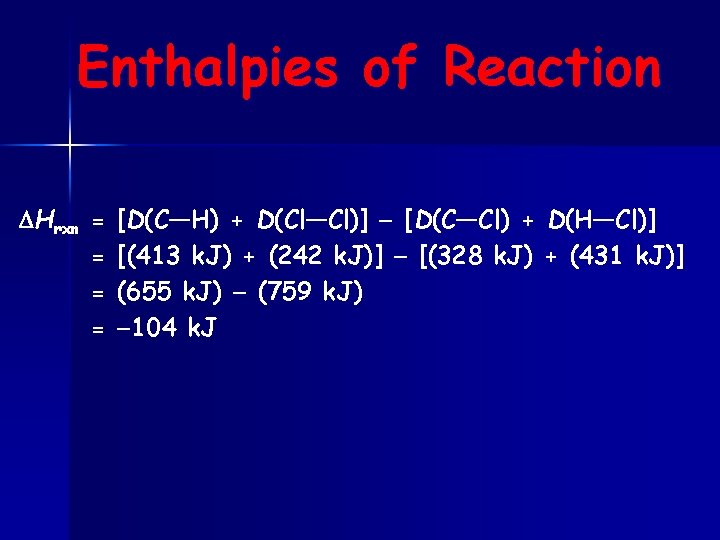
Enthalpies of Reaction n Another way to estimate H compare the bond enthalpies of bonds broken to the bond enthalpies of the new bonds formed Hrxn = (bond enthalpies of bonds broken) (bond enthalpies of bonds formed)
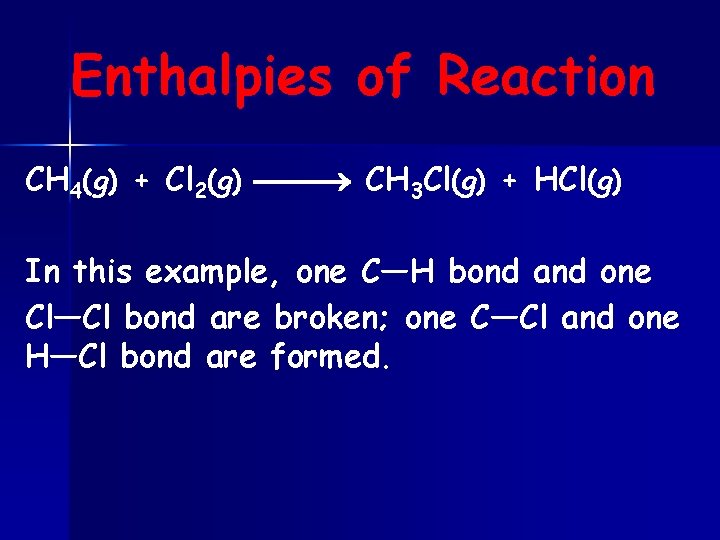
Enthalpies of Reaction CH 4(g) + Cl 2(g) CH 3 Cl(g) + HCl(g) In this example, one C—H bond and one Cl—Cl bond are broken; one C—Cl and one H—Cl bond are formed.
Enthalpies of Reaction Hrxn = = [D(C—H) + D(Cl—Cl)] [D(C—Cl) + D(H—Cl)] [(413 k. J) + (242 k. J)] [(328 k. J) + (431 k. J)] (655 k. J) (759 k. J) 104 k. J
Homework n 40, 44, 46, 48, 60, 66, and 70