Evolution and Domestication of Canis lupus via Human
- Slides: 15
Evolution and Domestication of Canis lupus via Human Interaction By Gabe Miranda
The Questions • When and how did humans and dogs first begin to survive together in a mutualistic relationship? • How and why did humans domesticate such a powerful carnivore? • Are dog breeds really genetically different from one another?
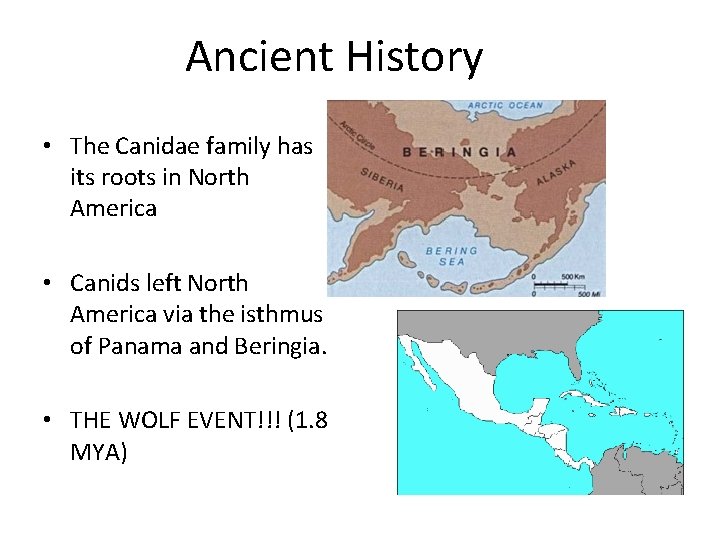
Ancient History • The Canidae family has its roots in North America • Canids left North America via the isthmus of Panama and Beringia. • THE WOLF EVENT!!! (1. 8 MYA)
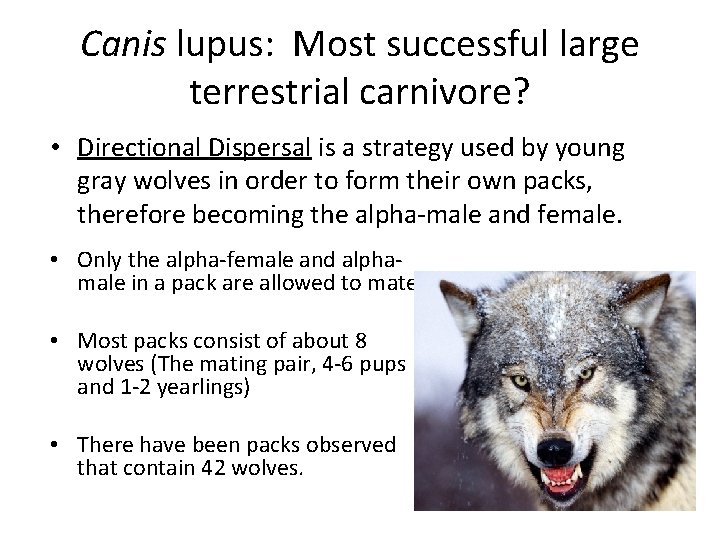
Canis lupus: Most successful large terrestrial carnivore? • Directional Dispersal is a strategy used by young gray wolves in order to form their own packs, therefore becoming the alpha-male and female. • Only the alpha-female and alphamale in a pack are allowed to mate. • Most packs consist of about 8 wolves (The mating pair, 4 -6 pups and 1 -2 yearlings) • There have been packs observed that contain 42 wolves.
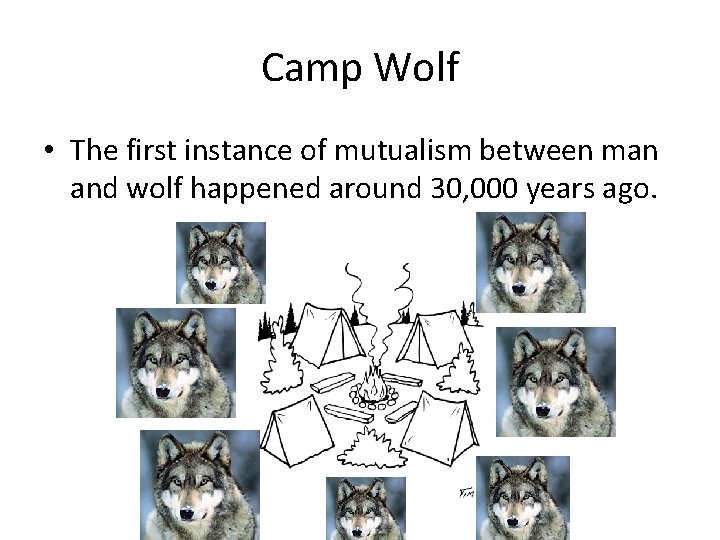
Camp Wolf • The first instance of mutualism between man and wolf happened around 30, 000 years ago.
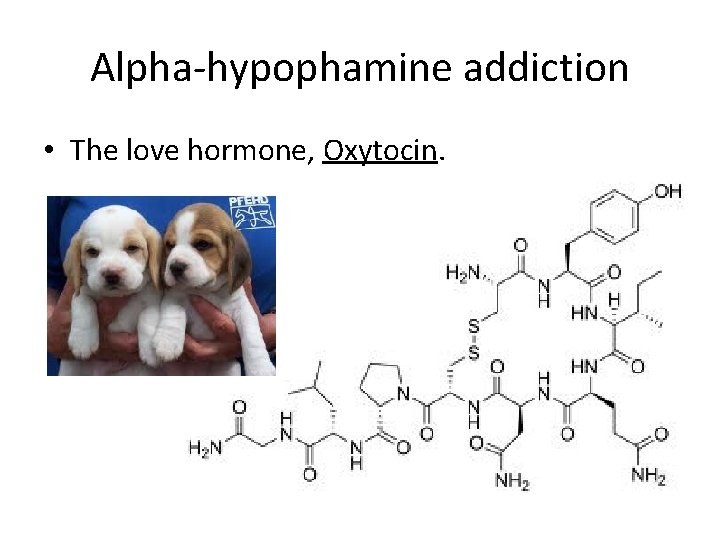
Alpha-hypophamine addiction • The love hormone, Oxytocin.
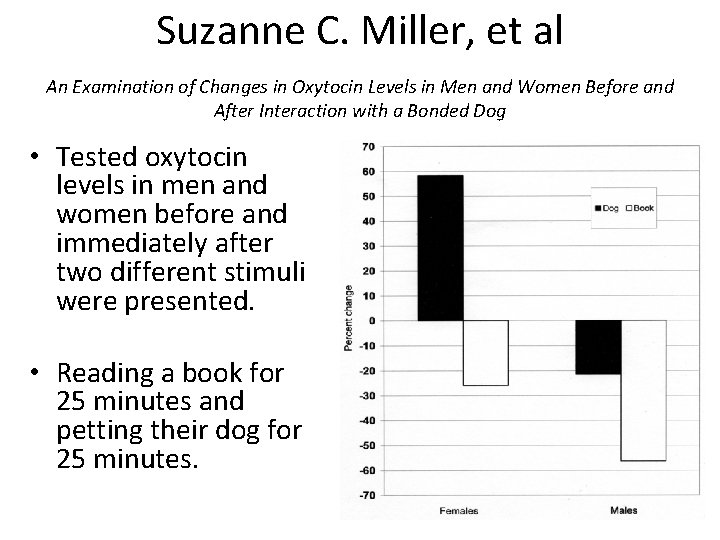
Suzanne C. Miller, et al An Examination of Changes in Oxytocin Levels in Men and Women Before and After Interaction with a Bonded Dog • Tested oxytocin levels in men and women before and immediately after two different stimuli were presented. • Reading a book for 25 minutes and petting their dog for 25 minutes.
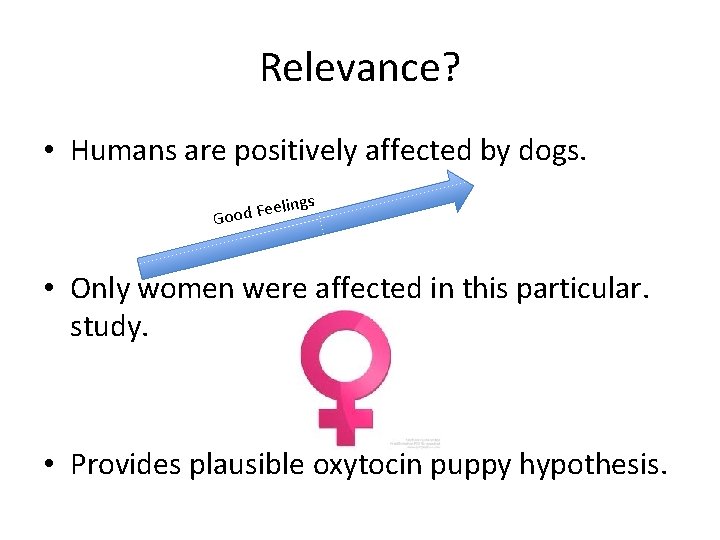
Relevance? • Humans are positively affected by dogs. gs eelin F d o o G • Only women were affected in this particular. study. • Provides plausible oxytocin puppy hypothesis.
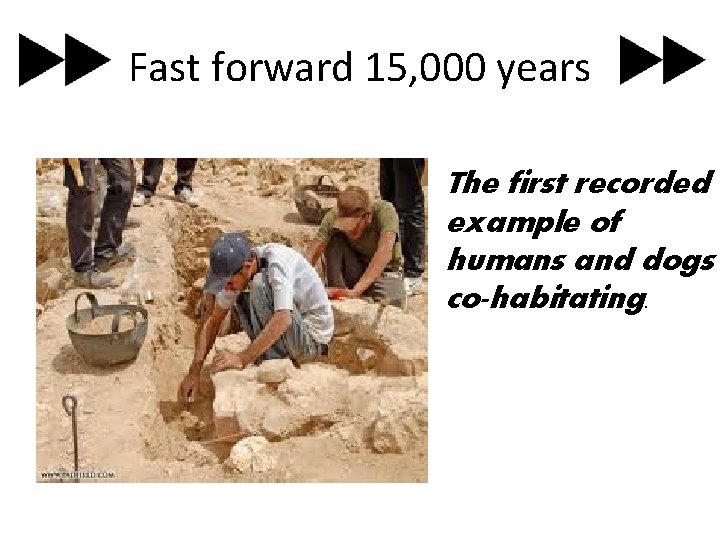
Fast forward 15, 000 years The first recorded example of humans and dogs co-habitating.
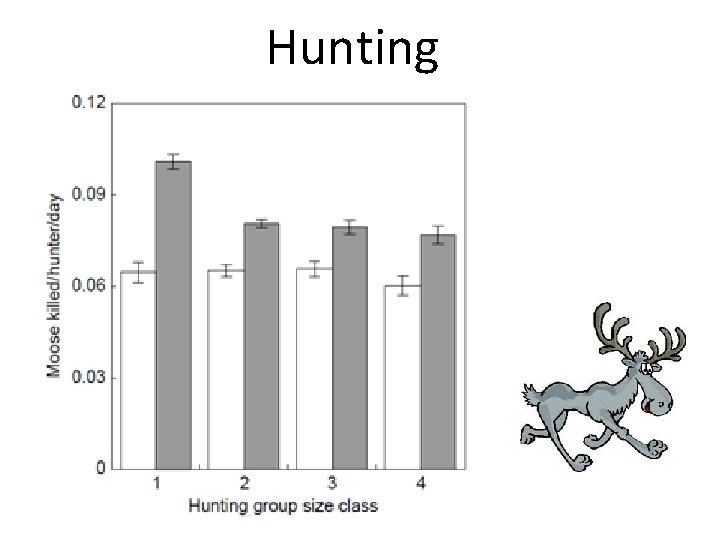
Hunting
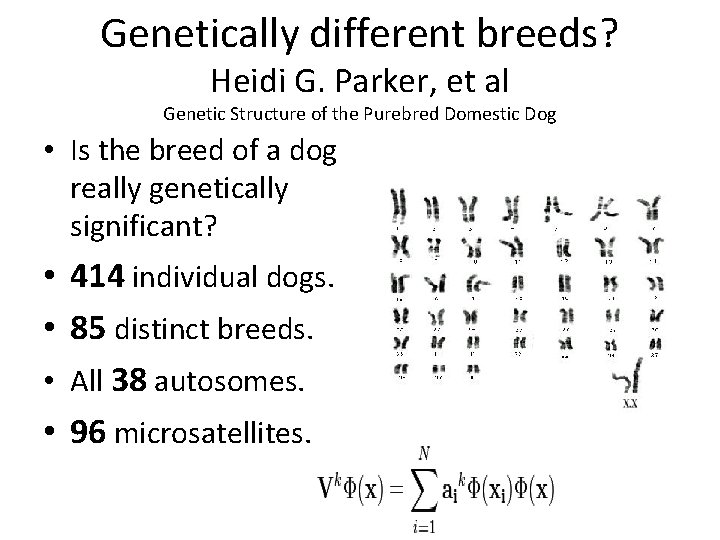
Genetically different breeds? Heidi G. Parker, et al Genetic Structure of the Purebred Domestic Dog • Is the breed of a dog really genetically significant? • 414 individual dogs. • 85 distinct breeds. • All 38 autosomes. • 96 microsatellites.
Relevance? • Breed of a dog is a real thing! • Physically and genetically
Conclusion • When and how did humans and dogs first begin to survive together in a mutualistic relationship? The exact date is still heavily debated and ranges from 100, 000 years ago to 10, 000 years ago. Most research I came across stated approx. 30, 000 years ago. • How and why did we domesticate such a powerful carnivore? A combination of oxytocin based emotions and the skill sets each species contributed to the mutualistic relationship. • Are dog breeds really genetically different? Yes, one of the most diverse species on the planet.
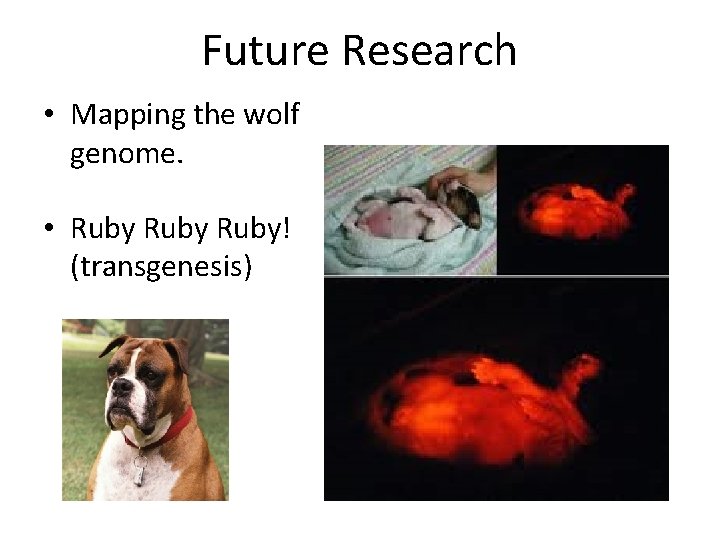
Future Research • Mapping the wolf genome. • Ruby! (transgenesis)
References • • http: //www. searchingwolf. com/wevolve. htm An Examination of Changes in Oxytocin Levels in Men and Women Before and After Interaction with a Bonded Dog. Suzanne C. Miller*, Cathy Kennedy*, Dale De. Voe*, Matthew Hickey*, Tracy Nelson* and Lori Kogan†* Department of Health and Exercise Science, Colorado State University, USA † Department of Clinical Sciences, Colorado State University, USA http: //www. sciencemag. org/content/304/5674/1160. full#aff-1 Spady TC, Ostrander EA (January 2008). "Canine behavioral genetics: pointing out the phenotypes and herding up the genes". American Journal of Human Genetics 82 (1): 10– 8. Chase, K. , D. F. Carrier, F. R. Adler, E. A. Ostrander and K. G. Lark. 2005. Interaction between the X chromosome and an autosome regulates size sexual dimorphism in Portuguese Water Dogs. Genome Research 15: 1820 -1824. Parker, H. G. , et al. 2004. Genetic structure of the purebred domestic dog. Science 304: 1160 -1164. Parker, H. G. , and Ostrander, E. A. 2005. Canine genomics and genetics: Running with the pack. PLo. S Genetics 1(5): e 58. Sutter, N. B. , et al. 2004. Extensive and breed-specific linkage disequilibrium in Canis familiaris. Genome Research 14: 23882396. Ruusila, V. , and M. Pesonen. 2004. Interspecific cooperationin human (Homo sapiens) hunting: The benefits of a barkingdog (Canis familiaris). Annales Zoologici Fennici 41: 545– 49. http: //www. google. com/imgres? imgurl=http: //www. genome. gov/Images/press_photos/lowres/5072. jpg&imgrefurl=http: //www. genome. gov/11007323&usg=__d. NXh_CSm 8 ot_7 PIj 9 qvb. Xn. EQCbs=&h=751&w=500&sz=256& hl=en&start=0&zoom=1&tbnid=WLyl_q 8 derop 5 M: &tbnh=121&tbnw=81&prev=/images%3 Fq%3 Dboxer%2 Bgenome%26 um %3 D 1%26 hl%3 Den%26 client%3 Dfirefox-a%26 rls%3 Dorg. mozilla: en. US: official%26 biw%3 D 1280%26 bih%3 D 607%26 tbs%3 Disch: 1&um=1&itbs=1&iact=hc&vpx=303&vpy=143&dur=224&hovh= 187&hovw=124&tx=116&ty=136&ei=2 ez 8 TPHt. I 8 Kql. Afq 97 m. IBQ&oei=2 ez 8 TPHt. I 8 Kql. Afq 97 m. IBQ&esq=1&page=1&ndsp=26 &ved=1 t: 429, r: 2, s: 0