European Christendom AP World History Notes Chapter 10
- Slides: 23
European Christendom AP World History Notes Chapter 10
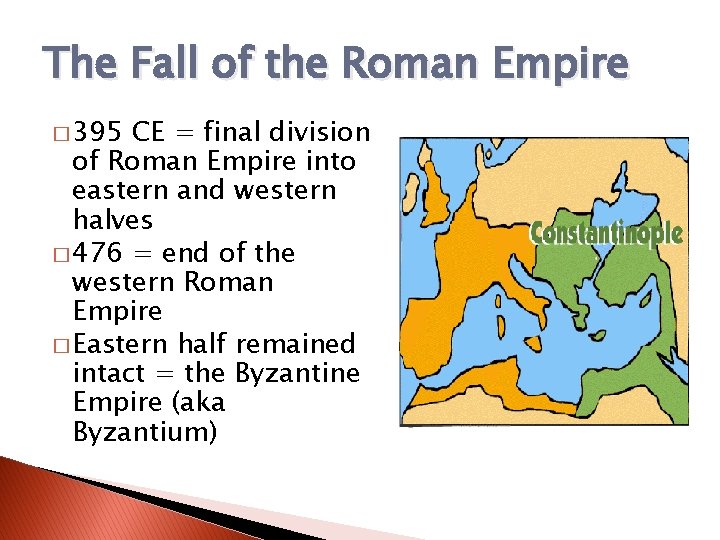
The Fall of the Roman Empire � 395 CE = final division of Roman Empire into eastern and western halves � 476 = end of the western Roman Empire � Eastern half remained intact = the Byzantine Empire (aka Byzantium)
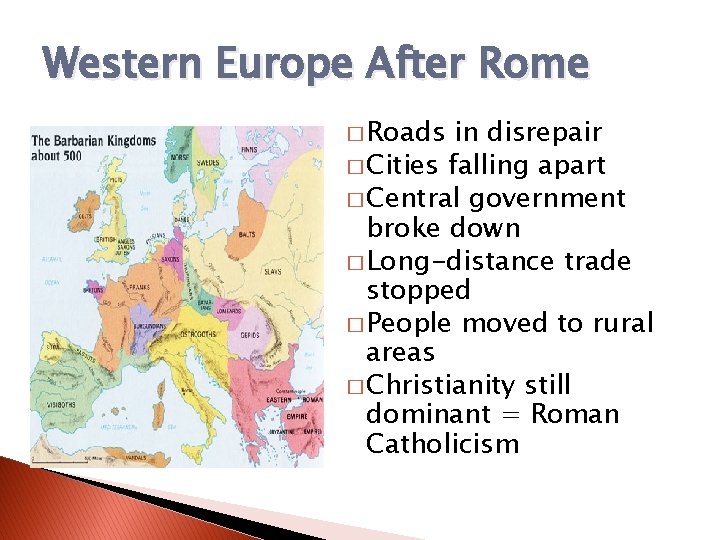
Western Europe After Rome � Roads in disrepair � Cities falling apart � Central government broke down � Long-distance trade stopped � People moved to rural areas � Christianity still dominant = Roman Catholicism
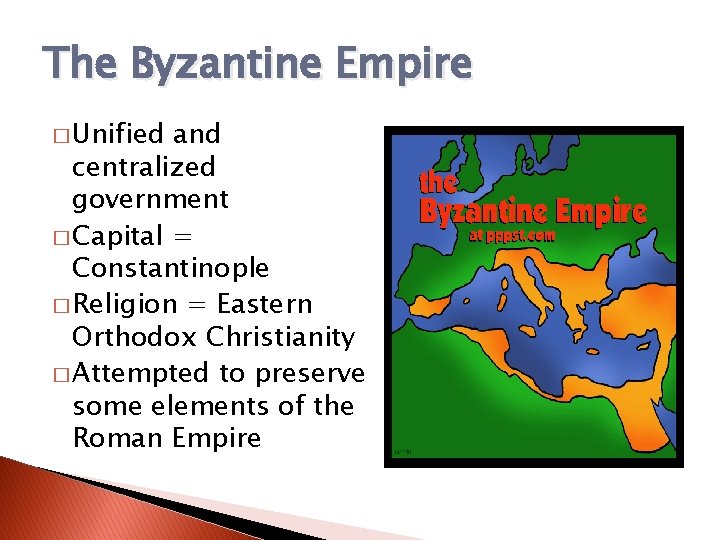
The Byzantine Empire � Unified and centralized government � Capital = Constantinople � Religion = Eastern Orthodox Christianity � Attempted to preserve some elements of the Roman Empire
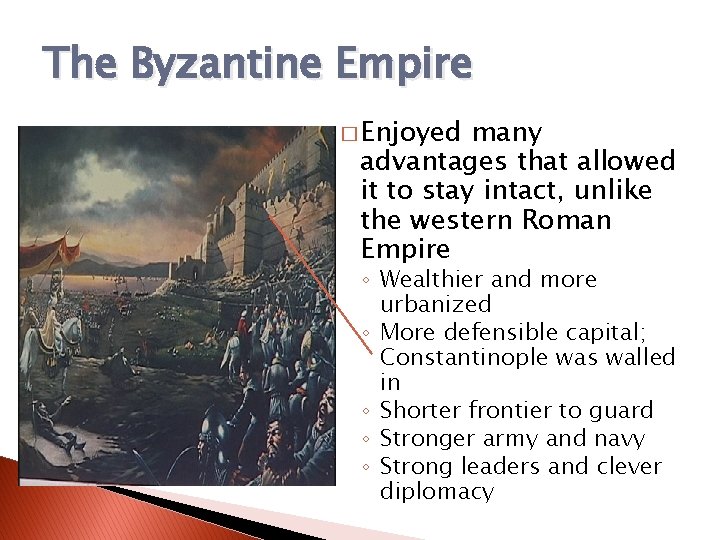
The Byzantine Empire � Enjoyed many advantages that allowed it to stay intact, unlike the western Roman Empire ◦ Wealthier and more urbanized ◦ More defensible capital; Constantinople was walled in ◦ Shorter frontier to guard ◦ Stronger army and navy ◦ Strong leaders and clever diplomacy
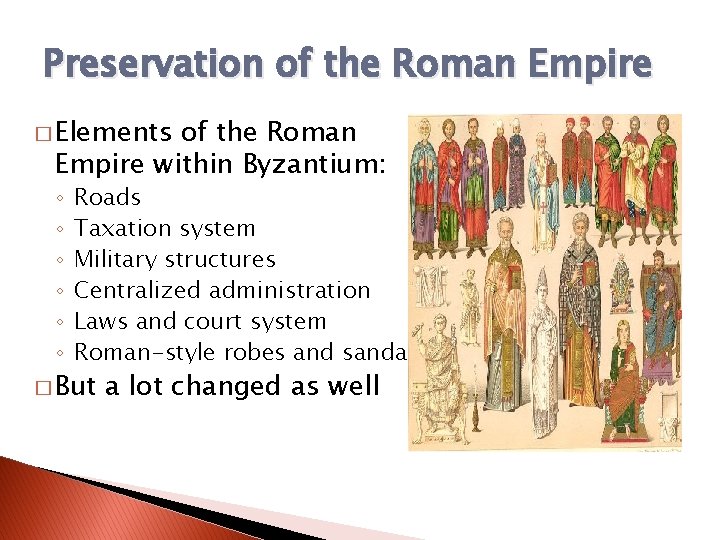
Preservation of the Roman Empire � Elements of the Roman Empire within Byzantium: ◦ ◦ ◦ Roads Taxation system Military structures Centralized administration Laws and court system Roman-style robes and sandals � But a lot changed as well
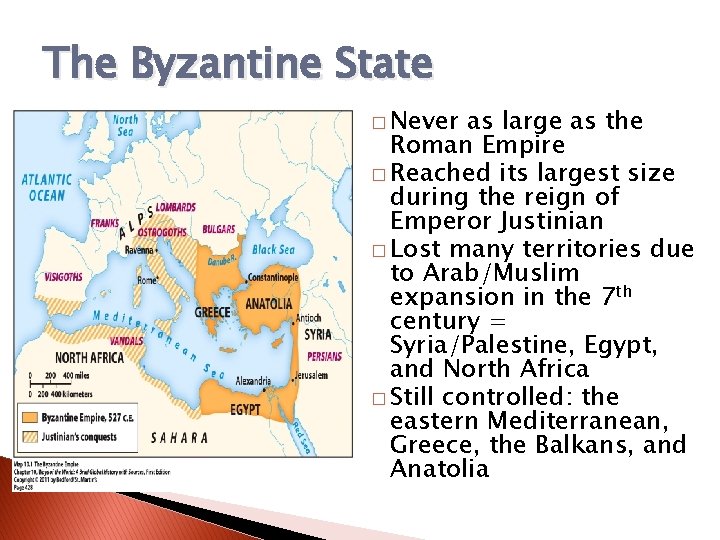
The Byzantine State � Never as large as the Roman Empire � Reached its largest size during the reign of Emperor Justinian � Lost many territories due to Arab/Muslim expansion in the 7 th century = Syria/Palestine, Egypt, and North Africa � Still controlled: the eastern Mediterranean, Greece, the Balkans, and Anatolia
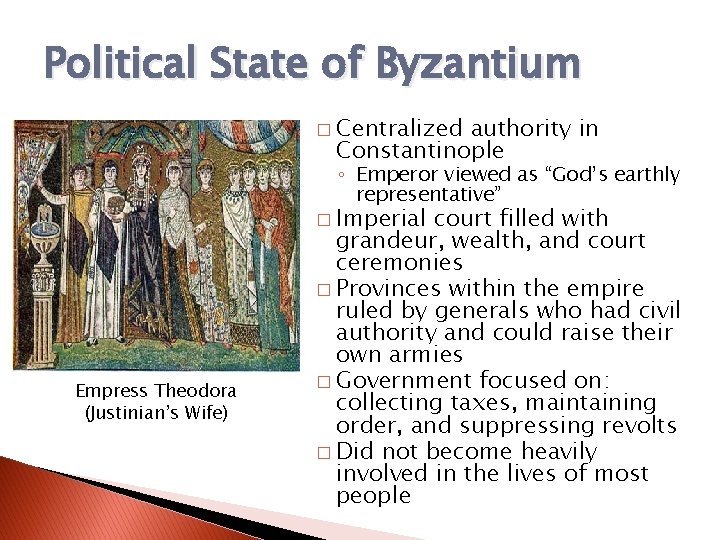
Political State of Byzantium � Centralized authority in Constantinople ◦ Emperor viewed as “God’s earthly representative” � Imperial Empress Theodora (Justinian’s Wife) court filled with grandeur, wealth, and court ceremonies � Provinces within the empire ruled by generals who had civil authority and could raise their own armies � Government focused on: collecting taxes, maintaining order, and suppressing revolts � Did not become heavily involved in the lives of most people
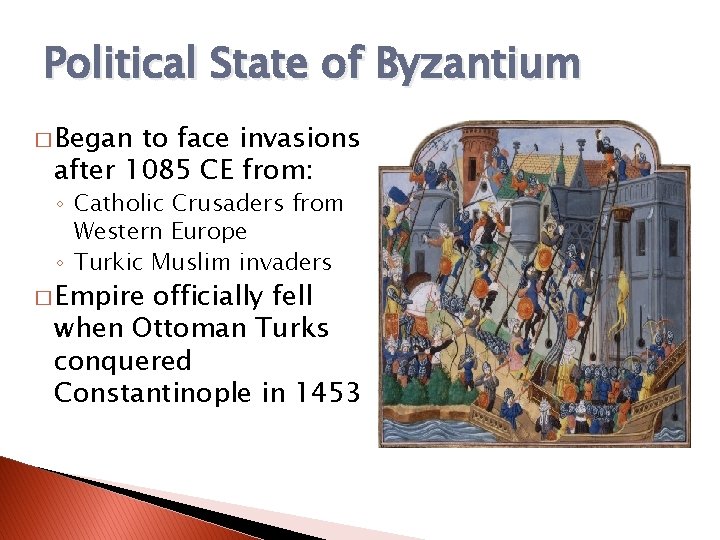
Political State of Byzantium � Began to face invasions after 1085 CE from: ◦ Catholic Crusaders from Western Europe ◦ Turkic Muslim invaders � Empire officially fell when Ottoman Turks conquered Constantinople in 1453
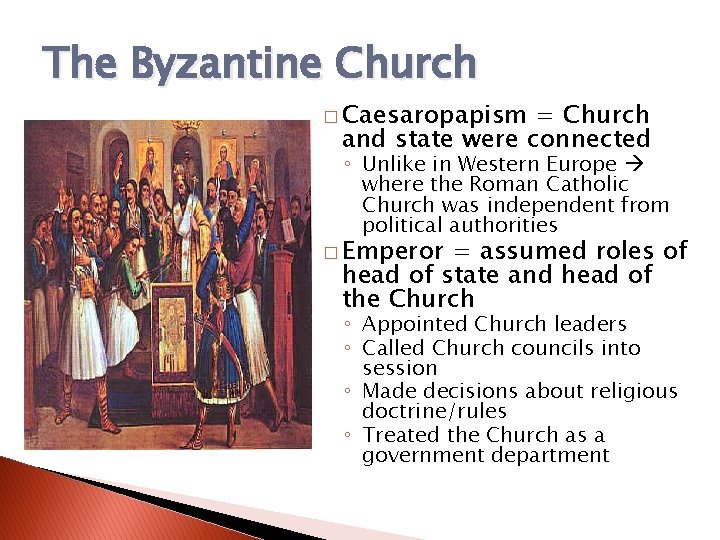
The Byzantine Church � Caesaropapism = Church and state were connected ◦ Unlike in Western Europe where the Roman Catholic Church was independent from political authorities � Emperor = assumed roles of head of state and head of the Church ◦ Appointed Church leaders ◦ Called Church councils into session ◦ Made decisions about religious doctrine/rules ◦ Treated the Church as a government department
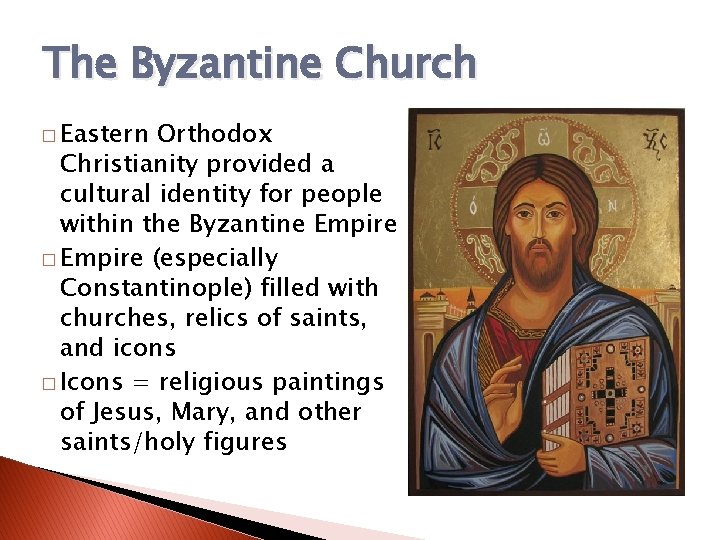
The Byzantine Church � Eastern Orthodox Christianity provided a cultural identity for people within the Byzantine Empire � Empire (especially Constantinople) filled with churches, relics of saints, and icons � Icons = religious paintings of Jesus, Mary, and other saints/holy figures
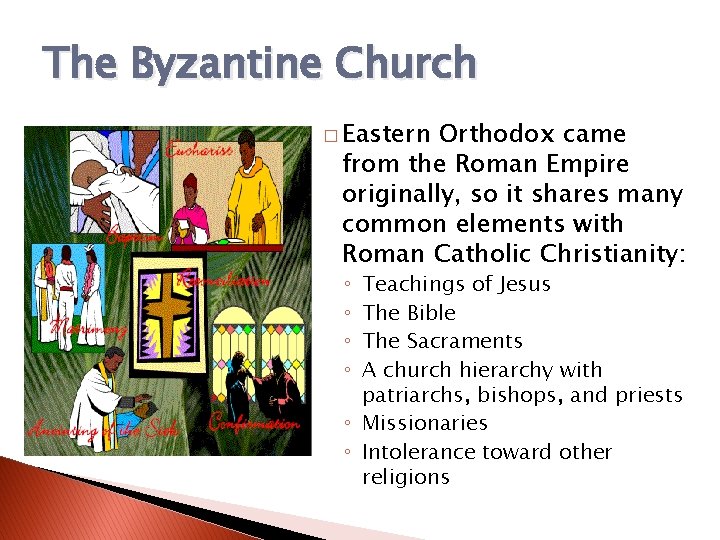
The Byzantine Church � Eastern Orthodox came from the Roman Empire originally, so it shares many common elements with Roman Catholic Christianity: Teachings of Jesus The Bible The Sacraments A church hierarchy with patriarchs, bishops, and priests ◦ Missionaries ◦ Intolerance toward other religions ◦ ◦
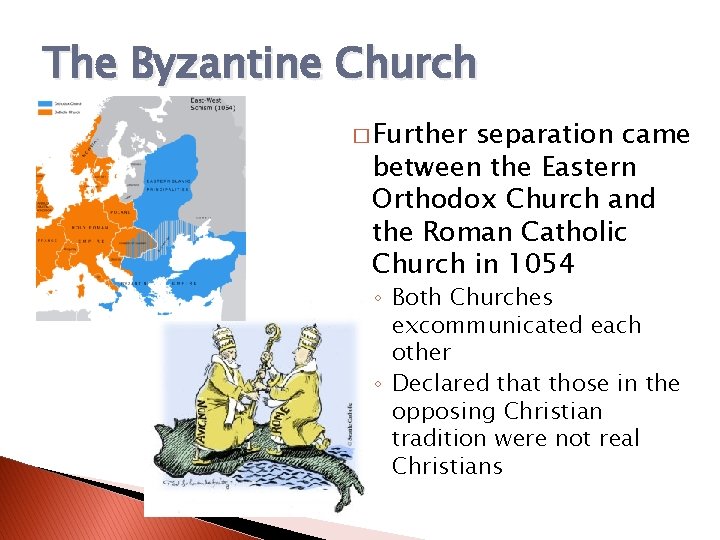
The Byzantine Church � Byzantine � Greek � Priests Empire grew long beards � Priests could get married � Rejected the authority of the Pope of Rome Eastern Orthodox � Western � Latin Europe � Priests shaved � Priests = celibate � Accepted the Roman Pope as the sole authority for Christians everywhere Roman Catholic
The Byzantine Church � Further separation came between the Eastern Orthodox Church and the Roman Catholic Church in 1054 ◦ Both Churches excommunicated each other ◦ Declared that those in the opposing Christian tradition were not real Christians
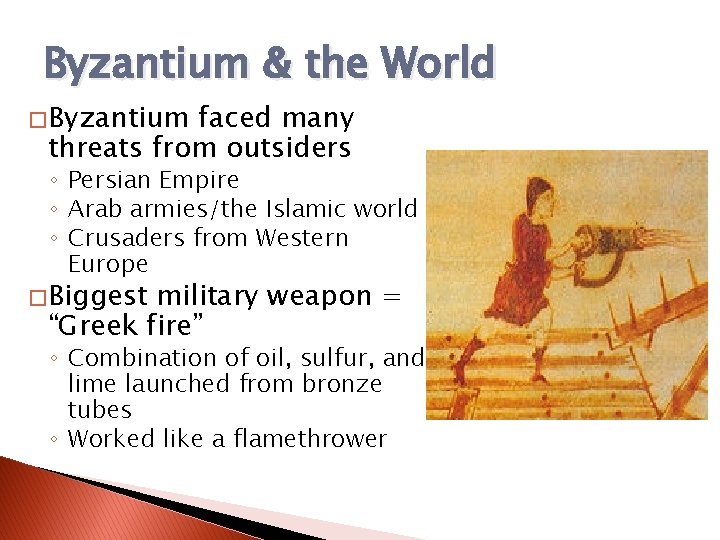
Byzantium & the World � Byzantium faced many threats from outsiders ◦ Persian Empire ◦ Arab armies/the Islamic world ◦ Crusaders from Western Europe � Biggest military weapon = “Greek fire” ◦ Combination of oil, sulfur, and lime launched from bronze tubes ◦ Worked like a flamethrower
Byzantium & the World � Central player in long-distance trade of Eurasia � Products made by Byzantine craftspeople in high demand ◦ ◦ ◦ Jewelry Gemstones Silver and gold work Linen, woolen, and silk textiles Purple dyes
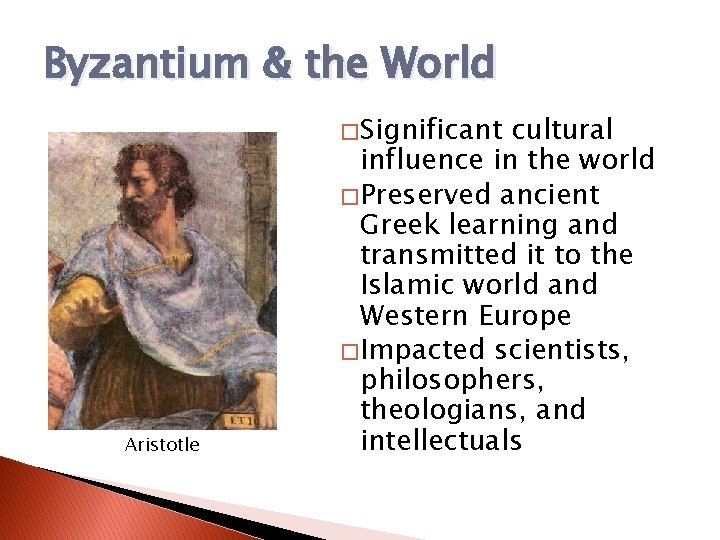
Byzantium & the World � Significant Aristotle cultural influence in the world � Preserved ancient Greek learning and transmitted it to the Islamic world and Western Europe � Impacted scientists, philosophers, theologians, and intellectuals
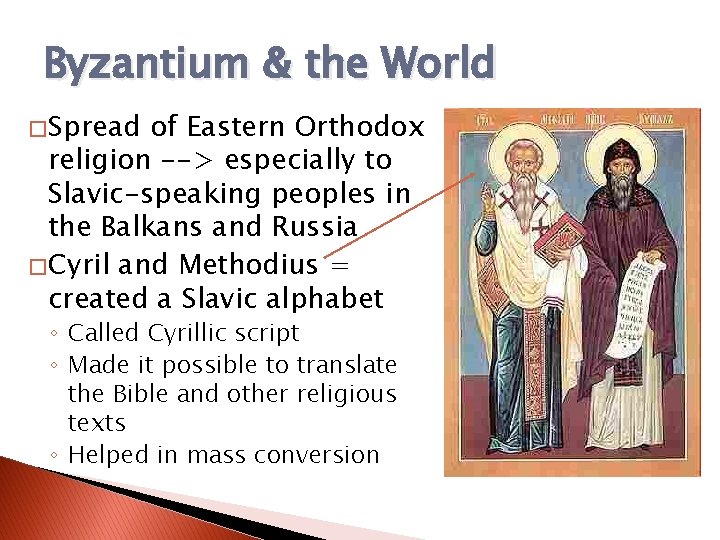
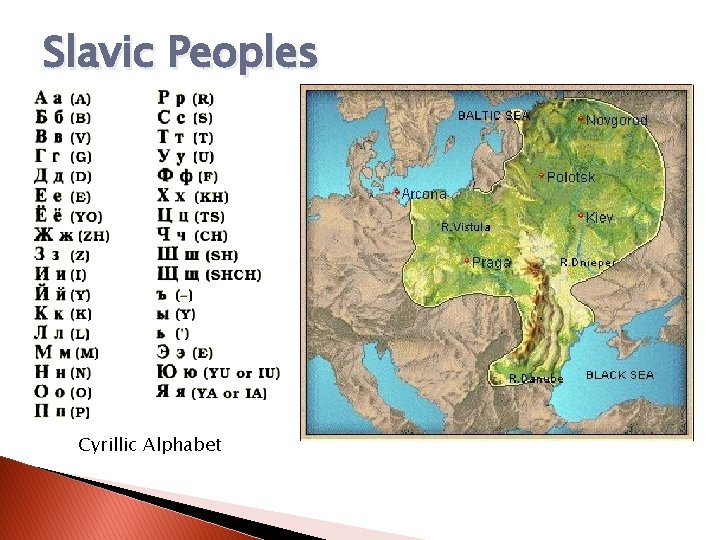
Byzantium & the World � Spread of Eastern Orthodox religion --> especially to Slavic-speaking peoples in the Balkans and Russia � Cyril and Methodius = created a Slavic alphabet ◦ Called Cyrillic script ◦ Made it possible to translate the Bible and other religious texts ◦ Helped in mass conversion
Slavic Peoples Cyrillic Alphabet
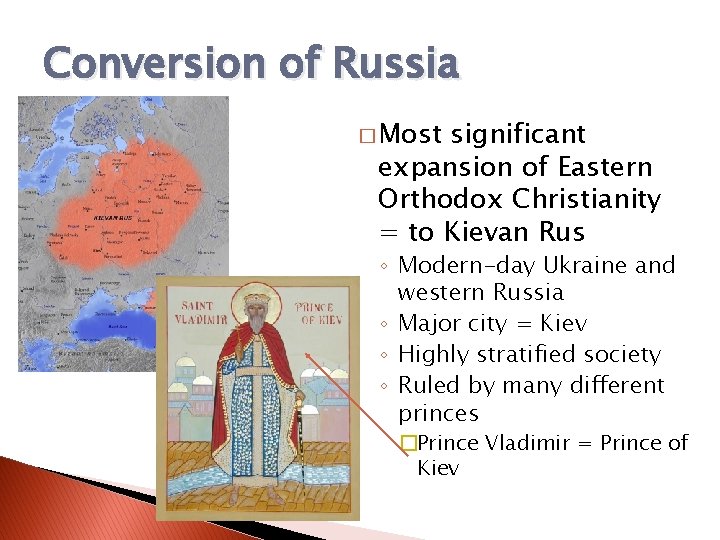
Conversion of Russia � Most significant expansion of Eastern Orthodox Christianity = to Kievan Rus ◦ Modern-day Ukraine and western Russia ◦ Major city = Kiev ◦ Highly stratified society ◦ Ruled by many different princes �Prince Vladimir = Prince of Kiev
Conversion of Russia � Prince Vladimir = wanted to bring a new faith to Rus that would unify the many diverse peoples of the region � He also wanted to link Rus into wider networks of communication and exchange in the world
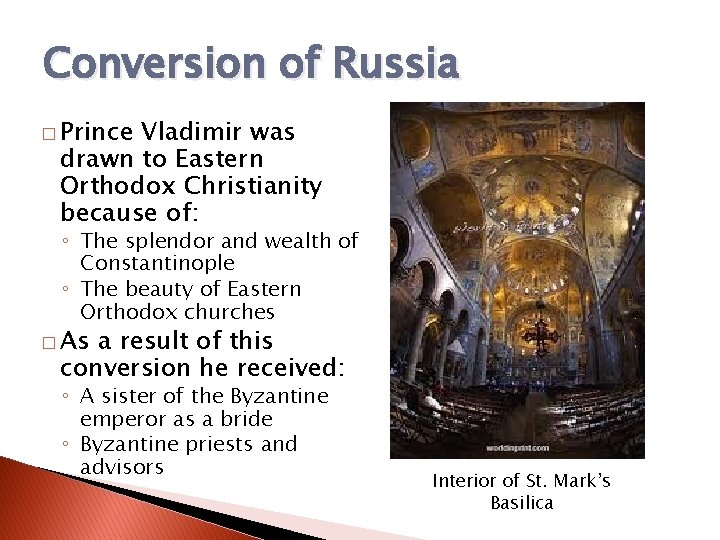
Conversion of Russia � Prince Vladimir was drawn to Eastern Orthodox Christianity because of: ◦ The splendor and wealth of Constantinople ◦ The beauty of Eastern Orthodox churches � As a result of this conversion he received: ◦ A sister of the Byzantine emperor as a bride ◦ Byzantine priests and advisors Interior of St. Mark’s Basilica
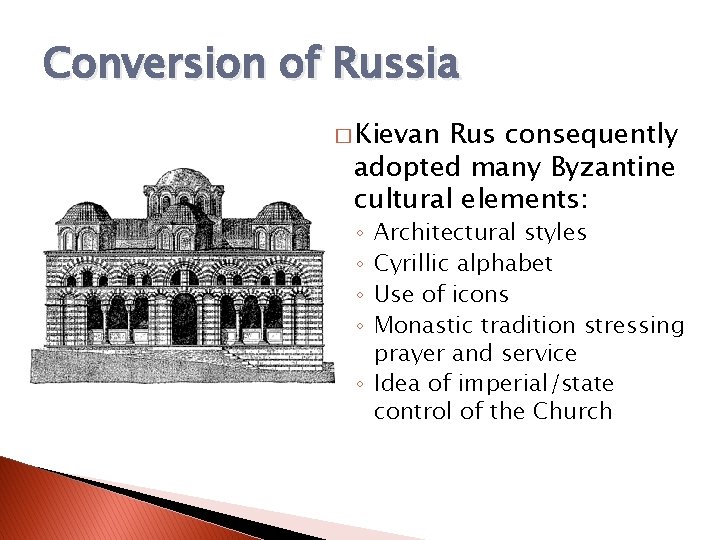
Conversion of Russia � Kievan Rus consequently adopted many Byzantine cultural elements: Architectural styles Cyrillic alphabet Use of icons Monastic tradition stressing prayer and service ◦ Idea of imperial/state control of the Church ◦ ◦