Essentials of Fire Fighting 6 th Edition Firefighter

- Slides: 55
Essentials of Fire Fighting 6 th Edition Firefighter II Chapter 17 — Fire Control
Learning Objective 1 Describe considerations taken when coordinating fireground operations. 17– 1
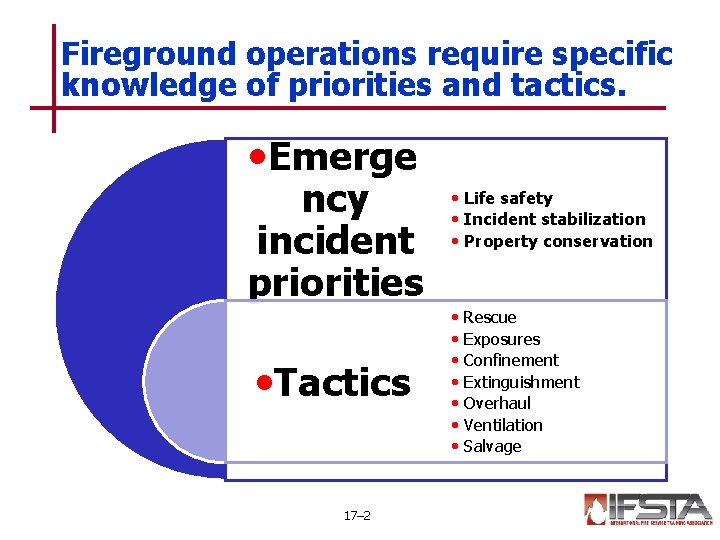
Fireground operations require specific knowledge of priorities and tactics. • Emerge ncy incident priorities • Tactics 17– 2 • Life safety • Incident stabilization • Property conservation • Rescue • Exposures • Confinement • Extinguishment • Overhaul • Ventilation • Salvage
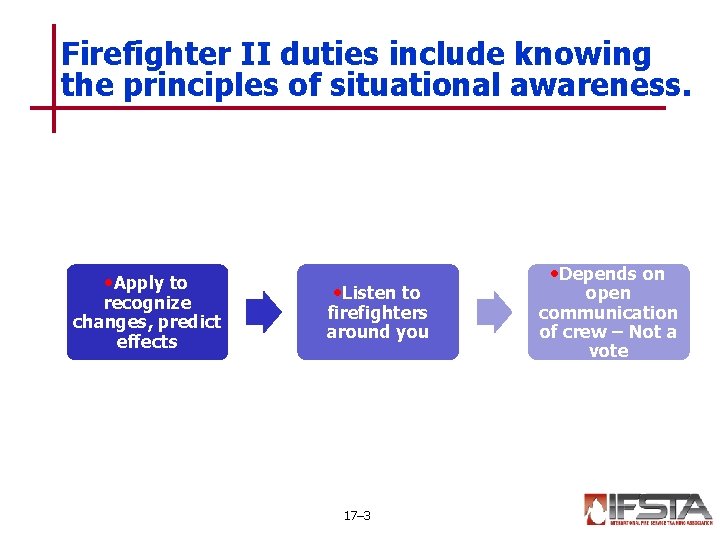
Firefighter II duties include knowing the principles of situational awareness. • Apply to recognize changes, predict effects • Listen to firefighters around you 17– 3 • Depends on open communication of crew – Not a vote
REVIEW QUESTIONS What are the priorities that must be considered when beginning fireground operations? 17– 4
Learning Objective 2 Explain fireground roles and responsibilities a firefighter II may need to coordinate. 17– 5
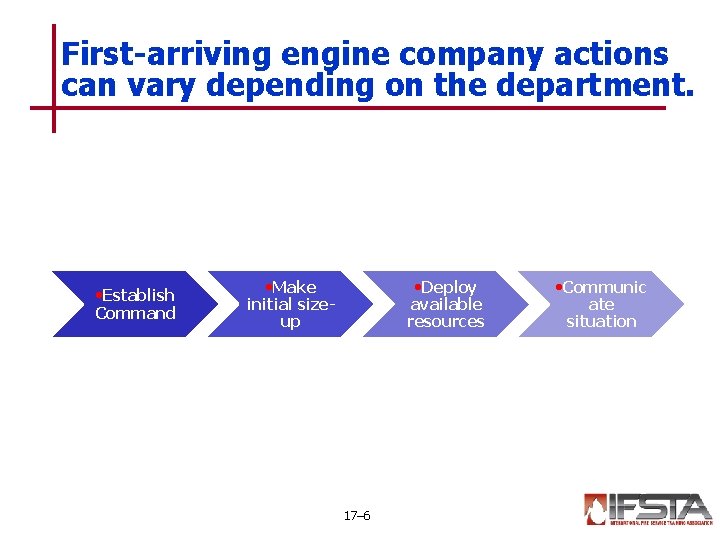
First-arriving engine company actions can vary depending on the department. • Establish Command • Make • Deploy initial sizeup available resources 17– 6 • Communic ate situation
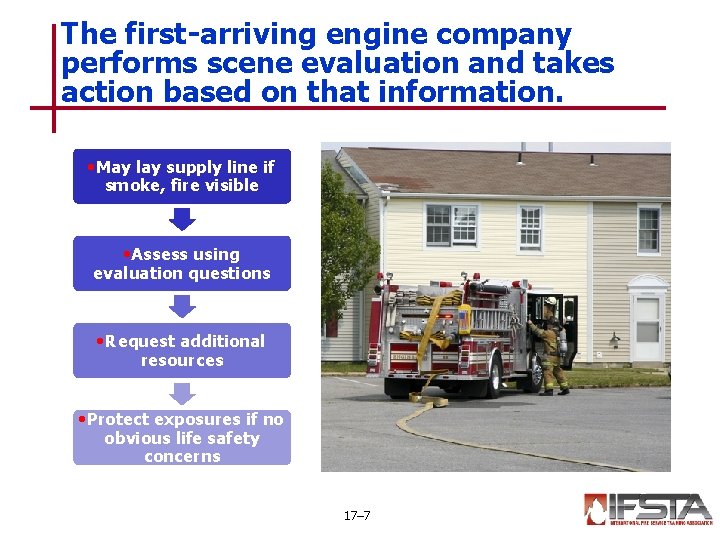
The first-arriving engine company performs scene evaluation and takes action based on that information. • May lay supply line if smoke, fire visible • Assess using evaluation questions • Request additional resources • Protect exposures if no obvious life safety concerns 17– 7
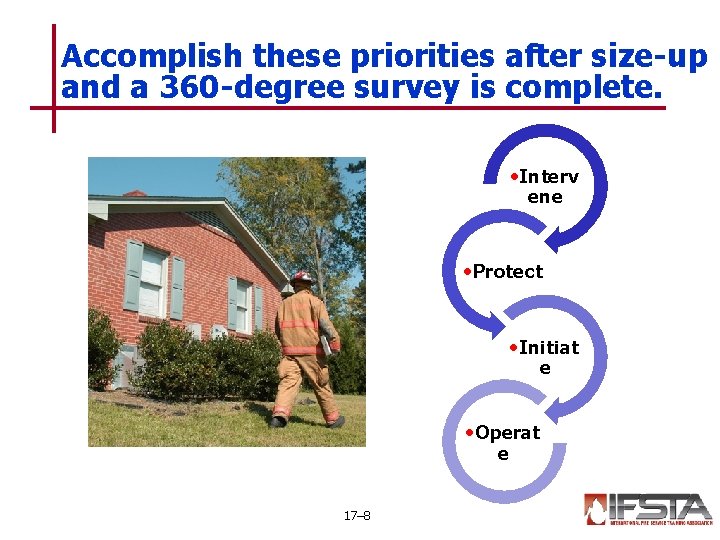
Accomplish these priorities after size-up and a 360 -degree survey is complete. • Interv ene • Protect • Initiat e • Operat e 17– 8
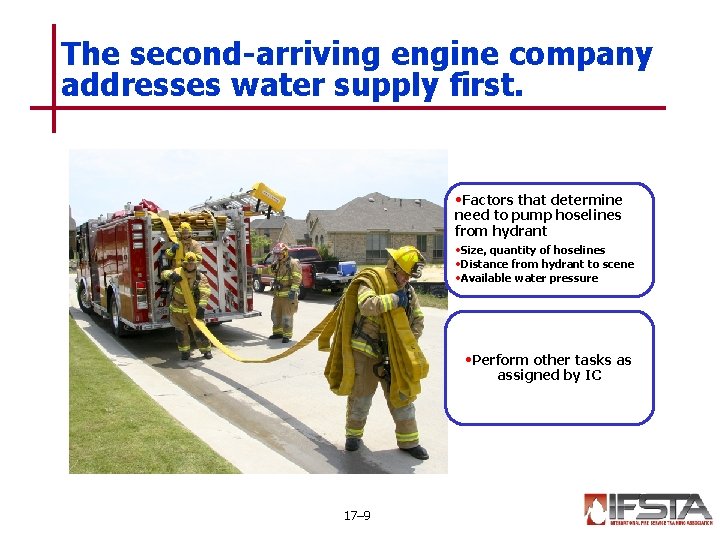
The second-arriving engine company addresses water supply first. • Factors that determine need to pump hoselines from hydrant • Size, quantity of hoselines • Distance from hydrant to scene • Available water pressure • Perform other tasks as assigned by IC 17– 9
Fireground support companies perform tasks dictated by the situation. • Initially • Check outside for victims • Raise ladders • Force entry for simultaneous interior attack, search and rescue • Search • • Not put firefighters at risk of severe injury, death May begin in areas likely inhabited Conduct systematically (Cont. ) Priority areas 17– 10
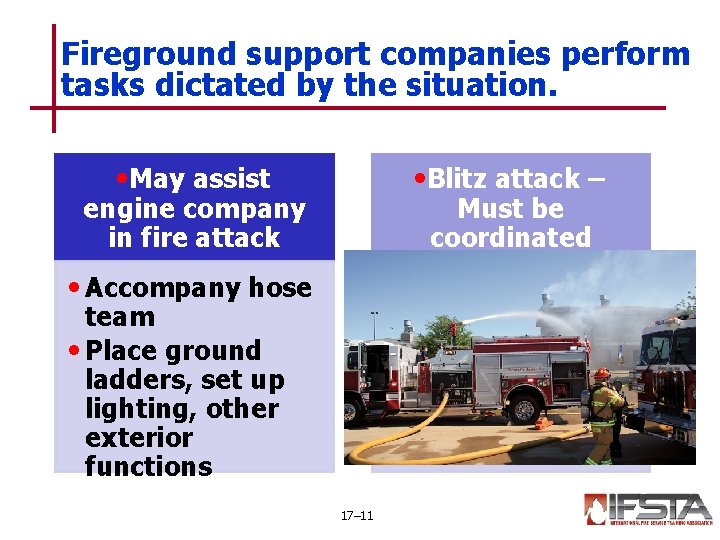
Fireground support companies perform tasks dictated by the situation. • May assist • Blitz attack – engine company in fire attack Must be coordinated • Accompany hose team • Place ground ladders, set up lighting, other exterior functions 17– 11
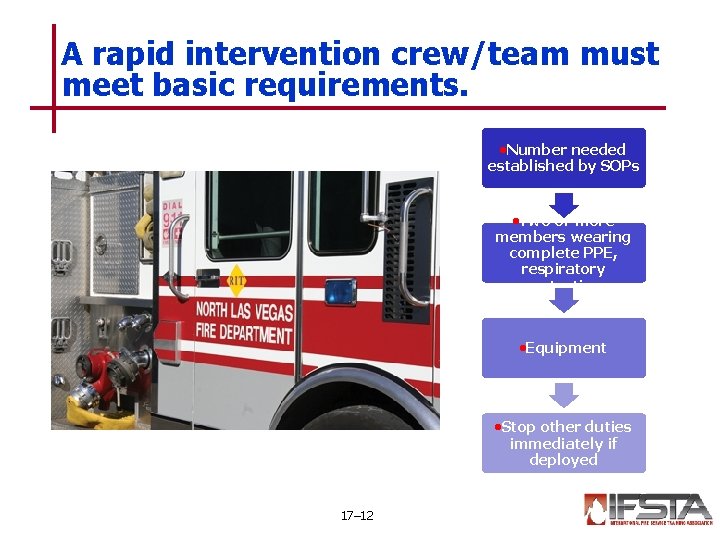
A rapid intervention crew/team must meet basic requirements. • Number needed established by SOPs • Two or more members wearing complete PPE, respiratory protection • Equipment • Stop other duties immediately if deployed 17– 12
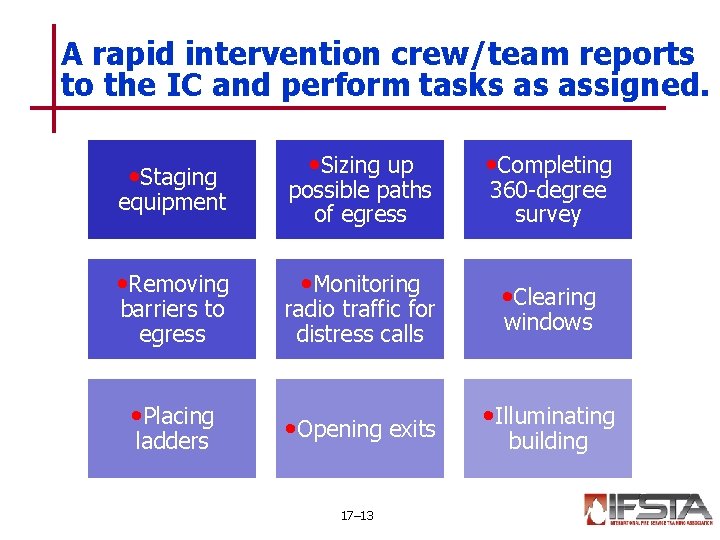
A rapid intervention crew/team reports to the IC and perform tasks as assigned. • Sizing up equipment possible paths of egress • Completing • Removing • Monitoring • Clearing • Staging barriers to egress • Placing ladders radio traffic for distress calls • Opening exits 17– 13 360 -degree survey windows • Illuminating building
CAUTION Do not allow additional assigned duties to prevent you from deploying in your primary rescue capacity when working as a RIT/RIC member. 17– 14
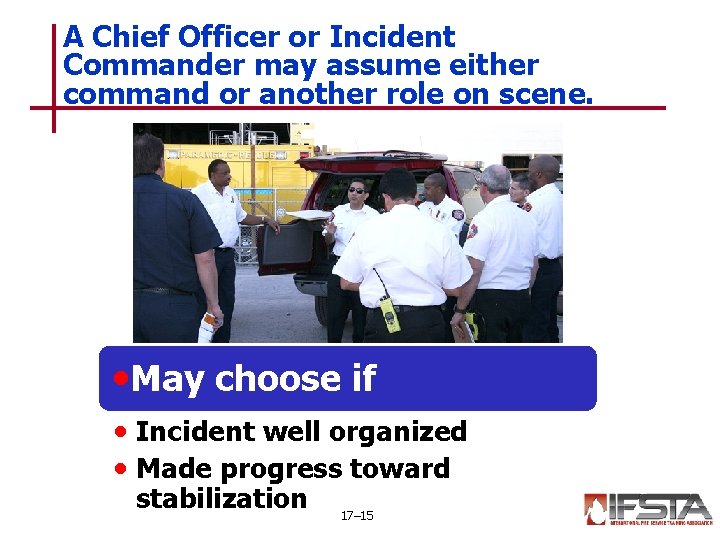
A Chief Officer or Incident Commander may assume either command or another role on scene. • May choose if • Incident well organized • Made progress toward stabilization 17– 15
REVIEW QUESTION What are the fireground roles a firefighter II may need to coordinate at an incident? 17– 16
Learning Objective 3 Discuss the process of establishing and transferring Command. 17– 17
Learning Objective 4 Describe hazards that may be present at fires in underground spaces. 17– 18
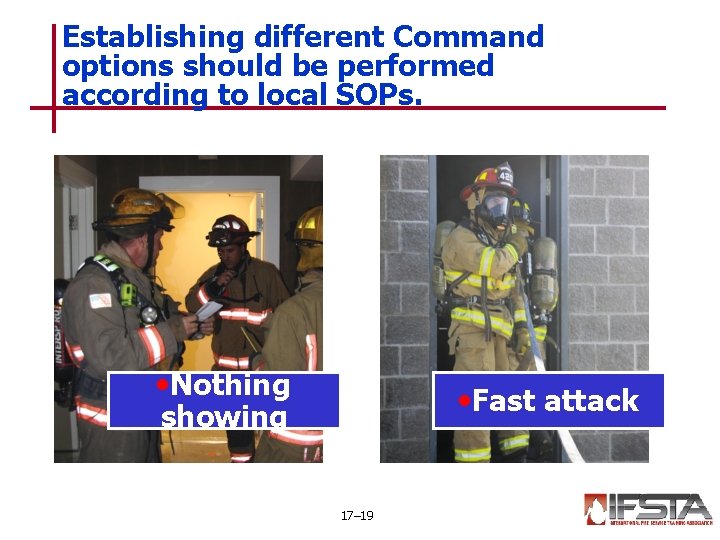
Establishing different Command options should be performed according to local SOPs. • Nothing • Fast attack showing 17– 19
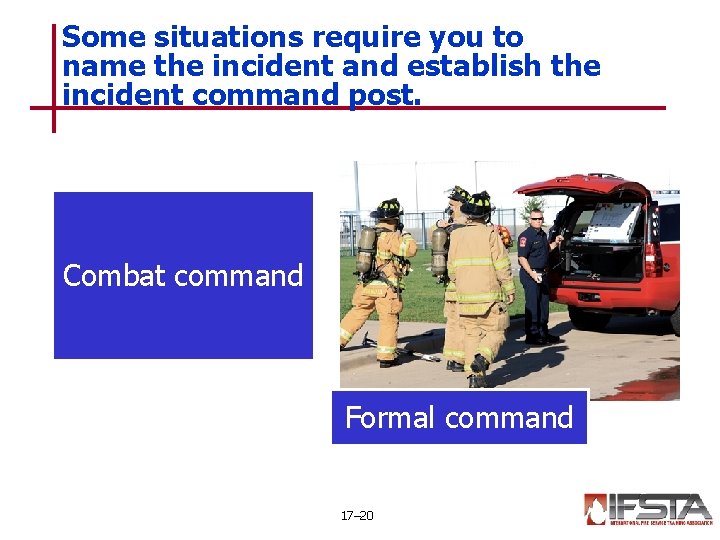
Some situations require you to name the incident and establish the incident command post. Combat command Formal command 17– 20
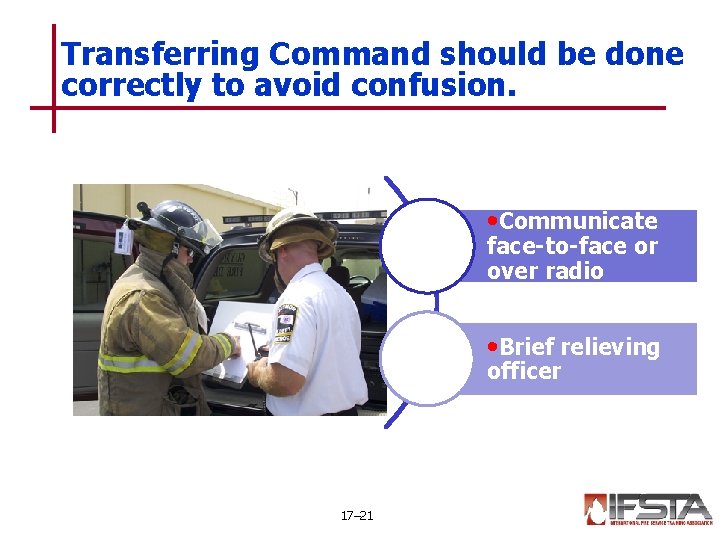
Transferring Command should be done correctly to avoid confusion. • Communicate face-to-face or over radio • Brief relieving officer 17– 21
REVIEW QUESTION How should Command be established at an incident? 17– 22
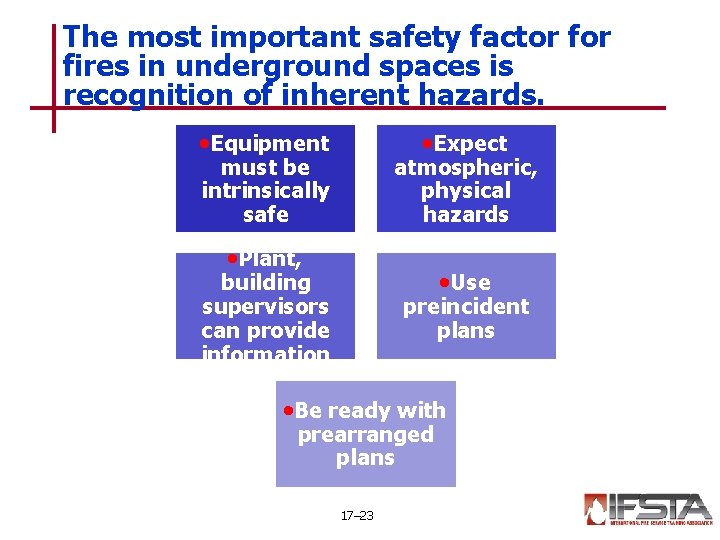
The most important safety factor fires in underground spaces is recognition of inherent hazards. • Equipment • Expect must be intrinsically safe atmospheric, physical hazards • Plant, • Use building supervisors can provide information preincident plans • Be ready with prearranged plans 17– 23
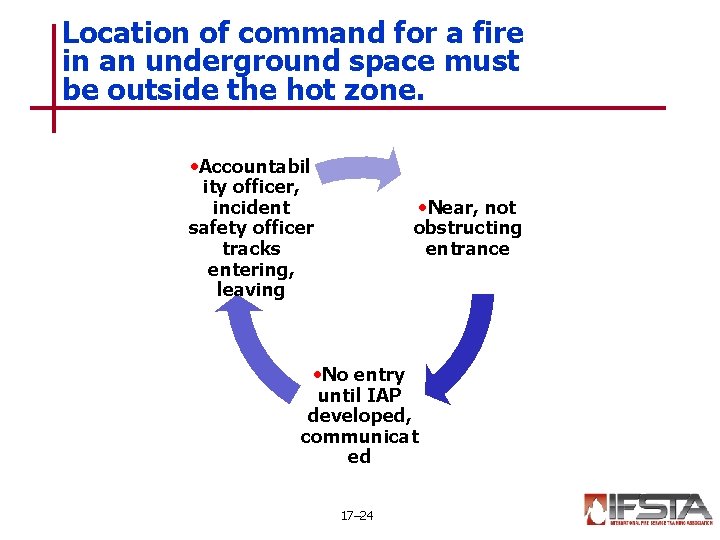
Location of command for a fire in an underground space must be outside the hot zone. • Accountabil ity officer, incident safety officer tracks entering, leaving • Near, not obstructing entrance • No entry until IAP developed, communicat ed 17– 24
Keep some limitations in mind when attacking an underground space fire. • Tire more quickly, consume air faster • Relieve before out of air • Effective-air management part of IAP 17– 25
REVIEW QUESTION What hazards may be present at fires in underground spaces? 17– 26
Learning Objective 5 List safety precautions that should be taken at flammable/combustible liquid fire incidents. 17– 27
Learning Objective 6 Recognize methods used when coordinating operations at a property protected by a fire suppression system. 17– 28
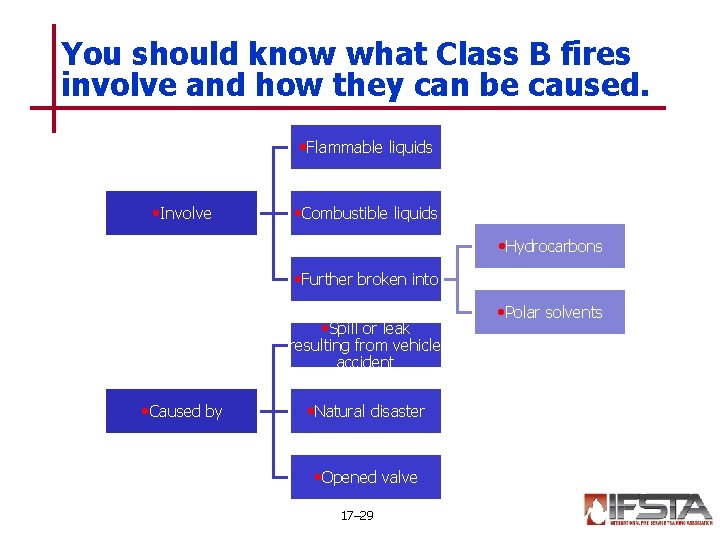
You should know what Class B fires involve and how they can be caused. • Flammable liquids • Involve • Combustible liquids • Hydrocarbons • Further broken into • Spill or leak resulting from vehicle accident • Caused by • Natural disaster • Opened valve 17– 29 • Polar solvents
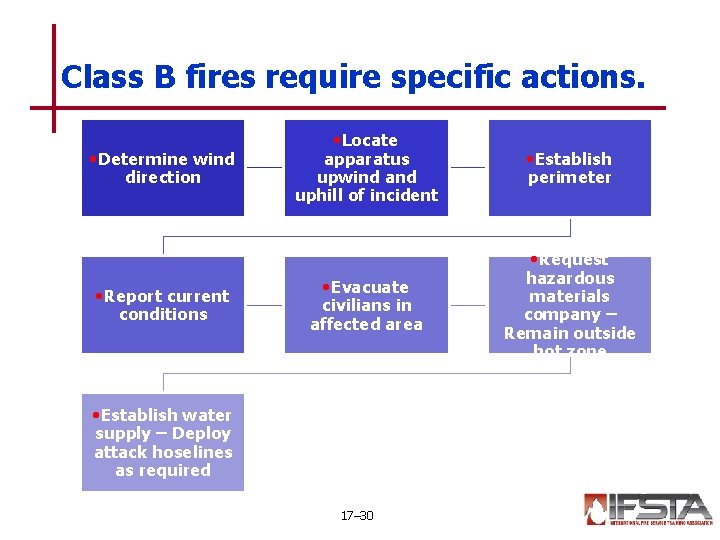
Class B fires require specific actions. • Determine wind direction • Locate apparatus upwind and uphill of incident • Establish perimeter • Request • Report current conditions • Evacuate civilians in affected area • Establish water supply – Deploy attack hoselines as required 17– 30 hazardous materials company – Remain outside hot zone
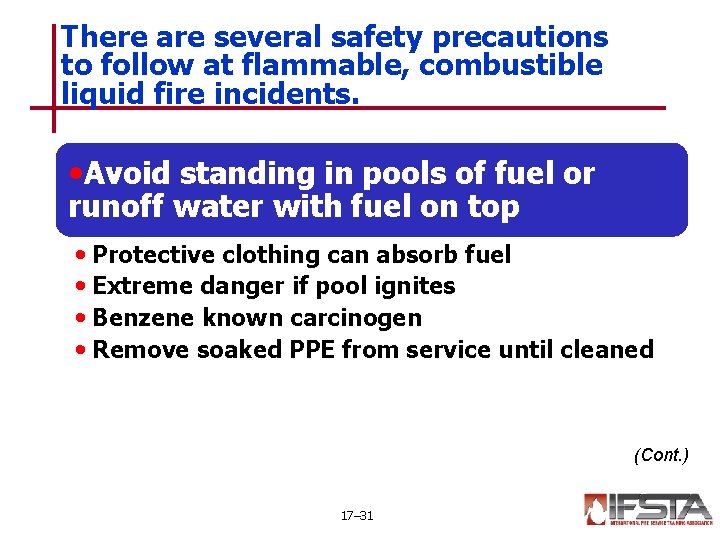
There are several safety precautions to follow at flammable, combustible liquid fire incidents. • Avoid standing in pools of fuel or runoff water with fuel on top • Protective clothing can absorb fuel • Extreme danger if pool ignites • Benzene known carcinogen • Remove soaked PPE from service until cleaned (Cont. ) 17– 31
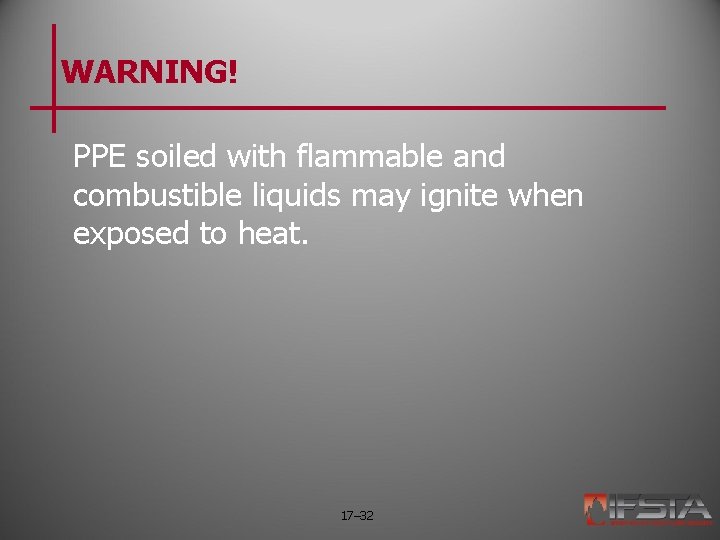
WARNING! PPE soiled with flammable and combustible liquids may ignite when exposed to heat. 17– 32
There are several safety precautions to follow at flammable, combustible liquid fire incidents. • Do not extinguish burning liquids • Around relief valves or piping until leak controlled • Be aware of increase • In intensity of sound or fire from relief valve (Cont. ) 17– 33
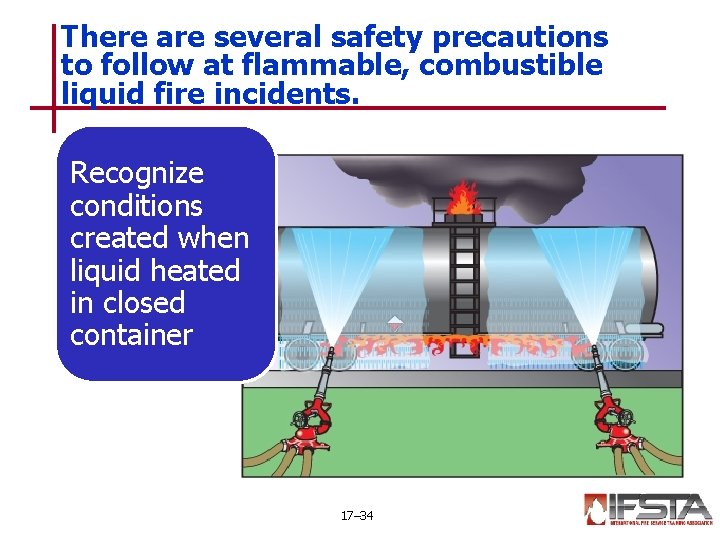
There are several safety precautions to follow at flammable, combustible liquid fire incidents. Recognize conditions created when liquid heated in closed container 17– 34
REVIEW QUESTION What safety precautions should be taken at flammable/combustible liquid fire incidents? 17– 35
You should work to support a fixed fire system when one is present. • Recognize hazards particular to system • • Oxygen depletion Poor visibility Energized electrical equipment Toxic environments • Preincident plans contain • SOPs • Procedures for response units • Building site plan 17– 36
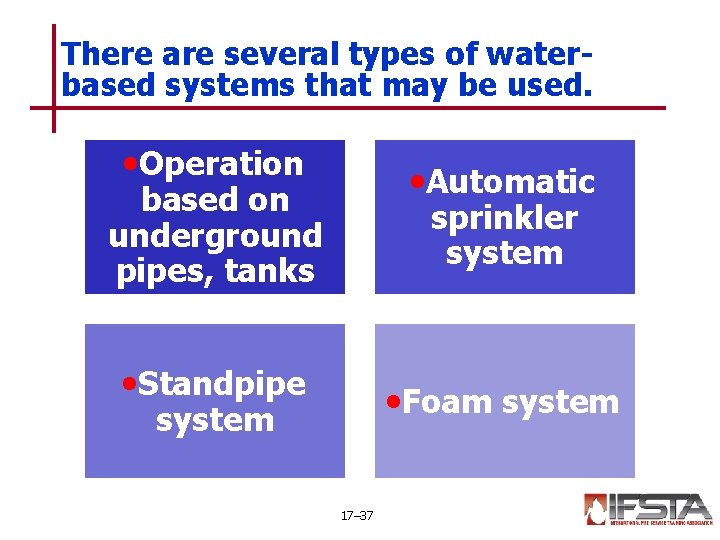
There are several types of waterbased systems that may be used. • Operation • Automatic based on underground pipes, tanks sprinkler system • Standpipe • Foam system 17– 37
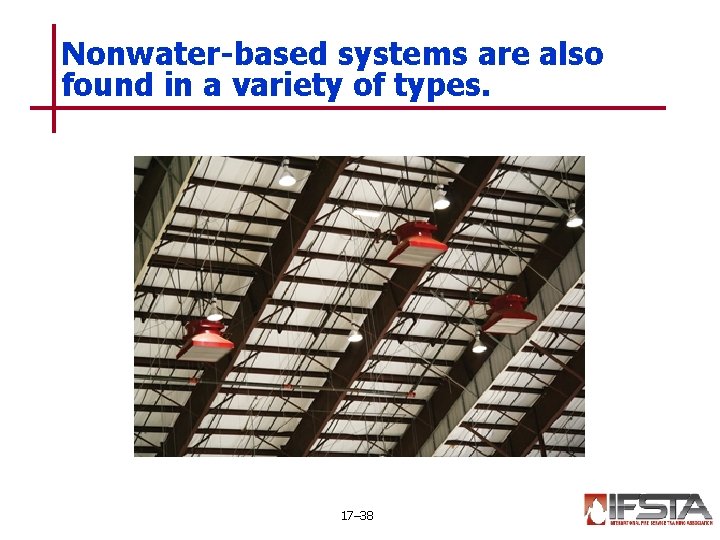
Nonwater-based systems are also found in a variety of types. 17– 38
REVIEW QUESTION How do suppression methods for water-based, and nonwater-based suppression systems differ? 17– 39
Learning Objective 7 Explain ways to use water to control Class B fires. 17– 40
Learning Objective 8 Compare methods used to suppress bulk transport vehicle fires and flammable gas incidents. 17– 41
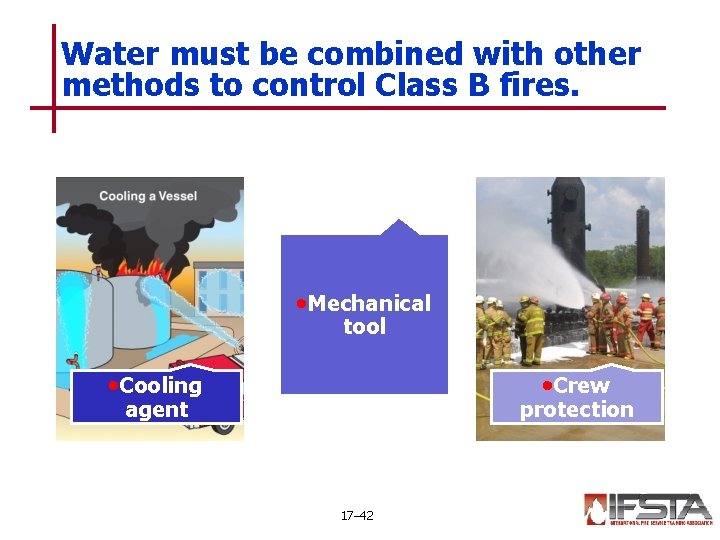
Water must be combined with other methods to control Class B fires. • Mechanical tool • Cooling • Crew agent protection 17– 42
WARNING Only firefighters who have practiced using hoselines for crew protection should do so during an emergency. 17– 43
REVIEW QUESTION What are the ways water can be used to control Class B fires? 17– 44
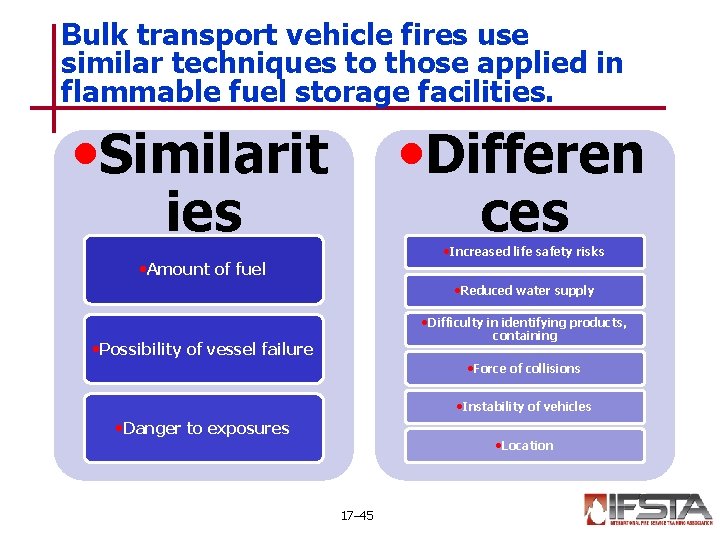
Bulk transport vehicle fires use similar techniques to those applied in flammable fuel storage facilities. • Similarit • Differen ies ces • Increased life safety risks • Amount of fuel • Reduced water supply • Difficulty in identifying products, containing • Possibility of vessel failure • Force of collisions • Instability of vehicles • Danger to exposures • Location 17– 45
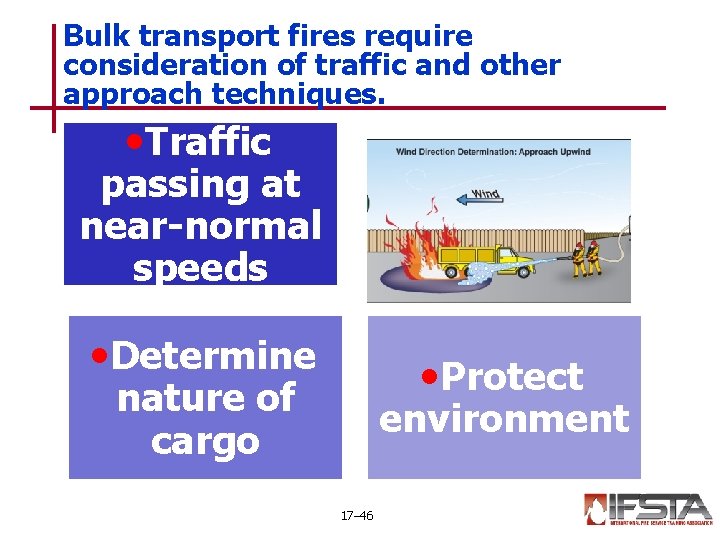
Bulk transport fires require consideration of traffic and other approach techniques. • Traffic passing at near-normal speeds • Determine • Protect nature of cargo environment 17– 46
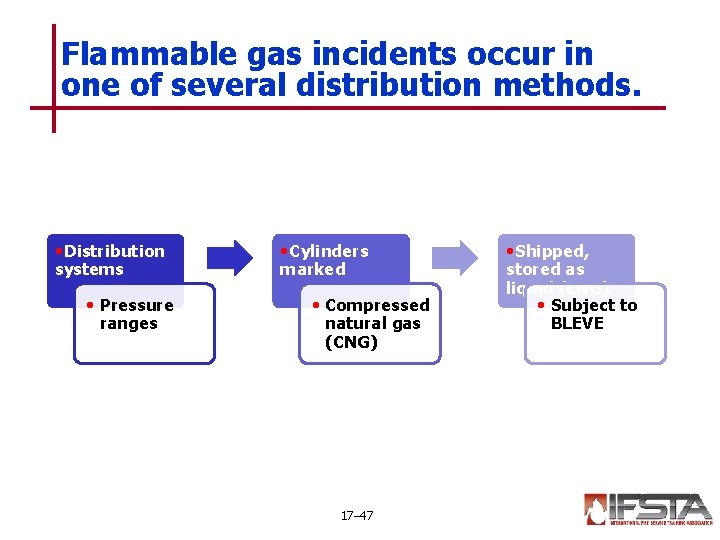
Flammable gas incidents occur in one of several distribution methods. • Distribution systems • Pressure ranges • Cylinders marked • Compressed natural gas (CNG) 17– 47 • Shipped, stored as liquid (LNG) • Subject to BLEVE
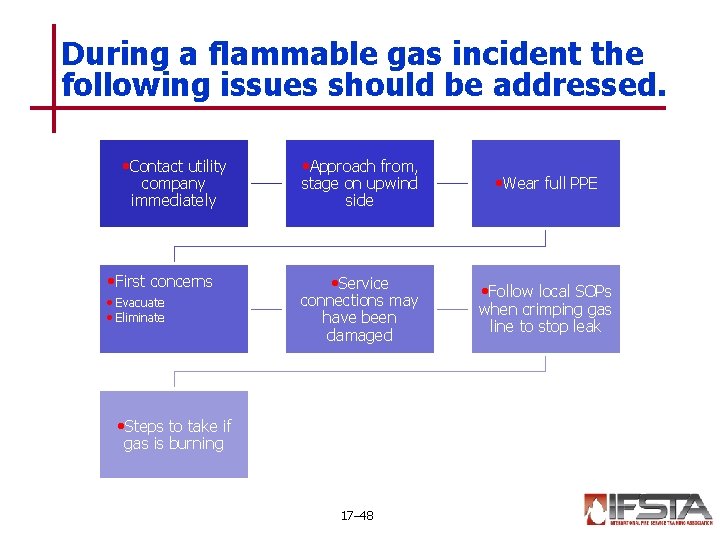
During a flammable gas incident the following issues should be addressed. • Contact utility company immediately • First concerns • Evacuate • Eliminate • Approach from, stage on upwind side • Service connections may have been damaged • Steps to take if gas is burning 17– 48 • Wear full PPE • Follow local SOPs when crimping gas line to stop leak
WARNING If gas is burning from a broken gas pipe, do not extinguish the fire. Provide protection for exposures. 17– 49
REVIEW QUESTION How do suppression methods for bulk transport vehicle fires and flammable gas incidents compare with one another? 17– 50
Summary • Coordinating fireground operations requires knowledge of the roles and responsibilities of each team present on -scene as well as effective establishment and transfer of command. (Cont. ) 17– 51
Summary • When supervising teams it is important to understand the unique considerations required for attacking not only structure fires, but also Class B liquids and gas fires. 17– 52
Learning Objective 9 Establish Incident Command coordinate interior attack of a structure fire. This objective is measured in Skill Sheet 17 -II-1. 17– 53
Learning Objective 10 Control a pressurized flammable gas container fire. This objective is measured in Skill Sheet 17 -II-2. 17– 54