ESSENTIAL POINTS IN CHRONIC CARE NURSING DR MARICHEN
- Slides: 26
ESSENTIAL POINTS IN CHRONIC CARE NURSING DR. MARICHEN A. DYCHANGCO, RN, MAN VICE PRESIDENT, ACADEMIC SERVICES, ST. PAUL UNIVERSITY MANILA AUDITOR – PHILIPPINE ONCOLOGY NURSES ASSOCIATION
A REVIEW
DEFINITION • Chronic Illness • Lasts for a long period of time, usually six (6) months or more, often for a LIFETIME (Treas & Wilkinson, 2014) • Periods of remission and exacerbation (Treas & Wilkinson, 2014) • Affects all ages, found in all types of setting (Bernan, et. al. , 2011) • Irreversible (Potter & Perry, 2017)
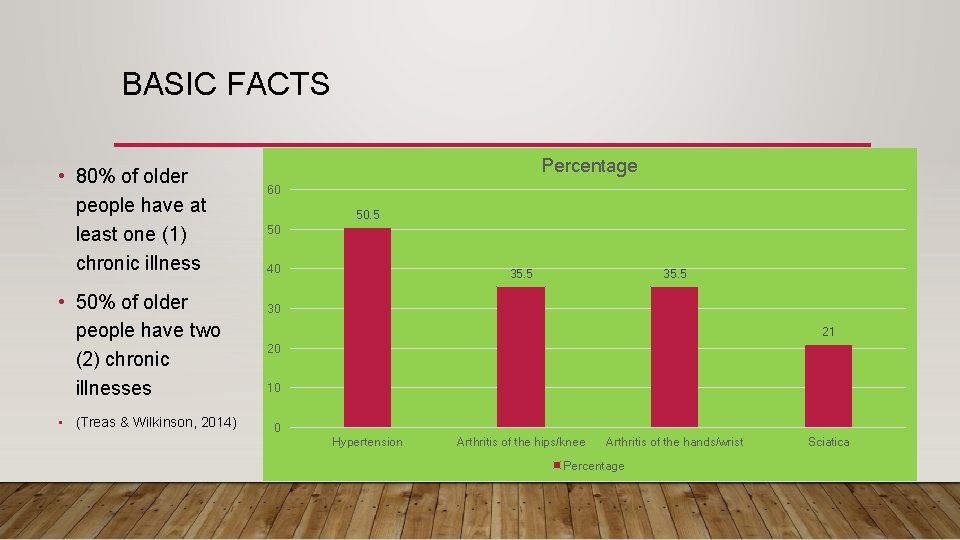
BASIC FACTS • 80% of older people have at least one (1) chronic illness • 50% of older people have two (2) chronic illnesses • (Treas & Wilkinson, 2014) Percentage 60 50. 5 50 40 35. 5 30 21 20 10 0 Hypertension Arthritis of the hips/knee Arthritis of the hands/wrist Percentage Sciatica
ESSENTIAL POINTS
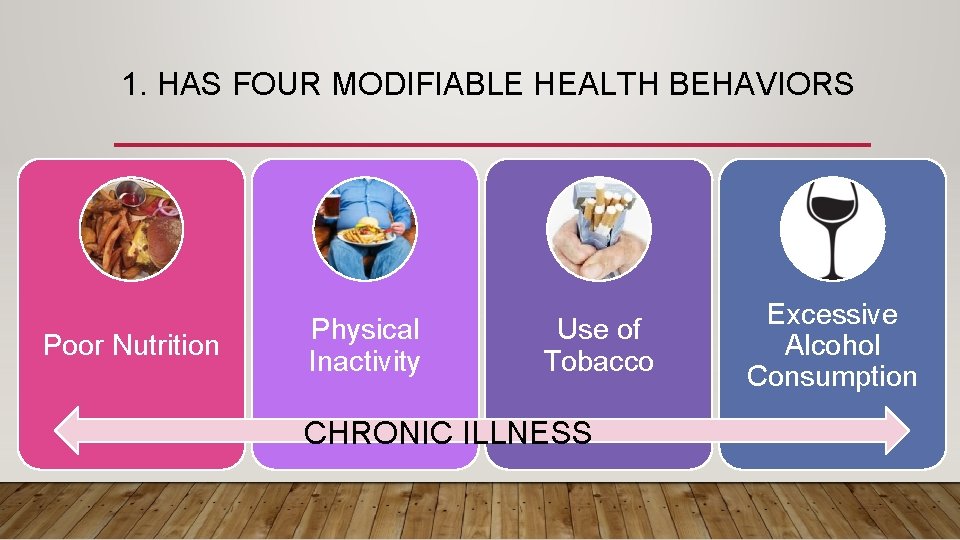
1. HAS FOUR MODIFIABLE HEALTH BEHAVIORS Poor Nutrition Physical Inactivity Use of Tobacco CHRONIC ILLNESS Excessive Alcohol Consumption
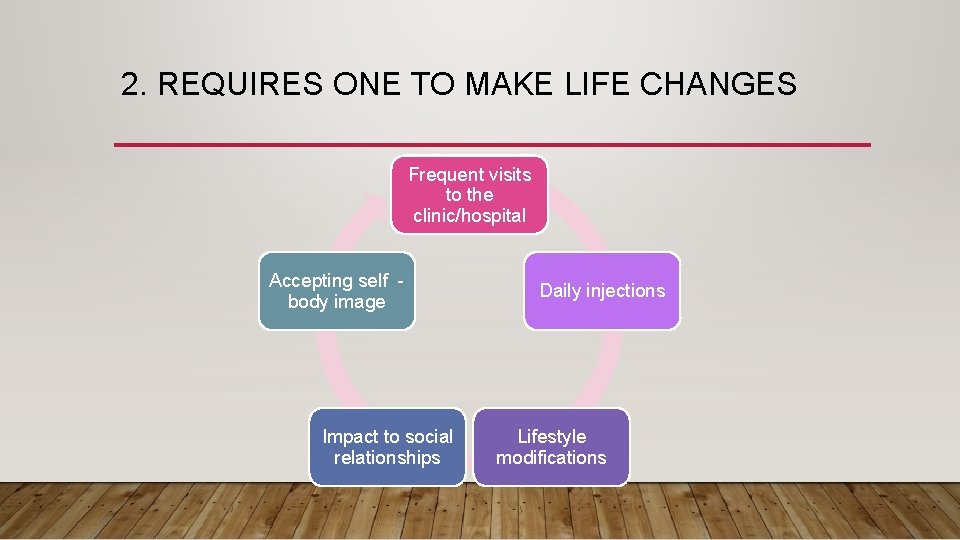
2. REQUIRES ONE TO MAKE LIFE CHANGES Frequent visits to the clinic/hospital Accepting self body image Impact to social relationships Daily injections Lifestyle modifications
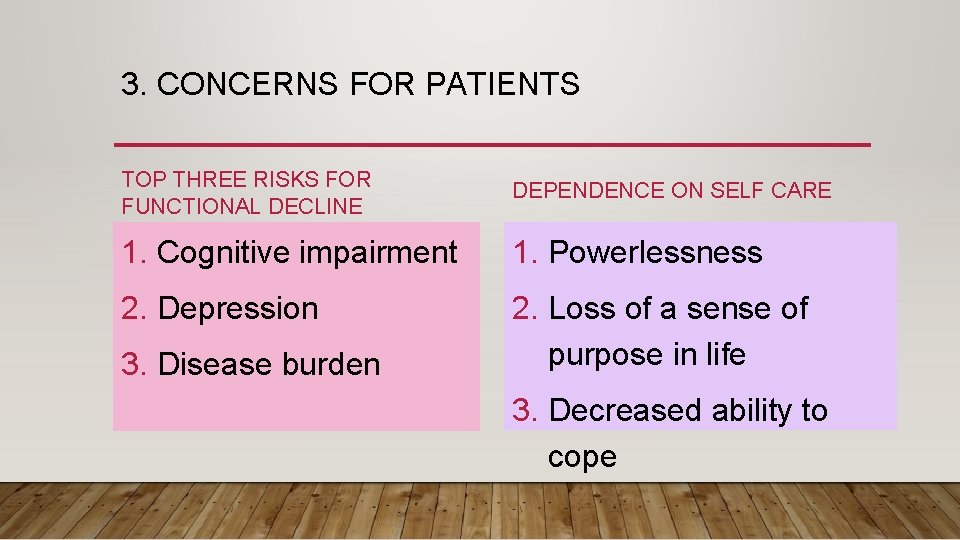
3. CONCERNS FOR PATIENTS TOP THREE RISKS FOR FUNCTIONAL DECLINE DEPENDENCE ON SELF CARE 1. Cognitive impairment 1. Powerlessness 2. Depression 2. Loss of a sense of purpose in life 3. Disease burden 3. Decreased ability to cope
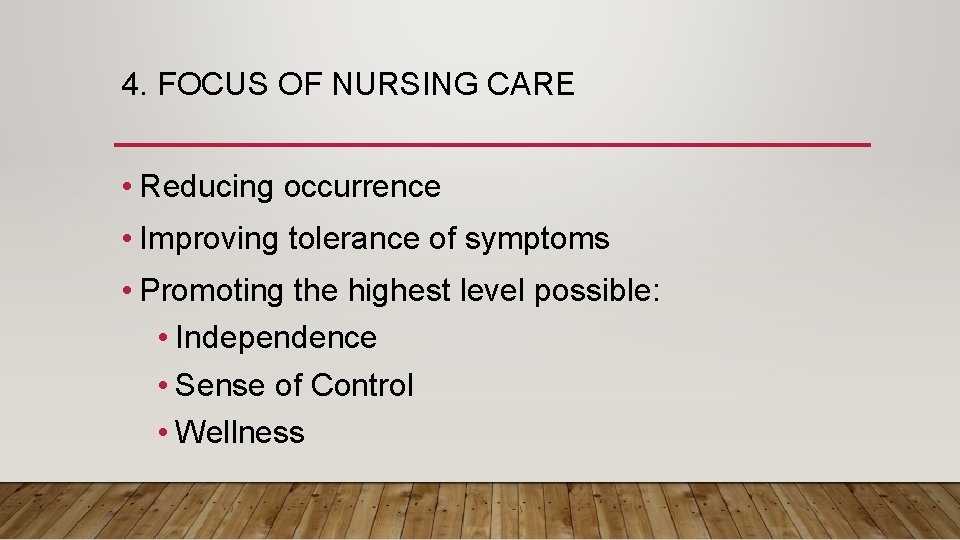
4. FOCUS OF NURSING CARE • Reducing occurrence • Improving tolerance of symptoms • Promoting the highest level possible: • Independence • Sense of Control • Wellness
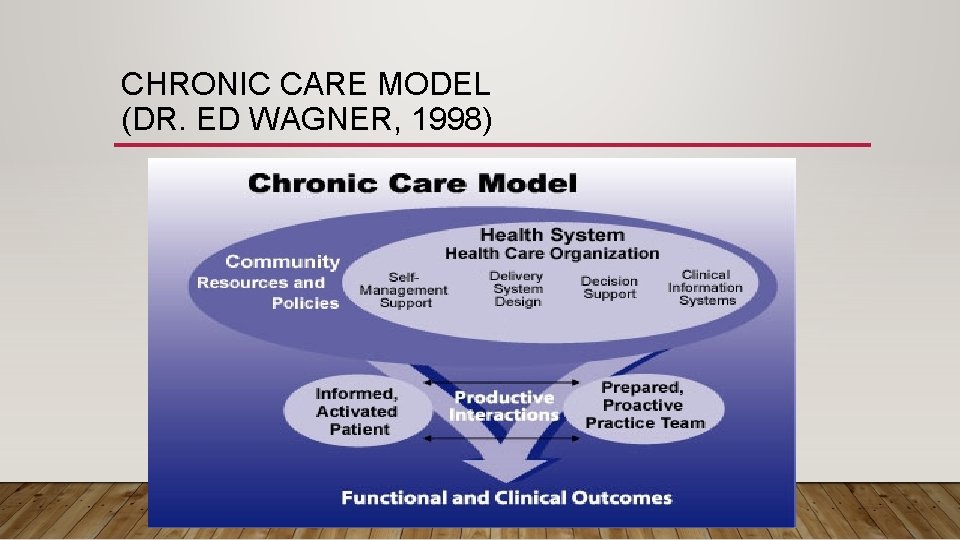
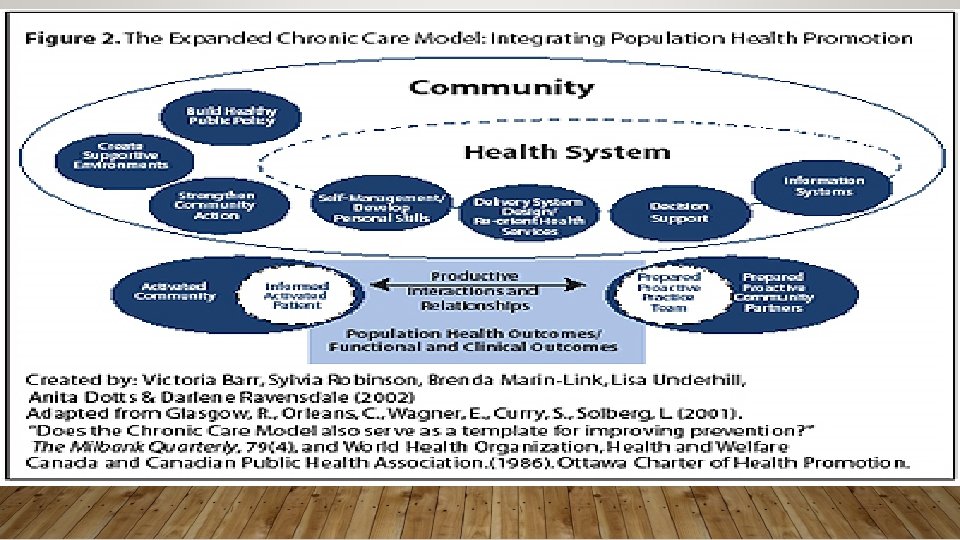
THE CHRONIC CARE MODEL
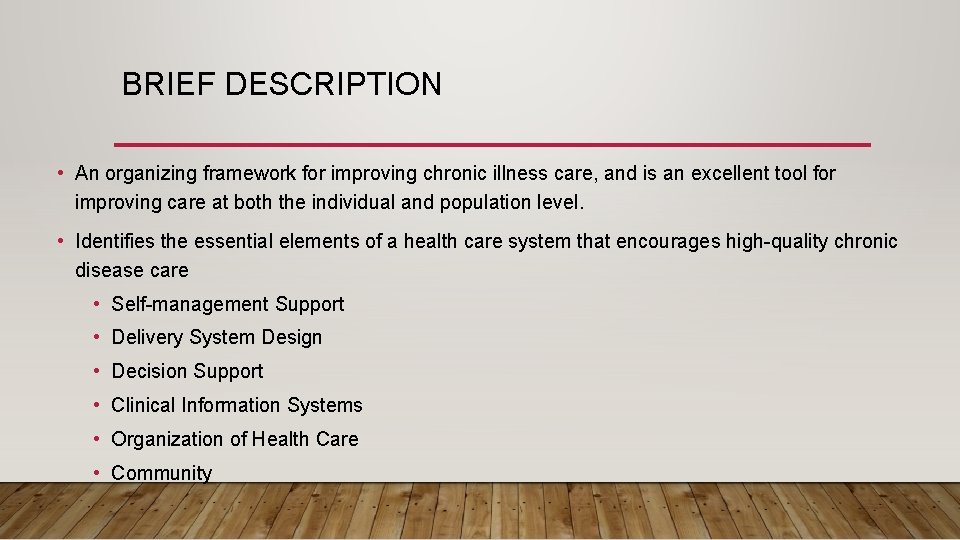
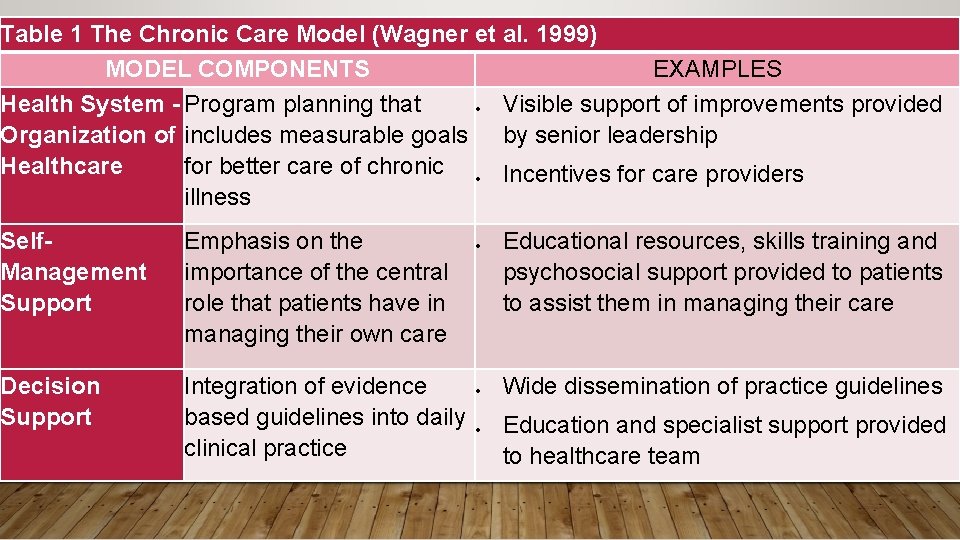
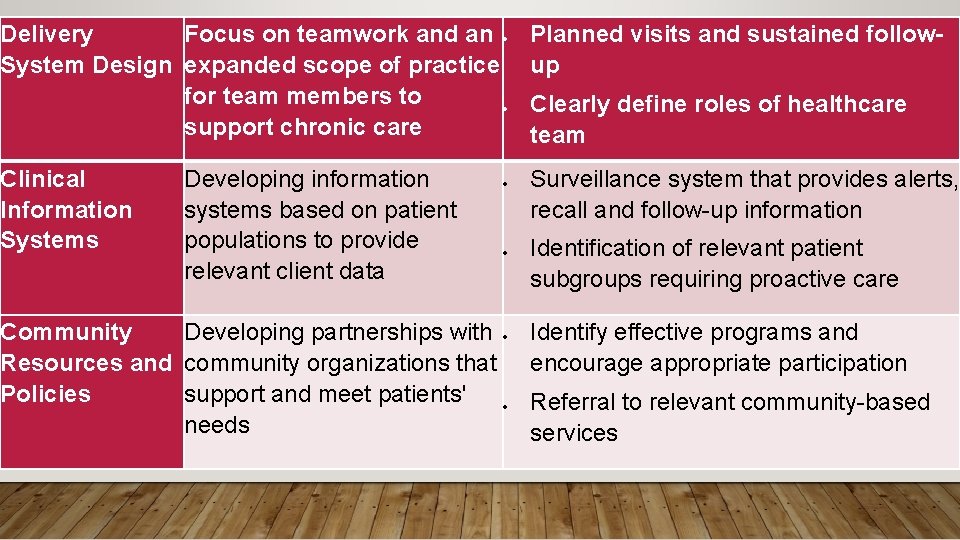
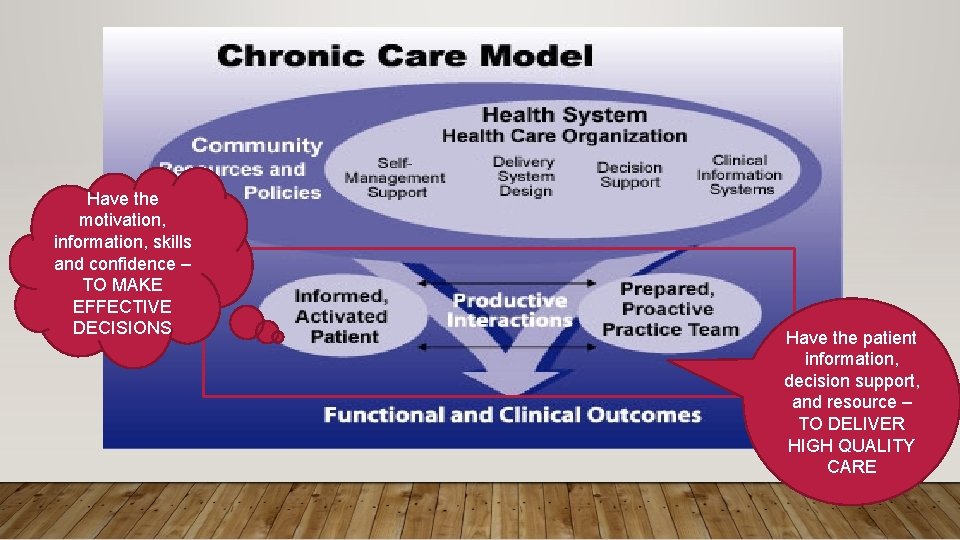
BRIEF DESCRIPTION • An organizing framework for improving chronic illness care, and is an excellent tool for improving care at both the individual and population level. • Identifies the essential elements of a health care system that encourages high-quality chronic disease care • Self-management Support • Delivery System Design • Decision Support • Clinical Information Systems • Organization of Health Care • Community
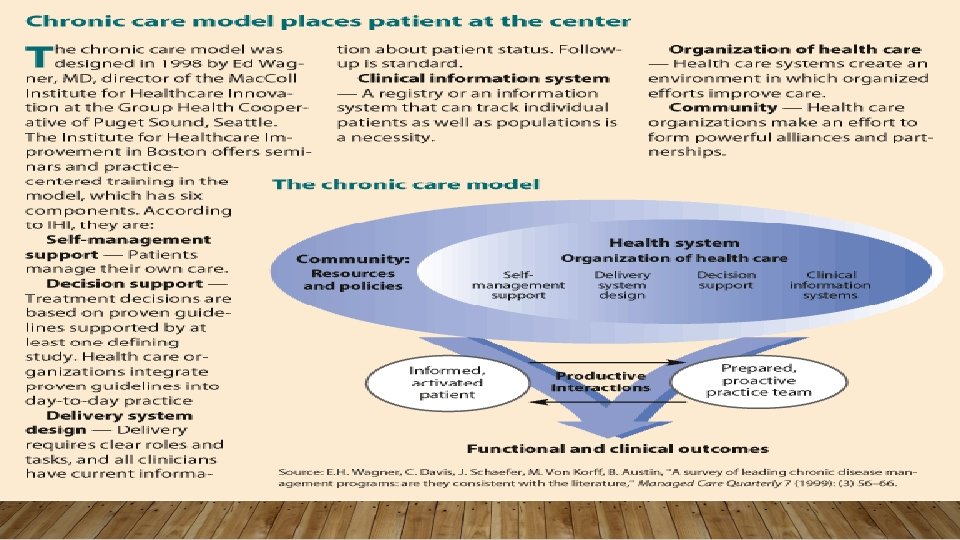
CHRONIC CARE MODEL (DR. ED WAGNER, 1998)
Table 1 The Chronic Care Model (Wagner et al. 1999) MODEL COMPONENTS EXAMPLES Health System - Program planning that Visible support of improvements provided Organization of includes measurable goals by senior leadership Healthcare for better care of chronic Incentives for care providers illness Self. Management Support Emphasis on the importance of the central role that patients have in managing their own care Decision Support Integration of evidence based guidelines into daily clinical practice Educational resources, skills training and psychosocial support provided to patients to assist them in managing their care Wide dissemination of practice guidelines Education and specialist support provided to healthcare team
Delivery Focus on teamwork and an System Design expanded scope of practice for team members to support chronic care Planned visits and sustained followup Clinical Information Systems Surveillance system that provides alerts, recall and follow-up information Developing information systems based on patient populations to provide relevant client data Community Developing partnerships with Resources and community organizations that Policies support and meet patients' needs Clearly define roles of healthcare team Identification of relevant patient subgroups requiring proactive care Identify effective programs and encourage appropriate participation Referral to relevant community-based services
Have the motivation, information, skills and confidence – TO MAKE EFFECTIVE DECISIONS Have the patient information, decision support, and resource – TO DELIVER HIGH QUALITY CARE
RESEARCH
EXPERIENCES OF PATIENTS WITH CHRONIC ILLNESS AND THEIR CARERS Mirzaci etal: A patient-centered approach to health service delivery: improving health outcomes for people with chronic illness. BMC Health Services Research 2013 13: 251 http: //www. biomedcentral. com/1472 -6963/13/251
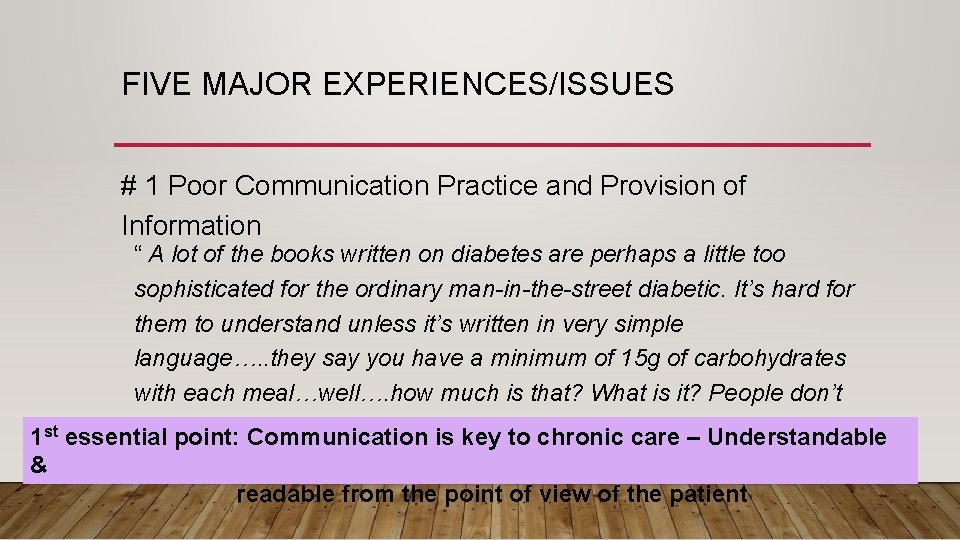
FIVE MAJOR EXPERIENCES/ISSUES # 1 Poor Communication Practice and Provision of Information “ A lot of the books written on diabetes are perhaps a little too sophisticated for the ordinary man-in-the-street diabetic. It’s hard for them to understand unless it’s written in very simple language…. . they say you have a minimum of 15 g of carbohydrates with each meal…well…. how much is that? What is it? People don’t know if it’s Communication one slice of breadisorkey a small potato”. care – Understandable 1 st essential point: to chronic & readable from the point of view of the patient
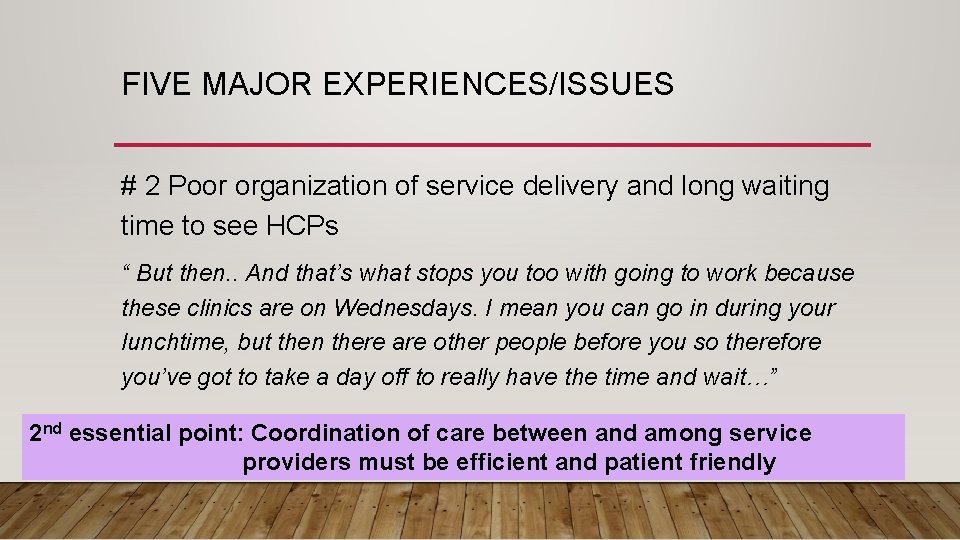
FIVE MAJOR EXPERIENCES/ISSUES # 2 Poor organization of service delivery and long waiting time to see HCPs “ But then. . And that’s what stops you too with going to work because these clinics are on Wednesdays. I mean you can go in during your lunchtime, but then there are other people before you so therefore you’ve got to take a day off to really have the time and wait…” 2 nd essential point: Coordination of care between and among service providers must be efficient and patient friendly
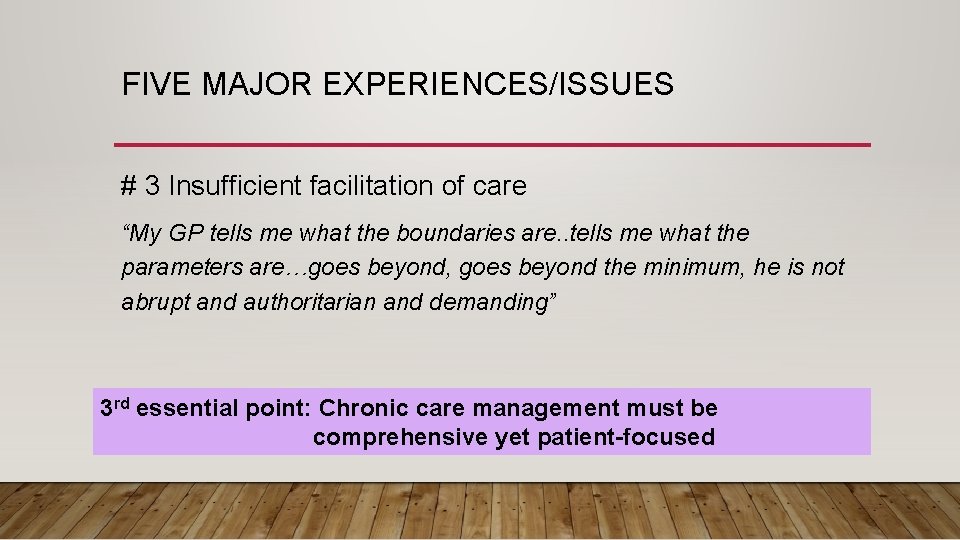
FIVE MAJOR EXPERIENCES/ISSUES # 3 Insufficient facilitation of care “My GP tells me what the boundaries are. . tells me what the parameters are…goes beyond, goes beyond the minimum, he is not abrupt and authoritarian and demanding” 3 rd essential point: Chronic care management must be comprehensive yet patient-focused
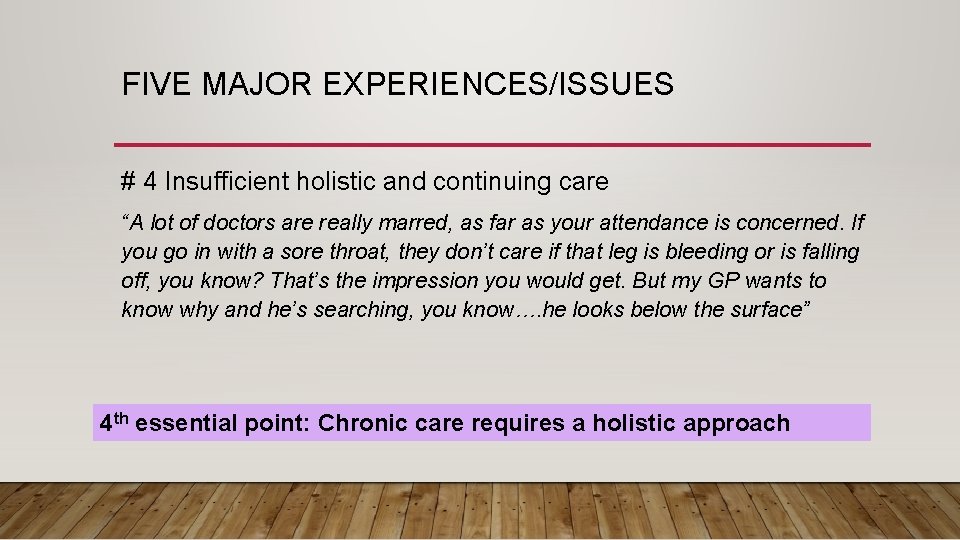
FIVE MAJOR EXPERIENCES/ISSUES # 4 Insufficient holistic and continuing care “A lot of doctors are really marred, as far as your attendance is concerned. If you go in with a sore throat, they don’t care if that leg is bleeding or is falling off, you know? That’s the impression you would get. But my GP wants to know why and he’s searching, you know…. he looks below the surface” 4 th essential point: Chronic care requires a holistic approach
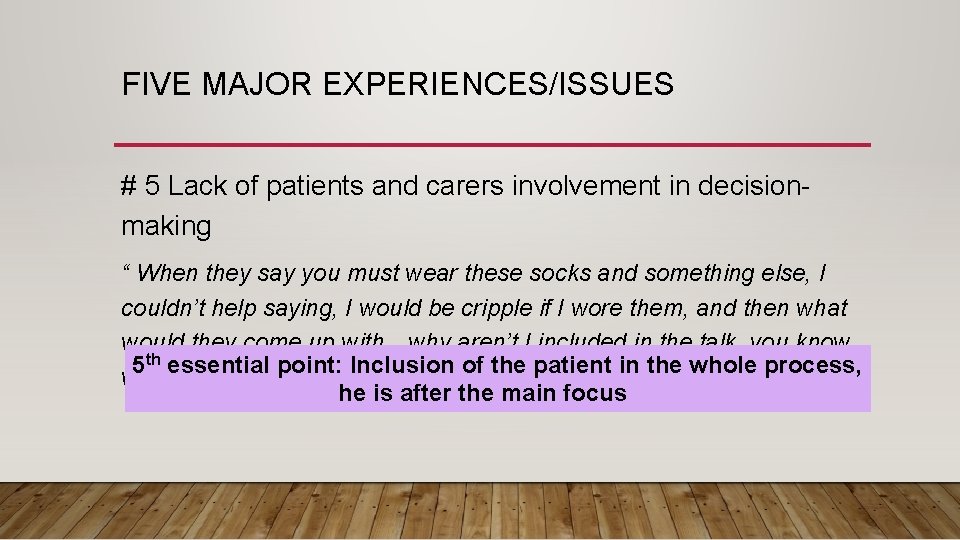
FIVE MAJOR EXPERIENCES/ISSUES # 5 Lack of patients and carers involvement in decisionmaking “ When they say you must wear these socks and something else, I couldn’t help saying, I would be cripple if I wore them, and then what would they come up with…why aren’t I included in the talk, you know 5 th essential point: Inclusion of the patient in the whole process, what I mean? ” he is after the main focus
What is best for the patient?
Thank you……. Terima kasih…….