Epidemiology Kept Simple Chapter 4 Descriptive Epidemiology Gerstman
- Slides: 22
Epidemiology Kept Simple Chapter 4 Descriptive Epidemiology Gerstman 1
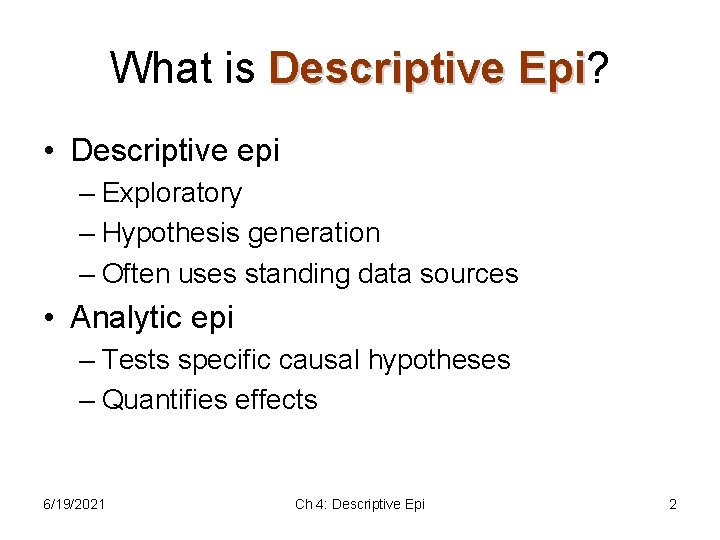
What is Descriptive Epi? Epi • Descriptive epi – Exploratory – Hypothesis generation – Often uses standing data sources • Analytic epi – Tests specific causal hypotheses – Quantifies effects 6/19/2021 Ch 4: Descriptive Epi 2
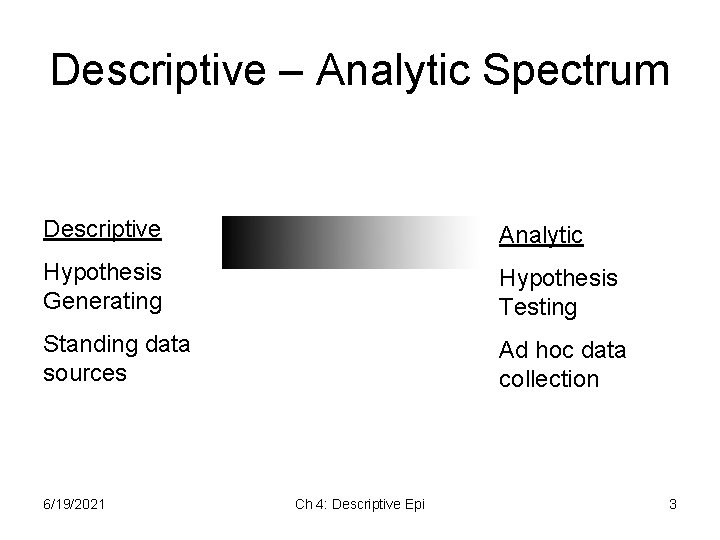
Descriptive – Analytic Spectrum Descriptive Analytic Hypothesis Generating Hypothesis Testing Standing data sources Ad hoc data collection 6/19/2021 Ch 4: Descriptive Epi 3
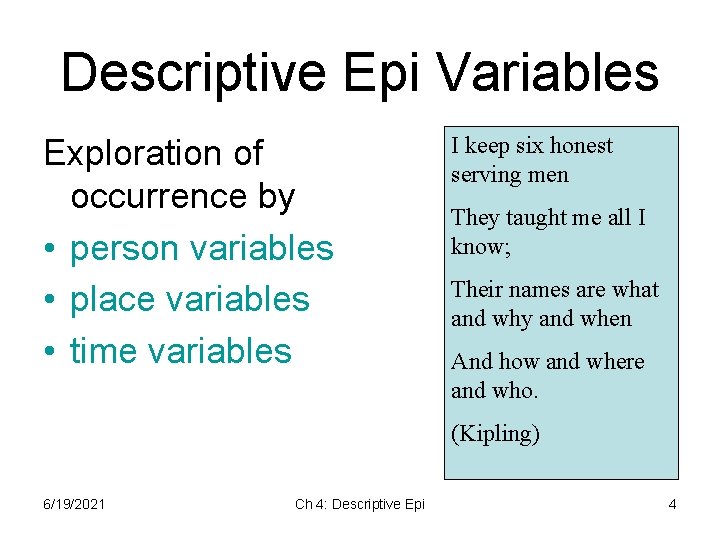
Descriptive Epi Variables Exploration of occurrence by • person variables • place variables • time variables I keep six honest serving men They taught me all I know; Their names are what and why and when And how and where and who. (Kipling) 6/19/2021 Ch 4: Descriptive Epi 4
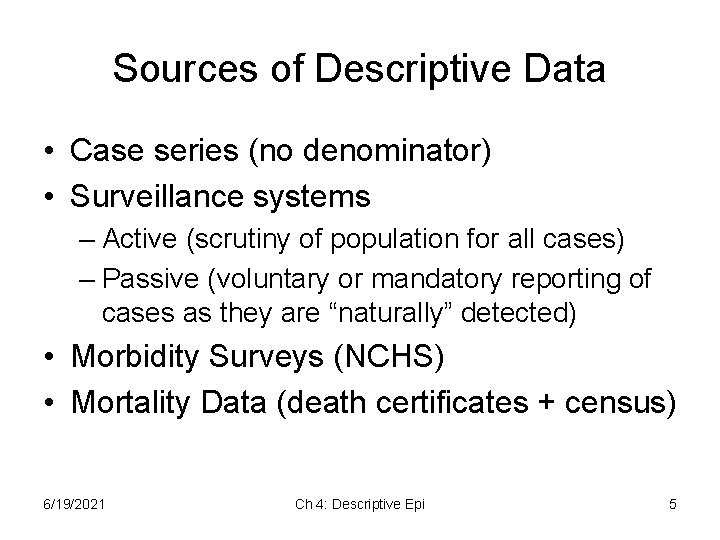
Sources of Descriptive Data • Case series (no denominator) • Surveillance systems – Active (scrutiny of population for all cases) – Passive (voluntary or mandatory reporting of cases as they are “naturally” detected) • Morbidity Surveys (NCHS) • Mortality Data (death certificates + census) 6/19/2021 Ch 4: Descriptive Epi 5
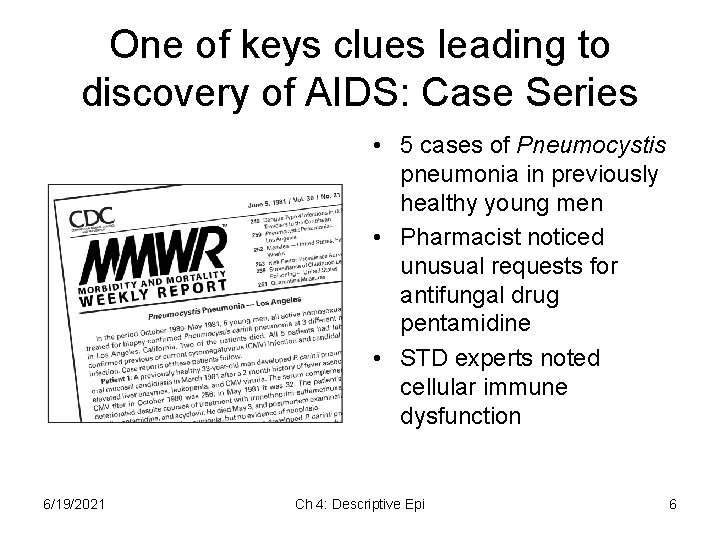
One of keys clues leading to discovery of AIDS: Case Series • 5 cases of Pneumocystis pneumonia in previously healthy young men • Pharmacist noticed unusual requests for antifungal drug pentamidine • STD experts noted cellular immune dysfunction 6/19/2021 Ch 4: Descriptive Epi 6
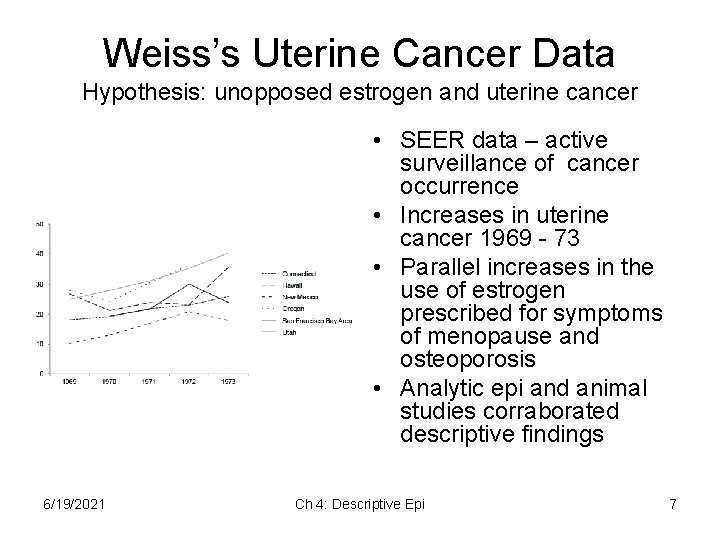
Weiss’s Uterine Cancer Data Hypothesis: unopposed estrogen and uterine cancer • SEER data – active surveillance of cancer occurrence • Increases in uterine cancer 1969 - 73 • Parallel increases in the use of estrogen prescribed for symptoms of menopause and osteoporosis • Analytic epi and animal studies corraborated descriptive findings 6/19/2021 Ch 4: Descriptive Epi 7
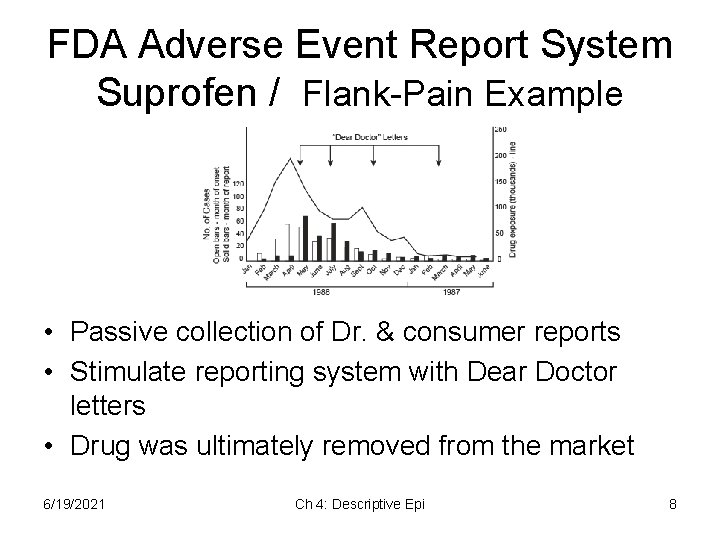
FDA Adverse Event Report System Suprofen / Flank-Pain Example • Passive collection of Dr. & consumer reports • Stimulate reporting system with Dear Doctor letters • Drug was ultimately removed from the market 6/19/2021 Ch 4: Descriptive Epi 8
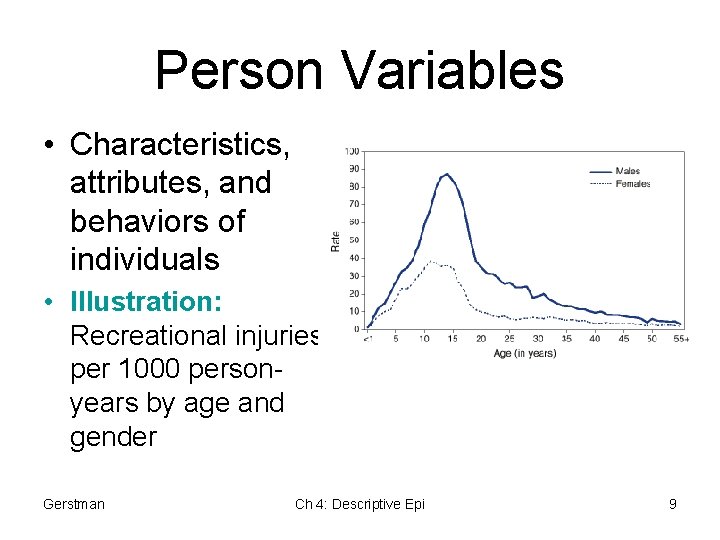
Person Variables • Characteristics, attributes, and behaviors of individuals • Illustration: Recreational injuries per 1000 personyears by age and gender Gerstman Ch 4: Descriptive Epi 9
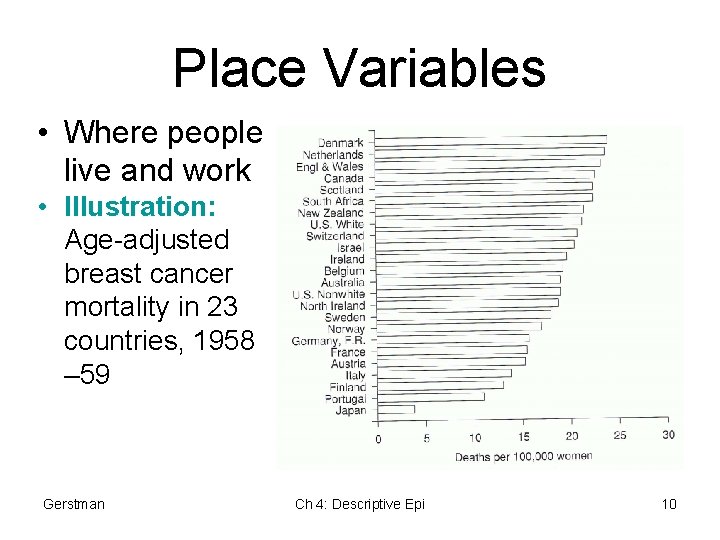
Place Variables • Where people live and work • Illustration: Age-adjusted breast cancer mortality in 23 countries, 1958 – 59 Gerstman Ch 4: Descriptive Epi 10
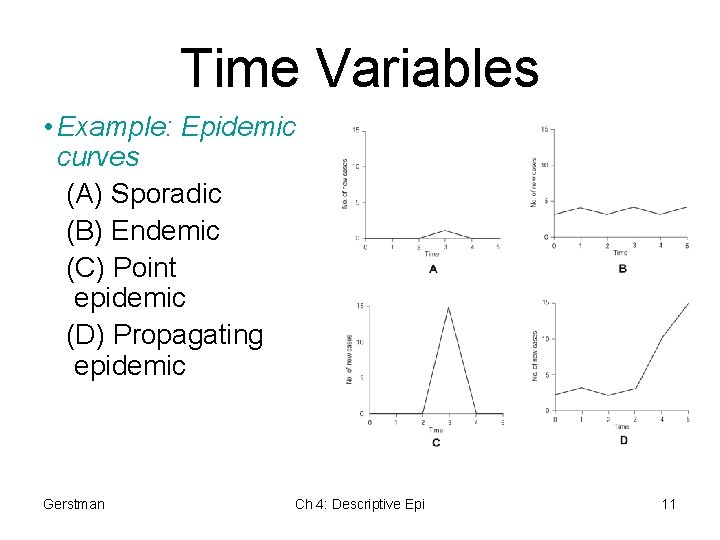
Time Variables • Example: Epidemic curves (A) Sporadic (B) Endemic (C) Point epidemic (D) Propagating epidemic Gerstman Ch 4: Descriptive Epi 11
Morbidity and Mortality Studies • See pages 4 – 5 • NCHS publications and websites • NCHS databases • Health United States (one of my favorites) 6/19/2021 Ch 4: Descriptive Epi 12
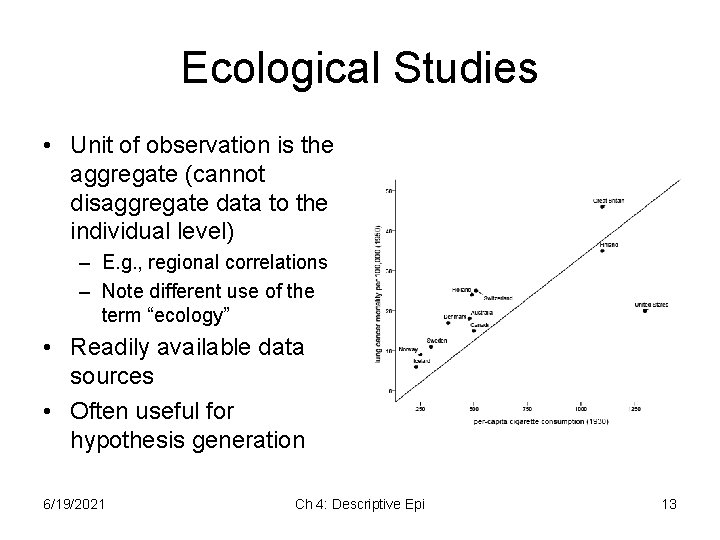
Ecological Studies • Unit of observation is the aggregate (cannot disaggregate data to the individual level) – E. g. , regional correlations – Note different use of the term “ecology” • Readily available data sources • Often useful for hypothesis generation 6/19/2021 Ch 4: Descriptive Epi 13
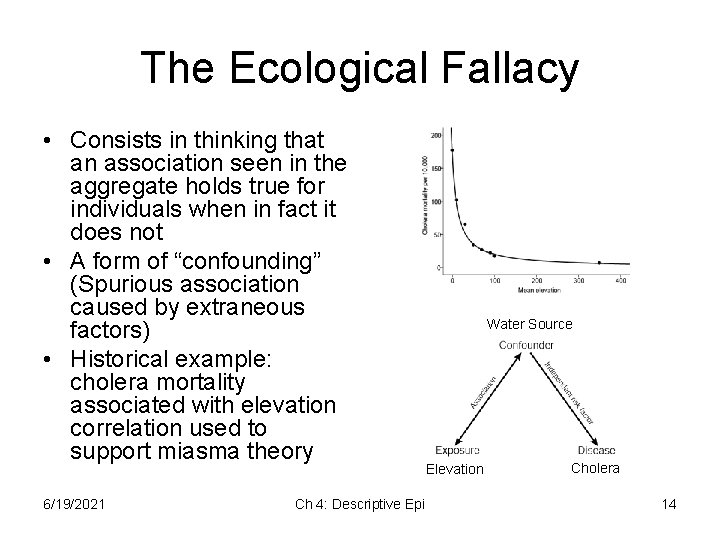
The Ecological Fallacy • Consists in thinking that an association seen in the aggregate holds true for individuals when in fact it does not • A form of “confounding” (Spurious association caused by extraneous factors) • Historical example: cholera mortality associated with elevation correlation used to support miasma theory 6/19/2021 Ch 4: Descriptive Epi Water Source Elevation Cholera 14
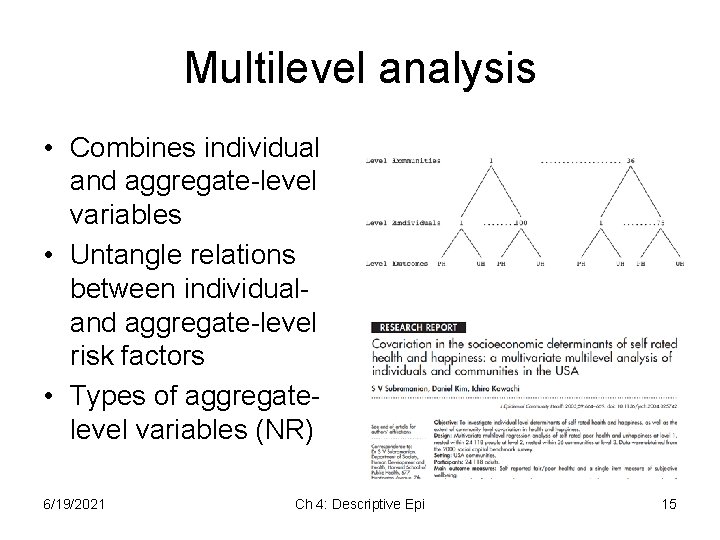
Multilevel analysis • Combines individual and aggregate-level variables • Untangle relations between individualand aggregate-level risk factors • Types of aggregatelevel variables (NR) 6/19/2021 Ch 4: Descriptive Epi 15
Study Chapter 4 for additional details and illustrative examples 6/19/2021 Ch 4: Descriptive Epi 16
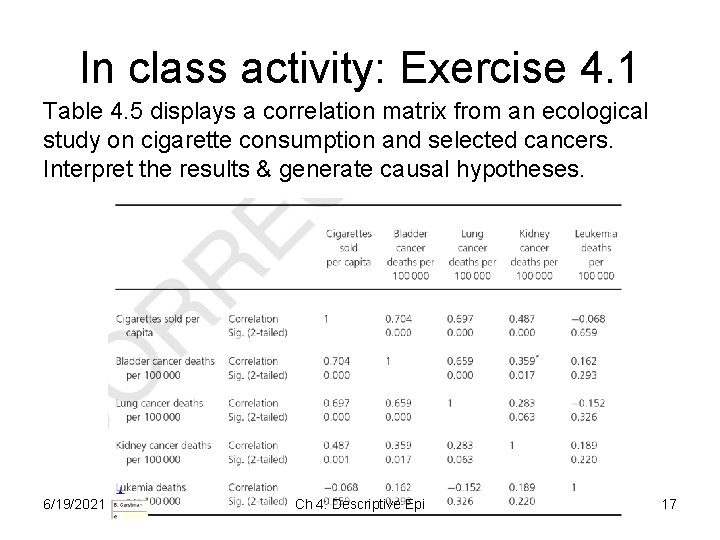
In class activity: Exercise 4. 1 Table 4. 5 displays a correlation matrix from an ecological study on cigarette consumption and selected cancers. Interpret the results & generate causal hypotheses. 6/19/2021 Ch 4: Descriptive Epi 17
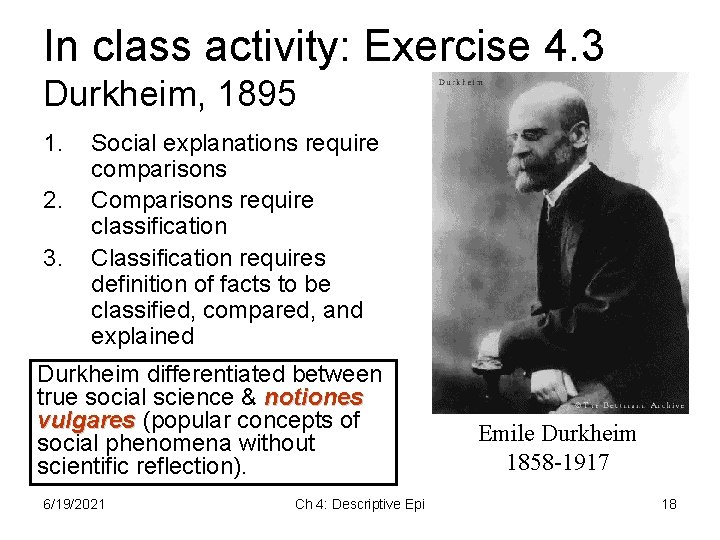
In class activity: Exercise 4. 3 Durkheim, 1895 1. 2. 3. Social explanations require comparisons Comparisons require classification Classification requires definition of facts to be classified, compared, and explained Durkheim differentiated between true social science & notiones vulgares (popular concepts of social phenomena without scientific reflection). 6/19/2021 Ch 4: Descriptive Epi Emile Durkheim 1858 -1917 18
Notiones Vulgares Durkheim warned against notiones vulgares — the idea that crudely formed concepts of social phenomena without scientific reflection produce only false knowledge: just as alchemy had preceded chemistry and astrology had preceded astronomy, social reflection merely foreshadows true social science. 6/19/2021 Ch 4: Descriptive Epi 19
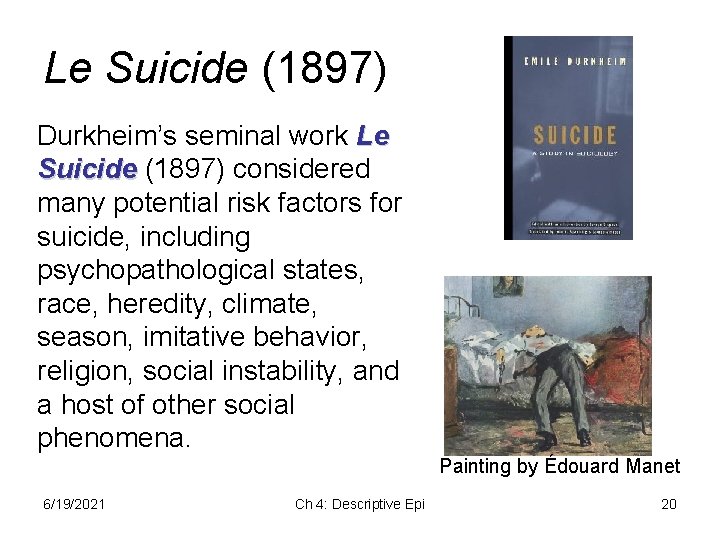
Le Suicide (1897) Durkheim’s seminal work Le Suicide (1897) considered many potential risk factors for suicide, including psychopathological states, race, heredity, climate, season, imitative behavior, religion, social instability, and a host of other social phenomena. Painting by Édouard Manet 6/19/2021 Ch 4: Descriptive Epi 20
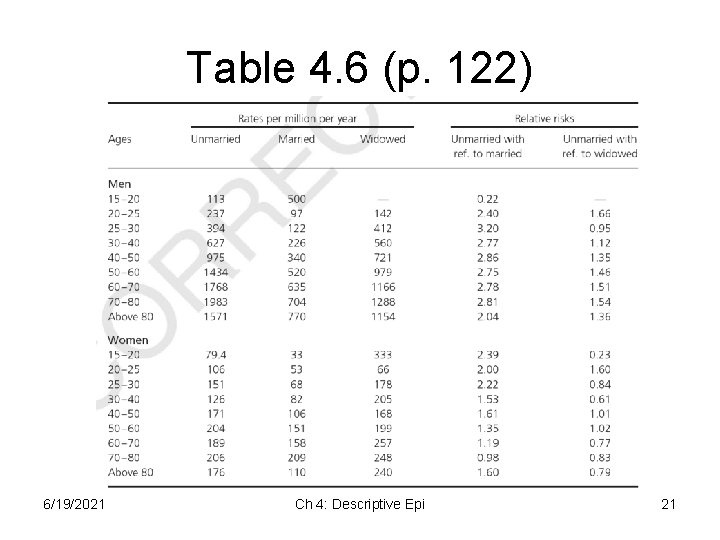
Table 4. 6 (p. 122) 6/19/2021 Ch 4: Descriptive Epi 21
Questions (A) Based on these data, list four observations about the potential effects of marriage on suicide. (B) Present an alternative explanation, other than the effect of marriage, for the associations you noted in part (A). 6/19/2021 Ch 4: Descriptive Epi 22