Environmental Factors Affect Nutrient Requirements For Goats An
- Slides: 30
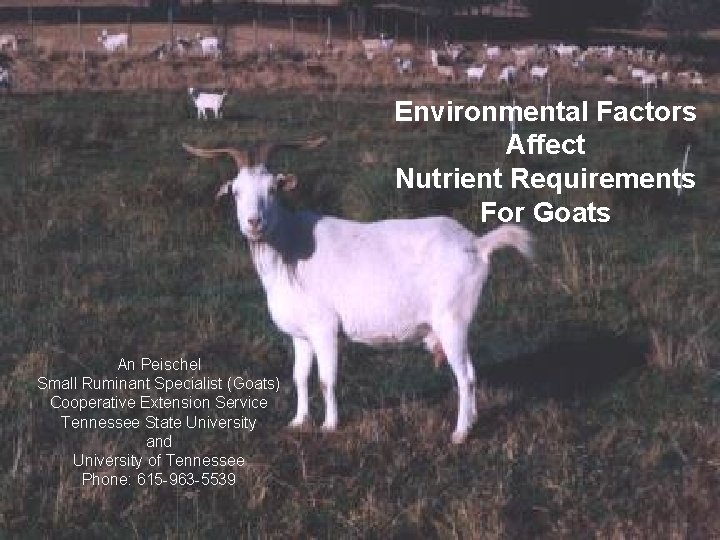
Environmental Factors Affect Nutrient Requirements For Goats An Peischel Small Ruminant Specialist (Goats) Cooperative Extension Service Tennessee State University and University of Tennessee Phone: 615 -963 -5539
the GOAT • • • Environmentally Adaptive Extremely Opportunistic Food Security Biological Land Enhancement Value-Added Products Alternative Enterprise
Ecosystem Foundation Blocks • Succession – Change and development – Complex, stable communities – Competition, interdependence and adaptation • Water Cycle – Maximum use of rainfall – Minimize erosion – Percolation / infiltration
Ecosystem Foundation Blocks • Mineral Cycle – Effective cyclic pattern – Biological soil – atmospheric interaction – Continuous decomposing plant & animal residues • Energy Flow – – Carbon cycle Keeps all processes of life functioning Solar power All living things depend upon plants to harvest (capture) energy from sun & convert it to a useable form
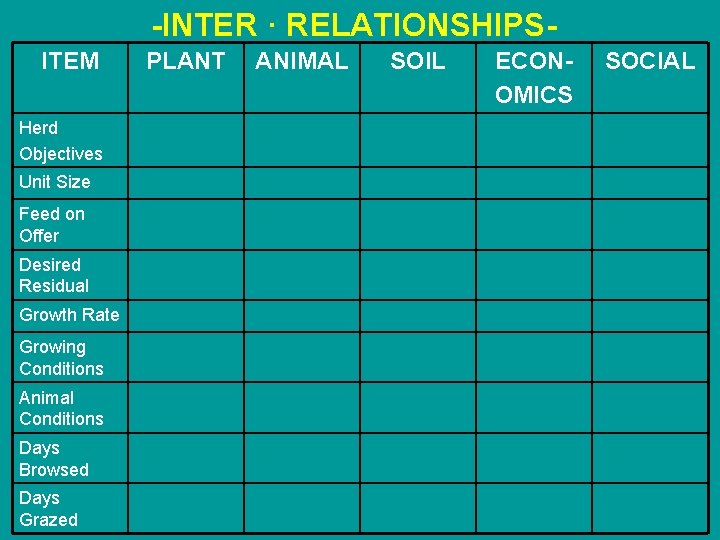
-INTER · RELATIONSHIPSITEM Herd Objectives Unit Size Feed on Offer Desired Residual Growth Rate Growing Conditions Animal Conditions Days Browsed Days Grazed PLANT ANIMAL SOIL ECONOMICS SOCIAL
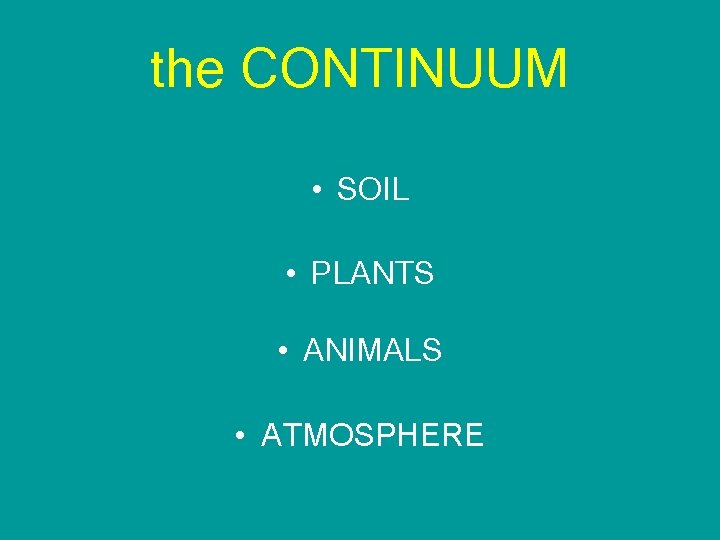
the CONTINUUM • SOIL • PLANTS • ANIMALS • ATMOSPHERE
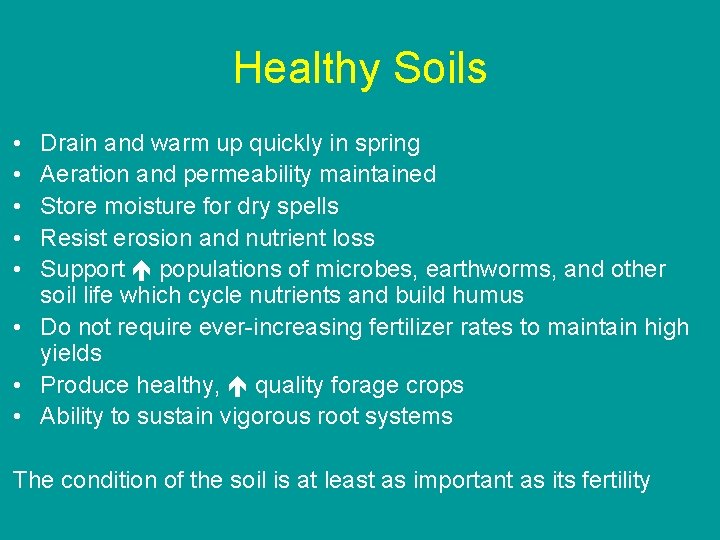
Healthy Soils • • • Drain and warm up quickly in spring Aeration and permeability maintained Store moisture for dry spells Resist erosion and nutrient loss Support populations of microbes, earthworms, and other soil life which cycle nutrients and build humus • Do not require ever-increasing fertilizer rates to maintain high yields • Produce healthy, quality forage crops • Ability to sustain vigorous root systems The condition of the soil is at least as important as its fertility
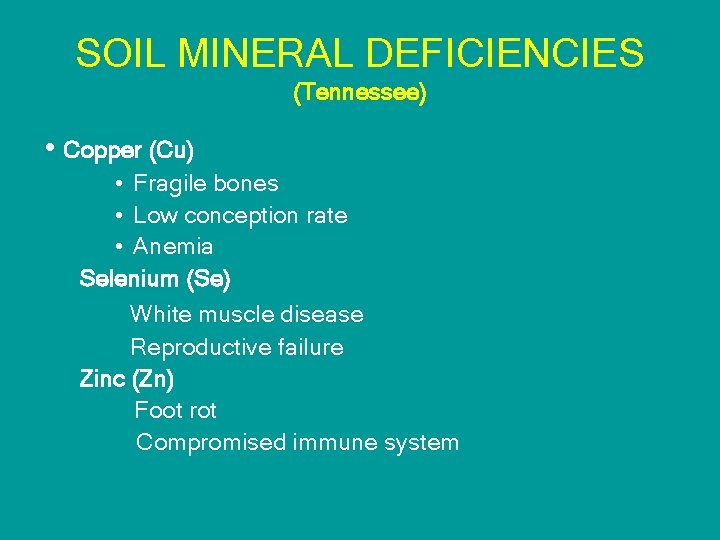
SOIL MINERAL DEFICIENCIES (Tennessee) • Copper (Cu) • Fragile bones • Low conception rate • Anemia Selenium (Se) White muscle disease Reproductive failure Zinc (Zn) Foot rot Compromised immune system
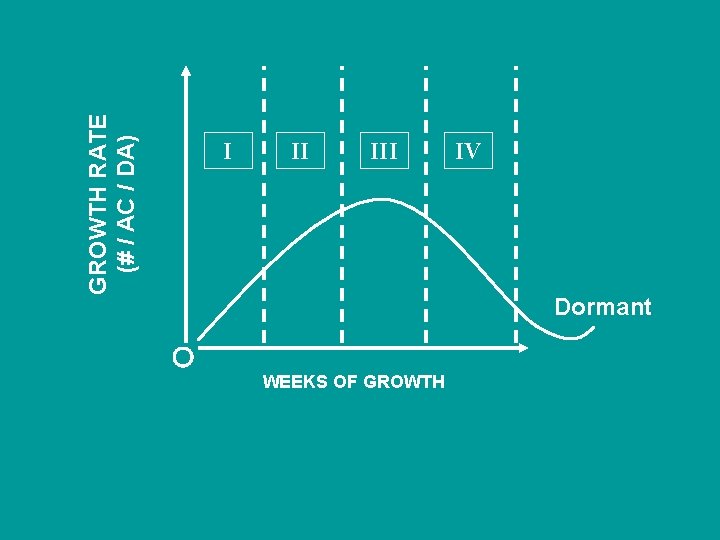
GROWTH RATE (# / AC / DA) I II IV Dormant WEEKS OF GROWTH
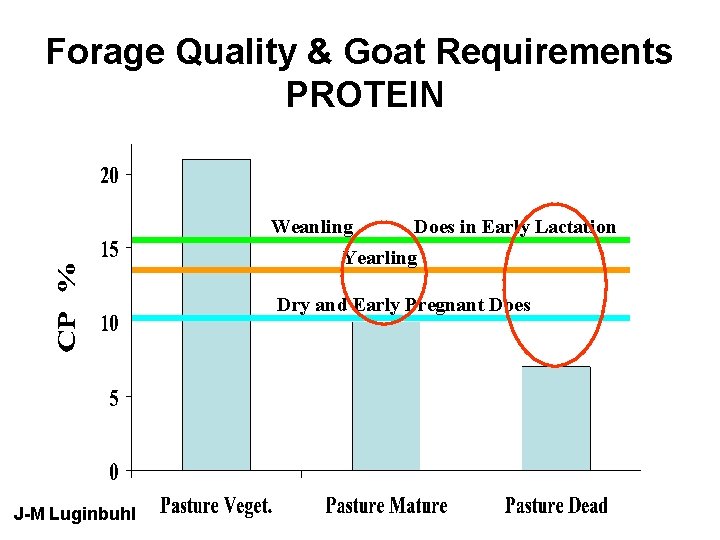
Forage Quality & Goat Requirements PROTEIN Weanling Does in Early Lactation Yearling Dry and Early Pregnant Does J-M Luginbuhl
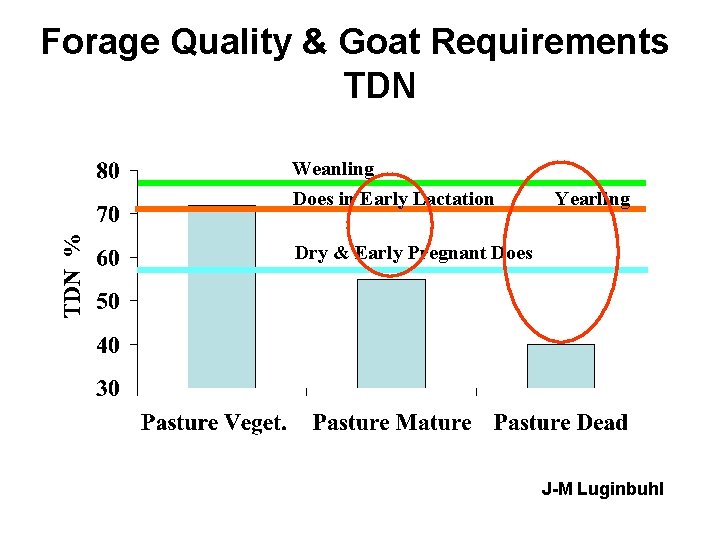
Forage Quality & Goat Requirements TDN Weanling Does in Early Lactation Yearling Dry & Early Pregnant Does J-M Luginbuhl
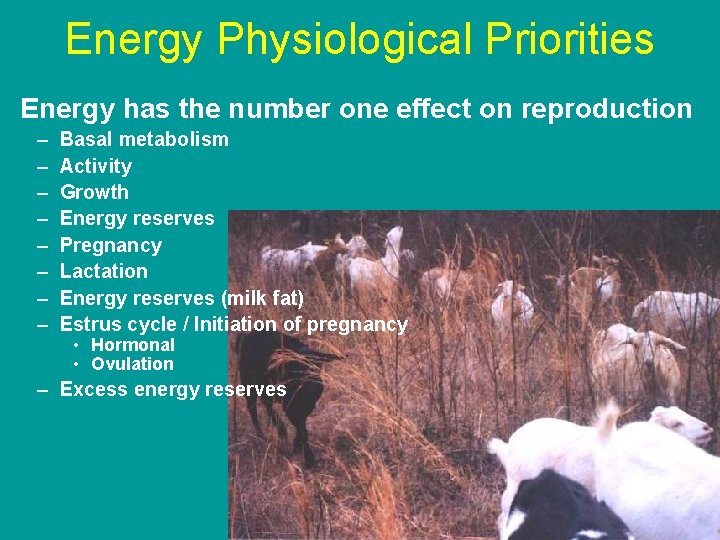
Energy Physiological Priorities Energy has the number one effect on reproduction – – – – Basal metabolism Activity Growth Energy reserves Pregnancy Lactation Energy reserves (milk fat) Estrus cycle / Initiation of pregnancy • Hormonal • Ovulation – Excess energy reserves
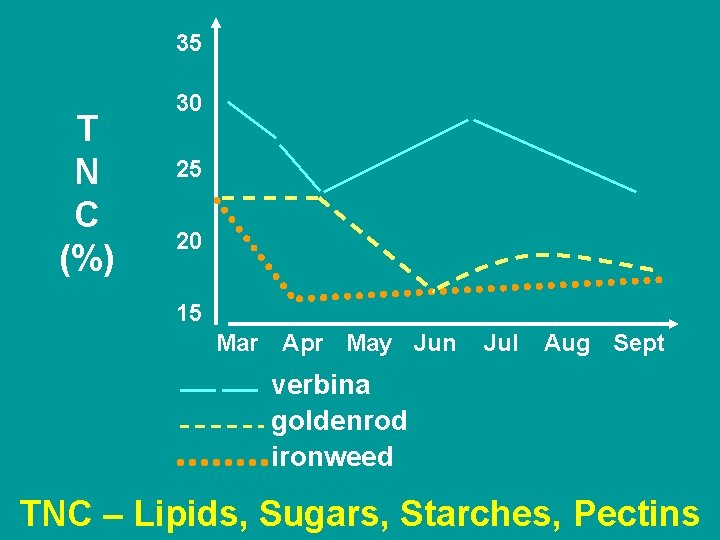
35 T N C (%) 30 25 20 15 Mar Apr May Jun Jul Aug Sept verbina goldenrod ironweed TNC – Lipids, Sugars, Starches, Pectins
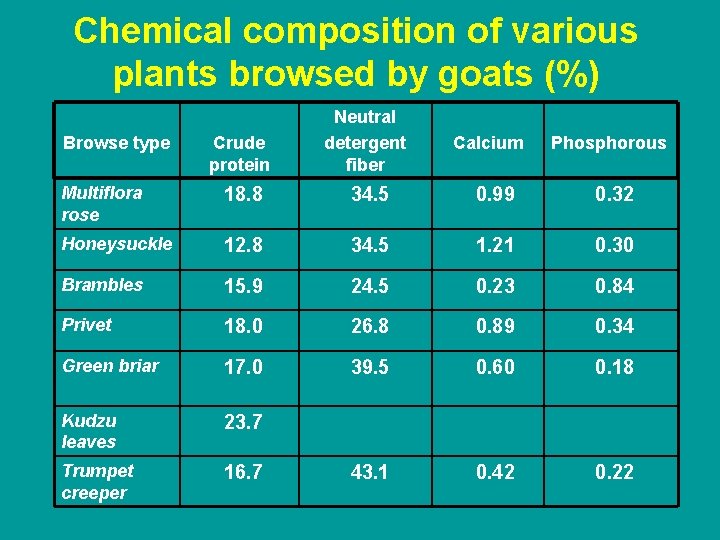
Chemical composition of various plants browsed by goats (%) Crude protein Neutral detergent fiber Multiflora rose 18. 8 34. 5 0. 99 0. 32 Honeysuckle 12. 8 34. 5 1. 21 0. 30 Brambles 15. 9 24. 5 0. 23 0. 84 Privet 18. 0 26. 8 0. 89 0. 34 Green briar 17. 0 39. 5 0. 60 0. 18 Kudzu leaves 23. 7 Trumpet creeper 16. 7 43. 1 0. 42 0. 22 Browse type Calcium Phosphorous
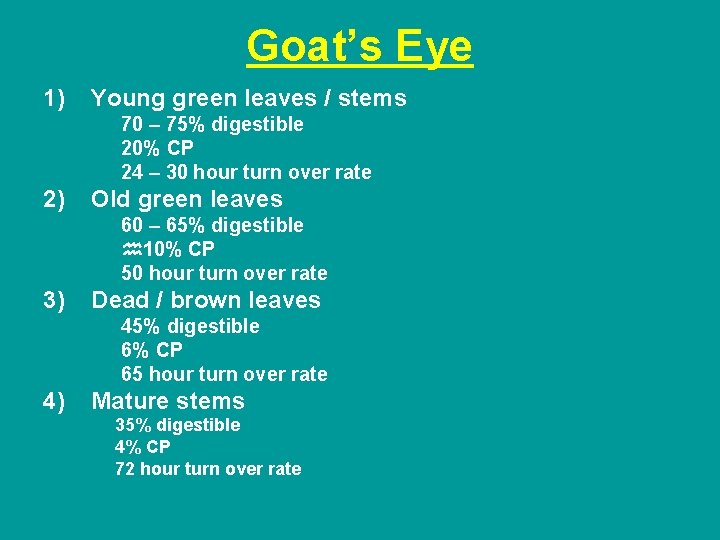
Goat’s Eye 1) Young green leaves / stems 70 – 75% digestible 20% CP 24 – 30 hour turn over rate 2) Old green leaves 60 – 65% digestible 10% CP 50 hour turn over rate 3) Dead / brown leaves 45% digestible 6% CP 65 hour turn over rate 4) Mature stems 35% digestible 4% CP 72 hour turn over rate
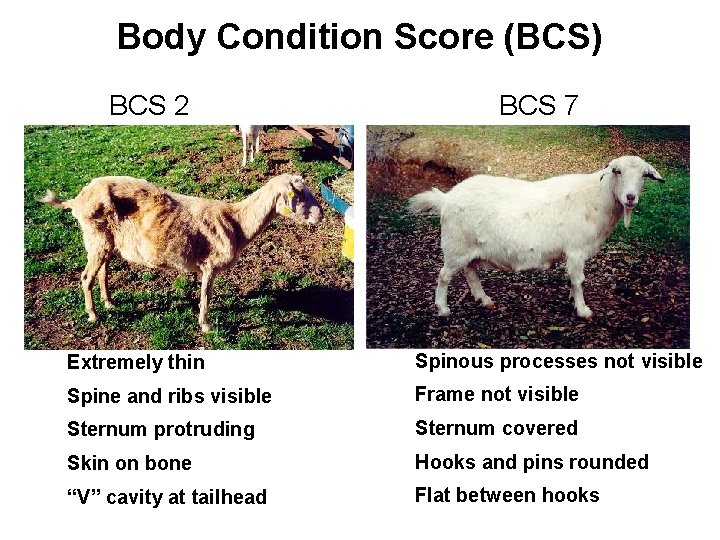
Body Condition Score (BCS) BCS 2 BCS 7 Extremely thin Spinous processes not visible Spine and ribs visible Frame not visible Sternum protruding Sternum covered Skin on bone Hooks and pins rounded “V” cavity at tailhead Flat between hooks
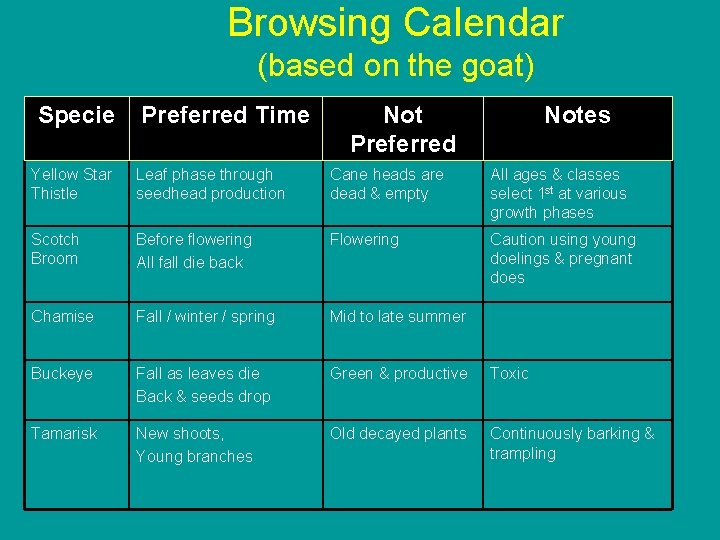
Browsing Calendar (based on the goat) Specie Preferred Time Not Preferred Notes Yellow Star Thistle Leaf phase through seedhead production Cane heads are dead & empty All ages & classes select 1 st at various growth phases Scotch Broom Before flowering All fall die back Flowering Caution using young doelings & pregnant does Chamise Fall / winter / spring Mid to late summer Buckeye Fall as leaves die Back & seeds drop Green & productive Toxic Tamarisk New shoots, Young branches Old decayed plants Continuously barking & trampling
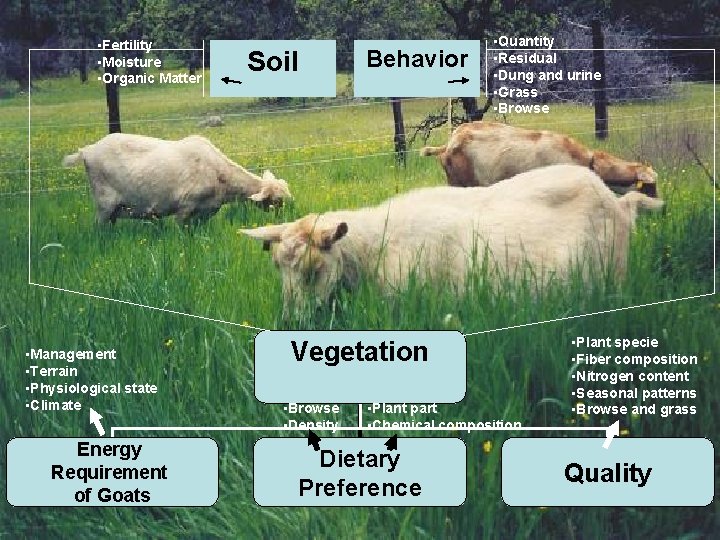
• Fertility • Moisture • Organic Matter • Management • Terrain • Physiological state • Climate Energy Requirement of Goats Soil Behavior • Quantity • Residual • Dung and urine • Grass • Browse Vegetation • Browse • Density • Plant part • Chemical composition Dietary Preference • Plant specie • Fiber composition • Nitrogen content • Seasonal patterns • Browse and grass Quality
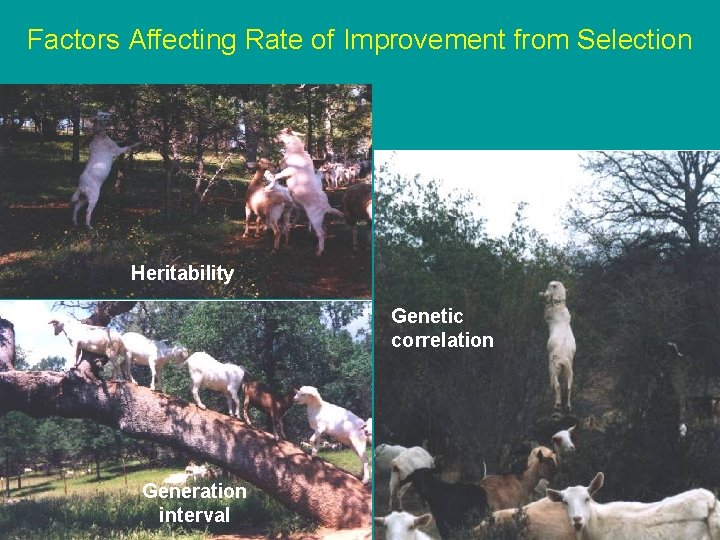
Factors Affecting Rate of Improvement from Selection Heritability Genetic correlation Generation interval
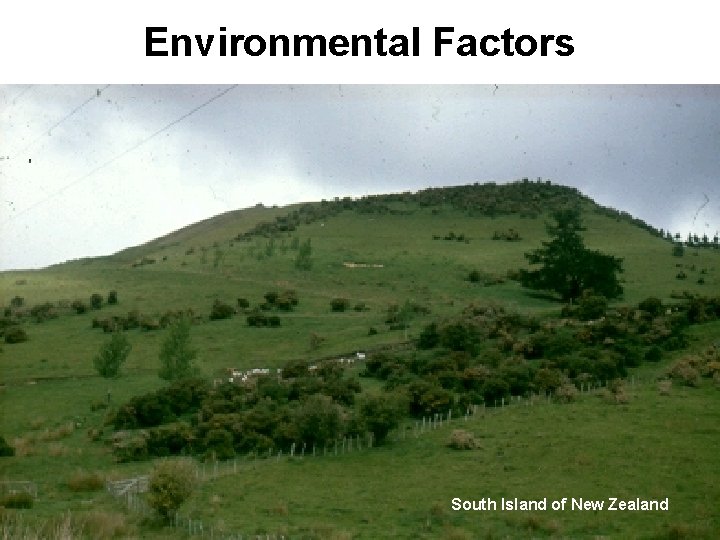
Environmental Factors South Island of New Zealand
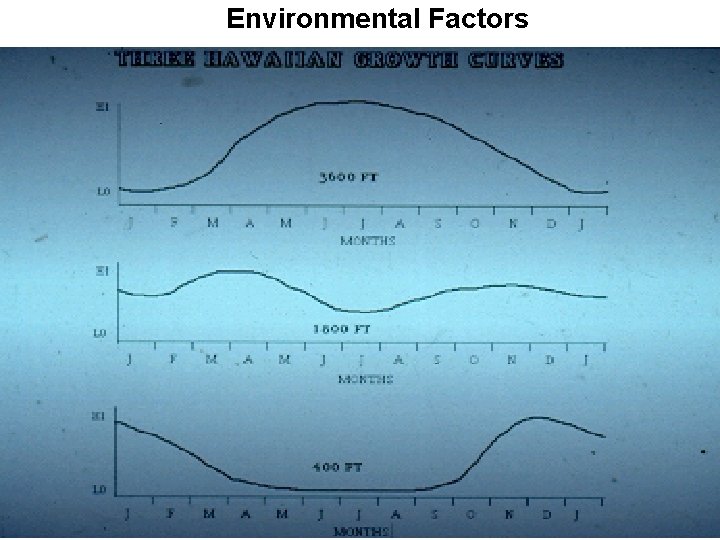
Environmental Factors
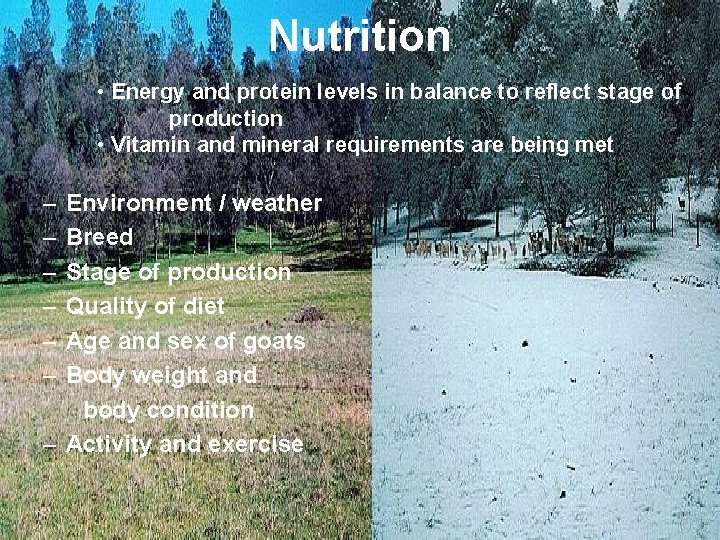
Nutrition • Energy and protein levels in balance to reflect stage of production • Vitamin and mineral requirements are being met – – – Environment / weather Breed Stage of production Quality of diet Age and sex of goats Body weight and body condition – Activity and exercise
ENVIRONMENTAL STRESS • Heat and Cold • Weather (precipitation and humidity) • Nutrient density • Quality of feed on offer • Predation • Travel (activity) • Topography
DEGREE of STRESS (affected by) • Breed of small ruminant • Physiological state • Age / Body size / Sex • Nutritional status • Social dominance • Fight / flight distance
ECONOMIC LO$$ • Decreased reproductive performance of both males and females • Inability to maintain body condition score • Decreased growth rate of off-spring • Increased incidences of internal parasitism • Suppressed immune system
Maintain Thermal Balance • Thermal Radiation • Humidity • Air Movement • Contact Surfaces • Precipitation
Major Effects of THERMAL STRESS on Nutrient Requirements • • • Reduction in voluntary feed intake Digestibility and energy metabolism lowered Increased water consumption Mineral requirements shift – K and Na Forage quality decreases
Major Effects of THERMAL STRESS on Reproduction • • • Delayed puberty (male and female) Lower semen quality Conception rate lowered Adverse effects on fetal growth Decrease of birth weights and weaning weights Increase in number of abortions
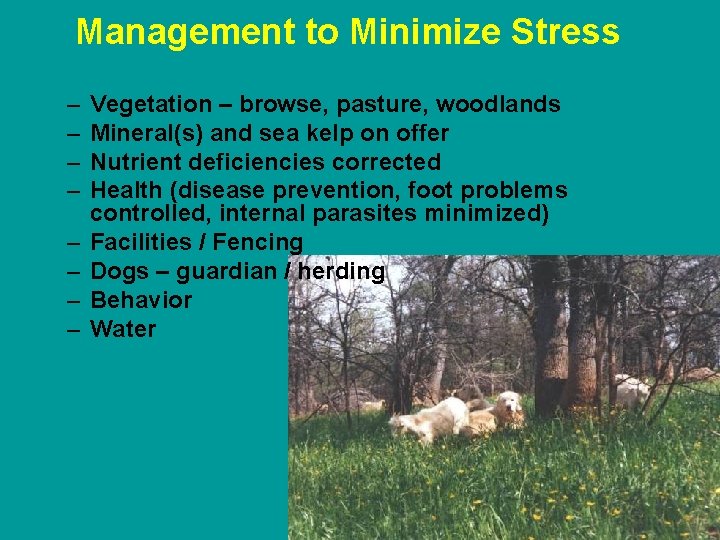
Management to Minimize Stress – – – – Vegetation – browse, pasture, woodlands Mineral(s) and sea kelp on offer Nutrient deficiencies corrected Health (disease prevention, foot problems controlled, internal parasites minimized) Facilities / Fencing Dogs – guardian / herding Behavior Water
Cooperative Extension Program