ENSINO DE HISTRIA Tendncias Contemporneas e Desafios da

- Slides: 10
ENSINO DE HISTÓRIA Tendências Contemporâneas e Desafios da Pesquisa (1980 -2014) Itamar Freitas PNPD/UNB/UFS www. tamarfo. blogspot. com itamarfo@gmail. com PORTO ALEGRE-RS (UFRGS) 9 jun. 2014
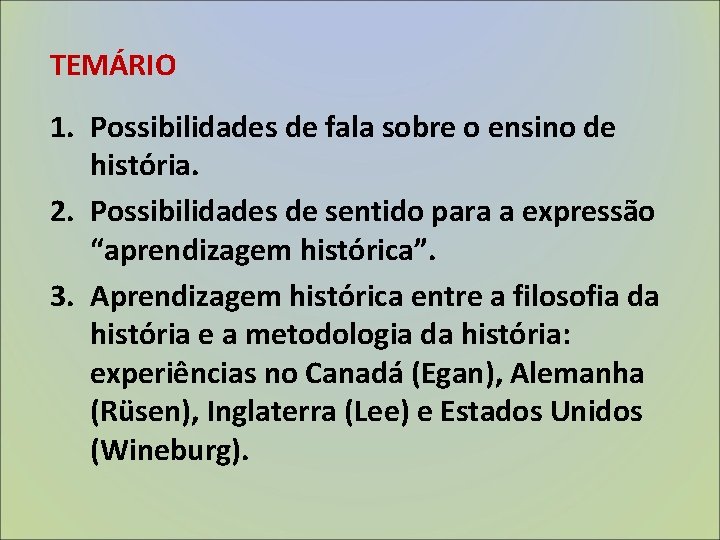
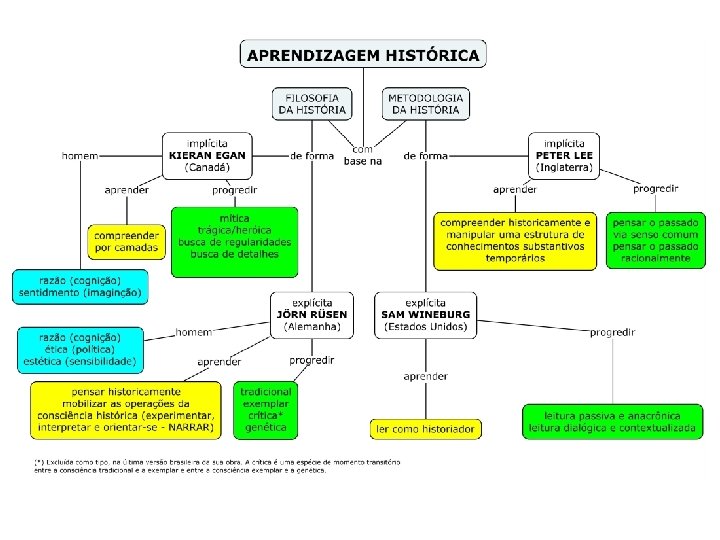
TEMÁRIO 1. Possibilidades de fala sobre o ensino de história. 2. Possibilidades de sentido para a expressão “aprendizagem histórica”. 3. Aprendizagem histórica entre a filosofia da história e a metodologia da história: experiências no Canadá (Egan), Alemanha (Rüsen), Inglaterra (Lee) e Estados Unidos (Wineburg).
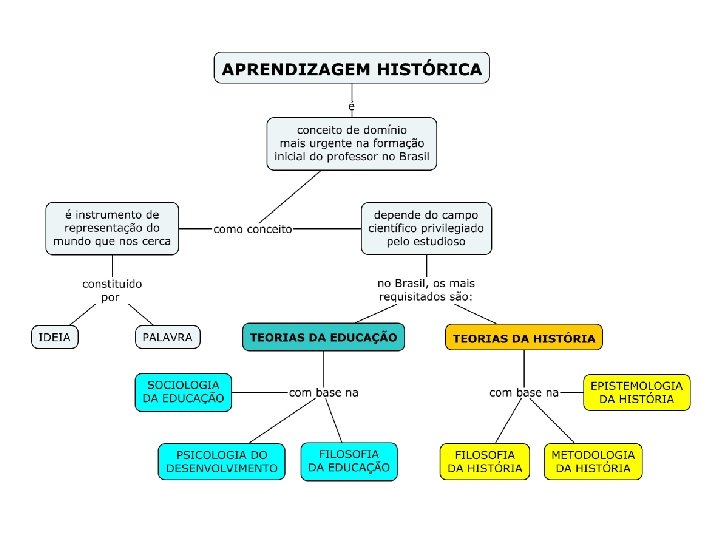
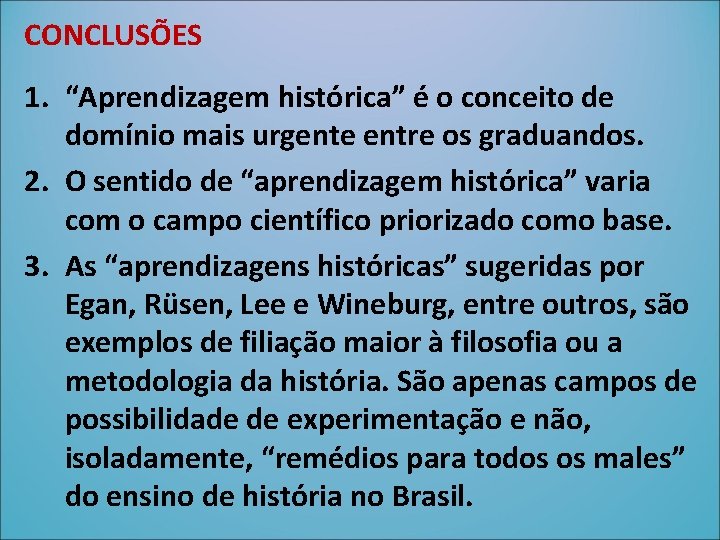
CONCLUSÕES 1. “Aprendizagem histórica” é o conceito de domínio mais urgente entre os graduandos. 2. O sentido de “aprendizagem histórica” varia com o campo científico priorizado como base. 3. As “aprendizagens históricas” sugeridas por Egan, Rüsen, Lee e Wineburg, entre outros, são exemplos de filiação maior à filosofia ou a metodologia da história. São apenas campos de possibilidade de experimentação e não, isoladamente, “remédios para todos os males” do ensino de história no Brasil.
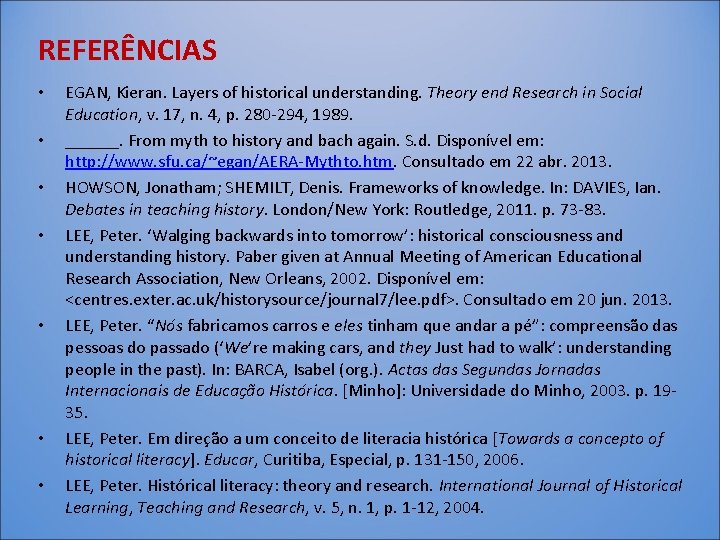
REFERÊNCIAS • • EGAN, Kieran. Layers of historical understanding. Theory end Research in Social Education, v. 17, n. 4, p. 280 -294, 1989. ______. From myth to history and bach again. S. d. Disponível em: http: //www. sfu. ca/~egan/AERA-Mythto. htm. Consultado em 22 abr. 2013. HOWSON, Jonatham; SHEMILT, Denis. Frameworks of knowledge. In: DAVIES, Ian. Debates in teaching history. London/New York: Routledge, 2011. p. 73 -83. LEE, Peter. ‘Walging backwards into tomorrow’: historical consciousness and understanding history. Paber given at Annual Meeting of American Educational Research Association, New Orleans, 2002. Disponível em: <centres. exter. ac. uk/historysource/journal 7/lee. pdf>. Consultado em 20 jun. 2013. LEE, Peter. “Nós fabricamos carros e eles tinham que andar a pé”: compreensão das pessoas do passado (‘We’re making cars, and they Just had to walk’: understanding people in the past). In: BARCA, Isabel (org. ). Actas das Segundas Jornadas Internacionais de Educação Histórica. [Minho]: Universidade do Minho, 2003. p. 1935. LEE, Peter. Em direção a um conceito de literacia histórica [Towards a concepto of historical literacy]. Educar, Curitiba, Especial, p. 131 -150, 2006. LEE, Peter. Histórical literacy: theory and research. International Journal of Historical Learning, Teaching and Research, v. 5, n. 1, p. 1 -12, 2004.
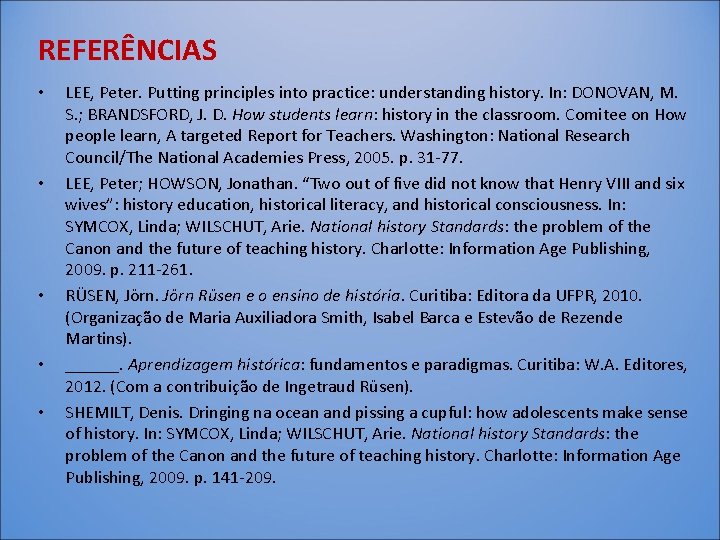
REFERÊNCIAS • • • LEE, Peter. Putting principles into practice: understanding history. In: DONOVAN, M. S. ; BRANDSFORD, J. D. How students learn: history in the classroom. Comitee on How people learn, A targeted Report for Teachers. Washington: National Research Council/The National Academies Press, 2005. p. 31 -77. LEE, Peter; HOWSON, Jonathan. “Two out of five did not know that Henry VIII and six wives”: history education, historical literacy, and historical consciousness. In: SYMCOX, Linda; WILSCHUT, Arie. National history Standards: the problem of the Canon and the future of teaching history. Charlotte: Information Age Publishing, 2009. p. 211 -261. RÜSEN, Jörn Rüsen e o ensino de história. Curitiba: Editora da UFPR, 2010. (Organização de Maria Auxiliadora Smith, Isabel Barca e Estevão de Rezende Martins). ______. Aprendizagem histórica: fundamentos e paradigmas. Curitiba: W. A. Editores, 2012. (Com a contribuição de Ingetraud Rüsen). SHEMILT, Denis. Dringing na ocean and pissing a cupful: how adolescents make sense of history. In: SYMCOX, Linda; WILSCHUT, Arie. National history Standards: the problem of the Canon and the future of teaching history. Charlotte: Information Age Publishing, 2009. p. 141 -209.
REFERÊNCIAS • • WINEBURG, Samuel S. Historical problem solving: a study of the cognitive proceses used in the evaluation of documentary and pictorial evidence. Journal of Educational Psychology, v. 83, n. 1, p. 73 -87, 1991. WINEBURG, Samuel S. Historical thinking and other unnatural acts: chartering the future of teaching the past. Philadelphia: Temple University Press, 2000. WINEBURG, Samuel S. Making historical sense. STEARNS, Peter N. ; SEIXAS, Peter; WINEBURG, Sam. Kowing, teaching, and learning history. New York/London: New York University Press, 2000. In: p. 306 -325. WINEBURG, Samuel S. ; MARTIN, Daisy; MONTE-SANO, Chauncey. Reading like a historian: teaching literacy in middle and high school history classrooms. New York: Teachers College, 2013.
Muito obrigado! Itamar Freitas PNPD-CAPES/UNB/NPGED/UFS www. tamarfo. blogspot. com itamarfo@gmail. com