English 9 Short Story Notes A review of

- Slides: 32
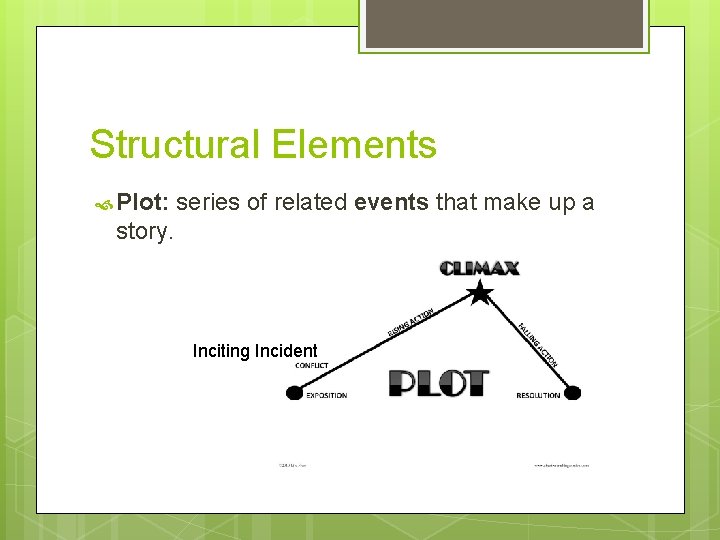
English 9 Short Story Notes A review of all the terminology from the last two years. . . you remember, don’t you?
How to Properly Write/Type Titles “Short Stories” “Magazine Articles” “Newspaper Articles” “Poems” “Songs” “Essays” “Chapters in Books” <- The following titles are placed in quotation marks.
When writing the following underline: When typing the following italicize: Novels Plays Magazines Movies Television Shows
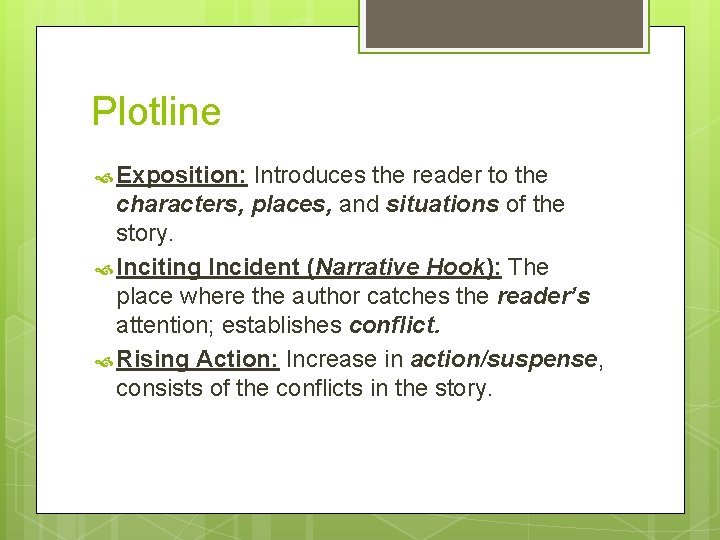
Structural Elements Plot: series of related events that make up a story. Inciting Incident
Plotline Exposition: Introduces the reader to the characters, places, and situations of the story. Inciting Incident (Narrative Hook): The place where the author catches the reader’s attention; establishes conflict. Rising Action: Increase in action/suspense, consists of the conflicts in the story.
Plotline continued. . . Climax: Highest point of interest, the point of no return, the plot must move forward. Denouement (Falling Action): Relates the events that are a result of the climax. Resolution: The outcome of the story: how the conflicts are resolved or not resolved.
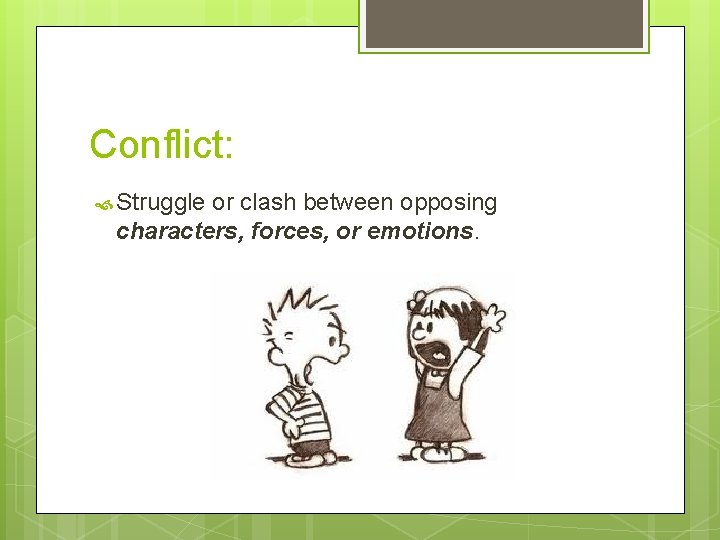
Conflict: Struggle or clash between opposing characters, forces, or emotions.
Types of Conflicts External Conflict A character struggles against an outside force Internal Conflict A character struggles with forces from within (emotions, desires, needs)
Types of Conflict: External A character struggles against an outside force. Internal A character struggles with forces from within (emotions, desires, needs).
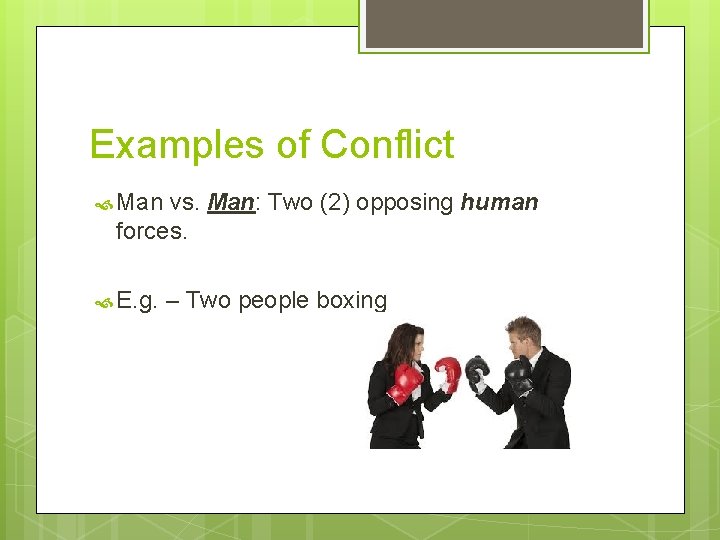
Examples of Conflict Man vs. Man: Two (2) opposing human forces. E. g. – Two people boxing
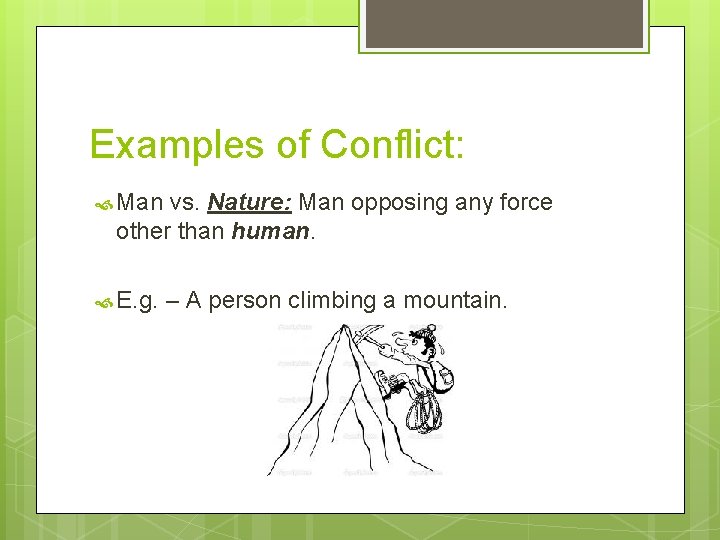
Examples of Conflict: Man vs. Nature: Man opposing any force other than human. E. g. – A person climbing a mountain.
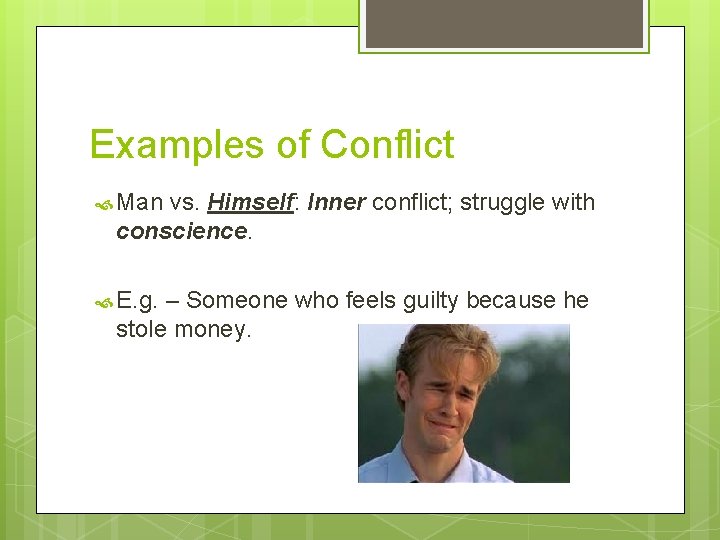
Examples of Conflict Man vs. Himself: Inner conflict; struggle with conscience. E. g. – Someone who feels guilty because he stole money.
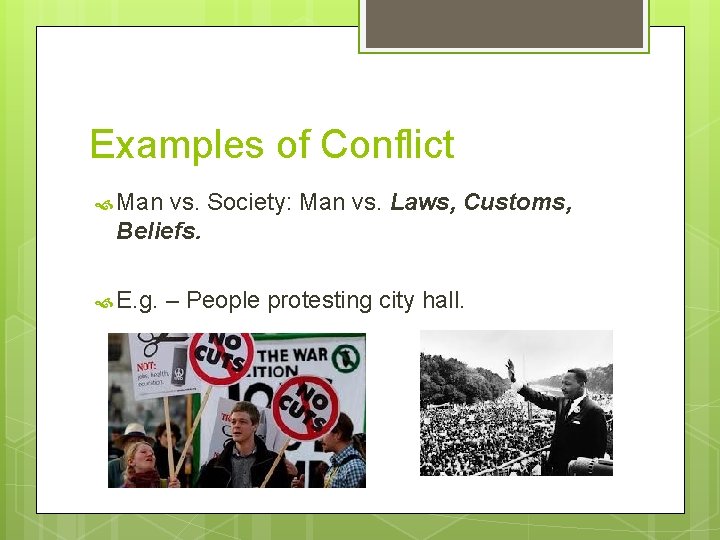
Examples of Conflict Man vs. Society: Man vs. Laws, Customs, Beliefs. E. g. – People protesting city hall.
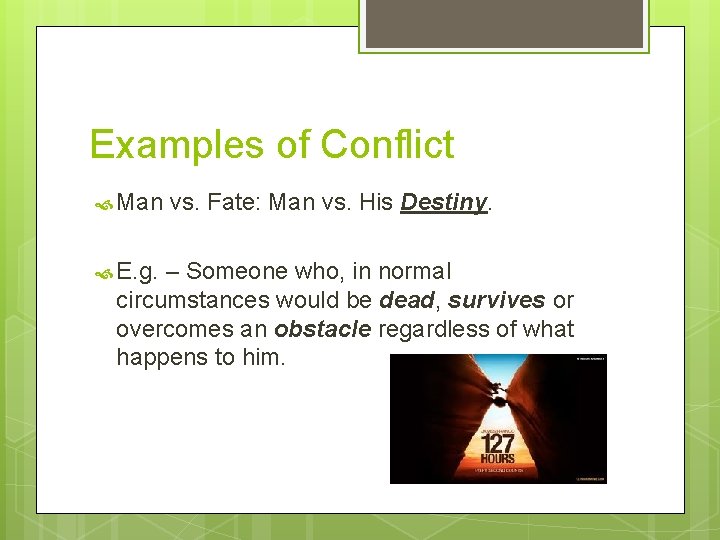
Examples of Conflict Man E. g. vs. Fate: Man vs. His Destiny. – Someone who, in normal circumstances would be dead, survives or overcomes an obstacle regardless of what happens to him.
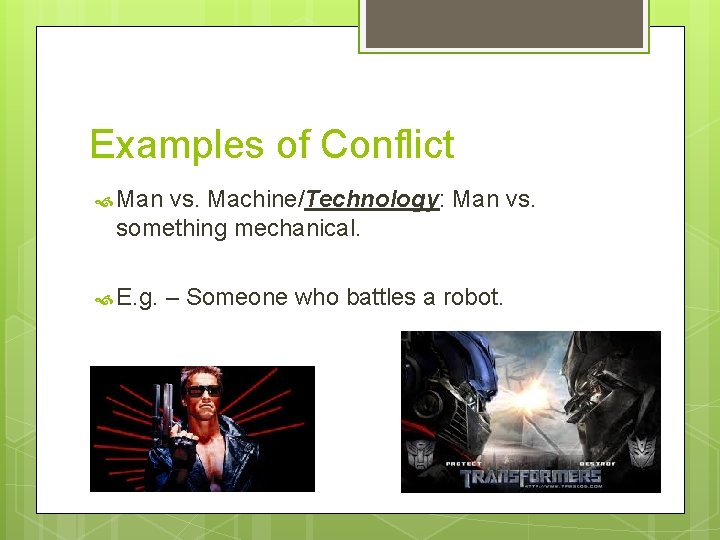
Examples of Conflict Man vs. Machine/Technology: Man vs. something mechanical. E. g. – Someone who battles a robot.
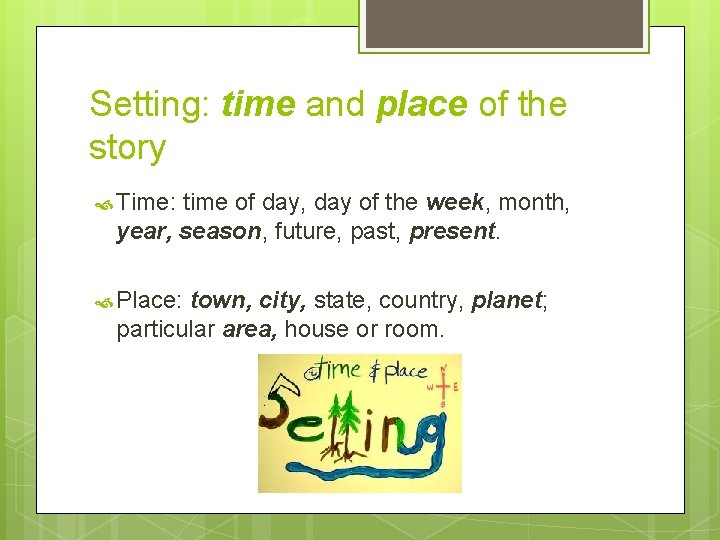
Setting: time and place of the story Time: time of day, day of the week, month, year, season, future, past, present. Place: town, city, state, country, planet; particular area, house or room.
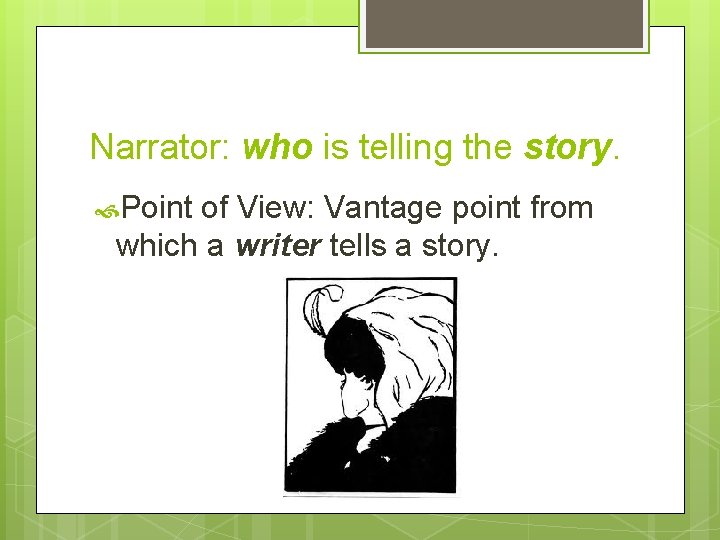
Narrator: who is telling the story. Point of View: Vantage point from which a writer tells a story.
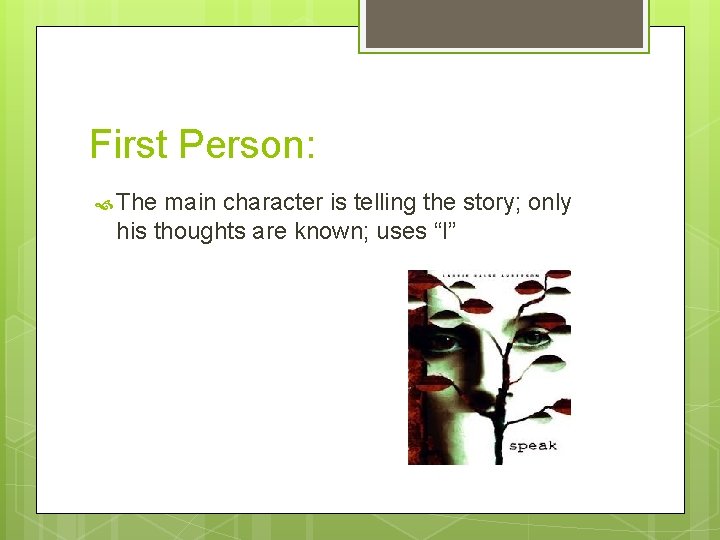
First Person: The main character is telling the story; only his thoughts are known; uses “I”
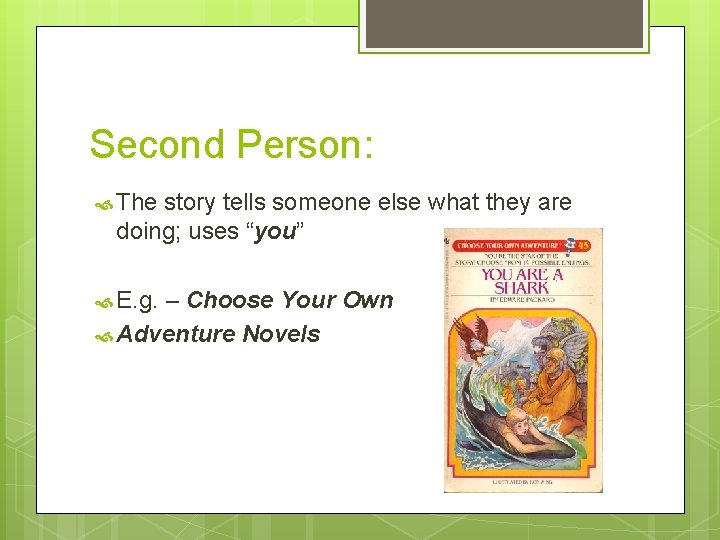
Second Person: The story tells someone else what they are doing; uses “you” E. g. – Choose Your Own Adventure Novels
Omniscient (“All-Knowing”): The narrator plays no part in the story (third person) but can tell the reader what ALL the characters are thinking and feeling as well as what is happening in other places.
Limited Omniscient: Told in third person by someone in the story; only his thoughts are revealed. Objective: Told in third person; none of the characters have their thoughts revealed; reader analyzes characters from actions and words only.
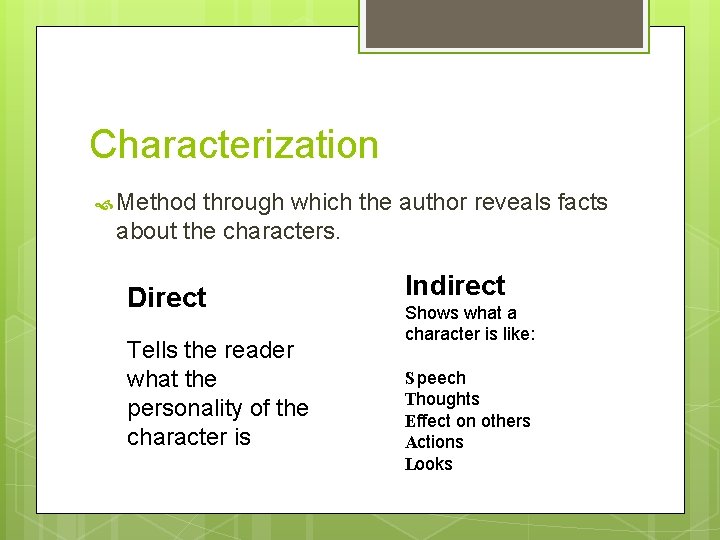
Characterization Method through which the author reveals facts about the characters. Direct Tells the reader what the personality of the character is Indirect Shows what a character is like: S peech Thoughts Effect on others Actions Looks
Characterization Continued. . . Dynamic A character that changes in some way Static A character that stays the same
Characterization Continued. . . Protagonist The leading character or “hero” of a literary work. Moves the plot forward. Antagonist The one opposed to the protagonist; opponent; adversary
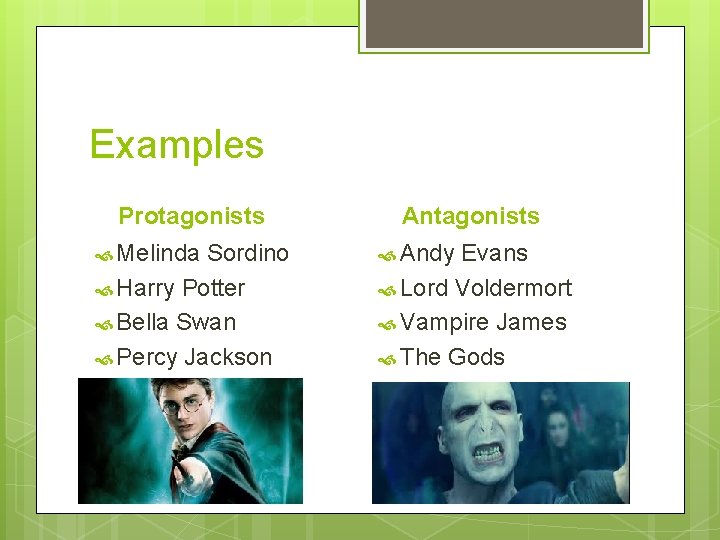
Examples Protagonists Melinda Sordino Harry Potter Bella Swan Percy Jackson Antagonists Andy Evans Lord Voldermort Vampire James The Gods
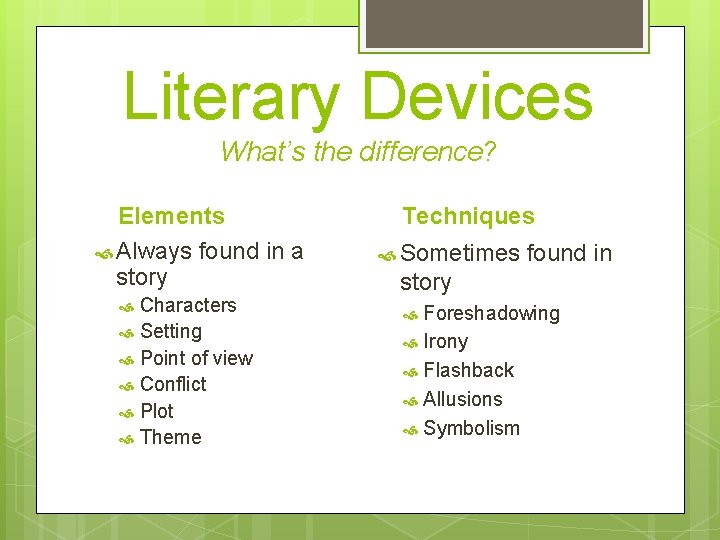
Literary Devices What’s the difference? Elements Always found in a story Characters Setting Point of view Conflict Plot Theme Techniques Sometimes found in story Foreshadowing Irony Flashback Allusions Symbolism
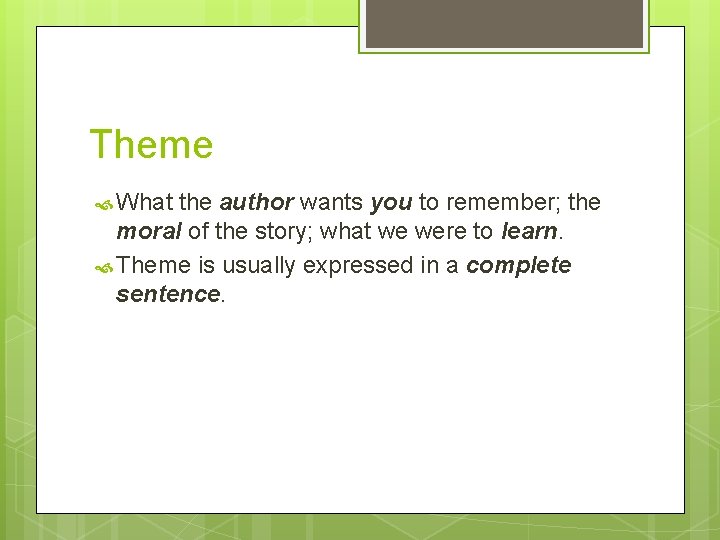
Theme What the author wants you to remember; the moral of the story; what we were to learn. Theme is usually expressed in a complete sentence.
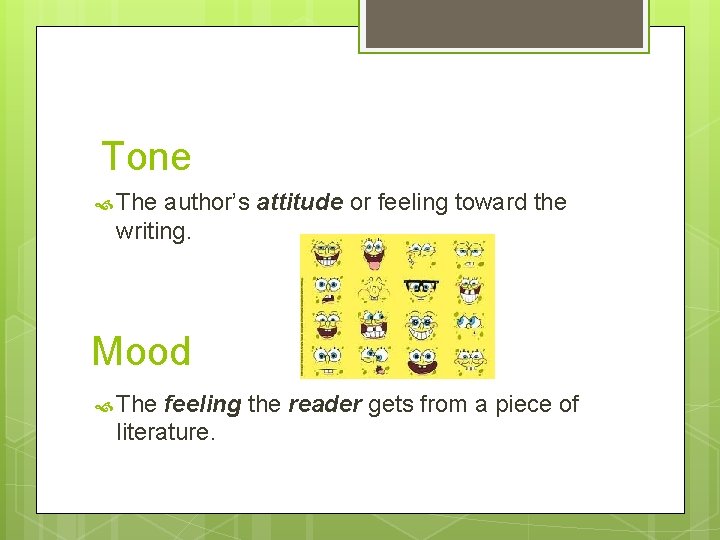
Tone The author’s attitude or feeling toward the writing. Mood The feeling the reader gets from a piece of literature.
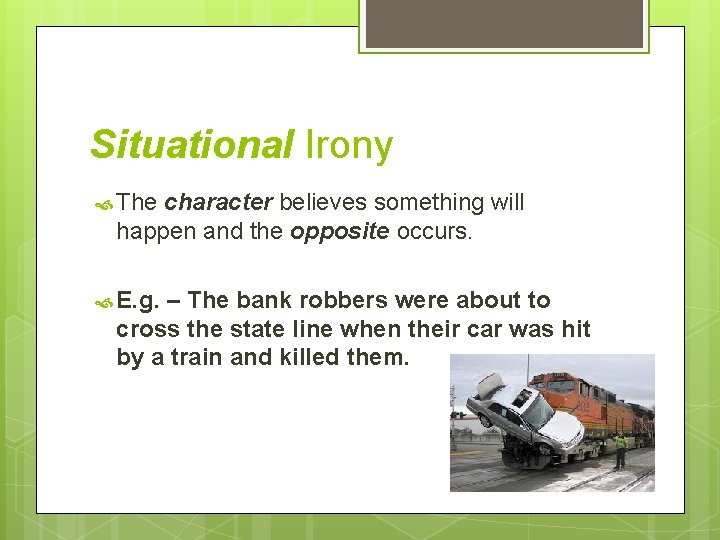
Situational Irony The character believes something will happen and the opposite occurs. E. g. – The bank robbers were about to cross the state line when their car was hit by a train and killed them.
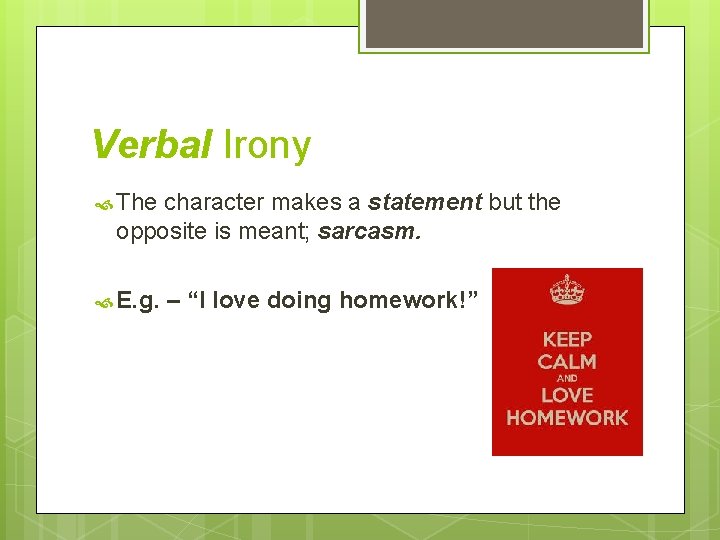
Verbal Irony The character makes a statement but the opposite is meant; sarcasm. E. g. – “I love doing homework!”
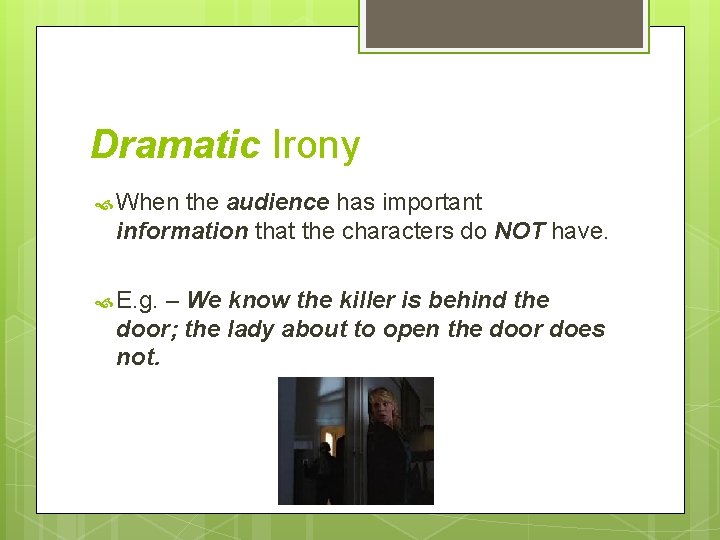
Dramatic Irony When the audience has important information that the characters do NOT have. E. g. – We know the killer is behind the door; the lady about to open the door does not.
The End!