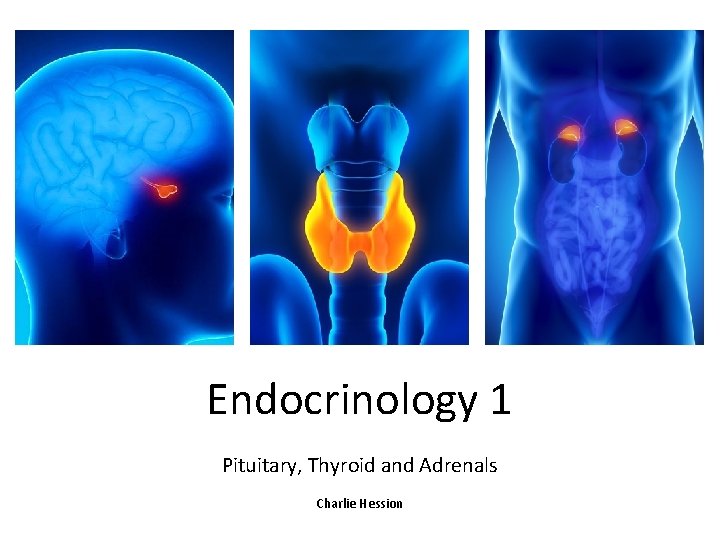
Endocrinology 1 Pituitary Thyroid and Adrenals Charlie Hession
- Slides: 31
Endocrinology 1 Pituitary, Thyroid and Adrenals Charlie Hession
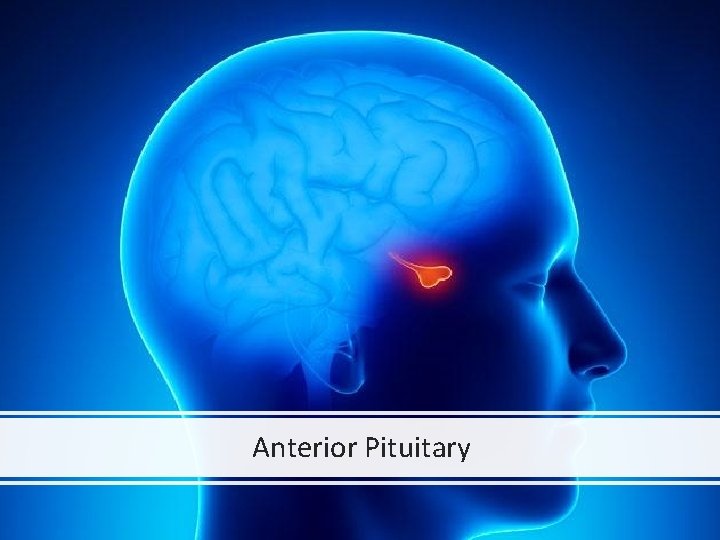
Anterior Pituitary
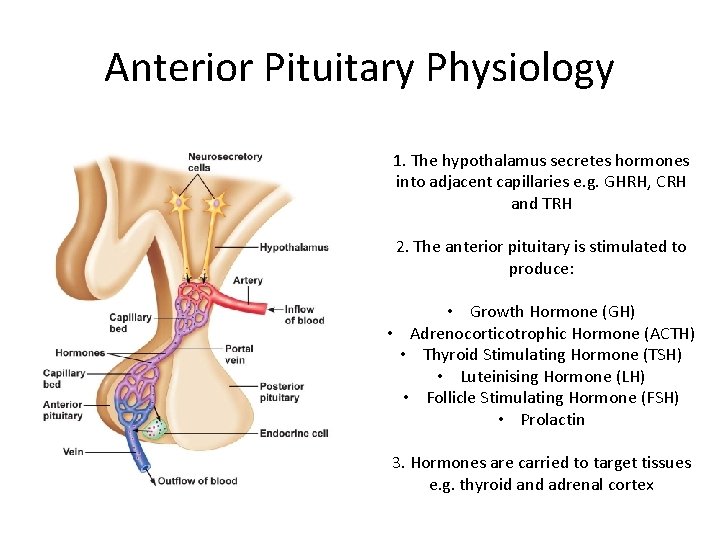
Anterior Pituitary Physiology 1. The hypothalamus secretes hormones into adjacent capillaries e. g. GHRH, CRH and TRH 2. The anterior pituitary is stimulated to produce: • Growth Hormone (GH) • Adrenocorticotrophic Hormone (ACTH) • Thyroid Stimulating Hormone (TSH) • Luteinising Hormone (LH) • Follicle Stimulating Hormone (FSH) • Prolactin 3. Hormones are carried to target tissues e. g. thyroid and adrenal cortex
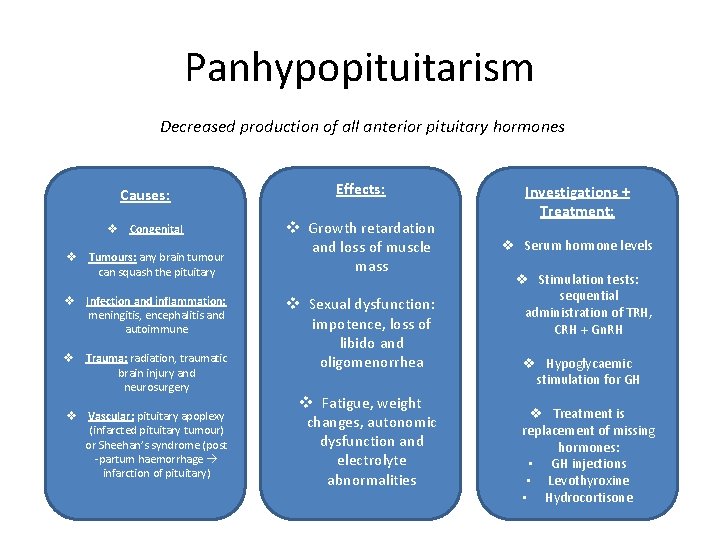
Panhypopituitarism Decreased production of all anterior pituitary hormones Causes: Effects: v Congenital v Growth retardation and loss of muscle mass v Tumours: any brain tumour can squash the pituitary v Infection and inflammation: meningitis, encephalitis and autoimmune v Trauma: radiation, traumatic brain injury and neurosurgery v Vascular: pituitary apoplexy (infarcted pituitary tumour) or Sheehan’s syndrome (post -partum haemorrhage infarction of pituitary) v Sexual dysfunction: impotence, loss of libido and oligomenorrhea v Fatigue, weight changes, autonomic dysfunction and electrolyte abnormalities Investigations + Treatment: v Serum hormone levels v Stimulation tests: sequential administration of TRH, CRH + Gn. RH v Hypoglycaemic stimulation for GH v Treatment is replacement of missing hormones: • GH injections • Levothyroxine • Hydrocortisone
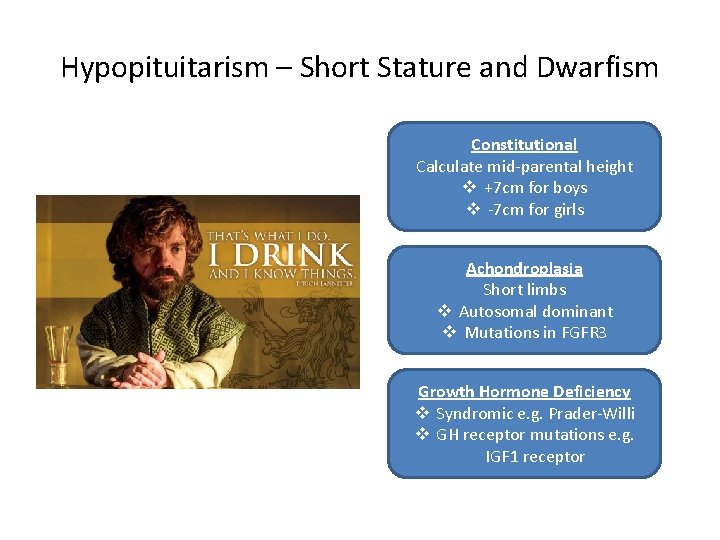
Hypopituitarism – Short Stature and Dwarfism Constitutional Calculate mid-parental height v +7 cm for boys v -7 cm for girls Achondroplasia Short limbs v Autosomal dominant v Mutations in FGFR 3 Growth Hormone Deficiency v Syndromic e. g. Prader-Willi v GH receptor mutations e. g. IGF 1 receptor
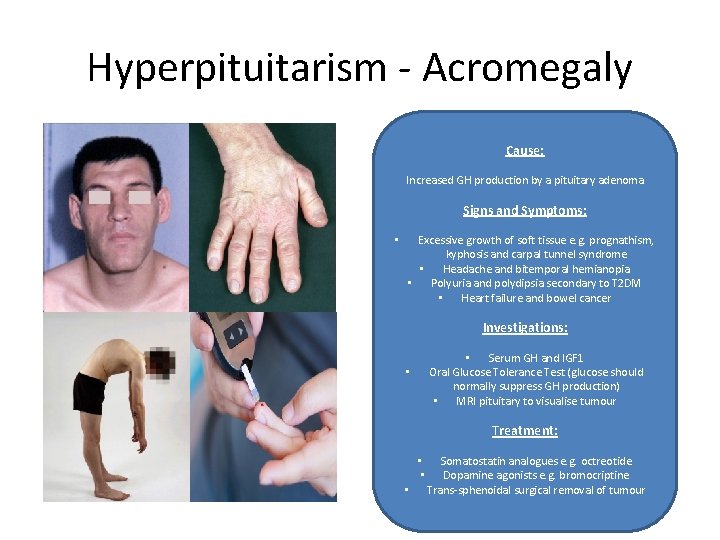
Hyperpituitarism - Acromegaly Cause: Increased GH production by a pituitary adenoma Signs and Symptoms: • Excessive growth of soft tissue e. g. prognathism, kyphosis and carpal tunnel syndrome • Headache and bitemporal hemianopia • Polyuria and polydipsia secondary to T 2 DM • Heart failure and bowel cancer Investigations: • Serum GH and IGF 1 Oral Glucose Tolerance Test (glucose should normally suppress GH production) • MRI pituitary to visualise tumour • Treatment: • • • Somatostatin analogues e. g. octreotide Dopamine agonists e. g. bromocriptine Trans-sphenoidal surgical removal of tumour
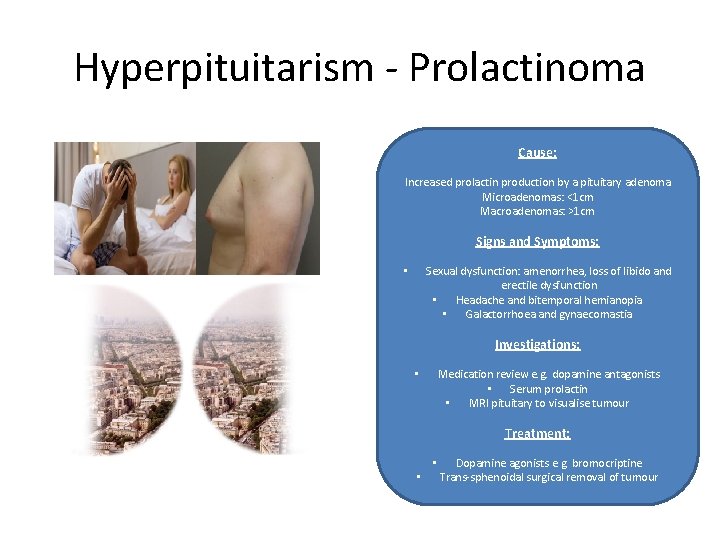
Hyperpituitarism - Prolactinoma Cause: Increased prolactin production by a pituitary adenoma Microadenomas: <1 cm Macroadenomas: >1 cm Signs and Symptoms: Sexual dysfunction: amenorrhea, loss of libido and erectile dysfunction • Headache and bitemporal hemianopia • Galactorrhoea and gynaecomastia • Investigations: Medication review e. g. dopamine antagonists • Serum prolactin • MRI pituitary to visualise tumour • Treatment: • • Dopamine agonists e. g. bromocriptine Trans-sphenoidal surgical removal of tumour
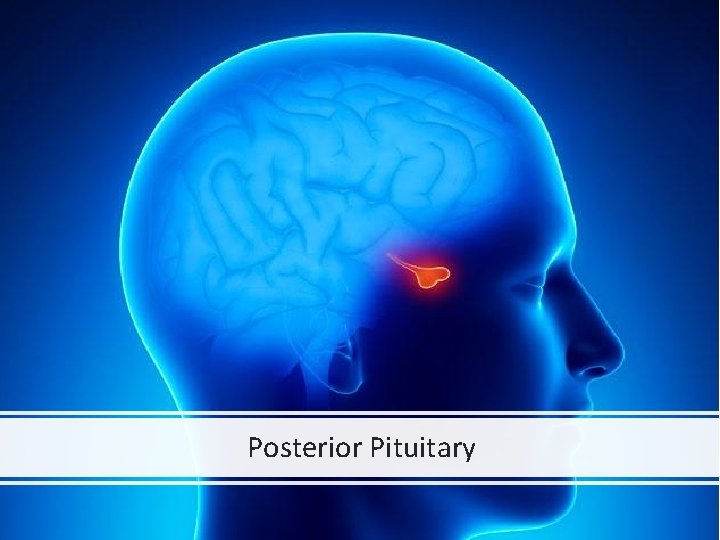
Posterior Pituitary
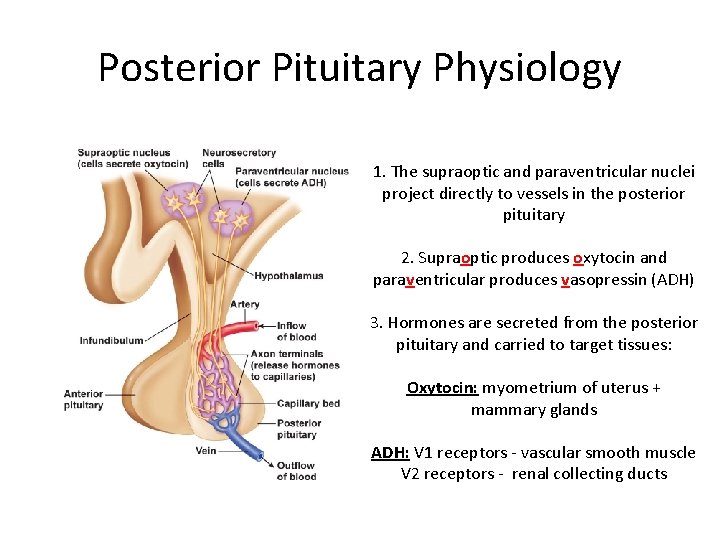
Posterior Pituitary Physiology 1. The supraoptic and paraventricular nuclei project directly to vessels in the posterior pituitary 2. Supraoptic produces oxytocin and paraventricular produces vasopressin (ADH) 3. Hormones are secreted from the posterior pituitary and carried to target tissues: Oxytocin: myometrium of uterus + mammary glands ADH: V 1 receptors - vascular smooth muscle V 2 receptors - renal collecting ducts
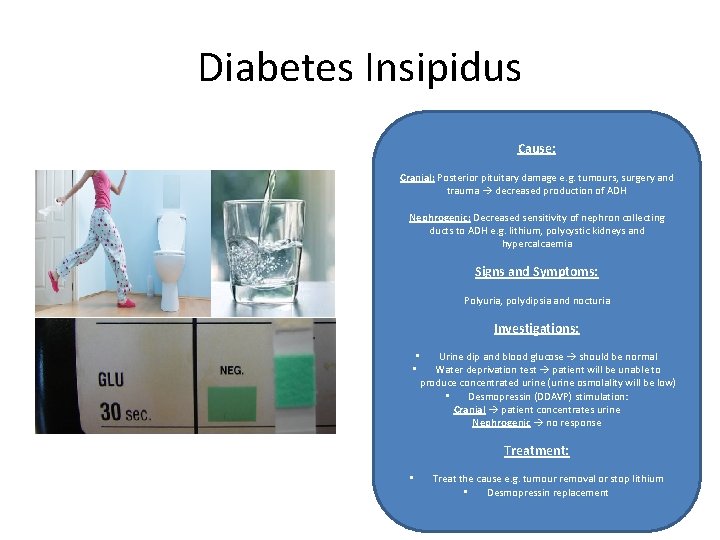
Diabetes Insipidus Cause: Cranial: Posterior pituitary damage e. g. tumours, surgery and trauma decreased production of ADH Nephrogenic: Decreased sensitivity of nephron collecting ducts to ADH e. g. lithium, polycystic kidneys and hypercalcaemia Signs and Symptoms: Polyuria, polydipsia and nocturia Investigations: • Urine dip and blood glucose should be normal • Water deprivation test patient will be unable to produce concentrated urine (urine osmolality will be low) • Desmopressin (DDAVP) stimulation: Cranial patient concentrates urine Nephrogenic no response Treatment: • Treat the cause e. g. tumour removal or stop lithium • Desmopressin replacement
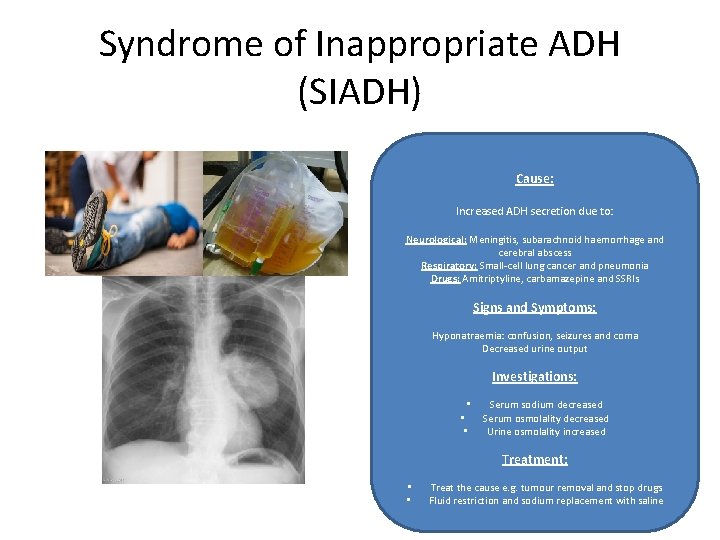
Syndrome of Inappropriate ADH (SIADH) Cause: Increased ADH secretion due to: Neurological: Meningitis, subarachnoid haemorrhage and cerebral abscess Respiratory: Small-cell lung cancer and pneumonia Drugs: Amitriptyline, carbamazepine and SSRIs Signs and Symptoms: Hyponatraemia: confusion, seizures and coma Decreased urine output Investigations: • • • Serum sodium decreased Serum osmolality decreased Urine osmolality increased Treatment: • • Treat the cause e. g. tumour removal and stop drugs Fluid restriction and sodium replacement with saline
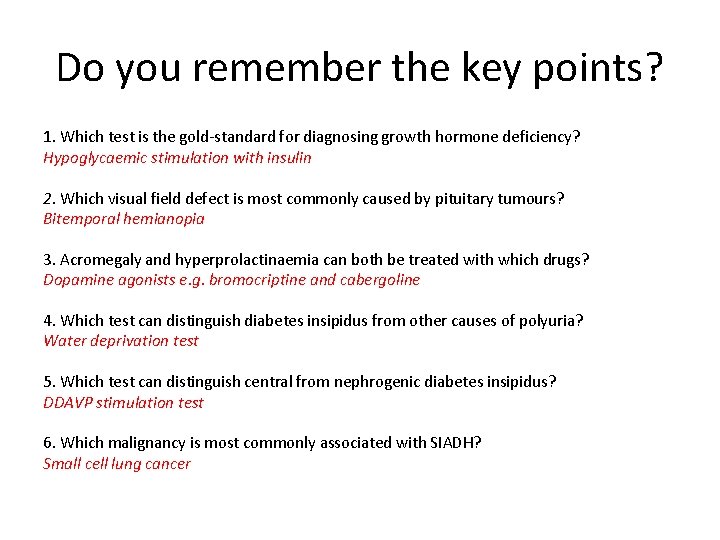
Do you remember the key points? 1. Which test is the gold-standard for diagnosing growth hormone deficiency? Hypoglycaemic stimulation with insulin 2. Which visual field defect is most commonly caused by pituitary tumours? Bitemporal hemianopia 3. Acromegaly and hyperprolactinaemia can both be treated with which drugs? Dopamine agonists e. g. bromocriptine and cabergoline 4. Which test can distinguish diabetes insipidus from other causes of polyuria? Water deprivation test 5. Which test can distinguish central from nephrogenic diabetes insipidus? DDAVP stimulation test 6. Which malignancy is most commonly associated with SIADH? Small cell lung cancer
Thyroid
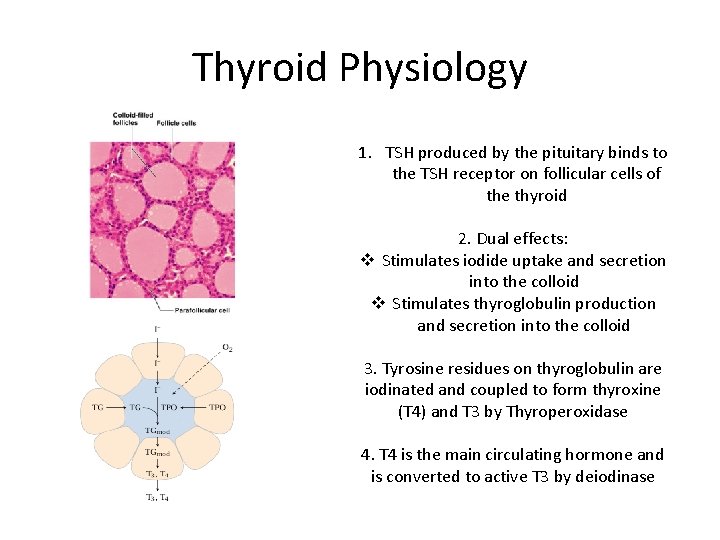
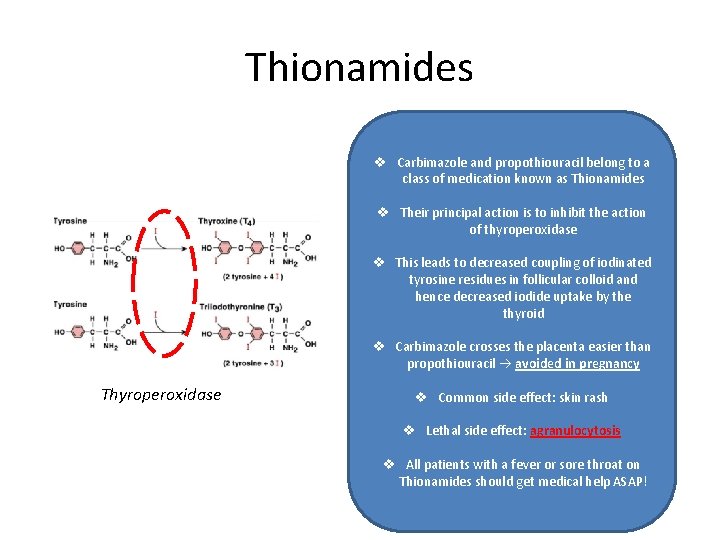
Thyroid Physiology 1. TSH produced by the pituitary binds to the TSH receptor on follicular cells of the thyroid 2. Dual effects: v Stimulates iodide uptake and secretion into the colloid v Stimulates thyroglobulin production and secretion into the colloid 3. Tyrosine residues on thyroglobulin are iodinated and coupled to form thyroxine (T 4) and T 3 by Thyroperoxidase 4. T 4 is the main circulating hormone and is converted to active T 3 by deiodinase
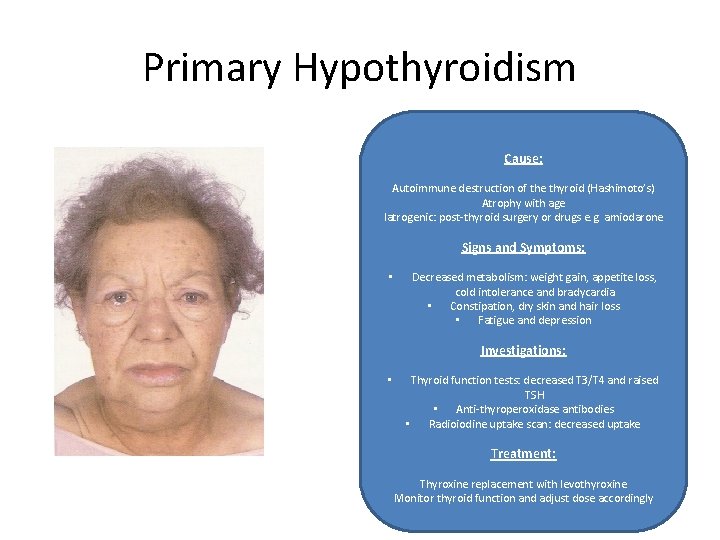
Primary Hypothyroidism Cause: Autoimmune destruction of the thyroid (Hashimoto’s) Atrophy with age Iatrogenic: post-thyroid surgery or drugs e. g. amiodarone Signs and Symptoms: • Decreased metabolism: weight gain, appetite loss, cold intolerance and bradycardia • Constipation, dry skin and hair loss • Fatigue and depression Investigations: • Thyroid function tests: decreased T 3/T 4 and raised TSH • Anti-thyroperoxidase antibodies • Radioiodine uptake scan: decreased uptake Treatment: Thyroxine replacement with levothyroxine Monitor thyroid function and adjust dose accordingly
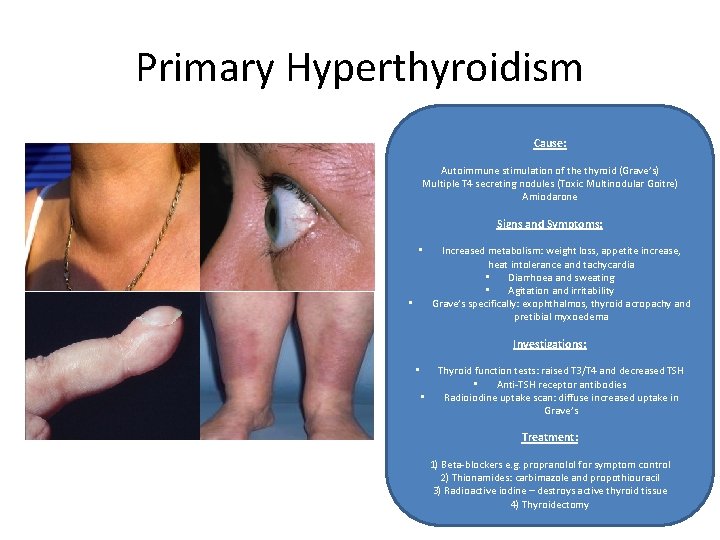
Primary Hyperthyroidism Cause: Autoimmune stimulation of the thyroid (Grave’s) Multiple T 4 secreting nodules (Toxic Multinodular Goitre) Amiodarone Signs and Symptoms: • • Increased metabolism: weight loss, appetite increase, heat intolerance and tachycardia • Diarrhoea and sweating • Agitation and irritability Grave’s specifically: exophthalmos, thyroid acropachy and pretibial myxoedema Investigations: • • Thyroid function tests: raised T 3/T 4 and decreased TSH • Anti-TSH receptor antibodies Radioiodine uptake scan: diffuse increased uptake in Grave’s Treatment: 1) Beta-blockers e. g. propranolol for symptom control 2) Thionamides: carbimazole and propothiouracil 3) Radioactive iodine – destroys active thyroid tissue 4) Thyroidectomy
Thionamides v Carbimazole and propothiouracil belong to a class of medication known as Thionamides v Their principal action is to inhibit the action of thyroperoxidase v This leads to decreased coupling of iodinated tyrosine residues in follicular colloid and hence decreased iodide uptake by the thyroid v Carbimazole crosses the placenta easier than propothiouracil avoided in pregnancy Thyroperoxidase v Common side effect: skin rash v Lethal side effect: agranulocytosis v All patients with a fever or sore throat on Thionamides should get medical help ASAP!
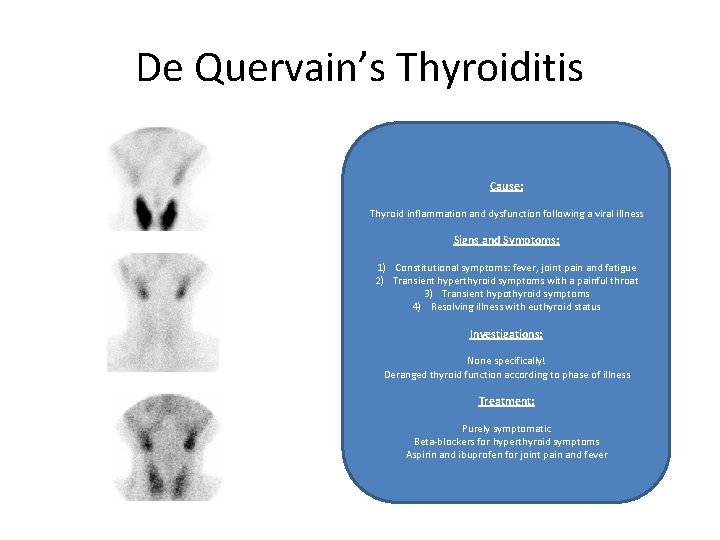
De Quervain’s Thyroiditis Cause: Thyroid inflammation and dysfunction following a viral illness Signs and Symptoms: 1) Constitutional symptoms: fever, joint pain and fatigue 2) Transient hyperthyroid symptoms with a painful throat 3) Transient hypothyroid symptoms 4) Resolving illness with euthyroid status Investigations: None specifically! Deranged thyroid function according to phase of illness Treatment: Purely symptomatic Beta-blockers for hyperthyroid symptoms Aspirin and ibuprofen for joint pain and fever
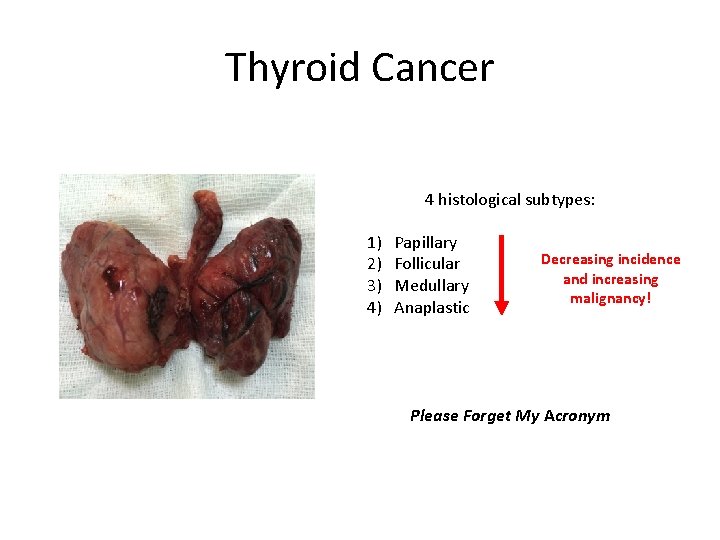
Thyroid Cancer 4 histological subtypes: 1) 2) 3) 4) Papillary Follicular Medullary Anaplastic Decreasing incidence and increasing malignancy! Please Forget My Acronym
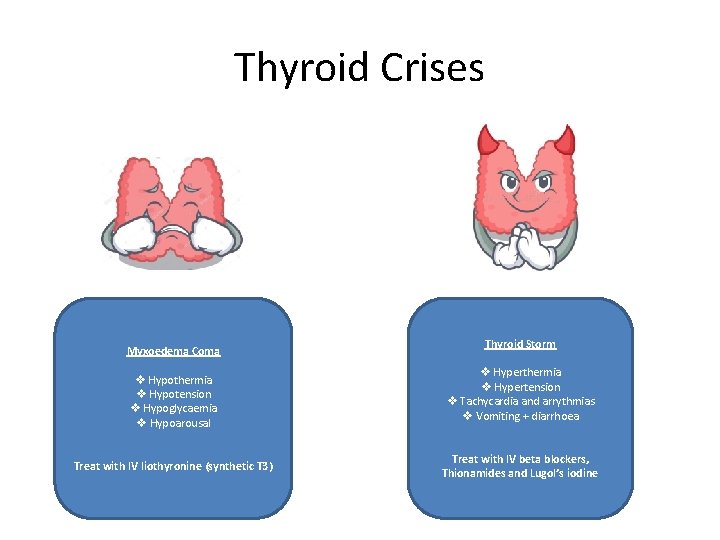
Thyroid Crises Myxoedema Coma v Hypothermia v Hypotension v Hypoglycaemia v Hypoarousal Treat with IV liothyronine (synthetic T 3) Thyroid Storm v Hyperthermia v Hypertension v Tachycardia and arrythmias v Vomiting + diarrhoea Treat with IV beta blockers, Thionamides and Lugol’s iodine
Do you remember the key points? 1. What is the most common form of hypothyroidism and which antibody is involved? Hashimoto’s: anti-thyroperoxidase antibodies 2. Which drug is given intravenously to treat myxoedema coma? Liothyronine 3. A patient has secondary hyperthyroidism. What would you expect their TSH and T 4 levels to be? TSH: high; T 4: high 4. What is the most serious side effect of thionamides? Agranulocytosis 5. Which subtype of thyroid cancer arises from parafollicular cells? Medullary
Adrenals
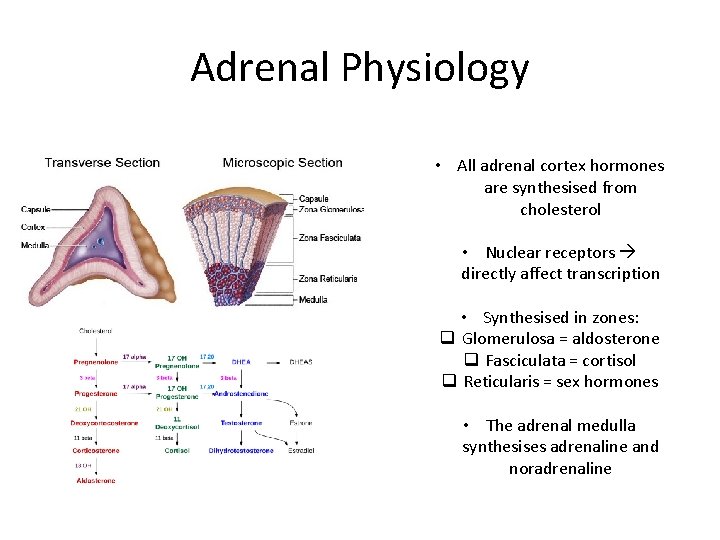
Adrenal Physiology • All adrenal cortex hormones are synthesised from cholesterol • Nuclear receptors directly affect transcription • Synthesised in zones: q Glomerulosa = aldosterone q Fasciculata = cortisol q Reticularis = sex hormones • The adrenal medulla synthesises adrenaline and noradrenaline
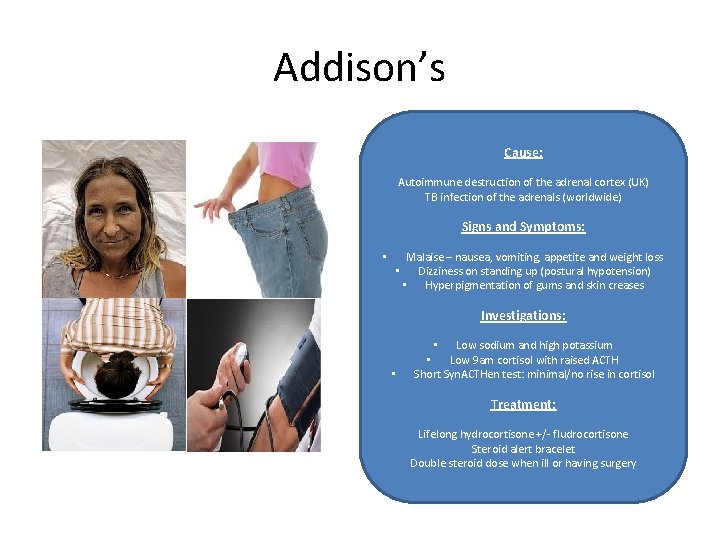
Addison’s Cause: Autoimmune destruction of the adrenal cortex (UK) TB infection of the adrenals (worldwide) Signs and Symptoms: • • Malaise – nausea, vomiting, appetite and weight loss Dizziness on standing up (postural hypotension) • Hyperpigmentation of gums and skin creases Investigations: • • Low sodium and high potassium • Low 9 am cortisol with raised ACTH Short Syn. ACTHen test: minimal/no rise in cortisol Treatment: Lifelong hydrocortisone +/- fludrocortisone Steroid alert bracelet Double steroid dose when ill or having surgery
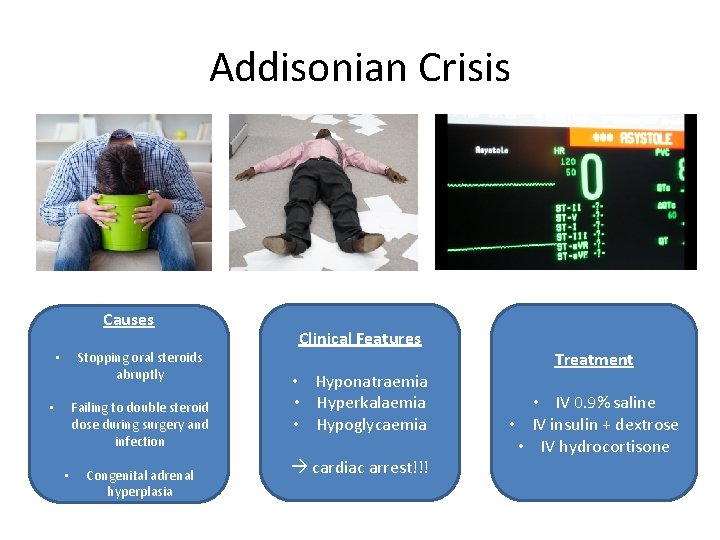
Addisonian Crisis Causes Stopping oral steroids abruptly • Failing to double steroid dose during surgery and infection • • Congenital adrenal hyperplasia Clinical Features • Hyponatraemia • Hyperkalaemia • Hypoglycaemia cardiac arrest!!! Treatment • IV 0. 9% saline • IV insulin + dextrose • IV hydrocortisone
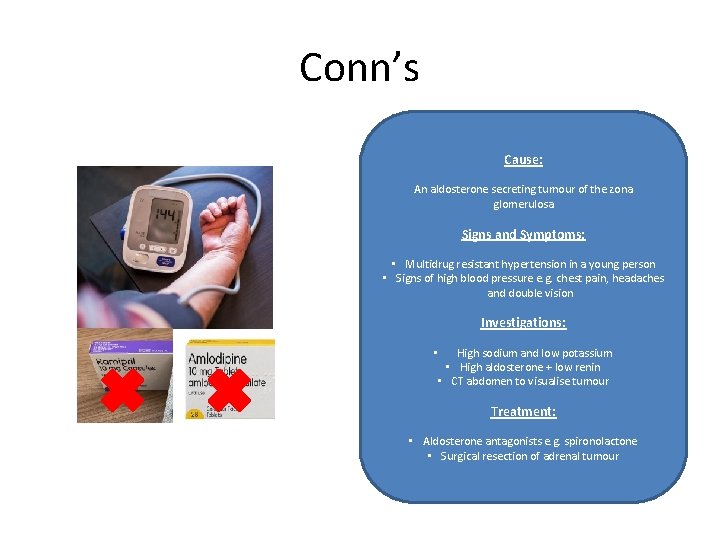
Conn’s Cause: An aldosterone secreting tumour of the zona glomerulosa Signs and Symptoms: • Multidrug resistant hypertension in a young person • Signs of high blood pressure e. g. chest pain, headaches and double vision Investigations: High sodium and low potassium • High aldosterone + low renin • CT abdomen to visualise tumour • Treatment: • Aldosterone antagonists e. g. spironolactone • Surgical resection of adrenal tumour
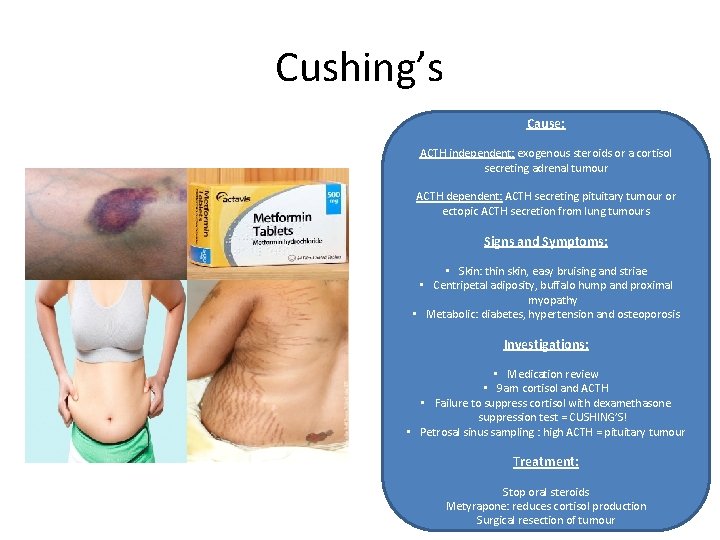
Cushing’s Cause: ACTH independent: exogenous steroids or a cortisol secreting adrenal tumour ACTH dependent: ACTH secreting pituitary tumour or ectopic ACTH secretion from lung tumours Signs and Symptoms: • Skin: thin skin, easy bruising and striae • Centripetal adiposity, buffalo hump and proximal myopathy • Metabolic: diabetes, hypertension and osteoporosis Investigations: • Medication review • 9 am cortisol and ACTH • Failure to suppress cortisol with dexamethasone suppression test = CUSHING’S! • Petrosal sinus sampling : high ACTH = pituitary tumour Treatment: Stop oral steroids Metyrapone: reduces cortisol production Surgical resection of tumour
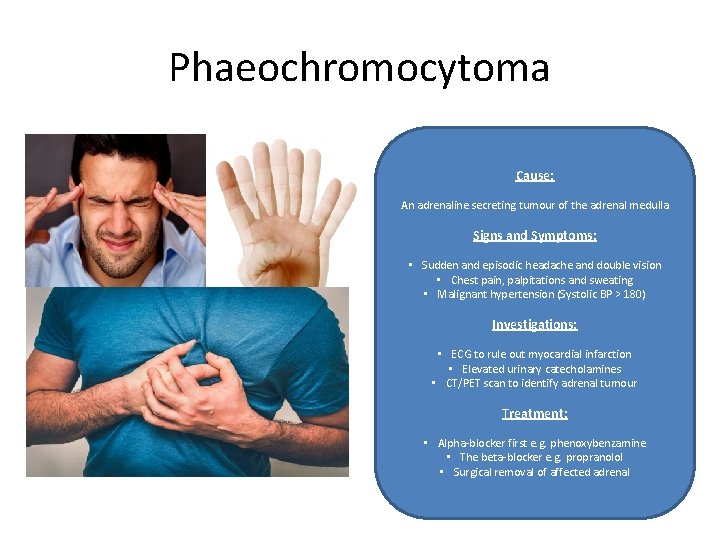
Phaeochromocytoma Cause: An adrenaline secreting tumour of the adrenal medulla Signs and Symptoms: • Sudden and episodic headache and double vision • Chest pain, palpitations and sweating • Malignant hypertension (Systolic BP > 180) Investigations: • ECG to rule out myocardial infarction • Elevated urinary catecholamines • CT/PET scan to identify adrenal tumour Treatment: • Alpha-blocker first e. g. phenoxybenzamine • The beta-blocker e. g. propranolol • Surgical removal of affected adrenal
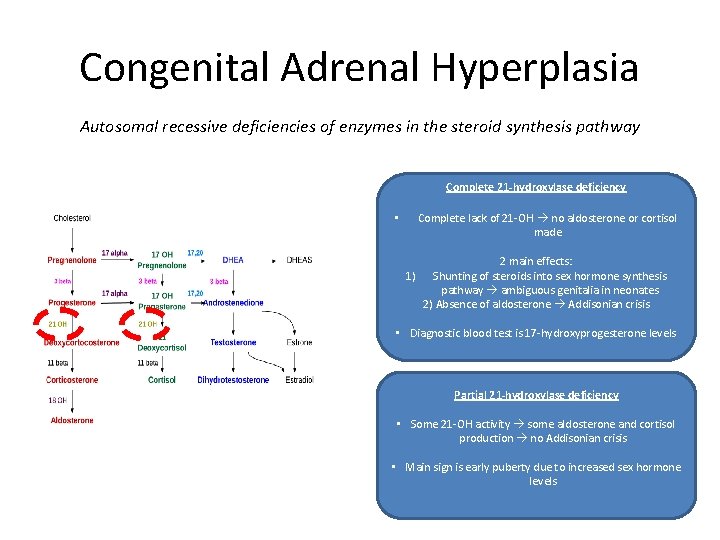
Congenital Adrenal Hyperplasia Autosomal recessive deficiencies of enzymes in the steroid synthesis pathway Complete 21 -hydroxylase deficiency Complete lack of 21 -OH no aldosterone or cortisol made • 1) 2 main effects: Shunting of steroids into sex hormone synthesis pathway ambiguous genitalia in neonates 2) Absence of aldosterone Addisonian crisis • Diagnostic blood test is 17 -hydroxyprogesterone levels Partial 21 -hydroxylase deficiency • Some 21 -OH activity some aldosterone and cortisol production no Addisonian crisis • Main sign is early puberty due to increased sex hormone levels
Do you remember the key points? 1. Which test is diagnostic of Addison’s disease? Short Syn. ACTHen test 2. What is the most common cause of Cushing’s syndrome? Exogenous steroids 3. What would the aldosterone : renin ratio be in a patient with Conn’s syndrome? Aldosterone: high; renin: low 4. What is the medication of choice for Conn’s syndrome? Aldosterone antagonists e. g. spironolactone 5. High levels of which steroid precursor are diagnostic of complete 21 -hydroxylase deficiency? 17 -hydroxyprogesterone
Thank You! Any Qs: cmh 214@ic. ac. uk Feedback: tiny. cc/tutorialfeedback