EMS in The Netherlands Italian Dutch seminar Verona

- Slides: 16
EMS in The Netherlands Italian – Dutch seminar Verona, 28 may 2014 Elmer de Bruin - Head of international Affairs Transport en Logistiek Nederland
Content • • Introduction TLN Situation in The Netherlands Modular system History EMS Pilot phase and conditions Results Summary Recent developments
Introduction TLN • Road transport operators association – Association provides services and represents interests of members – 12. 200 companies hire &reward in Holland – 5. 500 member of TLN (S, M, L) – 80% of members active in international transport – Permanent representation in Brussels
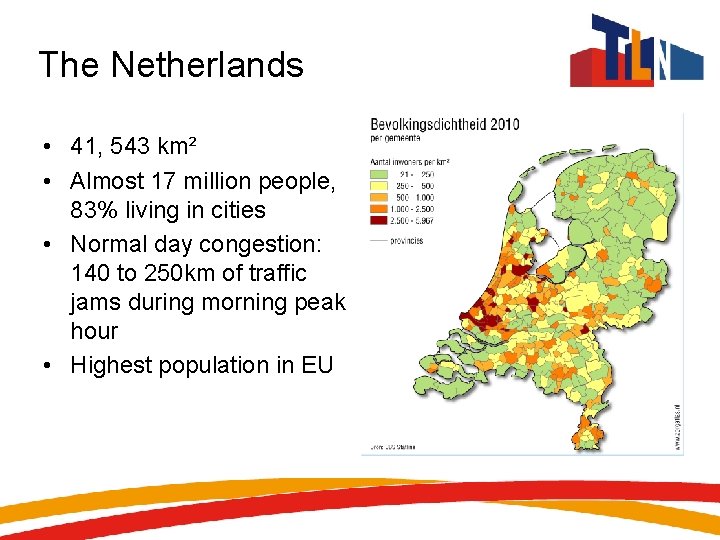
The Netherlands • 41, 543 km² • Almost 17 million people, 83% living in cities • Normal day congestion: 140 to 250 km of traffic jams during morning peak hour • Highest population in EU
Why the modular system? • To improve efficiency and environmental performance of the logistics system • To help to solve or decrease problems of: – Growing demand for (road) transport – Increasing congestion of the infrastructure – Air quality and emissions (e. g. CO 2 emissions) – Drivers shortage
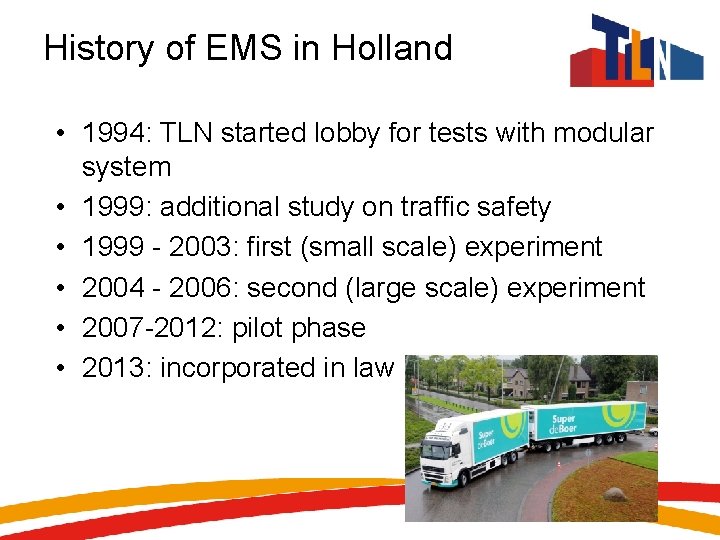
History of EMS in Holland • 1994: TLN started lobby for tests with modular system • 1999: additional study on traffic safety • 1999 - 2003: first (small scale) experiment • 2004 - 2006: second (large scale) experiment • 2007 -2012: pilot phase • 2013: incorporated in law
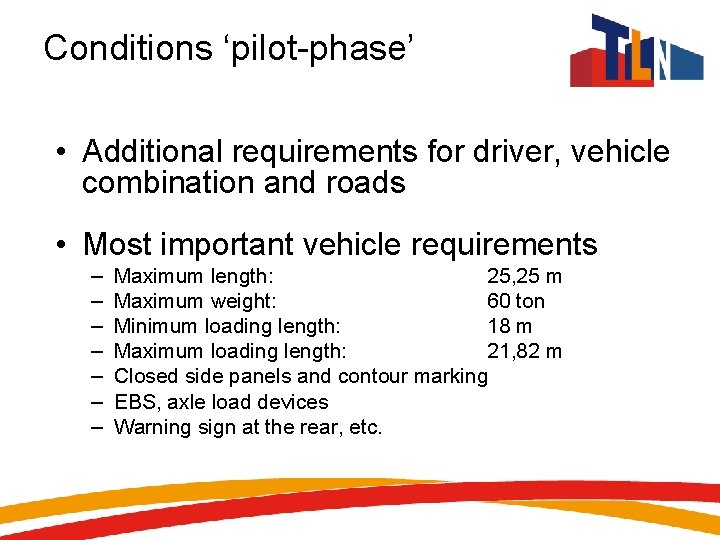
Conditions ‘pilot-phase’ • Additional requirements for driver, vehicle combination and roads • Most important vehicle requirements – – – – Maximum length: 25, 25 m Maximum weight: 60 ton Minimum loading length: 18 m Maximum loading length: 21, 82 m Closed side panels and contour marking EBS, axle load devices Warning sign at the rear, etc.
Conditions for driver • At least 5 years driving experience with articulated vehicle • License not suspended, withdrawn or been declared invalid for the last 3 years • Driver must follow a special training for driving an EMS combination -> certificate
Conditions for roads • Permission necessary of the road authority • Conditions for roads described in directive – No railway crossings – No city-centers, 30 -km zones, pedestrian areas – Only roads with separated pedestrian/bicycle lanes • Long-term permit, validity one year – Valid for all roads which are released for EMS • Motorways + 650 areas (e. g. distribution centers, terminals) • Overview on a special webpage – 300 euro per EMS
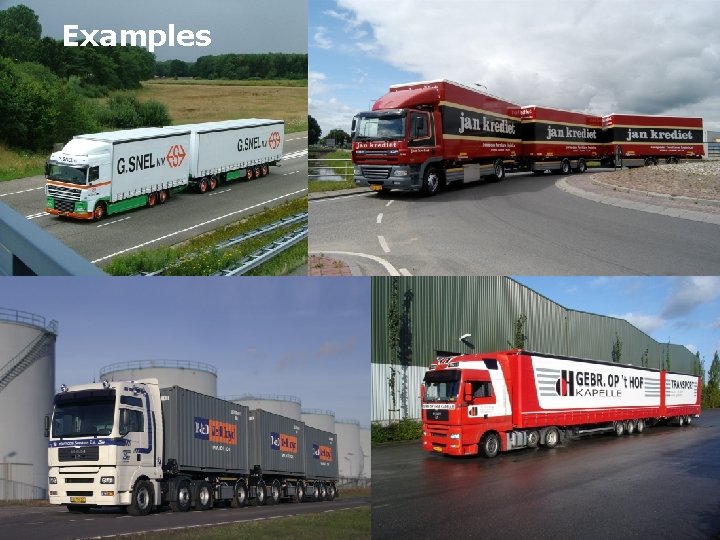
Examples
Testresults pilot phase • Hauliers and shippers very positive • Cargo: volume goods, flowers, city logistics • EMS leads to decrease of fuel consumption and emissions (savings of 20 million km’s per year) • Introduction of EMS causes only very limited modal shift • No higher safety risks • Infrastructure: no real problems, some points need attention like certain bridges
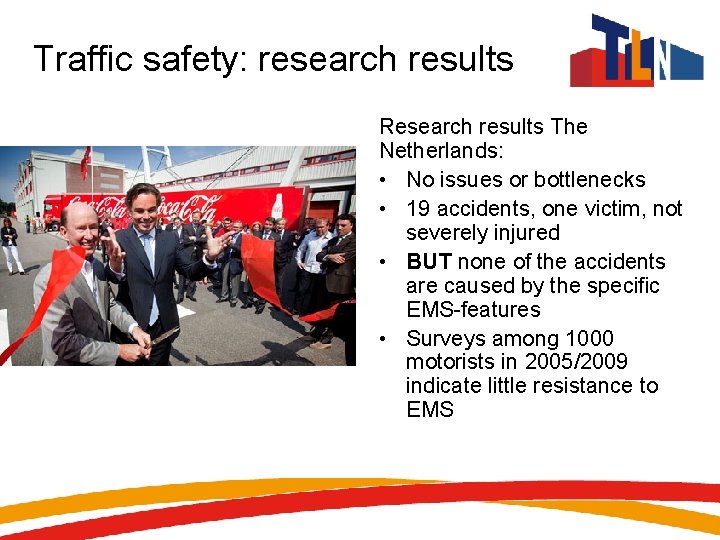
Traffic safety: research results Research results The Netherlands: • No issues or bottlenecks • 19 accidents, one victim, not severely injured • BUT none of the accidents are caused by the specific EMS-features • Surveys among 1000 motorists in 2005/2009 indicate little resistance to EMS
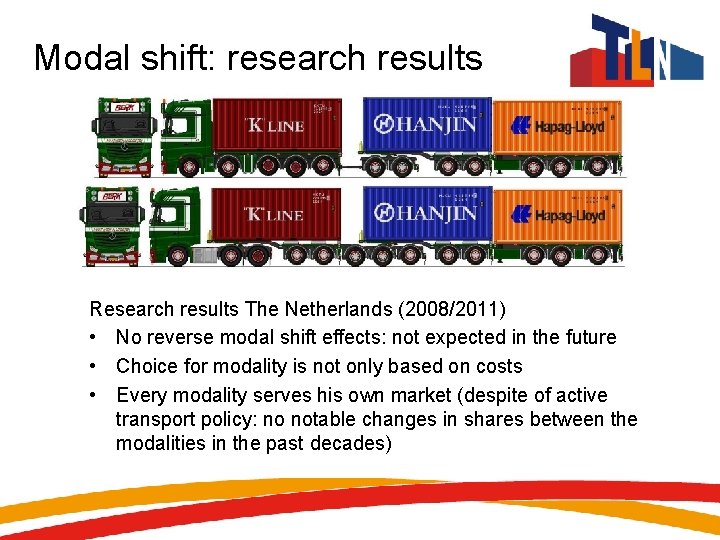
Modal shift: research results Research results The Netherlands (2008/2011) • No reverse modal shift effects: not expected in the future • Choice for modality is not only based on costs • Every modality serves his own market (despite of active transport policy: no notable changes in shares between the modalities in the past decades)
Summary • • • Pilot phase with EMS very successful Number of EMS reaches 1. 000 in June 2014 More than 250 participating companies More than 3. 500 drivers certified for EMS Positive results for costs, emissions and safety Positive decision by minister of transport regarding future of EMS in Netherlands
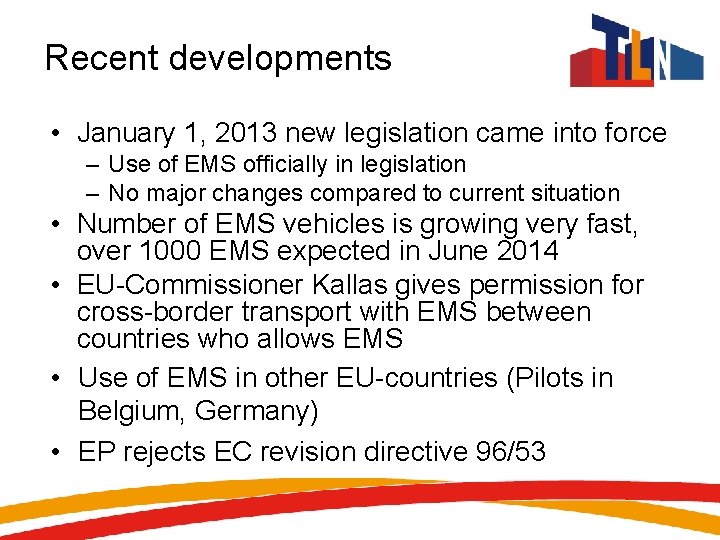
Recent developments • January 1, 2013 new legislation came into force – Use of EMS officially in legislation – No major changes compared to current situation • Number of EMS vehicles is growing very fast, over 1000 EMS expected in June 2014 • EU-Commissioner Kallas gives permission for cross-border transport with EMS between countries who allows EMS • Use of EMS in other EU-countries (Pilots in Belgium, Germany) • EP rejects EC revision directive 96/53
Thank you for your attention Questions?