EARLY ASSESSMENT SUPPORT ALLIANCE SERVING LINCOLN COUNTY EASA

- Slides: 22
EARLY ASSESSMENT & SUPPORT ALLIANCE SERVING LINCOLN COUNTY
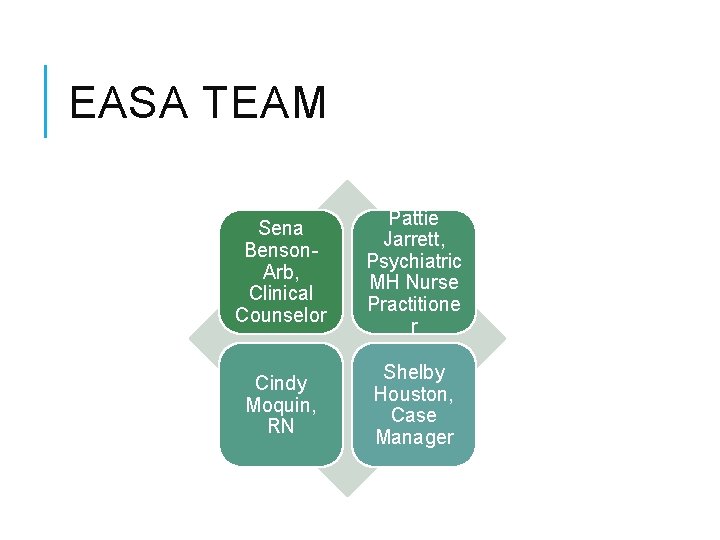
EASA TEAM Sena Benson. Arb, Clinical Counselor Pattie Jarrett, Psychiatric MH Nurse Practitione r Cindy Moquin, RN Shelby Houston, Case Manager
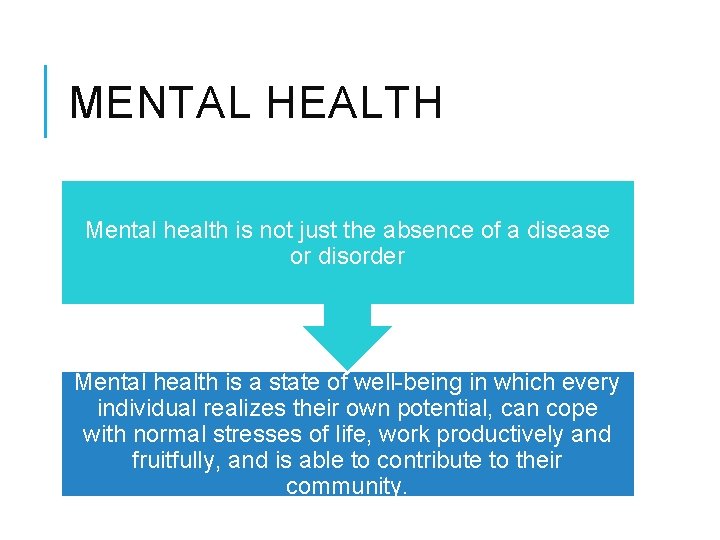
MENTAL HEALTH Mental health is not just the absence of a disease or disorder Mental health is a state of well-being in which every individual realizes their own potential, can cope with normal stresses of life, work productively and fruitfully, and is able to contribute to their community.
Eating healthy food Exercising regularly Good sleep Strong social connections Practicing stress management Practicing self-care Avoiding alcohol/drugs Reaching out for help when needed WHAT PROMO TES MENTAL HEALTH ?
WHEN TO SEEK HELP FOR MENTAL HEALTH ? Reach out if are experiencing one or more symptoms that cause problems with your ability to study, work, relate to others, or lead a full life.
Symptoms can include changes in mood, sleep, appetite, excessive worry, withdrawal from social activities, and trouble thinking, to name a few. MENTAL HEALTH Reaching out for help can be difficult but with treatment, things will get better.
WHAT IS EASA? Early Assessment and Support Alliance (EASA) is a two- year outreach/treatment program for young people ages 15 to 25 who are at risk of, or have experienced a first episode, of psychosis. EASA teams provide rapid, effective support to young people at-risk for developing psychosis or those who are experiencing early symptoms of psychosis.
LANGUAGE DISCLAIMER Language does have the power to change reality. Therefore, treat your words as the mighty instruments they are. -Daphne Rose Kingma The term “psychosis” is just one definition for a wide range of mental health experiences. Other terms include extreme stress, altered states, mental health experiences. For consistency, we are going to use the term psychosis throughout the presentation.
UNDERSTANDING PSYCHOSIS Psychosis is the medical term used to describe the disruption in a person’s connection with the commonly “shared reality”. There a lot of reasons why someone can experience a break from reality that are not related to a psychotic disorder. EASA treats the type of psychosis related to the diagnoses of the at-risk state of psychosis, schizophrenia, or bipolar.
There are multiple factors that can cause psychosis and are currently being researched. In the scientific community, psychosis is thought to be caused by changes in brain chemistry. Changes in brain function can be caused by an interplay between genetics and environment. WHAT CAUSES PSYCH OSIS?
PSYCHOSIS IS MORE COMMON THAN YOU THINK! ANYONE CAN DEVELOP PSYCHOSIS AND MANY PEOPLE SEE OR HEAR THINGS OTHERS DO NOT OR HAVE UNUSUAL IDEAS. IT AFFECTS 3 IN 100 PEOPLE AND USUALLY FIRST OCCURS BETWEEN THE AGES OF 15 AND 30. MEN OFTEN DEVELOP PSYCHOSIS 5 TO 10 YEARS YOUNGER THAN WOMEN. WHO CAN EXPERI ENCE PSYCH OSIS?
PSYCHOSIS Psychosis is only a problem when it is causing you, or someone close to you, significant distress or harm
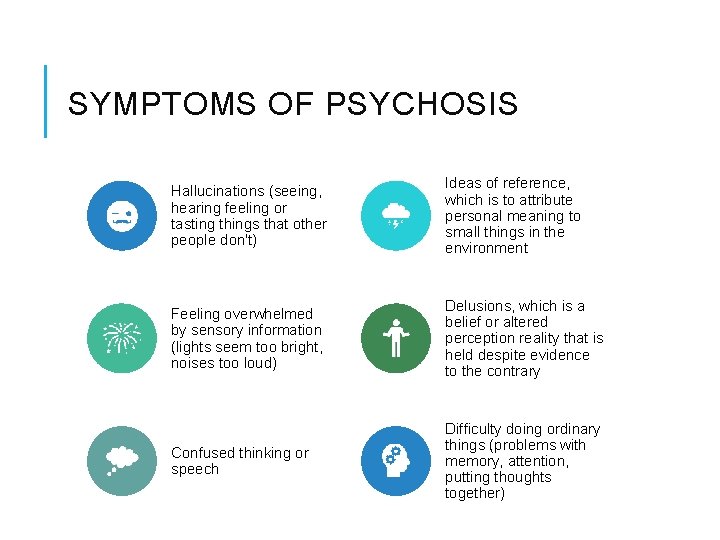
SYMPTOMS OF PSYCHOSIS Hallucinations (seeing, hearing feeling or tasting things that other people don't) Ideas of reference, which is to attribute personal meaning to small things in the environment Feeling overwhelmed by sensory information (lights seem too bright, noises too loud) Delusions, which is a belief or altered perception reality that is held despite evidence to the contrary Confused thinking or speech Difficulty doing ordinary things (problems with memory, attention, putting thoughts together)
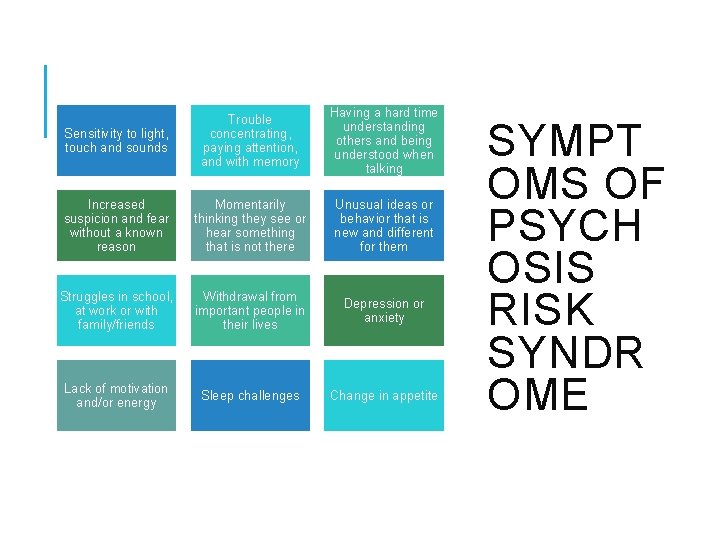
Sensitivity to light, touch and sounds Trouble concentrating, paying attention, and with memory Having a hard time understanding others and being understood when talking Increased suspicion and fear without a known reason Momentarily thinking they see or hear something that is not there Unusual ideas or behavior that is new and different for them Struggles in school, at work or with family/friends Withdrawal from important people in their lives Depression or anxiety Lack of motivation and/or energy Sleep challenges Change in appetite SYMPT OMS OF PSYCH OSIS RISK SYNDR OME
HOW EARLY INTERVENTION HELPS Psychosis becomes a problem when the symptoms are left undetected and untreated when they first develop. Early intervention treats the symptoms as close to when they first develop as possible. This helps keep young people on track for reaching their life goals and full potential in work, school, life, and relationships.
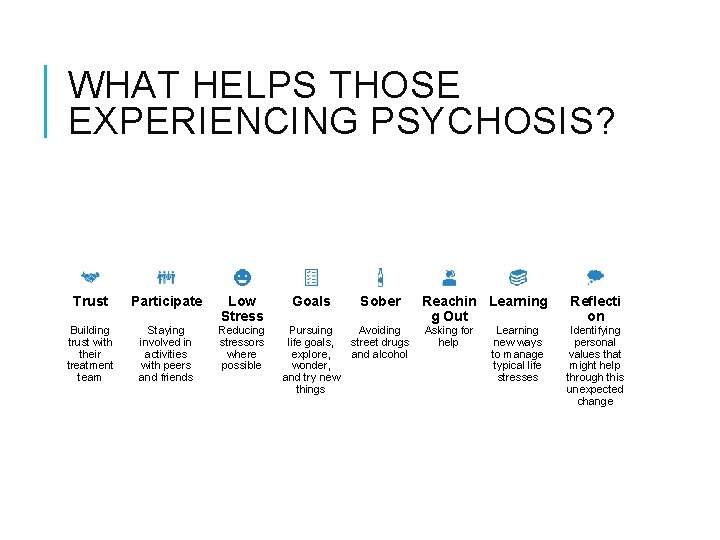
WHAT HELPS THOSE EXPERIENCING PSYCHOSIS? Trust Participate Building trust with their treatment team Staying involved in activities with peers and friends Low Stress Reducing stressors where possible Goals Sober Pursuing life goals, explore, wonder, and try new things Avoiding street drugs and alcohol Reachin Learning g Out Asking for help Learning new ways to manage typical life stresses Reflecti on Identifying personal values that might help through this unexpected change
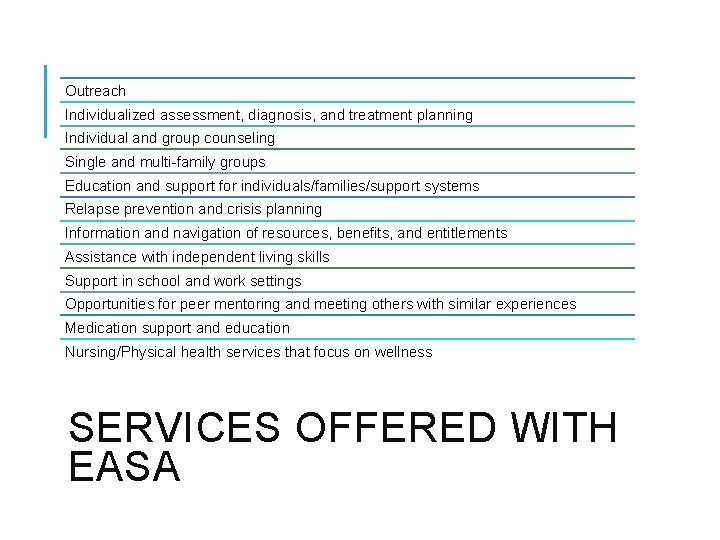
Outreach Individualized assessment, diagnosis, and treatment planning Individual and group counseling Single and multi-family groups Education and support for individuals/families/support systems Relapse prevention and crisis planning Information and navigation of resources, benefits, and entitlements Assistance with independent living skills Support in school and work settings Opportunities for peer mentoring and meeting others with similar experiences Medication support and education Nursing/Physical health services that focus on wellness SERVICES OFFERED WITH EASA
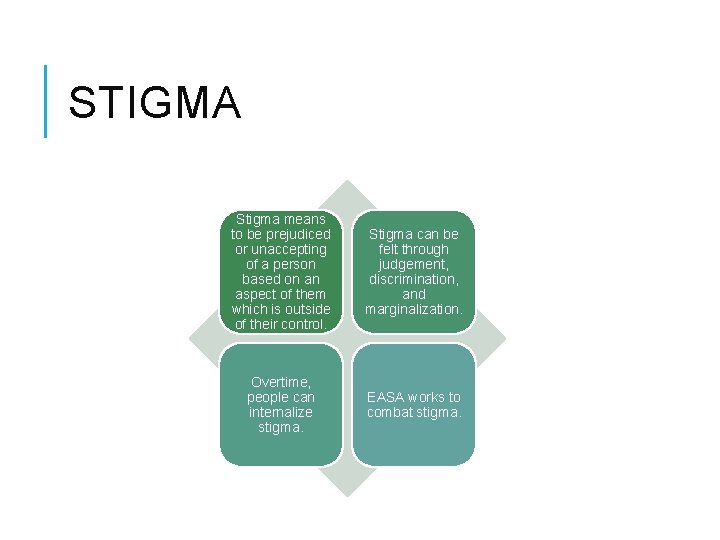
STIGMA Stigma means to be prejudiced or unaccepting of a person based on an aspect of them which is outside of their control. Stigma can be felt through judgement, discrimination, and marginalization. Overtime, people can internalize stigma. EASA works to combat stigma.
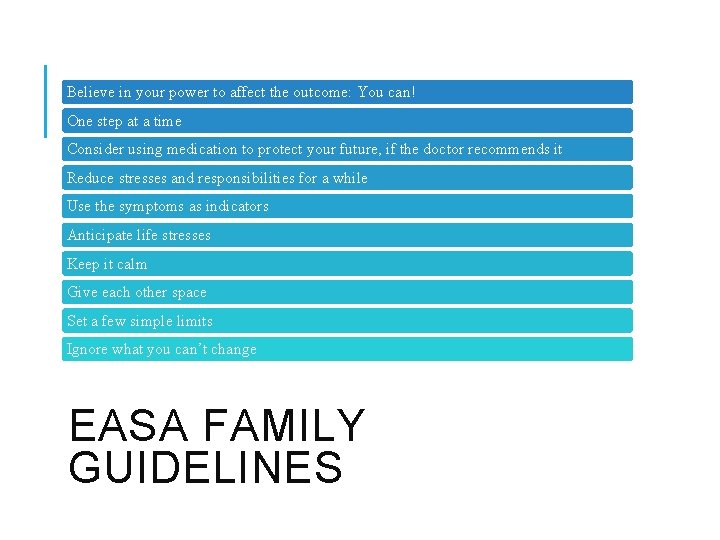
Believe in your power to affect the outcome: You can! One step at a time Consider using medication to protect your future, if the doctor recommends it Reduce stresses and responsibilities for a while Use the symptoms as indicators Anticipate life stresses Keep it calm Give each other space Set a few simple limits Ignore what you can’t change EASA FAMILY GUIDELINES
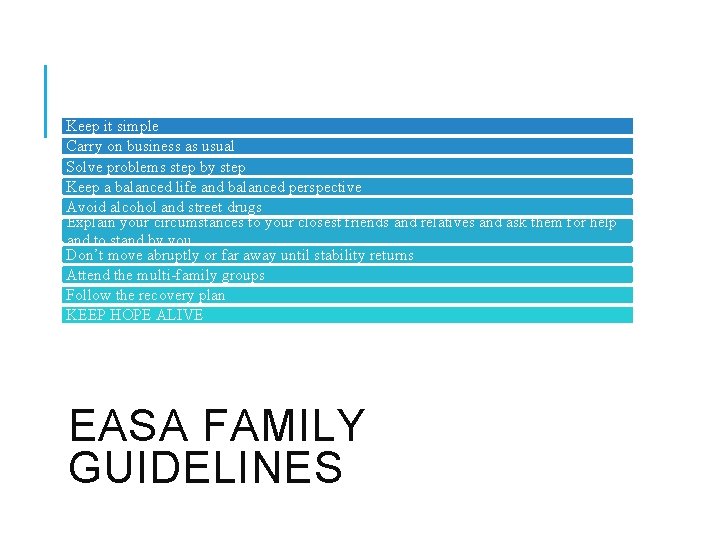
Keep it simple Carry on business as usual Solve problems step by step Keep a balanced life and balanced perspective Avoid alcohol and street drugs Explain your circumstances to your closest friends and relatives and ask them for help and to stand by you Don’t move abruptly or far away until stability returns Attend the multi-family groups Follow the recovery plan KEEP HOPE ALIVE EASA FAMILY GUIDELINES
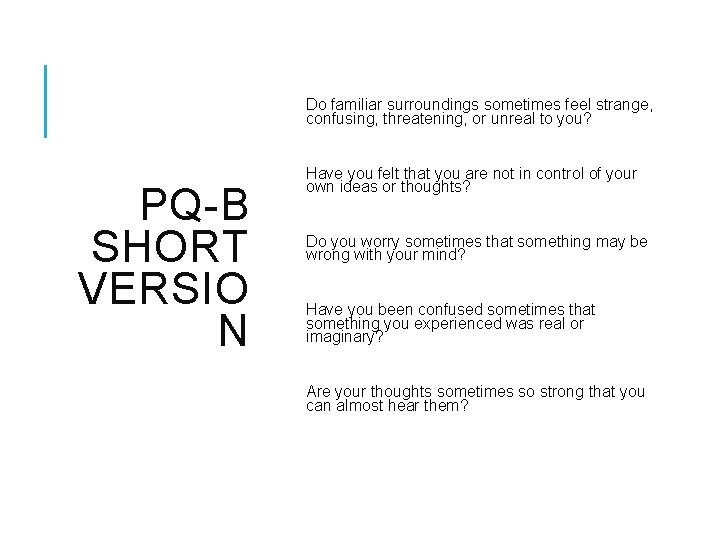
Do familiar surroundings sometimes feel strange, confusing, threatening, or unreal to you? PQ-B SHORT VERSIO N Have you felt that you are not in control of your own ideas or thoughts? Do you worry sometimes that something may be wrong with your mind? Have you been confused sometimes that something you experienced was real or imaginary? Are your thoughts sometimes so strong that you can almost hear them?
THANK YOU! For more information, text EASA to 61222 If you have a person you would like to refer or would like to talk to someone on the EASA team, call the Nye Street Clinic at (541) 265 -4179 and ask for an EASA team member.