Dynamics of liquid drops in precision deposition on




- Slides: 35
Dynamics of liquid drops in precision deposition on solid surfaces J. E Sprittles Y. D. Shikhmurzaev Particulate Engineering Seminar May 2009
Overview • Drop Impact and Spreading – Experiments – Conventional Modelling and its Flaws – The Interface Formation Model – Numerical Simulations • Flow Over Chemically Patterned Surfaces • Propagation of Wetting Fronts Through Porous Media
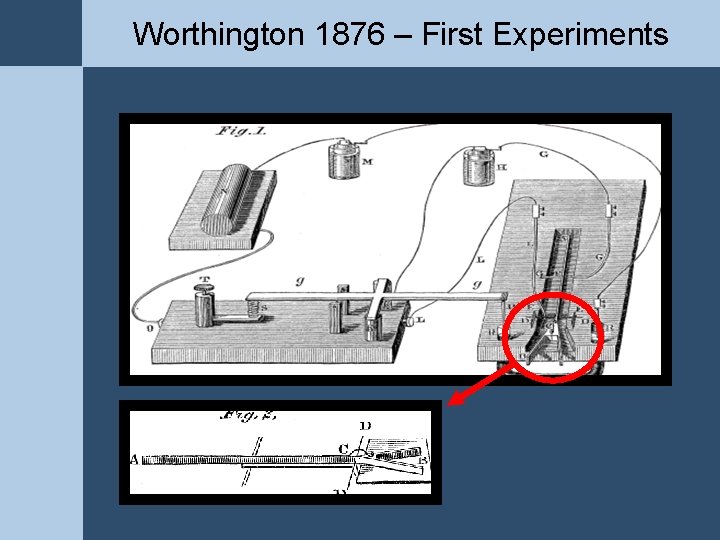
Worthington 1876 – First Experiments
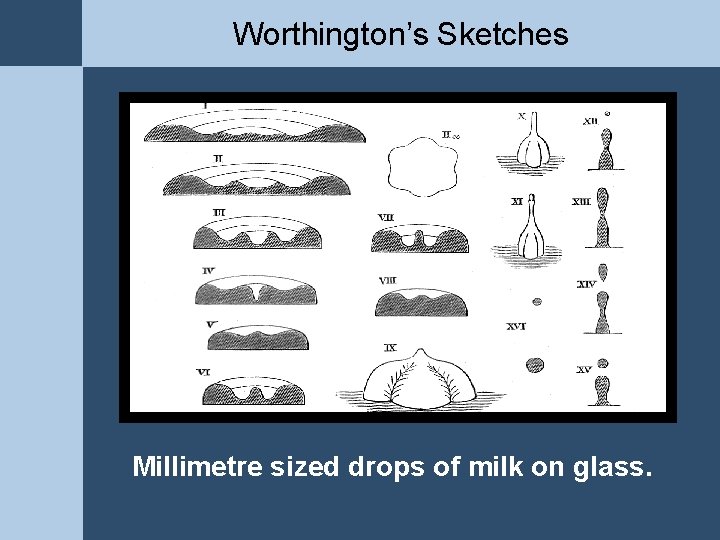
Worthington’s Sketches Millimetre sized drops of milk on glass.
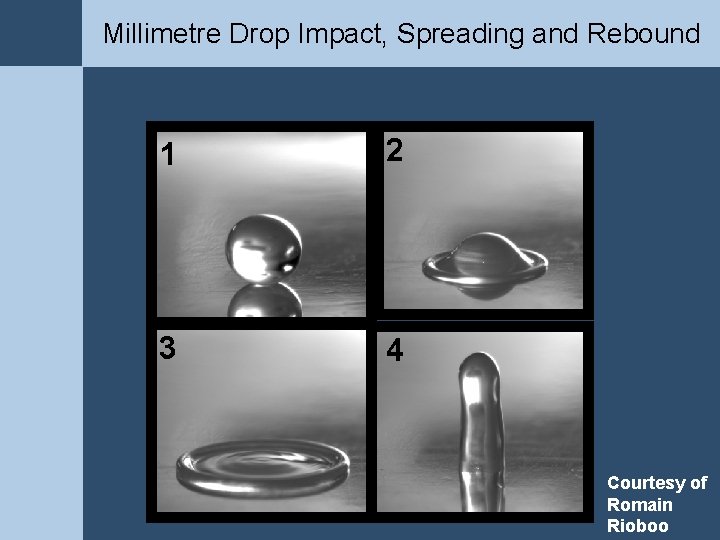
Millimetre Drop Impact, Spreading and Rebound 1 2 3 4 Courtesy of Romain Rioboo
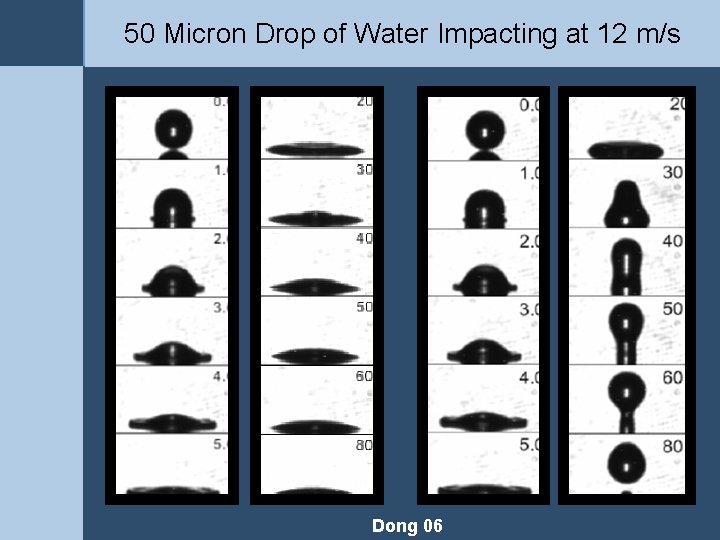
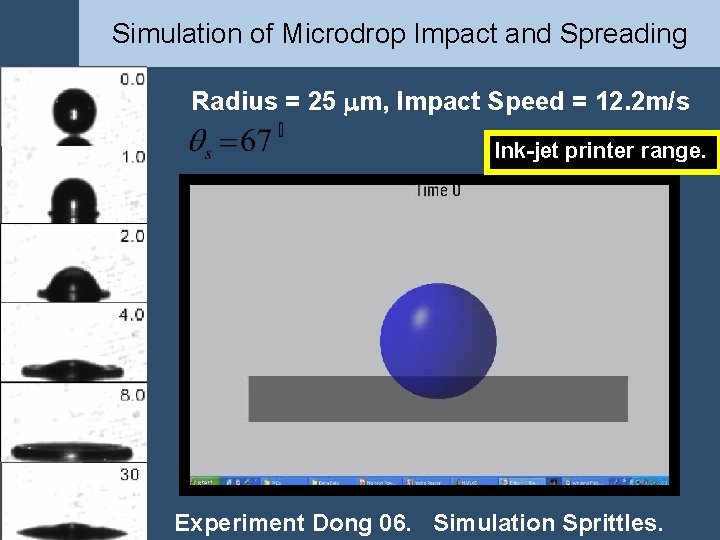
50 Micron Drop of Water Impacting at 12 m/s Dong 06
Theoretical Modelling of Dynamic Wetting Flows.
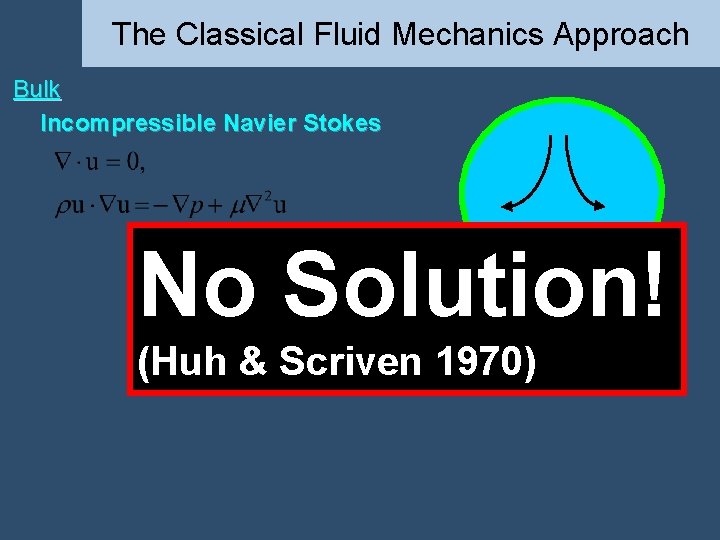
The Classical Fluid Mechanics Approach Bulk Incompressible Navier Stokes No Solution! Solid – Liquid Boundary No-Slip (Huh & Scriven 1970) Liquid – Gas (Free) Boundary Balance of stresses + Kinematic Condition
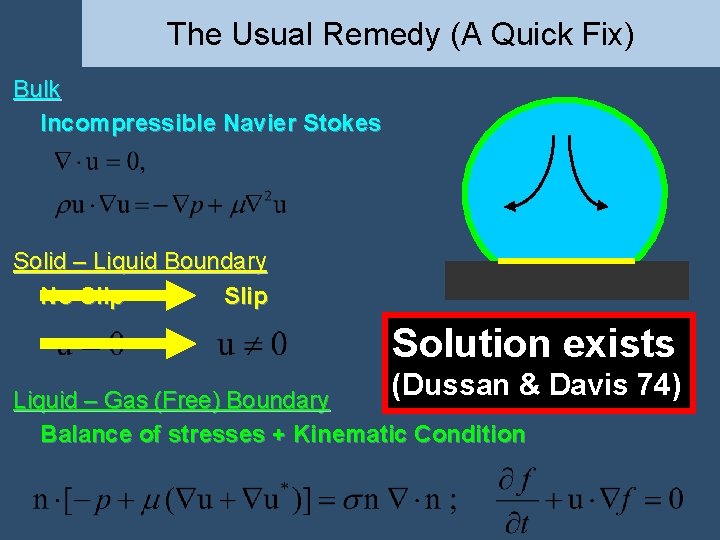
The Usual Remedy (A Quick Fix) Bulk Incompressible Navier Stokes Solid – Liquid Boundary No-Slip Solution exists (Dussan & Davis 74) Liquid – Gas (Free) Boundary Balance of stresses + Kinematic Condition
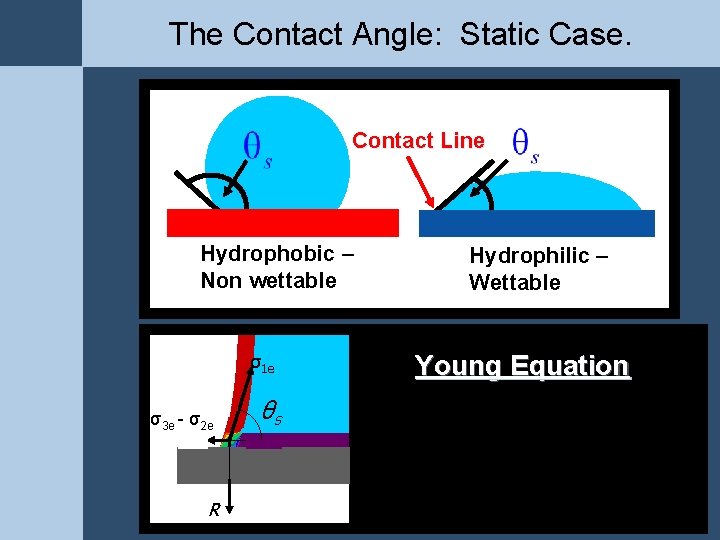
The Contact Angle: Static Case. Contact Line ) Hydrophobic – Non wettable σ1 e σ3 e - σ2 e R θs Hydrophilic – Wettable Young Equation
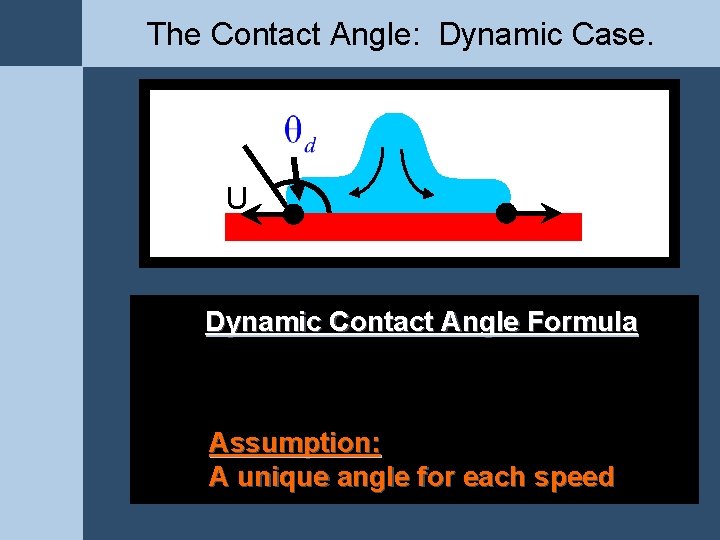
The Contact Angle: Dynamic Case. ) U ? Dynamic Contact Angle Formula σ1 Young Equation σ3 - σ2 θs Assumption: RA unique angle for each speed
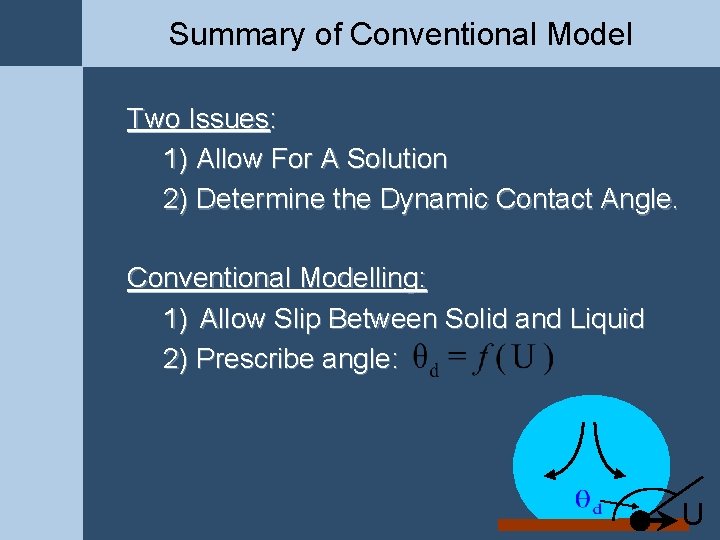
Summary of Conventional Model Two Issues: 1) Allow For A Solution 2) Determine the Dynamic Contact Angle. Conventional Modelling: 1) Allow Slip Between Solid and Liquid 2) Prescribe angle: U
Is the angle actually a function of the speed? Experiments answer, NO! “There is no universal expression to relate contact angle with contact line speed”. (Bayer and Megaridis 06) U, m/s U
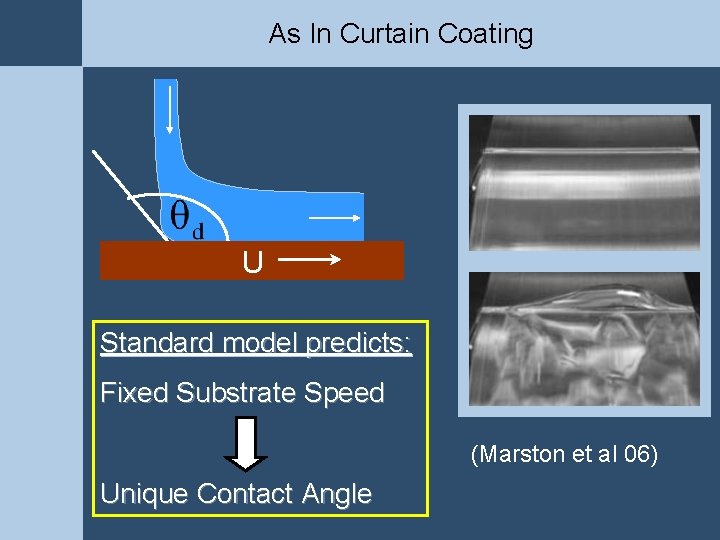
As In Curtain Coating U Standard model predicts: Fixed Substrate Speed (Marston et al 06) Unique Contact Angle
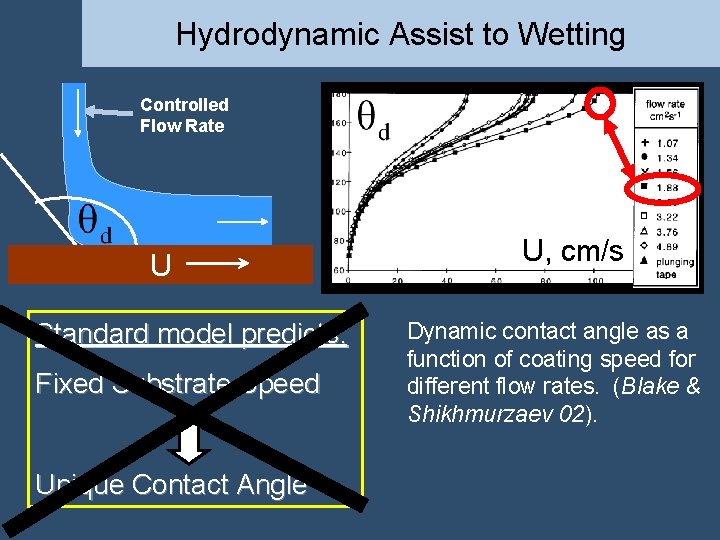
Hydrodynamic Assist to Wetting Controlled Flow Rate U Standard model predicts: Fixed Substrate Speed Unique Contact Angle U, cm/s Dynamic contact angle as a function of coating speed for different flow rates. (Blake & Shikhmurzaev 02).
The Interface Formation Model (Shikhmurzaev 93)
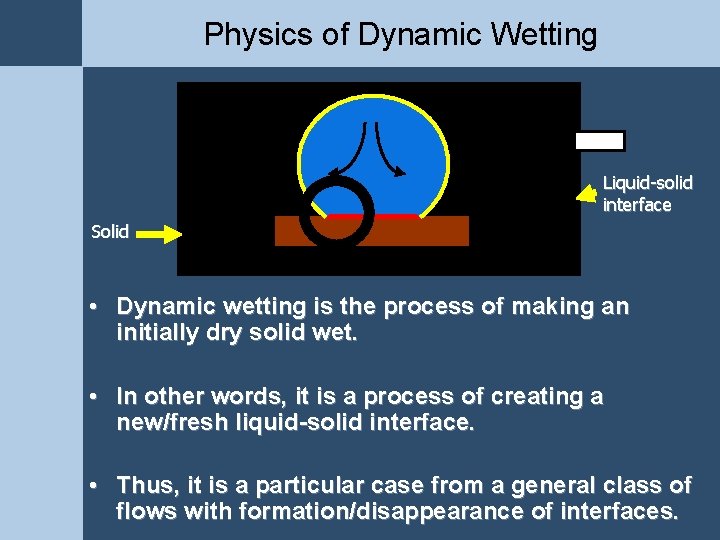
Physics of Dynamic Wetting Liquid-solid interface Solid Forming interface Formed interface • Dynamic wetting is the process of making an initially dry solid wet. • In other words, it is a process of creating a new/fresh liquid-solid interface. • Thus, it is a particular case from a general class of flows with formation/disappearance of interfaces.
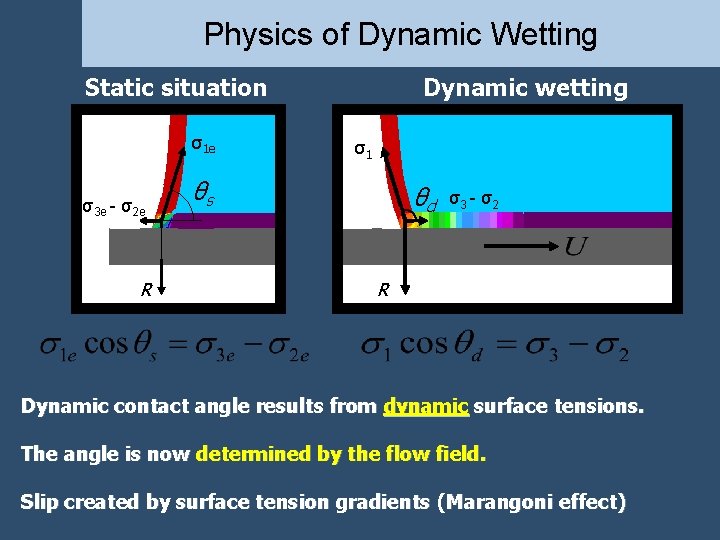
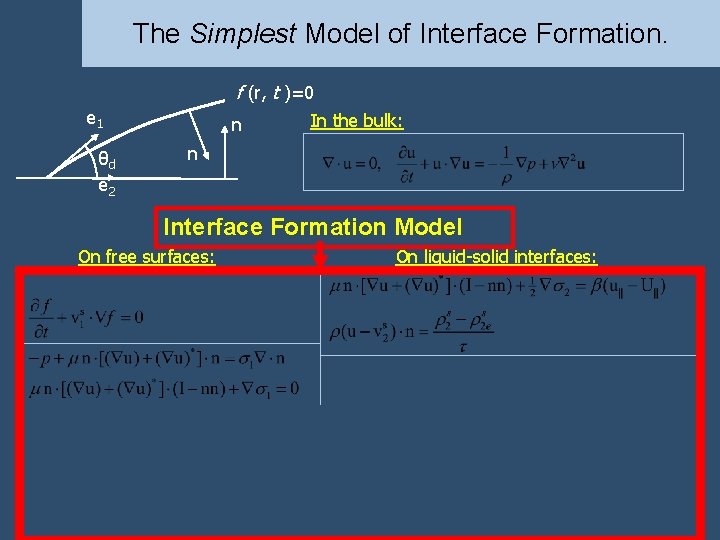
Physics of Dynamic Wetting Static situation σ1 e σ3 e - σ2 e R Dynamic wetting σ1 θs θd σ3 - σ2 R Dynamic contact angle results from dynamic surface tensions. The angle is now determined by the flow field. Slip created by surface tension gradients (Marangoni effect)
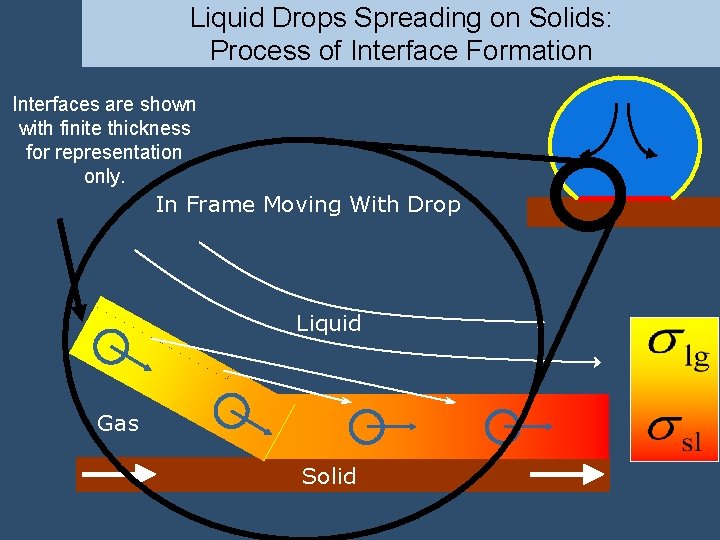
Liquid Drops Spreading on Solids: Process of Interface Formation Interfaces are shown with finite thickness for representation only. In Frame Moving With Drop Liquid Gas Solid
The Simplest Model of Interface Formation. f (r, t )=0 e 1 θd e 2 n In the bulk: n Interface Formation Model On free surfaces: On liquid-solid interfaces: At contact lines:
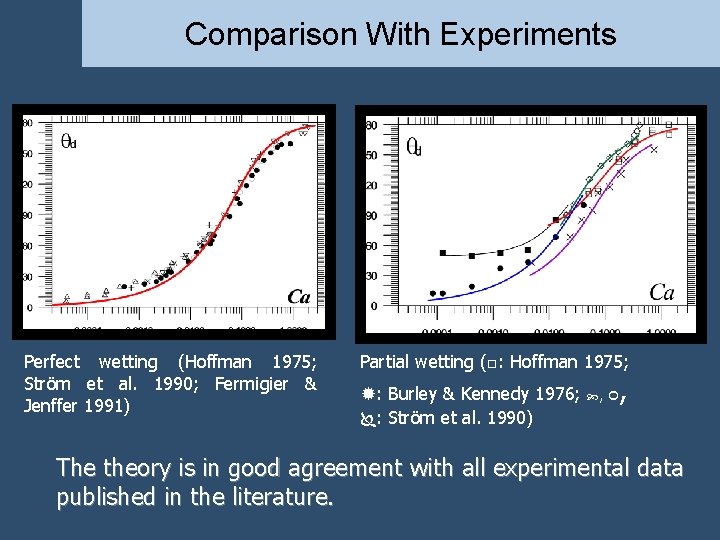
Comparison With Experiments Perfect wetting (Hoffman 1975; Ström et al. 1990; Fermigier & Jenffer 1991) Partial wetting (□: Hoffman 1975; : Burley & Kennedy 1976; , , : Ström et al. 1990) The theory is in good agreement with all experimental data published in the literature.
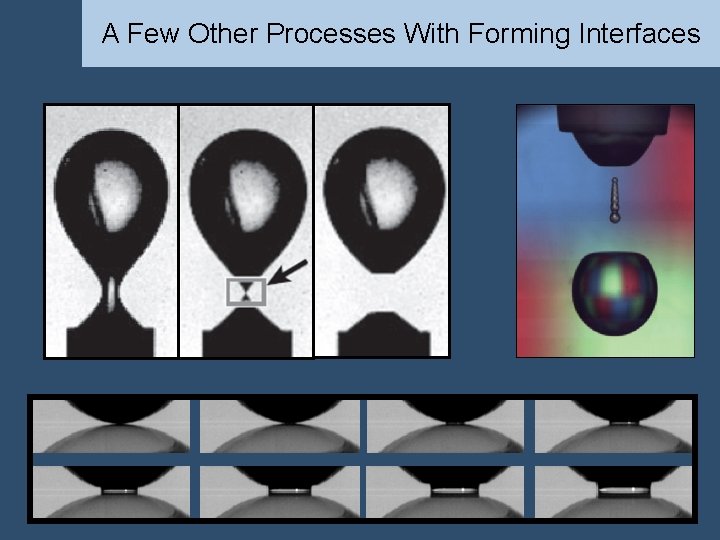
A Few Other Processes With Forming Interfaces
Development of a Numerical Platform
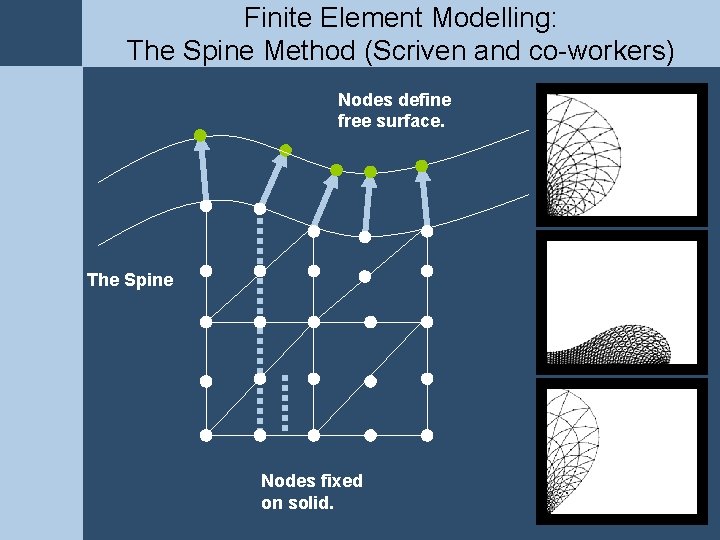
Finite Element Modelling: The Spine Method (Scriven and co-workers) Nodes define free surface. The Spine Nodes fixed on solid.
Simulation of Microdrop Impact and Spreading Radius = 25 mm, Impact Speed = 12. 2 m/s Ink-jet printer range. Experiment Dong 06. Simulation Sprittles.
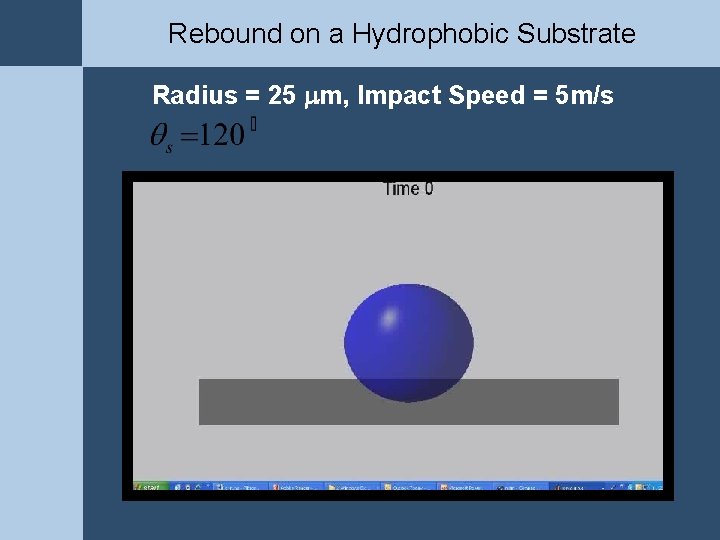
Drop Impact on a Hydrophobic (non-wettable) Rebound on a Hydrophobic Substrate Radius = 25 mm, Impact Speed = 5 m/s
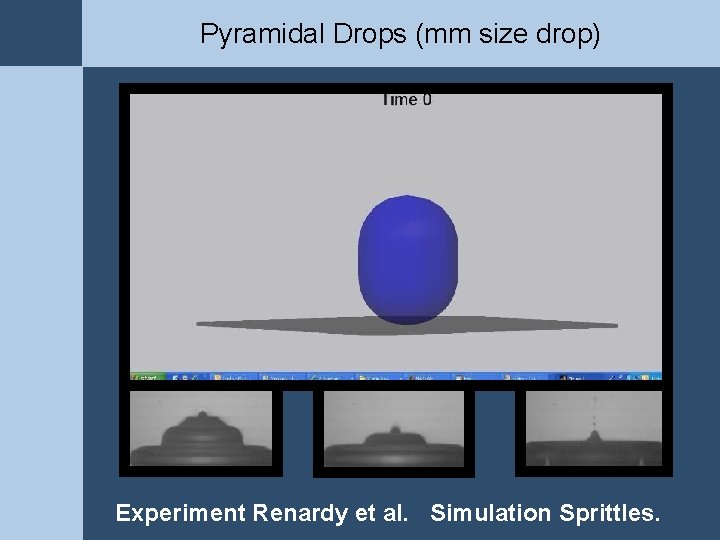
Pyramidal Drops (mm size drop) Experiment Renardy et al. Simulation Sprittles.
Current Research: Flow Over Chemically Patterned Surfaces.
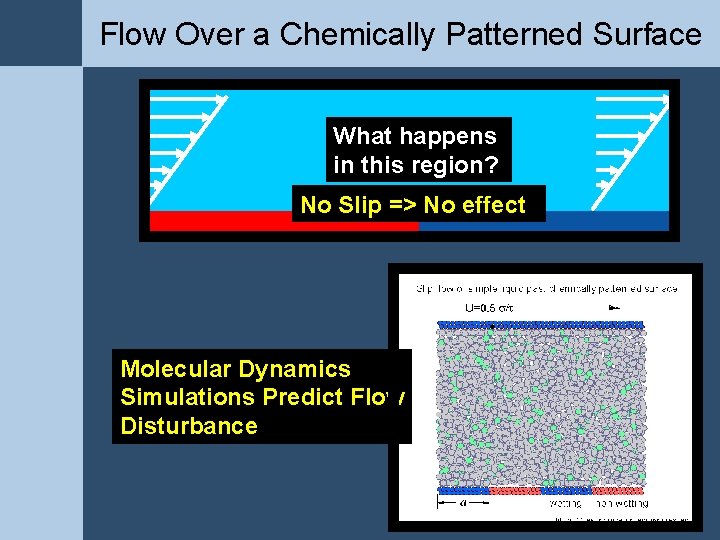
Flow Over a Chemically Patterned Surface What happens in this )region? No Slip => No effect Molecular Dynamics Simulations Predict Flow Disturbance
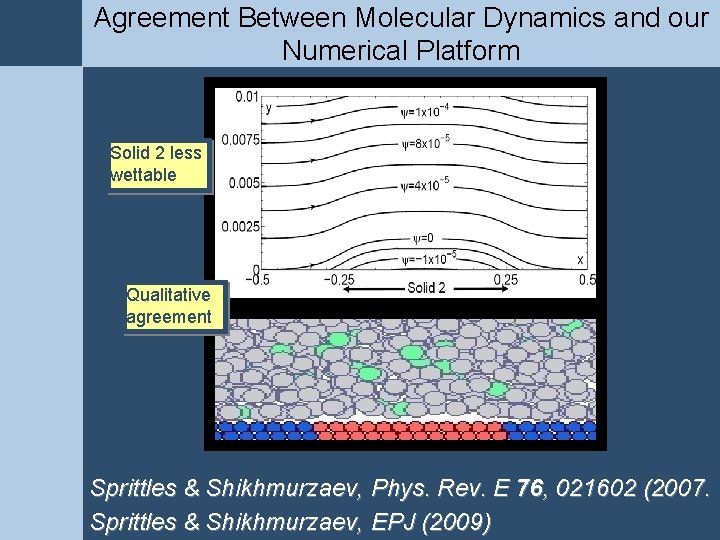
Agreement Between Molecular Dynamics and our Numerical Platform Solid 2 less wettable Qualitative agreement Sprittles & Shikhmurzaev, Phys. Rev. E 76, 021602 (2007. Sprittles & Shikhmurzaev, EPJ (2009)
Drop Impact onto a Chemically Patterned Surface • Pattern a surface to ‘correct’ deposition. Courtesy of Professor Roisman (Darmstadt)
Future Research: The Propagation of Wetting Fronts Through Porous Media
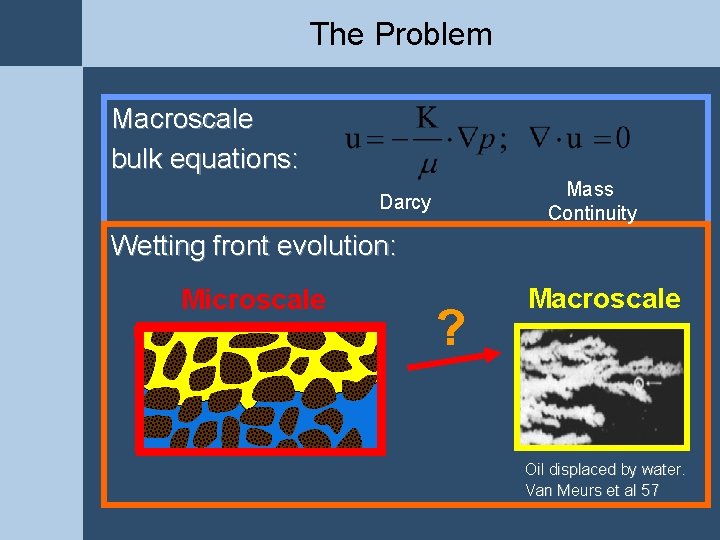
The Problem Macroscale bulk equations: Mass Continuity Darcy Wetting front evolution: Microscale ? Macroscale Oil displaced by water. Van Meurs et al 57
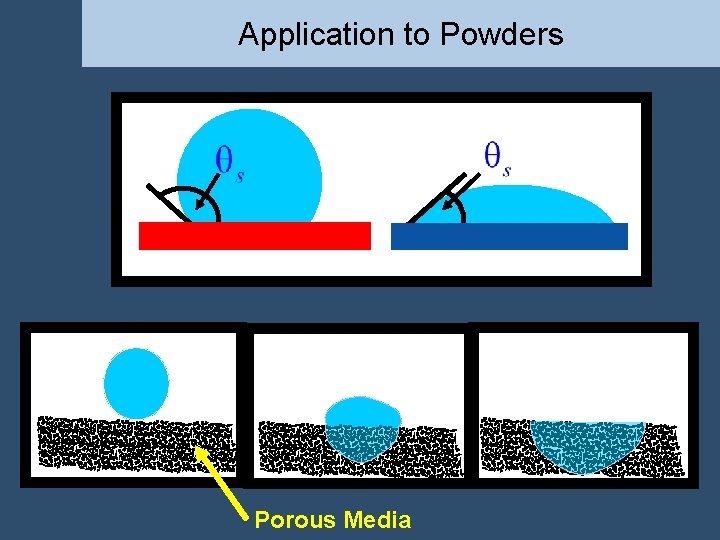
Application to Powders ) Porous Media
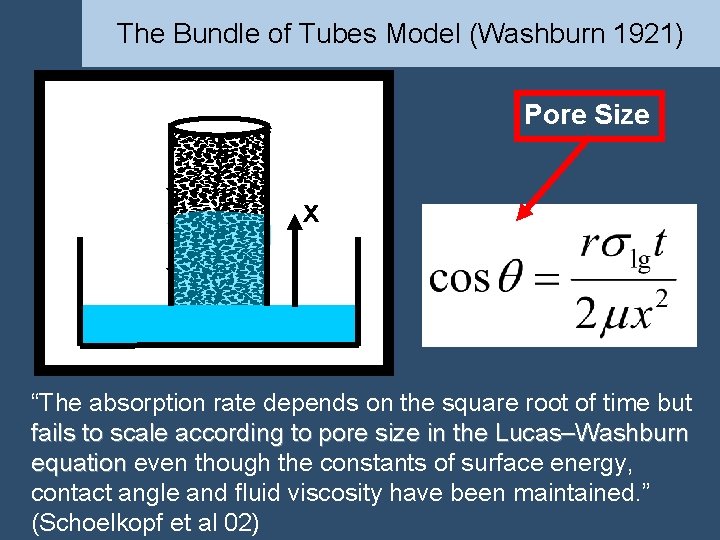
The Bundle of Tubes Model (Washburn 1921) Pore Size ) x “The absorption rate depends on the square root of time but fails to scale according to pore size in the Lucas–Washburn equation even though the constants of surface energy, contact angle and fluid viscosity have been maintained. ” (Schoelkopf et al 02)