Dr Varun S Dept of Surgery Skhmc INTRODUCTION

- Slides: 26
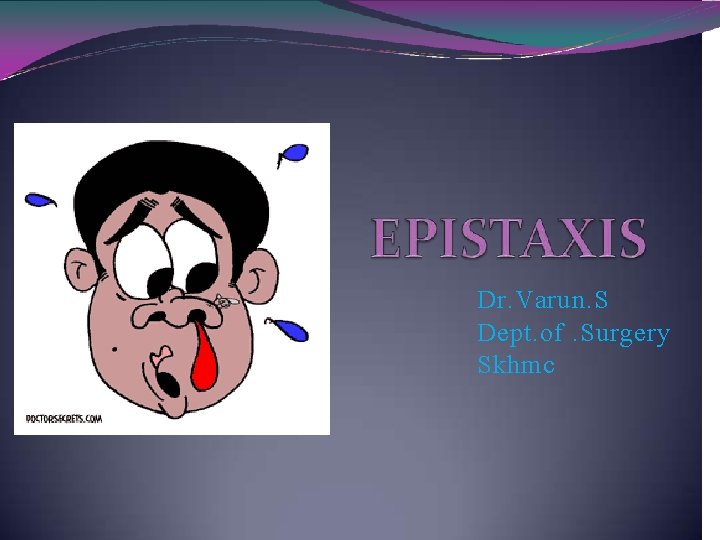
Dr. Varun. S Dept. of. Surgery Skhmc
INTRODUCTION �Bleeding from nostril, nasal cavity or nasopharynx �Most often self limited, but can often be serious and life threatening � 5 -10% of the population experience an episode of epistaxis each year, 10% of those will seek a physician and 1% of those will need a specialist �Can occur in all age groups
REASONFOREXCESSIVEBLEEDING �Rich vascularity �Supplied by both internal and external carotid system �Various anastomoses between arteries and veins �Blood vessels run under the mucosa unprotected �Larger vessels on the turbinate run in bony canals – cannot contract
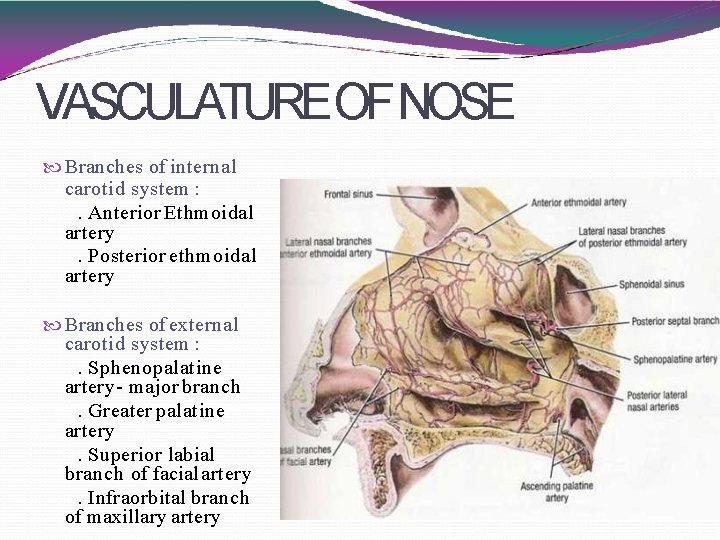
VASCULATUREOF NOSE Branches of internal carotid system : . Anterior Ethmoidal artery. Posterior ethmoidal artery Branches of external carotid system : . Sphenopalatine artery- major branch. Greater palatine artery. Superior labial branch of facial artery. Infraorbital branch of maxillary artery
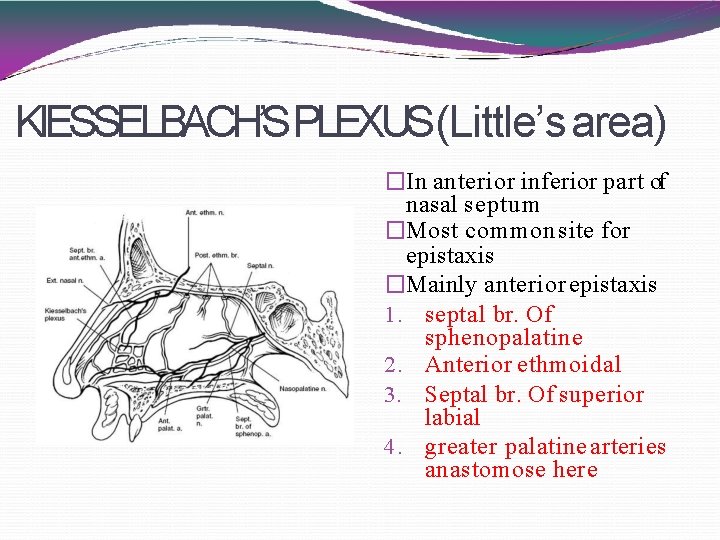
KIESSELBACH’SPLEXUS(Little’s area) �In anterior inferior part of nasal septum �Most common site for epistaxis �Mainly anterior epistaxis 1. septal br. Of sphenopalatine 2. Anterior ethmoidal 3. Septal br. Of superior labial 4. greater palatine arteries anastomose here
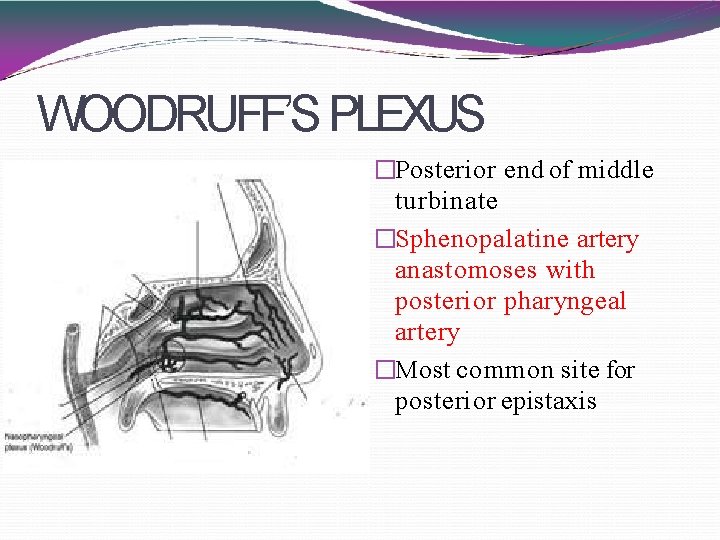
WOODRUFF’S PLEXUS �Posterior end of middle turbinate �Sphenopalatine artery anastomoses with posterior pharyngeal artery �Most common site for posterior epistaxis
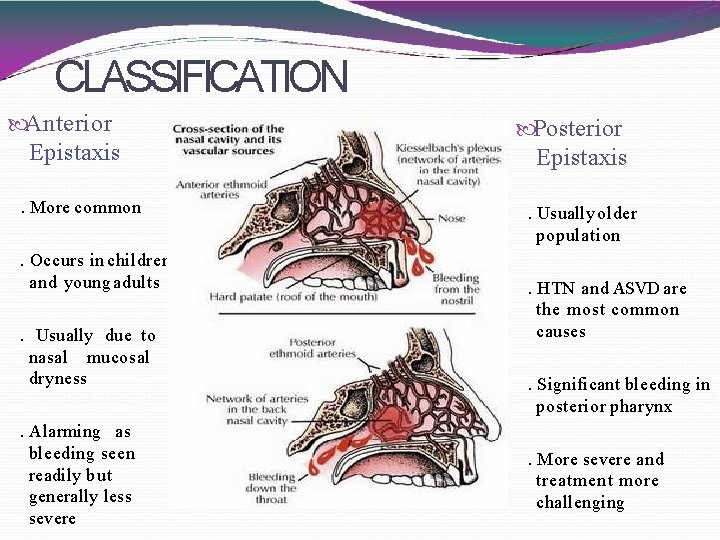
CLASSIFICATION Anterior Epistaxis. More common. Occurs in children and young adults. Usually due to nasal mucosal dryness. Alarming as bleeding seen readily but generally less severe Posterior Epistaxis. Usually older population. HTN and ASVD are the most common causes. Significant bleeding in posterior pharynx. More severe and treatment more challenging
LOCALCAUSESOFEPISTAXIS. A. Congenital – Hereditary telengiectasia B. Trauma . Nose picking. Facial and skull bone fractures. Foreign body. Iatrogenic trauma. Hard blowing, violent sneeze
C. Inflammatory. Infective rhinitis D. Specific. Acute – Diphteria. Chronic granulomatous- TB, Leprosy, Syphilis, Rhinosporiodiasis
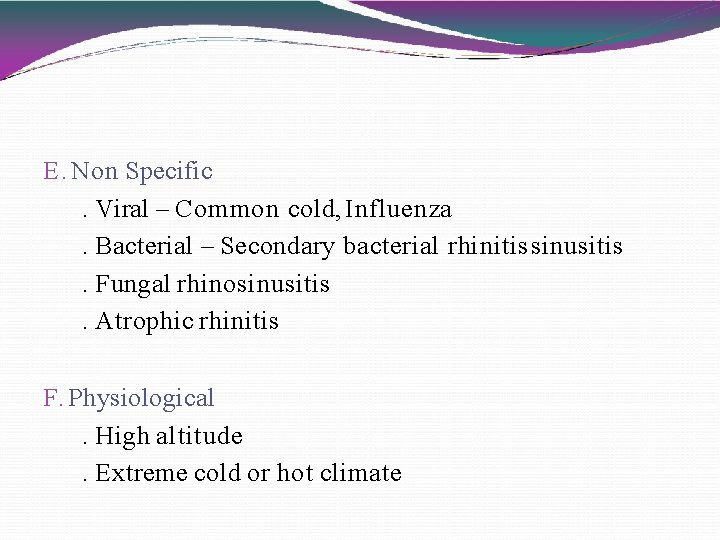
E. Non Specific. Viral – Common cold, Influenza. Bacterial – Secondary bacterial rhinitis sinusitis. Fungal rhinosinusitis. Atrophic rhinitis F. Physiological. High altitude. Extreme cold or hot climate
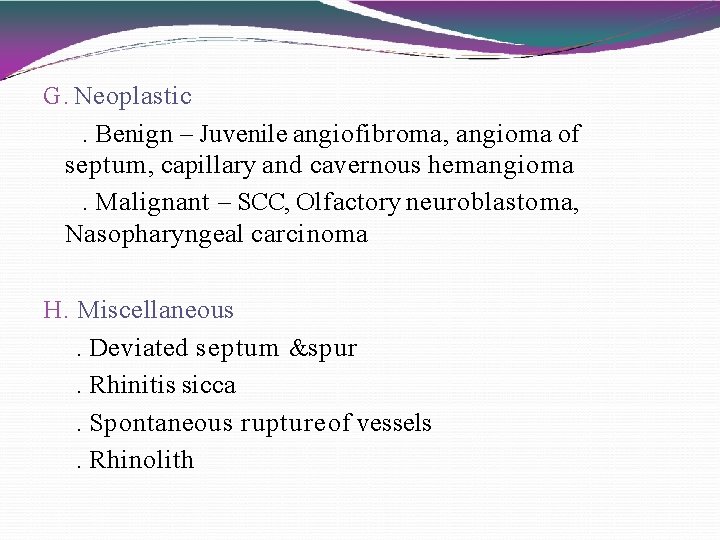
G. Neoplastic. Benign – Juvenile angiofibroma, angioma of septum, capillary and cavernous hemangioma. Malignant – SCC, Olfactory neuroblastoma, Nasopharyngeal carcinoma H. Miscellaneous. Deviated septum &spur. Rhinitis sicca. Spontaneous rupture of vessels. Rhinolith
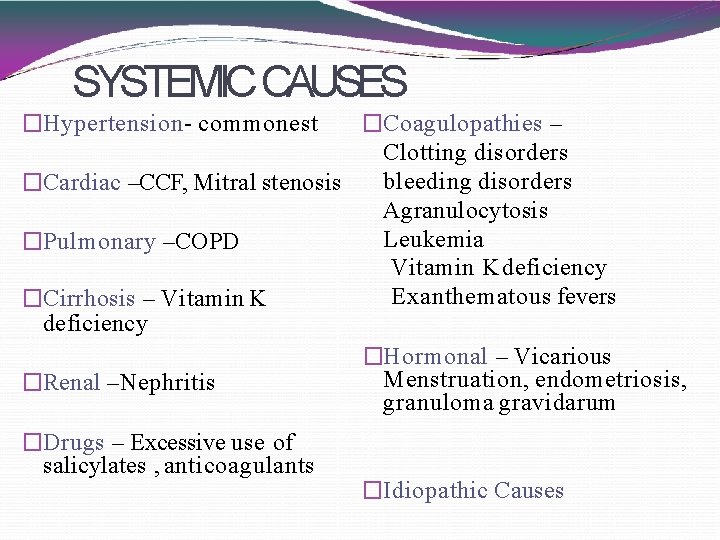
SYSTEMIC CAUSES �Coagulopathies – Clotting disorders bleeding disorders �Cardiac –CCF, Mitral stenosis Agranulocytosis Leukemia �Pulmonary –COPD Vitamin K deficiency Exanthematous fevers �Cirrhosis – Vitamin K deficiency �Hormonal – Vicarious Menstruation, endometriosis, �Renal –Nephritis granuloma gravidarum �Hypertension- commonest �Drugs – Excessive use of salicylates , anticoagulants �Idiopathic Causes
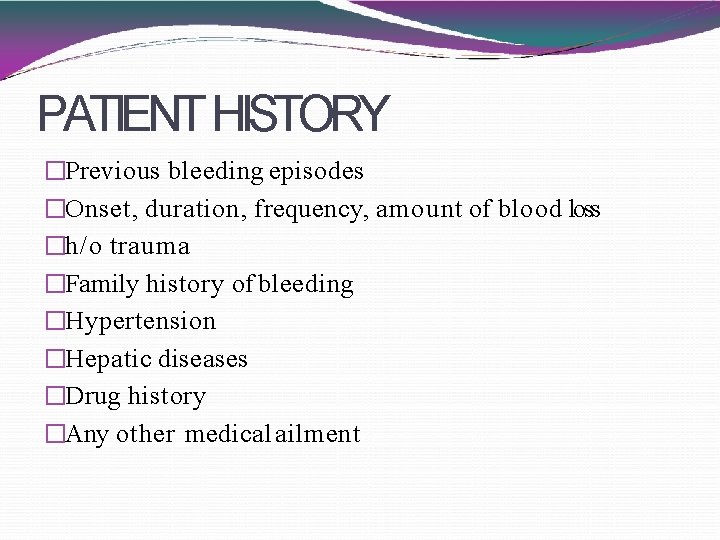
PATIENT HISTORY �Previous bleeding episodes �Onset, duration, frequency, amount of blood loss �h/o trauma �Family history of bleeding �Hypertension �Hepatic diseases �Drug history �Any other medical ailment
MANAGEMENT �Locate the bleeding site �Anterior and Posterior rh inoscopy �Diagnostic Nasal Endoscopy �INVESTIGATIONS : . Hematological investigations – Hb%, TLC, DLC, BT, CT, Platelet count, prothrombin time. Blood urea, liver function tests. Radiology – x-ray and CT scan of nose, PNS and nasopharynx. Other investigations depending upon the possible cause
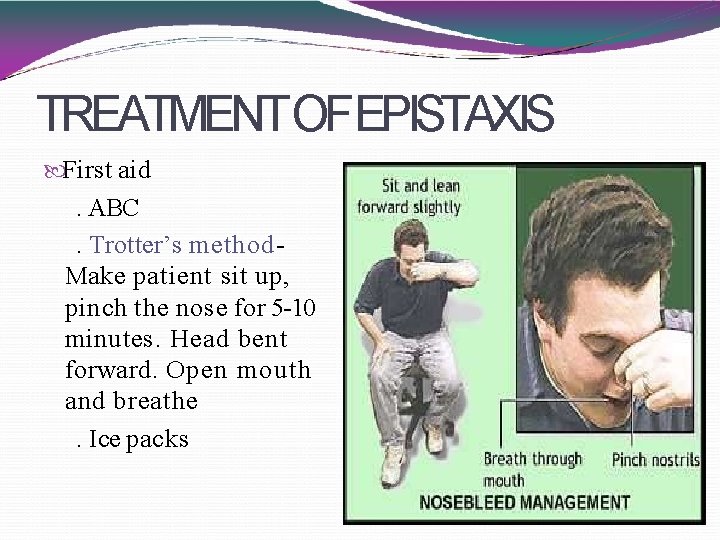
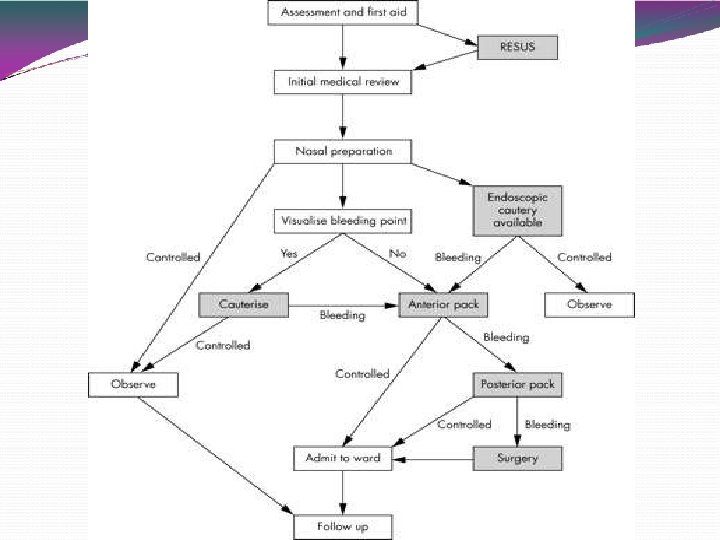
TREATMENTOFEPISTAXIS First aid . ABC. Trotter’s method. Make patient sit up, pinch the nose for 5 -10 minutes. Head bent forward. Open mouth and breathe. Ice packs
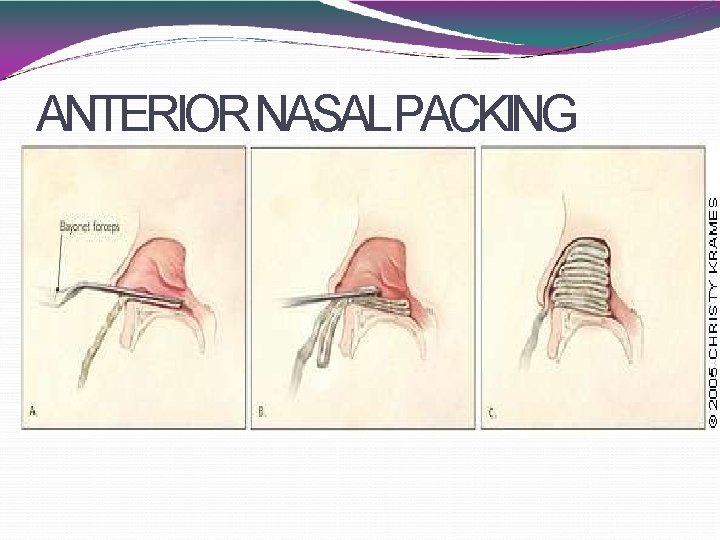
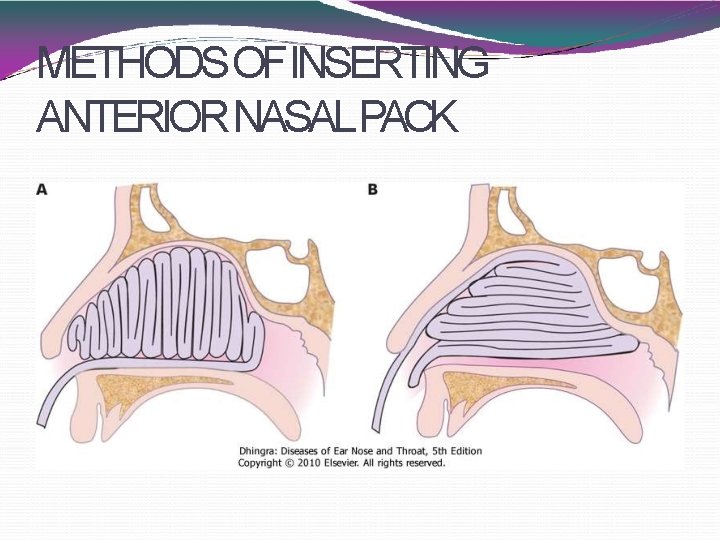
DEFINITIVE TREATMENT �CAUTERIZATION . Chemical cautery with Silver nitrate sticks, TCA (3%), Chromic acid bead. Electrocautery �Vasoconstrictor sprays / anesthetics �Anterior nasal packing or anterior epistaxis balloons for refractory epistaxis
ANTERIOR NASALPACKING
METHODS OFINSERTING ANTERIOR NASALPACK
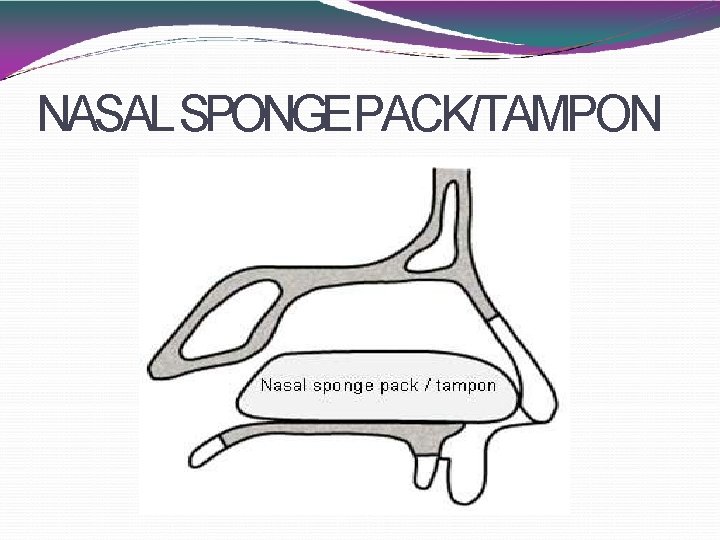
NASAL SPONGEPACK/TAMPON
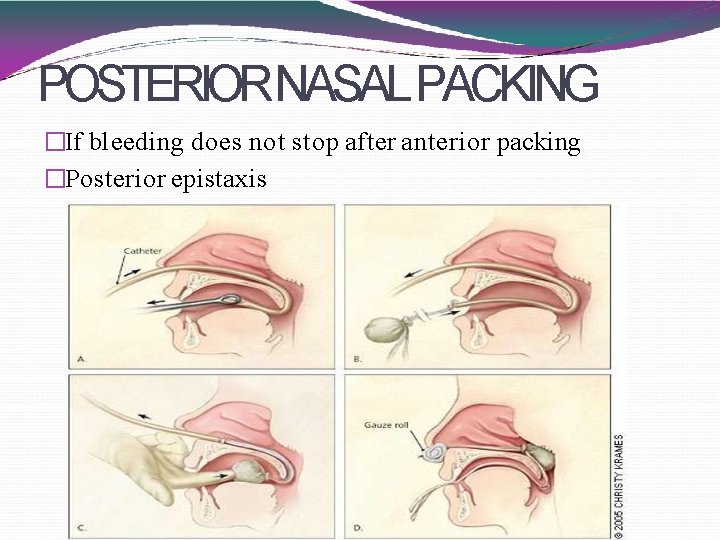
POSTERIORNASAL PACKING �If bleeding does not stop after anterior packing �Posterior epistaxis
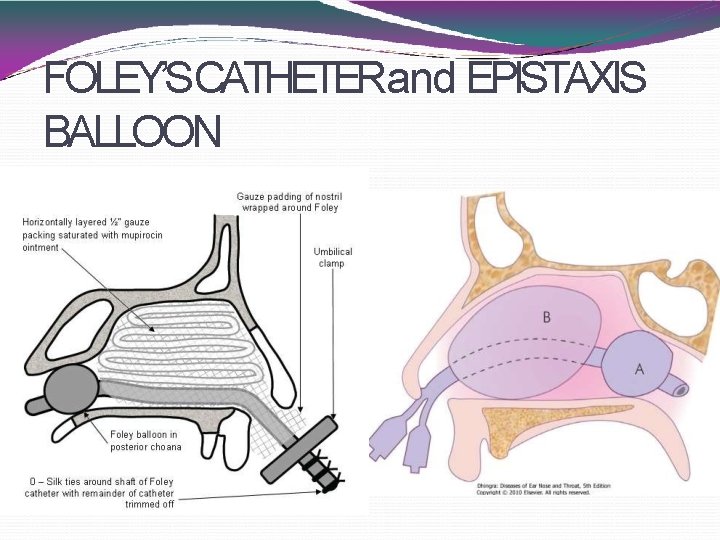
FOLEY’SCATHETERand EPISTAXIS BALLOON
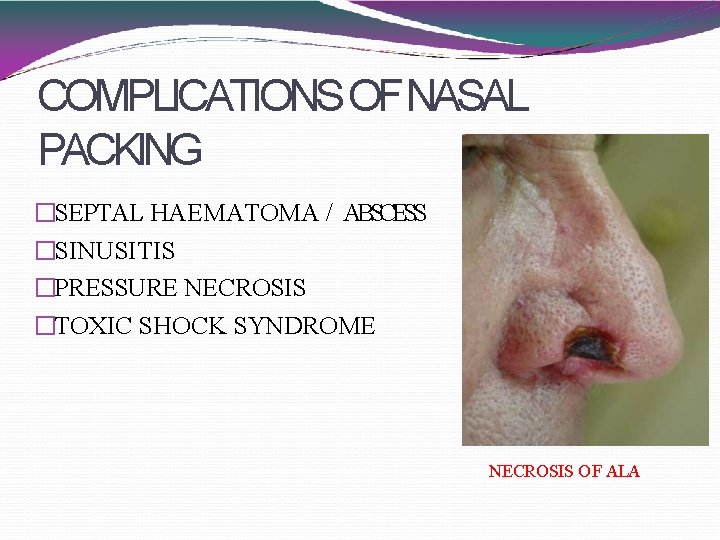
COMPLICATIONS OFNASAL PACKING �SEPTAL HAEMATOMA / ABSCESS �SINUSITIS �PRESSURE NECROSIS �TOXIC SHOCK SYNDROME NECROSIS OF ALA
PATIENTSON NASAL PACK �Best to place patient on antibiotics to decrease risk of sinusitis and toxic shock syndrome �Advise patient to avoid straining, bending forward or removing pack early �If other nostril is unpacked advise patient topical saline spray or saline gel to moisturize nasal mucosa �Admitted and monitored in severe cases
OTHERTREATMENTSFOR REFRACTORY EPISTAXIS �Greater palatine foramen block �Septoplasty �Endoscopic cauterization �Internal maxillary artery ligation �Transantral sphenopalatine artery ligation �Intraoral ligation of maxillary artery �Anterior and posterior ethmoid artery ligation �Selective embolisation �External carotid artery ligation
THANK YOU