Dr R V S N Sarma M D
- Slides: 53
Dr. R. V. S. N. Sarma. , M. D. , M. Sc. , Consultant Physician & Chest Specialist A Lucid Understanding of JAUNDICE – FOR THE PRACTITIONERS
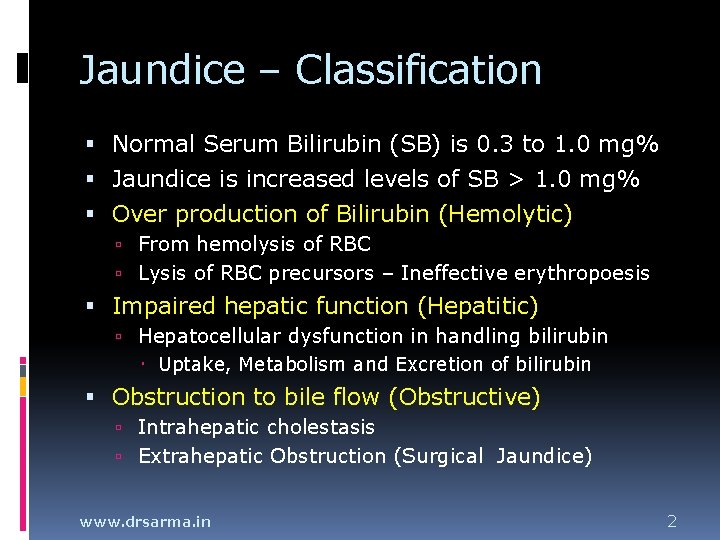
Jaundice – Classification Normal Serum Bilirubin (SB) is 0. 3 to 1. 0 mg% Jaundice is increased levels of SB > 1. 0 mg% Over production of Bilirubin (Hemolytic) From hemolysis of RBC Lysis of RBC precursors – Ineffective erythropoesis Impaired hepatic function (Hepatitic) Hepatocellular dysfunction in handling bilirubin Uptake, Metabolism and Excretion of bilirubin Obstruction to bile flow (Obstructive) Intrahepatic cholestasis Extrahepatic Obstruction (Surgical Jaundice) www. drsarma. in 2
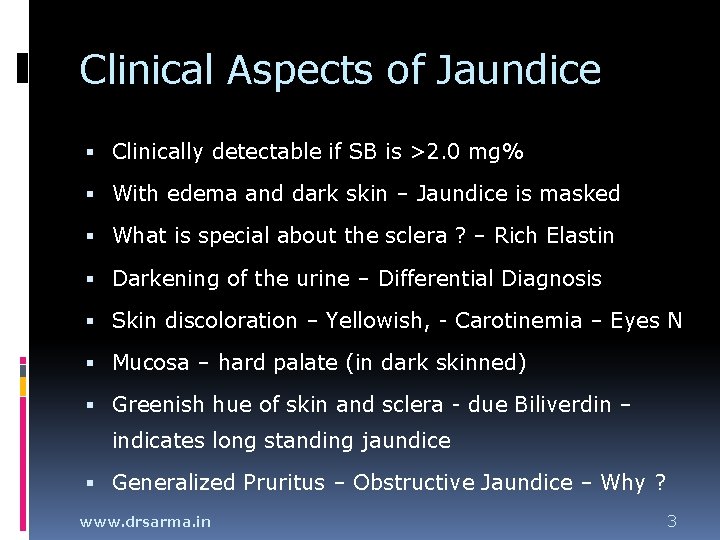
Clinical Aspects of Jaundice Clinically detectable if SB is >2. 0 mg% With edema and dark skin – Jaundice is masked What is special about the sclera ? – Rich Elastin Darkening of the urine – Differential Diagnosis Skin discoloration – Yellowish, - Carotinemia – Eyes N Mucosa – hard palate (in dark skinned) Greenish hue of skin and sclera - due Biliverdin – indicates long standing jaundice Generalized Pruritus – Obstructive Jaundice – Why ? www. drsarma. in 3
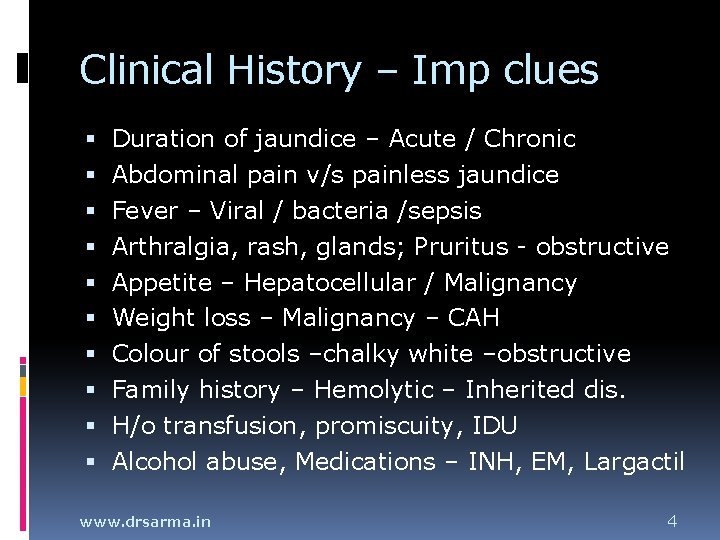
Clinical History – Imp clues Duration of jaundice – Acute / Chronic Abdominal pain v/s painless jaundice Fever – Viral / bacteria /sepsis Arthralgia, rash, glands; Pruritus - obstructive Appetite – Hepatocellular / Malignancy Weight loss – Malignancy – CAH Colour of stools –chalky white –obstructive Family history – Hemolytic – Inherited dis. H/o transfusion, promiscuity, IDU Alcohol abuse, Medications – INH, EM, Largactil www. drsarma. in 4
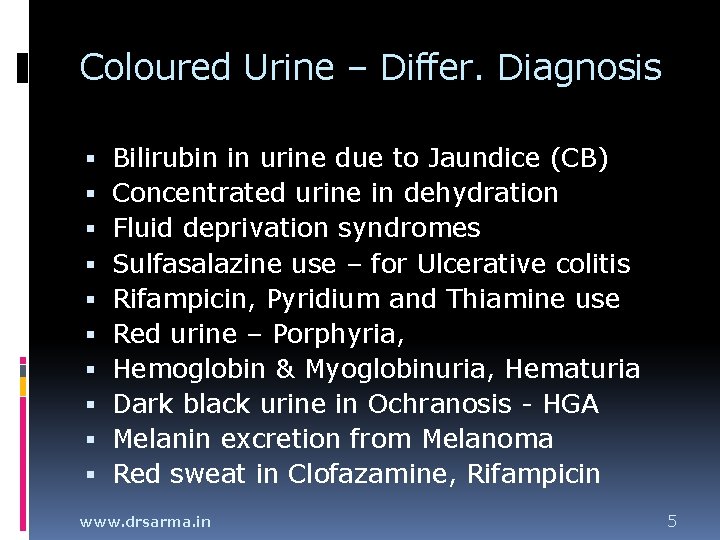
Coloured Urine – Differ. Diagnosis Bilirubin in urine due to Jaundice (CB) Concentrated urine in dehydration Fluid deprivation syndromes Sulfasalazine use – for Ulcerative colitis Rifampicin, Pyridium and Thiamine use Red urine – Porphyria, Hemoglobin & Myoglobinuria, Hematuria Dark black urine in Ochranosis - HGA Melanin excretion from Melanoma Red sweat in Clofazamine, Rifampicin www. drsarma. in 5
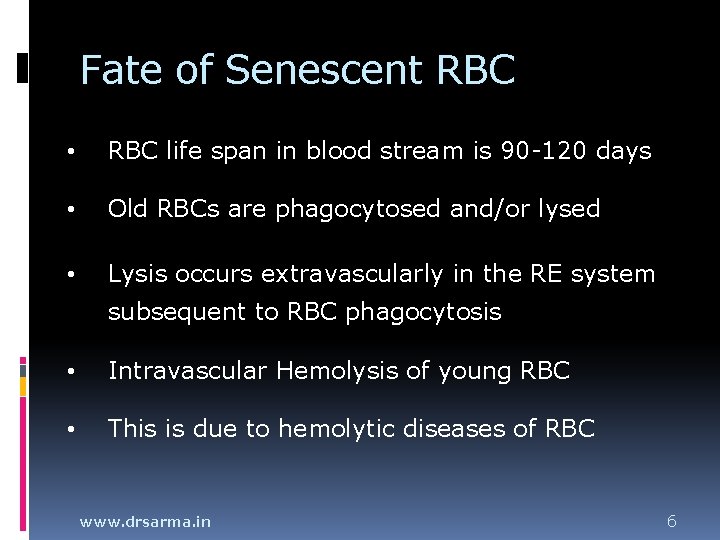
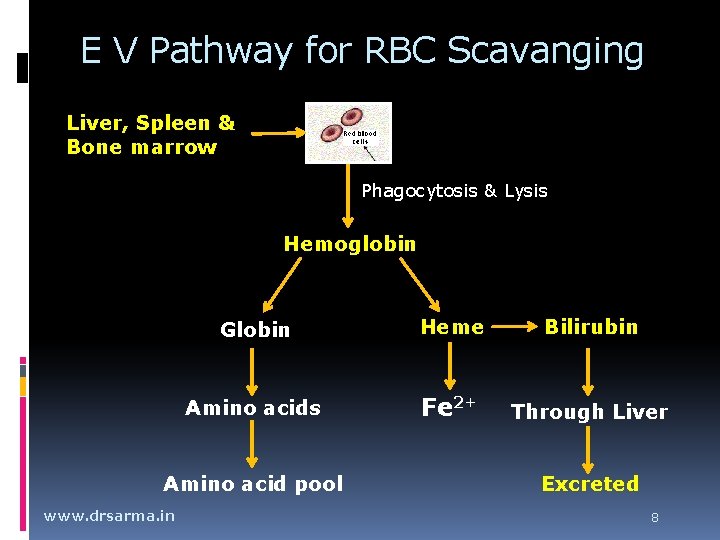
Fate of Senescent RBC • RBC life span in blood stream is 90 -120 days • Old RBCs are phagocytosed and/or lysed • Lysis occurs extravascularly in the RE system subsequent to RBC phagocytosis • Intravascular Hemolysis of young RBC • This is due to hemolytic diseases of RBC www. drsarma. in 6
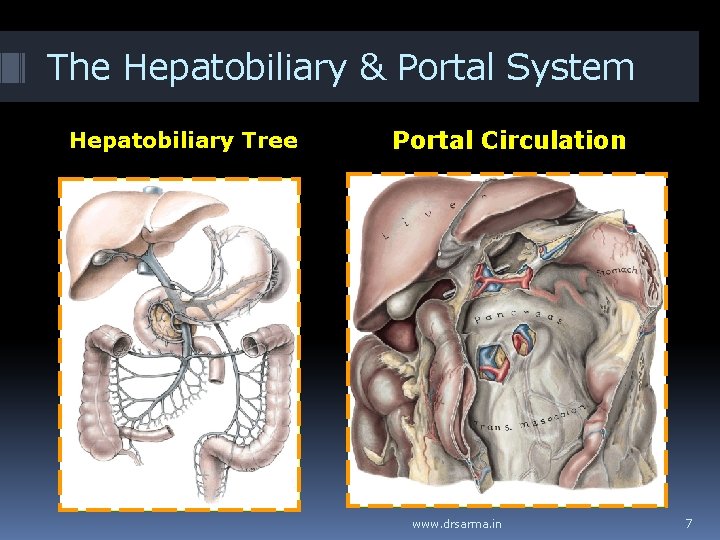
The Hepatobiliary & Portal System Hepatobiliary Tree Portal Circulation www. drsarma. in 7
E V Pathway for RBC Scavanging Liver, Spleen & Bone marrow Phagocytosis & Lysis Hemoglobin Globin Heme Bilirubin Amino acids Fe 2+ Through Liver Amino acid pool www. drsarma. in Excreted 8
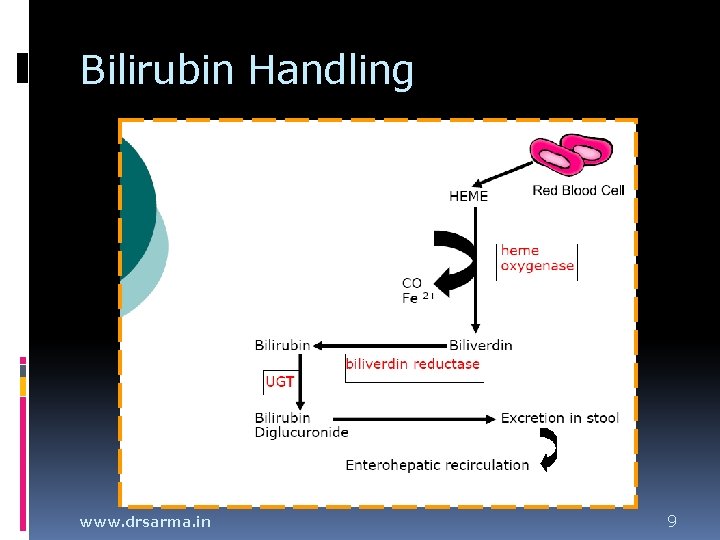
Bilirubin Handling www. drsarma. in 9
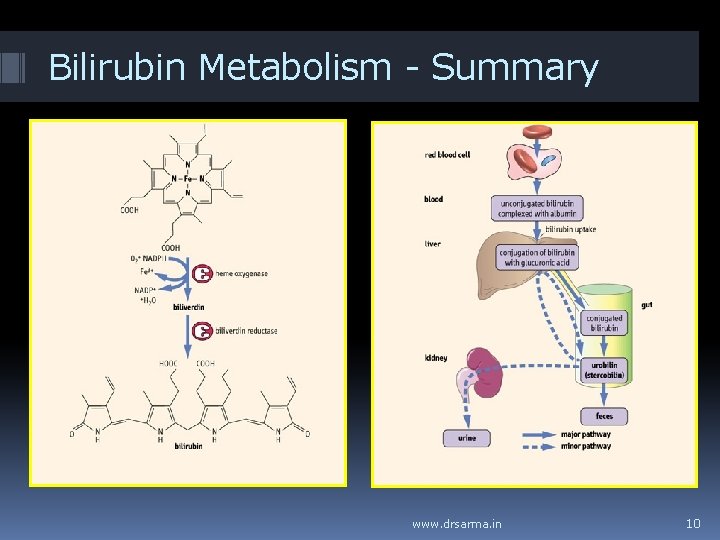
Bilirubin Metabolism - Summary www. drsarma. in 10
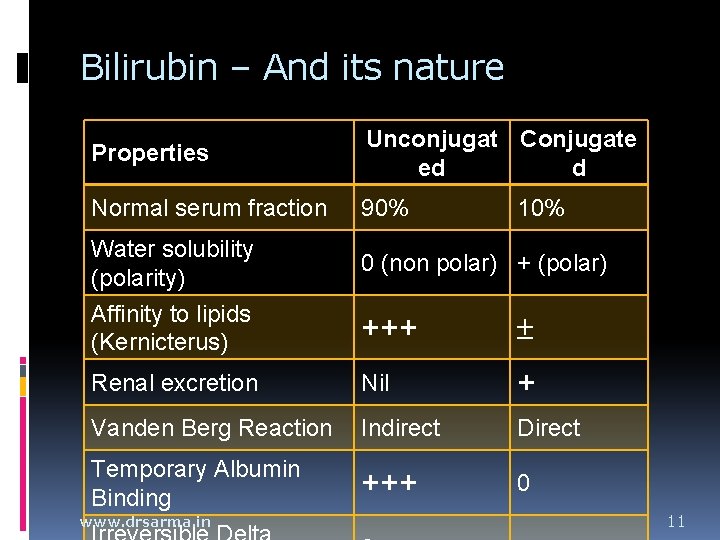
Bilirubin – And its nature Properties Unconjugat Conjugate ed d Normal serum fraction 90% Water solubility (polarity) 0 (non polar) + (polar) Affinity to lipids (Kernicterus) +++ Renal excretion Nil + Vanden Berg Reaction Indirect Direct Temporary Albumin Binding +++ 0 www. drsarma. in 10% 11
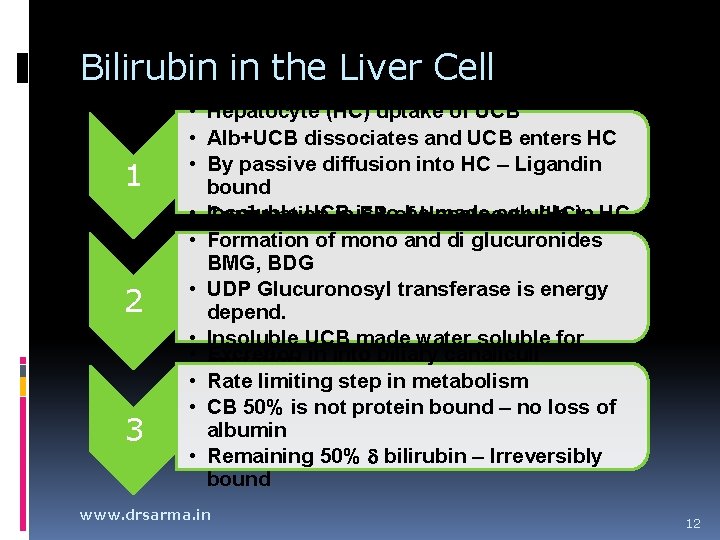
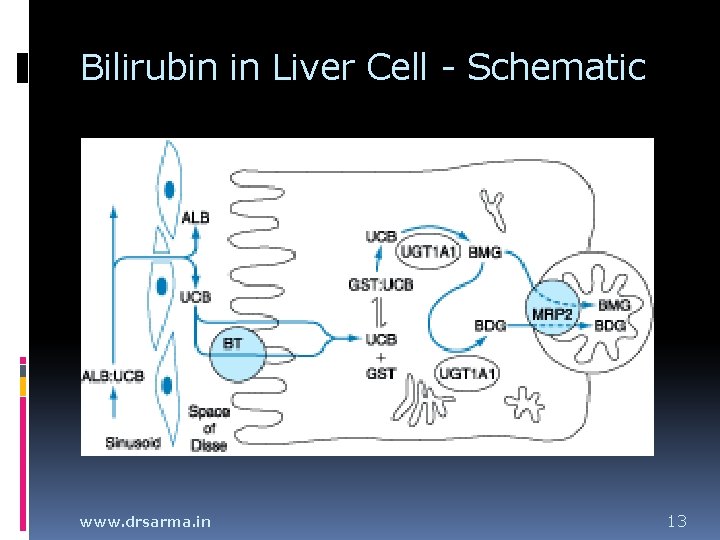
Bilirubin in the Liver Cell 1 2 3 • Hepatocyte (HC) uptake of UCB • Alb+UCB dissociates and UCB enters HC • By passive diffusion into HC – Ligandin bound Insoluble UCB made soluble • Conjugation in is ERtoofbe. Hepatocyte (HC)in HC • Formation of mono and di glucuronides BMG, BDG • UDP Glucuronosyl transferase is energy depend. • Insoluble UCB made water soluble for • excretion Excretion in into biliary canaliculi • Rate limiting step in metabolism • CB 50% is not protein bound – no loss of albumin • Remaining 50% bilirubin – Irreversibly bound www. drsarma. in 12
Bilirubin in Liver Cell - Schematic www. drsarma. in 13
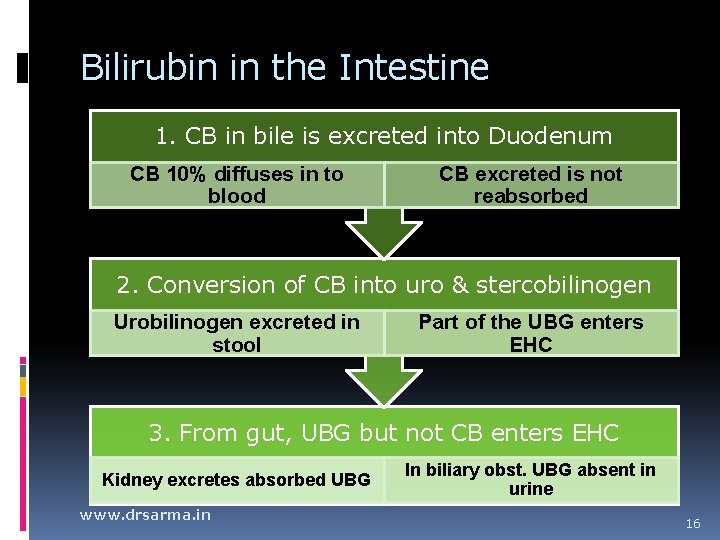
Bilirubin in the Intestine 1. CB in bile is excreted into Duodenum CB 10% diffuses in to blood CB excreted is not reabsorbed 2. Conversion of CB into uro & stercobilinogen Urobilinogen excreted in stool Part of the UBG enters EHC 3. From gut, UBG but not CB enters EHC Kidney excretes absorbed UBG www. drsarma. in In biliary obst. UBG absent in urine 16
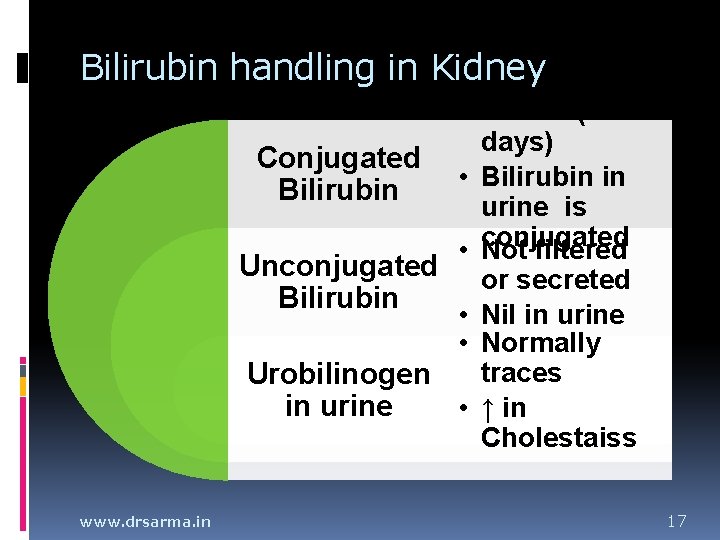
Bilirubin handling in Kidney • Bound (20 days) Conjugated • Bilirubin in Bilirubin urine is • conjugated Not filtered Unconjugated or secreted Bilirubin • Nil in urine • Normally traces Urobilinogen in urine • ↑ in Cholestaiss www. drsarma. in 17
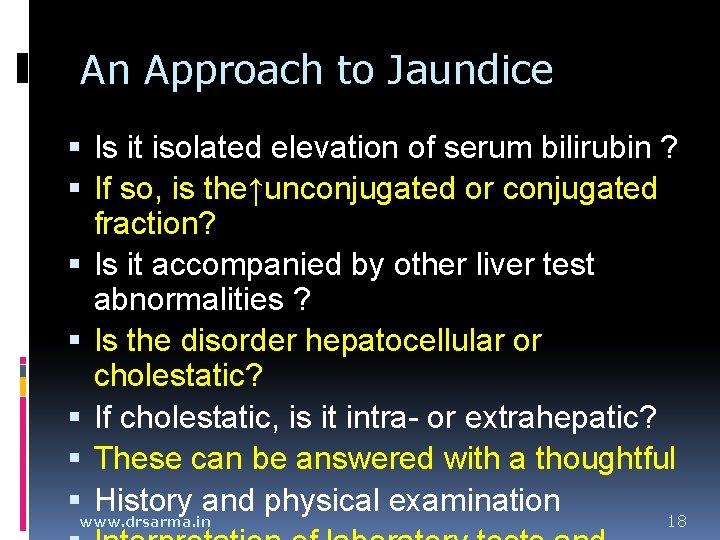
An Approach to Jaundice Is it isolated elevation of serum bilirubin ? If so, is the↑unconjugated or conjugated fraction? Is it accompanied by other liver test abnormalities ? Is the disorder hepatocellular or cholestatic? If cholestatic, is it intra- or extrahepatic? These can be answered with a thoughtful History and physical examination www. drsarma. in 18
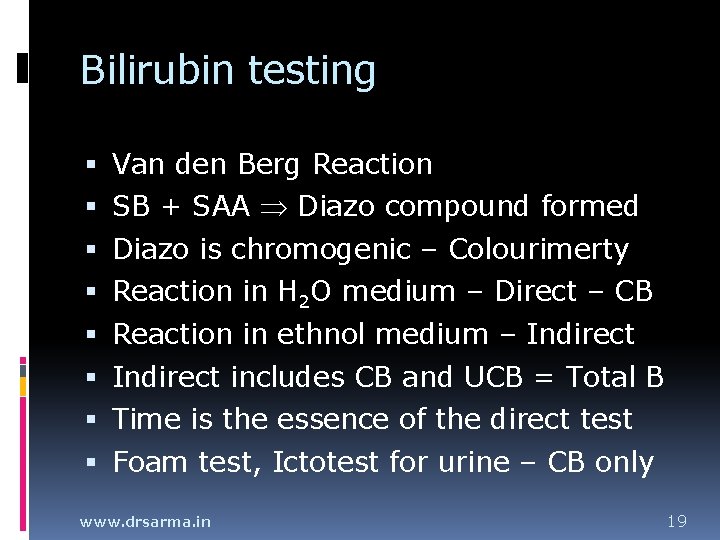
Bilirubin testing Van den Berg Reaction SB + SAA Diazo compound formed Diazo is chromogenic – Colourimerty Reaction in H 2 O medium – Direct – CB Reaction in ethnol medium – Indirect includes CB and UCB = Total B Time is the essence of the direct test Foam test, Ictotest for urine – CB only www. drsarma. in 19
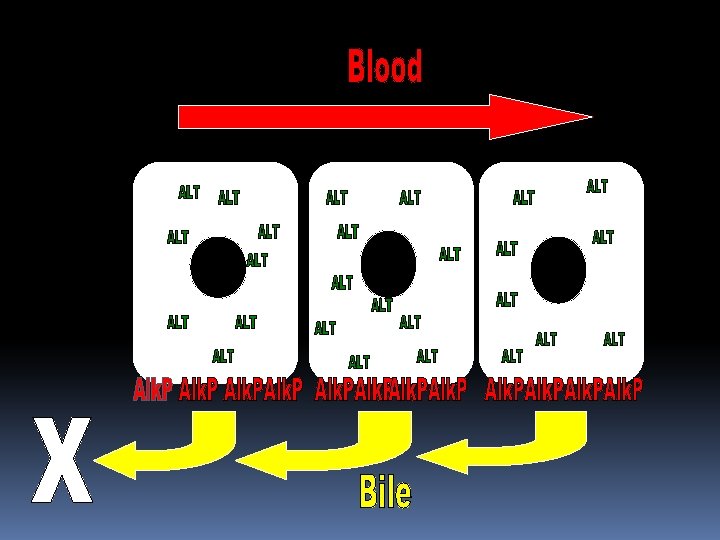
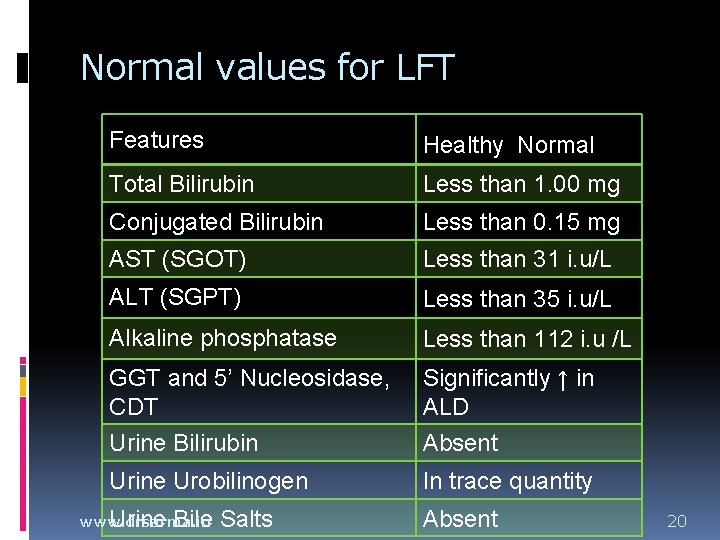
Normal values for LFT Features Healthy Normal Total Bilirubin Less than 1. 00 mg Conjugated Bilirubin Less than 0. 15 mg AST (SGOT) Less than 31 i. u/L ALT (SGPT) Less than 35 i. u/L Alkaline phosphatase Less than 112 i. u /L GGT and 5’ Nucleosidase, CDT Significantly ↑ in ALD Urine Bilirubin Absent Urine Urobilinogen In trace quantity Urine Bile Salts Absent www. drsarma. in 20
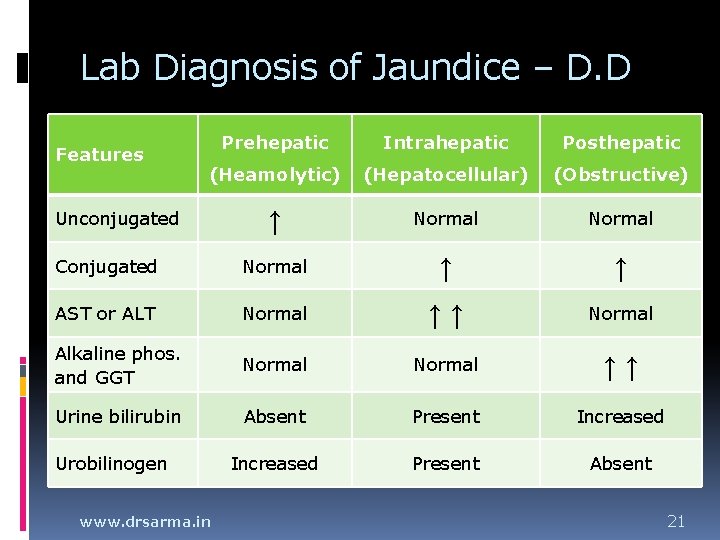
Lab Diagnosis of Jaundice – D. D Prehepatic Intrahepatic Posthepatic (Heamolytic) (Hepatocellular) (Obstructive) ↑ Normal Conjugated Normal ↑ ↑ AST or ALT Normal ↑↑ Normal Alkaline phos. and GGT Normal ↑↑ Urine bilirubin Absent Present Increased Present Absent Features Unconjugated Urobilinogen www. drsarma. in 21
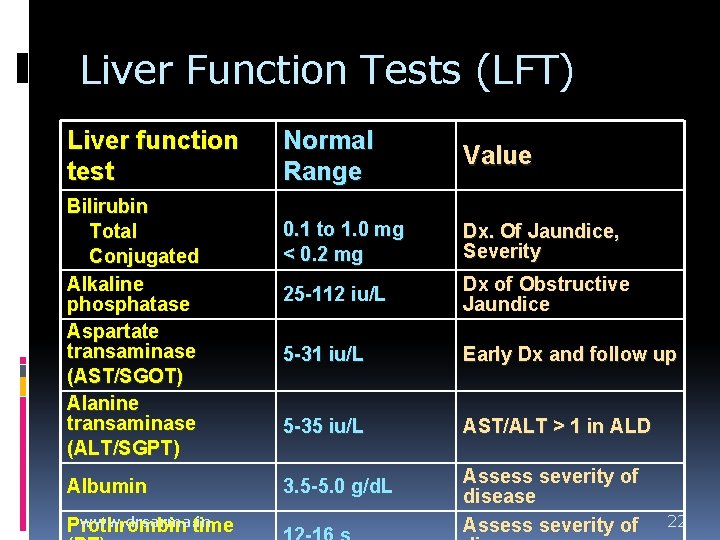
Liver Function Tests (LFT) Liver function test Bilirubin Total Conjugated Alkaline phosphatase Aspartate transaminase (AST/SGOT) Alanine transaminase (ALT/SGPT) Albumin www. drsarma. in Prothrombin time Normal Range Value 0. 1 to 1. 0 mg < 0. 2 mg Dx. Of Jaundice, Severity 25 -112 iu/L Dx of Obstructive Jaundice 5 -31 iu/L Early Dx and follow up 5 -35 iu/L AST/ALT > 1 in ALD 3. 5 -5. 0 g/d. L Assess severity of disease Assess severity of 22
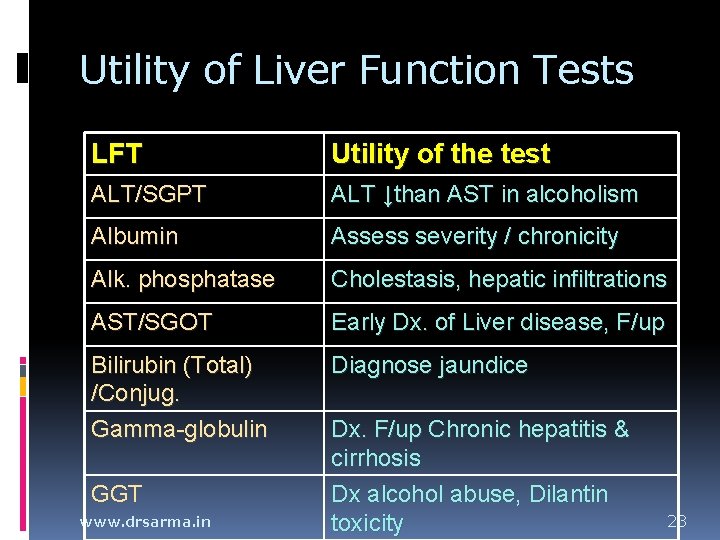
Utility of Liver Function Tests LFT Utility of the test ALT/SGPT ALT ↓than AST in alcoholism Albumin Assess severity / chronicity Alk. phosphatase Cholestasis, hepatic infiltrations AST/SGOT Early Dx. of Liver disease, F/up Bilirubin (Total) /Conjug. Gamma-globulin Diagnose jaundice GGT www. drsarma. in Dx. F/up Chronic hepatitis & cirrhosis Dx alcohol abuse, Dilantin toxicity 23
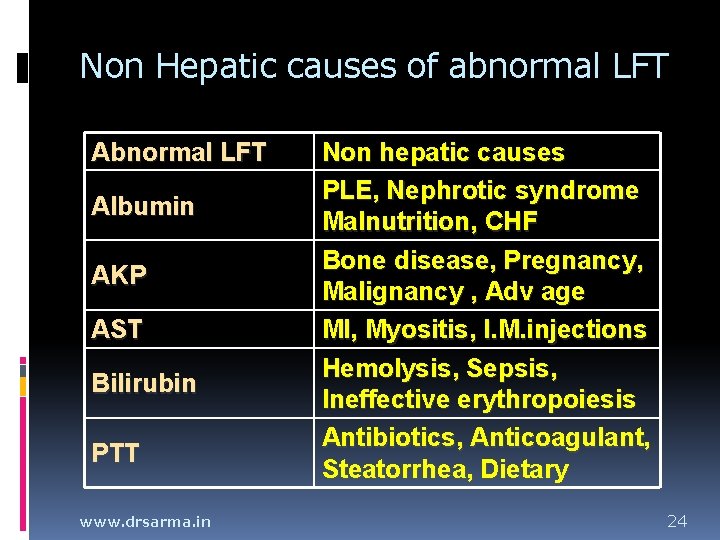
Non Hepatic causes of abnormal LFT Albumin AKP AST Bilirubin PTT www. drsarma. in Non hepatic causes PLE, Nephrotic syndrome Malnutrition, CHF Bone disease, Pregnancy, Malignancy , Adv age MI, Myositis, I. M. injections Hemolysis, Sepsis, Ineffective erythropoiesis Antibiotics, Anticoagulant, Steatorrhea, Dietary 24
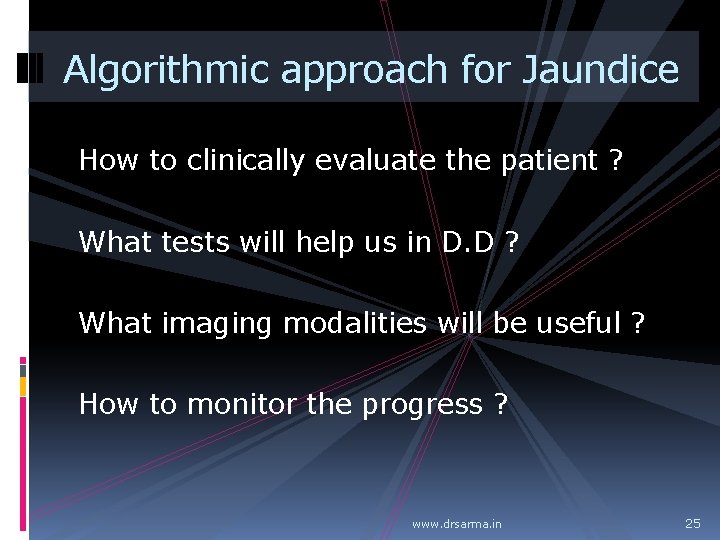
Algorithmic approach for Jaundice How to clinically evaluate the patient ? What tests will help us in D. D ? What imaging modalities will be useful ? How to monitor the progress ? www. drsarma. in 25
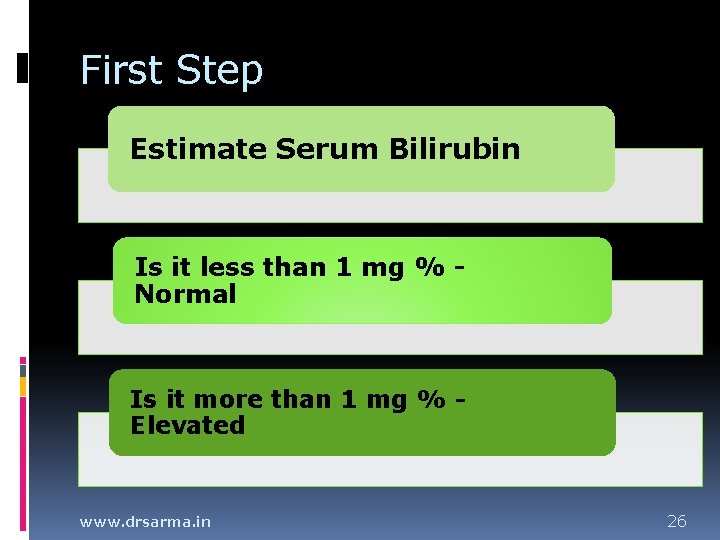
First Step Estimate Serum Bilirubin Is it less than 1 mg % Normal Is it more than 1 mg % Elevated www. drsarma. in 26
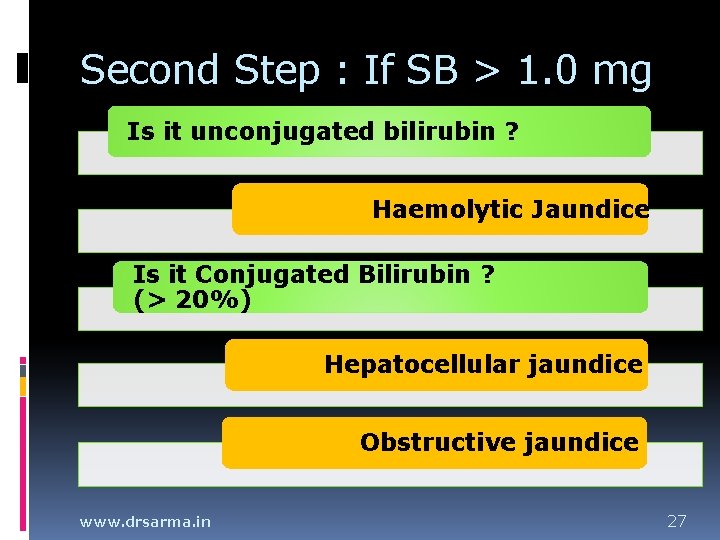
Second Step : If SB > 1. 0 mg Is it unconjugated bilirubin ? Haemolytic Jaundice Is it Conjugated Bilirubin ? (> 20%) Hepatocellular jaundice Obstructive jaundice www. drsarma. in 27
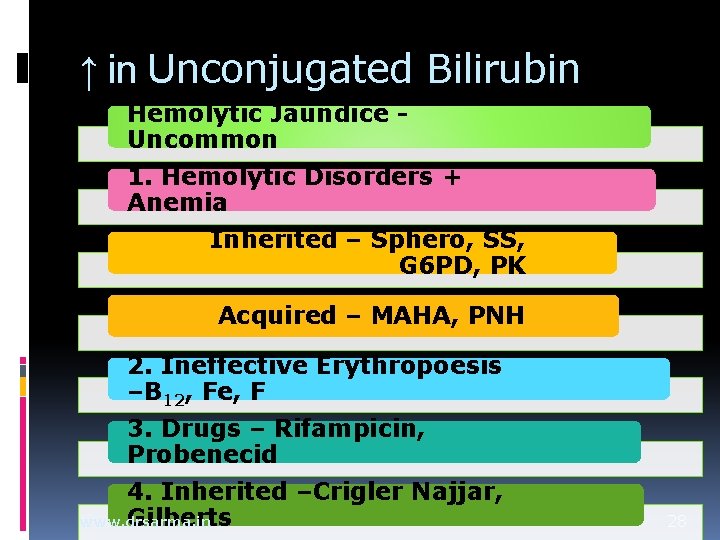
↑ in Unconjugated Bilirubin Hemolytic Jaundice Uncommon 1. Hemolytic Disorders + Anemia Inherited – Sphero, SS, G 6 PD, PK Acquired – MAHA, PNH 2. Ineffective Erythropoesis –B 12, Fe, F 3. Drugs – Rifampicin, Probenecid 4. Inherited –Crigler Najjar, Gilberts www. drsarma. in 28
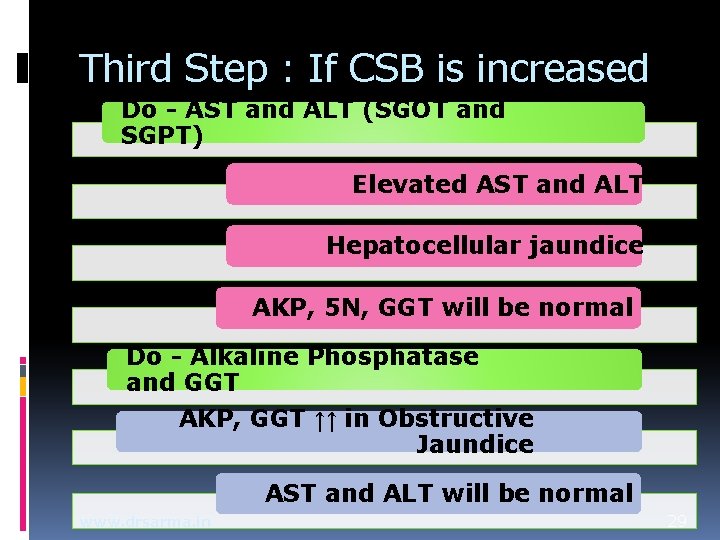
Third Step : If CSB is increased Do - AST and ALT (SGOT and SGPT) Elevated AST and ALT Hepatocellular jaundice AKP, 5 N, GGT will be normal Do - Alkaline Phosphatase and GGT AKP, GGT ↑↑ in Obstructive Jaundice AST and ALT will be normal www. drsarma. in 29
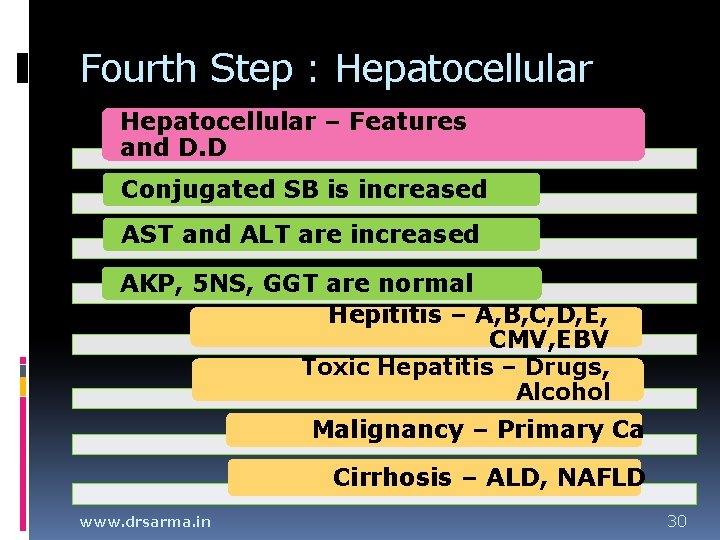
Fourth Step : Hepatocellular – Features and D. D Conjugated SB is increased AST and ALT are increased AKP, 5 NS, GGT are normal Hepititis – A, B, C, D, E, CMV, EBV Toxic Hepatitis – Drugs, Alcohol Malignancy – Primary Ca Cirrhosis – ALD, NAFLD www. drsarma. in 30
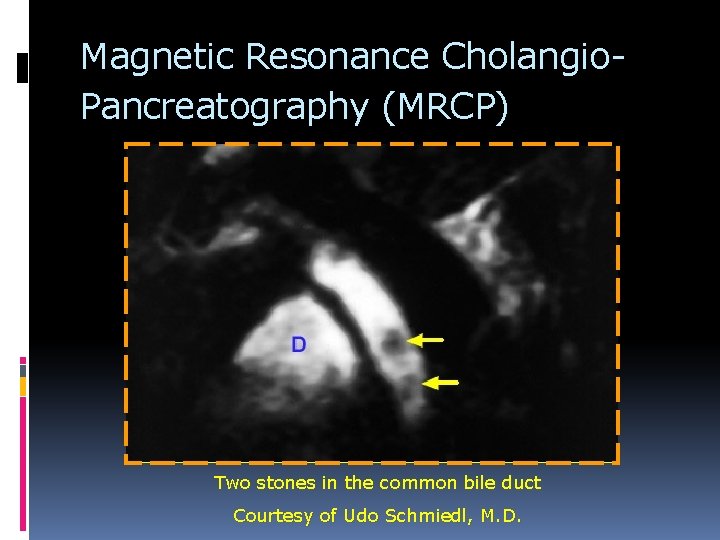
What imaging we need Ultrasonography – 98% Sp, 90% Sen. For GB stones USG better than CT For duct stones –only 40% seen in USG PTC – Extrahepatic obstr. – drainage ERCP – Distal biliary obstruction Dx. Rx. MRCP – Most useful for duct stones www. drsarma. in 31
Neonatal Jaundice Neonatal jaundice is common 50% healthy term infants Re-emergence of kernicterus In utero bilirubin is handled by placenta and mother’s liver After birth, neonate to has cope with increase in bilirubin production and the immature liver cannot www. drsarma. in 32
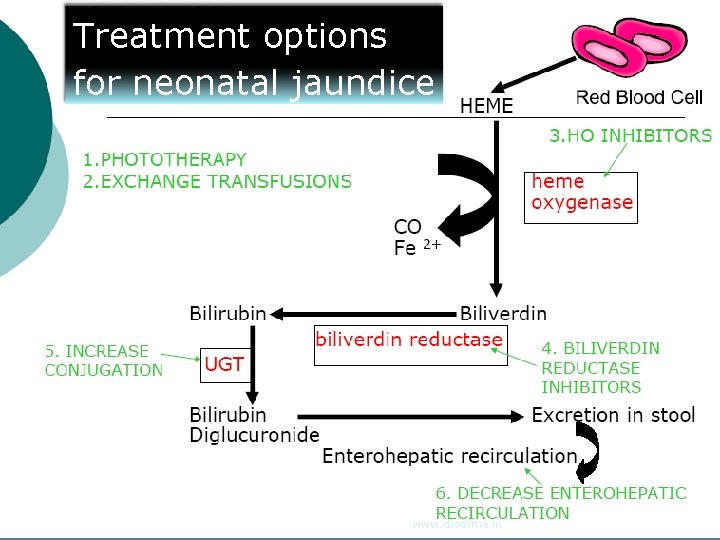
Treatment options for neonatal jaundice www. drsarma. in 33
Basis of photo therapy ? UCB is not water soluble in its form Blue light confrontational change in UBG Its Photo Isomers are water soluble Blue light converts the UCG into its photo isomers The soluble photo isomers pass through the Glomerular filter and get excreted Thus conjugation in liver is by passed. www. drsarma. in 34
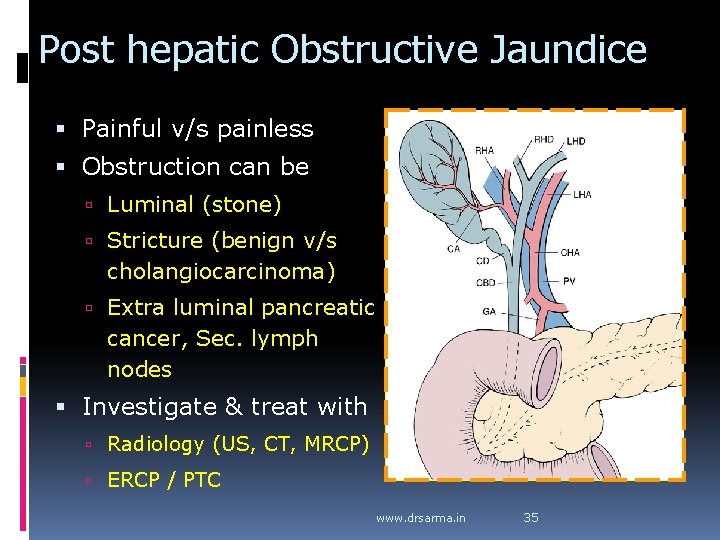
Post hepatic Obstructive Jaundice Painful v/s painless Obstruction can be Luminal (stone) Stricture (benign v/s cholangiocarcinoma) Extra luminal pancreatic cancer, Sec. lymph nodes Investigate & treat with Radiology (US, CT, MRCP) ERCP / PTC www. drsarma. in 35
Chronic Liver Disease (CLD) Alcoholic Liver (ALD) Chronic viral hepatitis Hepatitis B Hepatitis C Autoimmune liver disease: Autoimmune hepatitis Primary Biliary Inherited conditions Haemochromatosi s Wilson’s Disease Alpha 1 -Antitrypsin Deficiency (AATD) Non-alcoholic steato -hepatitis (NASH) Budd-Chiari syndrome Cryptogenic www. drsarma. in 36
Hepato toxic drugs Conventional Drugs Natural Substances Acetaminophen, Alphamethyldopa Amiodarone, Dantrolene, Diclofenac Disulfiram, Fluconazole, Glipizide Glyburide, Isoniazid, Ketaconazole Labetalol, Lovastatin, Nitrofurantoin www. drsarma. in Thiouracil, Troglitazone, Vitamins, Hypervitaminosis A Niacin, Cocaine, Mushrooms Aflatoxins, Herbal remedies Senecio, crotaliaria, Pennyroyal oil, Chapparral, Germander, Senna, 37
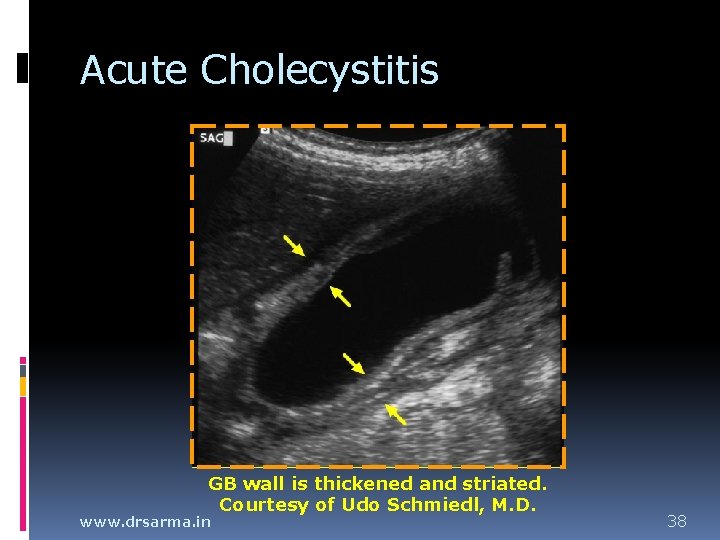
Acute Cholecystitis GB wall is thickened and striated. Courtesy of Udo Schmiedl, M. D. www. drsarma. in 38
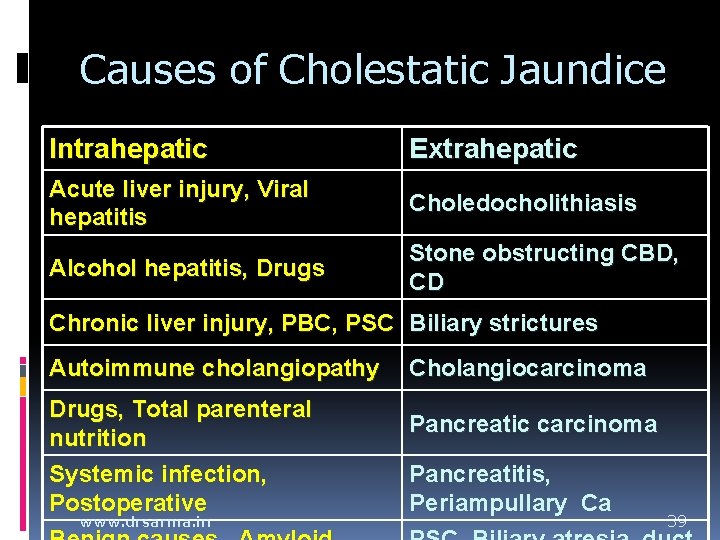
Causes of Cholestatic Jaundice Intrahepatic Extrahepatic Acute liver injury, Viral hepatitis Choledocholithiasis Alcohol hepatitis, Drugs Stone obstructing CBD, CD Chronic liver injury, PBC, PSC Biliary strictures Autoimmune cholangiopathy Drugs, Total parenteral nutrition Systemic infection, Postoperative www. drsarma. in Cholangiocarcinoma Pancreatic carcinoma Pancreatitis, Periampullary Ca 39
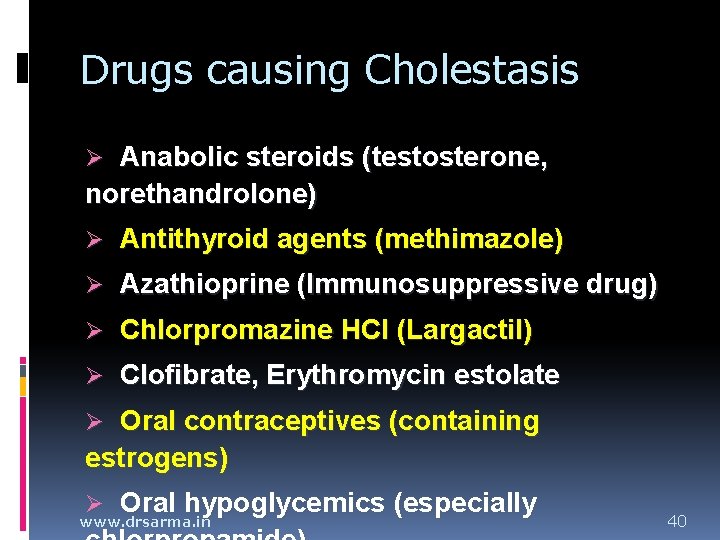
Drugs causing Cholestasis Ø Anabolic steroids (testosterone, norethandrolone) Ø Antithyroid agents (methimazole) Ø Azathioprine (Immunosuppressive drug) Ø Chlorpromazine HCI (Largactil) Ø Clofibrate, Erythromycin estolate Ø Oral contraceptives (containing estrogens) Ø Oral hypoglycemics (especially www. drsarma. in 40
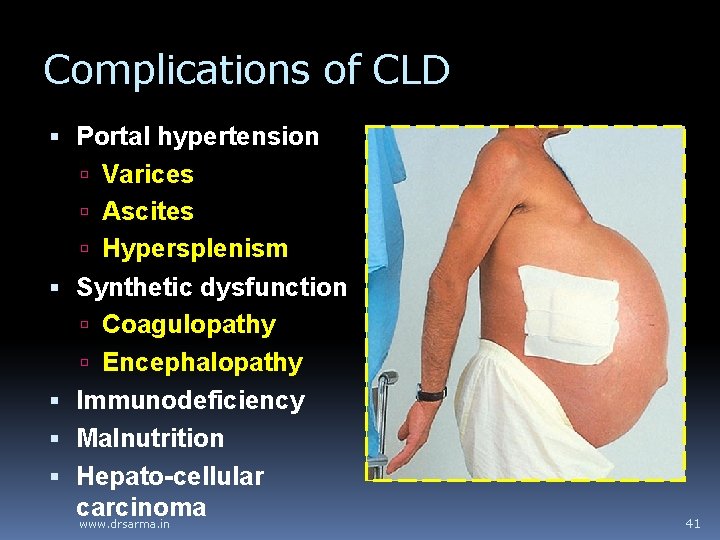
Complications of CLD Portal hypertension Varices Ascites Hypersplenism Synthetic dysfunction Coagulopathy Encephalopathy Immunodeficiency Malnutrition Hepato-cellular carcinoma www. drsarma. in 41
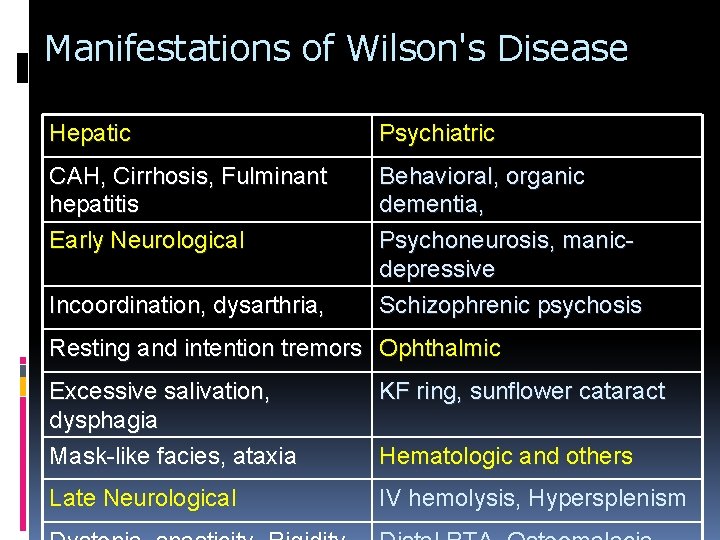
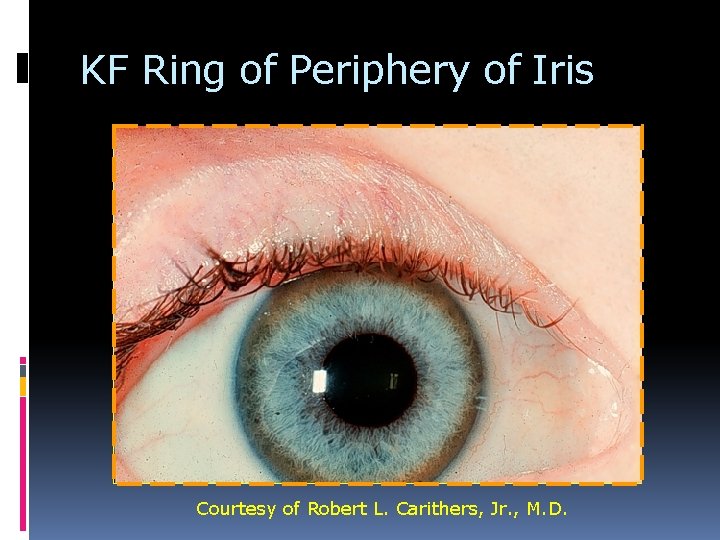
Manifestations of Wilson's Disease Hepatic Psychiatric CAH, Cirrhosis, Fulminant hepatitis Early Neurological Behavioral, organic dementia, Psychoneurosis, manicdepressive Schizophrenic psychosis Incoordination, dysarthria, Resting and intention tremors Ophthalmic Excessive salivation, dysphagia Mask-like facies, ataxia KF ring, sunflower cataract Late Neurological IV hemolysis, Hypersplenism Hematologic and others
KF Ring of Periphery of Iris Courtesy of Robert L. Carithers, Jr. , M. D.
Magnetic Resonance Cholangio. Pancreatography (MRCP) Two stones in the common bile duct Courtesy of Udo Schmiedl, M. D.
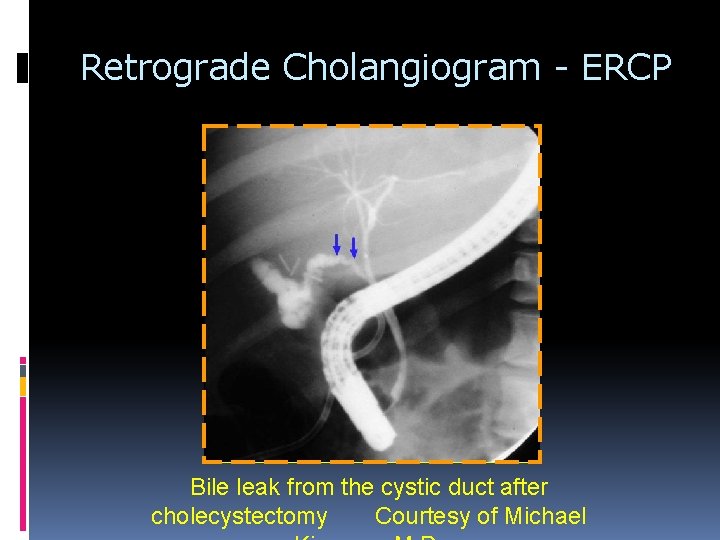
Retrograde Cholangiogram - ERCP Bile leak from the cystic duct after cholecystectomy Courtesy of Michael
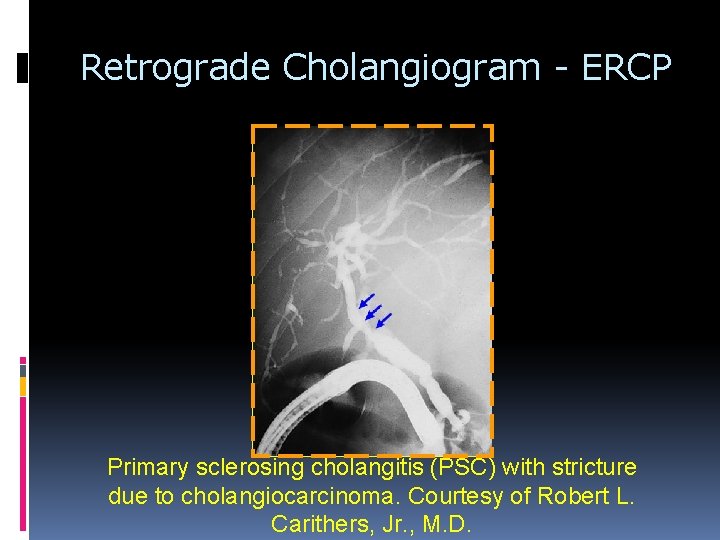
Retrograde Cholangiogram - ERCP Primary sclerosing cholangitis (PSC) with stricture due to cholangiocarcinoma. Courtesy of Robert L. Carithers, Jr. , M. D.
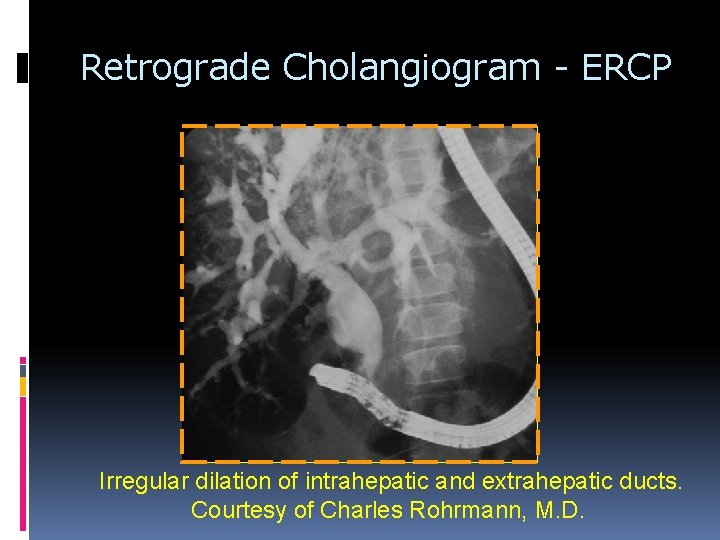
Retrograde Cholangiogram - ERCP Irregular dilation of intrahepatic and extrahepatic ducts. Courtesy of Charles Rohrmann, M. D.
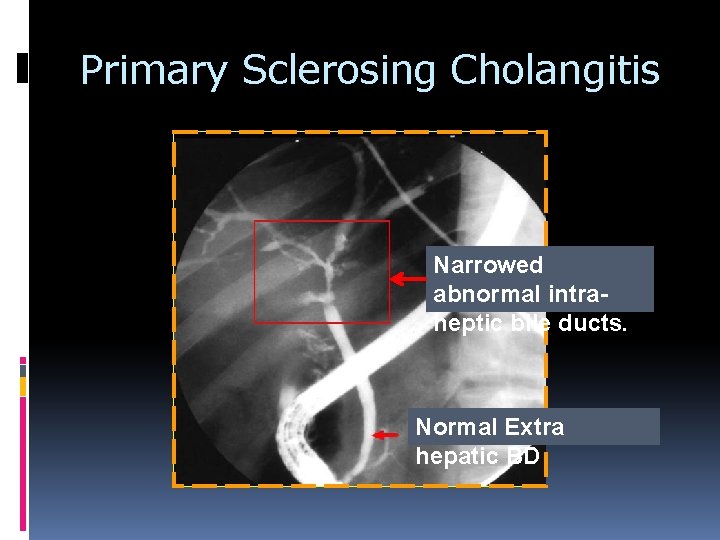
Primary Sclerosing Cholangitis Narrowed abnormal intraheptic bile ducts. Normal Extra hepatic BD
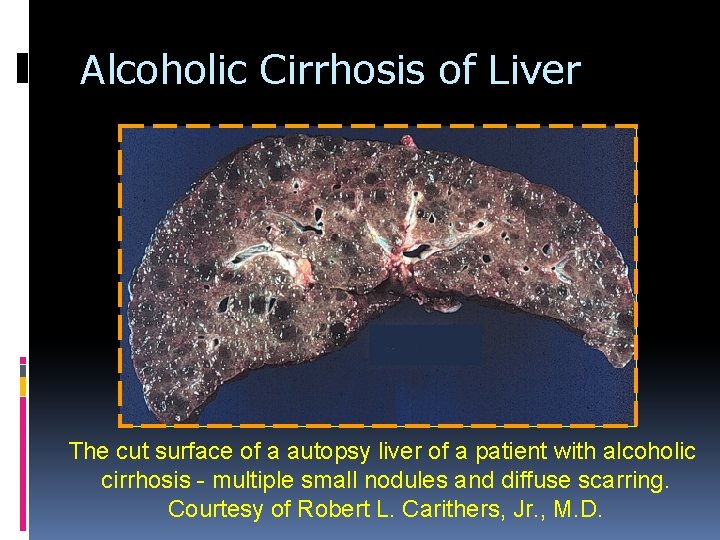
Alcoholic Cirrhosis of Liver The cut surface of a autopsy liver of a patient with alcoholic cirrhosis - multiple small nodules and diffuse scarring. Courtesy of Robert L. Carithers, Jr. , M. D.
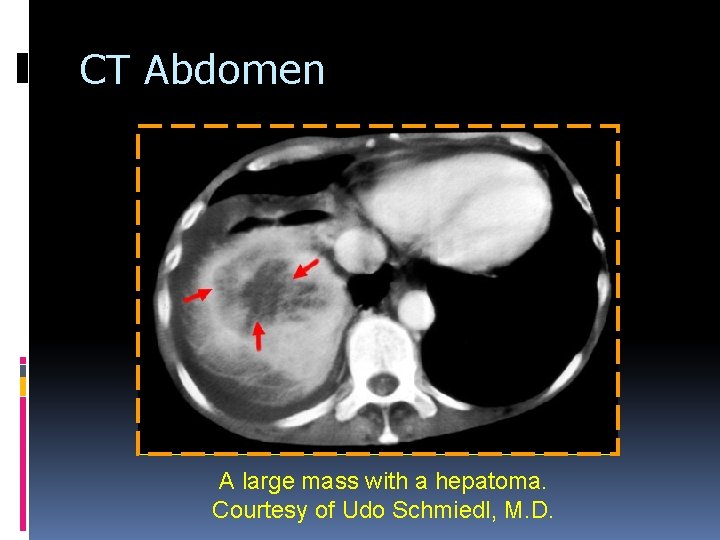
CT Abdomen A large mass with a hepatoma. Courtesy of Udo Schmiedl, M. D.
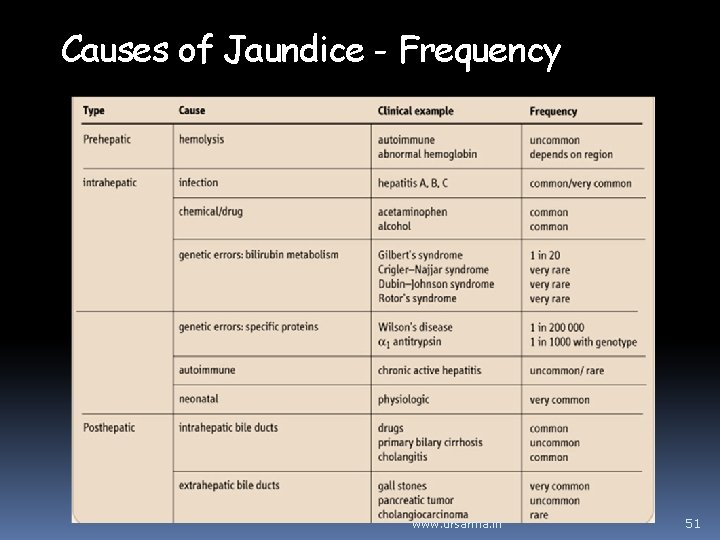
Causes of Jaundice - Frequency www. drsarma. in 51
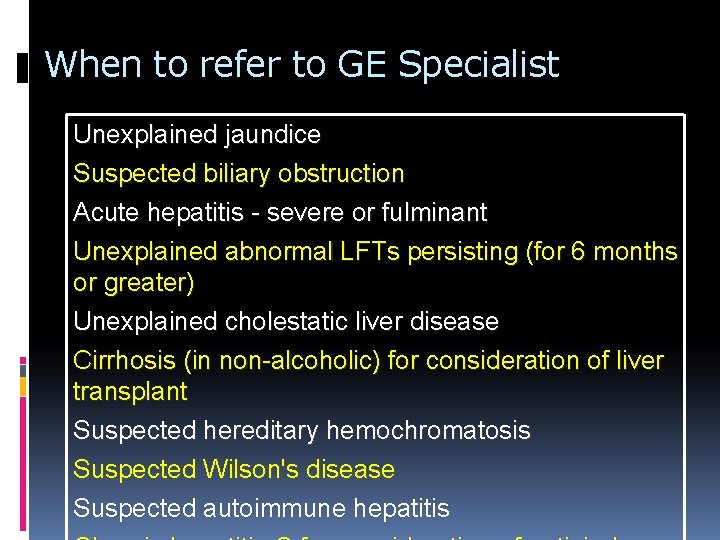
When to refer to GE Specialist Unexplained jaundice Suspected biliary obstruction Acute hepatitis - severe or fulminant Unexplained abnormal LFTs persisting (for 6 months or greater) Unexplained cholestatic liver disease Cirrhosis (in non-alcoholic) for consideration of liver transplant Suspected hereditary hemochromatosis Suspected Wilson's disease Suspected autoimmune hepatitis
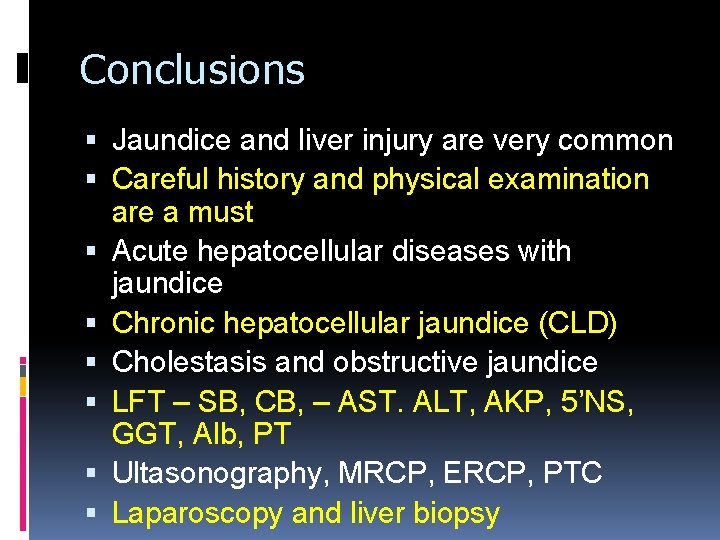
Conclusions Jaundice and liver injury are very common Careful history and physical examination are a must Acute hepatocellular diseases with jaundice Chronic hepatocellular jaundice (CLD) Cholestasis and obstructive jaundice LFT – SB, CB, – AST. ALT, AKP, 5’NS, GGT, Alb, PT Ultasonography, MRCP, ERCP, PTC Laparoscopy and liver biopsy