Dr Pracheth R Assistant Professor Community Medicine 10292020



- Slides: 35
Dr. Pracheth R, Assistant Professor, Community Medicine 10/29/2020 Occupational Hazards and Classification of Occupational Diseases 1
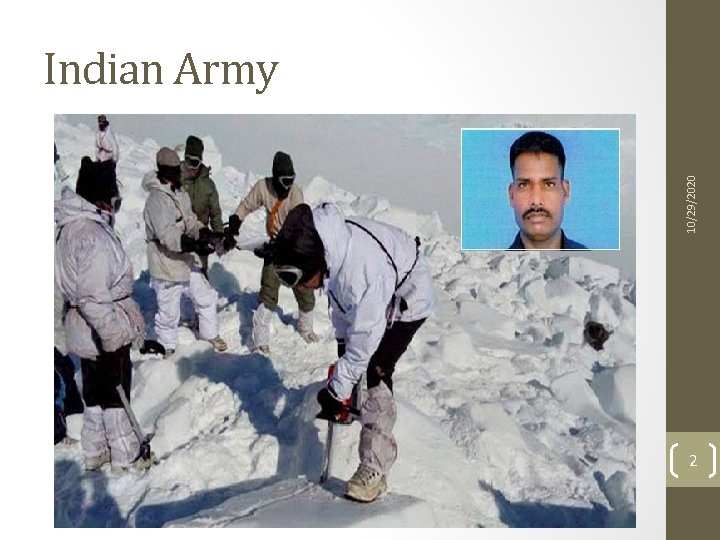
10/29/2020 Indian Army 2
10/29/2020 Health Care Professionals 3
1. To classify and enumerate the various occupational diseases 2. To describe occupational hazards and occupational diseases of public health importance 10/29/2020 Objectives 4
• Introduction • Ergonomics • Classification of occupational diseases • Occupational hazards in agricultural workers • Occupational dermatitis • Occupational cancer • Radiation hazards 10/29/2020 Outline 5
Introduction • Maintain well-being 10/29/2020 • Prevention of disease • Earlier: industrial health • All types: agriculture 6
• Fitting job to worker • Mutual adjustment of man and work 10/29/2020 Ergonomics • Interaction in working environment: üMan and agents üMan and machine üMan and man 7
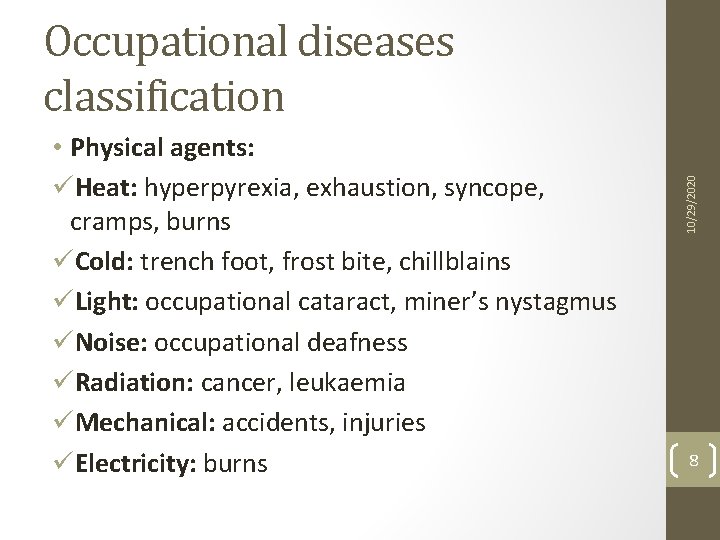
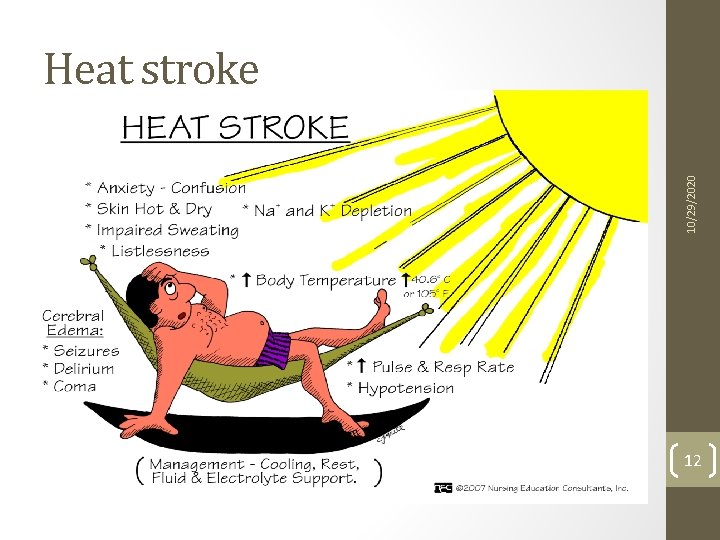
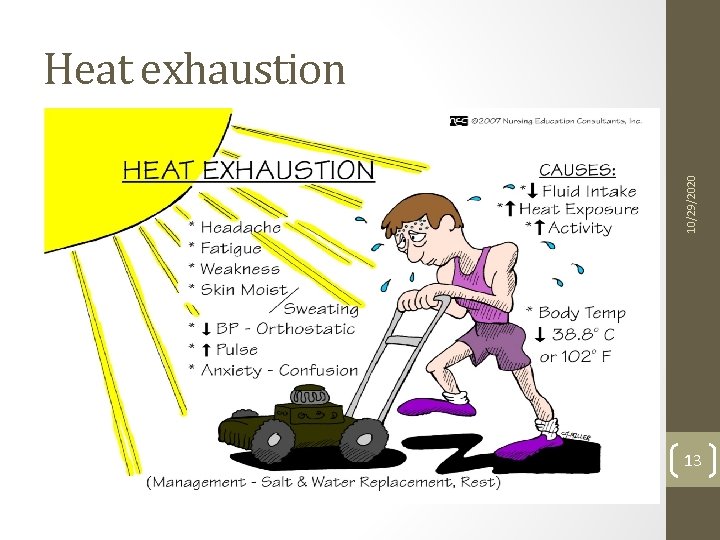
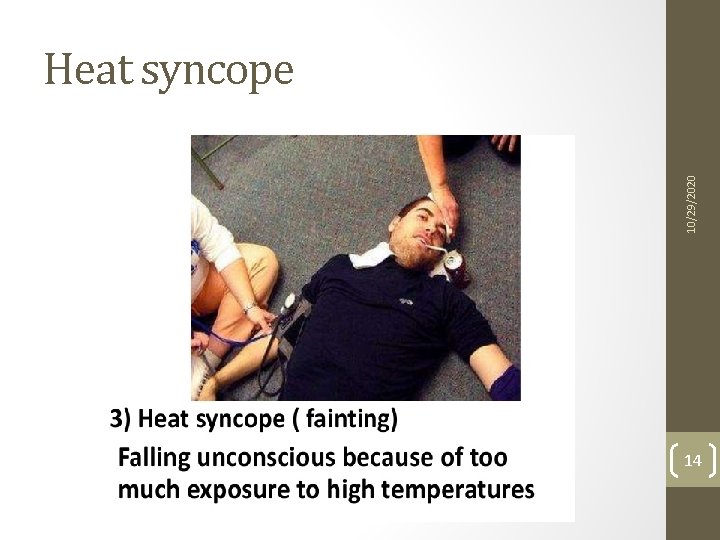
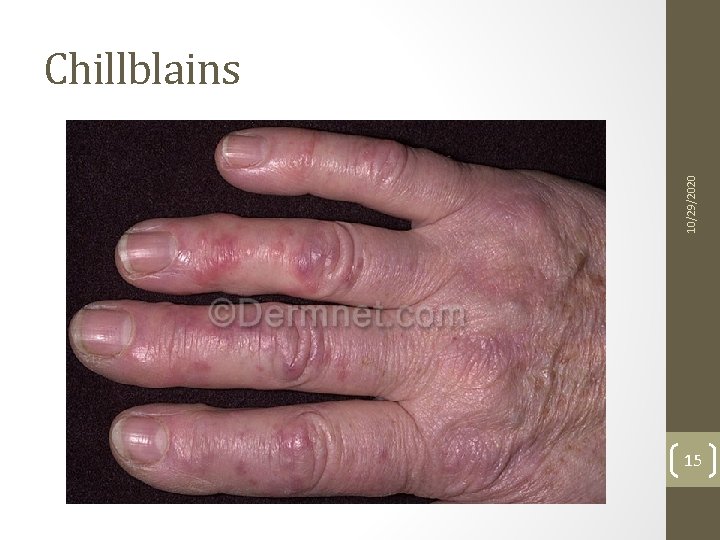
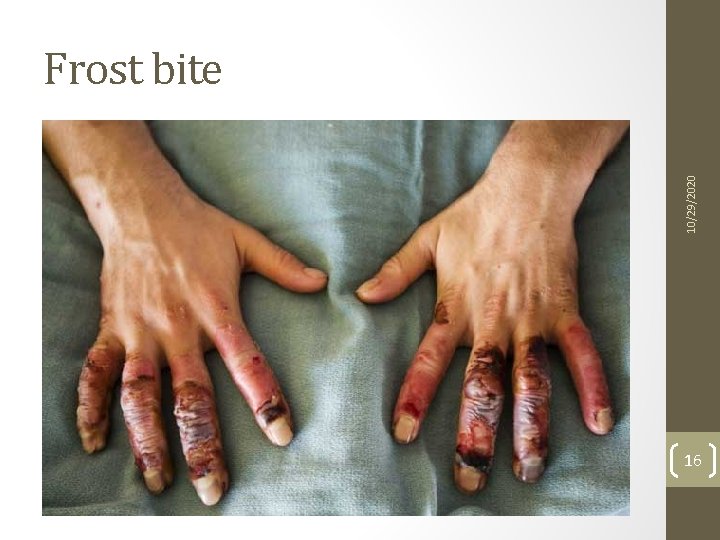
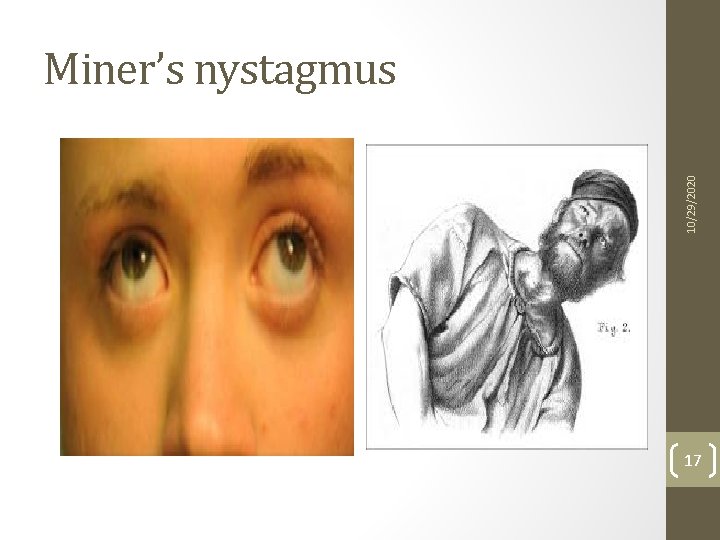
• Physical agents: üHeat: hyperpyrexia, exhaustion, syncope, cramps, burns üCold: trench foot, frost bite, chillblains üLight: occupational cataract, miner’s nystagmus üNoise: occupational deafness üRadiation: cancer, leukaemia üMechanical: accidents, injuries üElectricity: burns 10/29/2020 Occupational diseases classification 8
• Chemical agents: üGases: CO 2, CO, HCN, CS 2 üDusts: ØInorganic: Coal dust: anthracosis Silica: silicosis Asbestos: asbestosis Iron: siderosis 10/29/2020 Continued…. 9
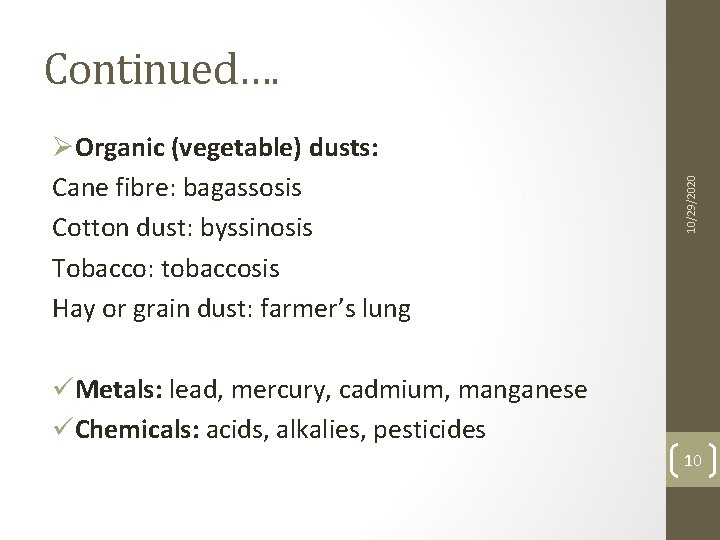
ØOrganic (vegetable) dusts: Cane fibre: bagassosis Cotton dust: byssinosis Tobacco: tobaccosis Hay or grain dust: farmer’s lung 10/29/2020 Continued…. üMetals: lead, mercury, cadmium, manganese üChemicals: acids, alkalies, pesticides 10
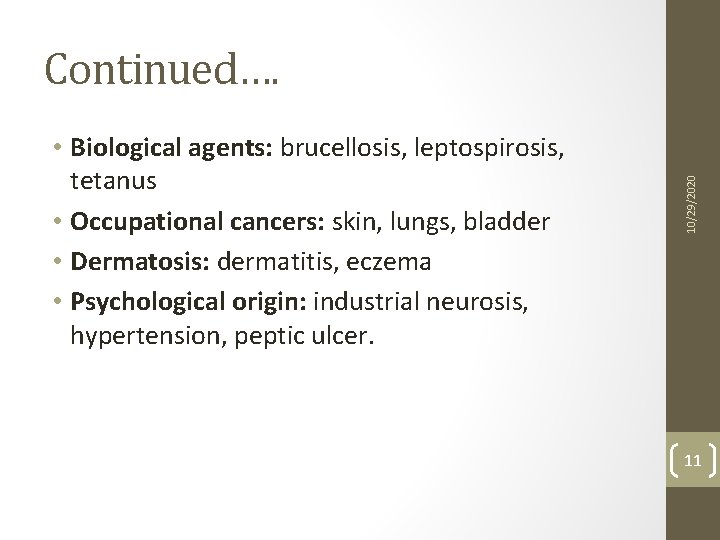
• Biological agents: brucellosis, leptospirosis, tetanus • Occupational cancers: skin, lungs, bladder • Dermatosis: dermatitis, eczema • Psychological origin: industrial neurosis, hypertension, peptic ulcer. 10/29/2020 Continued…. 11
10/29/2020 Heat stroke 12
10/29/2020 Heat exhaustion 13
10/29/2020 Heat syncope 14
10/29/2020 Chillblains 15
10/29/2020 Frost bite 16
10/29/2020 Miner’s nystagmus 17
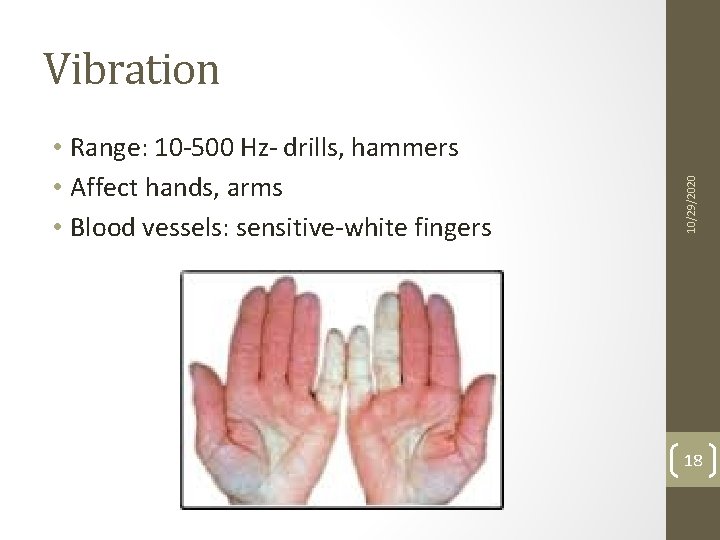
• Range: 10 -500 Hz- drills, hammers • Affect hands, arms • Blood vessels: sensitive-white fingers 10/29/2020 Vibration 18
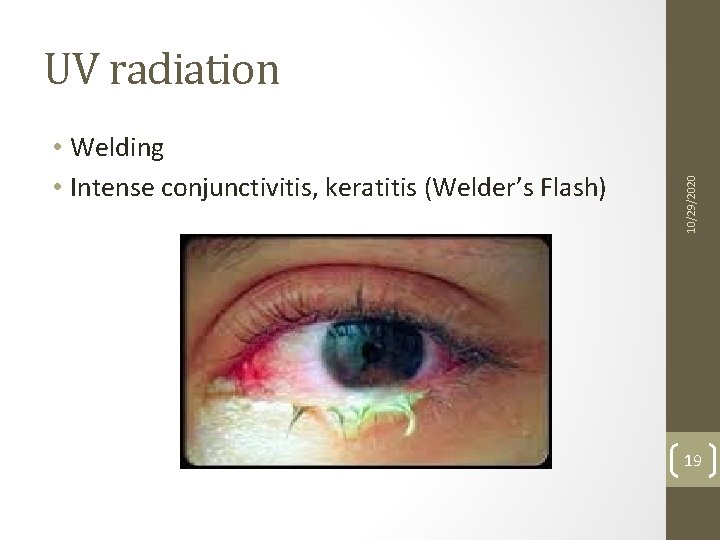
• Welding • Intense conjunctivitis, keratitis (Welder’s Flash) 10/29/2020 UV radiation 19
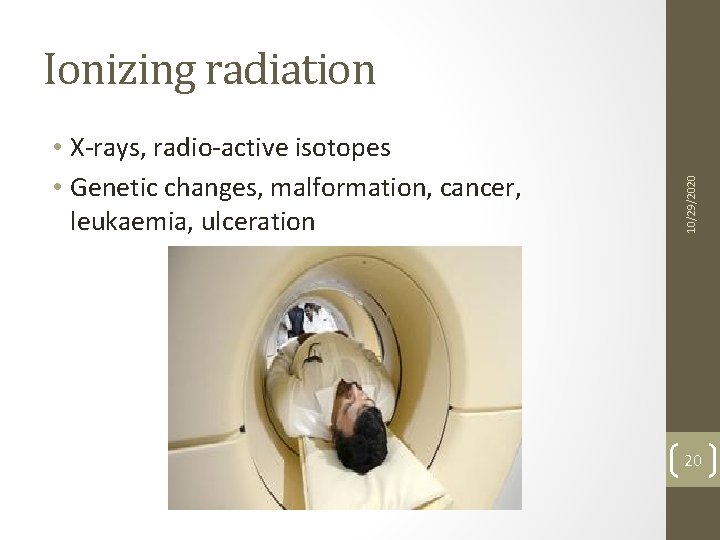
• X-rays, radio-active isotopes • Genetic changes, malformation, cancer, leukaemia, ulceration 10/29/2020 Ionizing radiation 20
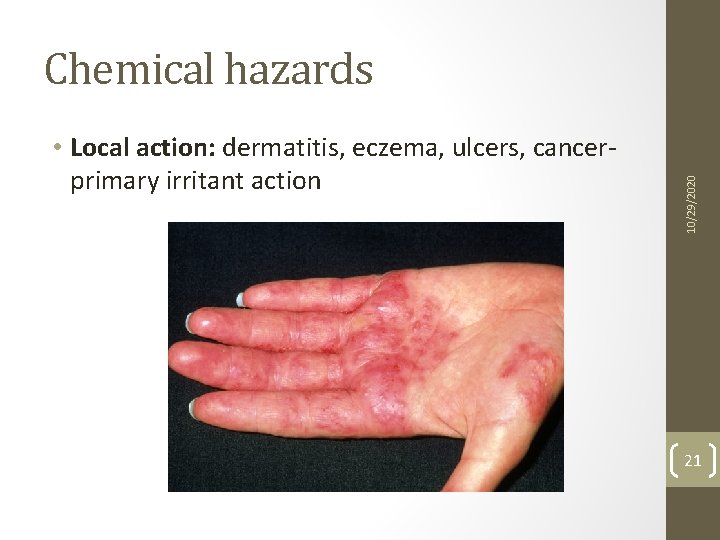
• Local action: dermatitis, eczema, ulcers, cancerprimary irritant action 10/29/2020 Chemical hazards 21
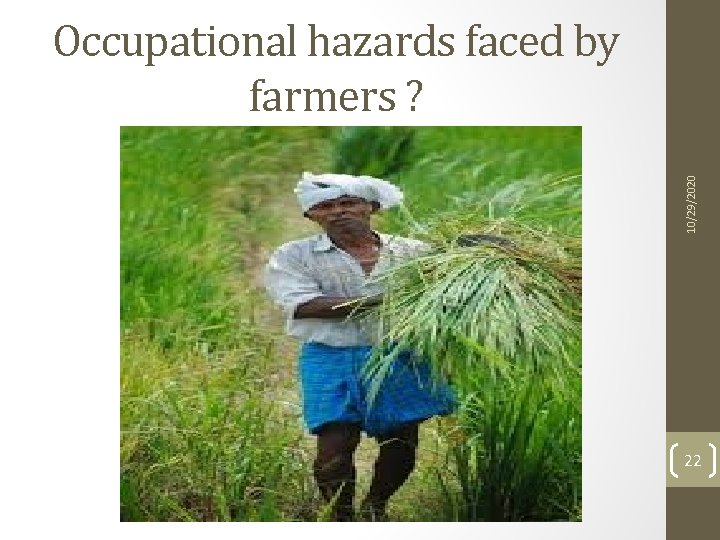
10/29/2020 Occupational hazards faced by farmers ? 22
• Zoonotic diseases: leptospirosis, tetanus, tuberculosis, brucellosis • Accidents: machinery, insect, snake bites 10/29/2020 Occupational hazards: agricultural workers • Toxic hazards: chemicals: fertilizers, pesticides • Physical: temperature, humidity • Respiratory diseases: dusts: grains, rice, tobacco: byssinosis, bagassosis, farmer’s lung, occupational asthma 23
Occupational dermatitis • Chemical: acids, alkalies, dyes 10/29/2020 • Physical: heat, cold, moisture, pressure • Biological: viruses, bacteria, fungi • Plant products: leaves, vegetables, fruits, flowers 24
Prevention • Protection: leather gloves, aprons, boots 10/29/2020 • Pre-selection • Personal hygiene: washing facilities • Periodic inspection 25
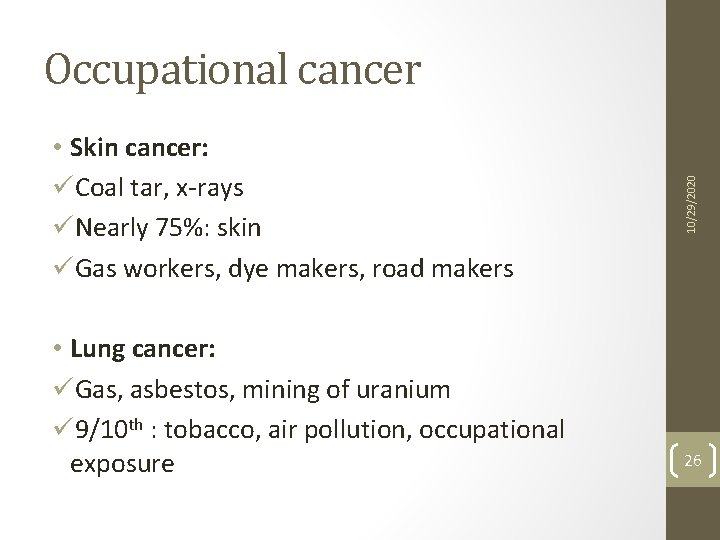
• Skin cancer: üCoal tar, x-rays üNearly 75%: skin üGas workers, dye makers, road makers • Lung cancer: üGas, asbestos, mining of uranium ü 9/10 th : tobacco, air pollution, occupational exposure 10/29/2020 Occupational cancer 26
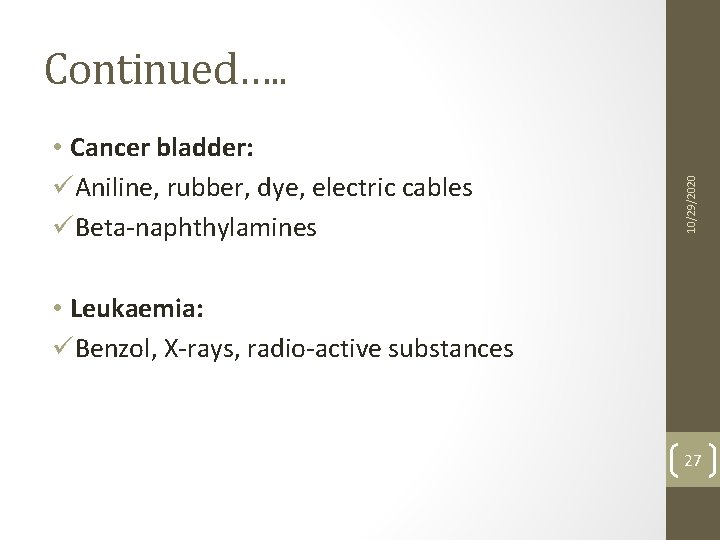
• Cancer bladder: üAniline, rubber, dye, electric cables üBeta-naphthylamines 10/29/2020 Continued…. . • Leukaemia: üBenzol, X-rays, radio-active substances 27
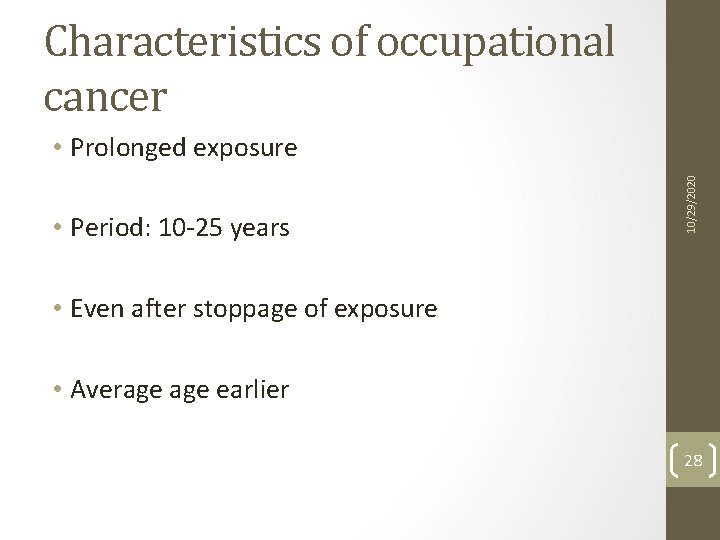
Characteristics of occupational cancer • Period: 10 -25 years 10/29/2020 • Prolonged exposure • Even after stoppage of exposure • Average earlier 28
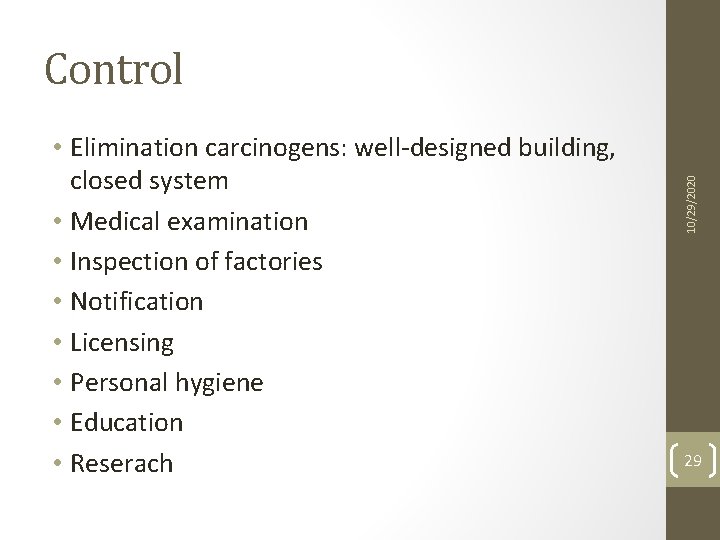
• Elimination carcinogens: well-designed building, closed system • Medical examination • Inspection of factories • Notification • Licensing • Personal hygiene • Education • Reserach 10/29/2020 Control 29
• Radium: watches, paints, mining, medicine • Infrared: welding, glass 10/29/2020 Radiation hazards • Effects: üBurns, dermatitis, chronic: cancer üLung cancer: uranium miners-inhale radio-active dust 30
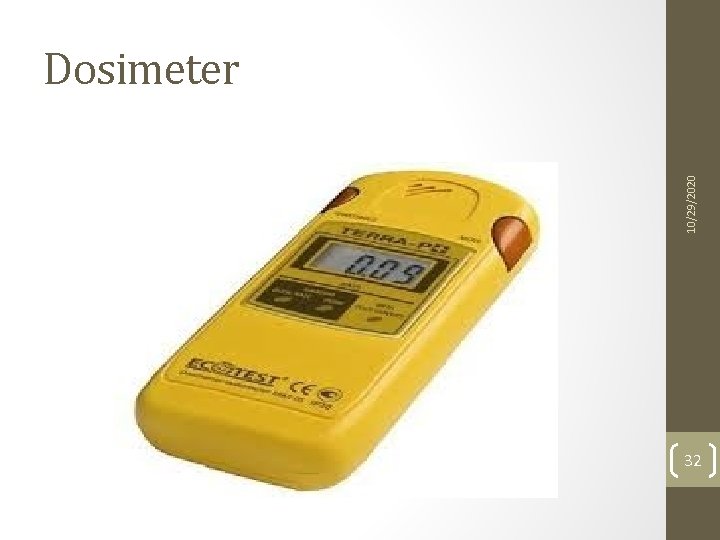
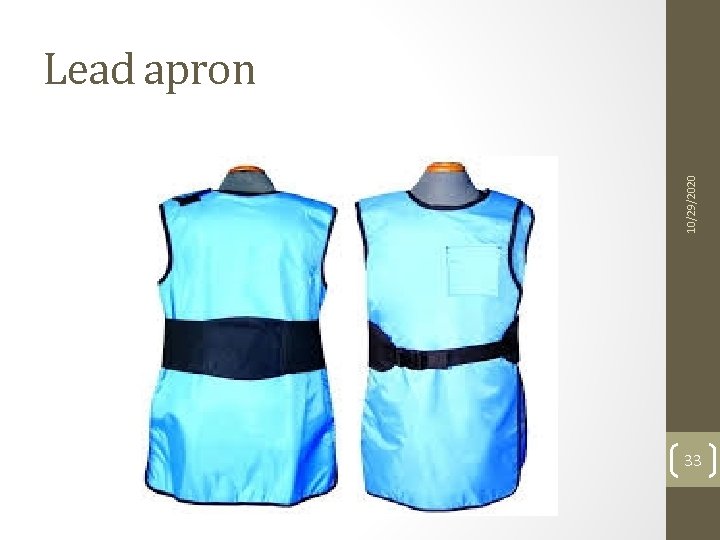
• Permissible dose not more than 5 rad year • Unnecessary X-ray exposure avoided • Inhalation, swallowing, direct contact avoided • X-rays: shielding • Lead shields, aprons • Film badge/dosimeter: accumulated radiation • Periodic medical examination- 2 months • Ventilation of work-place • Pregnant women not allowed to work 10/29/2020 Preventive measures 31
10/29/2020 Dosimeter 32
10/29/2020 Lead apron 33
1. Classify occupational diseases. Add a note on occupational hazards due to heat and cold. (6+4 -10) 2. Briefly describe the occupational hazards faced by agricultural workers. Add a note on prevention and control of the same. (3+2=5). 3. Explain the features and control of occupational cancers (3+2=5). 4. Enumerate the causes of occupational dermatitis. Briefly explain how to prevent and control the same. (3+2=5). 5. Enumerate any two measures to prevent radiation hazards. (2) 6. Define ergonomics (2). 10/29/2020 Questions 34
Thanks 35 10/29/2020