DNA What is it WHAT IS DNA DNA



- Slides: 15
DNA What is it?
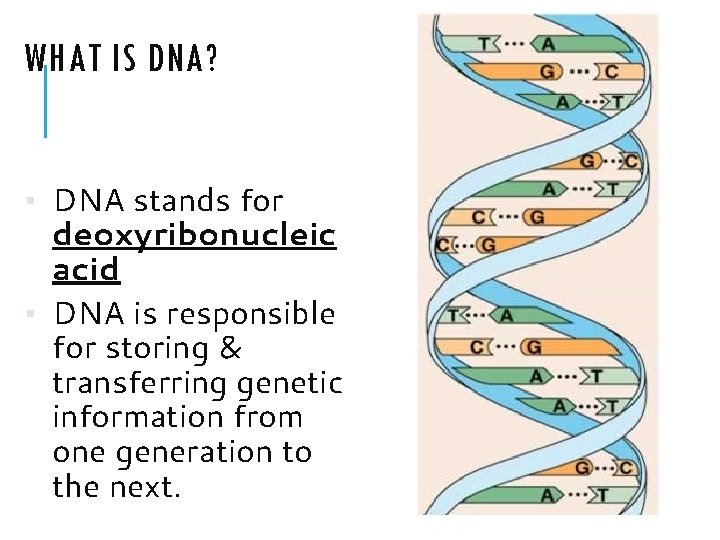
WHAT IS DNA? ▪ DNA stands for deoxyribonucleic acid ▪ DNA is responsible for storing & transferring genetic information from one generation to the next.
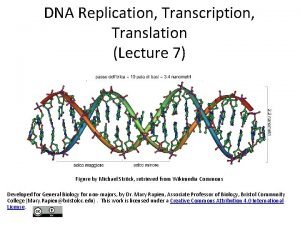
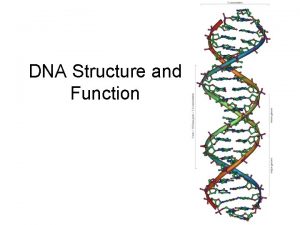
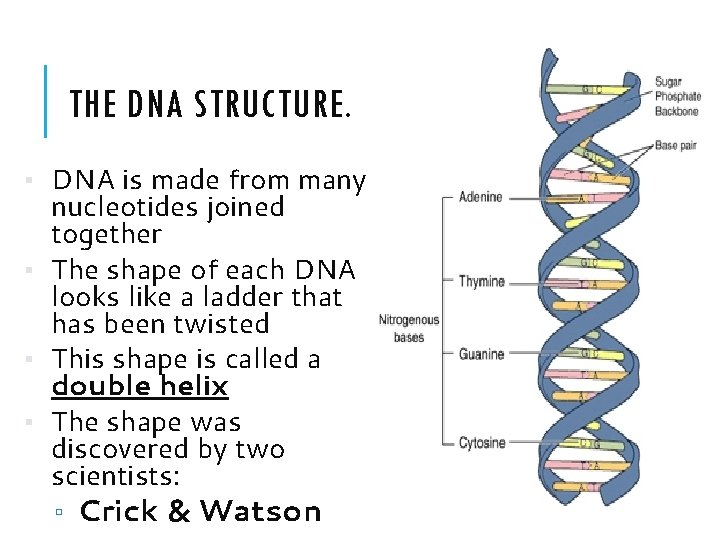
THE DNA STRUCTURE. ▪ DNA is made from many nucleotides joined together ▪ The shape of each DNA looks like a ladder that has been twisted ▪ This shape is called a double helix ▪ The shape was discovered by two scientists: ▫ Crick & Watson
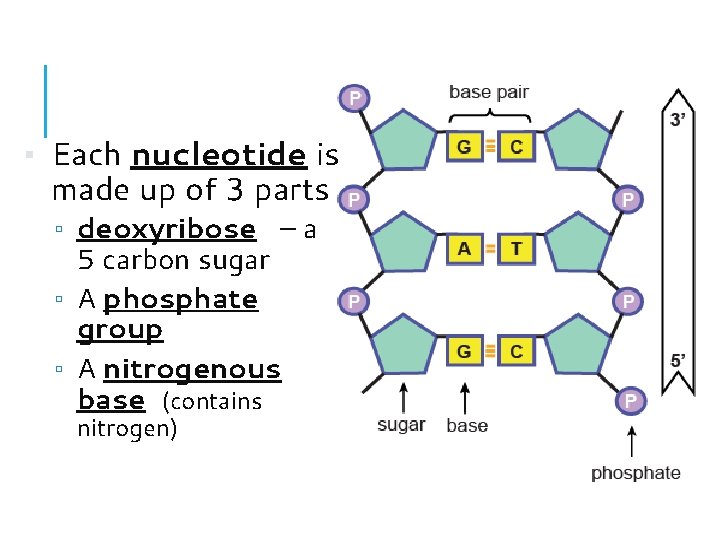
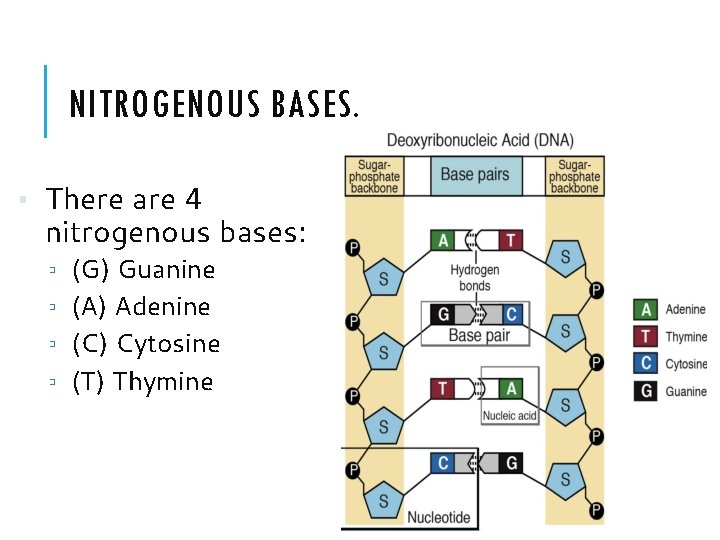
▪ Each nucleotide is made up of 3 parts ▫ deoxyribose – a 5 carbon sugar ▫ A phosphate group ▫ A nitrogenous base (contains nitrogen)
NITROGENOUS BASES. ▪ There are 4 nitrogenous bases: ▫ (G) Guanine ▫ (A) Adenine ▫ (C) Cytosine ▫ (T) Thymine
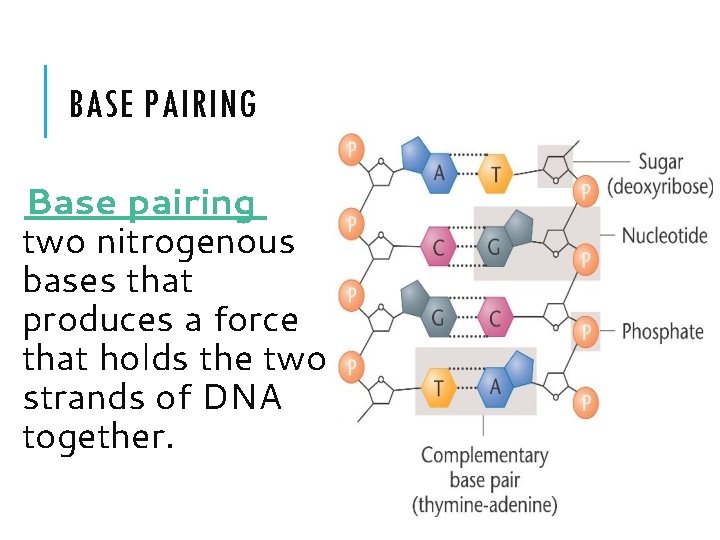
BASE PAIRING Base pairing is t two nitrogenous bases that produces a force that holds the two strands of DNA together.
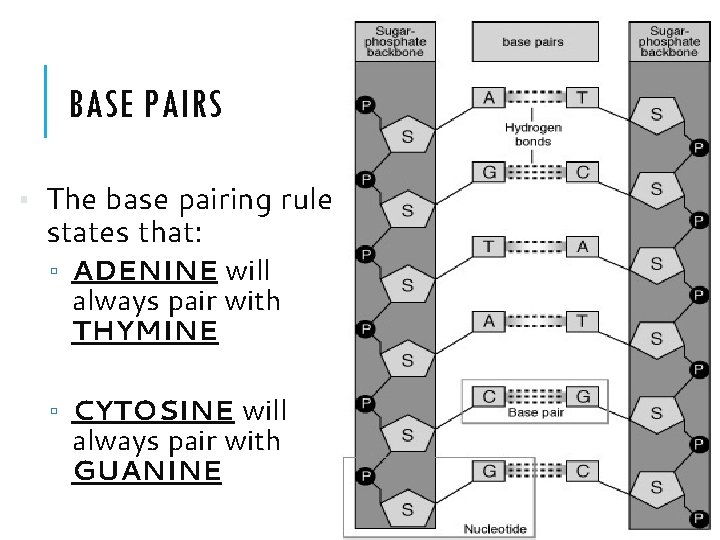
BASE PAIRS ▪ The base pairing rule states that: ▫ ADENINE will always pair with THYMINE ▫ CYTOSINE will always pair with GUANINE
Bond Types Hydrogen Bonds ▪ The base pairs in the double helix are held together by weak hydrogen bonds. Covalent Bonds ▪ The backbone of DNA is made up of alternating (D) deoxyribose and (P) phosphate molecules which are held together by strong covalent bonds.
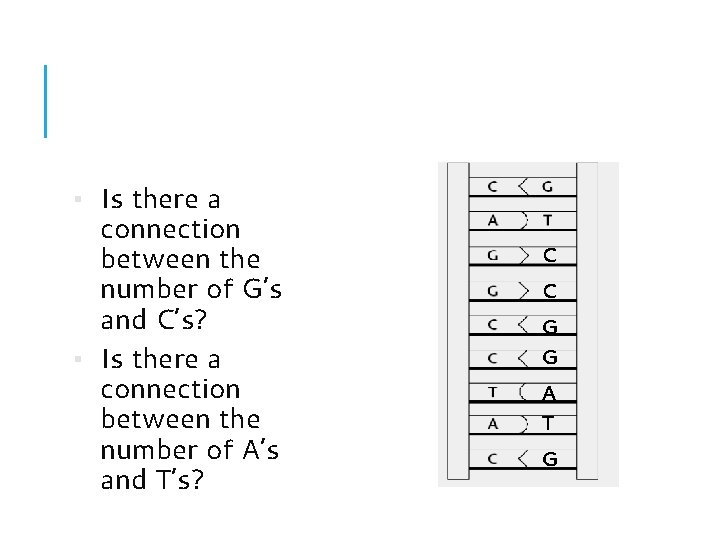
▪ Is there a connection between the number of G’s and C’s? ▪ Is there a connection between the number of A’s and T’s? C C G G A T G
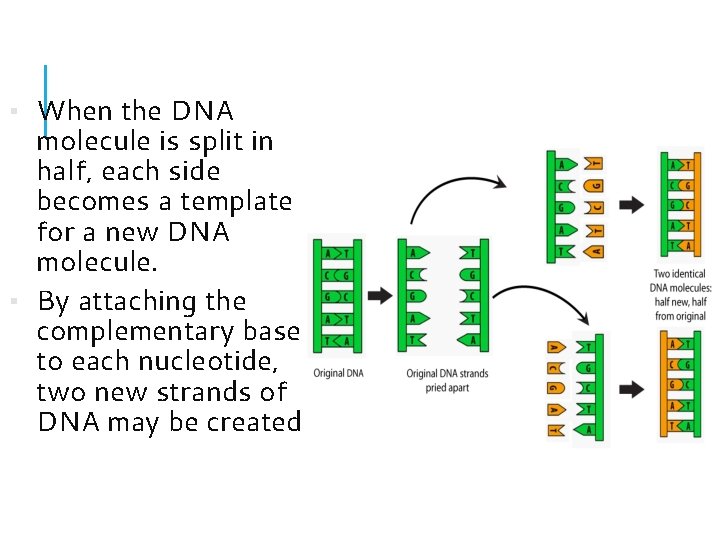
▪ When the DNA molecule is split in half, each side becomes a template for a new DNA molecule. ▪ By attaching the complementary base to each nucleotide, two new strands of DNA may be created.
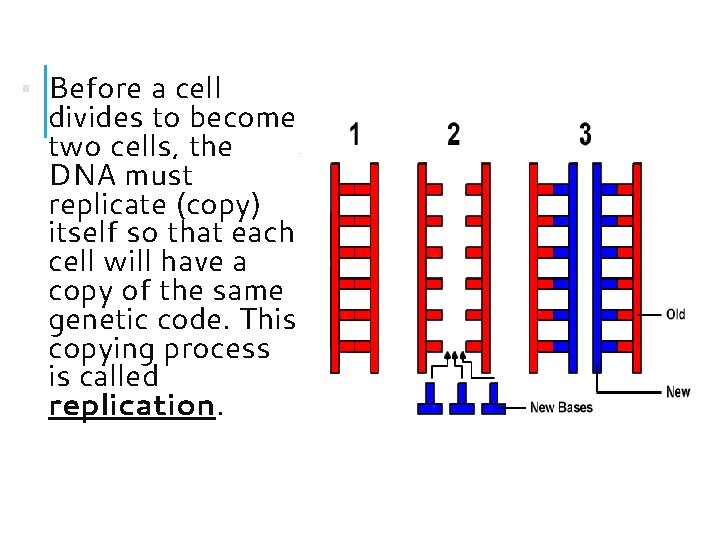
▪ Before a cell divides to become two cells, the DNA must replicate (copy) itself so that each cell will have a copy of the same genetic code. This copying process is called replication.
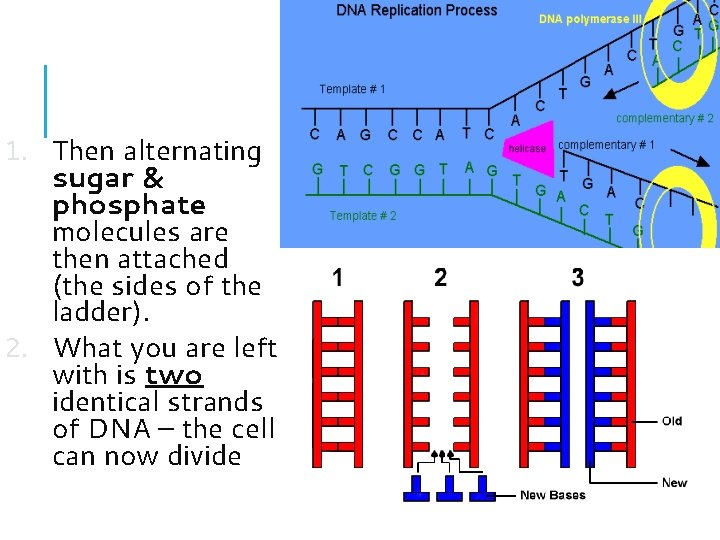
. An enzyme (helicase) comes in and breaks the hydrogen bonds between the base pairs which causes the strand of DNA to split or “unzips” (what is left looks like a ladder cut in two).
A second enzyme called DNA polymerase matches up the appropriate complementary bases
1. Then alternating sugar & phosphate molecules are then attached (the sides of the ladder). 2. What you are left with is two identical strands of DNA – the cell can now divide.
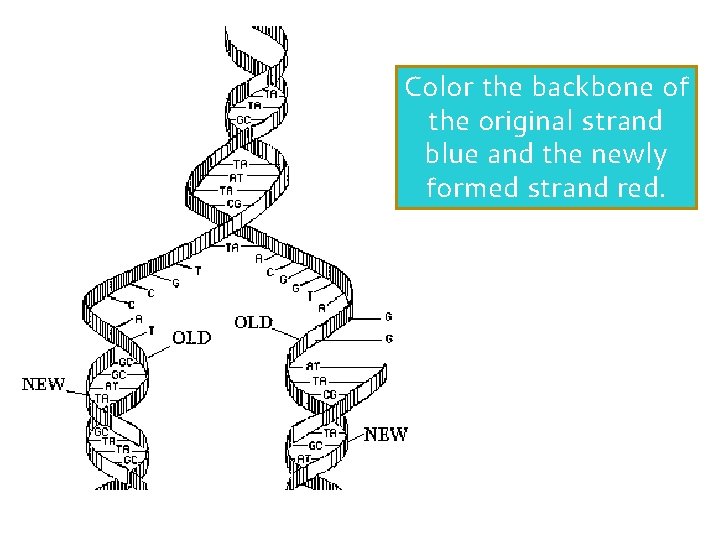
Color the backbone of the original strand blue and the newly formed strand red.