
DFA Minimization Why minimization is important Minimization of


- Slides: 16
DFA Minimization
Why minimization is important? Minimization of a DFA ensures that the resulting DFA (after minimization) has the least possible states. The advantages of having a minimal DFA are: 1. Faster Execution: The more the number of states the more time the DFA will take to process a string, hence minimization ensures faster execution. 2. Low Cost: Cost is always a factor when it comes to designing anything and in the case of DFA; the more the number of states the more the cost. 3. Less Complexity: Having more number of states will always lead to a complex DFA. Hence minimization ensures that the DFA is less complex.
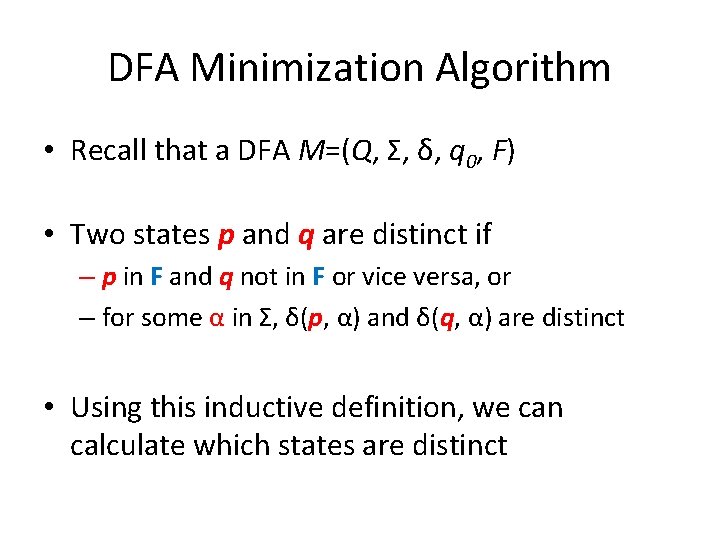
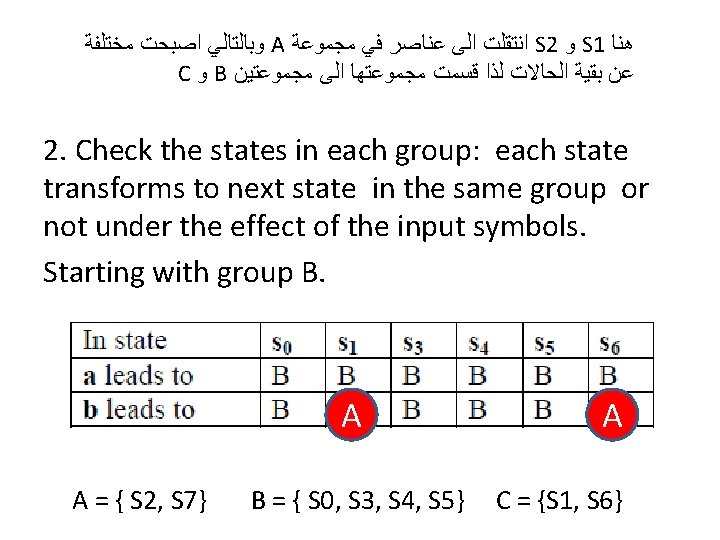
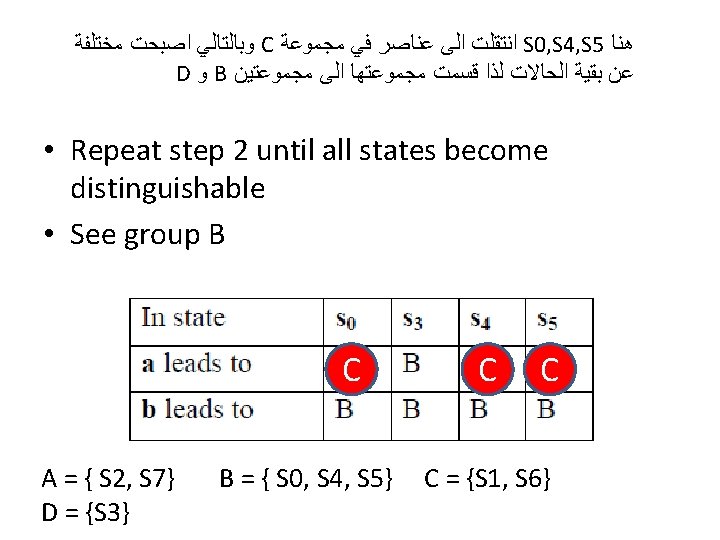
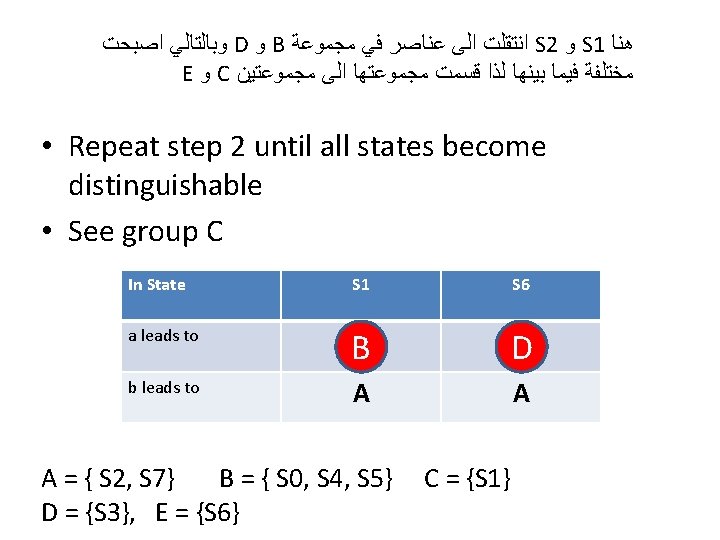
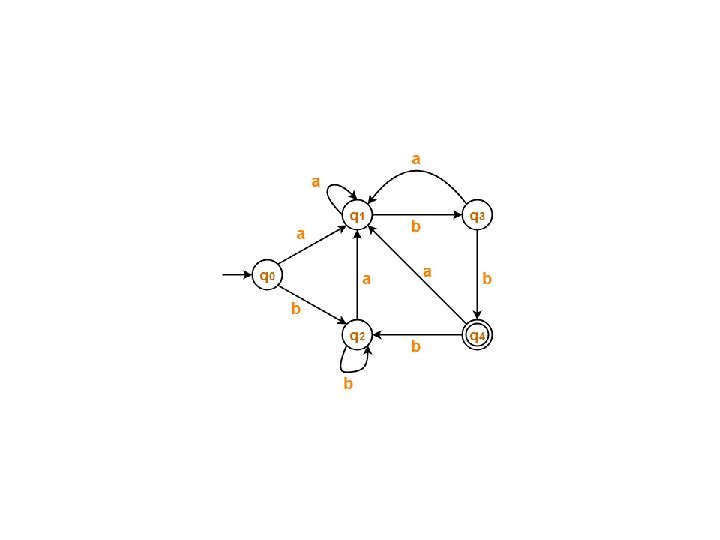
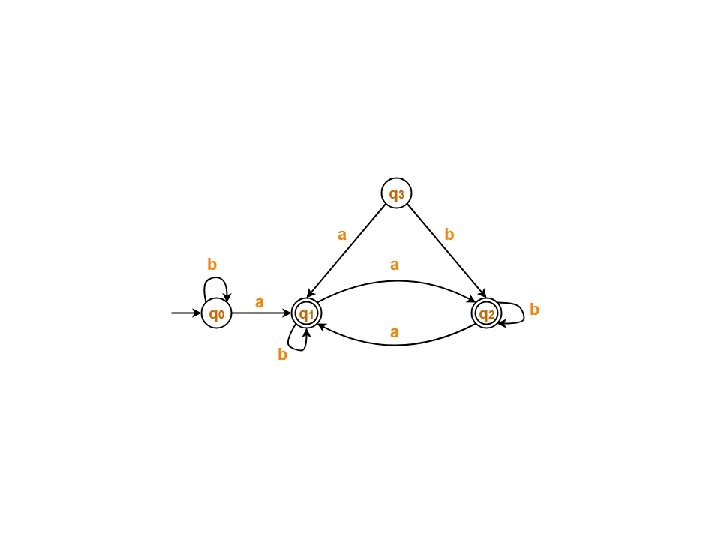
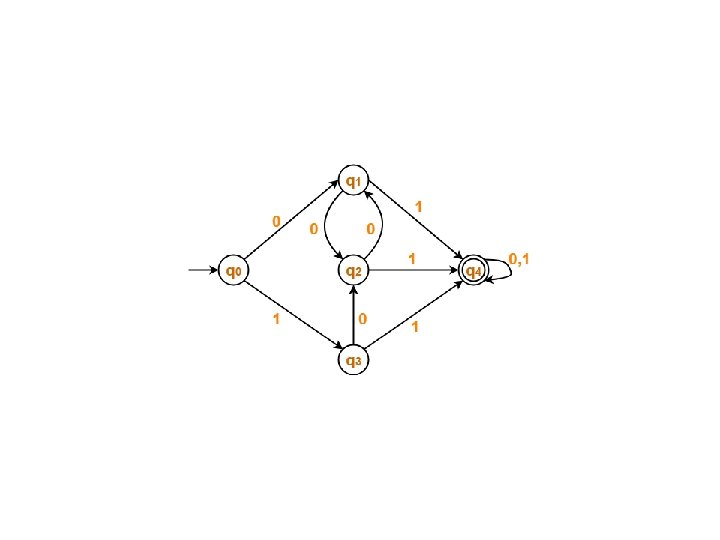
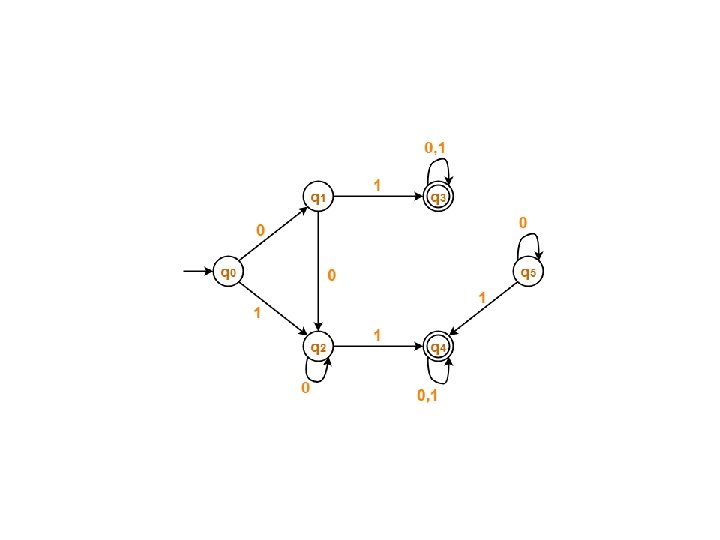
DFA Minimization Algorithm • Recall that a DFA M=(Q, Σ, δ, q 0, F) • Two states p and q are distinct if – p in F and q not in F or vice versa, or – for some α in Σ, δ(p, α) and δ(q, α) are distinct • Using this inductive definition, we can calculate which states are distinct
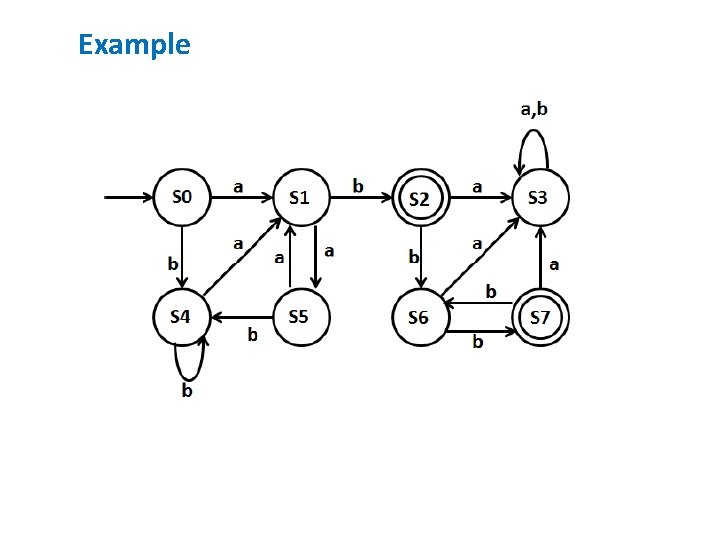
Example
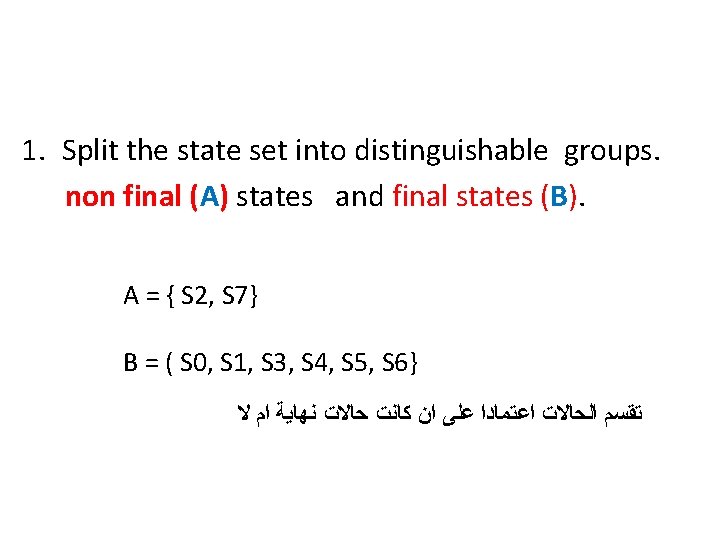
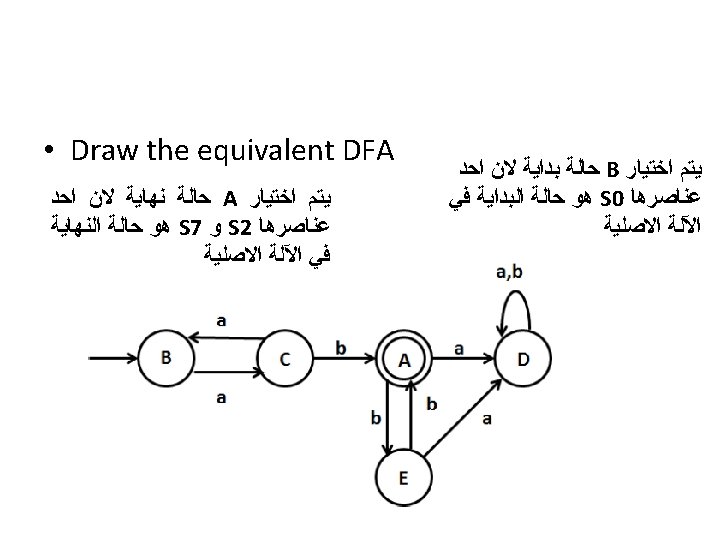
1. Split the state set into distinguishable groups. non final (A) states and final states (B). A = { S 2, S 7} B = ( S 0, S 1, S 3, S 4, S 5, S 6} ﺗﻘﺴﻢ ﺍﻟﺤﺎﻻﺕ ﺍﻋﺘﻤﺎﺩﺍ ﻋﻠﻰ ﺍﻥ ﻛﺎﻧﺖ ﺣﺎﻻﺕ ﻧﻬﺎﻳﺔ ﺍﻡ ﻻ
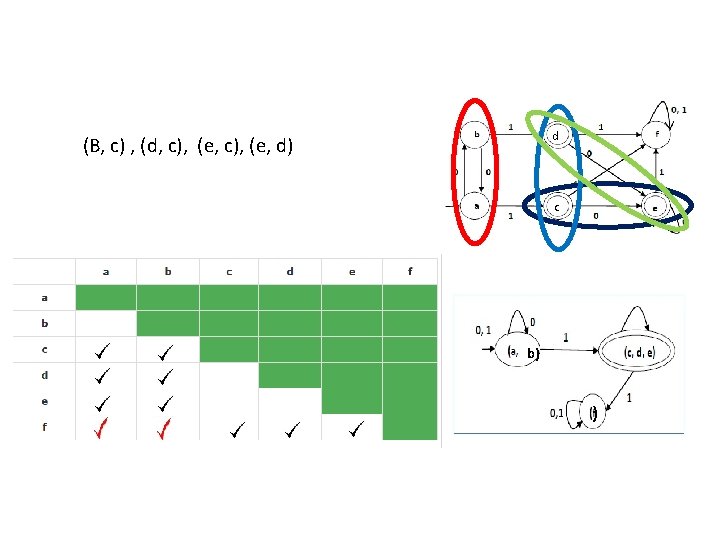
Algorithm Myphill-Nerode Theorem Input − DFA Output − Minimized DFA Step 1 − Draw a table for all pairs of states (Qi, Qj) not necessarily connected directly Step 2 – Mark all state pair (Qi, Qj) in the DFA where Qi ∈ F and Qj ∉ F. [Here F is the set of final states] Step 3 − Repeat this step until we cannot mark anymore states − If there is an unmarked pair (Qi, Qj), mark it if the pair {δ (Qi, A), δ (Qi, A)} is marked for some input alphabet. Step 4 − Combine all the unmarked pair (Qi, Qj) and make them a single state in the reduced DFA.