Developing a selforganised smart tank station for electroplating

- Slides: 14
Developing a self-organised smart tank station for electroplating process plant Presented By: Navya Venkateshaiah University of Wolverhampton Author: Navya Venkateshaiah Ahmad Zakeri Oliver L Iliev
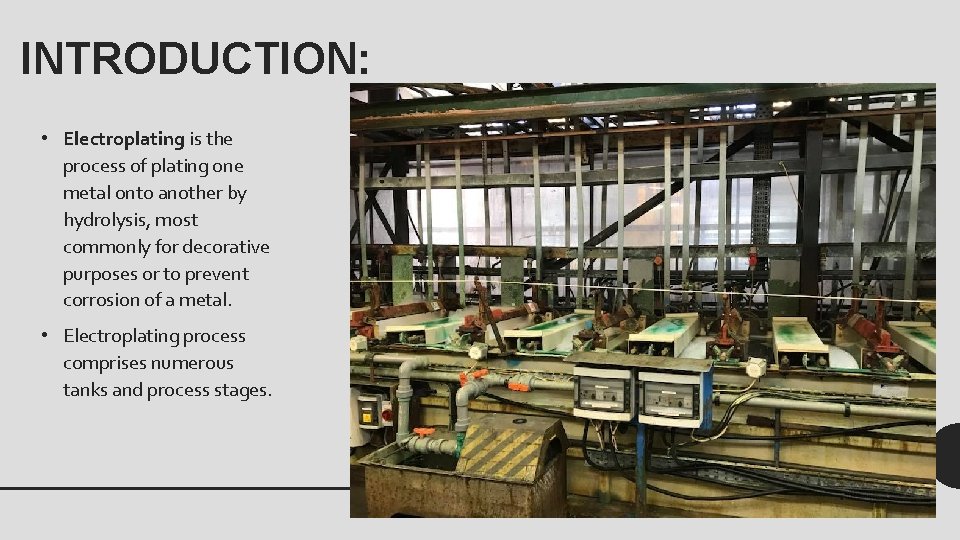
INTRODUCTION: • Electroplating is the process of plating one metal onto another by hydrolysis, most commonly for decorative purposes or to prevent corrosion of a metal. • Electroplating process comprises numerous tanks and process stages.
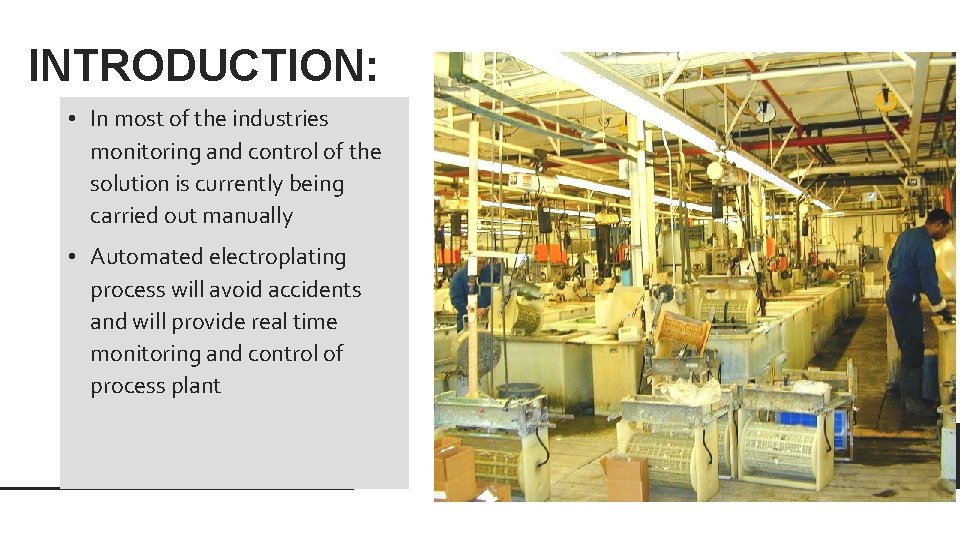
INTRODUCTION: • In most of the industries monitoring and control of the solution is currently being carried out manually • Automated electroplating process will avoid accidents and will provide real time monitoring and control of process plant
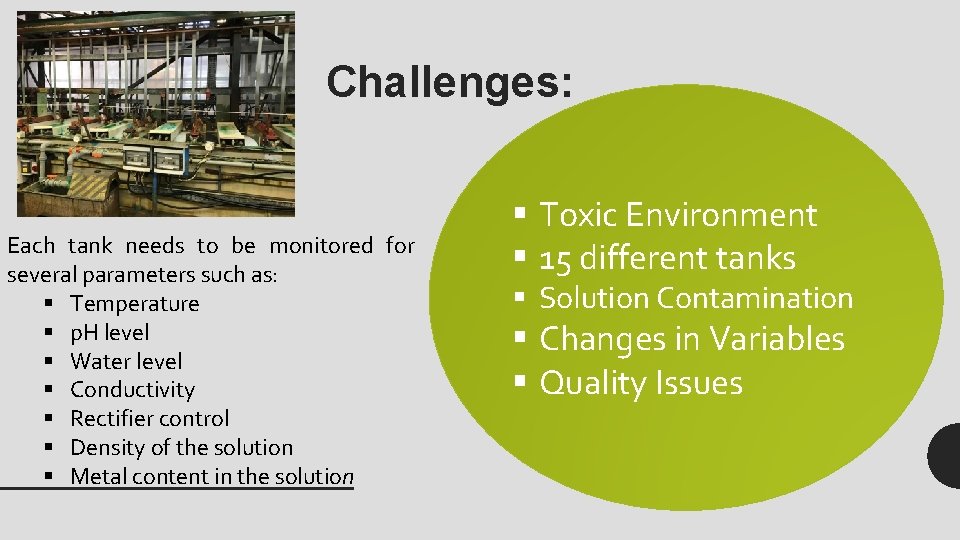
Challenges: Each tank needs to be monitored for several parameters such as: § Temperature § p. H level § Water level § Conductivity § Rectifier control § Density of the solution § Metal content in the solution § Toxic Environment § 15 different tanks § Solution Contamination § Changes in Variables § Quality Issues
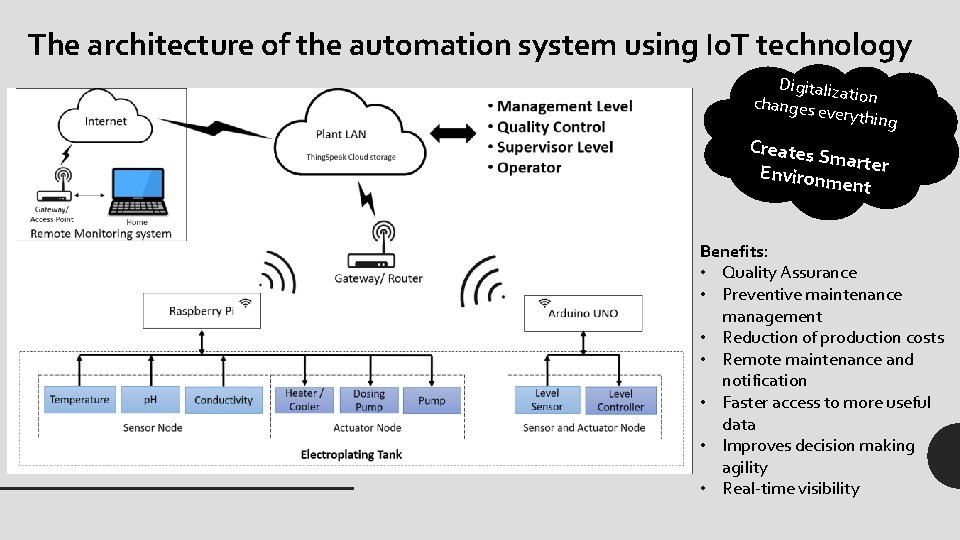
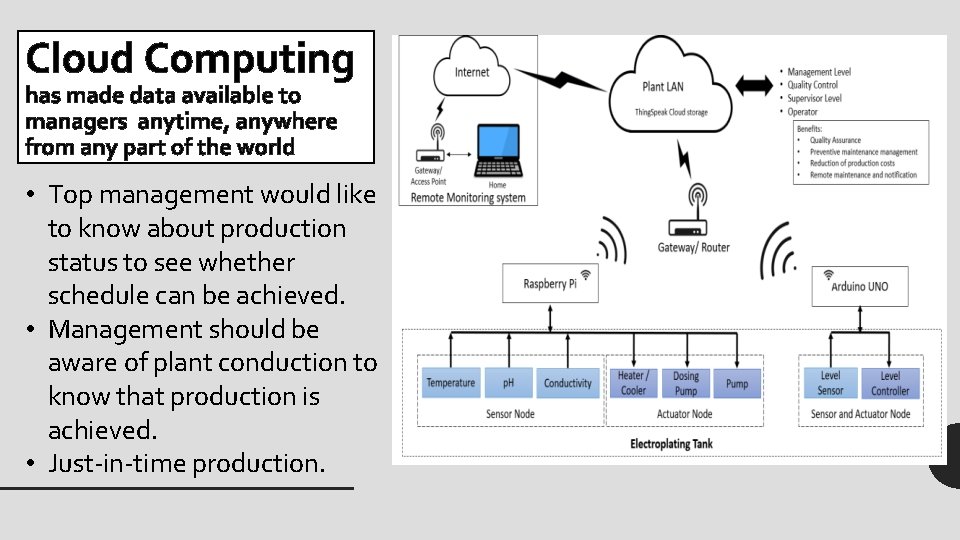
The architecture of the automation system using Io. T technology Digitaliza tion changes everythin g Creates S marter Environm ent Benefits: • Quality Assurance • Preventive maintenance management • Reduction of production costs • Remote maintenance and notification • Faster access to more useful data • Improves decision making agility • Real-time visibility
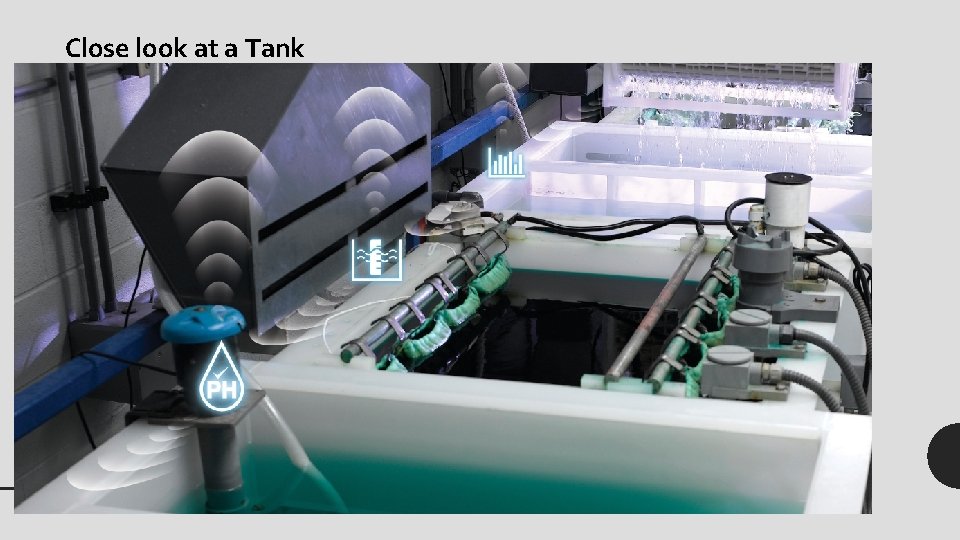
Close look at a Tank
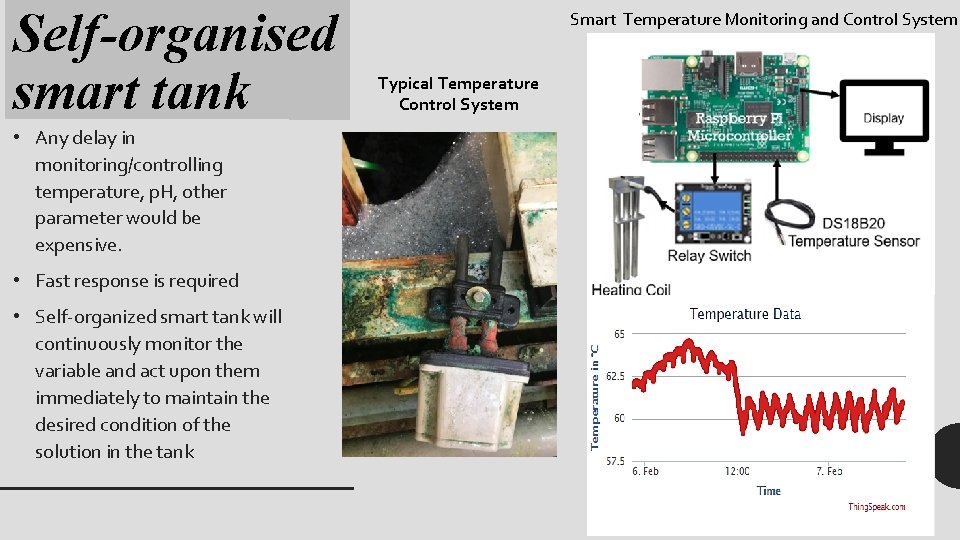
Self-organised smart tank • Any delay in monitoring/controlling temperature, p. H, other parameter would be expensive. • Fast response is required • Self-organized smart tank will continuously monitor the variable and act upon them immediately to maintain the desired condition of the solution in the tank Smart Temperature Monitoring and Control System Typical Temperature Control System
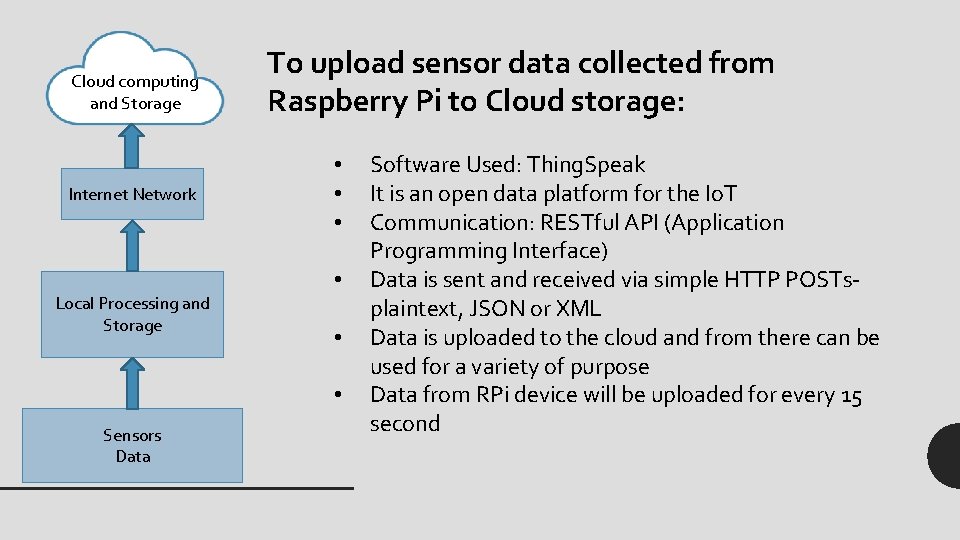
Cloud computing and Storage Internet Network Local Processing and Storage To upload sensor data collected from Raspberry Pi to Cloud storage: • • • Sensors Data Software Used: Thing. Speak It is an open data platform for the Io. T Communication: RESTful API (Application Programming Interface) Data is sent and received via simple HTTP POSTs- plaintext, JSON or XML Data is uploaded to the cloud and from there can be used for a variety of purpose Data from RPi device will be uploaded for every 15 second
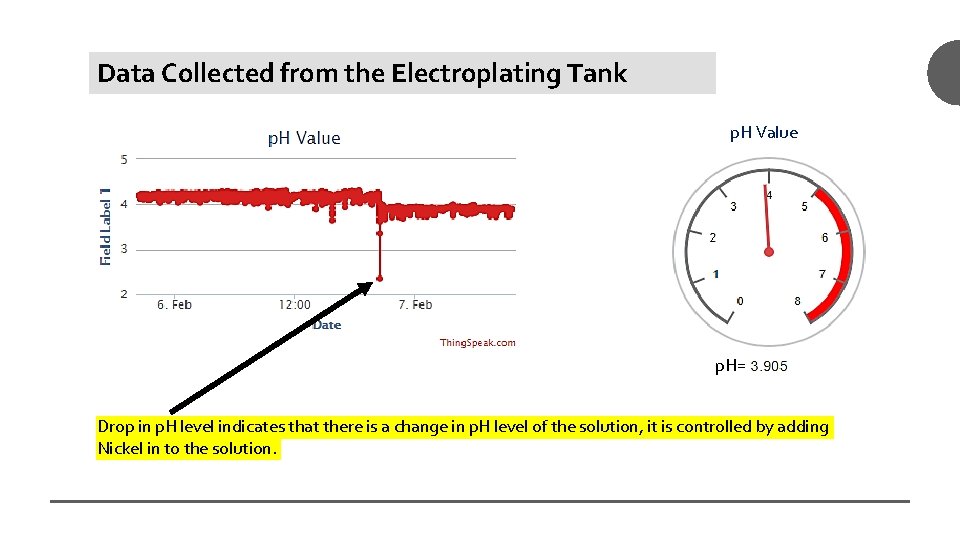
Data Collected from the Electroplating Tank p. H Value p. H= Drop in p. H level indicates that there is a change in p. H level of the solution, it is controlled by adding Nickel in to the solution.
Cloud Computing has made data available to managers anytime, anywhere from any part of the world • Top management would like to know about production status to see whether schedule can be achieved. • Management should be aware of plant conduction to know that production is achieved. • Just-in-time production.
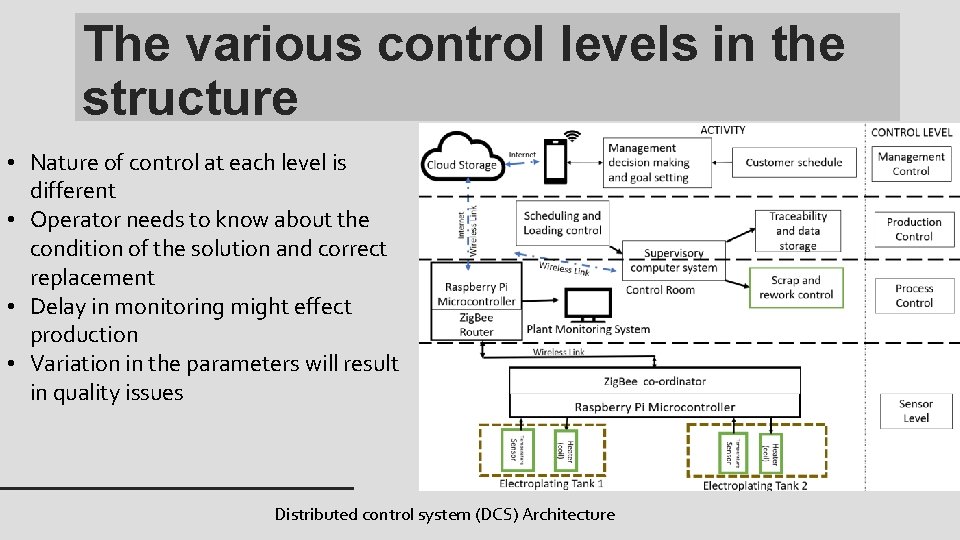
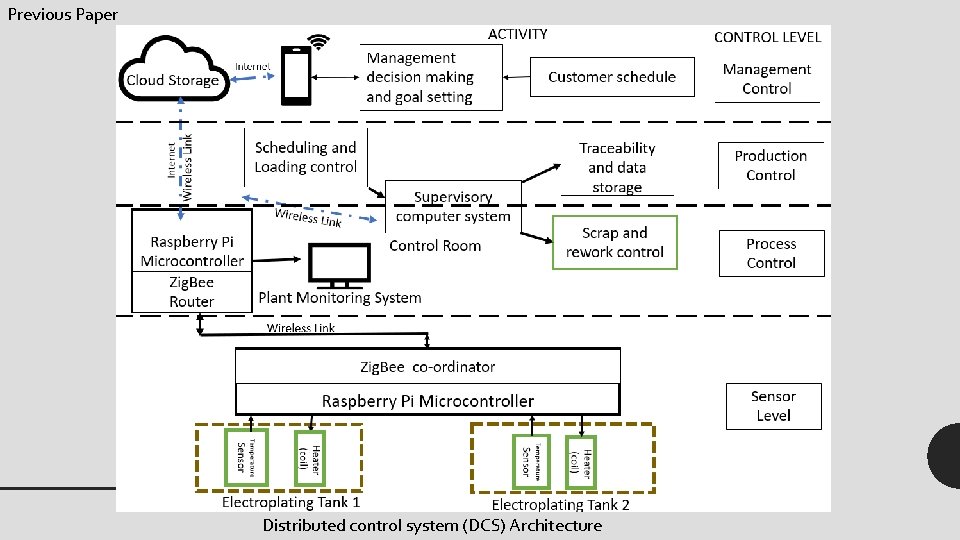
The various control levels in the structure • Nature of control at each level is different • Operator needs to know about the condition of the solution and correct replacement • Delay in monitoring might effect production • Variation in the parameters will result in quality issues Distributed control system (DCS) Architecture
Previous Paper Distributed control system (DCS) Architecture
Conclusion • Smart sensors and actuators for control of all vital variables at process solution are developed in order to maintain it at desired values. • These smart devices have enabled the process tank to be transformed into a smart tank station which will achieve specific quality in plating products. • Real time monitoring is achieved. • Response to change is immediate- desired quality can be achieved, hence waste is reduced. • Production schedule can be met.
Thank you Any Questions?