DET 101 ELECTRIC CIRCUIT FUNDAMENTAL I Chapter 2
- Slides: 33
DET 101 ELECTRIC CIRCUIT FUNDAMENTAL I Chapter 2 Resistive Circuits: Part II
RESISTIVE CIRCUIT: PART II § Series-Parallel § Delta-Wye Transformation
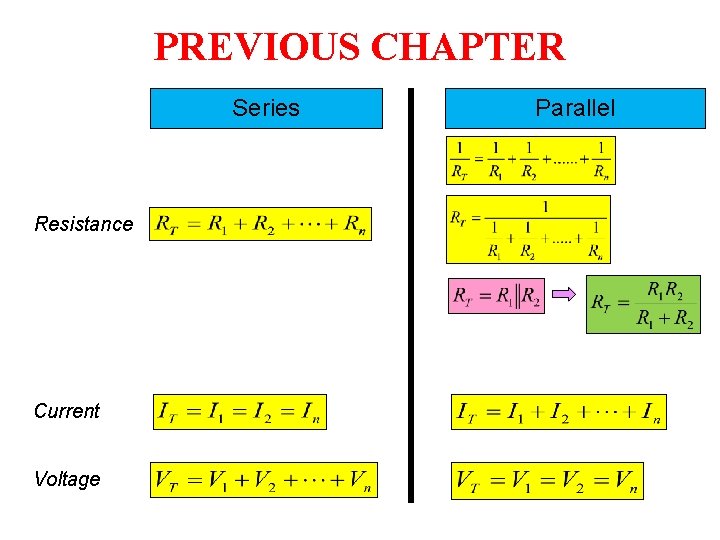
PREVIOUS CHAPTER Series Resistance Current Voltage Parallel
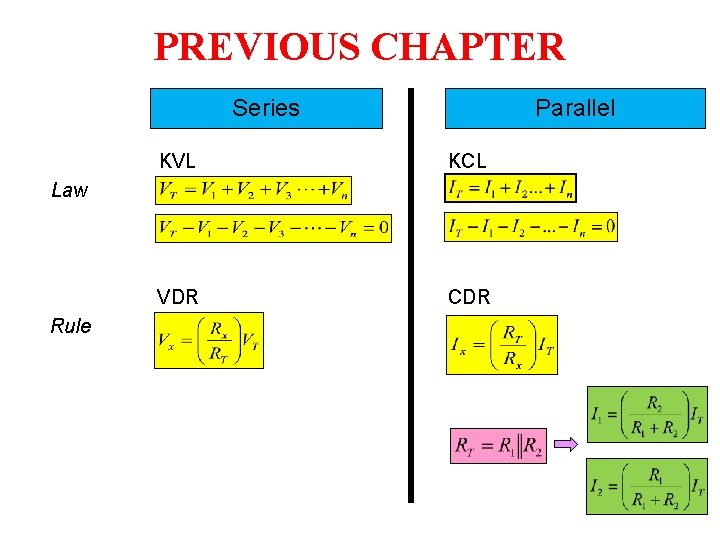
PREVIOUS CHAPTER Series Parallel KVL KCL VDR CDR Law Rule
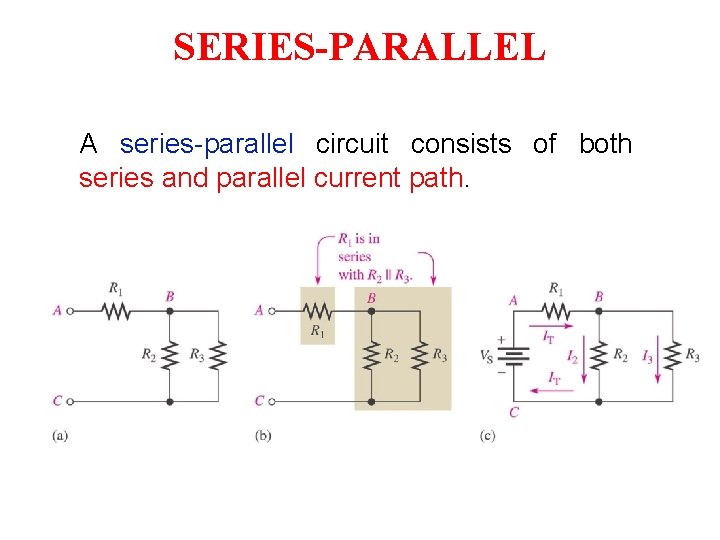
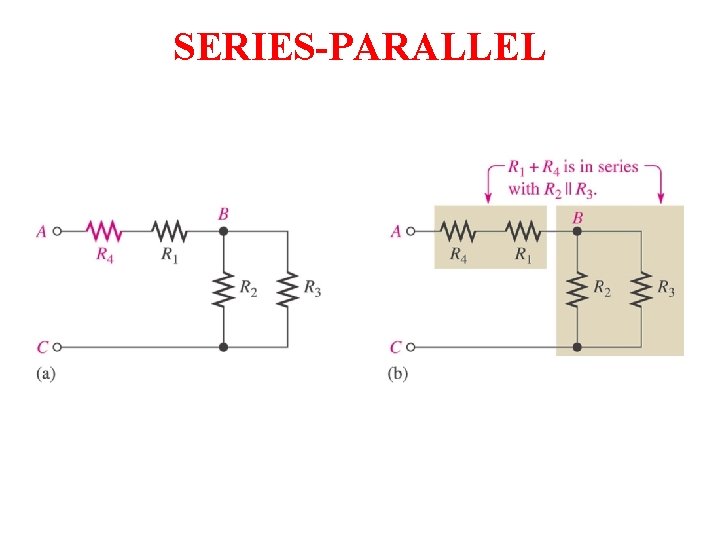
SERIES-PARALLEL A series-parallel circuit consists of both series and parallel current path.
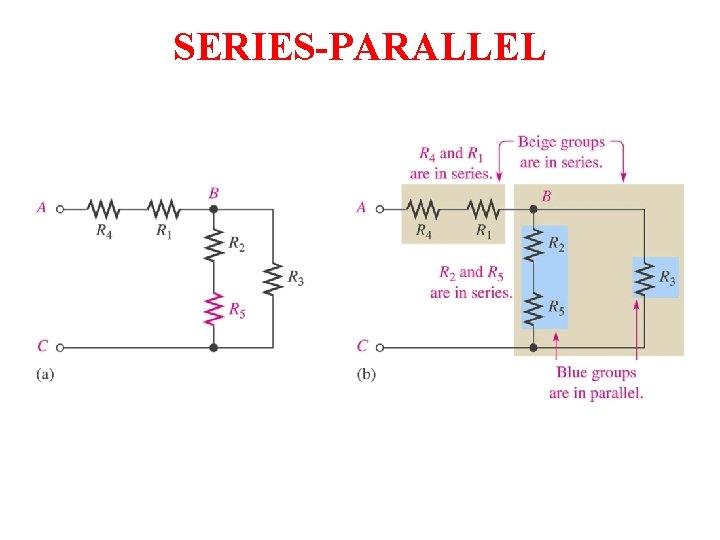
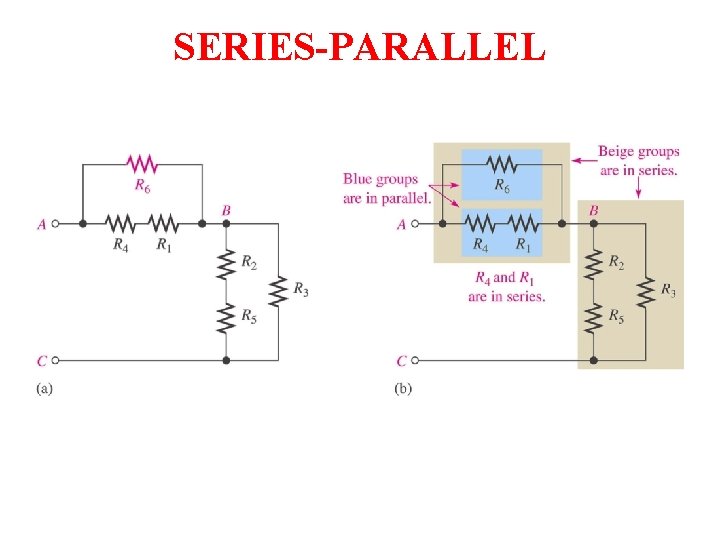
SERIES-PARALLEL § Most practical circuits have combinations of series and parallel components. § An important analysis method is to form an equivalent circuit. § An equivalent circuit is one that has characteristics that are electrically the same as another circuit but is generally simpler.
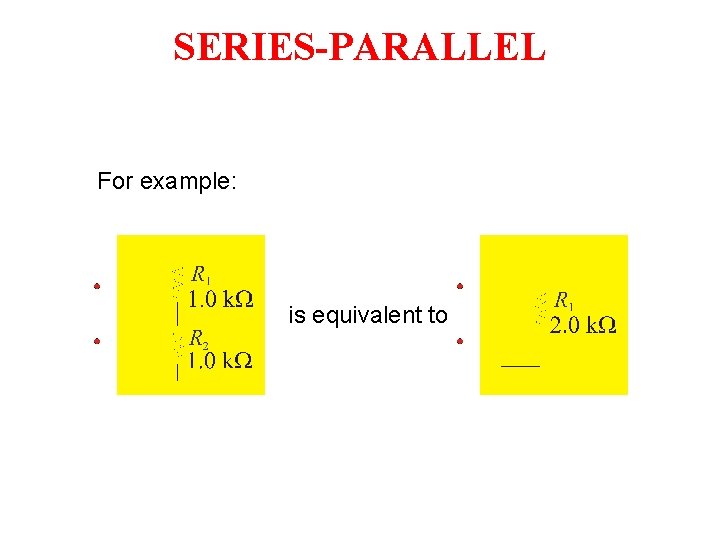
SERIES-PARALLEL For example: is equivalent to
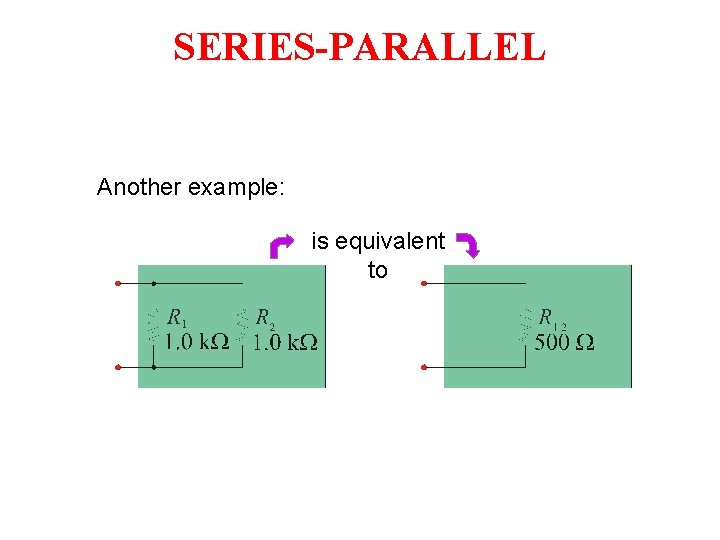
SERIES-PARALLEL Another example: is equivalent to
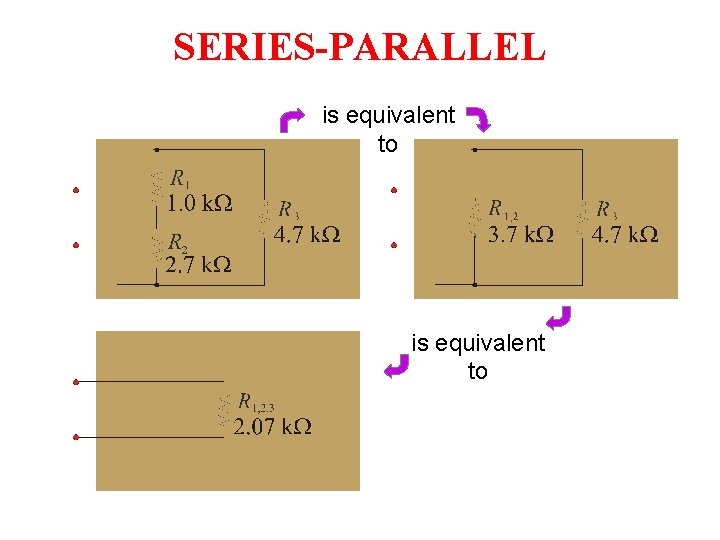
SERIES-PARALLEL is equivalent to
SERIES-PARALLEL
SERIES-PARALLEL
SERIES-PARALLEL
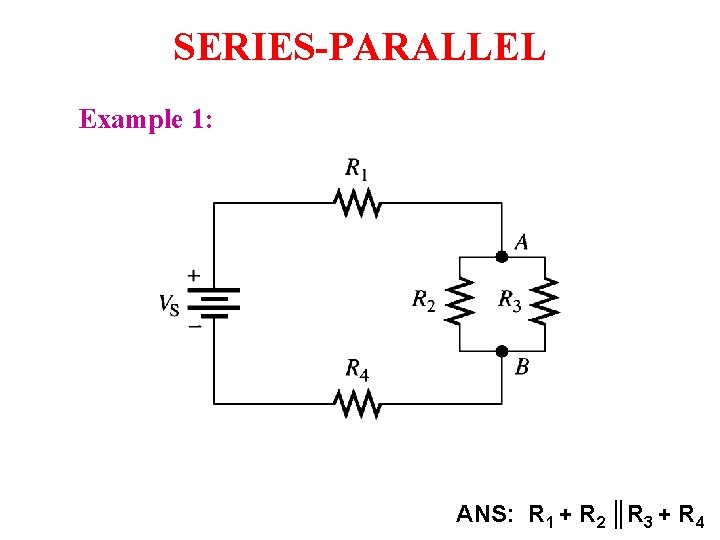
SERIES-PARALLEL Example 1: ANS: R 1 + R 2 ║R 3 + R 4
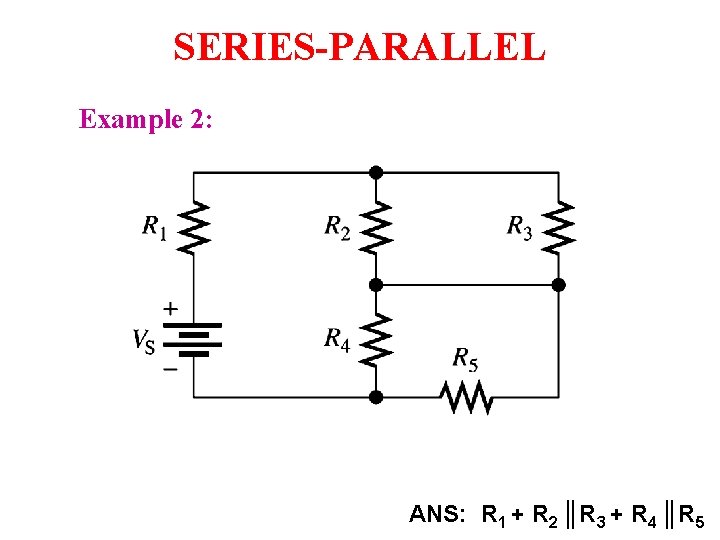
SERIES-PARALLEL Example 2: ANS: R 1 + R 2 ║R 3 + R 4 ║R 5
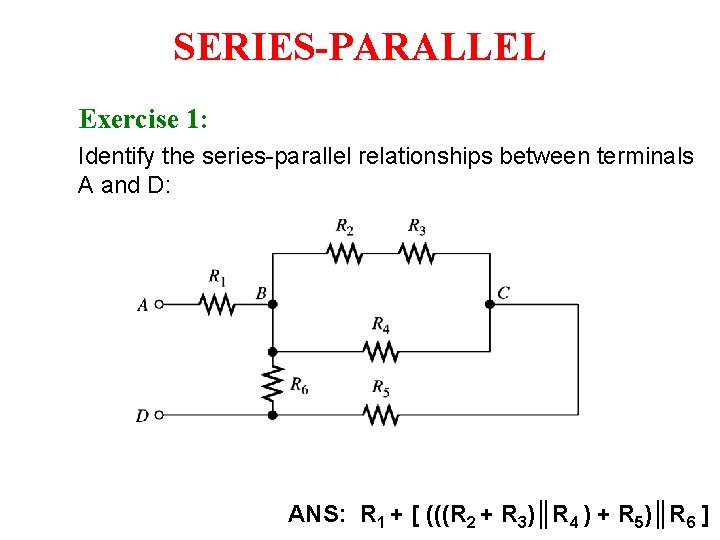
SERIES-PARALLEL Exercise 1: Identify the series-parallel relationships between terminals A and D: ANS: R 1 + [ (((R 2 + R 3)║R 4 ) + R 5)║R 6 ]
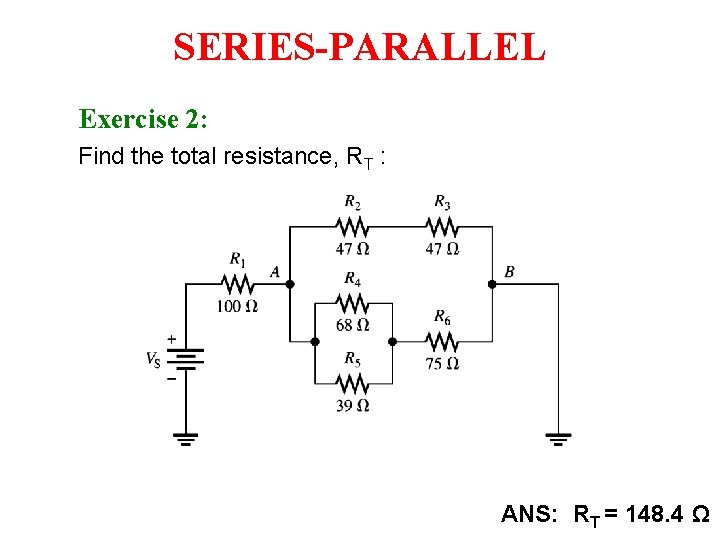
SERIES-PARALLEL Exercise 2: Find the total resistance, RT : ANS: RT = 148. 4 Ω
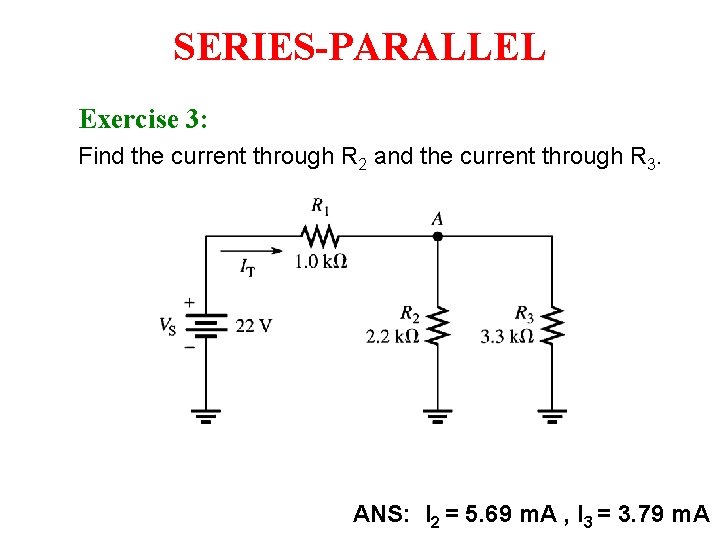
SERIES-PARALLEL Exercise 3: Find the current through R 2 and the current through R 3. ANS: I 2 = 5. 69 m. A , I 3 = 3. 79 m. A
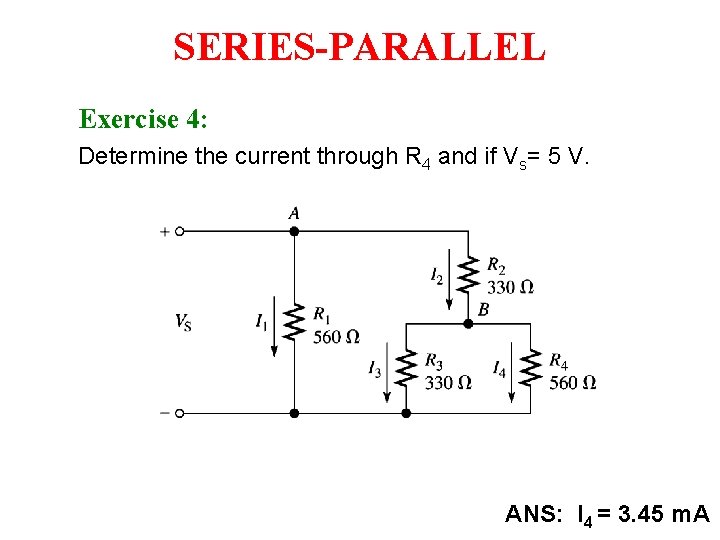
SERIES-PARALLEL Exercise 4: Determine the current through R 4 and if Vs= 5 V. ANS: I 4 = 3. 45 m. A
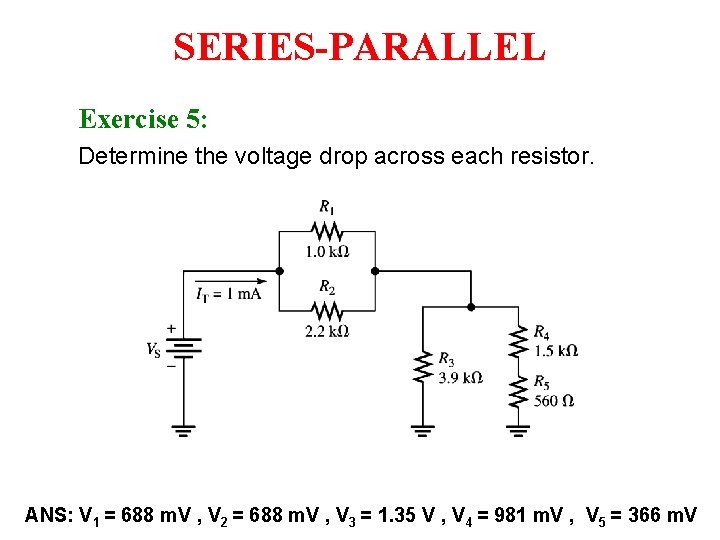
SERIES-PARALLEL Exercise 5: Determine the voltage drop across each resistor. ANS: V 1 = 688 m. V , V 2 = 688 m. V , V 3 = 1. 35 V , V 4 = 981 m. V , V 5 = 366 m. V
∆-TO-Y AND Y-TO-∆ Wye-Delta (and vice versa) Transformation § The Y-Δ transform, also written wye-delta and also known by many other names, is a mathematical technique to simplify the analysis of an electrical network. § The aim is to analyse the circuit when the resistors are neither in parallel nor in series.
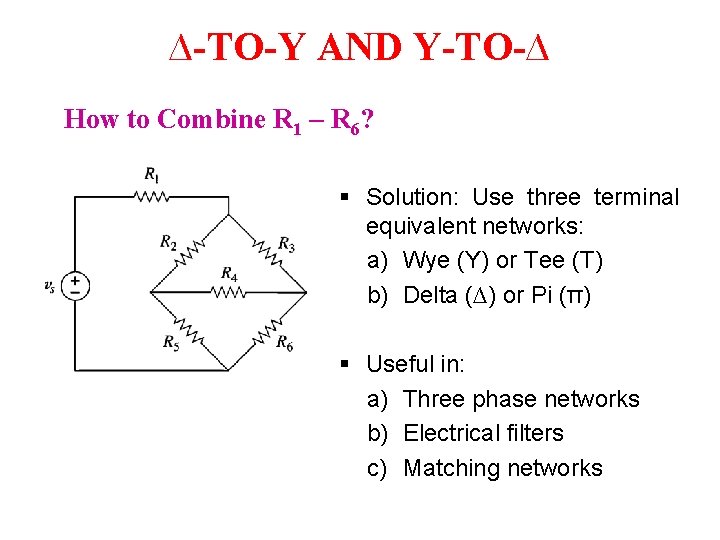
∆-TO-Y AND Y-TO-∆ How to Combine R 1 – R 6? § Solution: Use three terminal equivalent networks: a) Wye (Y) or Tee (T) b) Delta (∆) or Pi (π) § Useful in: a) Three phase networks b) Electrical filters c) Matching networks
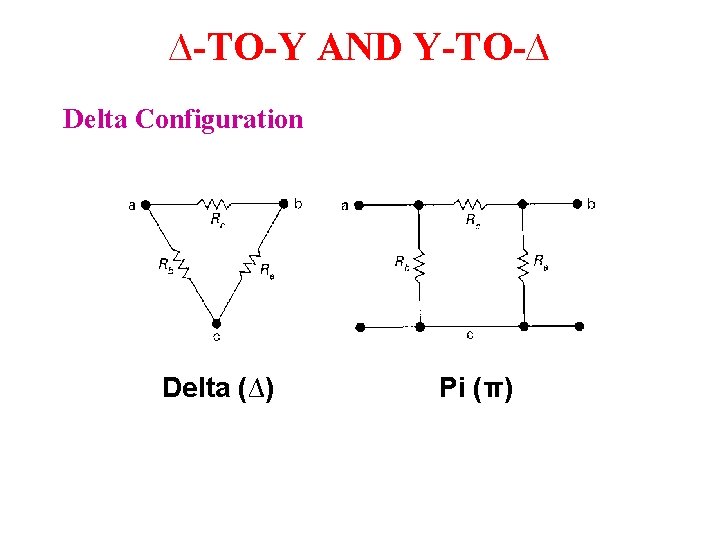
∆-TO-Y AND Y-TO-∆ Delta Configuration Delta (∆) Pi (π)
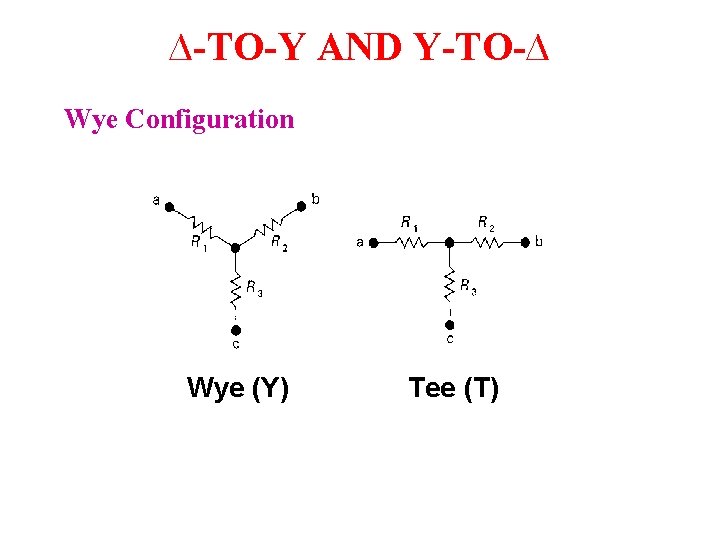
∆-TO-Y AND Y-TO-∆ Wye Configuration Wye (Y) Tee (T)
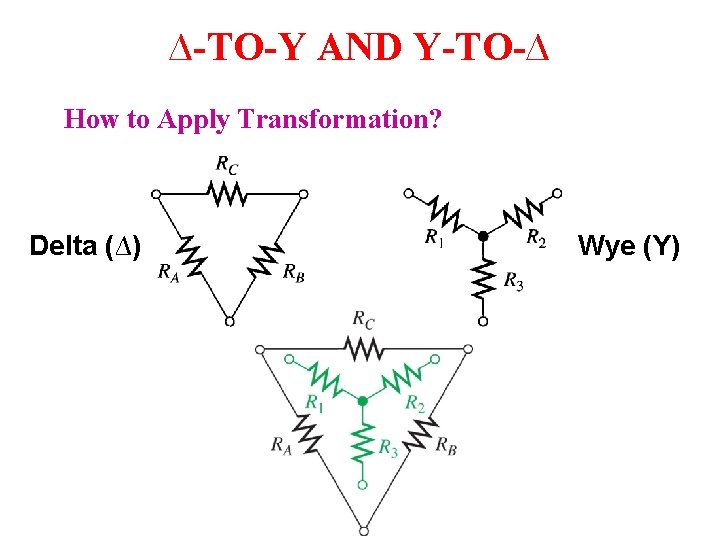
∆-TO-Y AND Y-TO-∆ How to Apply Transformation? Delta (∆) Wye (Y)
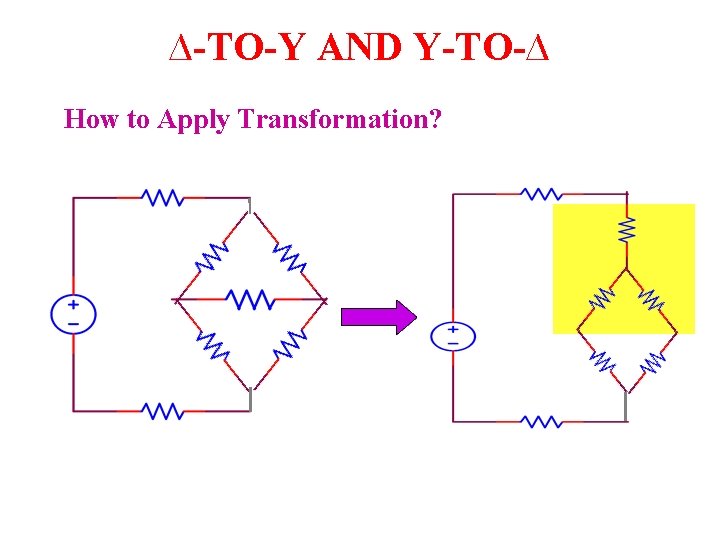
∆-TO-Y AND Y-TO-∆ How to Apply Transformation?
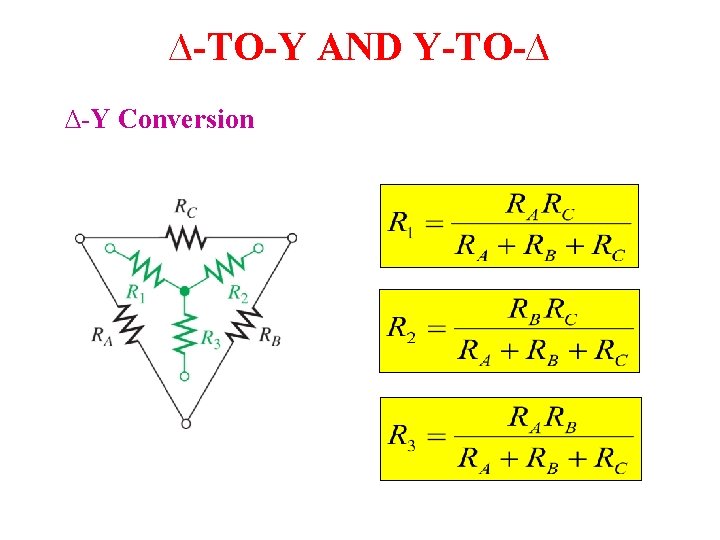
∆-TO-Y AND Y-TO-∆ ∆-Y Conversion
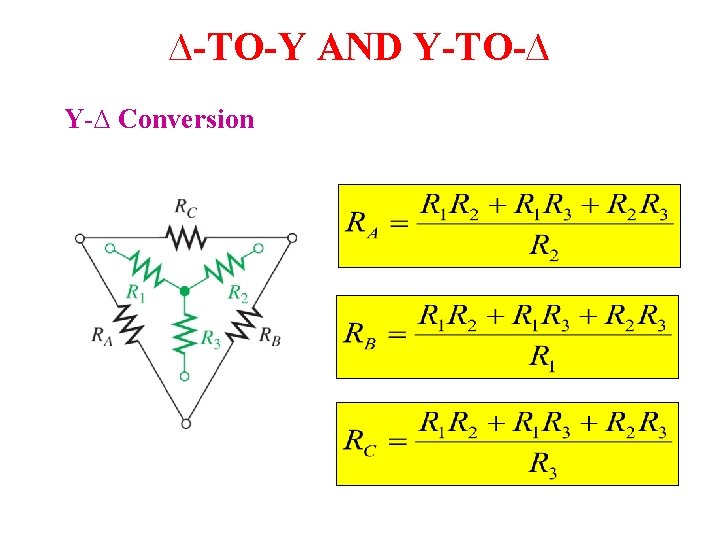
∆-TO-Y AND Y-TO-∆ Y-∆ Conversion
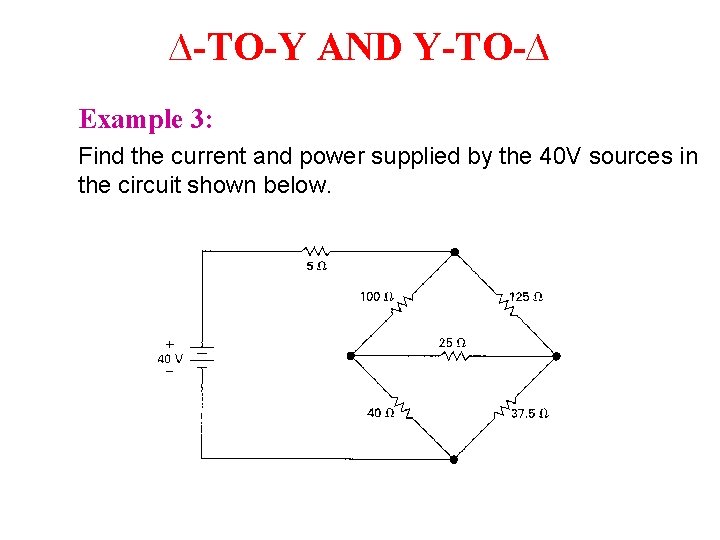
∆-TO-Y AND Y-TO-∆ Example 3: Find the current and power supplied by the 40 V sources in the circuit shown below.
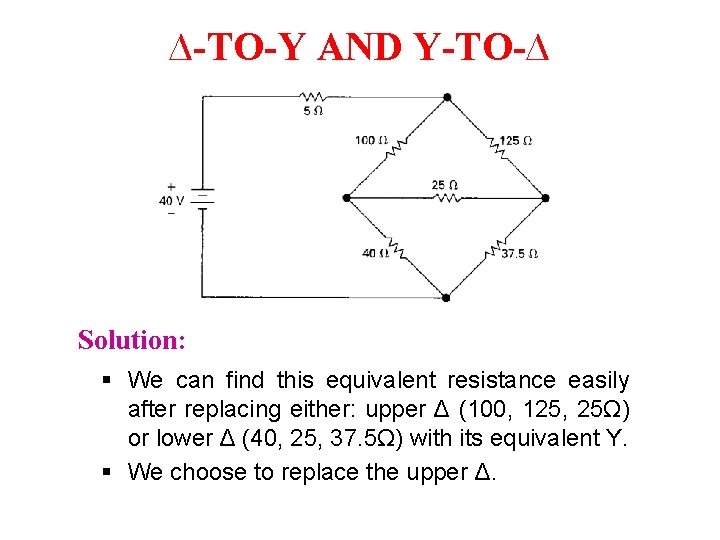
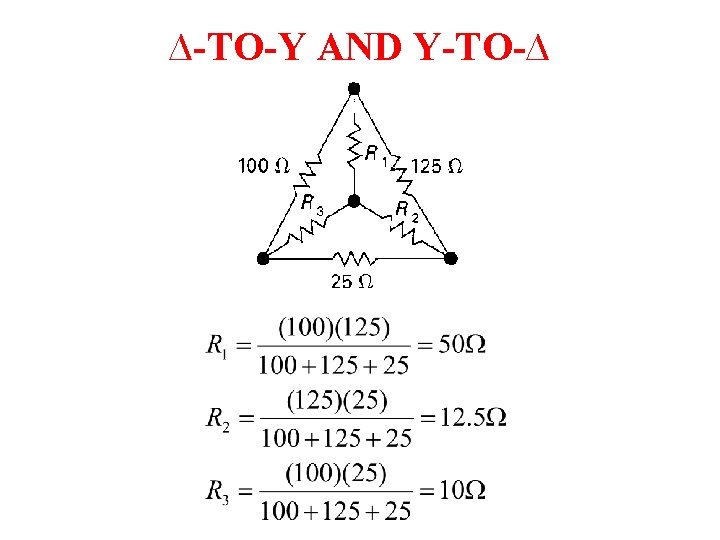
∆-TO-Y AND Y-TO-∆ Solution: § We can find this equivalent resistance easily after replacing either: upper Δ (100, 125, 25Ω) or lower Δ (40, 25, 37. 5Ω) with its equivalent Y. § We choose to replace the upper Δ.
∆-TO-Y AND Y-TO-∆
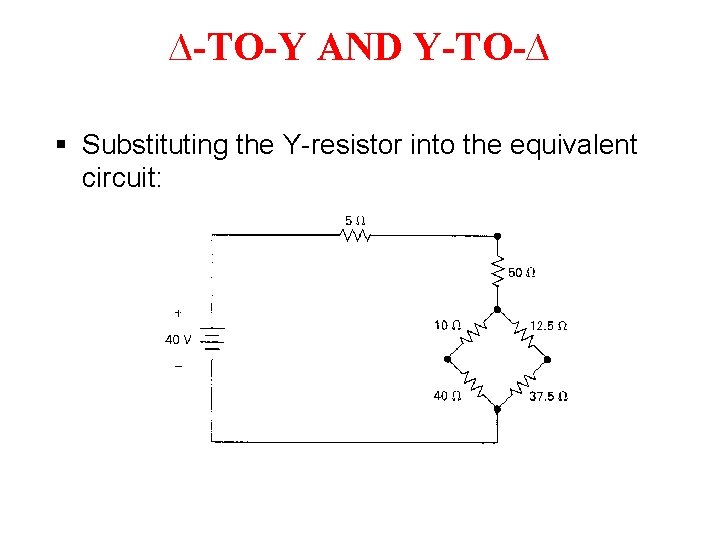
∆-TO-Y AND Y-TO-∆ § Substituting the Y-resistor into the equivalent circuit:
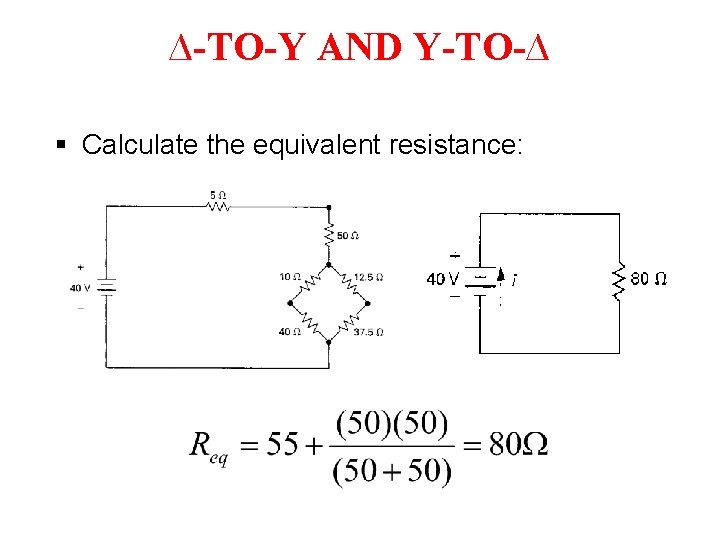
∆-TO-Y AND Y-TO-∆ § Calculate the equivalent resistance:
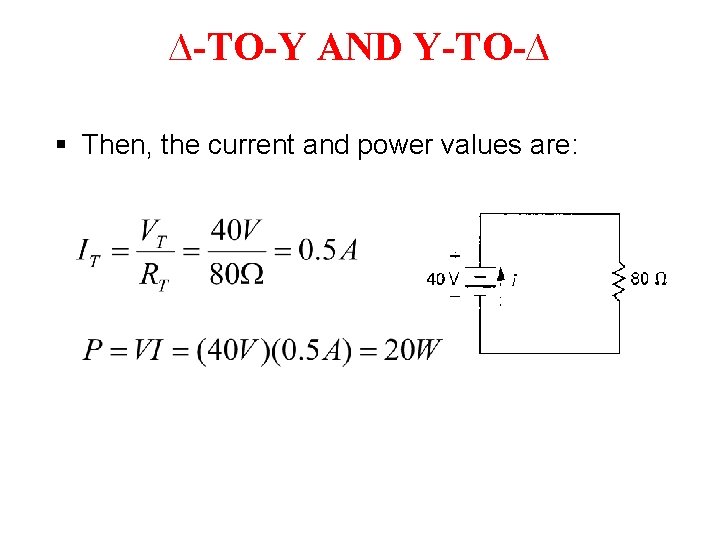
∆-TO-Y AND Y-TO-∆ § Then, the current and power values are: