Democracy Develops in England 10 2 PROLOGUE 3
- Slides: 21
Democracy Develops in England 10. 2 PROLOGUE 3 PG. 18 -23
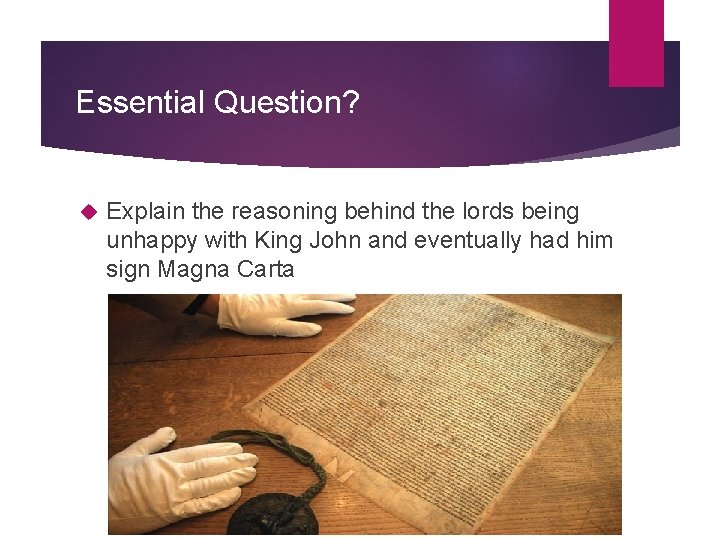
Essential Question? Explain the reasoning behind the lords being unhappy with King John and eventually had him sign Magna Carta
MAIN IDEA - (Power and Authority) England began to develop democratic institutions that limited the power of the monarch WHY IT MATTERS NOW- Democratic traditions that developed in England have influenced many countries, including the United States
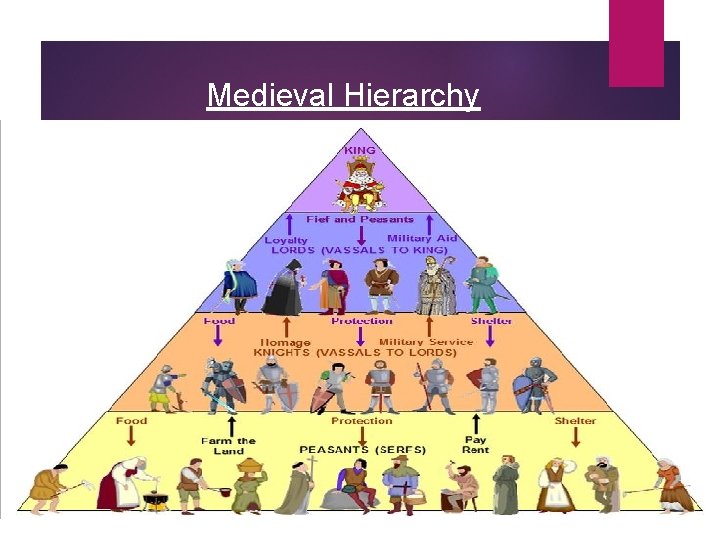
Medieval Hierarchy
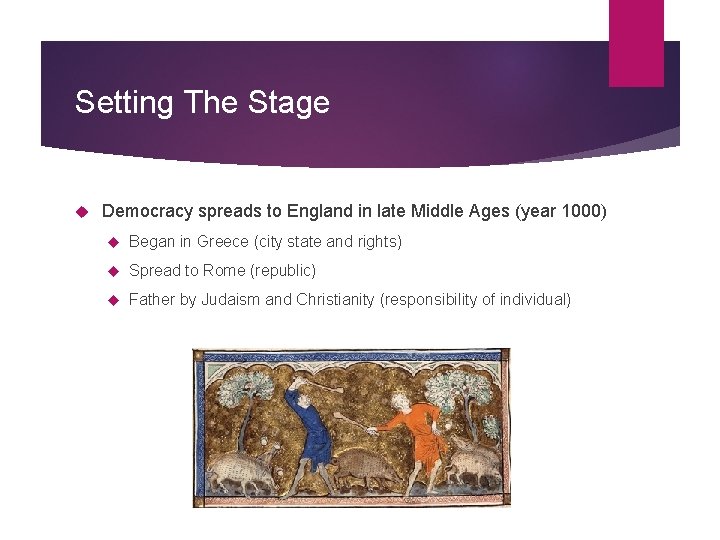
Setting The Stage Democracy spreads to England in late Middle Ages (year 1000) Began in Greece (city state and rights) Spread to Rome (republic) Father by Judaism and Christianity (responsibility of individual)
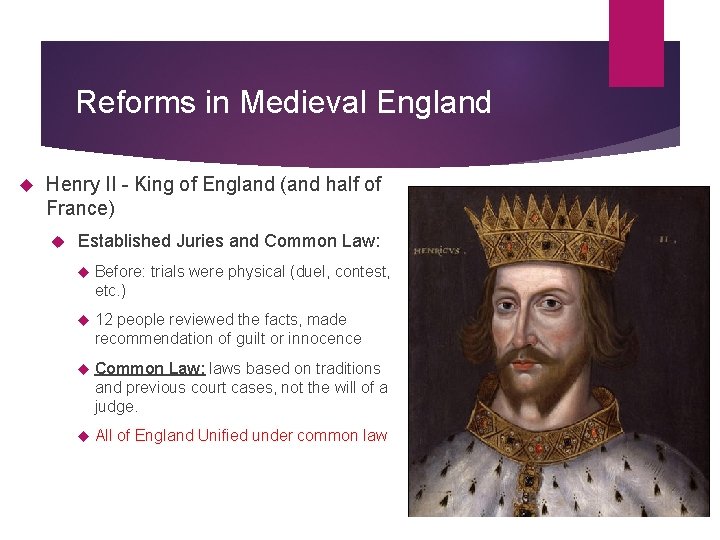
Reforms in Medieval England Henry II - King of England (and half of France) Established Juries and Common Law: Before: trials were physical (duel, contest, etc. ) 12 people reviewed the facts, made recommendation of guilt or innocence Common Law: laws based on traditions and previous court cases, not the will of a judge. All of England Unified under common law
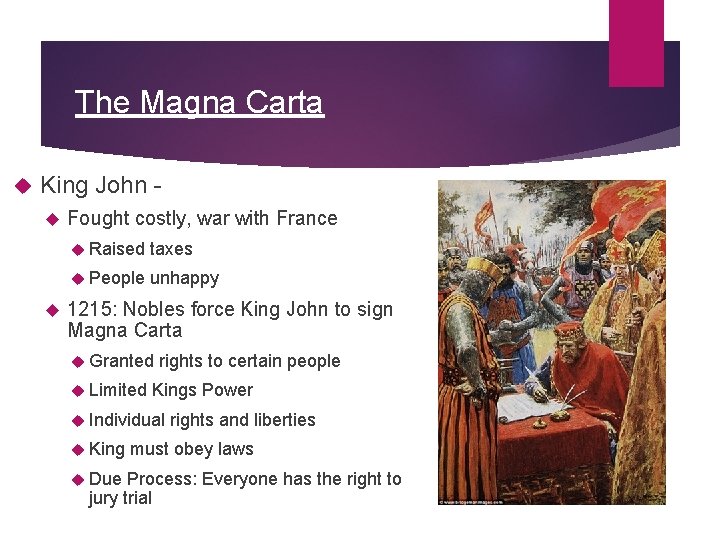
The Magna Carta King John Fought costly, war with France Raised taxes People unhappy 1215: Nobles force King John to sign Magna Carta Granted Limited rights to certain people Kings Power Individual King Due rights and liberties must obey laws Process: Everyone has the right to jury trial
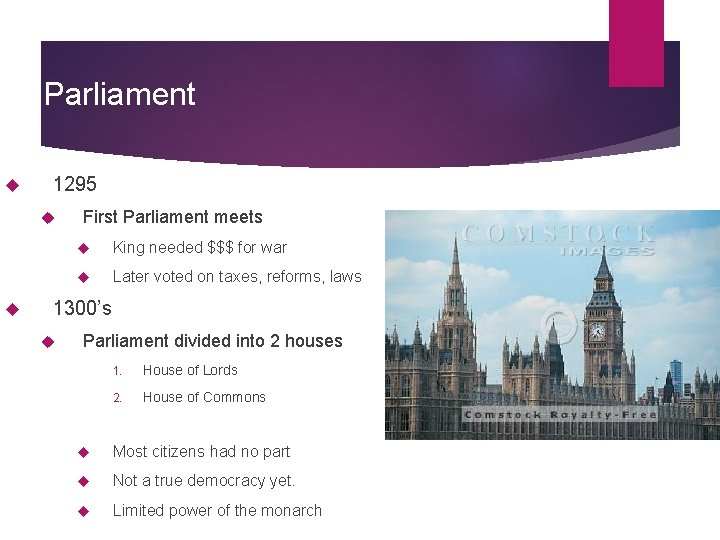
Parliament 1295 First Parliament meets King needed $$$ for war Later voted on taxes, reforms, laws 1300’s Parliament divided into 2 houses 1. House of Lords 2. House of Commons Most citizens had no part Not a true democracy yet. Limited power of the monarch
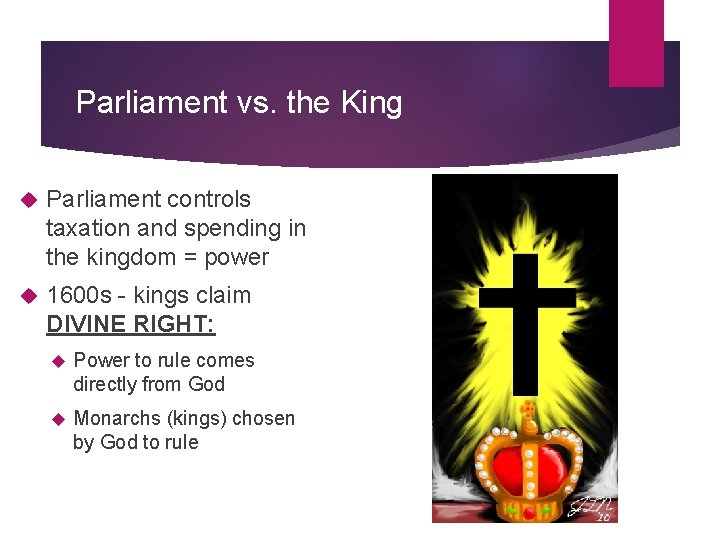
Parliament vs. the King Parliament controls taxation and spending in the kingdom = power 1600 s - kings claim DIVINE RIGHT: Power to rule comes directly from God Monarchs (kings) chosen by God to rule
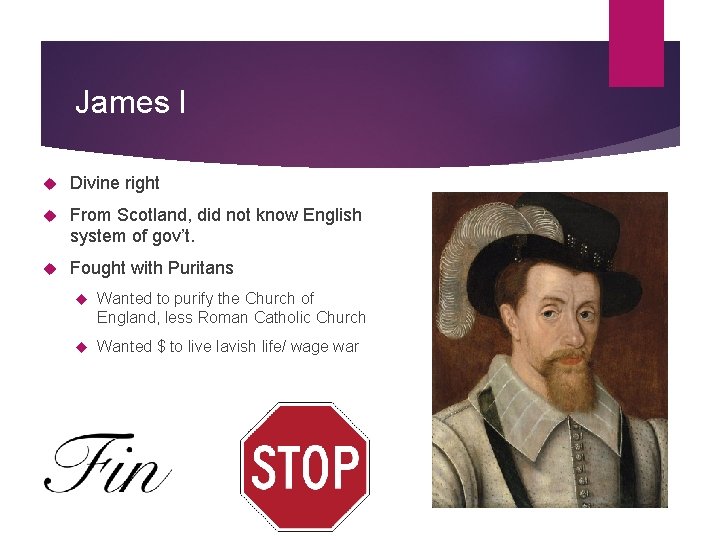
James I Divine right From Scotland, did not know English system of gov’t. Fought with Puritans Wanted to purify the Church of England, less Roman Catholic Church Wanted $ to live lavish life/ wage war
The English Civil War Parliament vs. the King Royalists: support King Anti-royalists: support Parliament Anti-royalists win the war, put King on trial Charles is executed, 1629 Oliver Cromwell placed in charge of Parliament
The Restoration Cromwell dissolves Parliament, establishes Protectorate Many unhappy Cromwell dies in 1658, 5 years of rule The Restoration Charles II asked to rule by Parliament 1679: Habeas Corpus Act: Police must produce arrested person in court Must be told why they are on trial Person cannot be held without a reason
Glorious Revolution Charles dies, James II is King James is Catholic (England is Church of England) Marries Catholic woman, she’s pregnant Catholic son will rule England Protestants angry Force King from the throne, give throne to his daughter Mary, and her husband William Both Protestants No bloodshed, power transferred = Bloodless Revolution
Constitutional Monarchy William and Mary, king and queen Powers of the monarch restricted by a formal document, or constitution Agreement between King and Parliament
English Bill of Rights 1689 - William and Mary agree to accept INDIVIDUAL RIGHTS in England Provided free speech Limited power (further) of the king Formalized the Petition of Right, cannot be broken
England’s Legacy Glorious Revolution + Bill of Rights: Citizens guaranteed: Rule of law Parliamentary gov’t. Individual rights Constitutional Monarchy English Civil War + Bill of Rights +Enlightenment = American and French Revolutions…
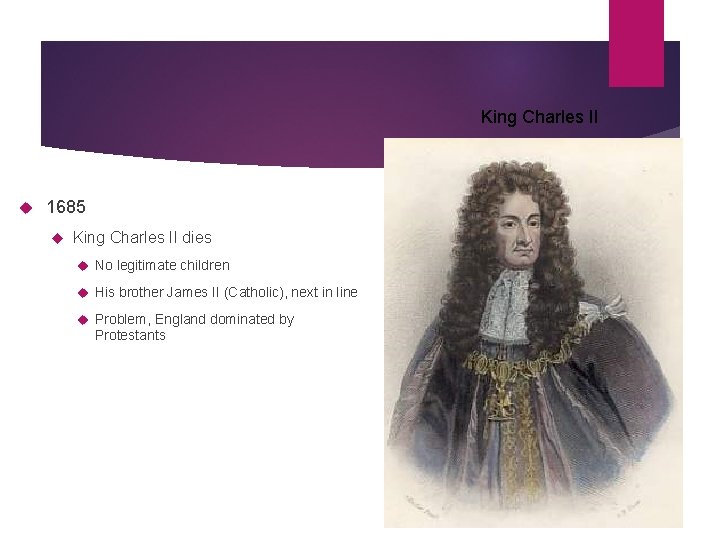
King Charles II 1685 King Charles II dies No legitimate children His brother James II (Catholic), next in line Problem, England dominated by Protestants
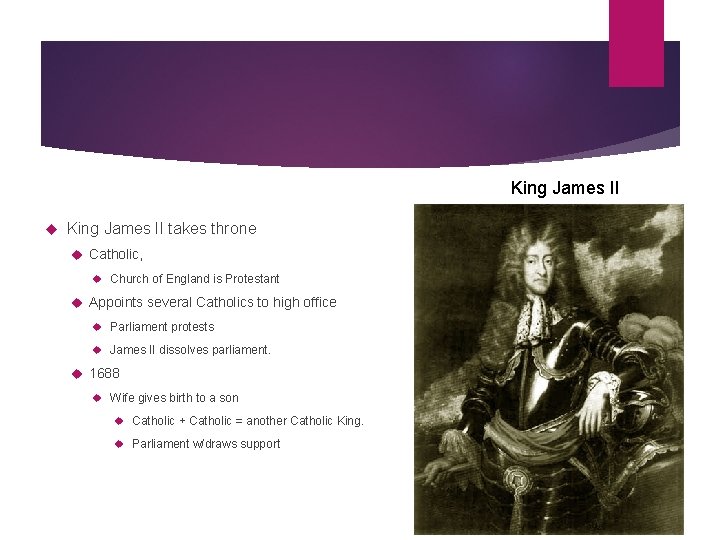
King James II takes throne Catholic, Church of England is Protestant Appoints several Catholics to high office Parliament protests James II dissolves parliament. 1688 Wife gives birth to a son Catholic + Catholic = another Catholic King. Parliament w/draws support
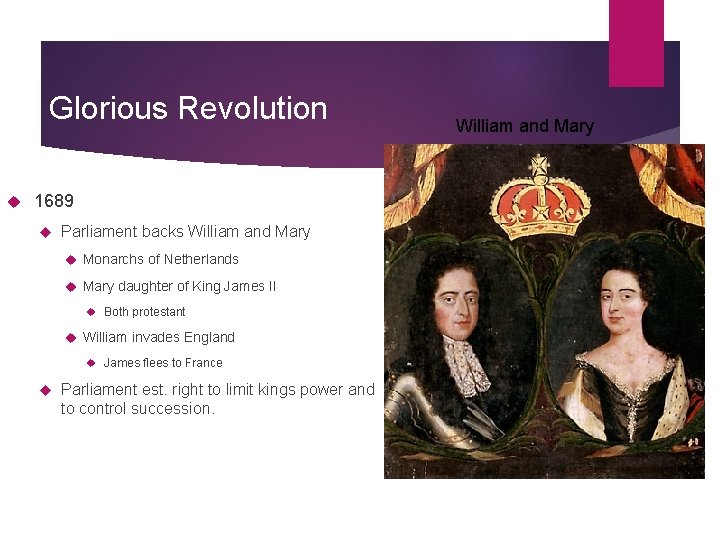
Glorious Revolution 1689 Parliament backs William and Mary Monarchs of Netherlands Mary daughter of King James II Both protestant William invades England James flees to France Parliament est. right to limit kings power and to control succession. William and Mary
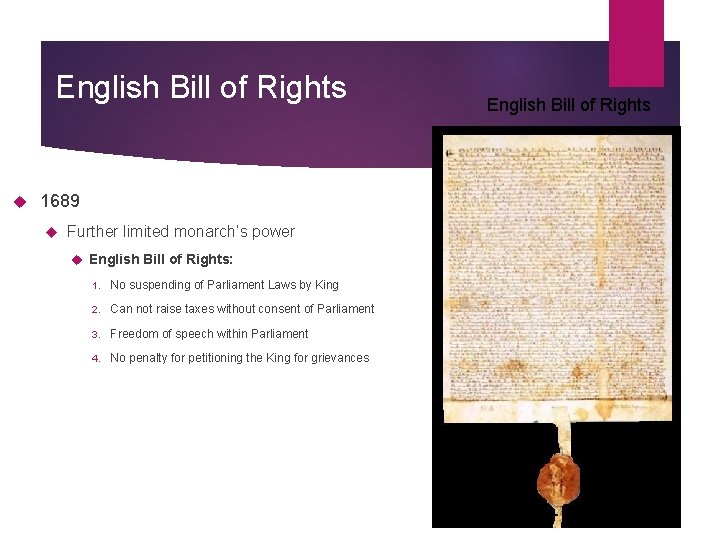
English Bill of Rights 1689 Further limited monarch’s power English Bill of Rights: 1. No suspending of Parliament Laws by King 2. Can not raise taxes without consent of Parliament 3. Freedom of speech within Parliament 4. No penalty for petitioning the King for grievances English Bill of Rights
English Legacy By 1689 English citizens were guaranteed: Rule of Law Parliamentary Govt. Bill of rights Constitutional Monarchy English Soccer Fan or cross dresser?