Deciding on New Office Hours Doodle kept giving


- Slides: 40
Deciding on New Office Hours Doodle kept giving me errors. Try to decide now? Options: (Maybe easiest to eliminate) • Tuesday 4 -5 • Wednesday 11 -12, 12 -1 I’ll email homework after class. I want to assign one more problem if we don’t have time to cover it today. Pretest diversity
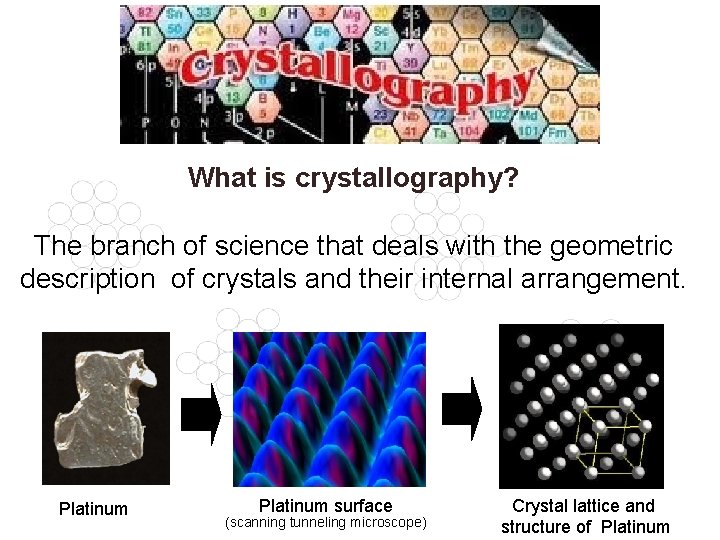
What is crystallography? The branch of science that deals with the geometric description of crystals and their internal arrangement. Platinum surface (scanning tunneling microscope) Crystal lattice and structure of Platinum
Structure of Solids Objectives By the end of this section you should be able to: • • Identify a unit cell in a symmetrical pattern Identify a crystal structure Compare bcc, fcc and hcp crystal structures Calculate atomic packing factors
I will sometimes start with a sample problem to test your current understanding of the material. Based on how you do, I may skip some slides or may emphasize different points. But I will never skip all of the slides because there are normally some common misconceptions we need to address. Please tell me to slow down if it’s too fast! And ask questions! Some of this will be review (because it’s so important), so make sure you ask if you don’t get it!
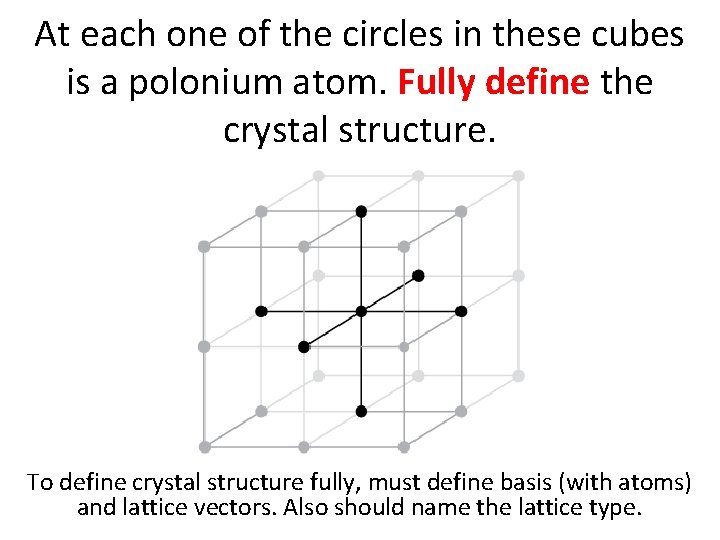
At each one of the circles in these cubes is a polonium atom. Fully define the crystal structure. To define crystal structure fully, must define basis (with atoms) and lattice vectors. Also should name the lattice type.
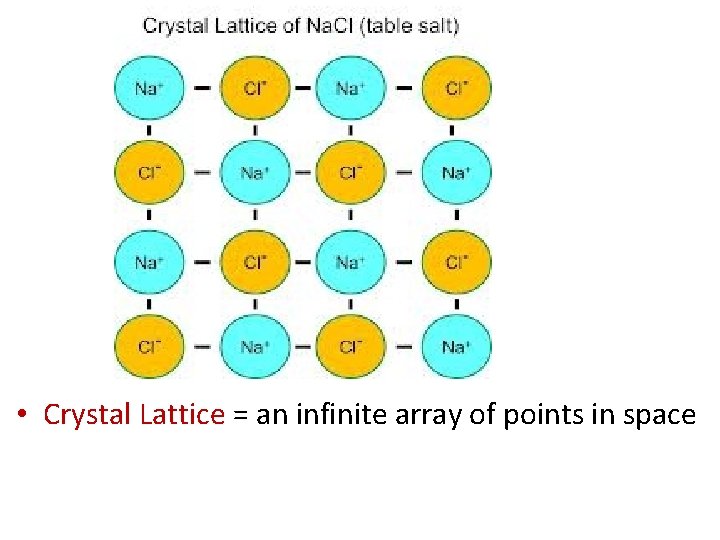
• Crystal Lattice = an infinite array of points in space
• Crystal Lattice = an infinite array of points in space • Each lattice point has identical surroundings. • Arrays are arranged exactly in a periodic manner.
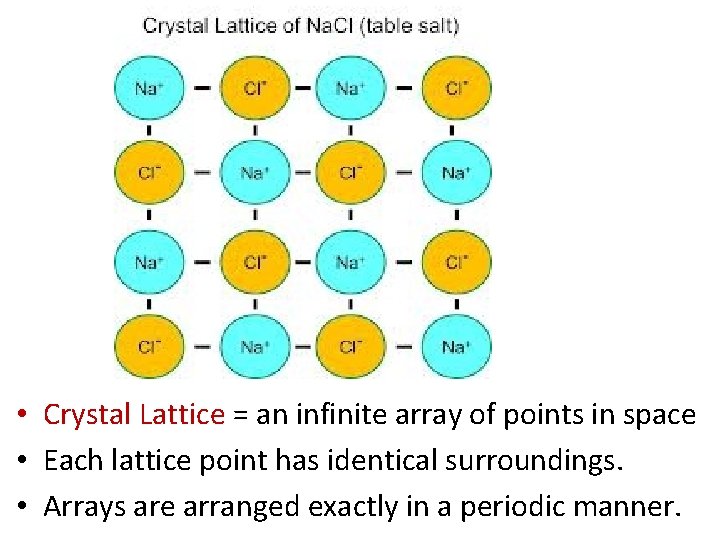
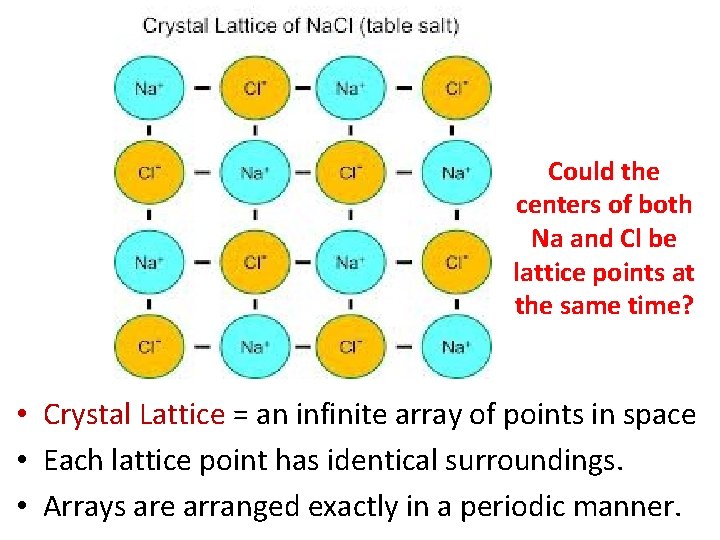
Could the centers of both Na and Cl be lattice points at the same time? • Crystal Lattice = an infinite array of points in space • Each lattice point has identical surroundings. • Arrays are arranged exactly in a periodic manner.
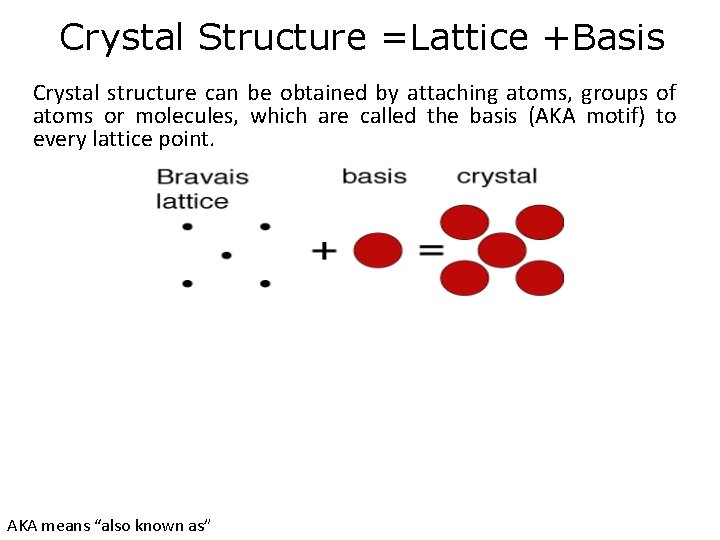
Crystal Structure =Lattice +Basis Crystal structure can be obtained by attaching atoms, groups of atoms or molecules, which are called the basis (AKA motif) to every lattice point. AKA means “also known as”
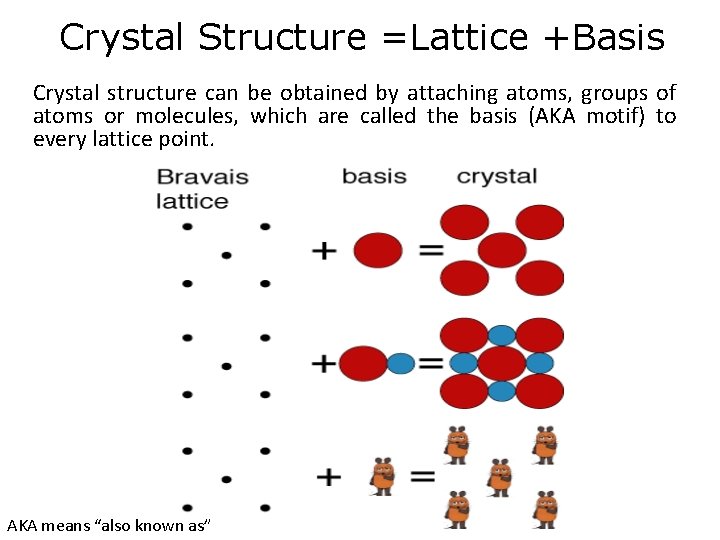
Crystal Structure =Lattice +Basis Crystal structure can be obtained by attaching atoms, groups of atoms or molecules, which are called the basis (AKA motif) to every lattice point. AKA means “also known as”
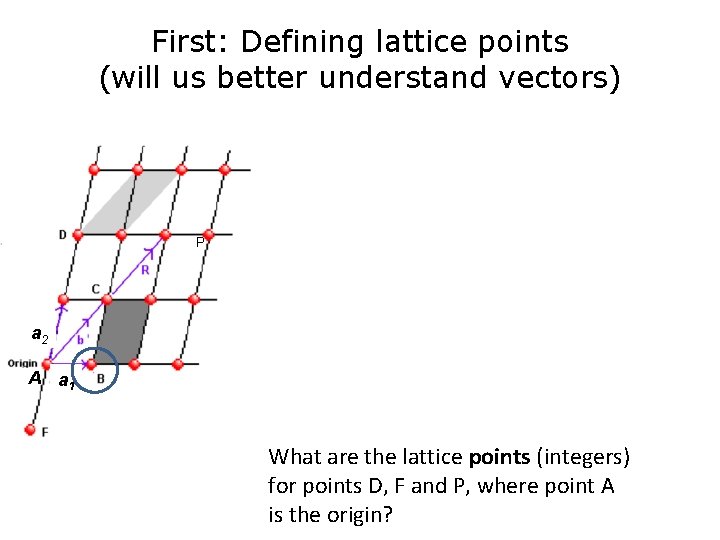
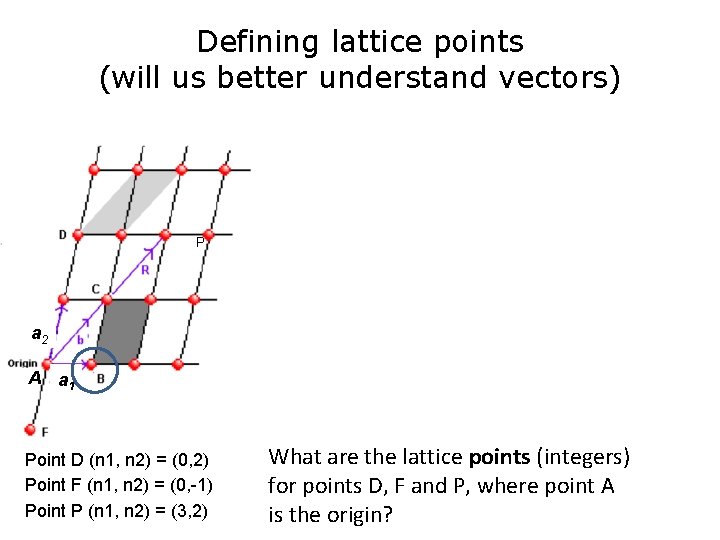
First: Defining lattice points (will us better understand vectors) P a 2 A a 1 What are the lattice points (integers) for points D, F and P, where point A is the origin?
Defining lattice points (will us better understand vectors) P a 2 A a 1 Point D (n 1, n 2) = (0, 2) Point F (n 1, n 2) = (0, -1) Point P (n 1, n 2) = (3, 2) What are the lattice points (integers) for points D, F and P, where point A is the origin?
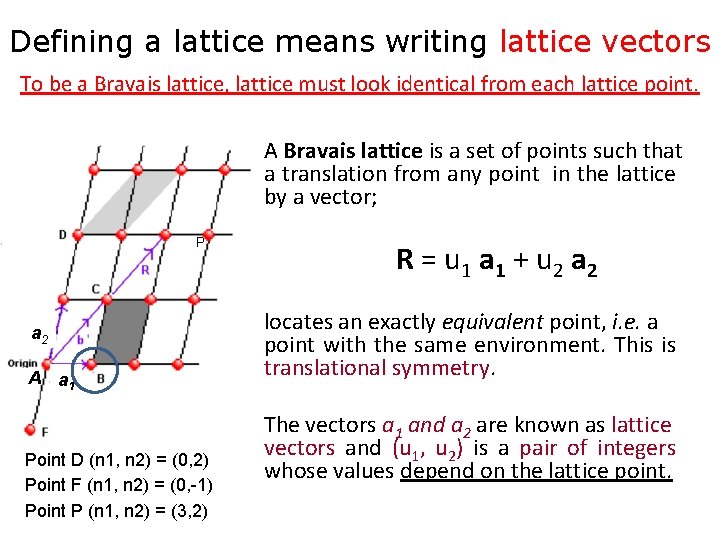
Defining a lattice means writing lattice vectors To be a Bravais lattice, lattice must look identical from each lattice point. A Bravais lattice is a set of points such that a translation from any point in the lattice by a vector; P a 2 A a 1 Point D (n 1, n 2) = (0, 2) Point F (n 1, n 2) = (0, -1) Point P (n 1, n 2) = (3, 2) R = u 1 a 1 + u 2 a 2 locates an exactly equivalent point, i. e. a point with the same environment. This is translational symmetry. The vectors a 1 and a 2 are known as lattice vectors and (u 1, u 2) is a pair of integers whose values depend on the lattice point.
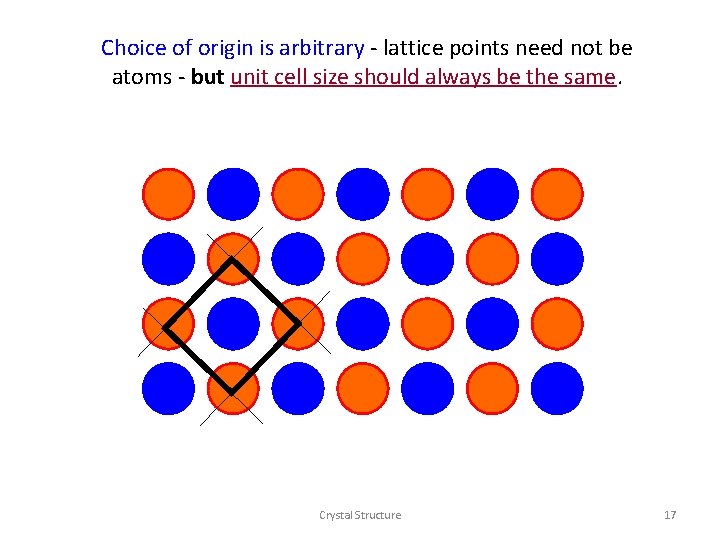
Unit Cell in 2 D Typically has lattice vectors shown between lattice points. • The smallest component of the crystal (group of atoms, ions or molecules), which when stacked together with pure translational repetition reproduces the whole crystal. The choice of unit cell is not unique. S S b S S a 14
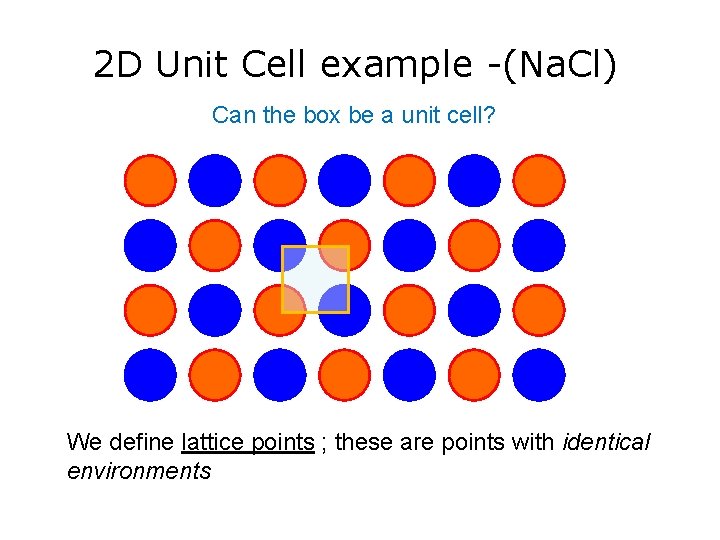
2 D Unit Cell example -(Na. Cl) Can the box be a unit cell? We define lattice points ; these are points with identical environments
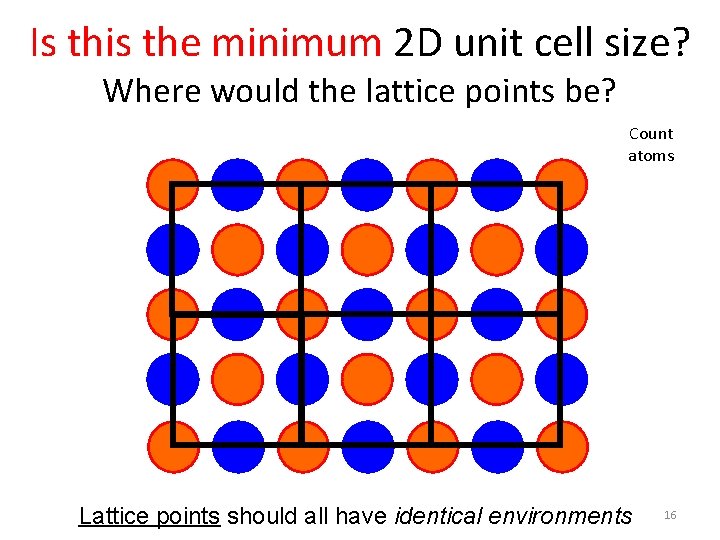
Is this the minimum 2 D unit cell size? Where would the lattice points be? Count atoms Lattice points should all have identical environments 16
Choice of origin is arbitrary - lattice points need not be atoms - but unit cell size should always be the same. Crystal Structure 17
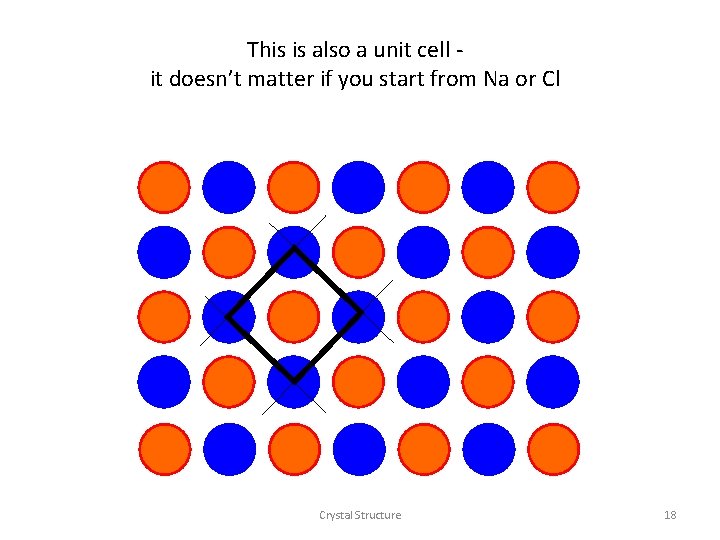
This is also a unit cell it doesn’t matter if you start from Na or Cl Crystal Structure 18
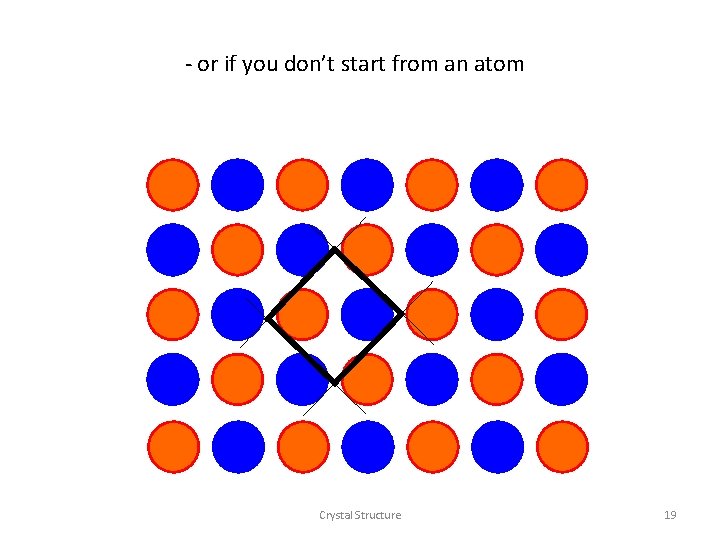
- or if you don’t start from an atom Crystal Structure 19
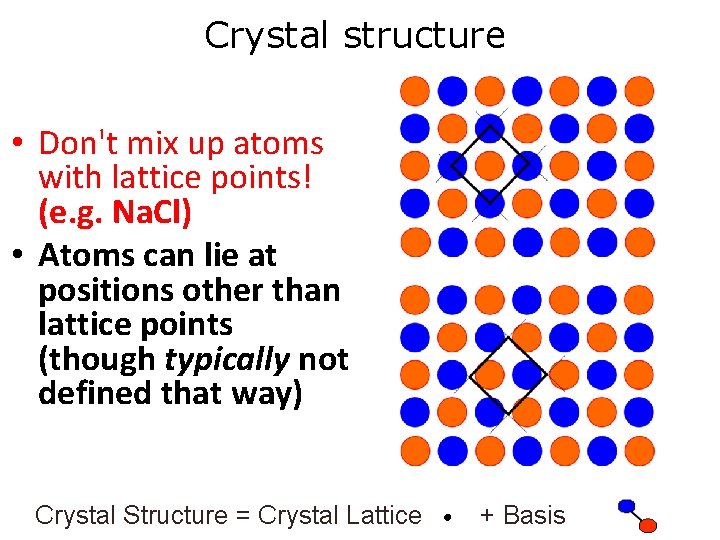
Crystal structure • Don't mix up atoms with lattice points! (e. g. Na. Cl) • Atoms can lie at positions other than lattice points (though typically not defined that way) Crystal Structure = Crystal Lattice + Basis
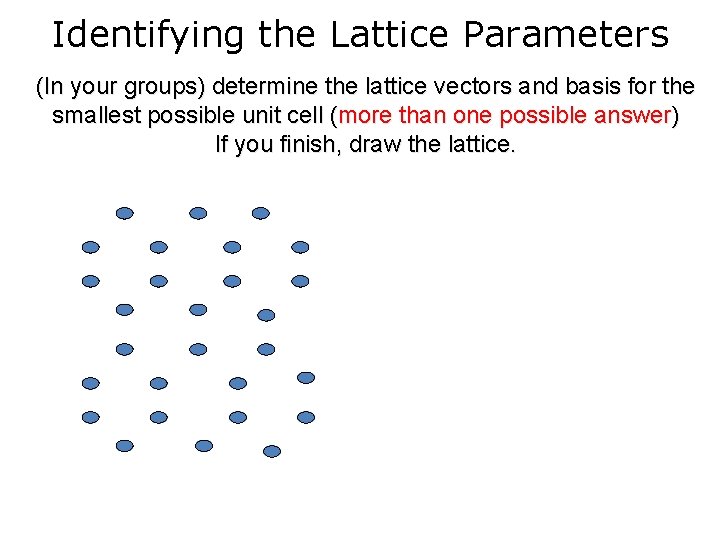
Identifying the Lattice Parameters (In your groups) determine the lattice vectors and basis for the smallest possible unit cell (more than one possible answer) If you finish, draw the lattice.
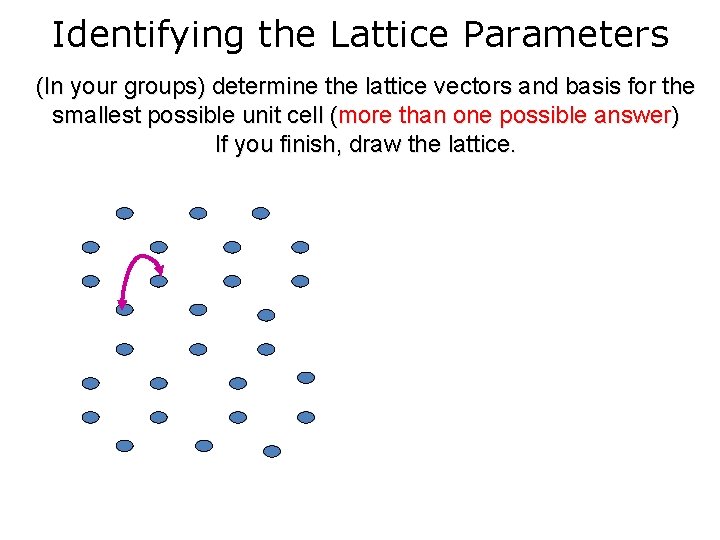
Identifying the Lattice Parameters (In your groups) determine the lattice vectors and basis for the smallest possible unit cell (more than one possible answer) If you finish, draw the lattice.
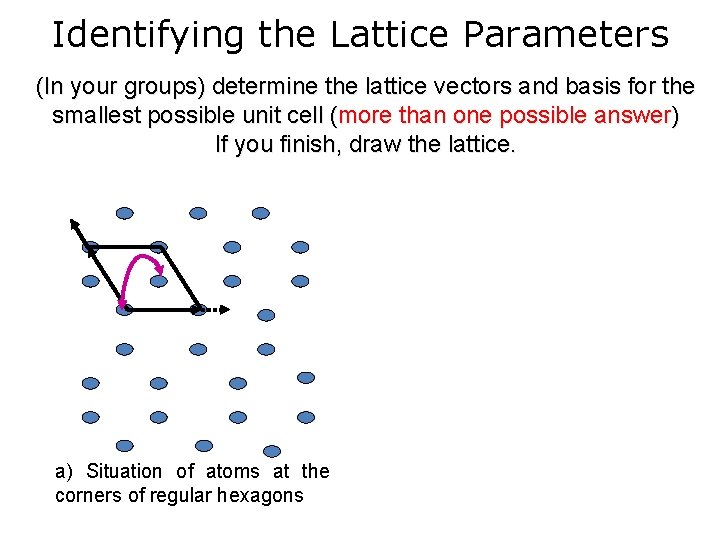
Identifying the Lattice Parameters (In your groups) determine the lattice vectors and basis for the smallest possible unit cell (more than one possible answer) If you finish, draw the lattice. a) Situation of atoms at the corners of regular hexagons
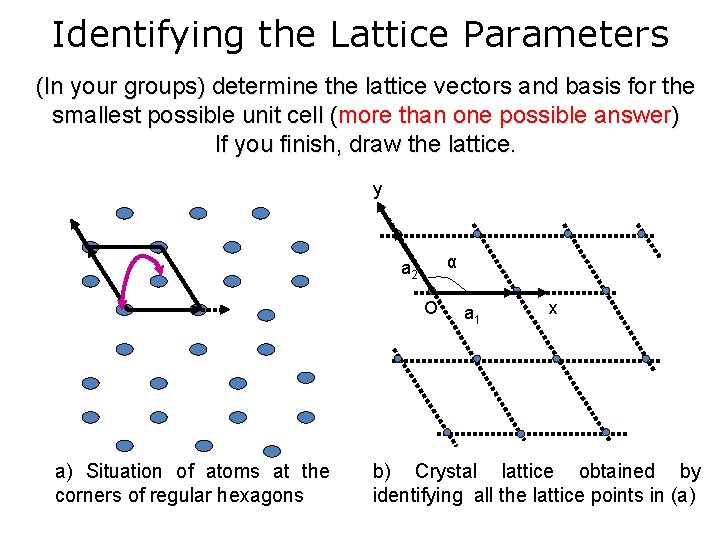
Identifying the Lattice Parameters (In your groups) determine the lattice vectors and basis for the smallest possible unit cell (more than one possible answer) If you finish, draw the lattice. y α a 2 O a) Situation of atoms at the corners of regular hexagons a 1 x b) Crystal lattice obtained by identifying all the lattice points in (a)
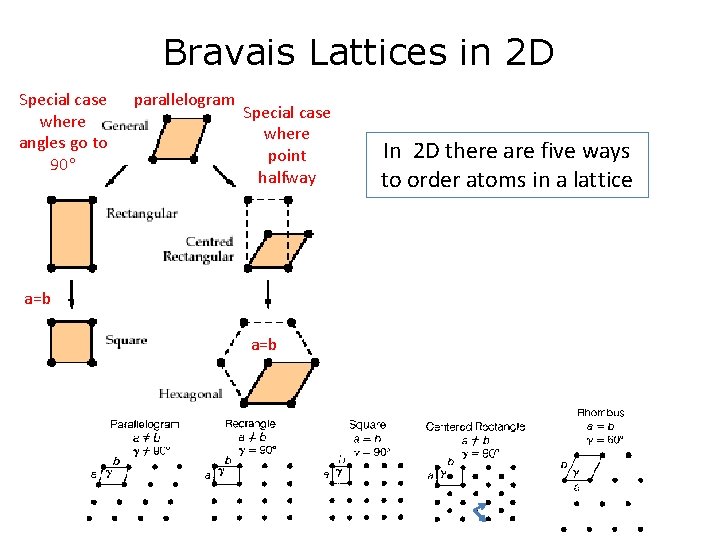
Bravais Lattices in 2 D Special case where angles go to 90 parallelogram Special case where point halfway a=b In 2 D there are five ways to order atoms in a lattice
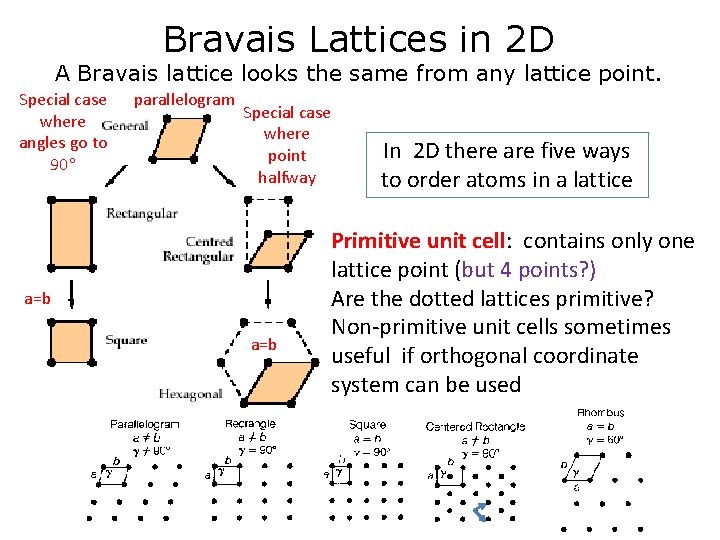
Bravais Lattices in 2 D A Bravais lattice looks the same from any lattice point. Special case where angles go to 90 parallelogram Special case where point halfway a=b In 2 D there are five ways to order atoms in a lattice Primitive unit cell: contains only one lattice point (but 4 points? ) Are the dotted lattices primitive? Non-primitive unit cells sometimes useful if orthogonal coordinate system can be used
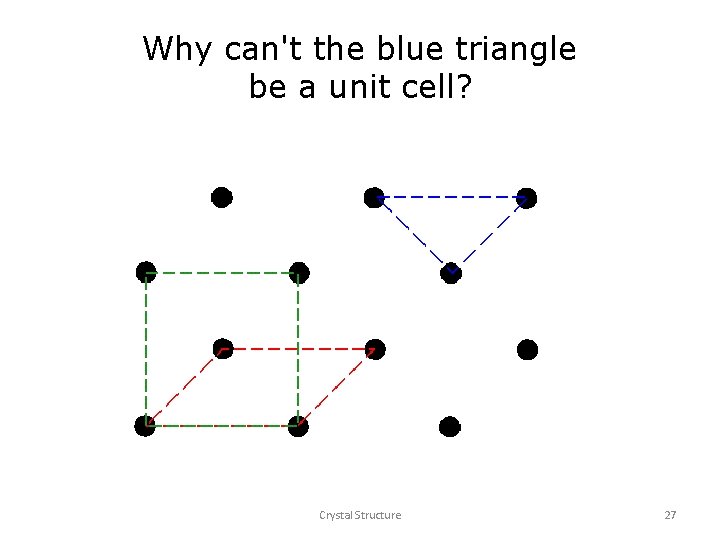
Why can't the blue triangle be a unit cell? Crystal Structure 27
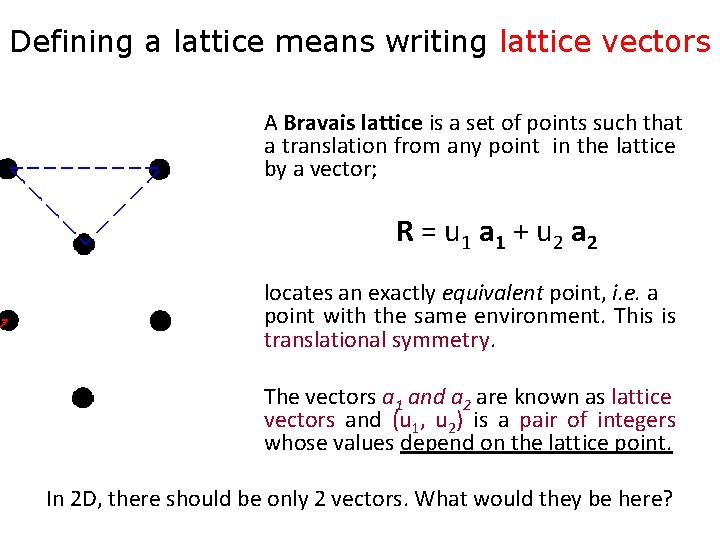
Defining a lattice means writing lattice vectors A Bravais lattice is a set of points such that a translation from any point in the lattice by a vector; R = u 1 a 1 + u 2 a 2 locates an exactly equivalent point, i. e. a point with the same environment. This is translational symmetry. The vectors a 1 and a 2 are known as lattice vectors and (u 1, u 2) is a pair of integers whose values depend on the lattice point. In 2 D, there should be only 2 vectors. What would they be here?
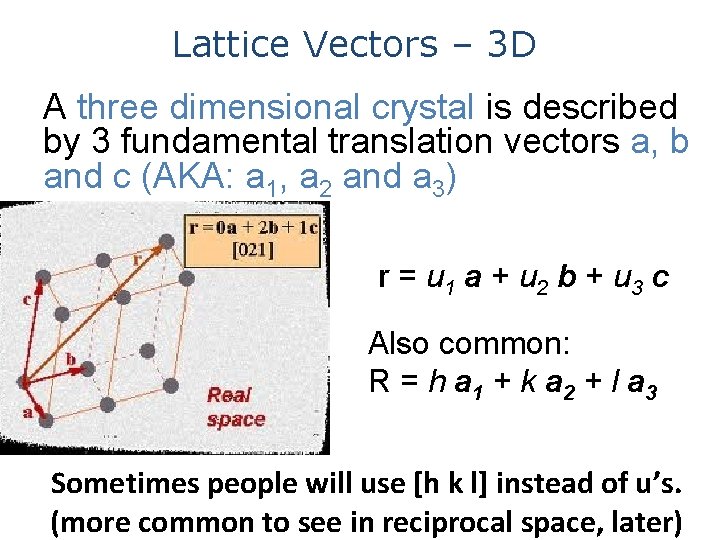
Lattice Vectors – 3 D A three dimensional crystal is described by 3 fundamental translation vectors a, b and c (AKA: a 1, a 2 and a 3) r = u 1 a + u 2 b + u 3 c Also common: R = h a 1 + k a 2 + l a 3 Sometimes people will use [h k l] instead of u’s. (more common to see in reciprocal space, later)
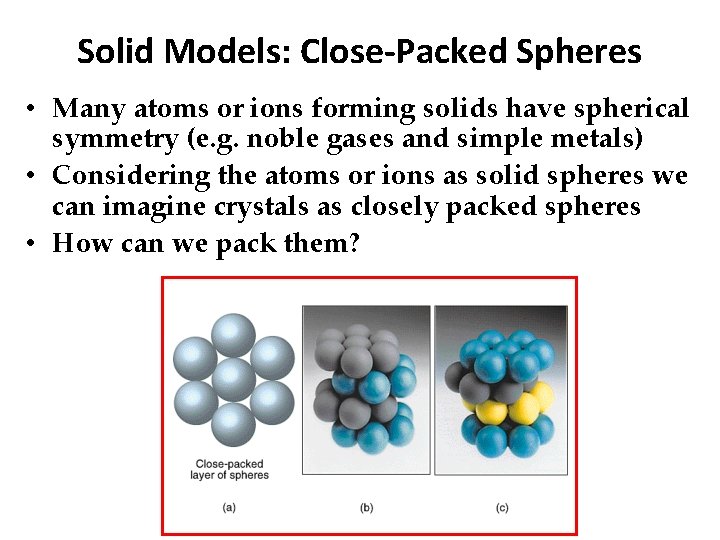
Solid Models: Close-Packed Spheres • Many atoms or ions forming solids have spherical symmetry (e. g. noble gases and simple metals) • Considering the atoms or ions as solid spheres we can imagine crystals as closely packed spheres • How can we pack them?
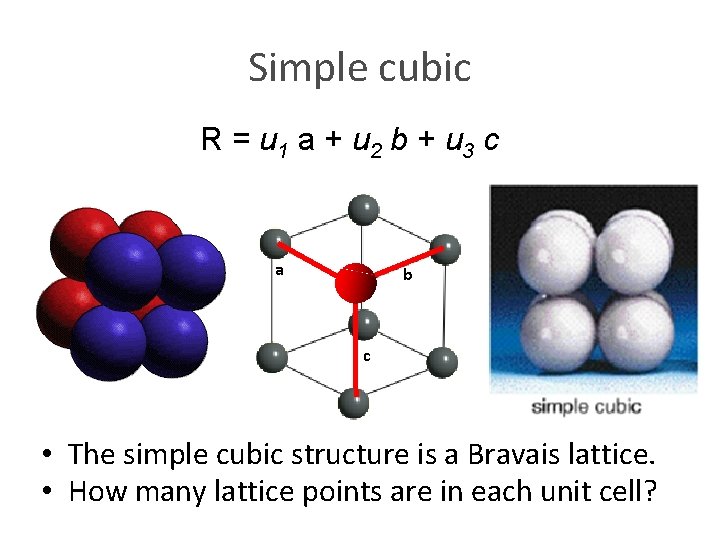
Simple cubic R = u 1 a + u 2 b + u 3 c a b c • The simple cubic structure is a Bravais lattice. • How many lattice points are in each unit cell?
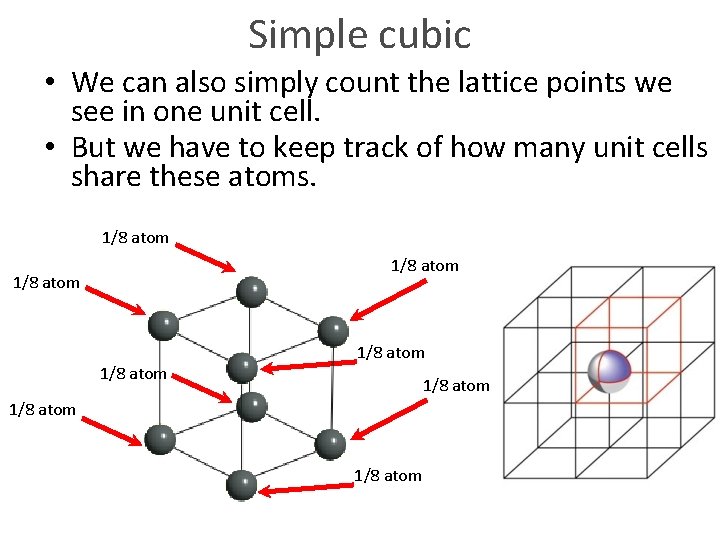
Simple cubic • We can also simply count the lattice points we see in one unit cell. • But we have to keep track of how many unit cells share these atoms. 1/8 atom 1/8 atom
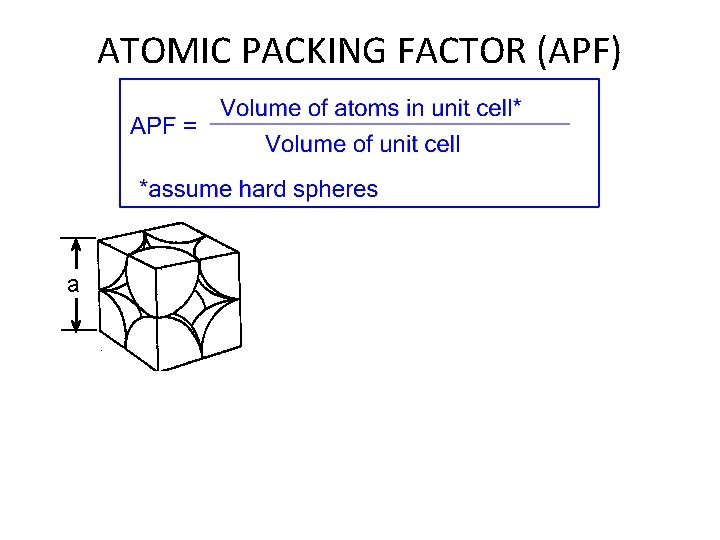
ATOMIC PACKING FACTOR (APF) a
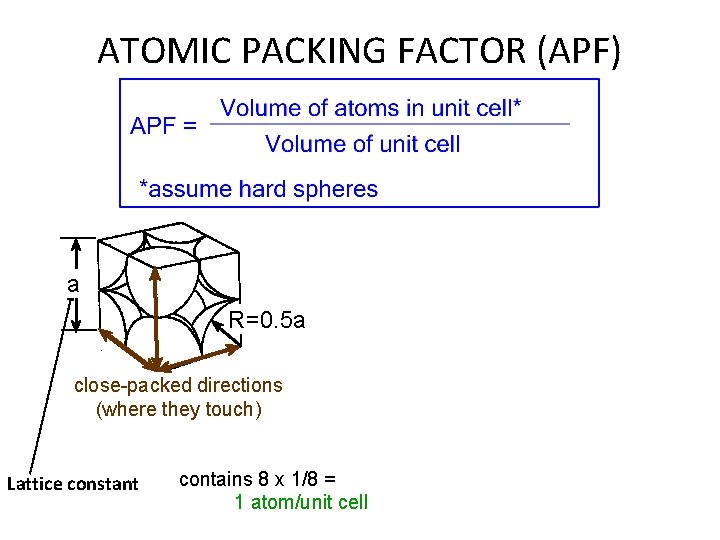
ATOMIC PACKING FACTOR (APF) a R=0. 5 a close-packed directions (where they touch) Lattice constant contains 8 x 1/8 = 1 atom/unit cell
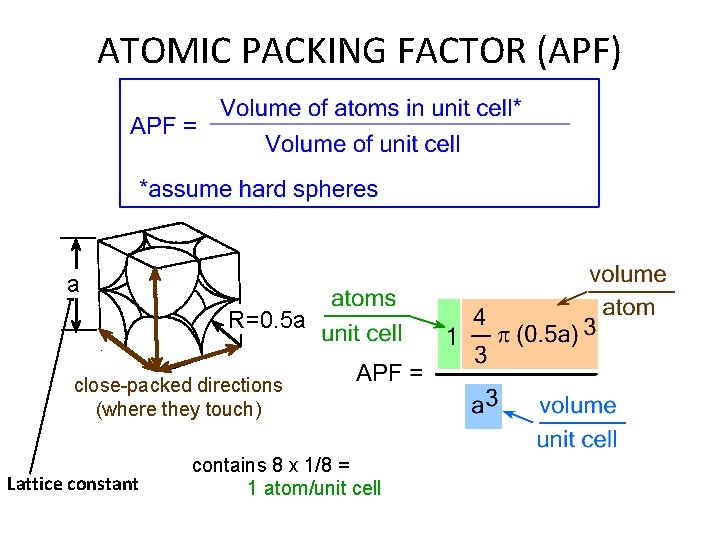
ATOMIC PACKING FACTOR (APF) a R=0. 5 a close-packed directions (where they touch) contains 8 x 1/8 = Lattice constant 1 atom/unit cell
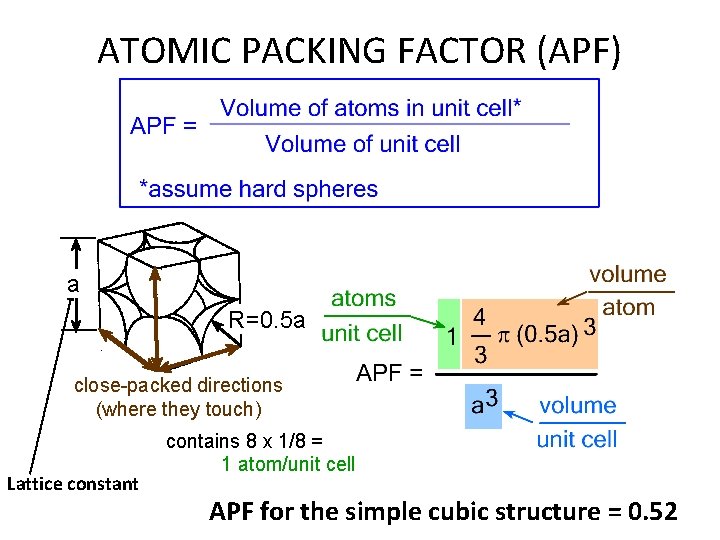
ATOMIC PACKING FACTOR (APF) a R=0. 5 a close-packed directions (where they touch) contains 8 x 1/8 = 1 atom/unit cell Lattice constant APF for the simple cubic structure = 0. 52
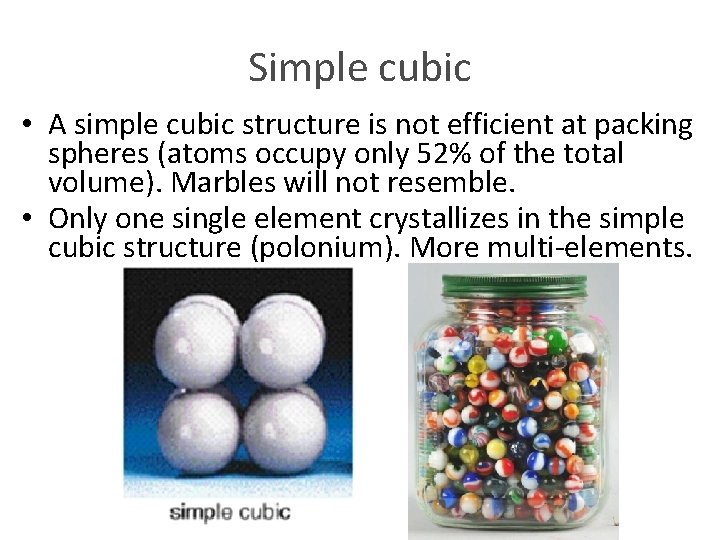
Simple cubic • A simple cubic structure is not efficient at packing spheres (atoms occupy only 52% of the total volume). Marbles will not resemble. • Only one single element crystallizes in the simple cubic structure (polonium). More multi-elements.
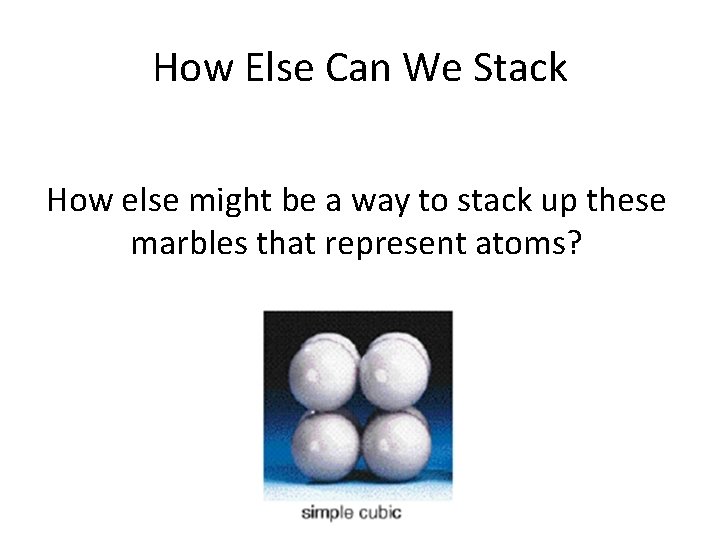
How Else Can We Stack How else might be a way to stack up these marbles that represent atoms?
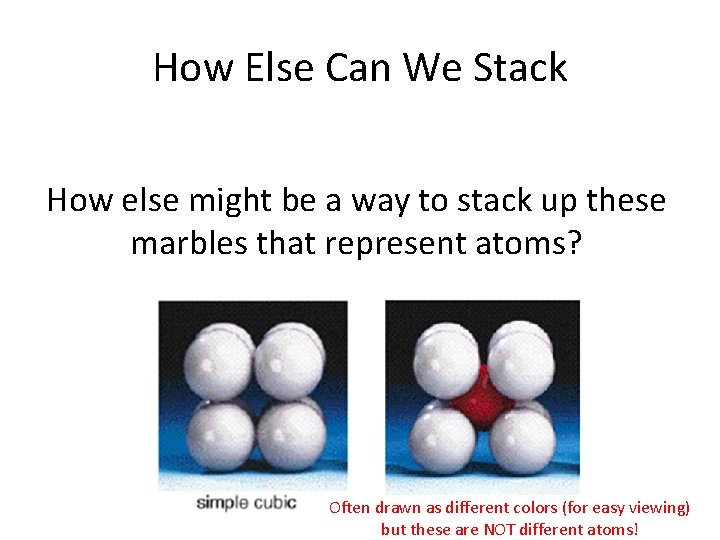
How Else Can We Stack How else might be a way to stack up these marbles that represent atoms? Often drawn as different colors (for easy viewing) but these are NOT different atoms!
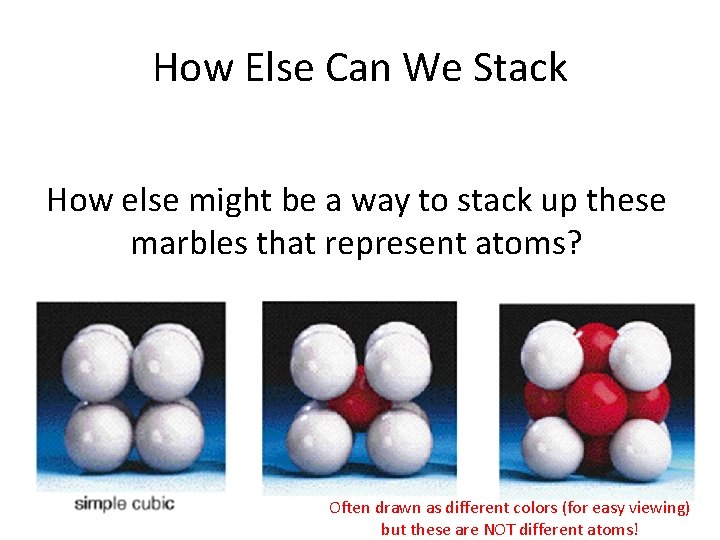
How Else Can We Stack How else might be a way to stack up these marbles that represent atoms? Often drawn as different colors (for easy viewing) but these are NOT different atoms!