
The Canterbury Tales Geoffrey Chaucer English 12 Doodle

The Canterbury Tales Geoffrey Chaucer English 12

Doodle Notes • Rules: • When you see a slide with a title that is in YELLOW must take your doodle notes! • Represent the concepts in each slide with DOODLES/DRAWINGS, and label with a FEW WORDS/NUMBERS (as needed) FONT- you • No COLOR necessary • NUMBER EACH SECTION AS YOU GO (YOU SHOULD END UP WITH DRAWINGS TO REPRESENT 9 SLIDES)
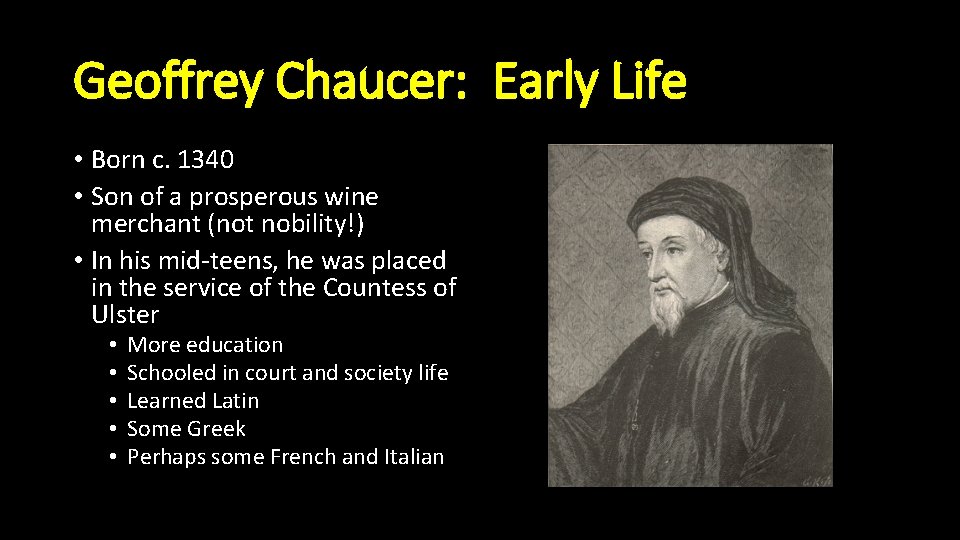
Geoffrey Chaucer: Early Life • Born c. 1340 • Son of a prosperous wine merchant (not nobility!) • In his mid-teens, he was placed in the service of the Countess of Ulster • • • More education Schooled in court and society life Learned Latin Some Greek Perhaps some French and Italian
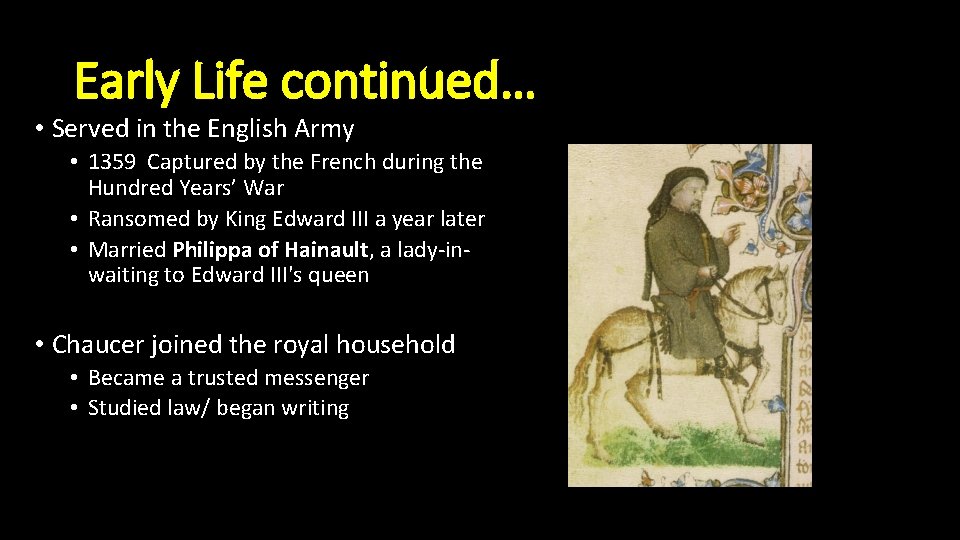
Early Life continued… • Served in the English Army • 1359 Captured by the French during the Hundred Years’ War • Ransomed by King Edward III a year later • Married Philippa of Hainault, a lady-inwaiting to Edward III's queen • Chaucer joined the royal household • Became a trusted messenger • Studied law/ began writing
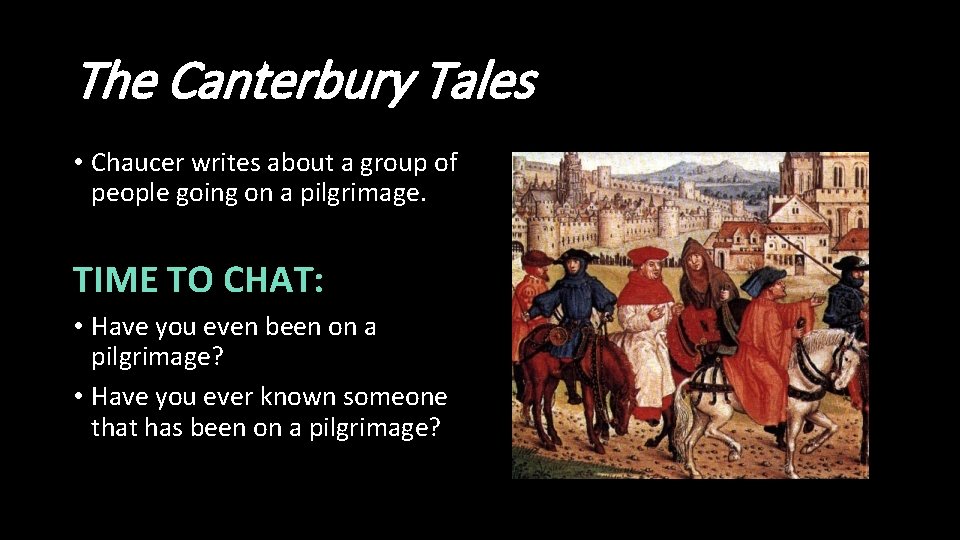
The Canterbury Tales • Chaucer writes about a group of people going on a pilgrimage. TIME TO CHAT: • Have you even been on a pilgrimage? • Have you ever known someone that has been on a pilgrimage?
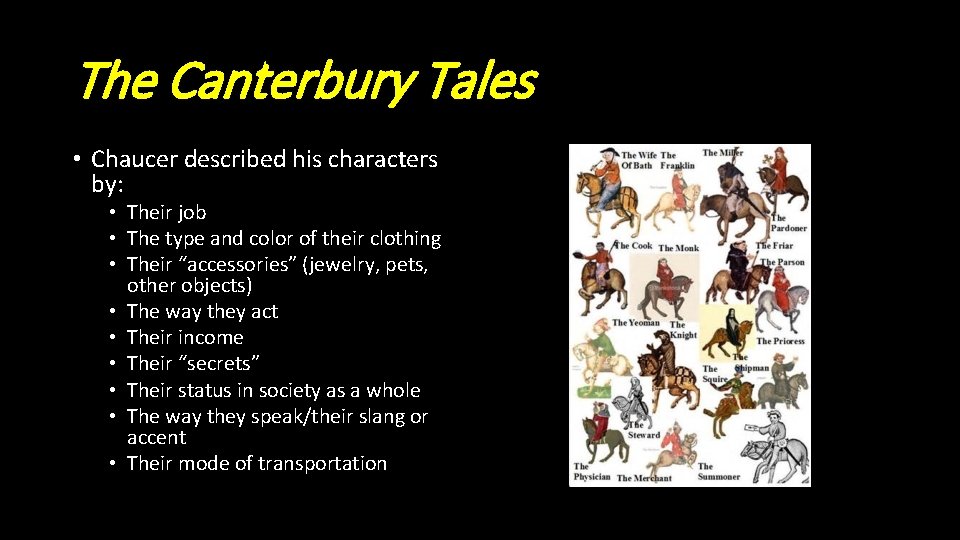
The Canterbury Tales • Chaucer described his characters by: • Their job • The type and color of their clothing • Their “accessories” (jewelry, pets, other objects) • The way they act • Their income • Their “secrets” • Their status in society as a whole • The way they speak/their slang or accent • Their mode of transportation
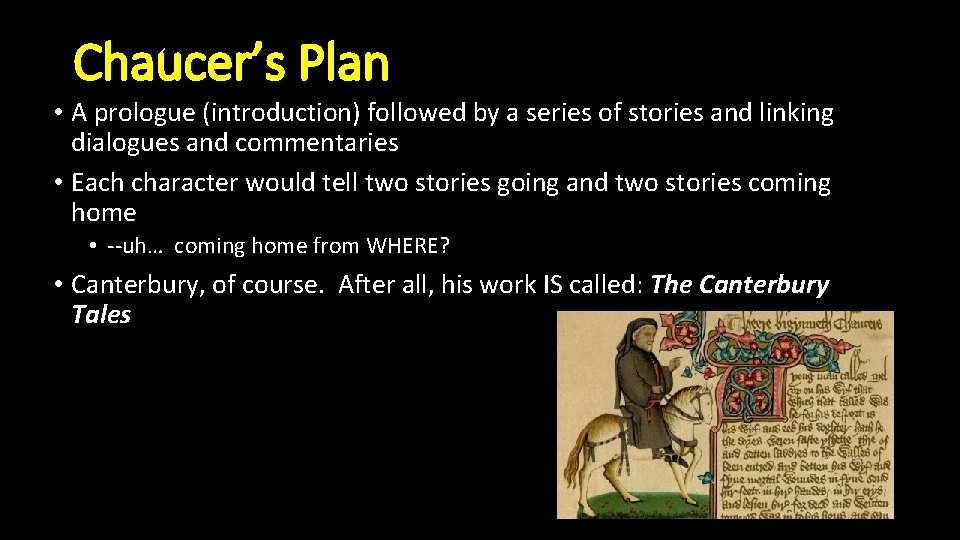
Chaucer’s Plan • A prologue (introduction) followed by a series of stories and linking dialogues and commentaries • Each character would tell two stories going and two stories coming home • --uh… coming home from WHERE? • Canterbury, of course. After all, his work IS called: The Canterbury Tales
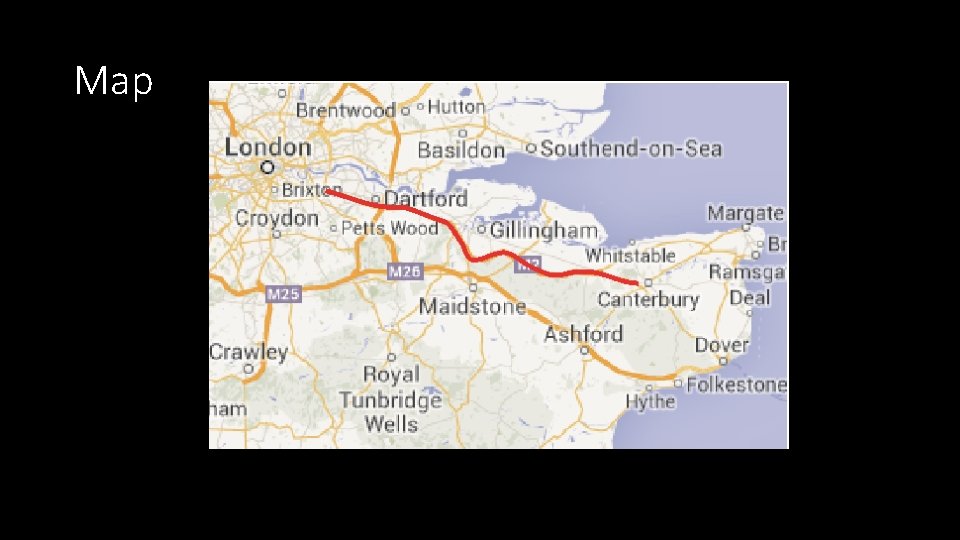
Map
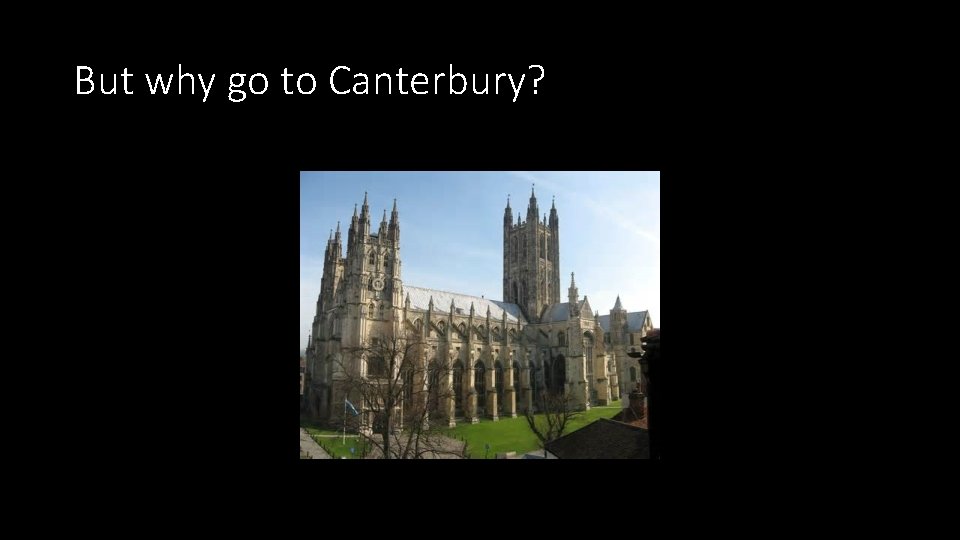
But why go to Canterbury?
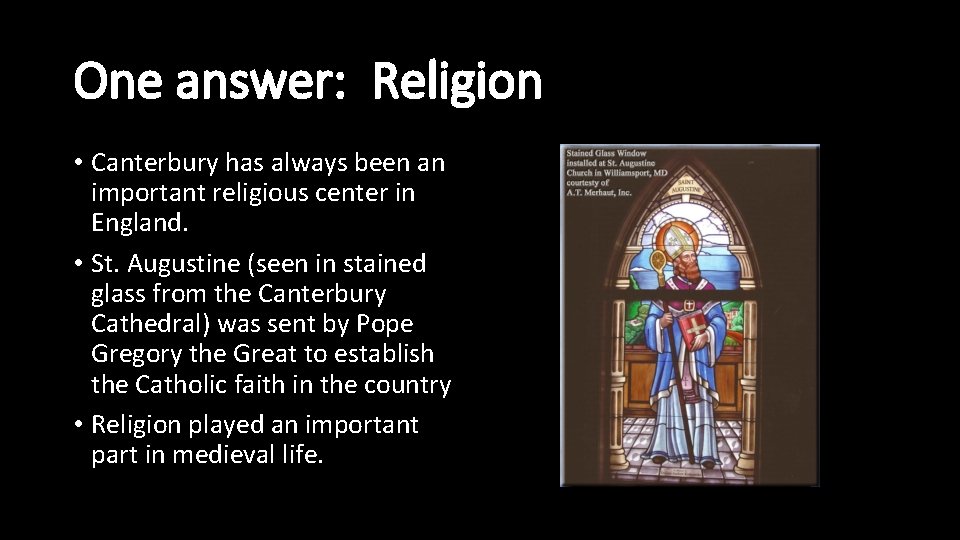
One answer: Religion • Canterbury has always been an important religious center in England. • St. Augustine (seen in stained glass from the Canterbury Cathedral) was sent by Pope Gregory the Great to establish the Catholic faith in the country • Religion played an important part in medieval life.
Why was religion important? • It’s the Middle Ages • • Plague Warfare High infant mortality rate Short life expectancy • …and if you were a peasant, you lived your whole life in harsh conditions • About the best thing that you had to look forward to was dying and going to heaven
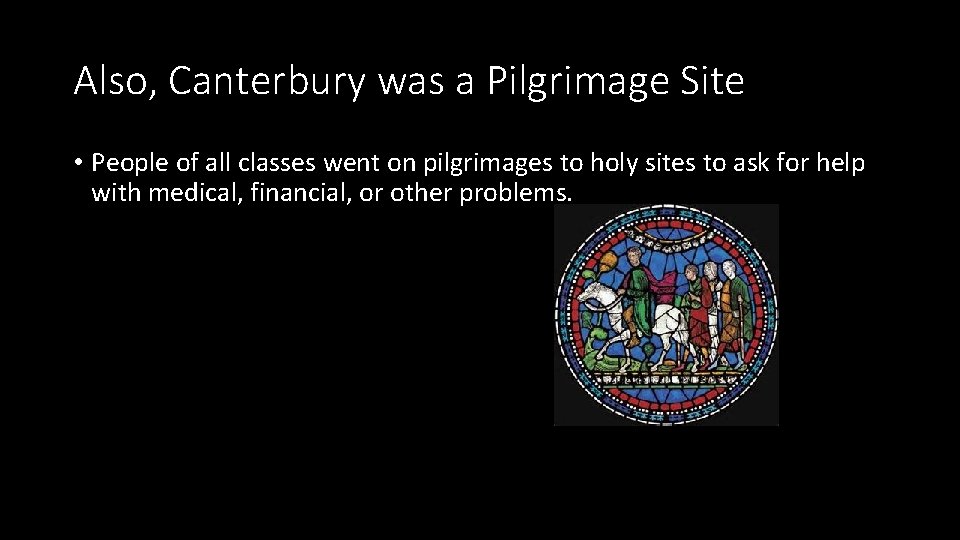
Also, Canterbury was a Pilgrimage Site • People of all classes went on pilgrimages to holy sites to ask for help with medical, financial, or other problems.
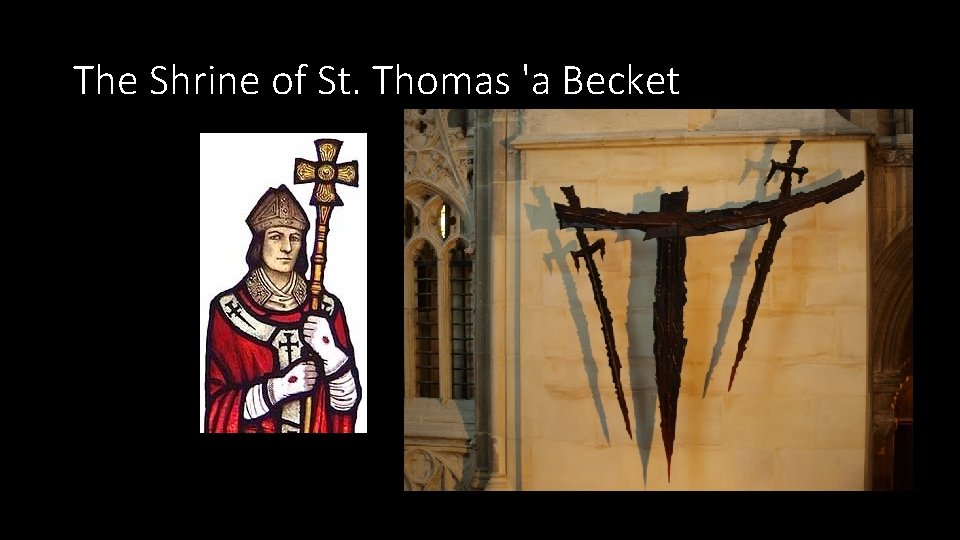
The Shrine of St. Thomas 'a Becket
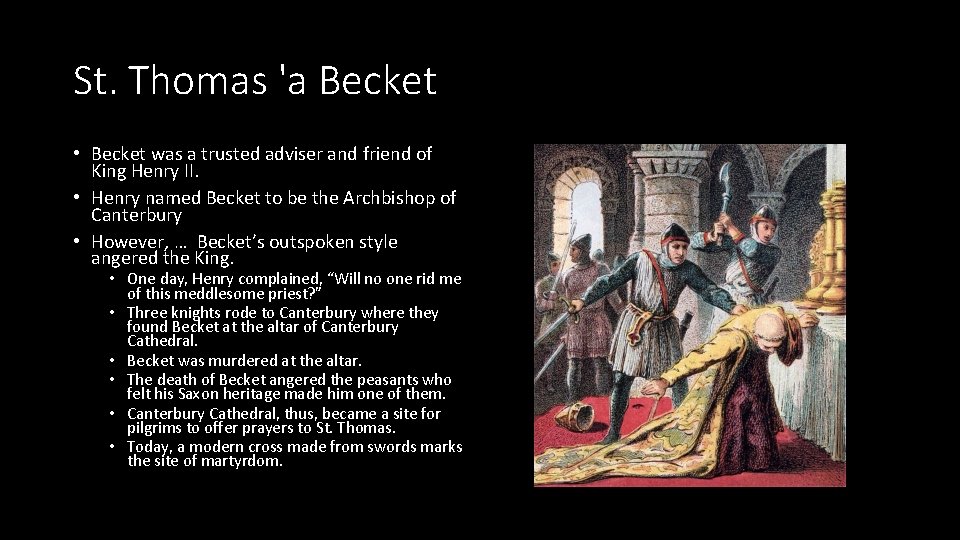
St. Thomas 'a Becket • Becket was a trusted adviser and friend of King Henry II. • Henry named Becket to be the Archbishop of Canterbury • However, … Becket’s outspoken style angered the King. • One day, Henry complained, “Will no one rid me of this meddlesome priest? ” • Three knights rode to Canterbury where they found Becket at the altar of Canterbury Cathedral. • Becket was murdered at the altar. • The death of Becket angered the peasants who felt his Saxon heritage made him one of them. • Canterbury Cathedral, thus, became a site for pilgrims to offer prayers to St. Thomas. • Today, a modern cross made from swords marks the site of martyrdom.
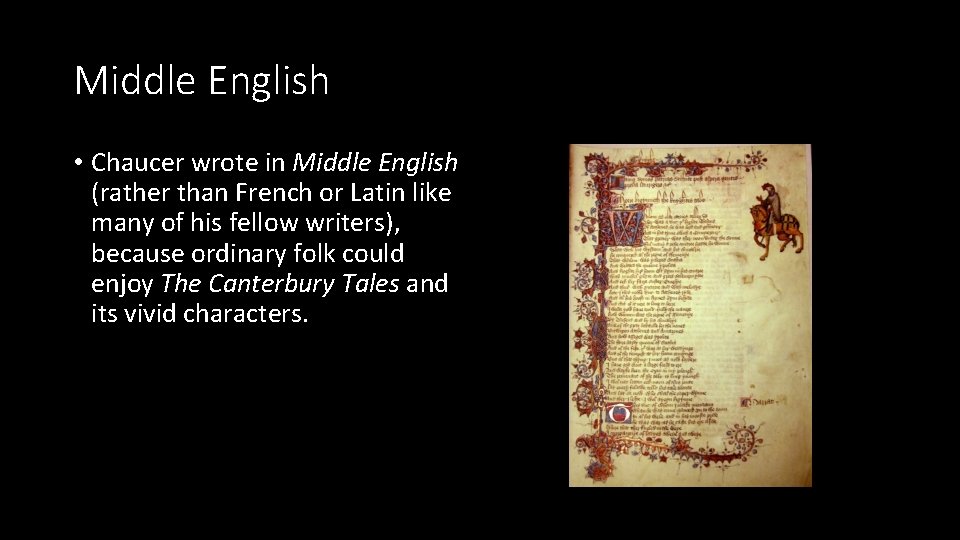
Middle English • Chaucer wrote in Middle English (rather than French or Latin like many of his fellow writers), because ordinary folk could enjoy The Canterbury Tales and its vivid characters.
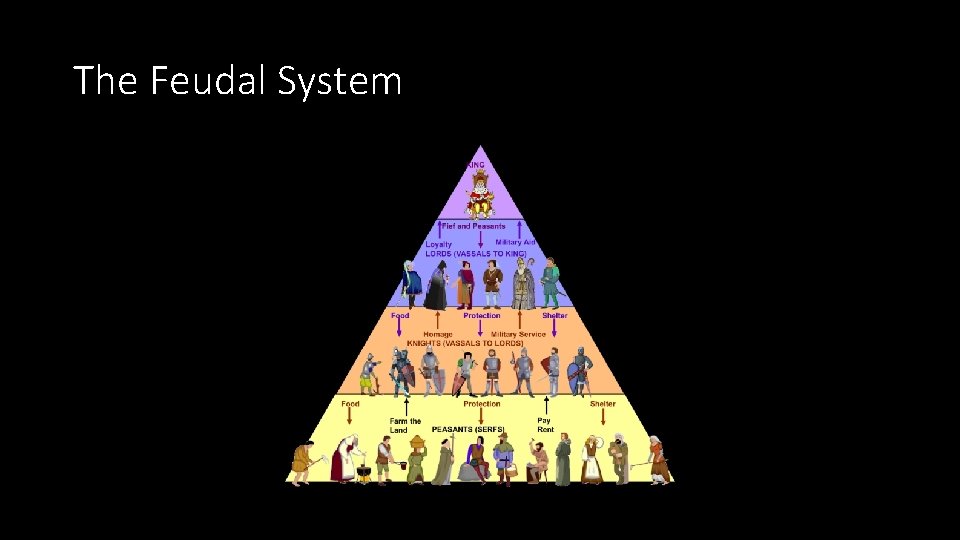
The Feudal System
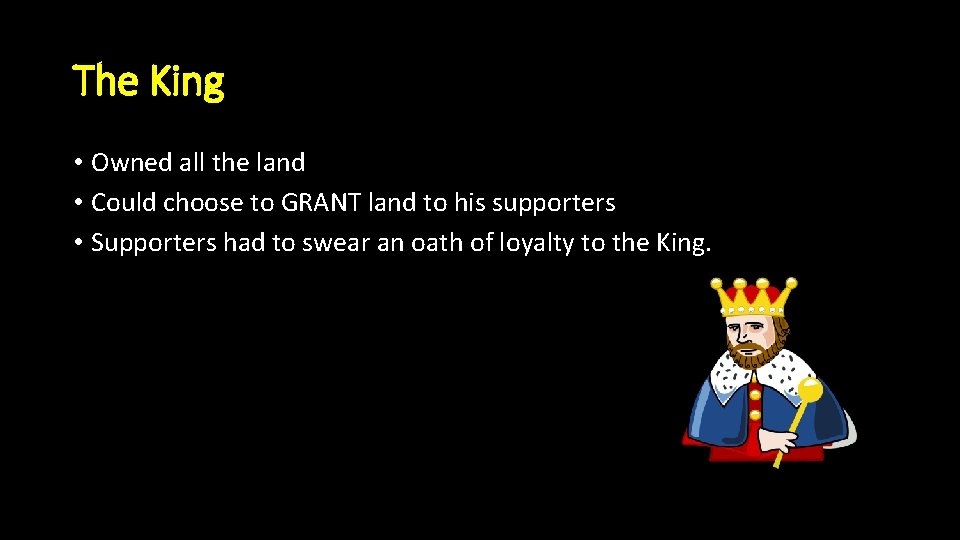
The King • Owned all the land • Could choose to GRANT land to his supporters • Supporters had to swear an oath of loyalty to the King.
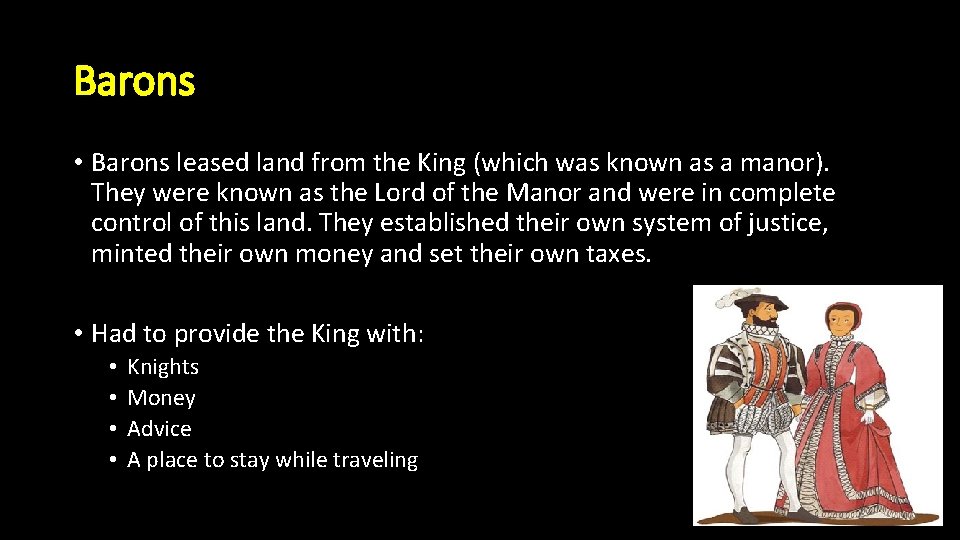
Barons • Barons leased land from the King (which was known as a manor). They were known as the Lord of the Manor and were in complete control of this land. They established their own system of justice, minted their own money and set their own taxes. • Had to provide the King with: • • Knights Money Advice A place to stay while traveling
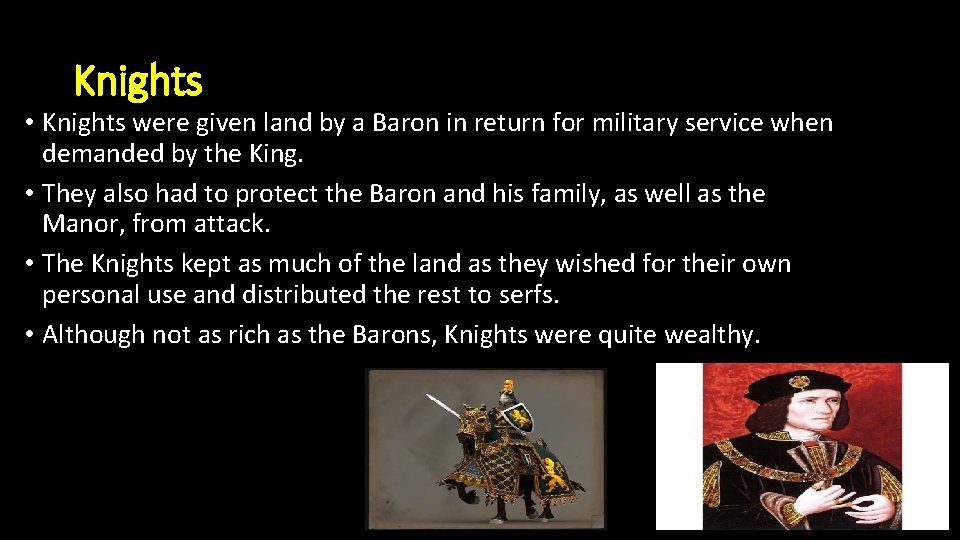
Knights • Knights were given land by a Baron in return for military service when demanded by the King. • They also had to protect the Baron and his family, as well as the Manor, from attack. • The Knights kept as much of the land as they wished for their own personal use and distributed the rest to serfs. • Although not as rich as the Barons, Knights were quite wealthy.
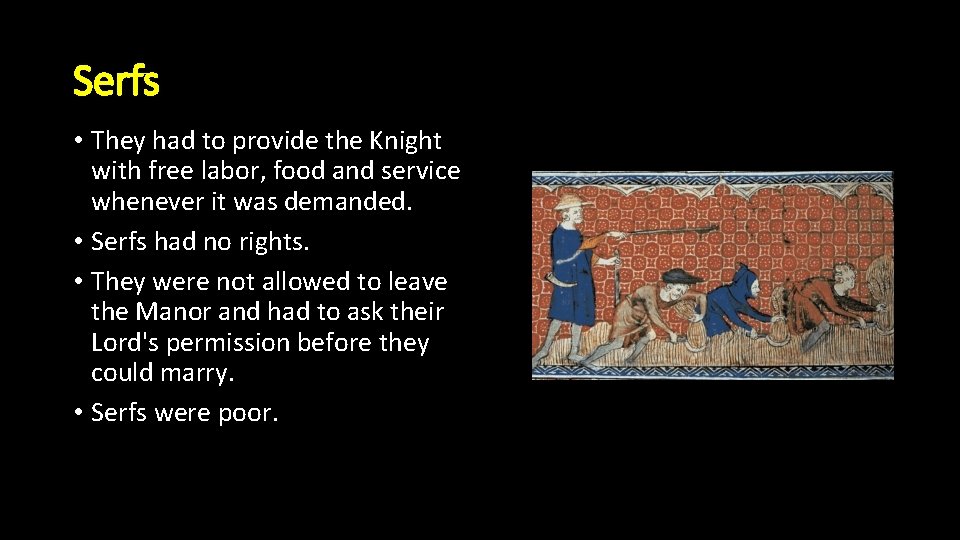
Serfs • They had to provide the Knight with free labor, food and service whenever it was demanded. • Serfs had no rights. • They were not allowed to leave the Manor and had to ask their Lord's permission before they could marry. • Serfs were poor.
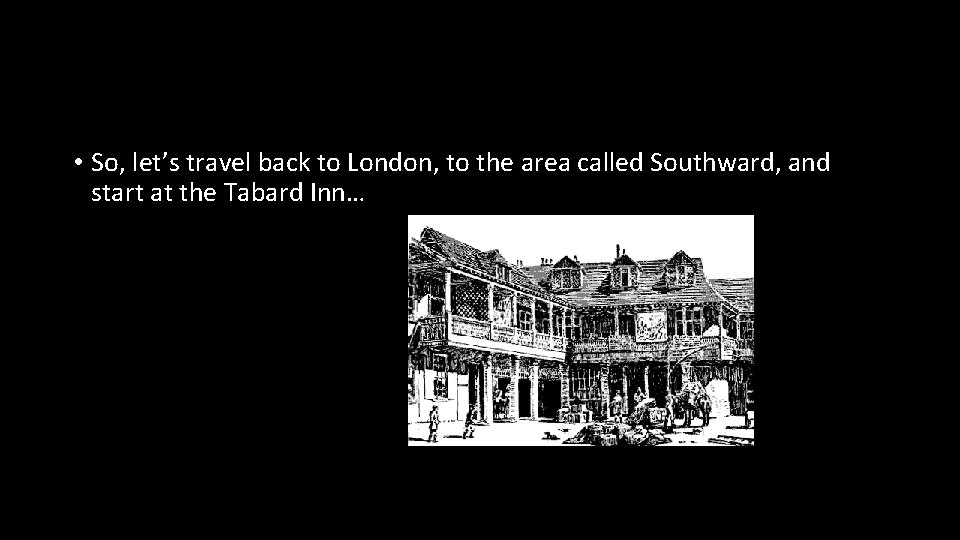
• So, let’s travel back to London, to the area called Southward, and start at the Tabard Inn…
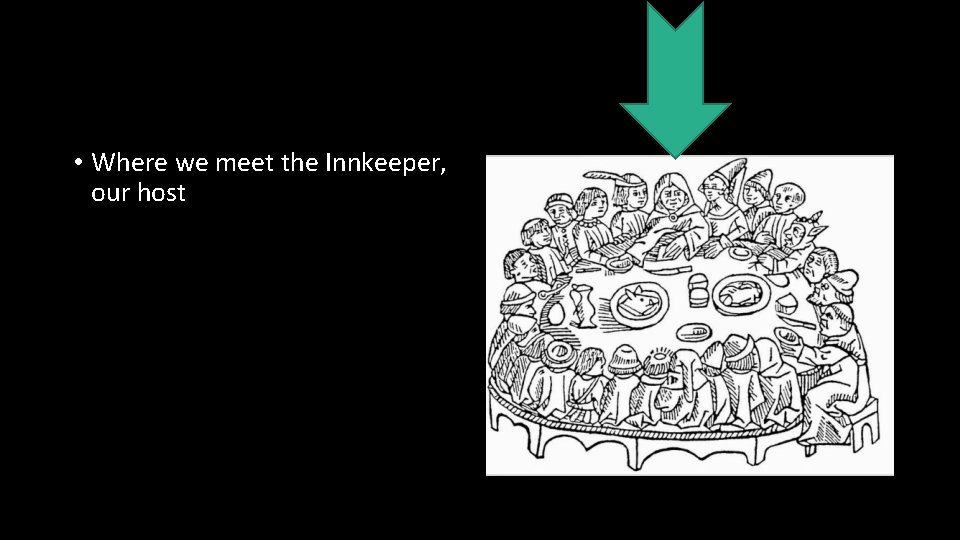
• Where we meet the Innkeeper, our host
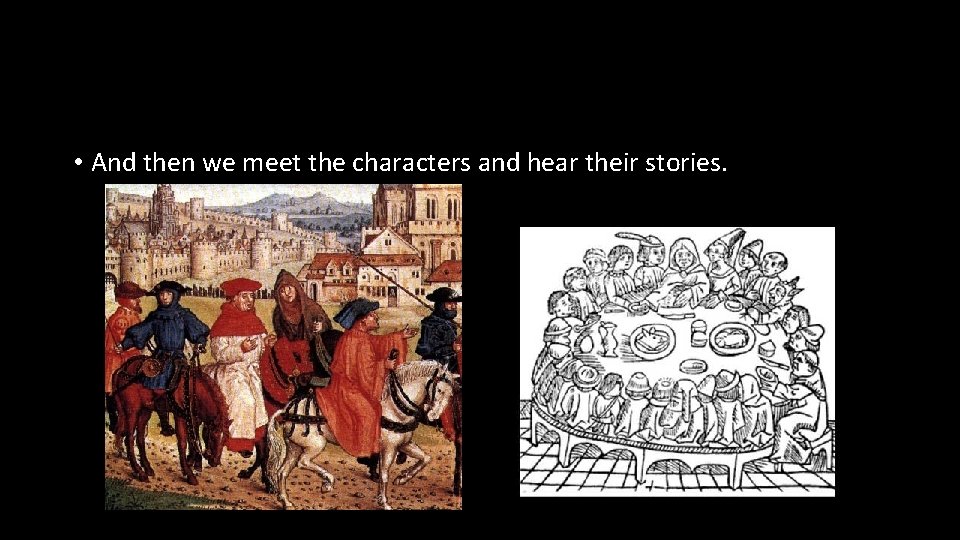
• And then we meet the characters and hear their stories.
Canterbury Tales Episodes • http: //www. bing. com/videos/search? q=youtube+canterbury+tales& &view=detail&mid=72 AFB 8 B 2 E 2 DAC 29 D 394972 AFB 8 B 2 E 2 DAC 29 D 39 49&FORM=VRDGAR
- Slides: 24