DANCE IN THE COURTS 16 th and 17

- Slides: 27
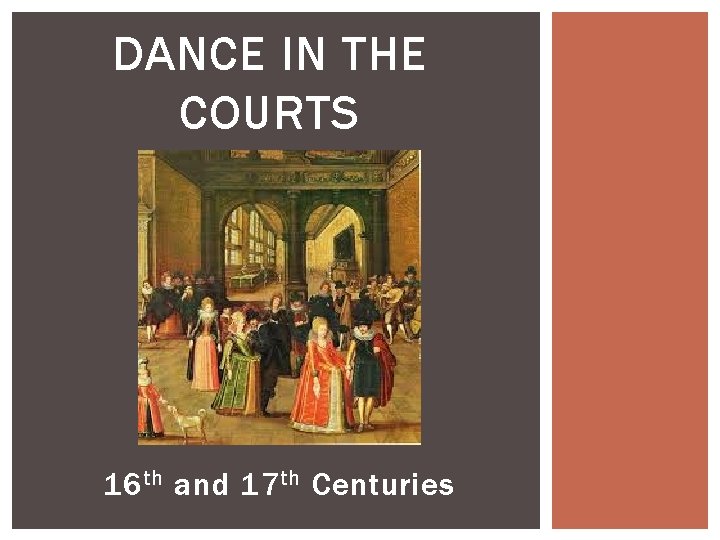
DANCE IN THE COURTS 16 th and 17 th Centuries
HISTORY IN EUROPE DURING 16 TH CENTURY -16 t h century Europe saw many changes including the emergence of a money-based economy, rising of strong monarchs, religious and political wars and tensions between social orders Late Renaissance period in Europe France-religious and political struggles, but ascended to golden age England- Political struggles (constant changing of powers) § § § Queen Elizabeth I James I Charles II James II Protestant Reformation: European politics became dominated by religious conflicts Michelangelo, Leonardo da Vinci, William Shakespeare, Machiavelli
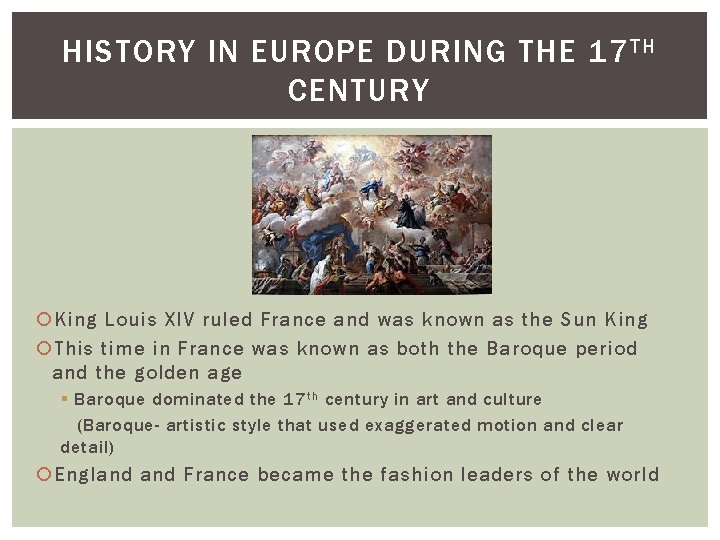
HISTORY IN EUROPE DURING THE 17 TH CENTURY King Louis XIV ruled France and was known as the Sun King This time in France was known as both the Baroque period and the golden age § Baroque dominated the 17 th century in art and culture (Baroque- artistic style that used exaggerated motion and clear detail) England France became the fashion leaders of the world
IMPORTANT HISTORICAL DANCE FIGURES OF THE PERIOD
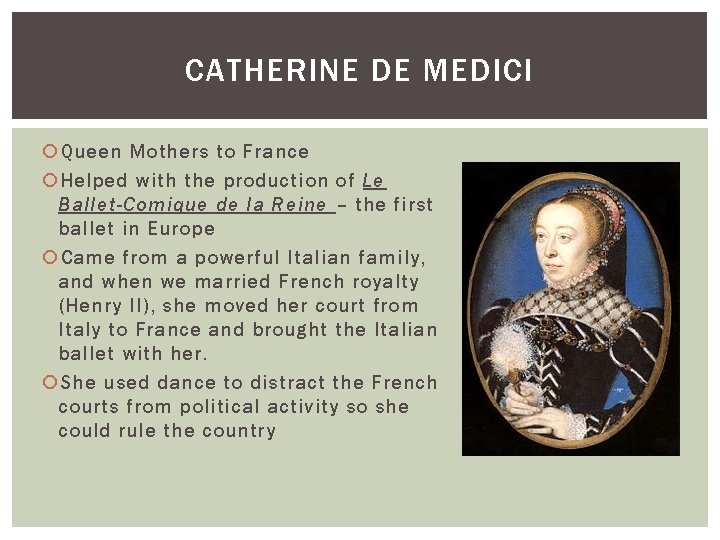
CATHERINE DE MEDICI Queen Mothers to France Helped with the production of Le Ballet-Comique de la Reine – the first ballet in Europe Came from a powerful Italian family, and when we married French royalty (Henry II), she moved her court from Italy to France and brought the Italian ballet with her. She used dance to distract the French courts from political activity so she could rule the country
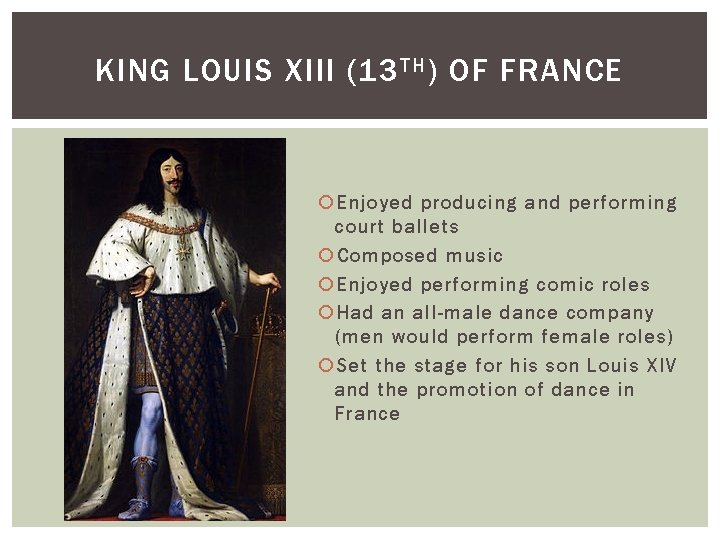
KING LOUIS XIII (13 TH ) OF FRANCE Enjoyed producing and performing court ballets Composed music Enjoyed performing comic roles Had an all-male dance company (men would perform female roles) Set the stage for his son Louis XIV and the promotion of dance in France
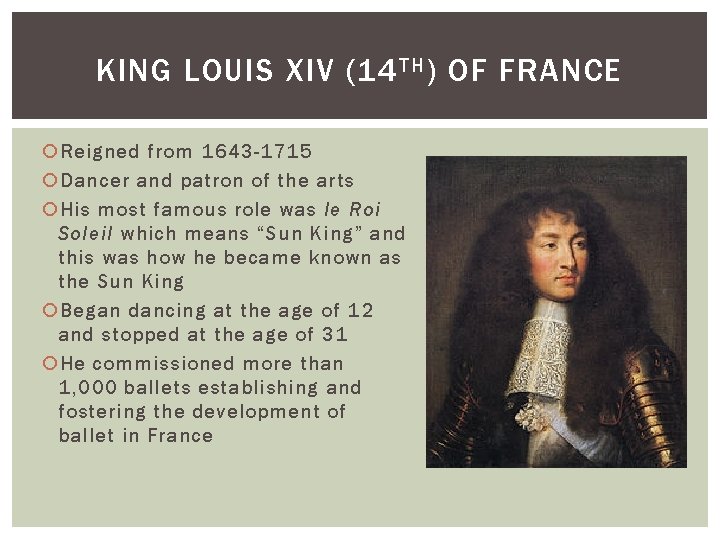
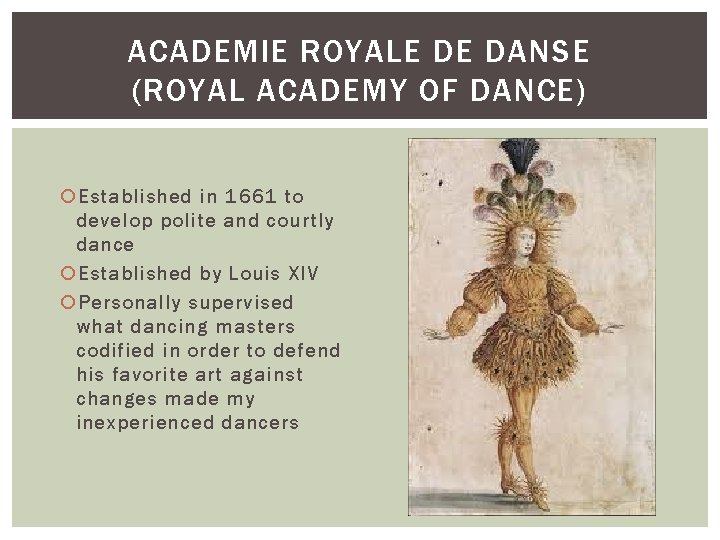
KING LOUIS XIV (14 TH ) OF FRANCE Reigned from 1643 -1715 Dancer and patron of the arts His most famous role was le Roi Soleil which means “Sun King” and this was how he became known as the Sun King Began dancing at the age of 12 and stopped at the age of 31 He commissioned more than 1, 000 ballets establishing and fostering the development of ballet in France
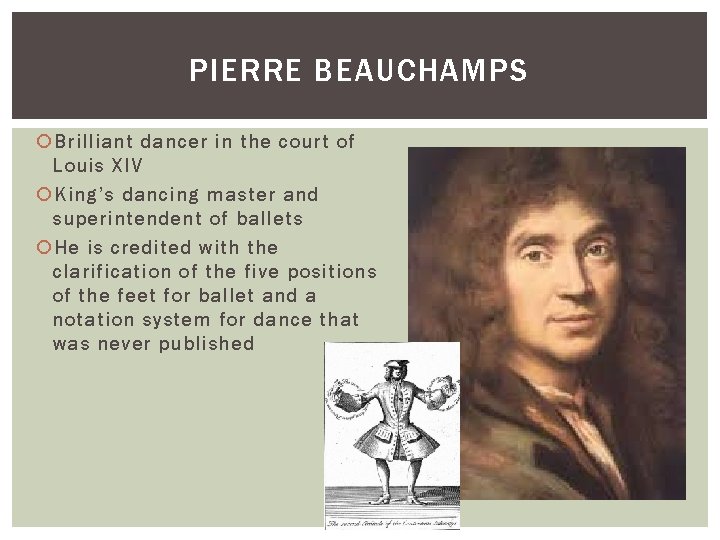
PIERRE BEAUCHAMPS Brilliant dancer in the court of Louis XIV King’s dancing master and superintendent of ballets He is credited with the clarification of the five positions of the feet for ballet and a notation system for dance that was never published
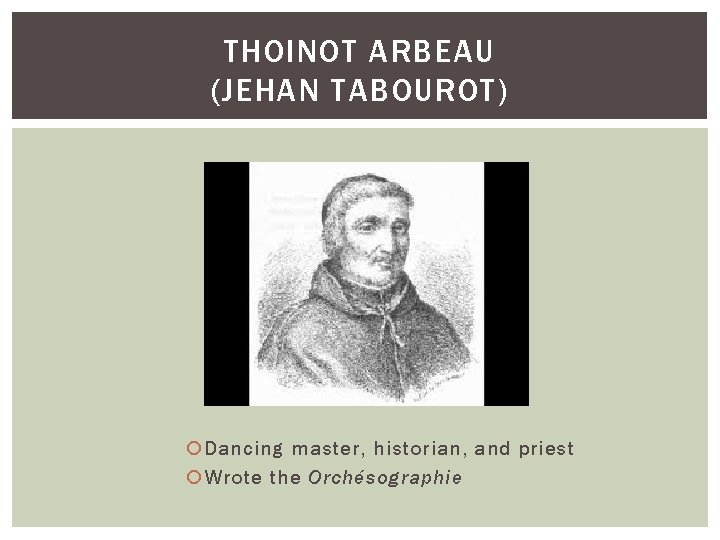
THOINOT ARBEAU (JEHAN TABOUROT) Dancing master, historian, and priest Wrote the Orchésographie
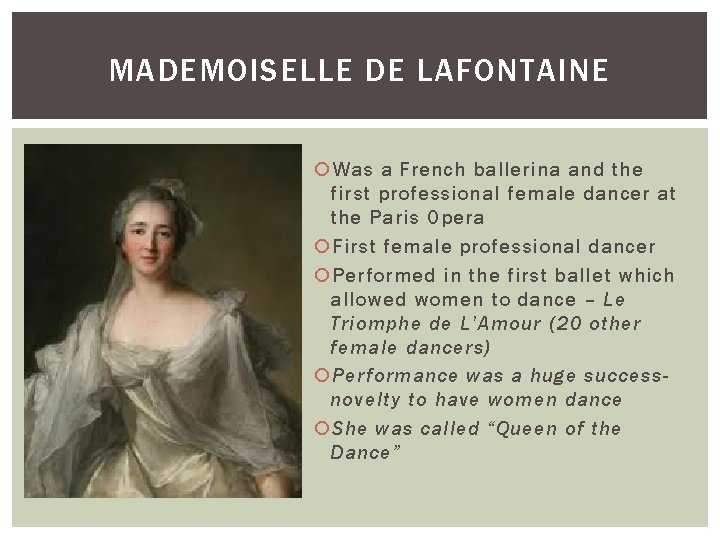
MADEMOISELLE DE LAFONTAINE Was a French ballerina and the first professional female dancer at the Paris Opera First female professional dancer Performed in the first ballet which allowed women to dance – Le Triomphe de L’Amour (20 other female dancers) Performance was a huge successnovelty to have women dance She was called “Queen of the Dance”
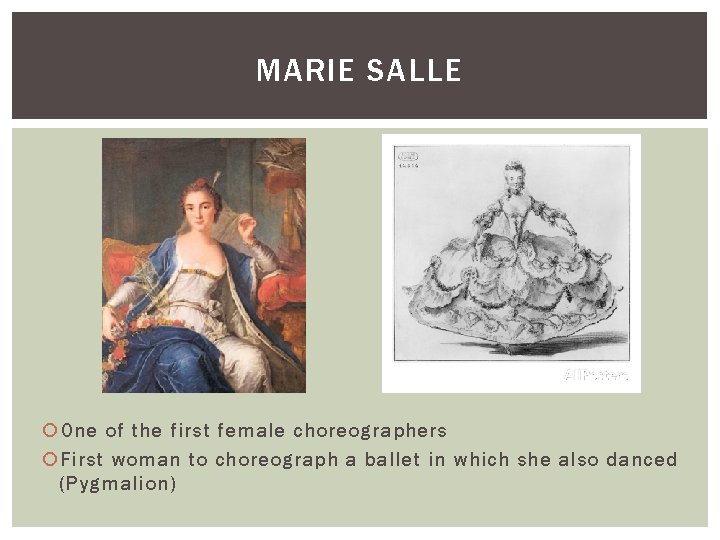
MARIE SALLE One of the first female choreographers First woman to choreograph a ballet in which she also danced (Pygmalion)
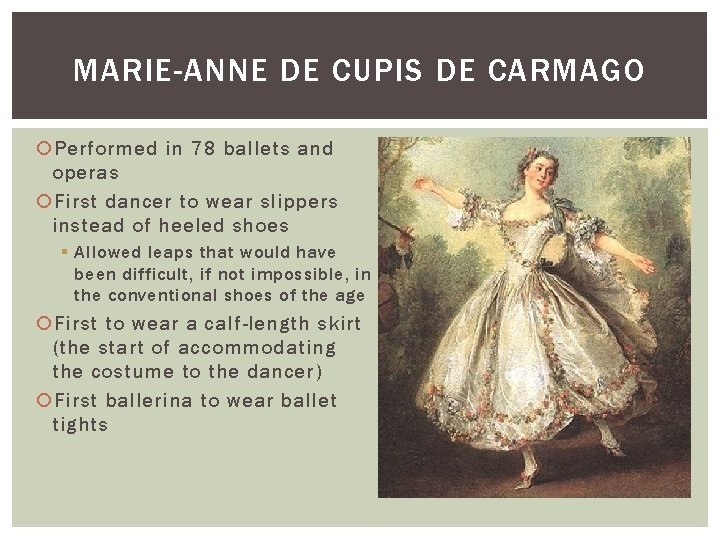
MARIE-ANNE DE CUPIS DE CARMAGO Performed in 78 ballets and operas First dancer to wear slippers instead of heeled shoes § Allowed leaps that would have been difficult, if not impossible, in the conventional shoes of the age First to wear a calf-length skirt (the start of accommodating the costume to the dancer) First ballerina to wear ballet tights
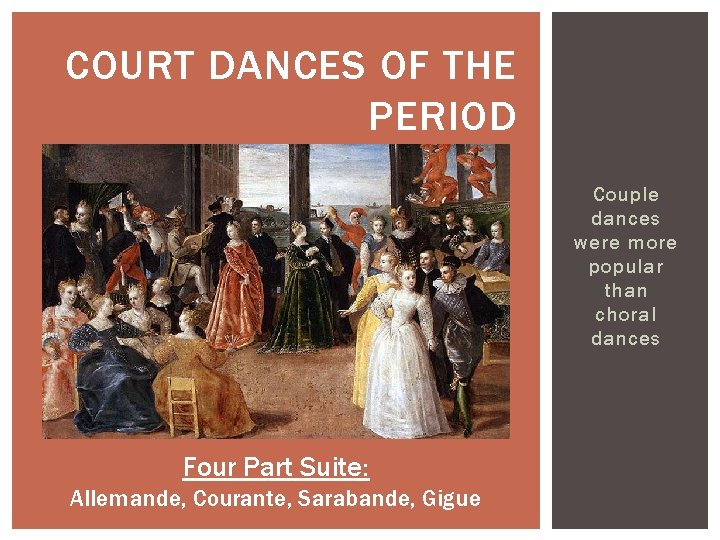
COURT DANCES OF THE PERIOD Couple dances were more popular than choral dances Four Part Suite: Allemande, Courante, Sarabande, Gigue
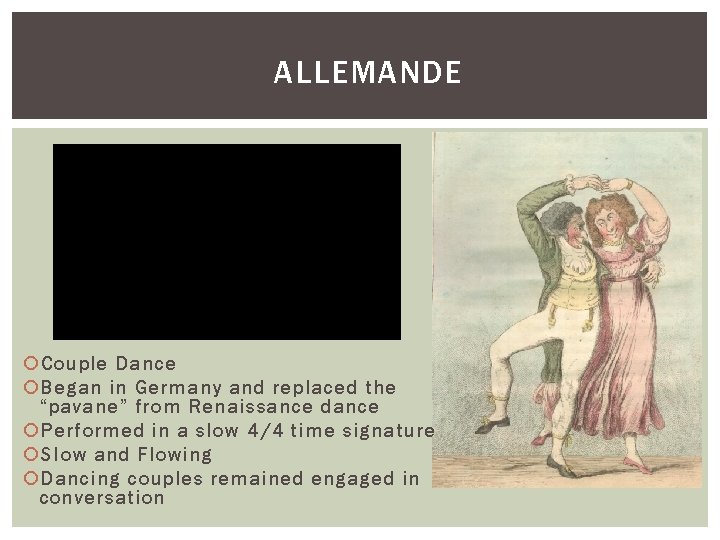
ALLEMANDE Couple Dance Began in Germany and replaced the “pavane” from Renaissance dance Performed in a slow 4/4 time signature Slow and Flowing Dancing couples remained engaged in conversation
COURANTE Originated in Italy (Catherine de Medici) Couple dance Wooing Dance Name of dance comes from Corrente- means stream in Italian Danced with fast running and jumping steps Each couple held hands to move forward and backward or dropped hands to face each other or turn
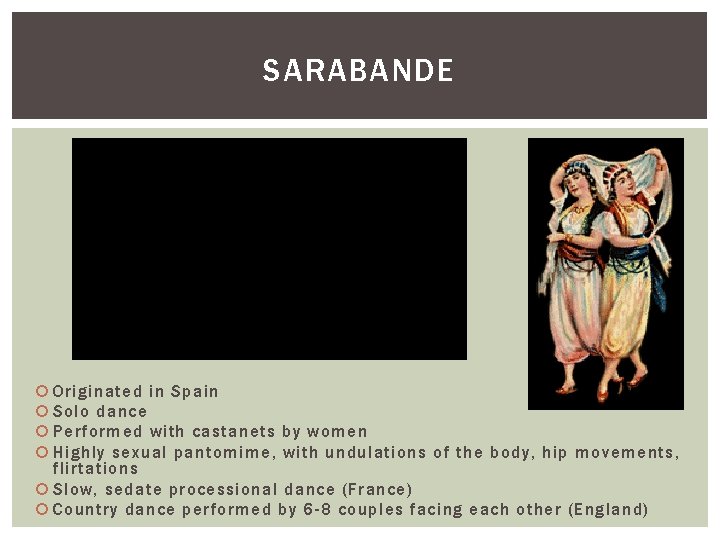
SARABANDE Originated in Spain Solo dance Performed with castanets by women Highly sexual pantomime, with undulations of the body, hip movements, flirtations Slow, sedate processional dance (France) Country dance performed by 6 -8 couples facing each other (England)
GIGUE Lively Dance in Triple Time Lively Footwork and Stampings Performed by both Nobles and Peasants
DANCE DESIGNS, ACCOMPANIMENT , DRESS/ ADORNMENT
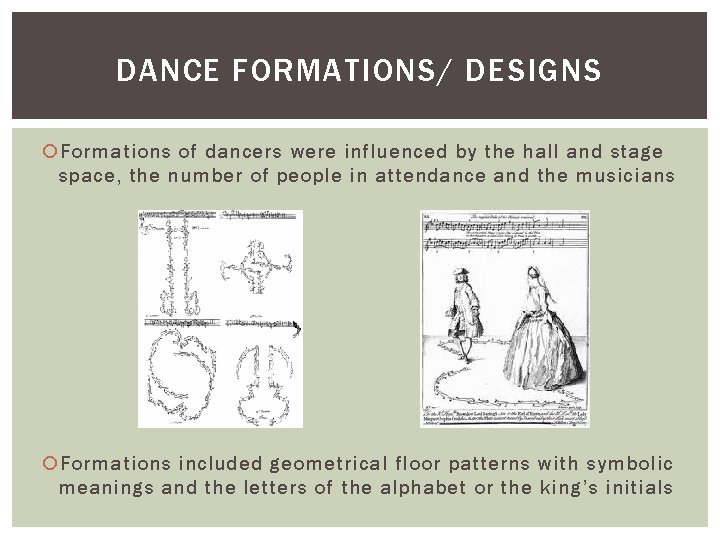
DANCE FORMATIONS/ DESIGNS Formations of dancers were influenced by the hall and stage space, the number of people in attendance and the musicians Formations included geometrical floor patterns with symbolic meanings and the letters of the alphabet or the king’s initials
ACCOMPANIMENT Music directly corresponded with dance Music was written and developed specifically for ballets
PUT THE DANCES IN ORDER THAT THEY WERE TYPICALLY DANCED Gigue Sarabande Allemande Courante
ADORNMENT/COSTUMES Elaborate and elegant dress for both men and women (ballroom and performances) Costumes were designed based on the silhouette of the times and character the dancer portrayed 1 to 1 ¼ inch heels were added to shoes in 17 t h centuryaffected people’s balance and posture Nobility wore scarlet heels on their shoes
POPULAR DANCES, BALLETS, AND DANCE LITURATURE
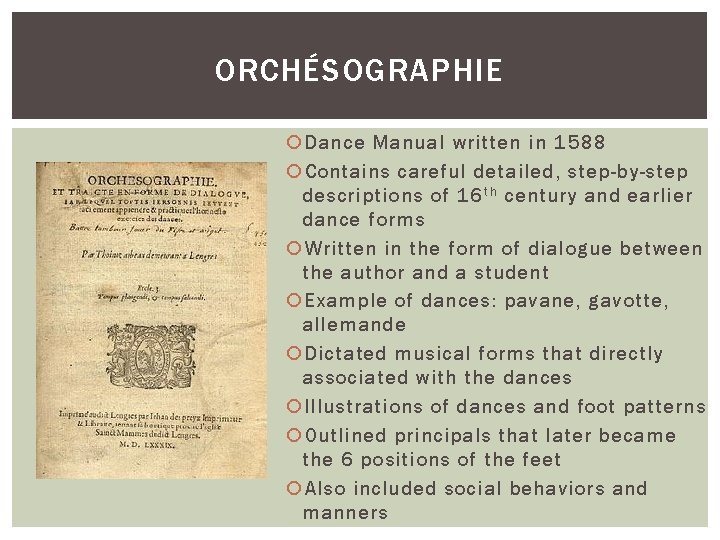
ORCHÉSOGRAPHIE Dance Manual written in 1588 Contains careful detailed, step-by-step descriptions of 16 t h century and earlier dance forms Written in the form of dialogue between the author and a student Example of dances: pavane, gavotte, allemande Dictated musical forms that directly associated with the dances Illustrations of dances and foot patterns Outlined principals that later became the 6 positions of the feet Also included social behaviors and manners
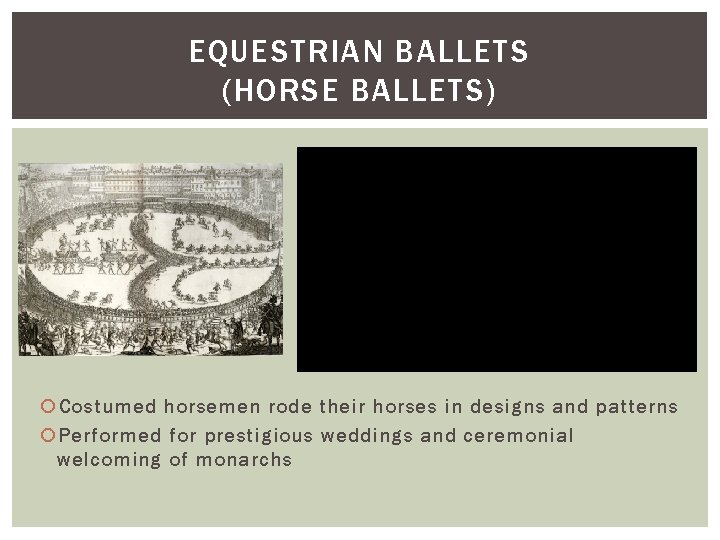
EQUESTRIAN BALLETS (HORSE BALLETS) Costumed horsemen rode their horses in designs and patterns Performed for prestigious weddings and ceremonial welcoming of monarchs
ACADEMIE ROYALE DE DANSE (ROYAL ACADEMY OF DANCE) Established in 1661 to develop polite and courtly dance Established by Louis XIV Personally supervised what dancing masters codified in order to defend his favorite art against changes made my inexperienced dancers
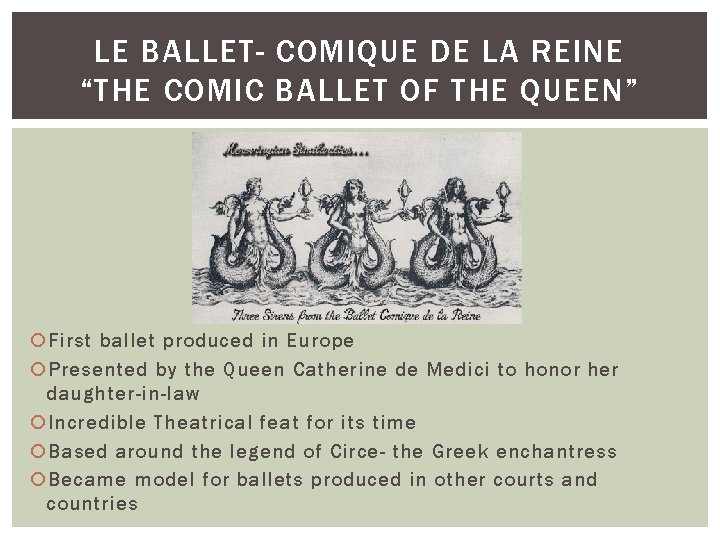
LE BALLET- COMIQUE DE LA REINE “THE COMIC BALLET OF THE QUEEN” First ballet produced in Europe Presented by the Queen Catherine de Medici to honor her daughter-in-law Incredible Theatrical feat for its time Based around the legend of Circe- the Greek enchantress Became model for ballets produced in other courts and countries