Culturally Responsive Teaching and the Summer Institute Culturally
- Slides: 28
Culturally Responsive Teaching and the Summer Institute • Culturally Responsive Teaching Working Group • November 22, 2013 March 24, 2012 1
Opening On the Phone and In the Chat Log • Where does culturally responsive teaching currently live in your institute’s strategic plan? Or, where do you hope it will live? • What has your region already done with culturally responsive teaching up to this point? 2
Spotlight on Phoenix March 24, 2012 3
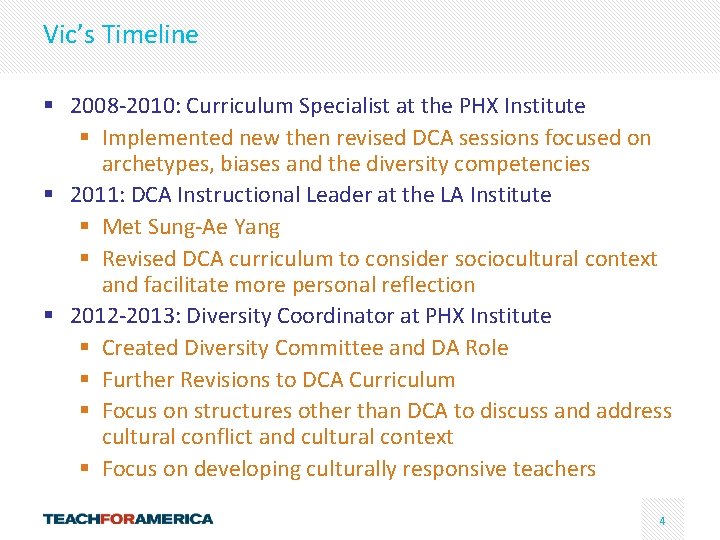
Vic’s Timeline § 2008 -2010: Curriculum Specialist at the PHX Institute § Implemented new then revised DCA sessions focused on archetypes, biases and the diversity competencies § 2011: DCA Instructional Leader at the LA Institute § Met Sung-Ae Yang § Revised DCA curriculum to consider sociocultural context and facilitate more personal reflection § 2012 -2013: Diversity Coordinator at PHX Institute § Created Diversity Committee and DA Role § Further Revisions to DCA Curriculum § Focus on structures other than DCA to discuss and address cultural conflict and cultural context § Focus on developing culturally responsive teachers 4
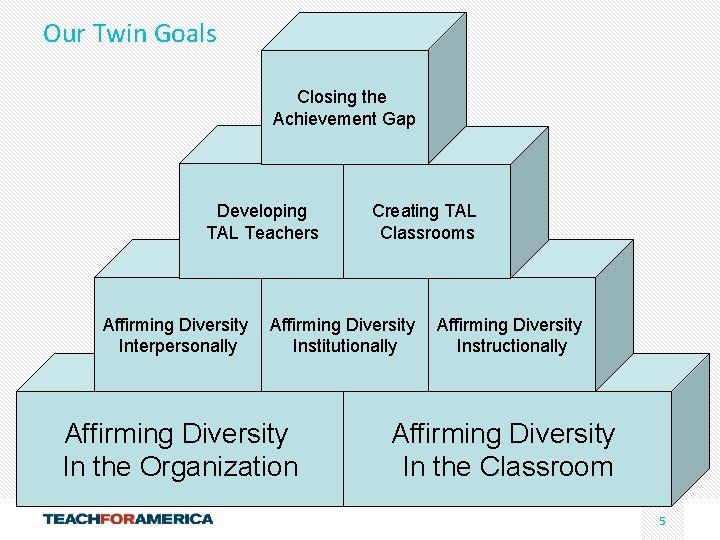
Our Twin Goals Closing the Achievement Gap Developing TAL Teachers Affirming Diversity Interpersonally Creating TAL Classrooms Affirming Diversity Institutionally Affirming Diversity In the Organization Affirming Diversity Instructionally Affirming Diversity In the Classroom 5
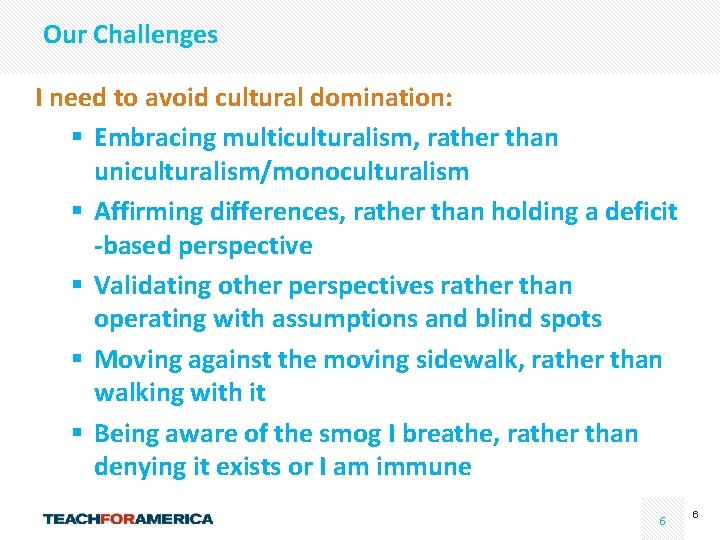
Our Challenges I need to avoid cultural domination: § Embracing multiculturalism, rather than uniculturalism/monoculturalism § Affirming differences, rather than holding a deficit -based perspective § Validating other perspectives rather than operating with assumptions and blind spots § Moving against the moving sidewalk, rather than walking with it § Being aware of the smog I breathe, rather than denying it exists or I am immune 6 6
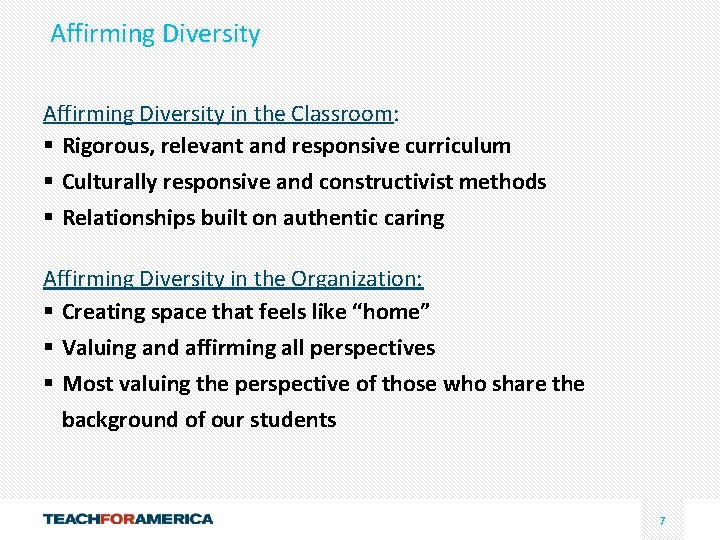
Affirming Diversity in the Classroom: § Rigorous, relevant and responsive curriculum § Culturally responsive and constructivist methods § Relationships built on authentic caring Affirming Diversity in the Organization: § Creating space that feels like “home” § Valuing and affirming all perspectives § Most valuing the perspective of those who share the background of our students 7
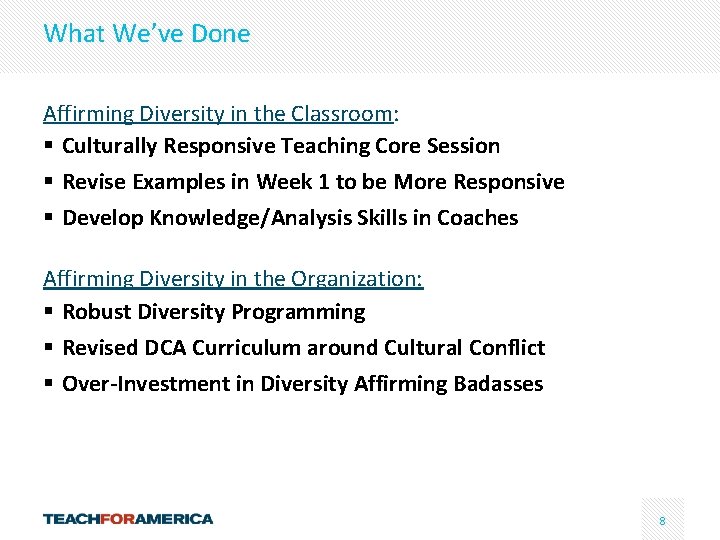
What We’ve Done Affirming Diversity in the Classroom: § Culturally Responsive Teaching Core Session § Revise Examples in Week 1 to be More Responsive § Develop Knowledge/Analysis Skills in Coaches Affirming Diversity in the Organization: § Robust Diversity Programming § Revised DCA Curriculum around Cultural Conflict § Over-Investment in Diversity Affirming Badasses 8
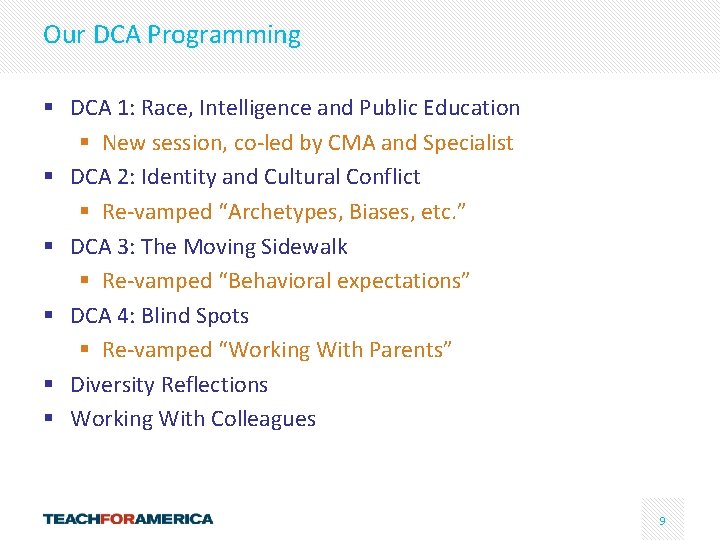
Our DCA Programming § DCA 1: Race, Intelligence and Public Education § New session, co-led by CMA and Specialist § DCA 2: Identity and Cultural Conflict § Re-vamped “Archetypes, Biases, etc. ” § DCA 3: The Moving Sidewalk § Re-vamped “Behavioral expectations” § DCA 4: Blind Spots § Re-vamped “Working With Parents” § Diversity Reflections § Working With Colleagues 9
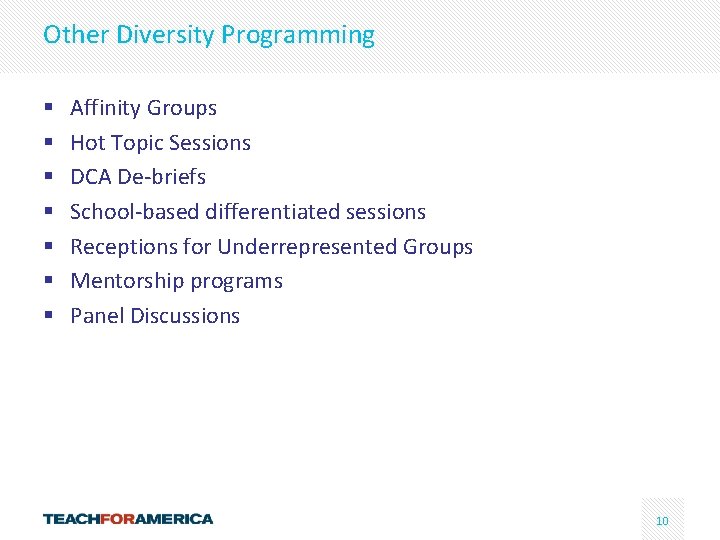
Other Diversity Programming § § § § Affinity Groups Hot Topic Sessions DCA De-briefs School-based differentiated sessions Receptions for Underrepresented Groups Mentorship programs Panel Discussions 10
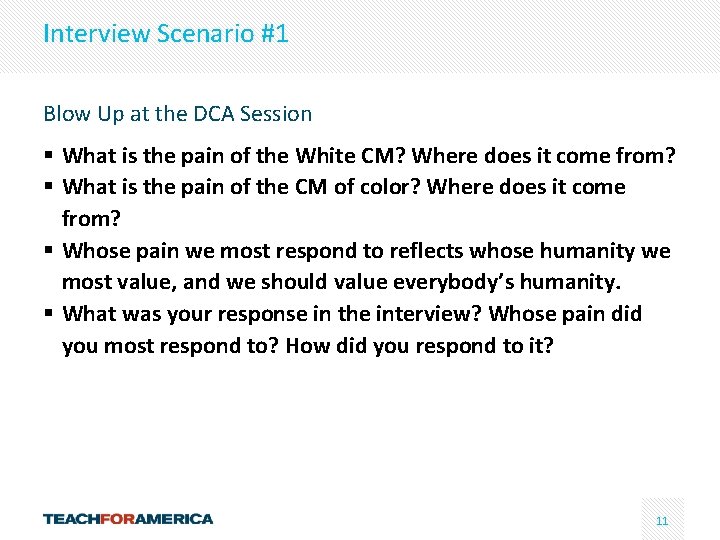
Interview Scenario #1 Blow Up at the DCA Session § What is the pain of the White CM? Where does it come from? § What is the pain of the CM of color? Where does it come from? § Whose pain we most respond to reflects whose humanity we most value, and we should value everybody’s humanity. § What was your response in the interview? Whose pain did you most respond to? How did you respond to it? 11
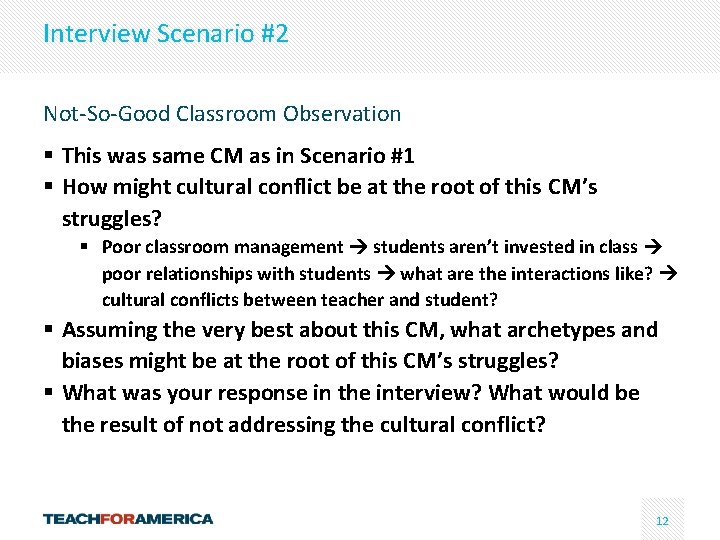
Interview Scenario #2 Not-So-Good Classroom Observation § This was same CM as in Scenario #1 § How might cultural conflict be at the root of this CM’s struggles? § Poor classroom management students aren’t invested in class poor relationships with students what are the interactions like? cultural conflicts between teacher and student? § Assuming the very best about this CM, what archetypes and biases might be at the root of this CM’s struggles? § What was your response in the interview? What would be the result of not addressing the cultural conflict? 12
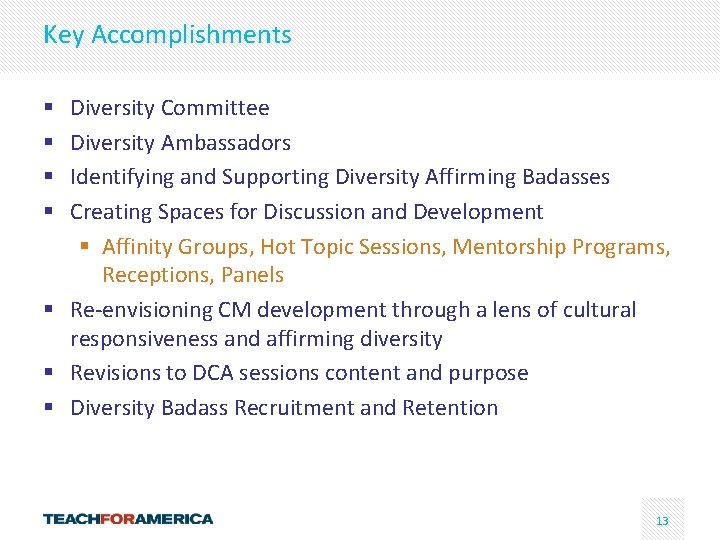
Key Accomplishments Diversity Committee Diversity Ambassadors Identifying and Supporting Diversity Affirming Badasses Creating Spaces for Discussion and Development § Affinity Groups, Hot Topic Sessions, Mentorship Programs, Receptions, Panels § Re-envisioning CM development through a lens of cultural responsiveness and affirming diversity § Revisions to DCA sessions content and purpose § Diversity Badass Recruitment and Retention § § 13
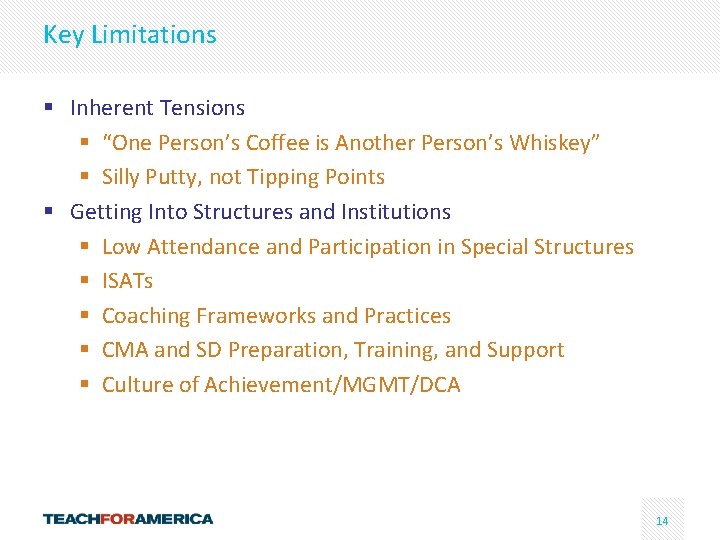
Key Limitations § Inherent Tensions § “One Person’s Coffee is Another Person’s Whiskey” § Silly Putty, not Tipping Points § Getting Into Structures and Institutions § Low Attendance and Participation in Special Structures § ISATs § Coaching Frameworks and Practices § CMA and SD Preparation, Training, and Support § Culture of Achievement/MGMT/DCA 14
Where does Culturally Responsive Teaching Come From? March 24, 2012 15
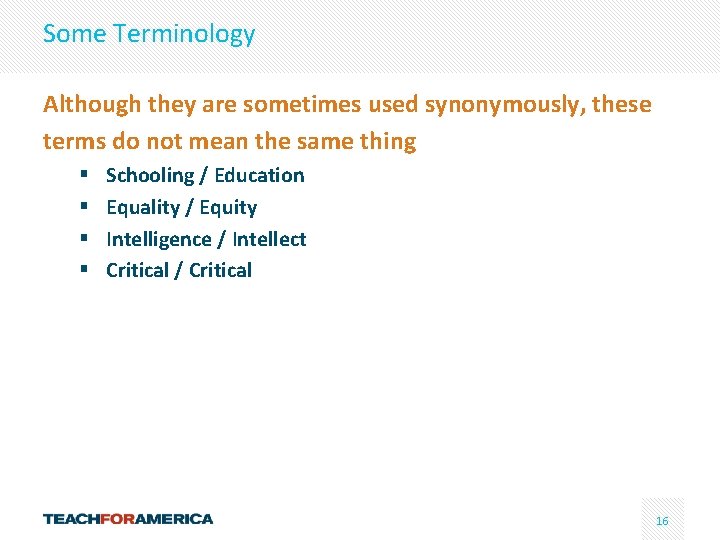
Some Terminology Although they are sometimes used synonymously, these terms do not mean the same thing § § Schooling / Education Equality / Equity Intelligence / Intellect Critical / Critical 16
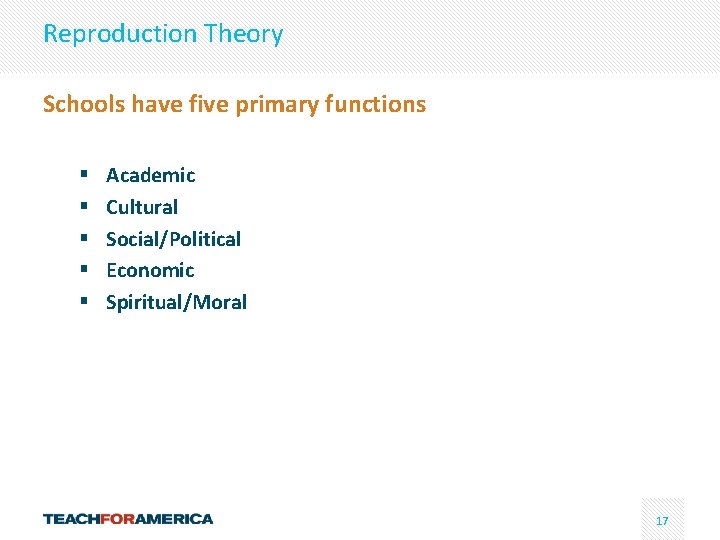
Reproduction Theory Schools have five primary functions § § § Academic Cultural Social/Political Economic Spiritual/Moral 17
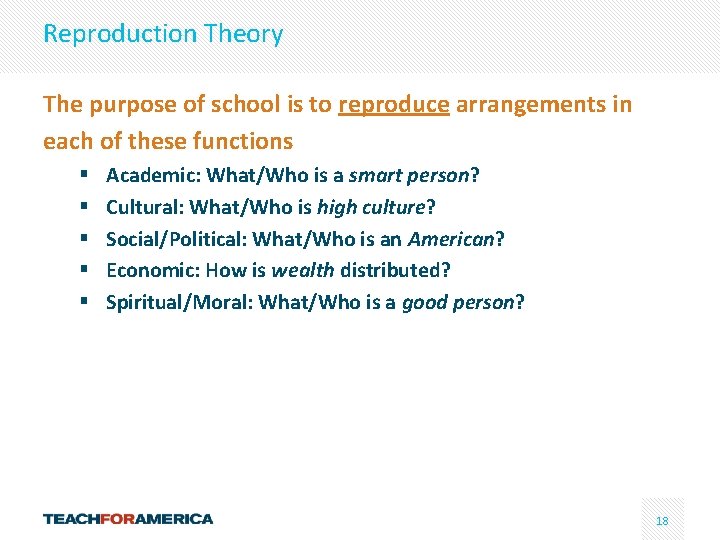
Reproduction Theory The purpose of school is to reproduce arrangements in each of these functions § § § Academic: What/Who is a smart person? Cultural: What/Who is high culture? Social/Political: What/Who is an American? Economic: How is wealth distributed? Spiritual/Moral: What/Who is a good person? 18
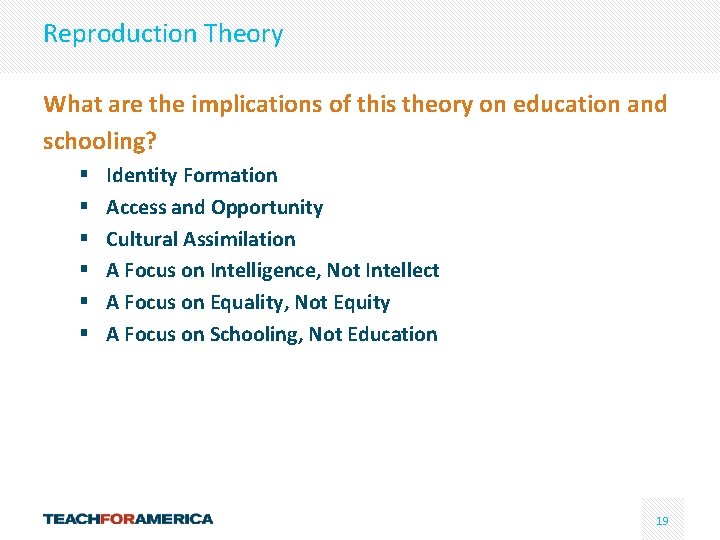
Reproduction Theory What are the implications of this theory on education and schooling? § § § Identity Formation Access and Opportunity Cultural Assimilation A Focus on Intelligence, Not Intellect A Focus on Equality, Not Equity A Focus on Schooling, Not Education 19
Resistance Theory If schools re-produce, they therefore produce. § § § Academic: Cultural: Social/Political: Economic: Spiritual/Moral: 20
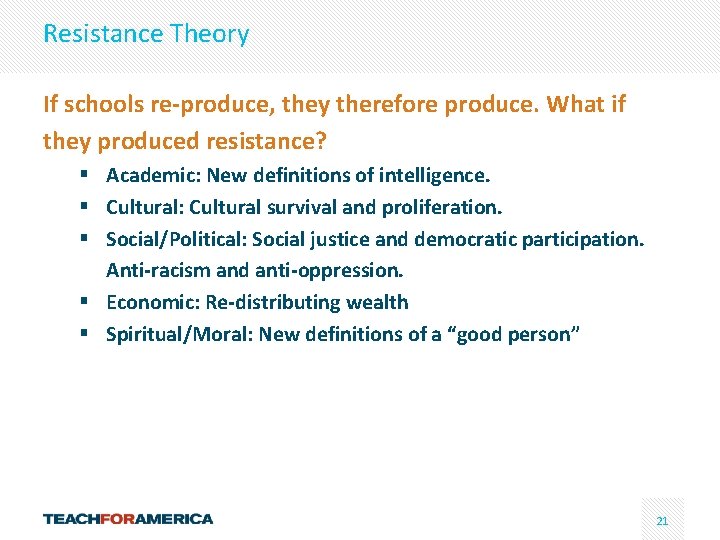
Resistance Theory If schools re-produce, they therefore produce. What if they produced resistance? § Academic: New definitions of intelligence. § Cultural: Cultural survival and proliferation. § Social/Political: Social justice and democratic participation. Anti-racism and anti-oppression. § Economic: Re-distributing wealth § Spiritual/Moral: New definitions of a “good person” 21
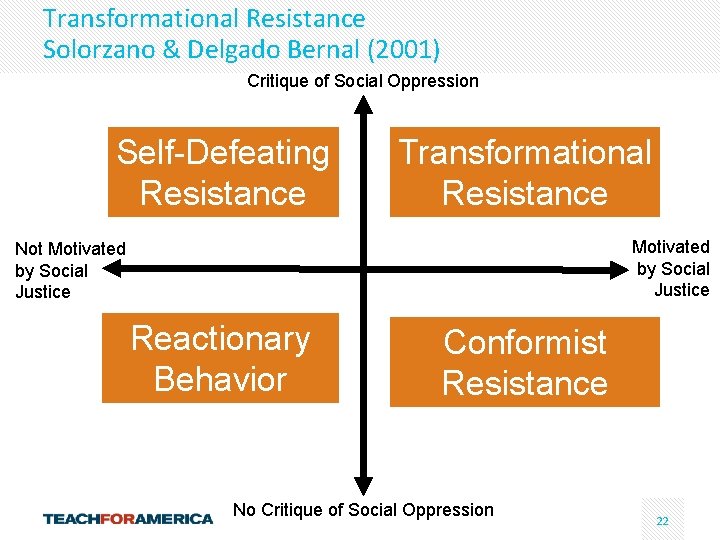
Transformational Resistance Solorzano & Delgado Bernal (2001) Critique of Social Oppression Self-Defeating Resistance Transformational Resistance Motivated by Social Justice Not Motivated by Social Justice Reactionary Behavior Conformist Resistance No Critique of Social Oppression 22
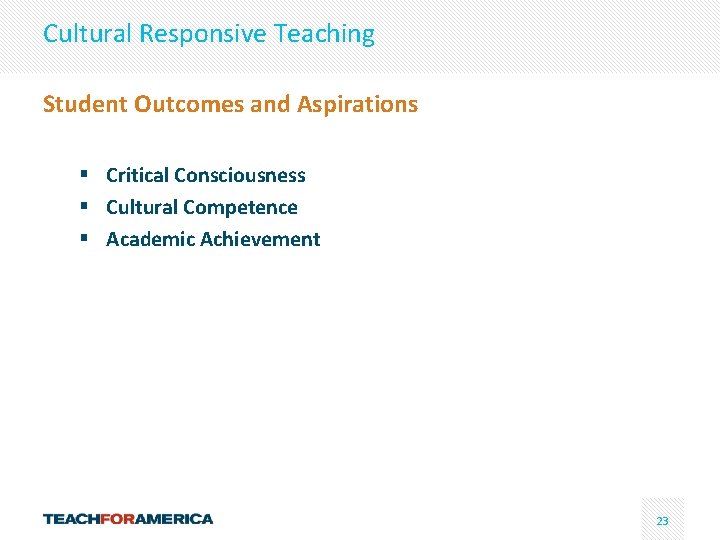
Cultural Responsive Teaching Student Outcomes and Aspirations § Critical Consciousness § Cultural Competence § Academic Achievement 23
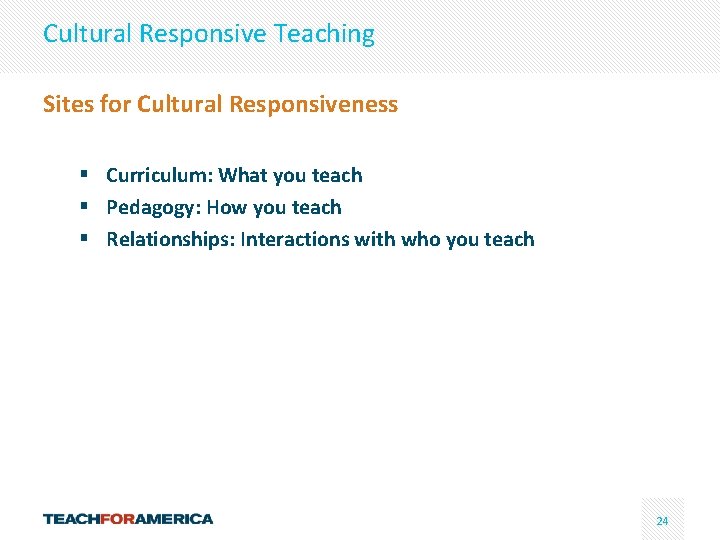
Cultural Responsive Teaching Sites for Cultural Responsiveness § Curriculum: What you teach § Pedagogy: How you teach § Relationships: Interactions with who you teach 24
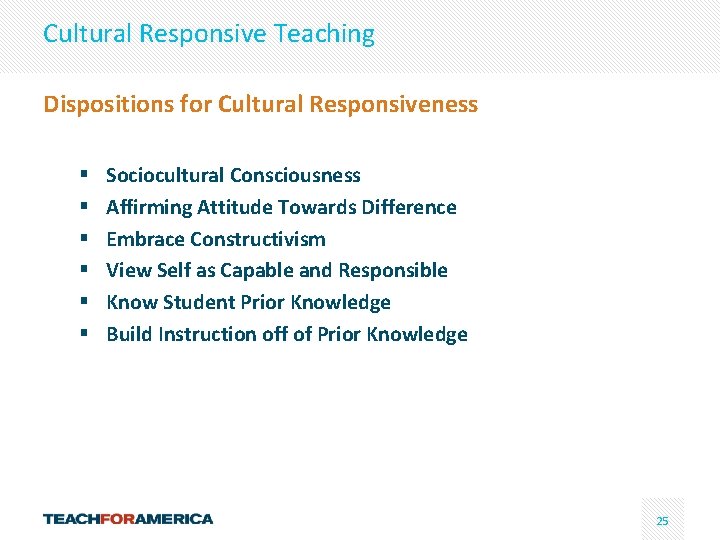
Cultural Responsive Teaching Dispositions for Cultural Responsiveness § § § Sociocultural Consciousness Affirming Attitude Towards Difference Embrace Constructivism View Self as Capable and Responsible Know Student Prior Knowledge Build Instruction off of Prior Knowledge 25
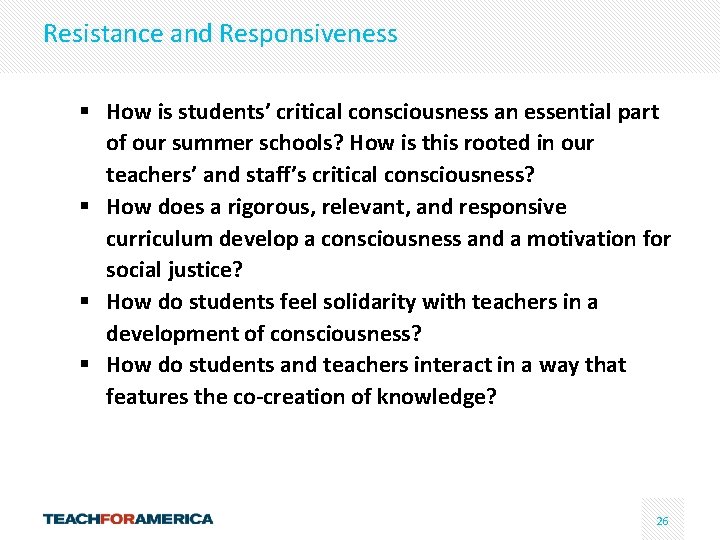
Resistance and Responsiveness § How is students’ critical consciousness an essential part of our summer schools? How is this rooted in our teachers’ and staff’s critical consciousness? § How does a rigorous, relevant, and responsive curriculum develop a consciousness and a motivation for social justice? § How do students feel solidarity with teachers in a development of consciousness? § How do students and teachers interact in a way that features the co-creation of knowledge? 26
Implications for Summer Institute March 24, 2012 27
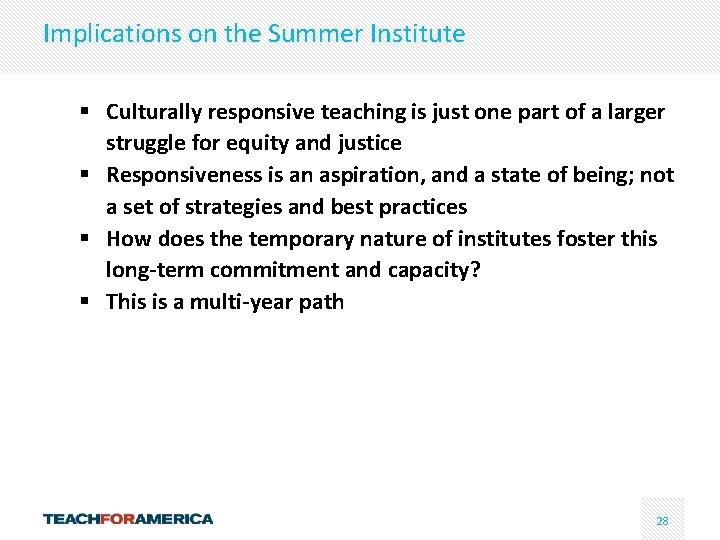
Implications on the Summer Institute § Culturally responsive teaching is just one part of a larger struggle for equity and justice § Responsiveness is an aspiration, and a state of being; not a set of strategies and best practices § How does the temporary nature of institutes foster this long-term commitment and capacity? § This is a multi-year path 28