CONTINUOUS RENAL REPLACEMENT THERAPY Joshua H Wolf MD

- Slides: 23
CONTINUOUS RENAL REPLACEMENT THERAPY Joshua H. Wolf, MD Transplant Nephrologist Piedmont Transplant Institute
Renal Replacement Therapy (RRT) �Indications = A E I O U �Acidosis �Electrolytes (hyperkalemia, hyponatremia) �Intoxication (methylene glycol) �Overload – Volume Overload �Uremia
Continuous Renal Replacement Therapy (CRRT) �A E I O U in the setting of: �Hypotension �Oligoanuria and receiving multiple blood products � Pre-liver patient who is actively bleeding requiring multiple blood products �Hyponatremia refractory to medical intervention �Critically ill, intubated with drug intoxication and tenous volume status �Pre-liver patient who needs aggressive volume removal to optimize for liver transplant
Continuous Renal Replacement Therapy (CRRT) • SCUF- Slow Continuous Ultrafiltration � Ultrafiltration • CVVH- Continuous Veno-Venous Hemofiltration � Convection • CVVHD- Continuous Veno-Venous Hemodialysis � Diffusion • CVVHDF- Continuous Veno-Venous Hemodiafiltration � Diffusion and Convection
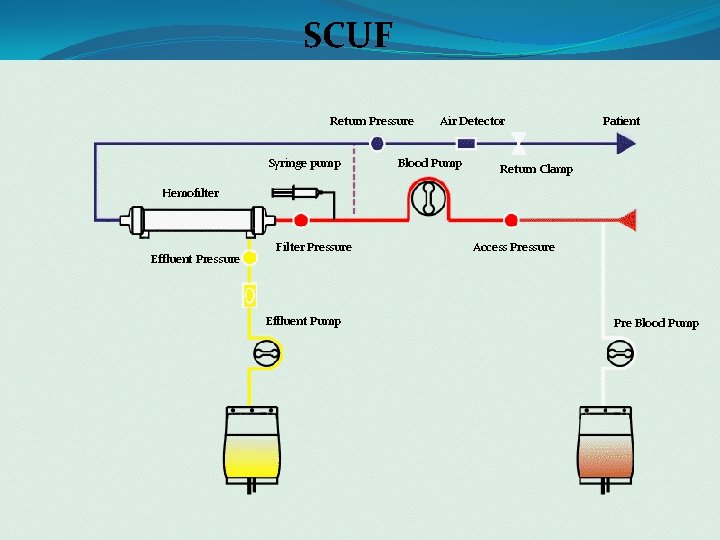
SCUF-Ultrafiltration • Slow continuous ultrafiltration: �Requires a blood an effluent pump. �No dialysate or replacement solution. �Fluid removal up to 2 liters/hr can be achieved. • Primary Goal �Safe management of fluid removal �Large fluid removal via ultrafiltration
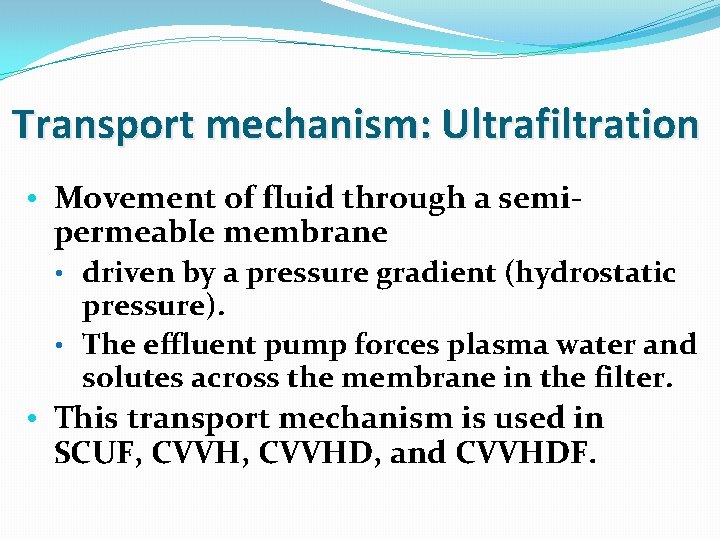
Transport mechanism: Ultrafiltration • Movement of fluid through a semipermeable membrane • driven by a pressure gradient (hydrostatic pressure). • The effluent pump forces plasma water and solutes across the membrane in the filter. • This transport mechanism is used in SCUF, CVVHD, and CVVHDF.
SCUF Return Pressure Syringe pump Air Detector Blood Pump Patient Return Clamp Hemofilter Effluent Pressure Filter Pressure Effluent Pump Access Pressure Pre Blood Pump
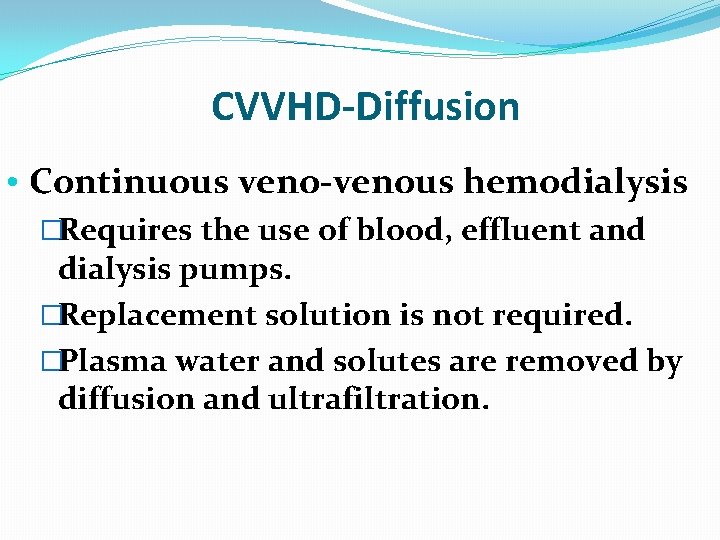
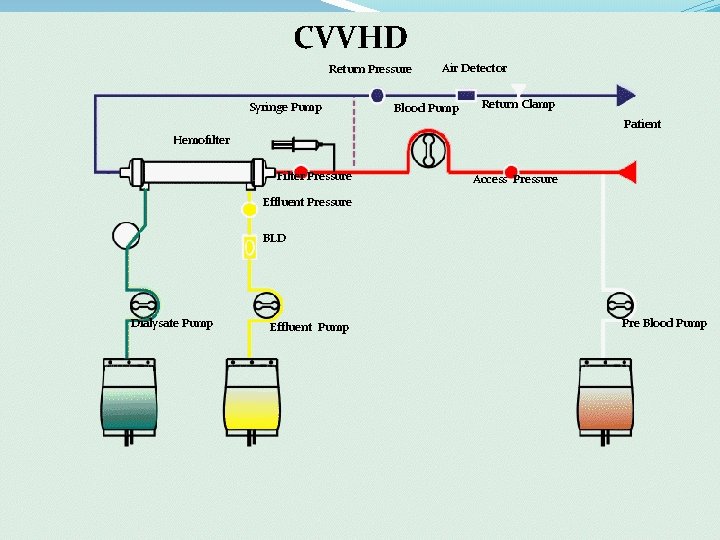
CVVHD-Diffusion • Continuous veno-venous hemodialysis �Requires the use of blood, effluent and dialysis pumps. �Replacement solution is not required. �Plasma water and solutes are removed by diffusion and ultrafiltration.
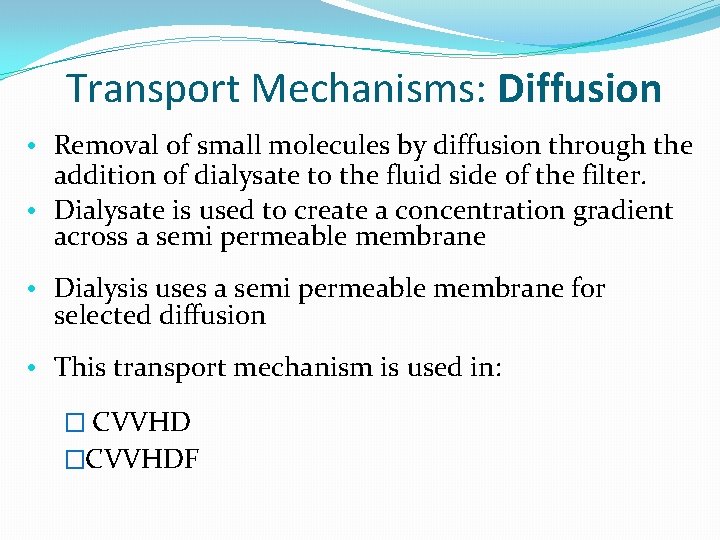
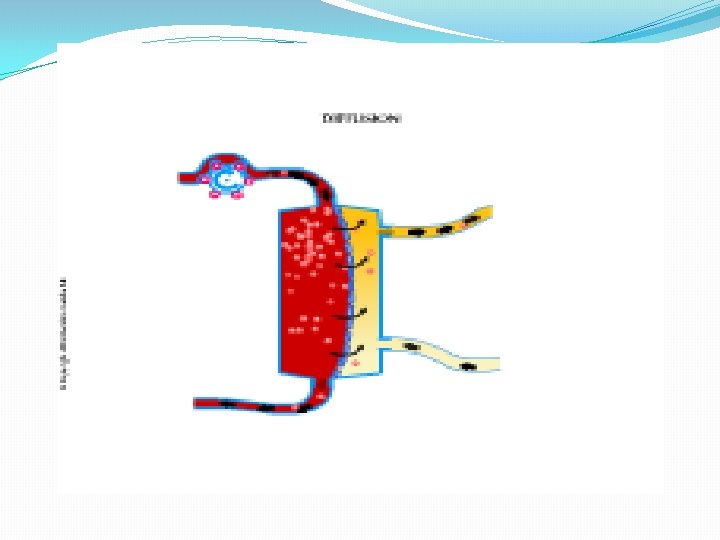
Transport Mechanisms: Diffusion • Removal of small molecules by diffusion through the addition of dialysate to the fluid side of the filter. • Dialysate is used to create a concentration gradient across a semi permeable membrane • Dialysis uses a semi permeable membrane for selected diffusion • This transport mechanism is used in: � CVVHD �CVVHDF
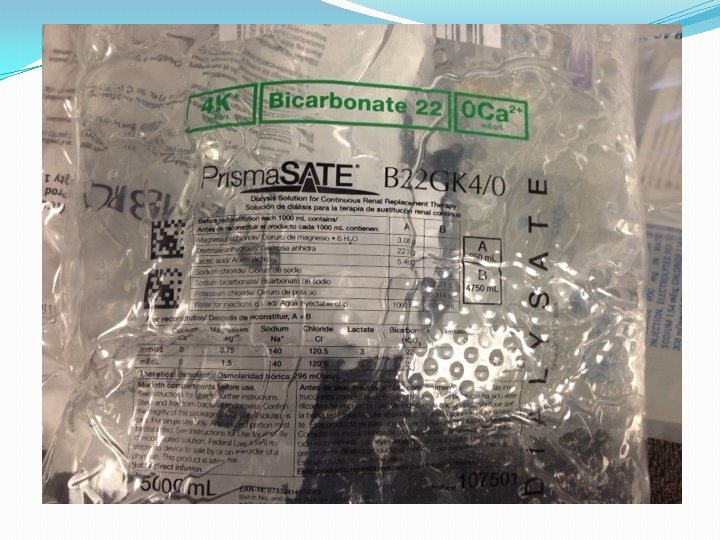
Dialysate Solutions • Through diffusion, dialysate corrects underlying metabolic problems • Dialysate is dependent on buffering agent, electrolytes, and glucose • Dialysate formulas should reflect normal plasma values to achieve homeostasis
Dialysate
CVVHD Return Pressure Syringe Pump Air Detector Blood Pump Return Clamp Patient Hemofilter Filter Pressure Access Pressure Effluent Pressure BLD Dialysate Pump 306100135 Effluent Pump Pre Blood Pump
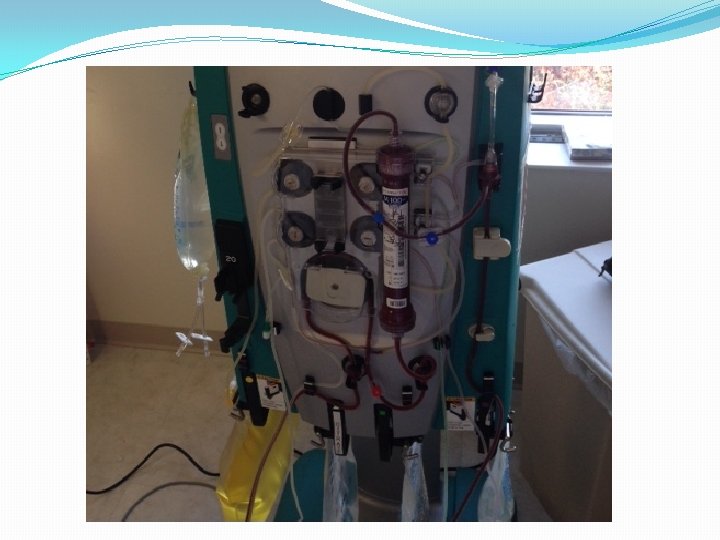
CVVHDF • Continuous veno-venous hemodiafiltration �Requires the use of a blood, effluent, dialysate and replacement pumps. �Both dialysate and replacement solutions are used. �Plasma water and solutes are removed by diffusion, convection and ultrafiltration.
Transport Mechanisms: Diffusion and Convection • Removal of small molecules by diffusion through the addition of dialysate solution. • Removal of middle to large molecules by convection through the addition of replacement solution. • This transport mechanism is used in: � CVVHDF
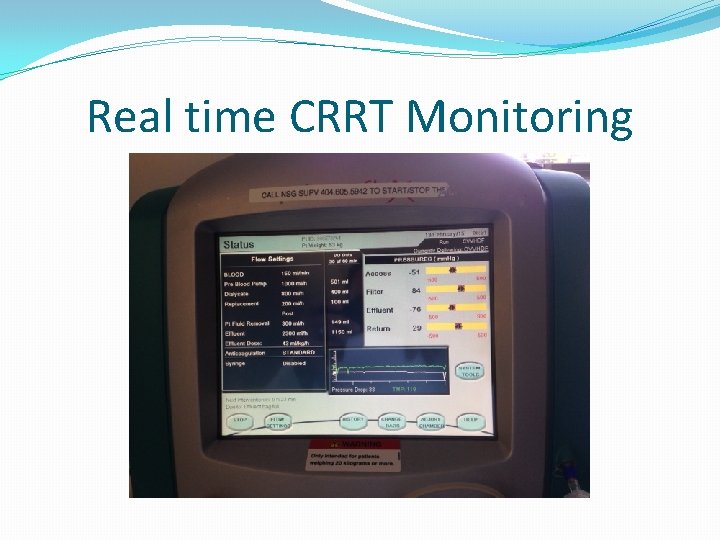
Intratherapy Monitoring The critical care nurse must continuously monitor the following parameters during CRRT � Blood pressure �Blood flow rate � Patency of circuit �Ultrafiltration flow rate � Hemodynamic stability � Level of consciousness � Acid/base balance � Electrolyte balance � Hematological status � Infection � Nutritional status � Air embolus �Dialysate/replacement flow rate �Alarms and responses �Color of ultrafiltrate/filter blood leak �Color of CRRT circuit
Real time CRRT Monitoring
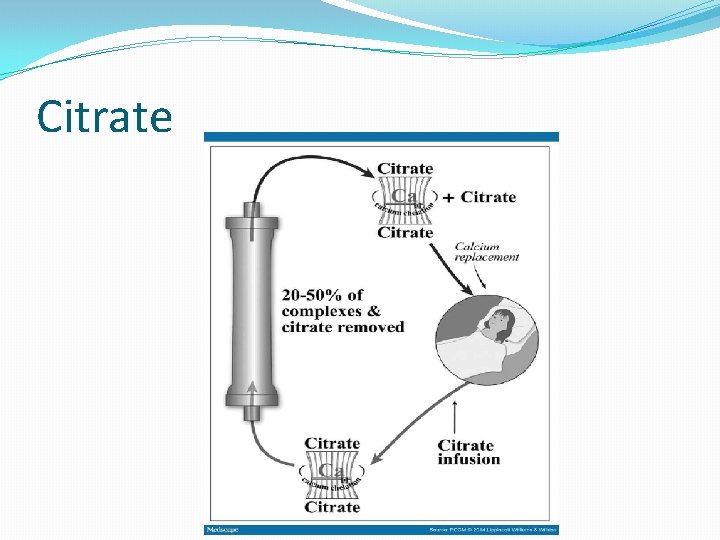
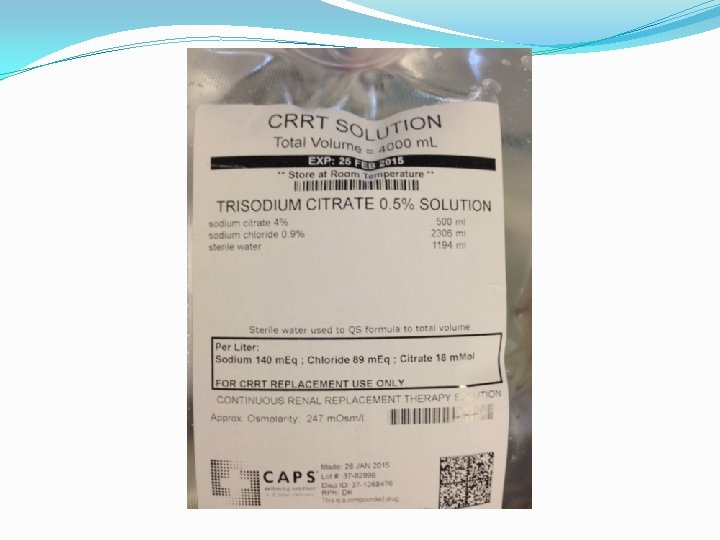
Citrate
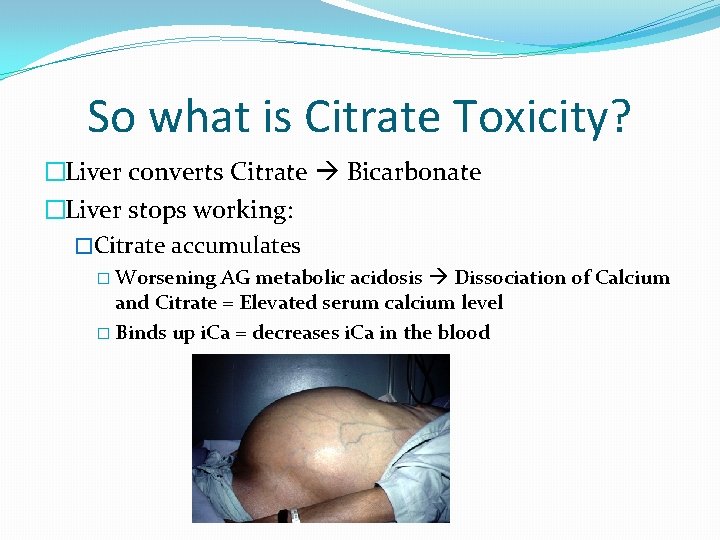
So what is Citrate Toxicity? �Liver converts Citrate Bicarbonate �Liver stops working: �Citrate accumulates � Worsening AG metabolic acidosis Dissociation of Calcium and Citrate = Elevated serum calcium level � Binds up i. Ca = decreases i. Ca in the blood
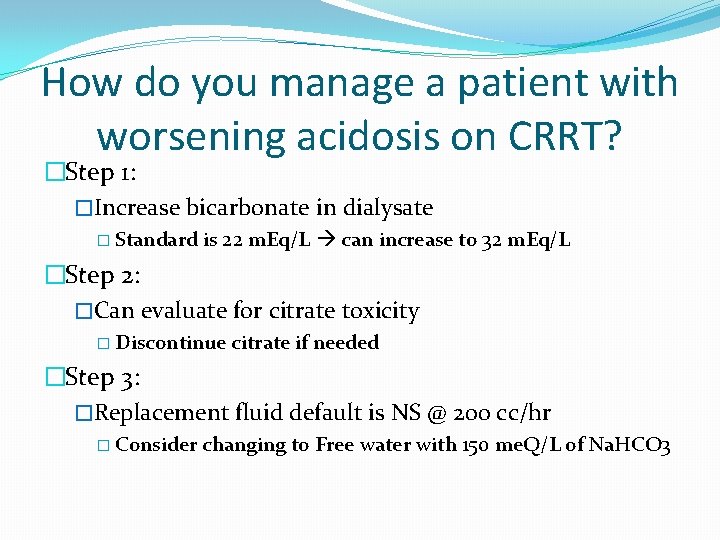
How do you manage a patient with worsening acidosis on CRRT? �Step 1: �Increase bicarbonate in dialysate � Standard is 22 m. Eq/L can increase to 32 m. Eq/L �Step 2: �Can evaluate for citrate toxicity � Discontinue citrate if needed �Step 3: �Replacement fluid default is NS @ 200 cc/hr � Consider changing to Free water with 150 me. Q/L of Na. HCO 3
Questions?