Cognitive Dissonance Antecedents and Impacts at Workplace Javaid

- Slides: 22
Cognitive Dissonance Antecedents and Impacts at Workplace Javaid Ali Shah Prof. Delphine Lacaze
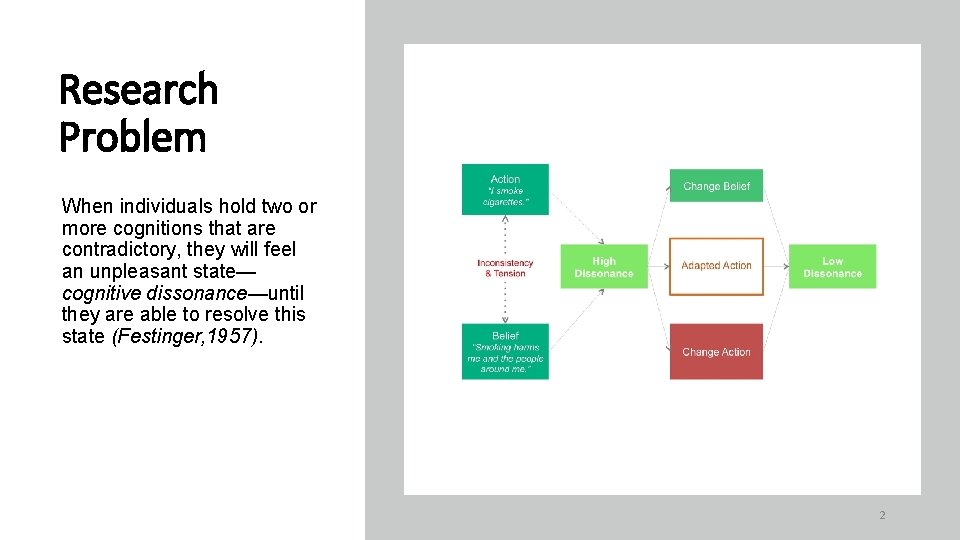
Research Problem When individuals hold two or more cognitions that are contradictory, they will feel an unpleasant state— cognitive dissonance—until they are able to resolve this state (Festinger, 1957). 2
Literature Review • It leads to dissonance if an individual’s self-concept conflicts with the organizational work standards. (Bhave & Glomb 2016). • Workplace Practices which are against employees’ ethical codes causes cognitive dissonance (Kammeyer-Mueller, 2012) • Incongruence between supervisor and employee perceptions leads to cognitive dissonance. (Bashshur, Hernandez, 2011) • Employees who experience less dissonance in their job would exhibit a higher level of job satisfaction (Okpara, 2002). • Cognitive dissonance theory is useful in investigating employee turnover and job satisfaction. (Halpern, 2005). • Employees adjust their performance level to redress cognitive dissonance. (Adam, 1963)
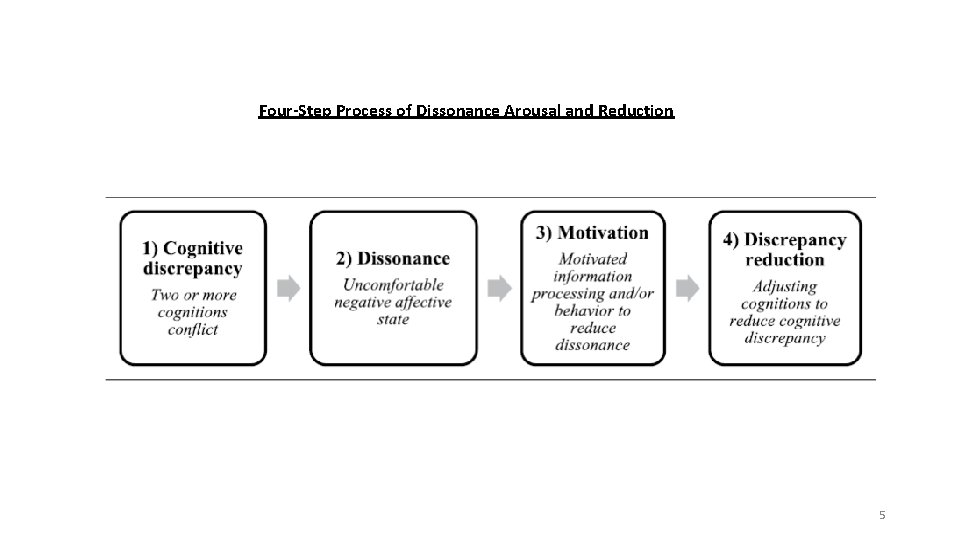
Cognitive Dissonance Theory Cognitive dissonance theory suggests that the dissonance arousal process starts when an individual experience a discrepancy between two or more cognitions. Cognitions are considered to be discrepant if a person believes that one cognition follows from the obverse of another (Cooper, 2012). There are many possible scenarios that can induce cognitive dissonance, and each scenario is often coupled with a specific prediction of the form of discrepancy reduction. 4
Four-Step Process of Dissonance Arousal and Reduction 5
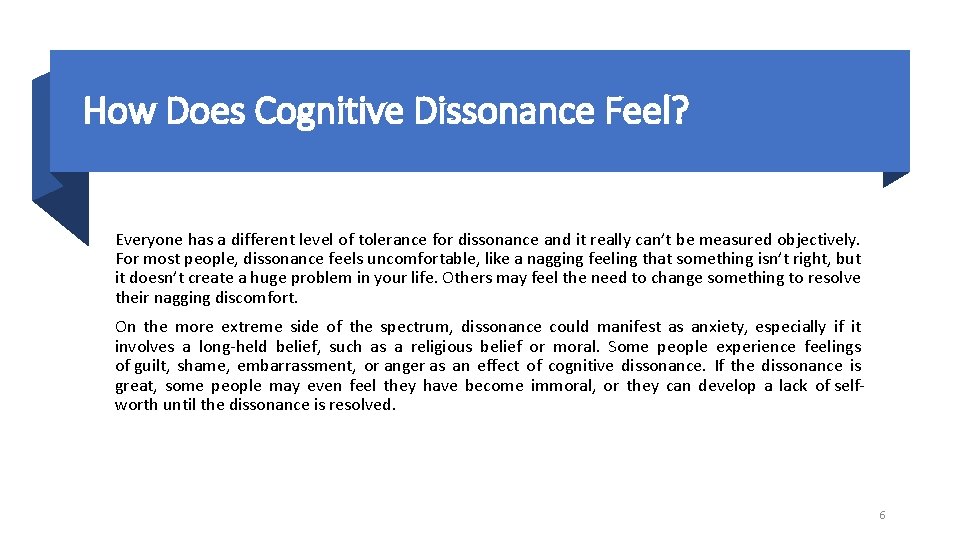
How Does Cognitive Dissonance Feel? Everyone has a different level of tolerance for dissonance and it really can’t be measured objectively. For most people, dissonance feels uncomfortable, like a nagging feeling that something isn’t right, but it doesn’t create a huge problem in your life. Others may feel the need to change something to resolve their nagging discomfort. On the more extreme side of the spectrum, dissonance could manifest as anxiety, especially if it involves a long-held belief, such as a religious belief or moral. Some people experience feelings of guilt, shame, embarrassment, or anger as an effect of cognitive dissonance. If the dissonance is great, some people may even feel they have become immoral, or they can develop a lack of selfworth until the dissonance is resolved. 6
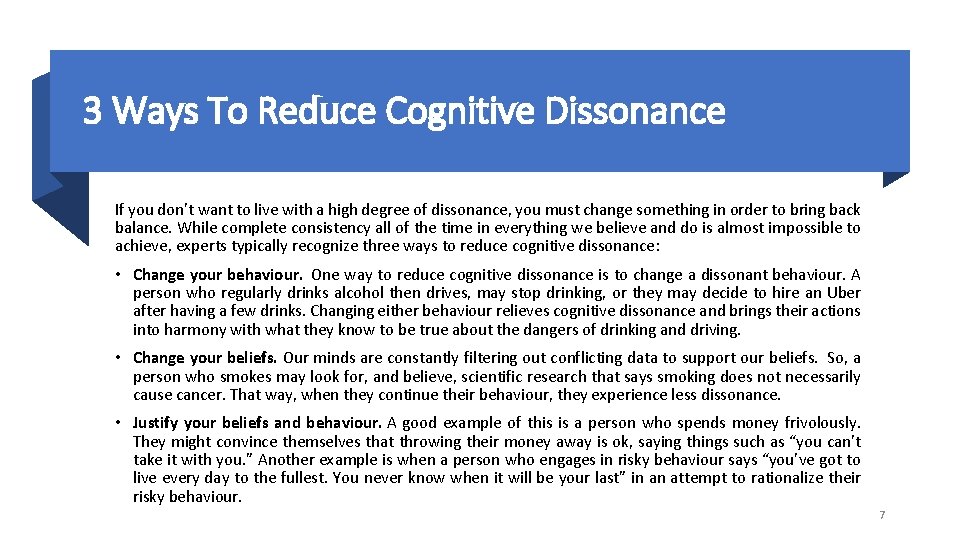
3 Ways To Reduce Cognitive Dissonance If you don’t want to live with a high degree of dissonance, you must change something in order to bring back balance. While complete consistency all of the time in everything we believe and do is almost impossible to achieve, experts typically recognize three ways to reduce cognitive dissonance: • Change your behaviour. One way to reduce cognitive dissonance is to change a dissonant behaviour. A person who regularly drinks alcohol then drives, may stop drinking, or they may decide to hire an Uber after having a few drinks. Changing either behaviour relieves cognitive dissonance and brings their actions into harmony with what they know to be true about the dangers of drinking and driving. • Change your beliefs. Our minds are constantly filtering out conflicting data to support our beliefs. So, a person who smokes may look for, and believe, scientific research that says smoking does not necessarily cause cancer. That way, when they continue their behaviour, they experience less dissonance. • Justify your beliefs and behaviour. A good example of this is a person who spends money frivolously. They might convince themselves that throwing their money away is ok, saying things such as “you can’t take it with you. ” Another example is when a person who engages in risky behaviour says “you’ve got to live every day to the fullest. You never know when it will be your last” in an attempt to rationalize their risky behaviour. 7
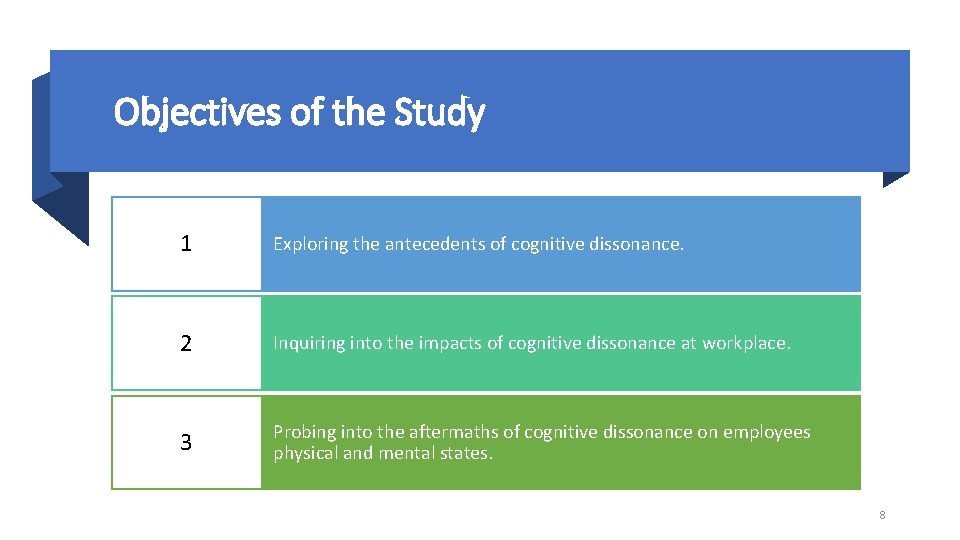
Objectives of the Study 1 Exploring the antecedents of cognitive dissonance. 2 Inquiring into the impacts of cognitive dissonance at workplace. 3 Probing into the aftermaths of cognitive dissonance on employees physical and mental states. 8
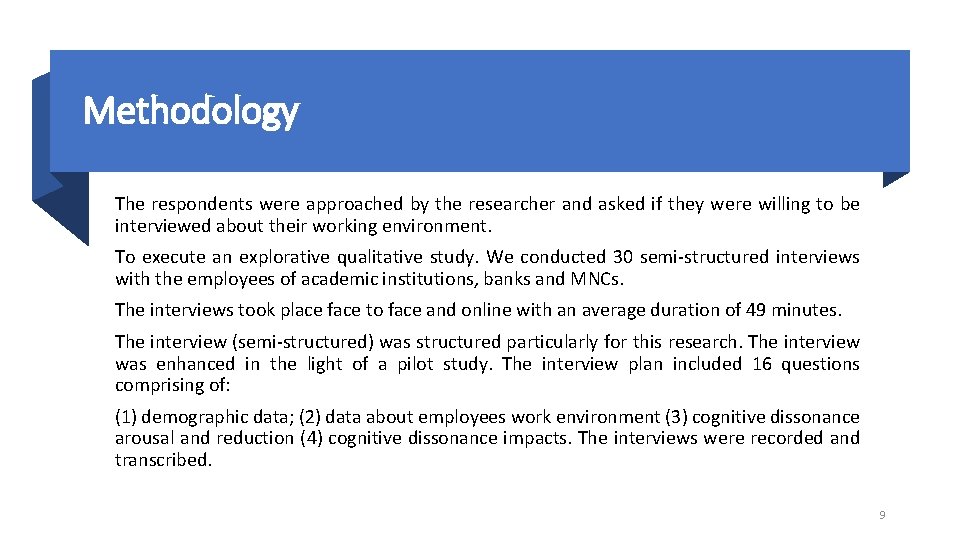
Methodology The respondents were approached by the researcher and asked if they were willing to be interviewed about their working environment. To execute an explorative qualitative study. We conducted 30 semi-structured interviews with the employees of academic institutions, banks and MNCs. The interviews took place face to face and online with an average duration of 49 minutes. The interview (semi-structured) was structured particularly for this research. The interview was enhanced in the light of a pilot study. The interview plan included 16 questions comprising of: (1) demographic data; (2) data about employees work environment (3) cognitive dissonance arousal and reduction (4) cognitive dissonance impacts. The interviews were recorded and transcribed. 9
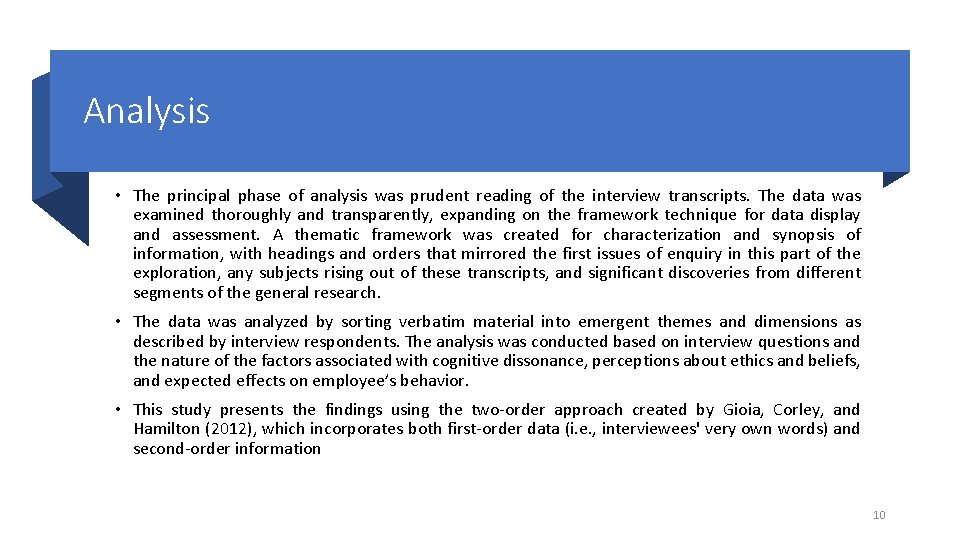
Analysis • The principal phase of analysis was prudent reading of the interview transcripts. The data was examined thoroughly and transparently, expanding on the framework technique for data display and assessment. A thematic framework was created for characterization and synopsis of information, with headings and orders that mirrored the first issues of enquiry in this part of the exploration, any subjects rising out of these transcripts, and significant discoveries from different segments of the general research. • The data was analyzed by sorting verbatim material into emergent themes and dimensions as described by interview respondents. The analysis was conducted based on interview questions and the nature of the factors associated with cognitive dissonance, perceptions about ethics and beliefs, and expected effects on employee’s behavior. • This study presents the findings using the two-order approach created by Gioia, Corley, and Hamilton (2012), which incorporates both first-order data (i. e. , interviewees' very own words) and second-order information 10
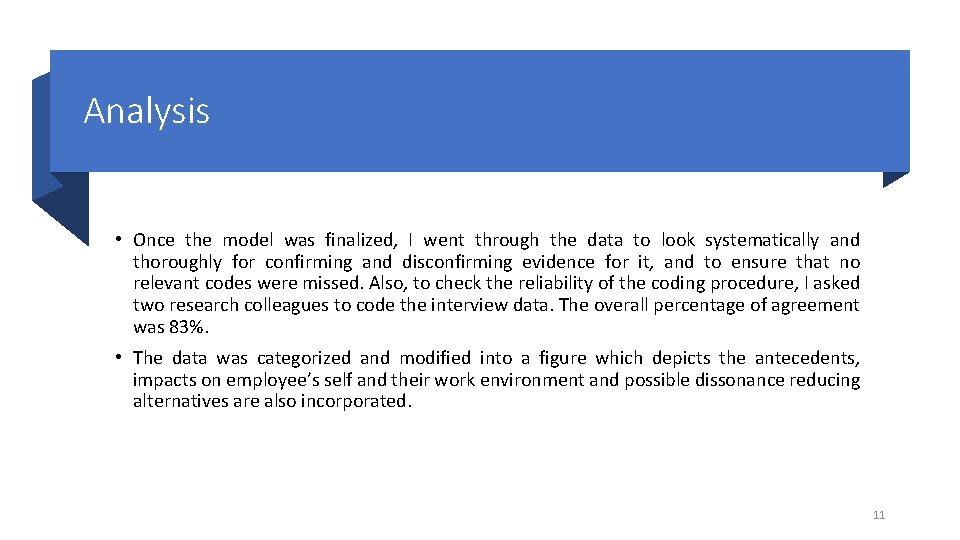
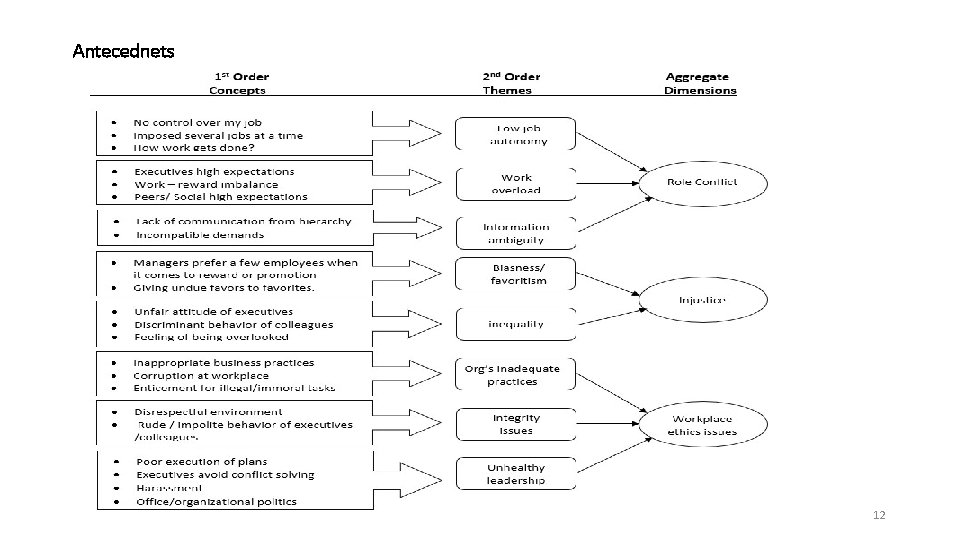
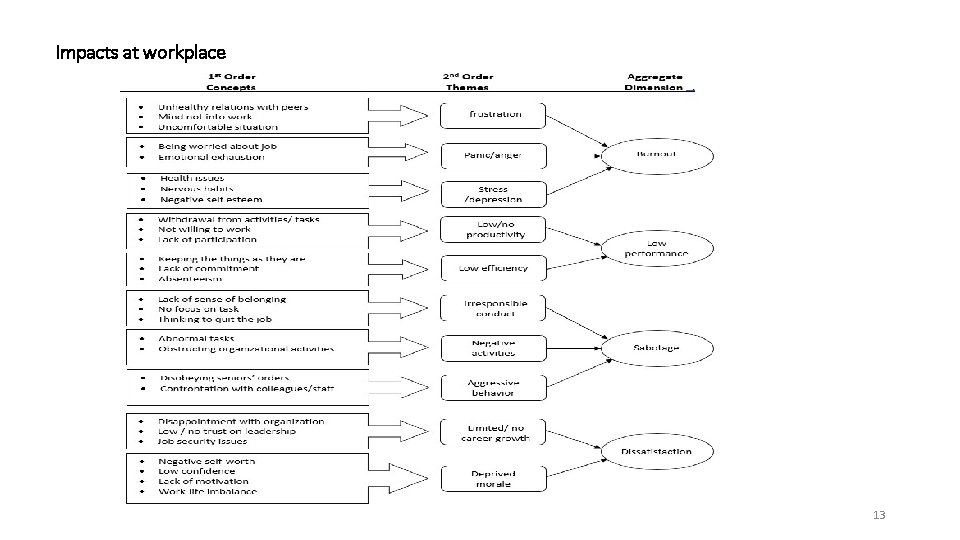
Analysis • Once the model was finalized, I went through the data to look systematically and thoroughly for confirming and disconfirming evidence for it, and to ensure that no relevant codes were missed. Also, to check the reliability of the coding procedure, I asked two research colleagues to code the interview data. The overall percentage of agreement was 83%. • The data was categorized and modified into a figure which depicts the antecedents, impacts on employee’s self and their work environment and possible dissonance reducing alternatives are also incorporated. 11
Antecednets 12
Impacts at workplace 13
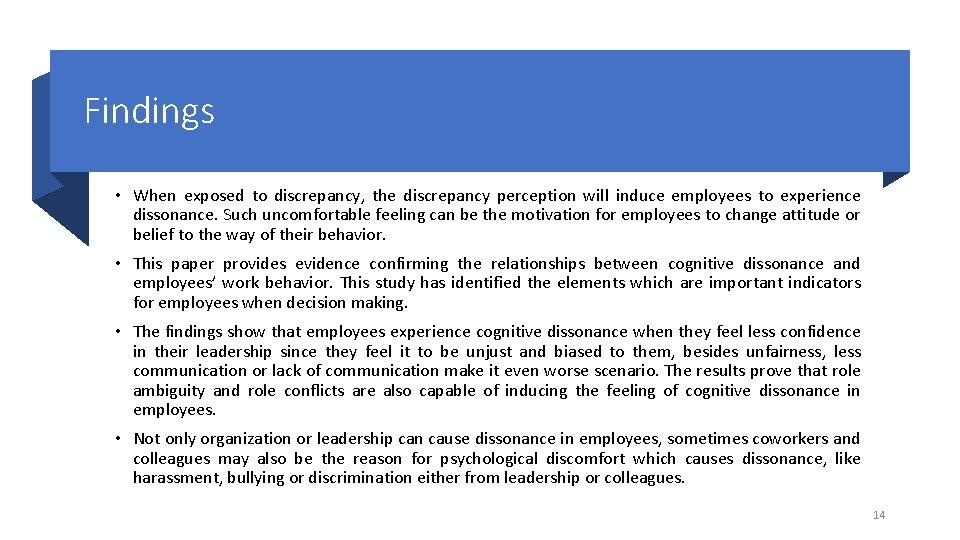
Findings • When exposed to discrepancy, the discrepancy perception will induce employees to experience dissonance. Such uncomfortable feeling can be the motivation for employees to change attitude or belief to the way of their behavior. • This paper provides evidence confirming the relationships between cognitive dissonance and employees’ work behavior. This study has identified the elements which are important indicators for employees when decision making. • The findings show that employees experience cognitive dissonance when they feel less confidence in their leadership since they feel it to be unjust and biased to them, besides unfairness, less communication or lack of communication make it even worse scenario. The results prove that role ambiguity and role conflicts are also capable of inducing the feeling of cognitive dissonance in employees. • Not only organization or leadership can cause dissonance in employees, sometimes coworkers and colleagues may also be the reason for psychological discomfort which causes dissonance, like harassment, bullying or discrimination either from leadership or colleagues. 14
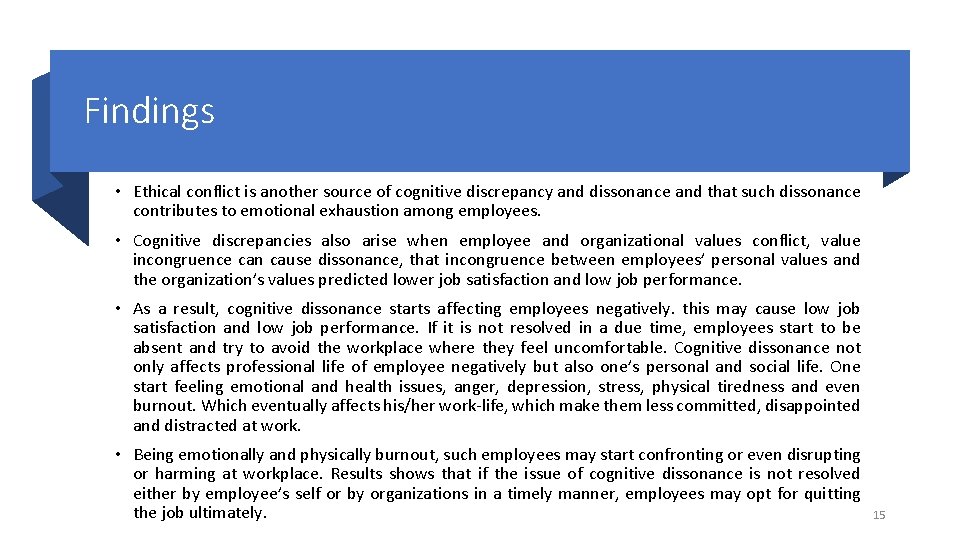
Findings • Ethical conflict is another source of cognitive discrepancy and dissonance and that such dissonance contributes to emotional exhaustion among employees. • Cognitive discrepancies also arise when employee and organizational values conflict, value incongruence can cause dissonance, that incongruence between employees’ personal values and the organization’s values predicted lower job satisfaction and low job performance. • As a result, cognitive dissonance starts affecting employees negatively. this may cause low job satisfaction and low job performance. If it is not resolved in a due time, employees start to be absent and try to avoid the workplace where they feel uncomfortable. Cognitive dissonance not only affects professional life of employee negatively but also one’s personal and social life. One start feeling emotional and health issues, anger, depression, stress, physical tiredness and even burnout. Which eventually affects his/her work-life, which make them less committed, disappointed and distracted at work. • Being emotionally and physically burnout, such employees may start confronting or even disrupting or harming at workplace. Results shows that if the issue of cognitive dissonance is not resolved either by employee’s self or by organizations in a timely manner, employees may opt for quitting the job ultimately. 15
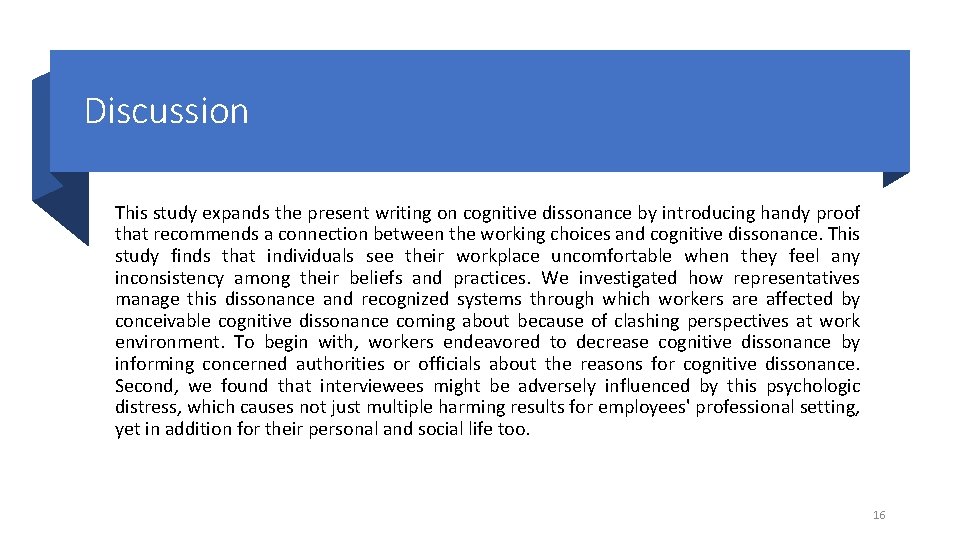
Discussion This study expands the present writing on cognitive dissonance by introducing handy proof that recommends a connection between the working choices and cognitive dissonance. This study finds that individuals see their workplace uncomfortable when they feel any inconsistency among their beliefs and practices. We investigated how representatives manage this dissonance and recognized systems through which workers are affected by conceivable cognitive dissonance coming about because of clashing perspectives at work environment. To begin with, workers endeavored to decrease cognitive dissonance by informing concerned authorities or officials about the reasons for cognitive dissonance. Second, we found that interviewees might be adversely influenced by this psychologic distress, which causes not just multiple harming results for employees' professional setting, yet in addition for their personal and social life too. 16
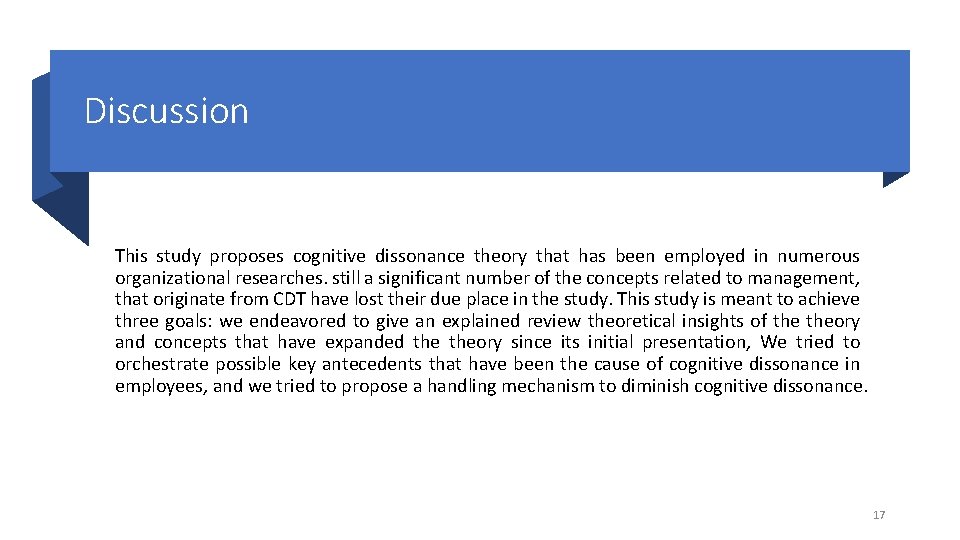
Discussion This study proposes cognitive dissonance theory that has been employed in numerous organizational researches. still a significant number of the concepts related to management, that originate from CDT have lost their due place in the study. This study is meant to achieve three goals: we endeavored to give an explained review theoretical insights of theory and concepts that have expanded theory since its initial presentation, We tried to orchestrate possible key antecedents that have been the cause of cognitive dissonance in employees, and we tried to propose a handling mechanism to diminish cognitive dissonance. 17
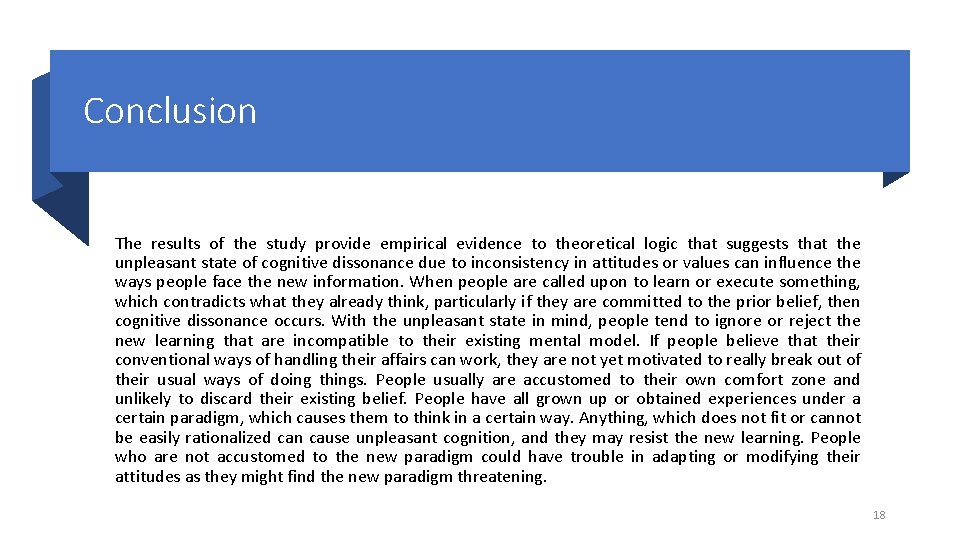
Conclusion The results of the study provide empirical evidence to theoretical logic that suggests that the unpleasant state of cognitive dissonance due to inconsistency in attitudes or values can influence the ways people face the new information. When people are called upon to learn or execute something, which contradicts what they already think, particularly if they are committed to the prior belief, then cognitive dissonance occurs. With the unpleasant state in mind, people tend to ignore or reject the new learning that are incompatible to their existing mental model. If people believe that their conventional ways of handling their affairs can work, they are not yet motivated to really break out of their usual ways of doing things. People usually are accustomed to their own comfort zone and unlikely to discard their existing belief. People have all grown up or obtained experiences under a certain paradigm, which causes them to think in a certain way. Anything, which does not fit or cannot be easily rationalized can cause unpleasant cognition, and they may resist the new learning. People who are not accustomed to the new paradigm could have trouble in adapting or modifying their attitudes as they might find the new paradigm threatening. 18
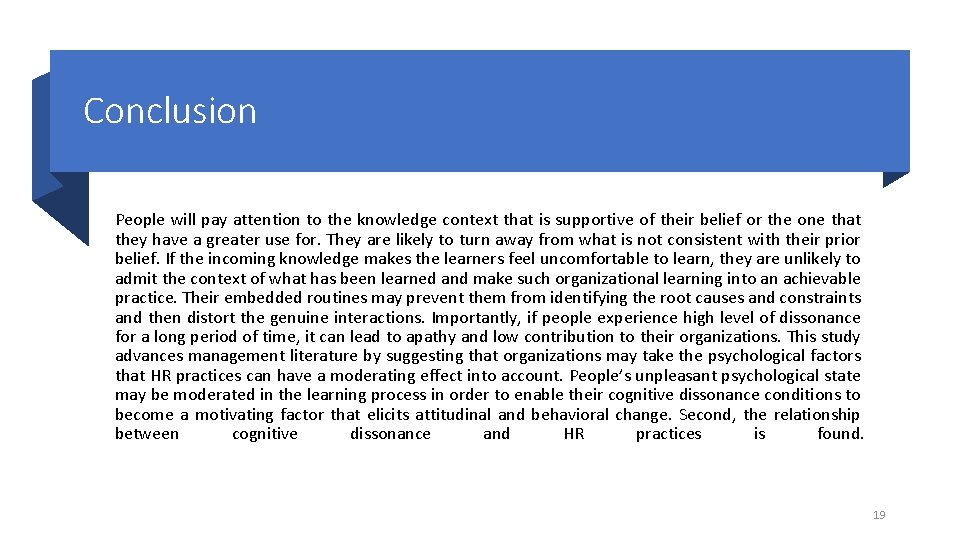
Conclusion People will pay attention to the knowledge context that is supportive of their belief or the one that they have a greater use for. They are likely to turn away from what is not consistent with their prior belief. If the incoming knowledge makes the learners feel uncomfortable to learn, they are unlikely to admit the context of what has been learned and make such organizational learning into an achievable practice. Their embedded routines may prevent them from identifying the root causes and constraints and then distort the genuine interactions. Importantly, if people experience high level of dissonance for a long period of time, it can lead to apathy and low contribution to their organizations. This study advances management literature by suggesting that organizations may take the psychological factors that HR practices can have a moderating effect into account. People’s unpleasant psychological state may be moderated in the learning process in order to enable their cognitive dissonance conditions to become a motivating factor that elicits attitudinal and behavioral change. Second, the relationship between cognitive dissonance and HR practices is found. 19
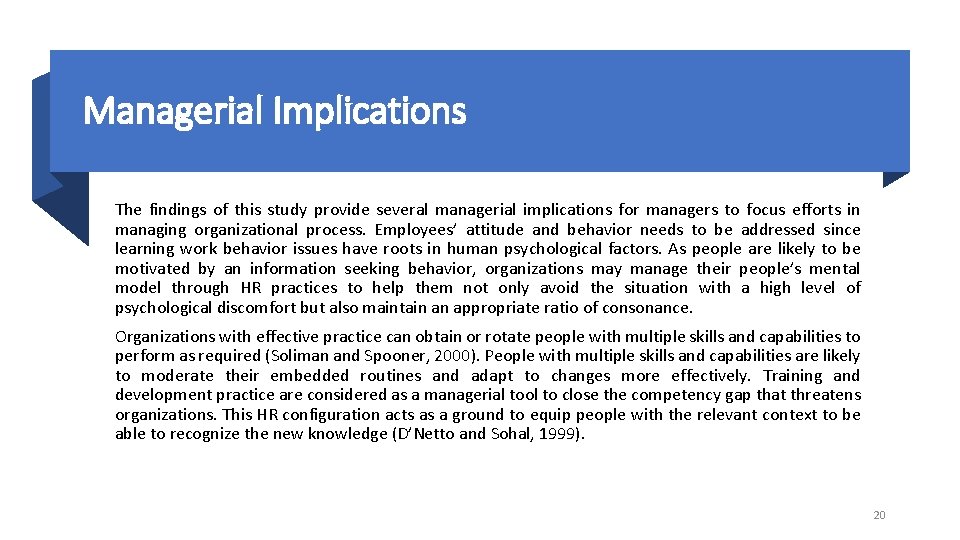
Managerial Implications The findings of this study provide several managerial implications for managers to focus efforts in managing organizational process. Employees’ attitude and behavior needs to be addressed since learning work behavior issues have roots in human psychological factors. As people are likely to be motivated by an information seeking behavior, organizations may manage their people’s mental model through HR practices to help them not only avoid the situation with a high level of psychological discomfort but also maintain an appropriate ratio of consonance. Organizations with effective practice can obtain or rotate people with multiple skills and capabilities to perform as required (Soliman and Spooner, 2000). People with multiple skills and capabilities are likely to moderate their embedded routines and adapt to changes more effectively. Training and development practice are considered as a managerial tool to close the competency gap that threatens organizations. This HR configuration acts as a ground to equip people with the relevant context to be able to recognize the new knowledge (D’Netto and Sohal, 1999). 20
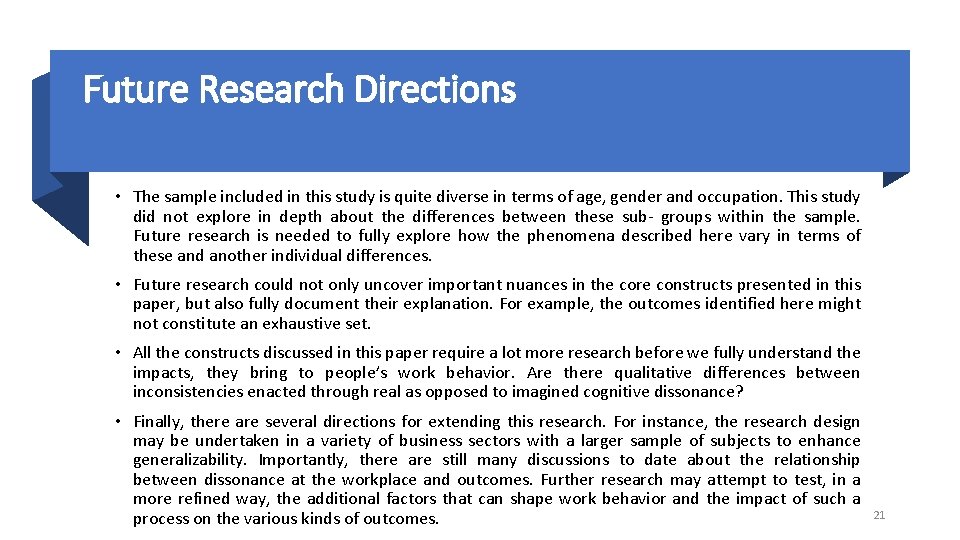
Future Research Directions • The sample included in this study is quite diverse in terms of age, gender and occupation. This study did not explore in depth about the differences between these sub- groups within the sample. Future research is needed to fully explore how the phenomena described here vary in terms of these and another individual differences. • Future research could not only uncover important nuances in the core constructs presented in this paper, but also fully document their explanation. For example, the outcomes identified here might not constitute an exhaustive set. • All the constructs discussed in this paper require a lot more research before we fully understand the impacts, they bring to people’s work behavior. Are there qualitative differences between inconsistencies enacted through real as opposed to imagined cognitive dissonance? • Finally, there are several directions for extending this research. For instance, the research design may be undertaken in a variety of business sectors with a larger sample of subjects to enhance generalizability. Importantly, there are still many discussions to date about the relationship between dissonance at the workplace and outcomes. Further research may attempt to test, in a more refined way, the additional factors that can shape work behavior and the impact of such a process on the various kinds of outcomes. 21
Thank you 22