Clinical Governance and Medication Safety Systems for Detection

- Slides: 13
Clinical Governance and Medication Safety Systems for Detection and Resolution of Medication errors Dr. Dorothy Aywak
Outline • Pillars of Clinical Governance • Practical Application of Clinical Governance in Medication Safety
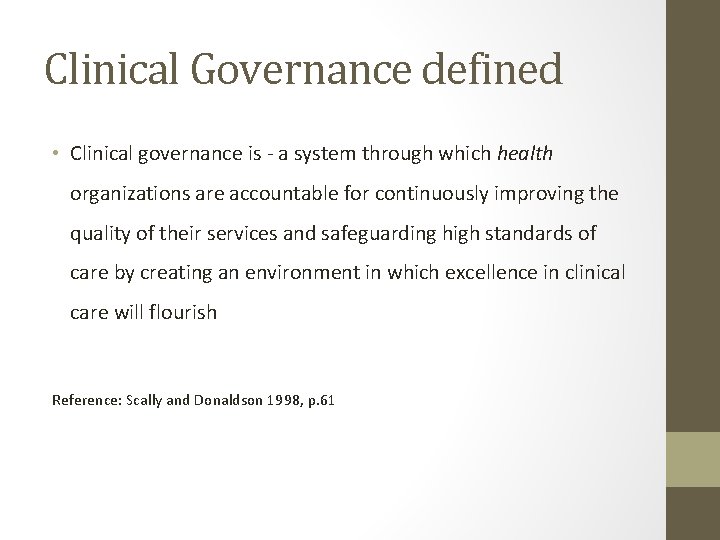
Clinical Governance defined • Clinical governance is - a system through which health organizations are accountable for continuously improving the quality of their services and safeguarding high standards of care by creating an environment in which excellence in clinical care will flourish Reference: Scally and Donaldson 1998, p. 61
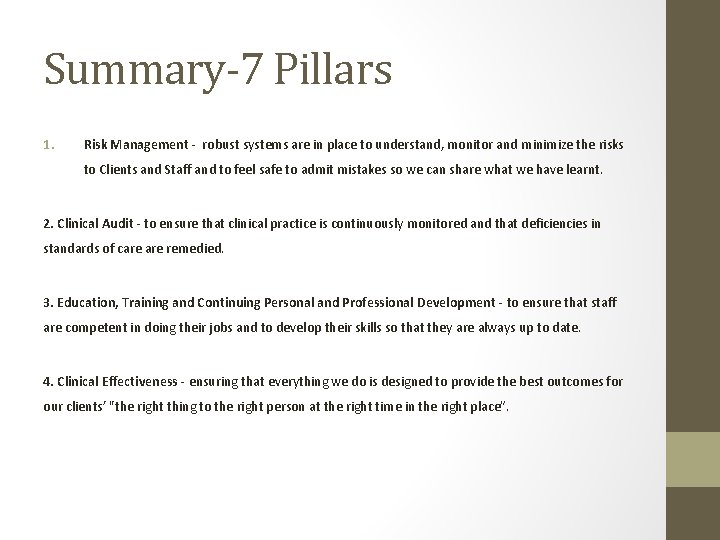
7 Pillars of Clinical Governance Source: https: //www. routeshealthcare. com/info/index. asp? page=clinical-governance-123
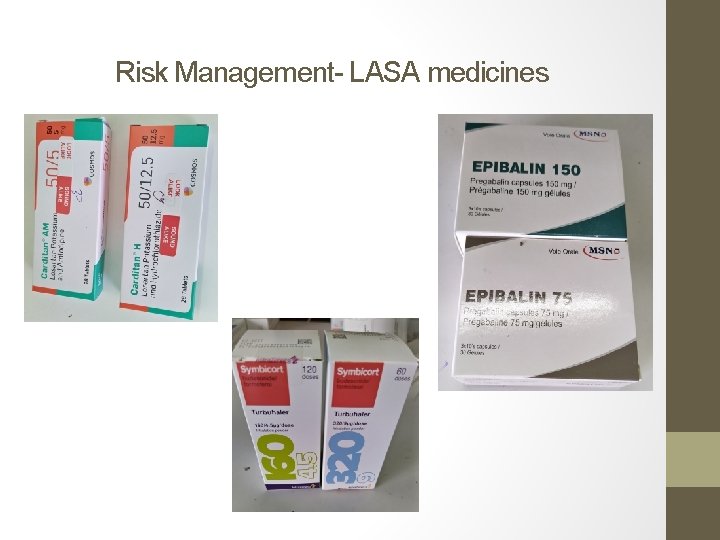
Risk Management- LASA medicines
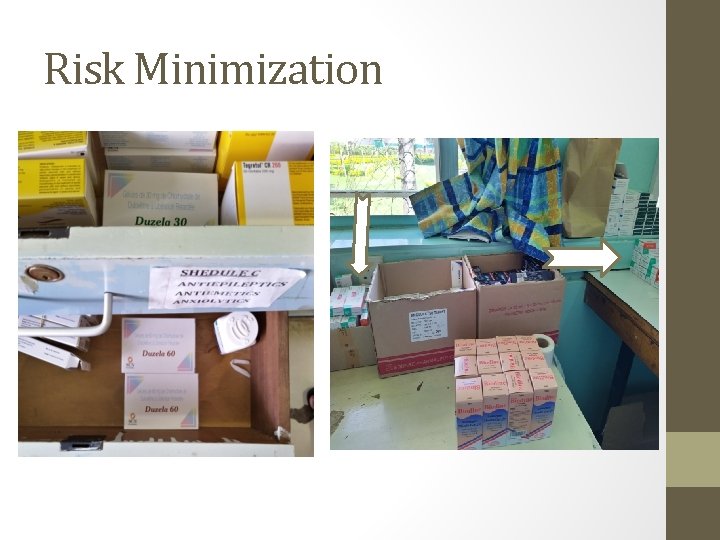
Risk Minimization
Clinical effectiveness Ensuring that everything we do is designed to provide the best outcomes for our clients’ "the right thing to the right person at the right time in the right place”.
KNH- prescribing Policy CHAPTER THREE: SPECIFIC CONSIDERATIONS IN PRESCRIBING • Narcotics and Controlled Substances prescribing • Prescribers with the requisite knowledge and experience shall prescribe narcotics and controlled substances for the treatment of acute or chronic pain, sedation, anaesthesia and mental conditions when clinically appropriate. • Prescribers shall comply with the prescription requirements and guidelines outlined in the work instructions for prescribing Narcotics and controlled substances and in line with legal considerations.
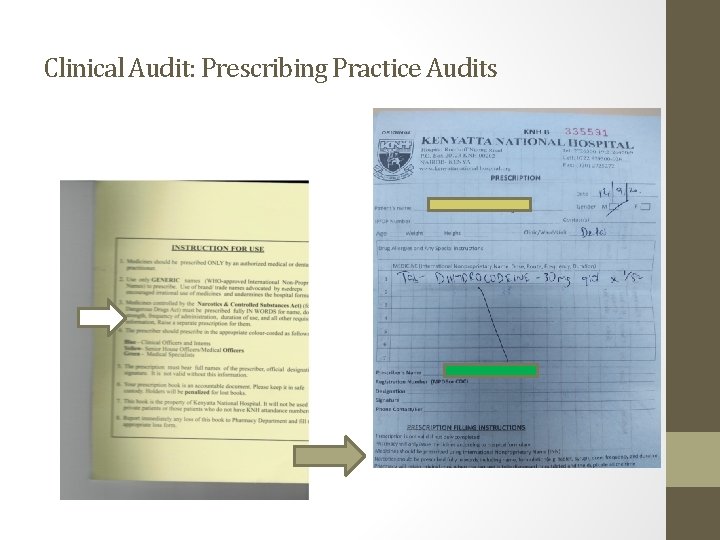
Clinical Audit: Prescribing Practice Audits
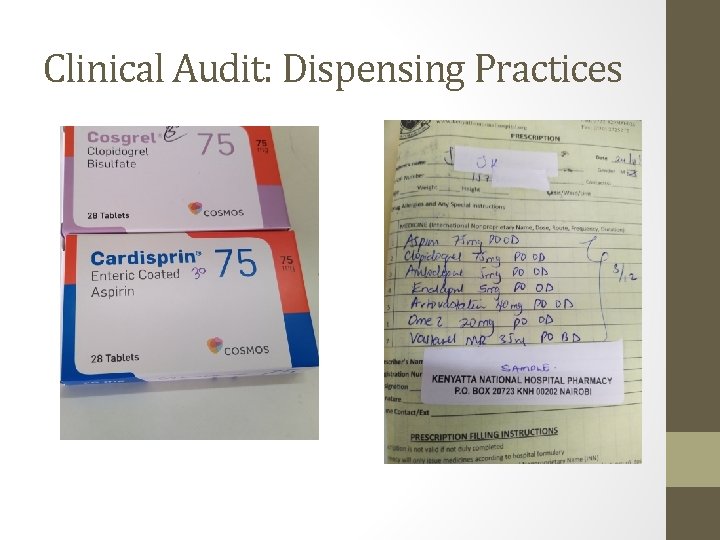
Clinical Audit: Dispensing Practices
Summary-7 Pillars 1. Risk Management - robust systems are in place to understand, monitor and minimize the risks to Clients and Staff and to feel safe to admit mistakes so we can share what we have learnt. 2. Clinical Audit - to ensure that clinical practice is continuously monitored and that deficiencies in standards of care remedied. 3. Education, Training and Continuing Personal and Professional Development - to ensure that staff are competent in doing their jobs and to develop their skills so that they are always up to date. 4. Clinical Effectiveness - ensuring that everything we do is designed to provide the best outcomes for our clients’ "the right thing to the right person at the right time in the right place”.
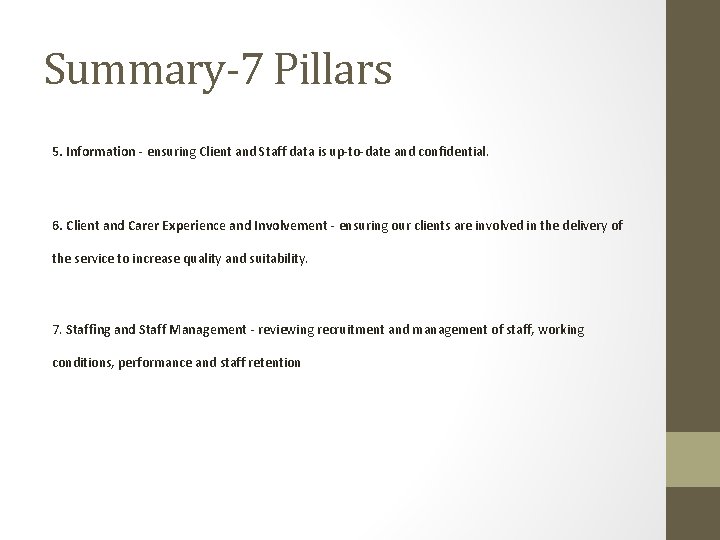
Summary-7 Pillars 5. Information - ensuring Client and Staff data is up-to-date and confidential. 6. Client and Carer Experience and Involvement - ensuring our clients are involved in the delivery of the service to increase quality and suitability. 7. Staffing and Staff Management - reviewing recruitment and management of staff, working conditions, performance and staff retention
References https: //www. rcn. org. uk/clinical-topics/clinical-governance https: //www. routeshealthcare. com/info/index. asp? page=clinical-governance 123