Ciara Earley VFPMS Consultant VFPMS Seminar June 2
- Slides: 31
Ciara Earley VFPMS Consultant VFPMS Seminar June 2 nd 2014 The head injured child What tests? When? Why
Outline Types of head injuries Subdural haematomas Controversies in AHT Skull fractures Investigations
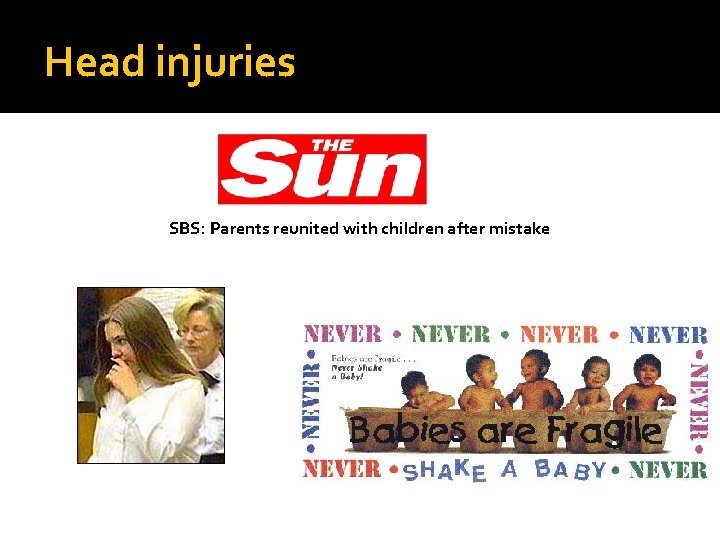
Head injuries SBS: Parents reunited with children after mistake
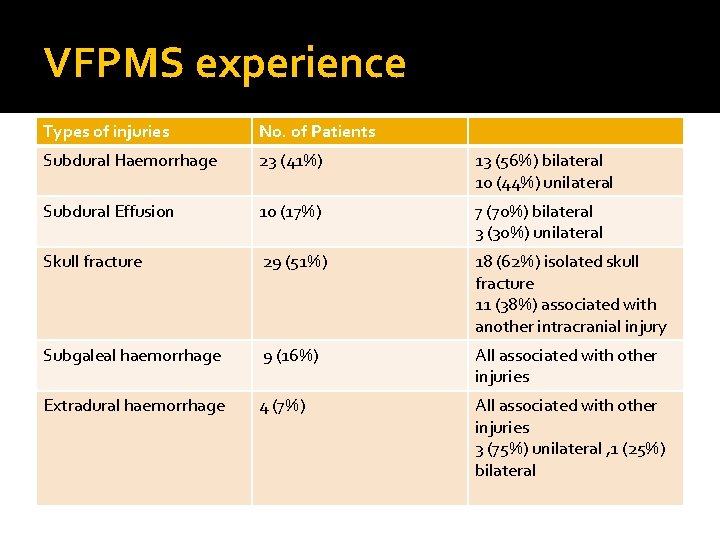
VFPMS experience Types of injuries No. of Patients Subdural Haemorrhage 23 (41%) 13 (56%) bilateral 10 (44%) unilateral Subdural Effusion 10 (17%) 7 (70%) bilateral 3 (30%) unilateral Skull fracture 29 (51%) 18 (62%) isolated skull fracture 11 (38%) associated with another intracranial injury Subgaleal haemorrhage 9 (16%) All associated with other injuries Extradural haemorrhage 4 (7%) All associated with other injuries 3 (75%) unilateral , 1 (25%) bilateral
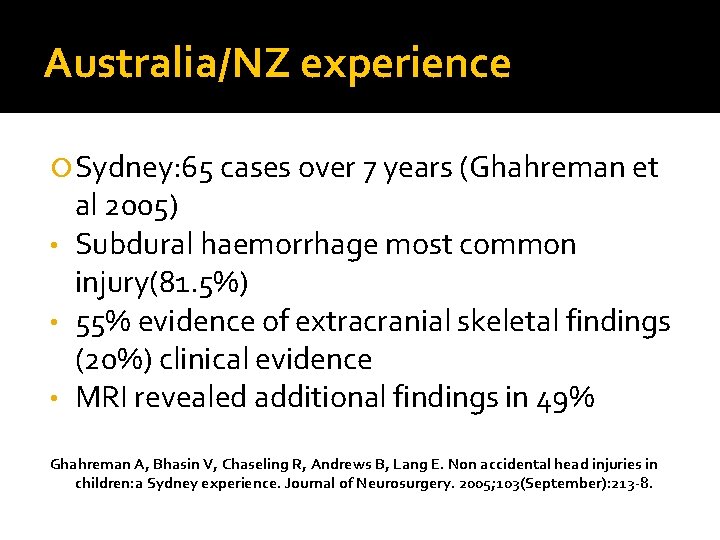
Australia/NZ experience Sydney: 65 cases over 7 years (Ghahreman et al 2005) • Subdural haemorrhage most common injury(81. 5%) • 55% evidence of extracranial skeletal findings (20%) clinical evidence • MRI revealed additional findings in 49% Ghahreman A, Bhasin V, Chaseling R, Andrews B, Lang E. Non accidental head injuries in children: a Sydney experience. Journal of Neurosurgery. 2005; 103(September): 213 -8.
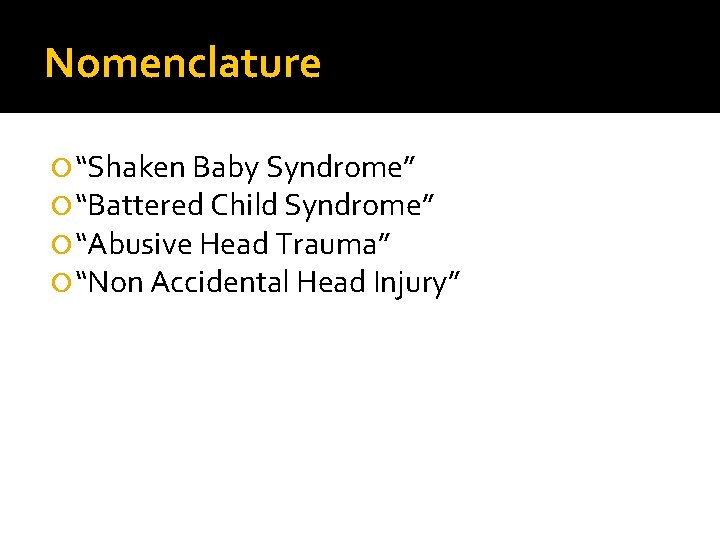
Nomenclature “Shaken Baby Syndrome” “Battered Child Syndrome” “Abusive Head Trauma” “Non Accidental Head Injury”
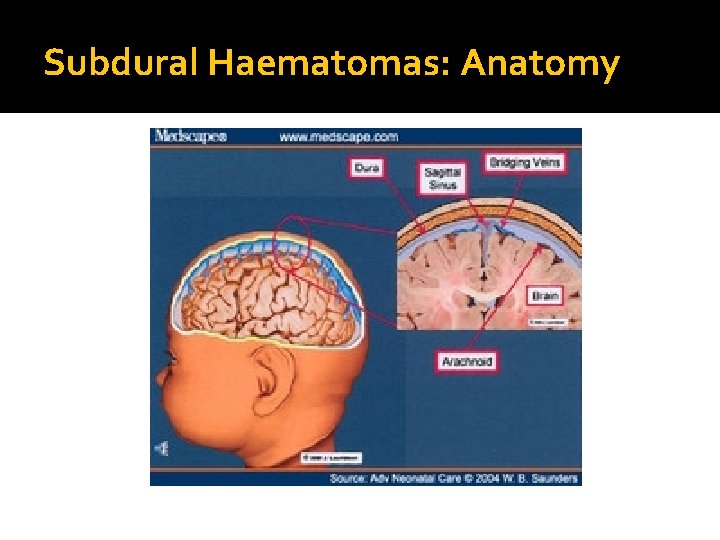
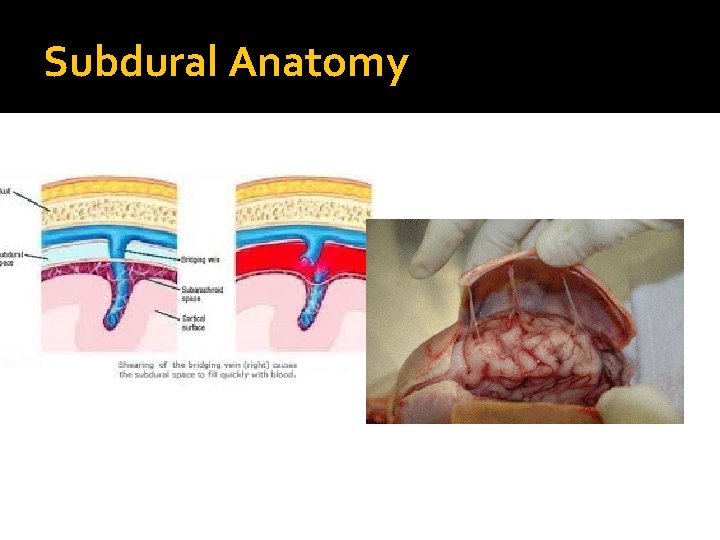
Subdural Haematomas: Anatomy
Subdural Anatomy
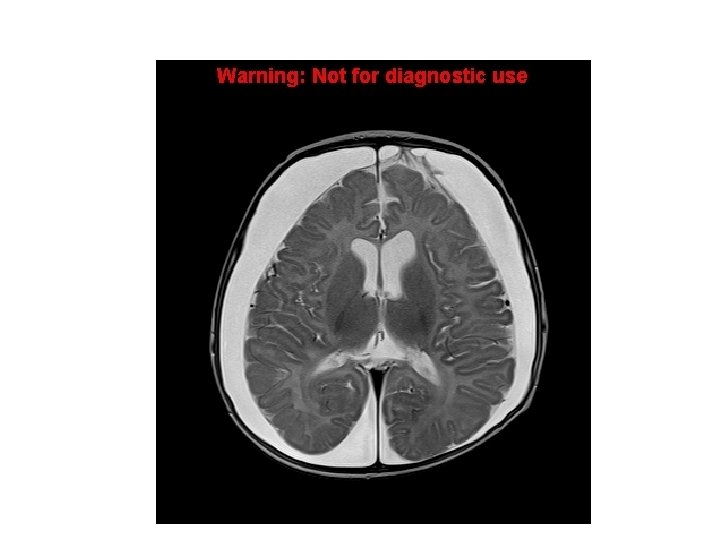
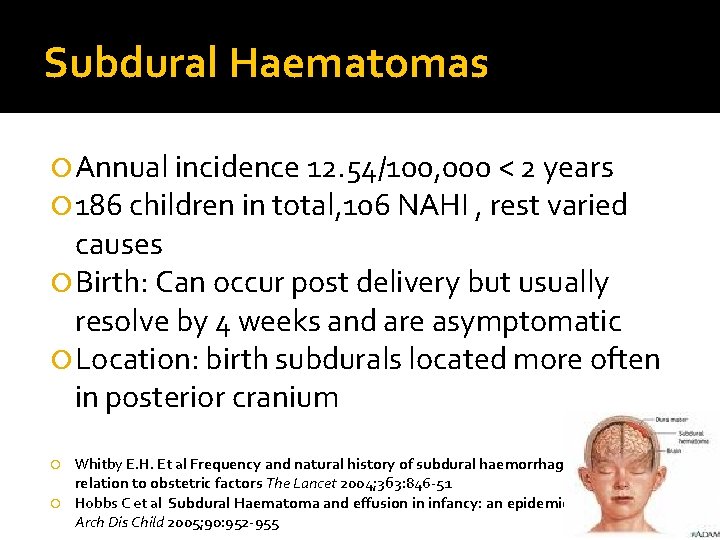
Subdural Haematomas Annual incidence 12. 54/100, 000 < 2 years 186 children in total, 106 NAHI , rest varied causes Birth: Can occur post delivery but usually resolve by 4 weeks and are asymptomatic Location: birth subdurals located more often in posterior cranium Whitby E. H. Et al Frequency and natural history of subdural haemorrhages in babies and relation to obstetric factors The Lancet 2004; 363: 846 -51 Hobbs C et al Subdural Haematoma and effusion in infancy: an epidemiological study Arch Dis Child 2005; 90: 952 -955
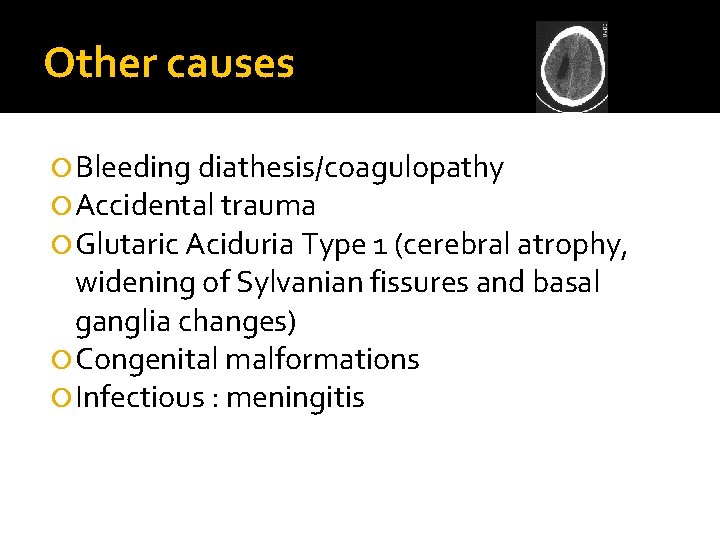
Other causes Bleeding diathesis/coagulopathy Accidental trauma Glutaric Aciduria Type 1 (cerebral atrophy, widening of Sylvanian fissures and basal ganglia changes) Congenital malformations Infectious : meningitis
The controversies The triad: retinal haemorrhages + subdural haemorrhages+encephalopathy Geddes: “unified hypothesis” pathogenesis of SDH +RH was hypoxia ischaemia not trauma Dr Squier : raised arterial and venous pressure, quoted mechanical studies Geddes J. F. et al. Dural haemorrhage in non-traumatic infant deaths: does it explain bleeding in “shaken baby syndrome”? Neuropathol Appl Neurobiol 2003, 29: 14 -22 Squier W Shaken baby syndrome; the quest for evidence Dev Med Child Neurol Jan 2008; 50: 10 -14
The controversies contd. UK Court of Appeal – R v Harris, Rock, Cherry and Faulder [2005] EWCA Crim 1980 2 convictions quashed Squier W, Adams L. B. The triad of retinal haemorrhage, subdural haemorrhage and encephalopathy in an infant associated with evidence of physical injury is not the result of shaking, but is most likely to have been caused by a natural disease J. Prim Health Care 2011: 3(2)159 -163
Legal arguements “Subdural Haematomas can result from cortical venous sinus thrombosis” “Subdural Haematomas and retinal haemorrhages can occur from short distance falls” “Subdural haemorrhages are rebleeds of old birth subdurals”
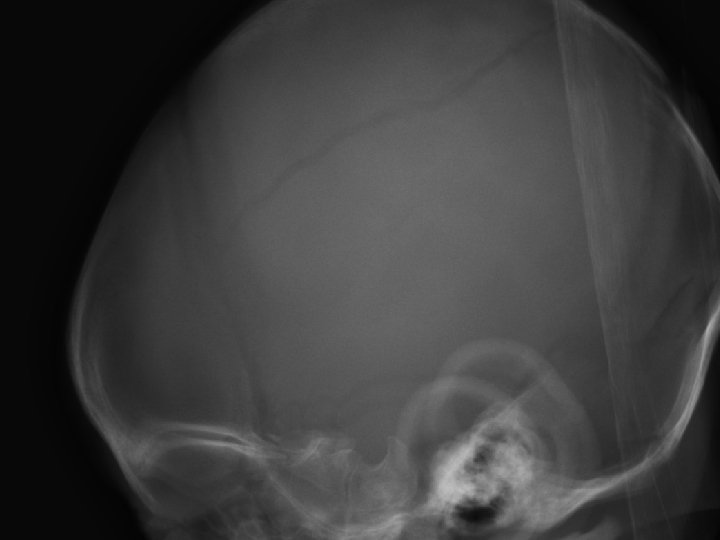
Skull fractures Can result from short vertical falls Accidental usually linear and non displaced Bone scan insensitive to detect them Unable to age ? Need for further imaging Wood J, Christian C, Adams C Skeletal Surveys in Infants With Isolated Skull Fractures Pediatrics 2009; 123 (Feb)e 247 -e 52 Ruddick C et al Head trauma outcomes of verifiable falls in newborn babies Arch Dis Child Fetal Neonatal Ed 2010; 95: F 144 -145
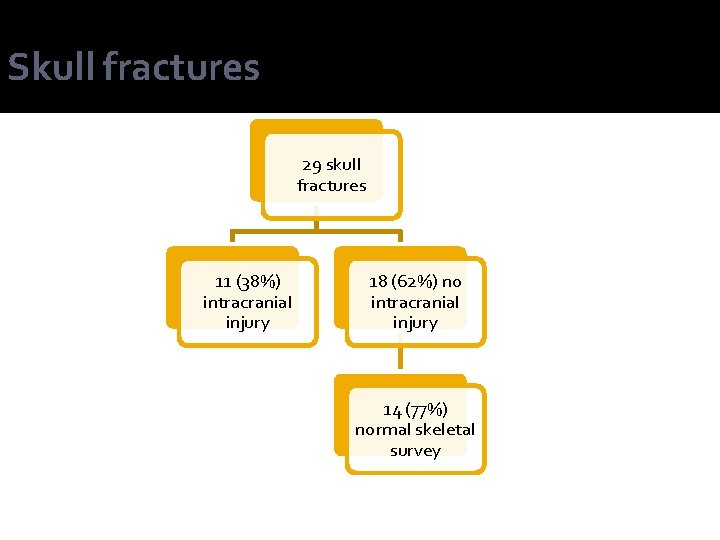
Skull fractures 29 skull fractures 11 (38%) intracranial injury 18 (62%) no intracranial injury 14 (77%) normal skeletal survey
Investigations Skeletal survey and bone scan in children < 2 years (UK suggest rpt survey after 2 weeks) CT brain MRI brain Ophthalmology
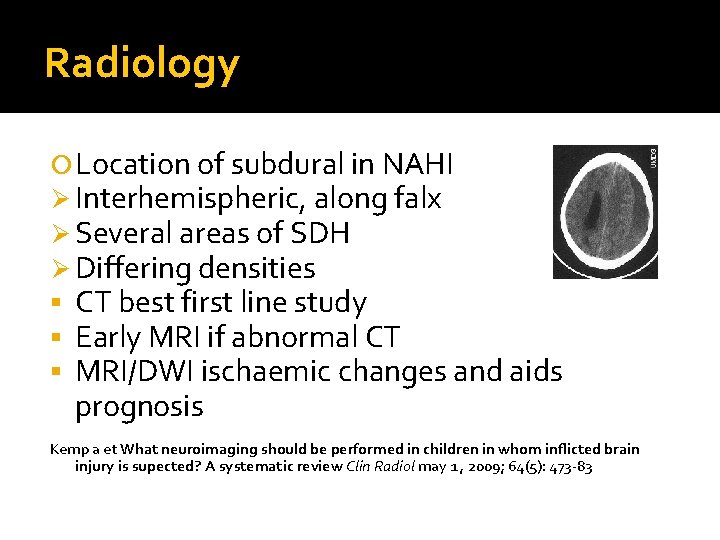
Radiology Location of subdural in NAHI Ø Interhemispheric, along falx Ø Several areas of SDH Ø Differing densities CT best first line study Early MRI if abnormal CT MRI/DWI ischaemic changes and aids prognosis Kemp a et What neuroimaging should be performed in children in whom inflicted brain injury is supected? A systematic review Clin Radiol may 1 , 2009; 64(5): 473 -83
What about spinal injuries? Some centres now routinely requesting MRI brain and c spine Recent studies have suggested that spinal injuries may be more common than previously thought Structure of the infants neck makes it prone to ligamentous damage. Kemp A et al What are the clinical and radiological characteristics of spinal injuries from physical abuse: a systematic review Arch Dis Child 2010; 95 (5): 355 -360 Barber et al Prevalence and relevance of pediatric spinal fractures in suspected child abuse Pediatr Radiol (2013) 43: 1507 -1515
Ophthalmology Who should do it? When? What do you need to know?
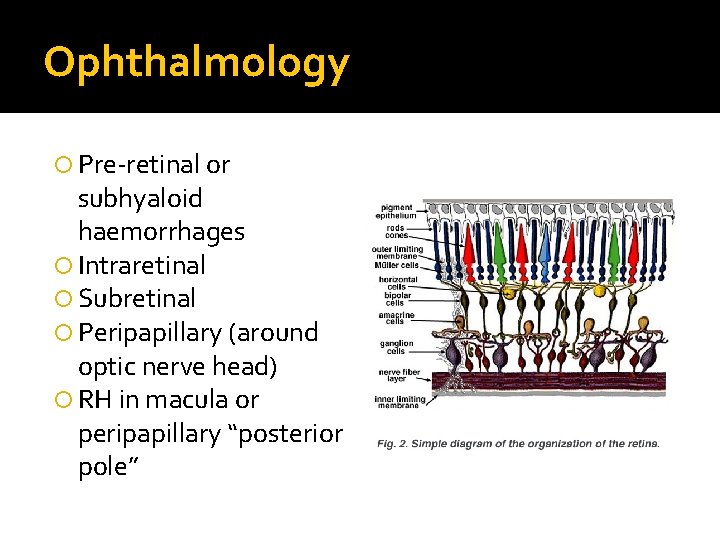
Ophthalmology Pre-retinal or subhyaloid haemorrhages Intraretinal Subretinal Peripapillary (around optic nerve head) RH in macula or peripapillary “posterior pole”
Retinal haemorrhages Can occur after birth but usually resolve by 6 weeks Significant RH are not seen in coughing, vomiting or seizures Thought to be secondary to rapid acceleration/deccelaration RH in NAHI are more often bilateral and involve the pre-retinal layer Bechtel K, Stoessel K, Leventhal JM, Ogle E, Teague B, Lavietes S, et al. Characteristics that distinguish accidental from abusive injury in hospitalized young children with head trauma. Pediatrics. 2004 Jul; 114(1): 165 -8.
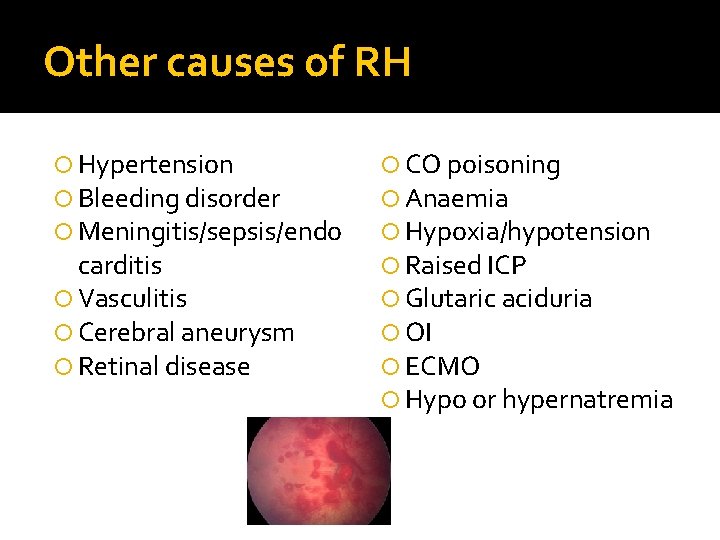
Other causes of RH Hypertension Bleeding disorder Meningitis/sepsis/endo carditis Vasculitis Cerebral aneurysm Retinal disease CO poisoning Anaemia Hypoxia/hypotension Raised ICP Glutaric aciduria OI ECMO Hypo or hypernatremia
RH contd. Current interest in retinal haemorrhages and raised ICP Terson syndrome Putscher’s retinopathy Macular retinoschisis
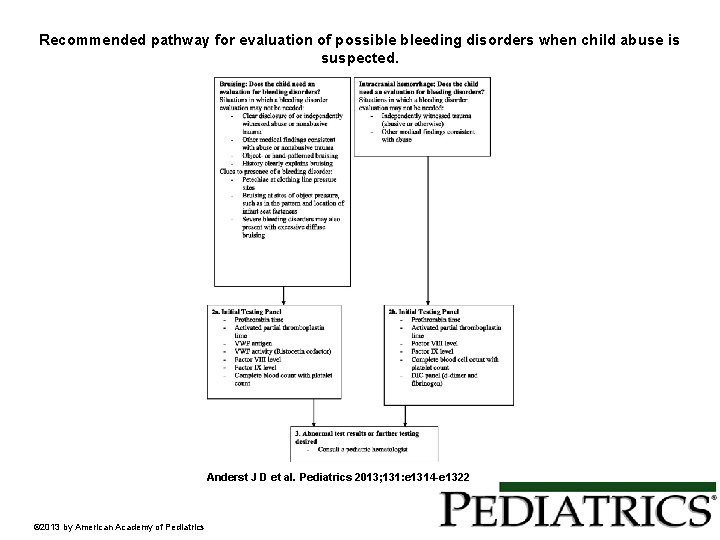
What about bleeding disorders? FBE, blood film LFTs, U&E/creatinine Coagulation screen Factor VIII and IX assays VW screen Anderst et al Evaluation for Bleeding Disorders in Suspected Child Abuse Pediatrics 2013; 131; e 1314
Recommended pathway for evaluation of possible bleeding disorders when child abuse is suspected. Anderst J D et al. Pediatrics 2013; 131: e 1314 -e 1322 © 2013 by American Academy of Pediatrics
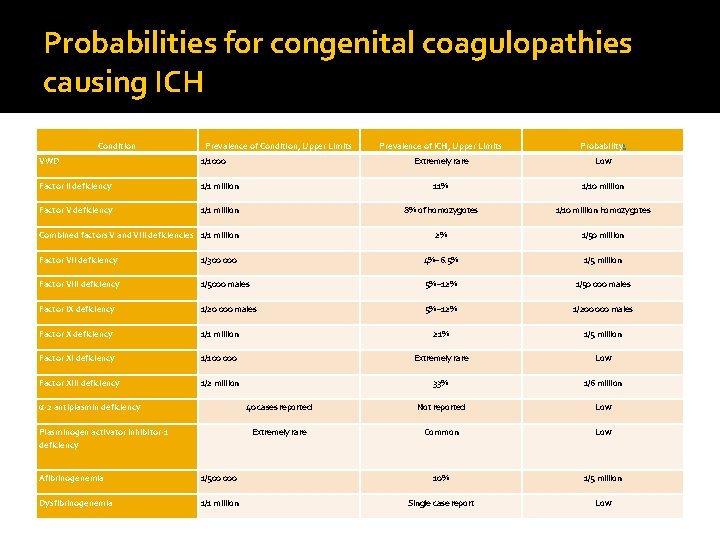
Probabilities for congenital coagulopathies causing ICH Condition Prevalence of Condition, Upper Limits Prevalence of ICH, Upper Limits Probabilityb Extremely rare Low VWD 1/1000 Factor II deficiency 1/1 million 11% 1/10 million Factor V deficiency 1/1 million 8% of homozygotes 1/10 million homozygotes 2% 1/50 million Combined factors V and VIII deficiencies 1/1 million Factor VII deficiency 1/300 000 4%– 6. 5% 1/5 million Factor VIII deficiency 1/5000 males 5%– 12% 1/50 000 males Factor IX deficiency 1/20 000 males 5%– 12% 1/200 000 males Factor X deficiency 1/1 million 21% 1/5 million Factor XI deficiency 1/100 000 Extremely rare Low Factor XIII deficiency 1/2 million 33% 1/6 million 40 cases reported Not reported Low Extremely rare Common Low α-2 antiplasmin deficiency Plasminogen activator inhibitor-1 deficiency Afibrinogenemia 1/500 000 10% 1/5 million Dysfibrinogenemia 1/1 million Single case report Low
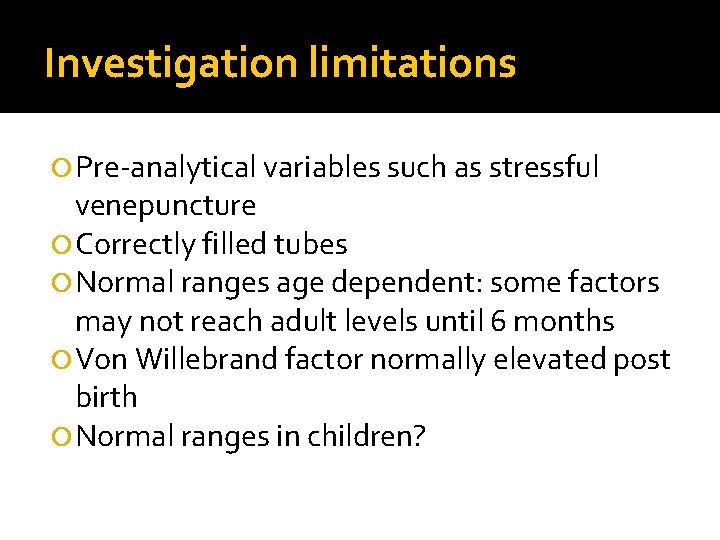
Investigation limitations Pre-analytical variables such as stressful venepuncture Correctly filled tubes Normal ranges age dependent: some factors may not reach adult levels until 6 months Von Willebrand factor normally elevated post birth Normal ranges in children?
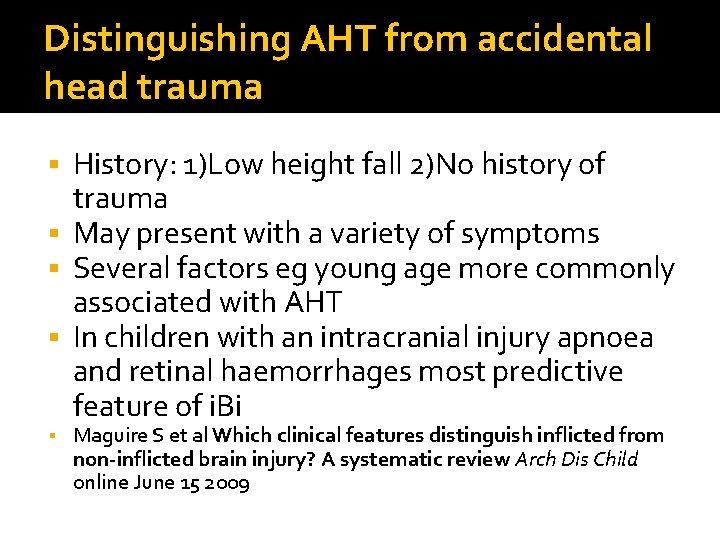
Distinguishing AHT from accidental head trauma History: 1)Low height fall 2)No history of trauma May present with a variety of symptoms Several factors eg young age more commonly associated with AHT In children with an intracranial injury apnoea and retinal haemorrhages most predictive feature of i. Bi Maguire S et al Which clinical features distinguish inflicted from non-inflicted brain injury? A systematic review Arch Dis Child online June 15 2009
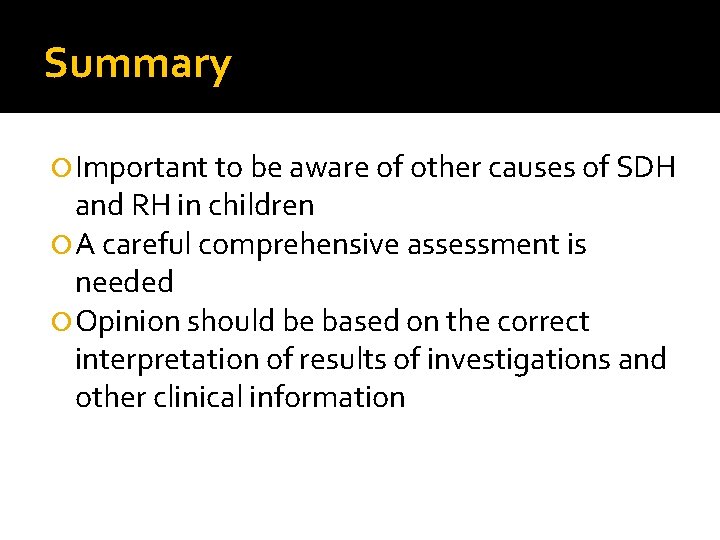
Summary Important to be aware of other causes of SDH and RH in children A careful comprehensive assessment is needed Opinion should be based on the correct interpretation of results of investigations and other clinical information