
CHILDHOOD APRAXIA OF SPEECH pp 381 385 I
- Slides: 20
CHILDHOOD APRAXIA OF SPEECH (pp. 381 -385)
I. INTRODUCTION** n Childhood apraxia of speech (CAS) also called developmental apraxia of speech (DAS) n Motor programming disorder of neurogenic origin n Affects articulatory and prosodic parameters of speech production n The child has great difficulty with fine, rapid, voluntary movements of speech
Review of Characteristics--Fogle, 2019:
Review--Fogle, 2019 continued:
In general…** n Tx: sequential organization; simple to complex speech tasks n We can progress from CV or VC combinations CVC CCVC syllable shapes words phrases sentences conversational speech
II. GENERAL PRINCIPLES OF TREATMENT
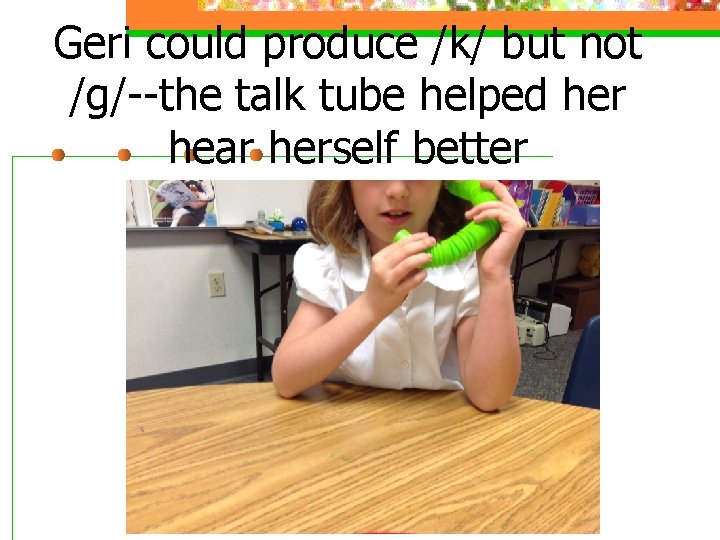
Geri could produce /k/ but not /g/--the talk tube helped her hear herself better
n 12. Make sure ch speaks slowly** n 13. Use a variety of carrier phrases (e. g. , “Here is ____” “I want ___”)
Youtube n K-SLP Techniques with Nancy & Avery – Segment 1 n Write down 3 -4 specific therapy techniques you hear her using
III. SPECIFIC TREATMENT APPROACHES** n A. Introduction n Multimodality approach! n For children with severe CAS, may need sign language or augmentative communication
B. Phonetic Placement Techniques to Elicit Sound Production
C. PROMPT
PROMPT: ** n Deborah Hayden n Used in countries world-wide n Offers training and certification workshops n Esp. effective for severely involved ch (CAS, cerebral palsy, dysarthria [TBI])
D. Shaping/Progressive Assimilation
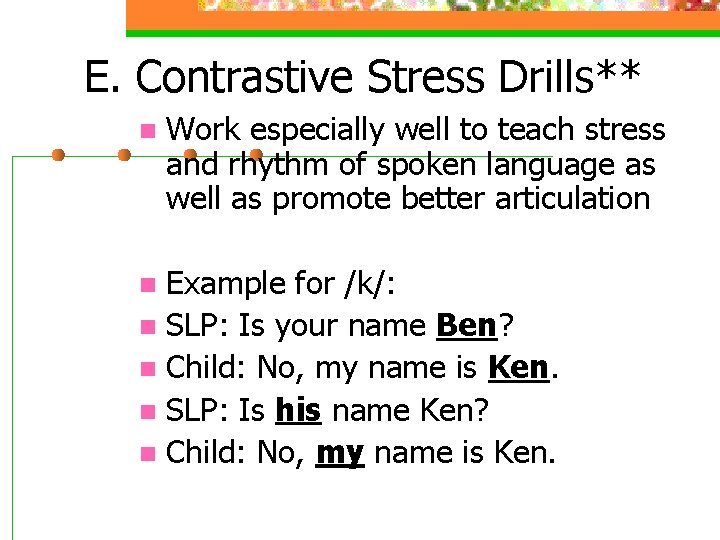
E. Contrastive Stress Drills** n Work especially well to teach stress and rhythm of spoken language as well as promote better articulation Example for /k/: n SLP: Is your name Ben? n Child: No, my name is Ken. n SLP: Is his name Ken? n Child: No, my name is Ken. n
Remember….
Youtube n Luke’s speech therapy apraxia 3