Chapter 4 Zeithaml CONSUMER EXPECTATIONS OF SERVICES Think


- Slides: 27
Chapter 4 Zeithaml CONSUMER EXPECTATIONS OF SERVICES
Think of a…… public toilet in the malls of Dhaka versus a public toilet in the malls of Bangkok Any Difference? ? ?
Think of a meal @ Dhanshiri Versus @ Izumi
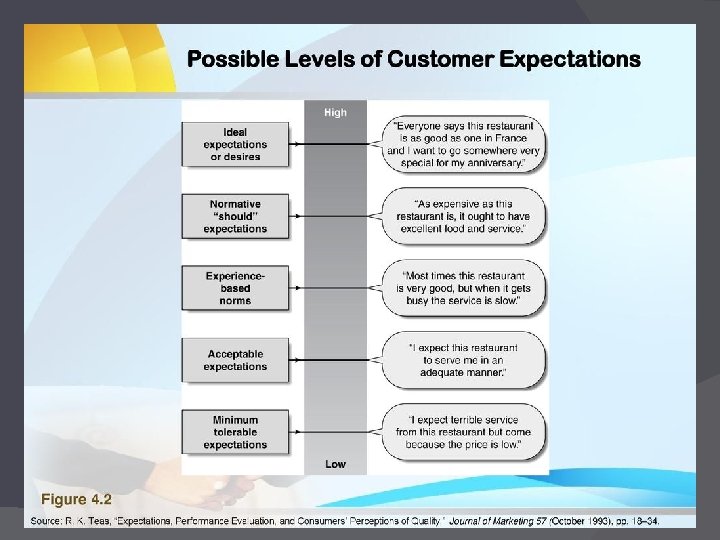
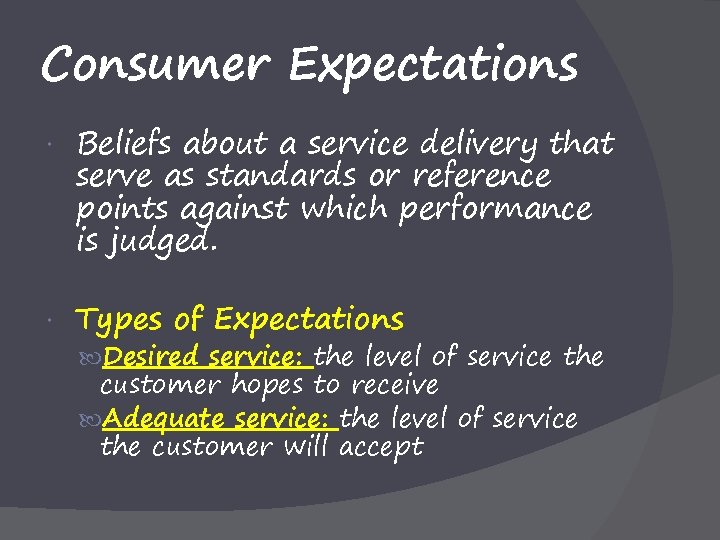
Consumer Expectations Beliefs about a service delivery that serve as standards or reference points against which performance is judged. Types of Expectations Desired service: the level of service the customer hopes to receive Adequate service: the level of service the customer will accept
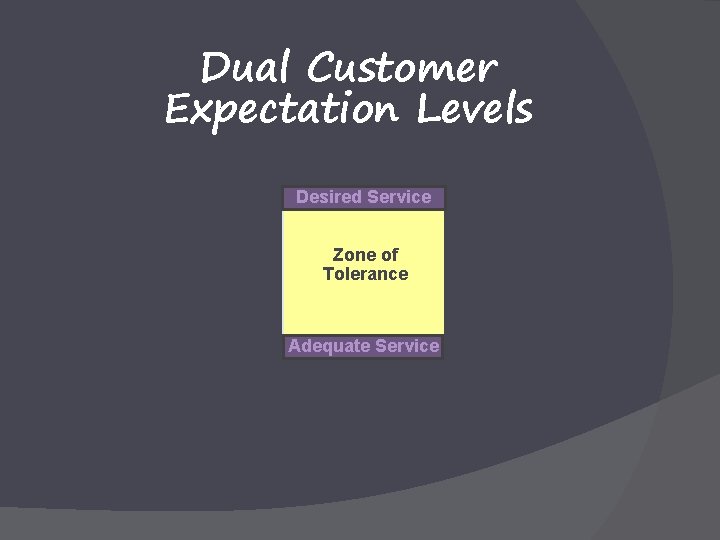
Dual Customer Expectation Levels Desired Service Zone of Tolerance Adequate Service
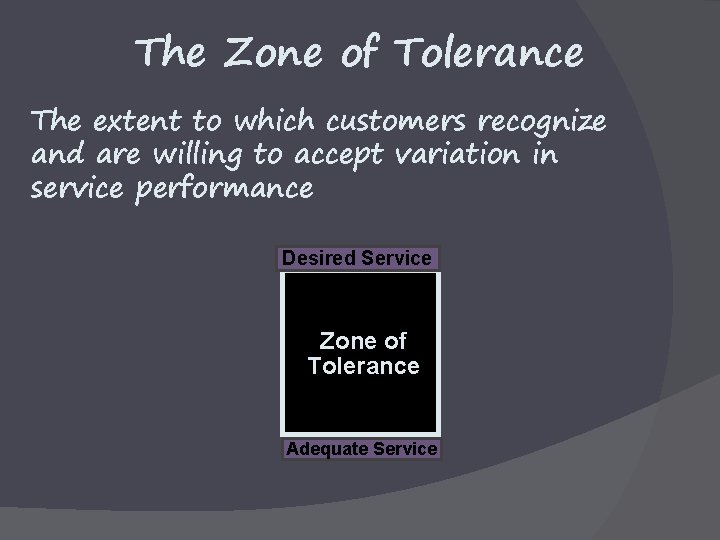
The Zone of Tolerance The extent to which customers recognize and are willing to accept variation in service performance Desired Service Zone of Tolerance Adequate Service
Zone of Tolerance and Importance of Service Dimensions Think of factors/situations that might influence YOUR Zone of Tolerance
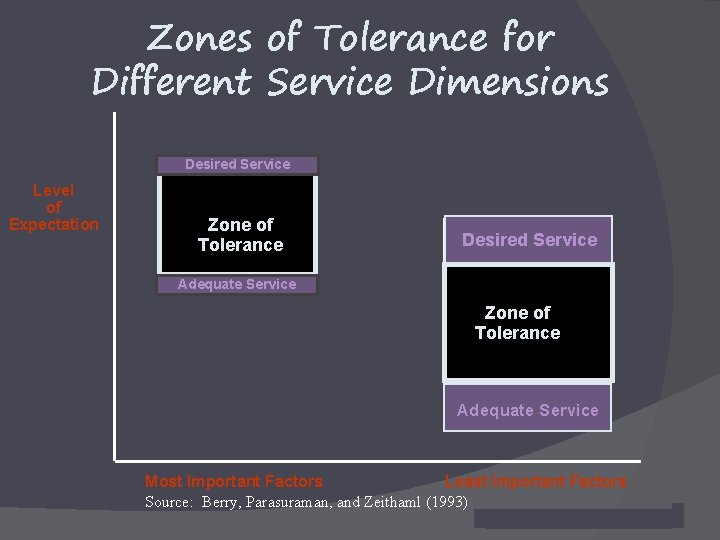
Zones of Tolerance for Different Service Dimensions Desired Service Level of Expectation Zone of Tolerance Desired Service Adequate Service Zone of Tolerance Adequate Service Most Important Factors Least Important Factors Source: Berry, Parasuraman, and Zeithaml (1993)
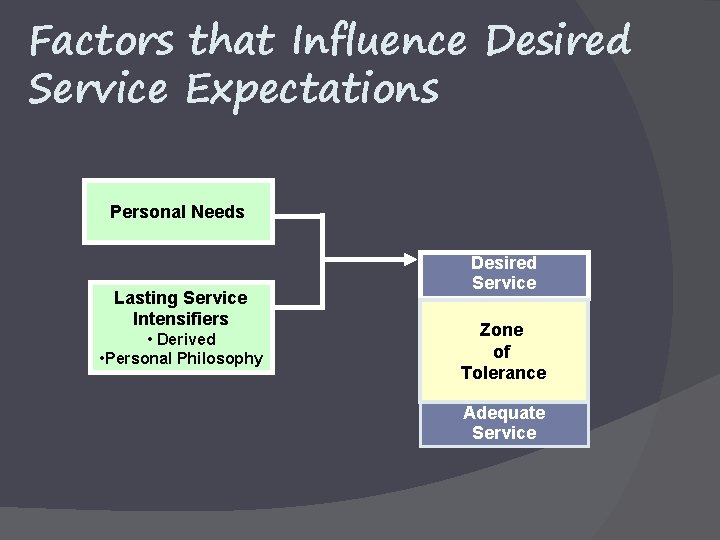
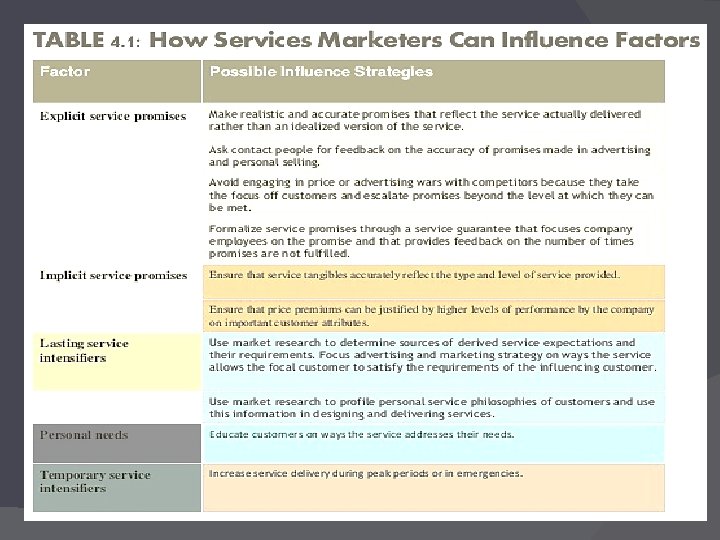
Factors that Influence Desired Service Expectations Personal Needs Lasting Service Intensifiers • Derived • Personal Philosophy Desired Service Zone of Tolerance Adequate Service
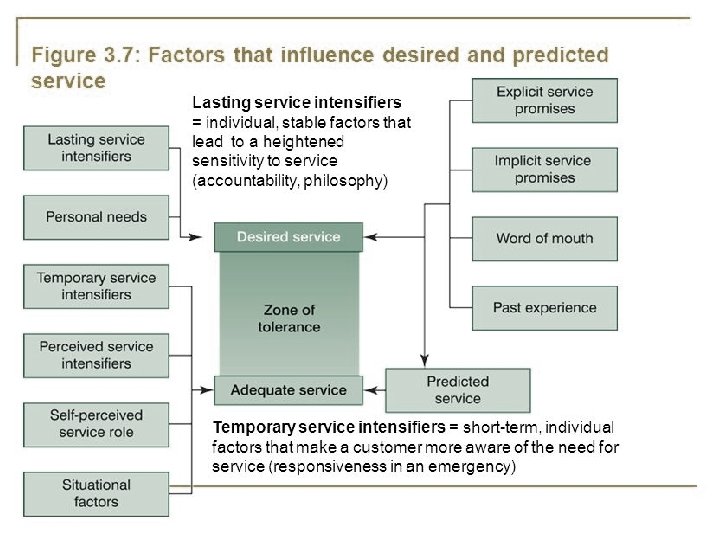
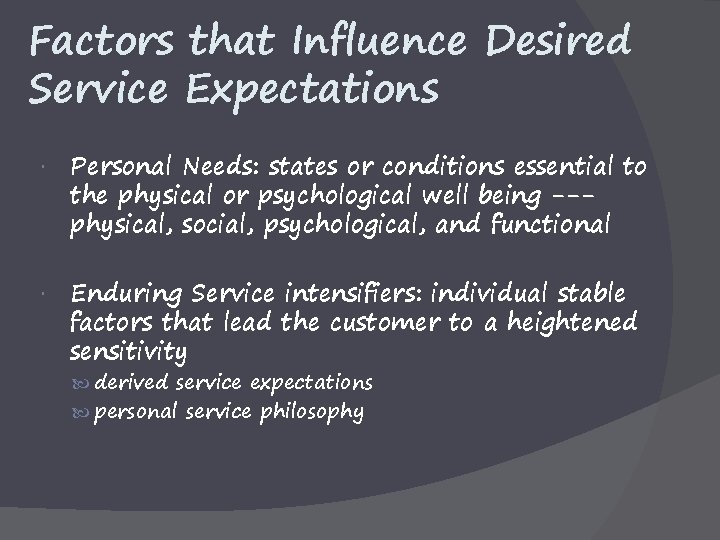
Factors that Influence Desired Service Expectations Personal Needs: states or conditions essential to the physical or psychological well being --physical, social, psychological, and functional Enduring Service intensifiers: individual stable factors that lead the customer to a heightened sensitivity derived service expectations personal service philosophy
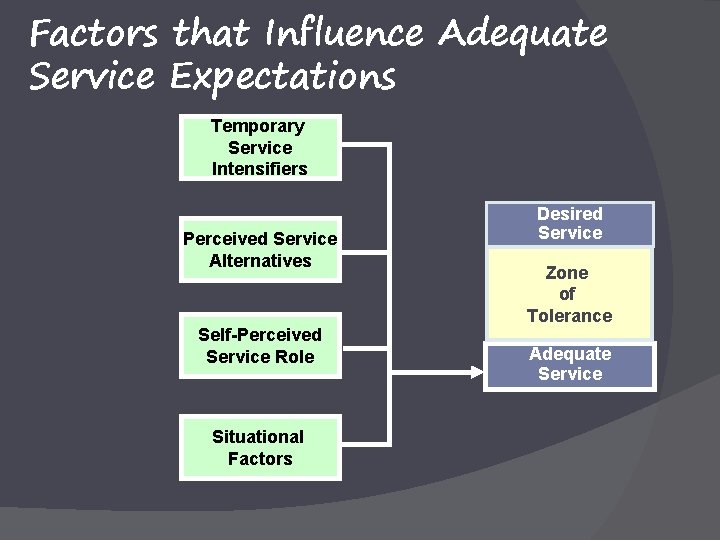
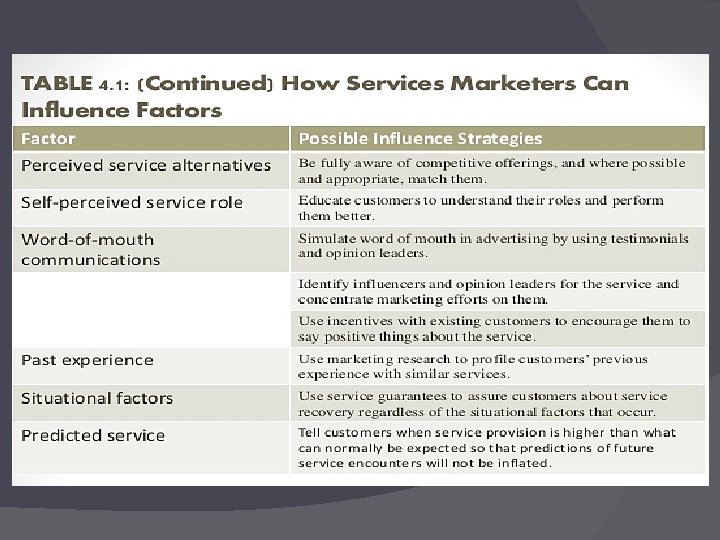
Factors that Influence Adequate Service Expectations Temporary Service Intensifiers Perceived Service Alternatives Self-Perceived Service Role Situational Factors Desired Service Zone of Tolerance Adequate Service
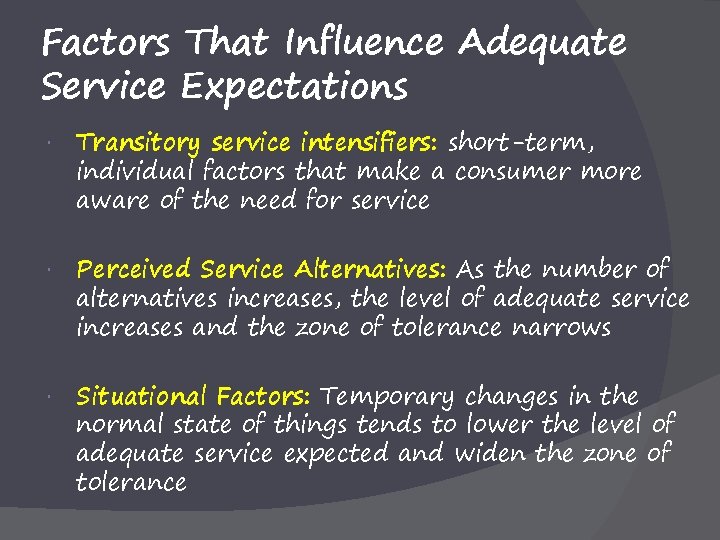
Factors That Influence Adequate Service Expectations Transitory service intensifiers: short-term, individual factors that make a consumer more aware of the need for service Perceived Service Alternatives: As the number of alternatives increases, the level of adequate service increases and the zone of tolerance narrows Situational Factors: Temporary changes in the normal state of things tends to lower the level of adequate service expected and widen the zone of tolerance
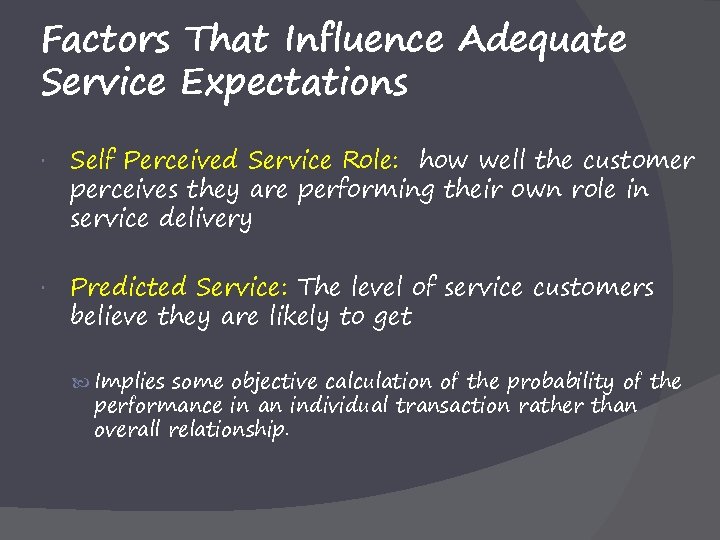
Factors That Influence Adequate Service Expectations Self Perceived Service Role: how well the customer perceives they are performing their own role in service delivery Predicted Service: The level of service customers believe they are likely to get Implies some objective calculation of the probability of the performance in an individual transaction rather than overall relationship.
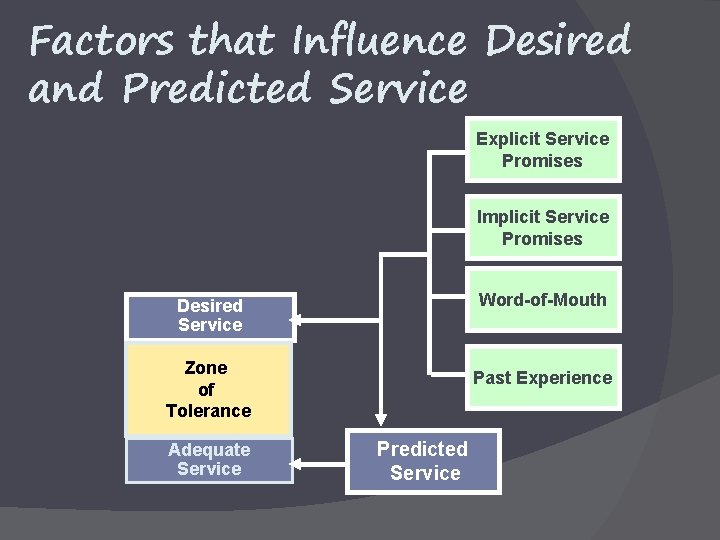
Factors that Influence Desired and Predicted Service Explicit Service Promises Implicit Service Promises Word-of-Mouth Desired Service Zone of Tolerance Adequate Service Past Experience Predicted Service
Factors that Influence Desired and Predicted Service Explicit Service Promises Implicit Service Promises Word of Mouth Past Experience
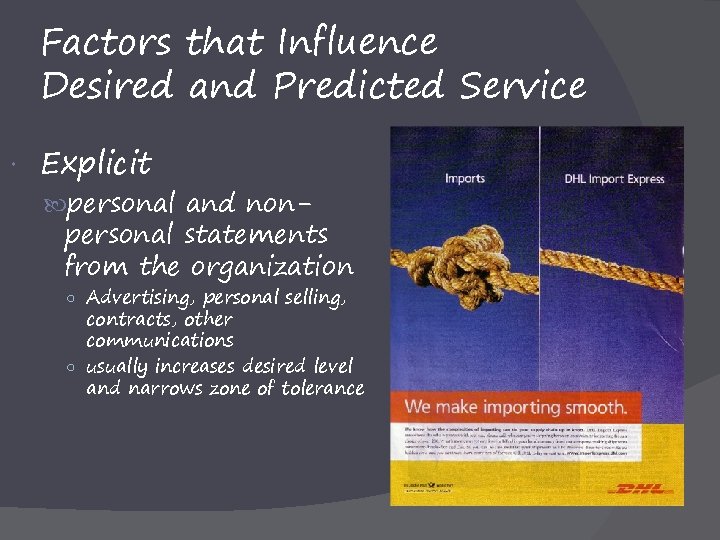
Factors that Influence Desired and Predicted Service Explicit personal and non- personal statements from the organization ○ Advertising, personal selling, contracts, other communications ○ usually increases desired level and narrows zone of tolerance
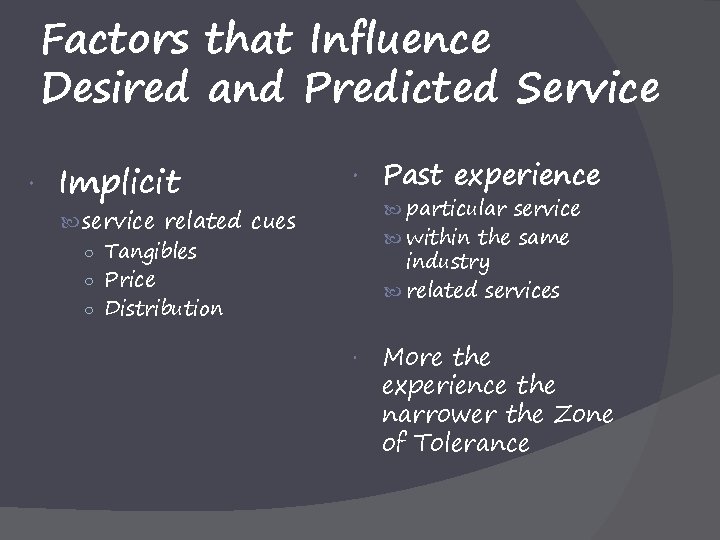
Factors that Influence Desired and Predicted Service Implicit Past experience particular service related cues ○ Tangibles ○ Price ○ Distribution within the same industry related services More the experience the narrower the Zone of Tolerance
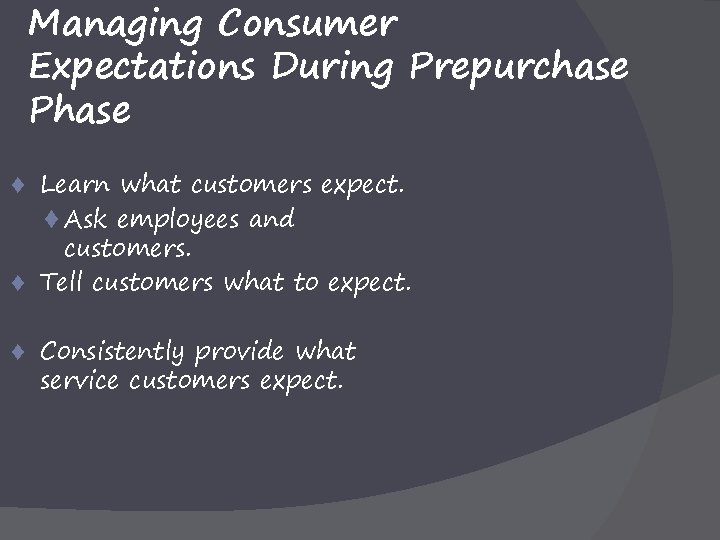
Managing Consumer Expectations During Prepurchase Phase Learn what customers expect. t Ask employees and customers. t Tell customers what to expect. t t Consistently provide what service customers expect.
Managing Consumer Expectations During Service Encounter Communicate with customers during the service. t If possible, modify the service to meet customer expectations. t Explain why service cannot be modified. t
Managing Consumer Expectations During Postpurchase Phase Communicate expectations were met? t Develop a follow-up program. t Develop a procedure for dealing with dissatisfied customers. t