Chapter 27 Notes Physical Geography of East Asia
- Slides: 30
Chapter 27 Notes Physical Geography of East Asia: A Rugged Terrain
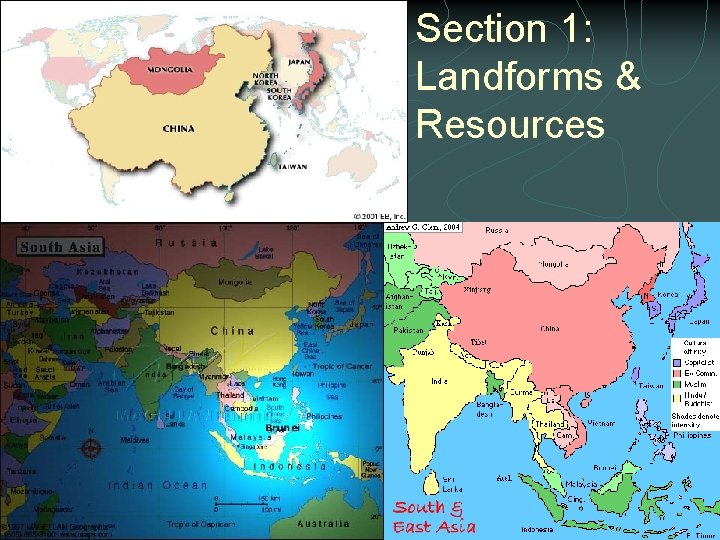
Section 1: Landforms & Resources
Section 1: Landforms & Resources
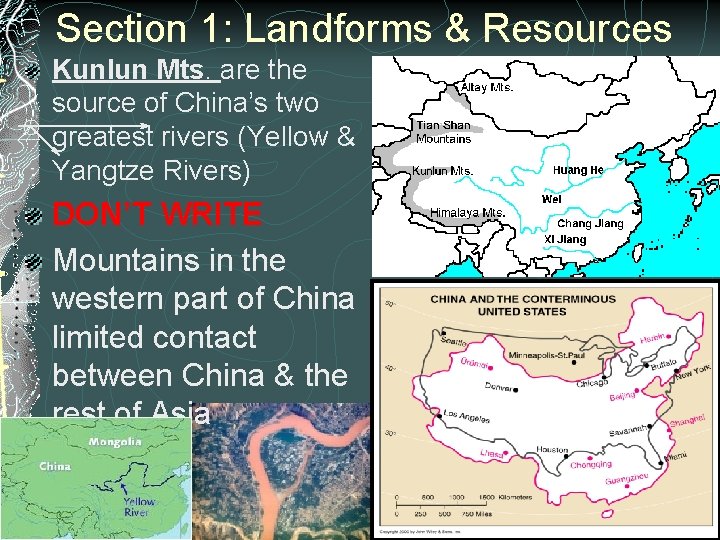
Section 1: Landforms & Resources Kunlun Mts. are the source of China’s two greatest rivers (Yellow & Yangtze Rivers) DON’T WRITE Mountains in the western part of China limited contact between China & the rest of Asia
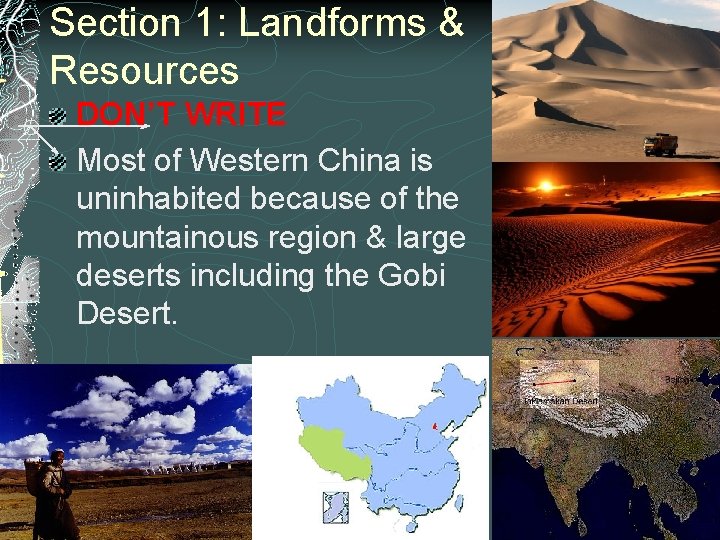
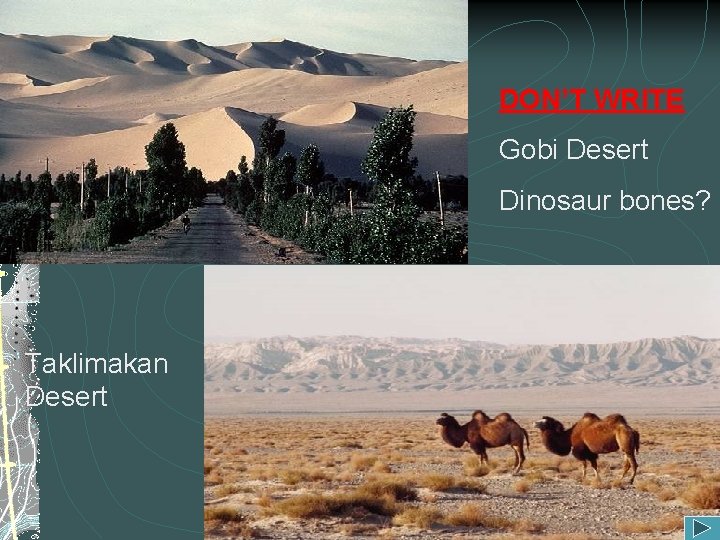
Section 1: Landforms & Resources DON’T WRITE Most of Western China is uninhabited because of the mountainous region & large deserts including the Gobi Desert.
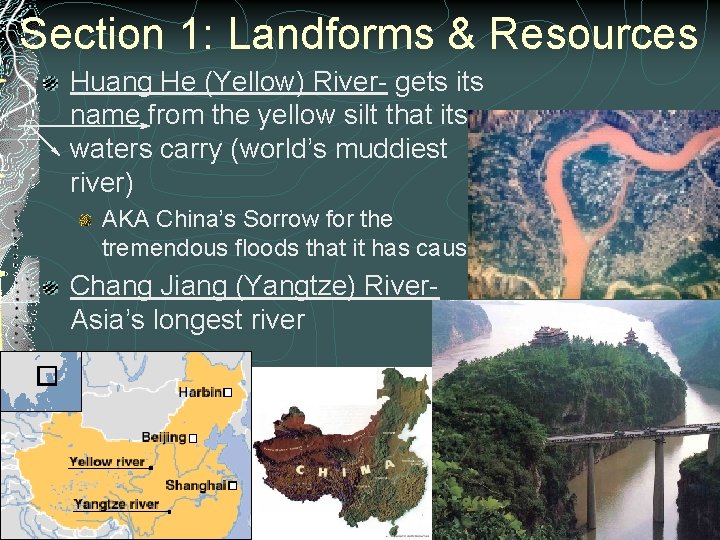
Section 1: Landforms & Resources Huang He (Yellow) River- gets its name from the yellow silt that its waters carry (world’s muddiest river) AKA China’s Sorrow for the tremendous floods that it has caused Chang Jiang (Yangtze) River. Asia’s longest river
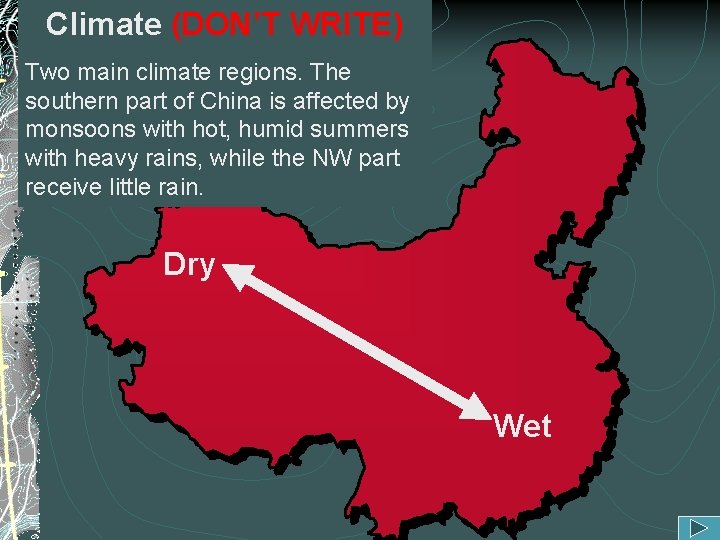
Climate (DON’T WRITE) Two main climate regions. The southern part of China is affected by monsoons with hot, humid summers with heavy rains, while the NW part receive little rain. Dry Wet
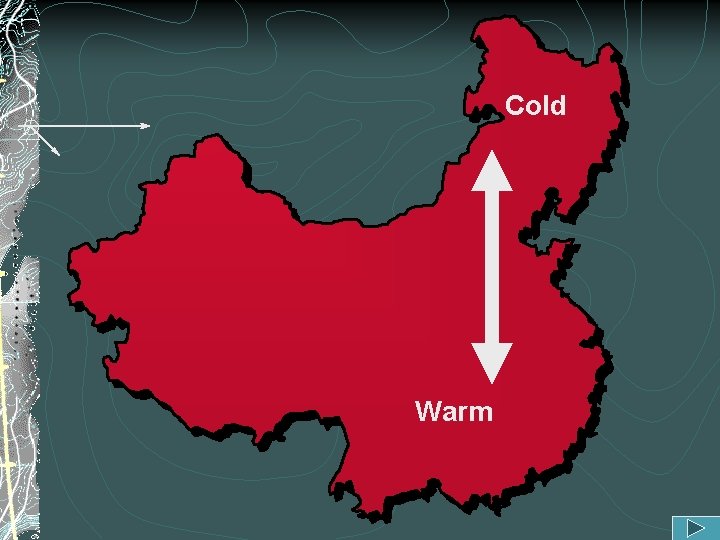
Cold Warm
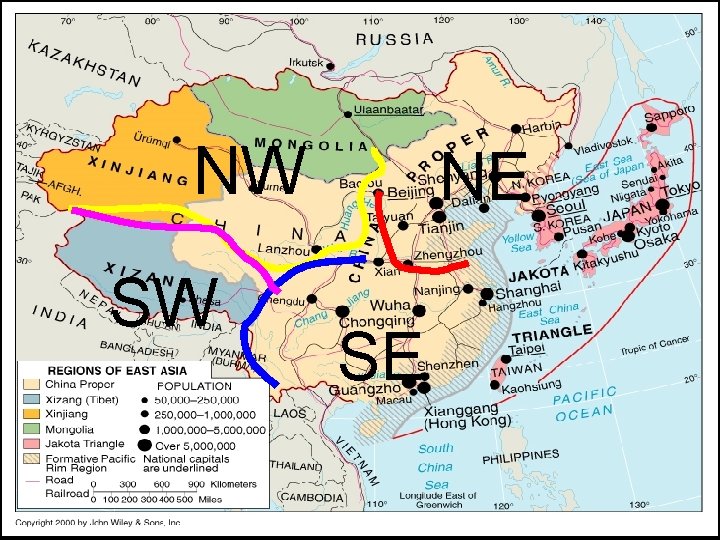
Section 2: Climate & Vegetation NW SW NE SE
Section 2: Climate & Vegetation
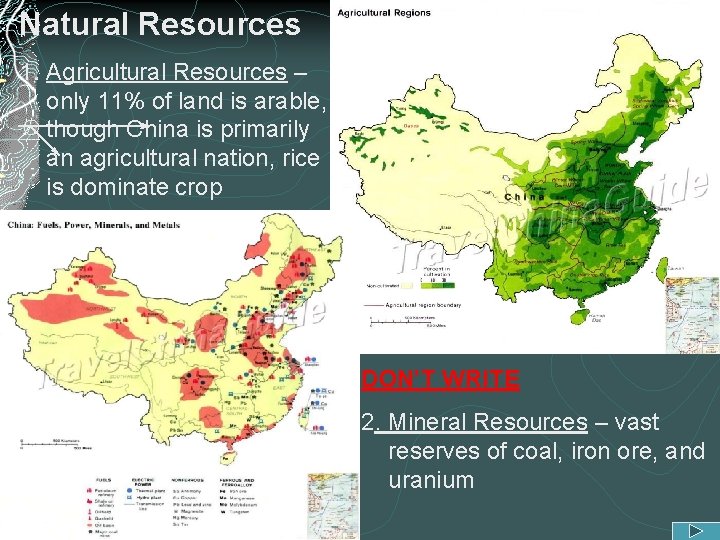
Natural Resources 1. Agricultural Resources – only 11% of land is arable, though China is primarily an agricultural nation, rice is dominate crop DON’T WRITE 2. Mineral Resources – vast reserves of coal, iron ore, and uranium
DON’T WRITE Gobi Desert Dinosaur bones? Taklimakan Desert
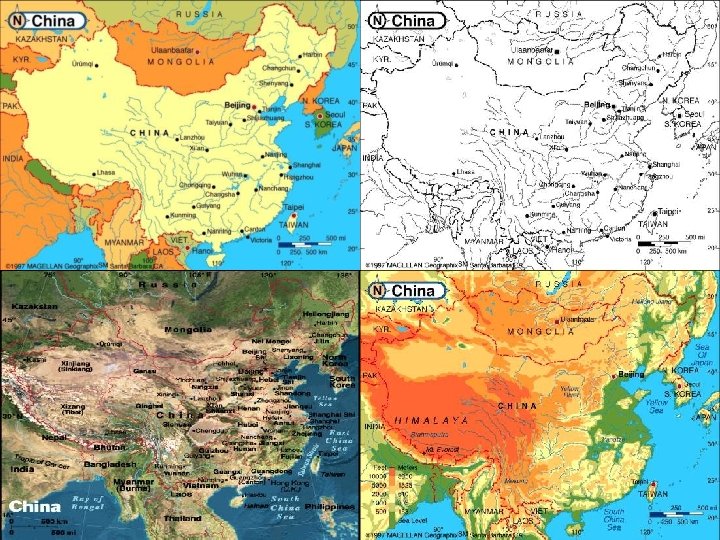
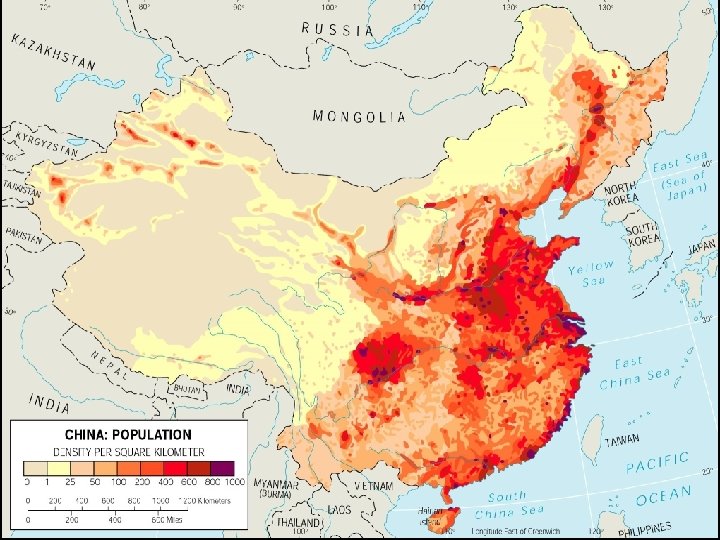
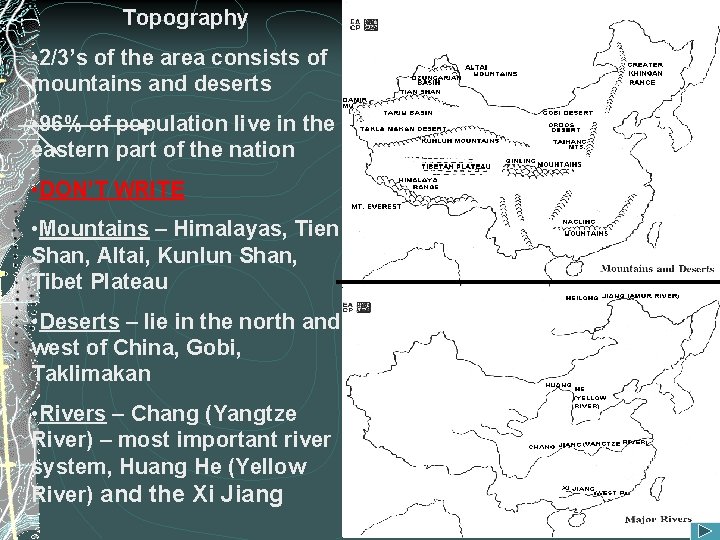
Topography • 2/3’s of the area consists of mountains and deserts • 96% of population live in the eastern part of the nation • DON’T WRITE • Mountains – Himalayas, Tien Shan, Altai, Kunlun Shan, Tibet Plateau • Deserts – lie in the north and west of China, Gobi, Taklimakan • Rivers – Chang (Yangtze River) – most important river system, Huang He (Yellow River) and the Xi Jiang
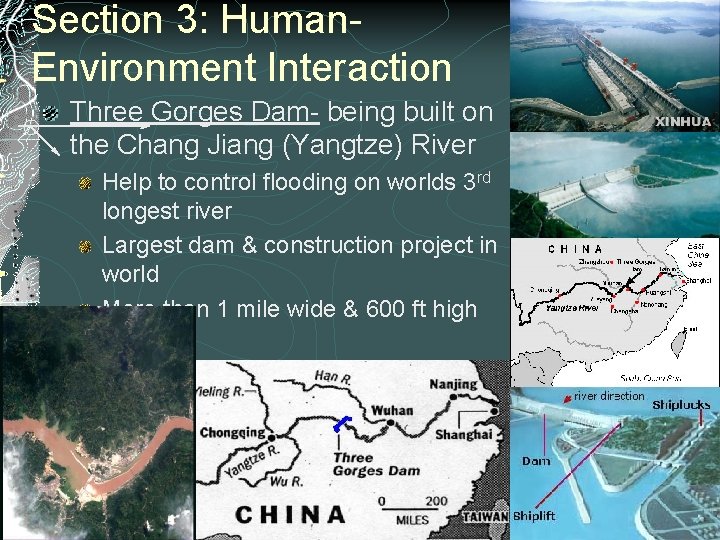
Section 3: Human. Environment Interaction Three Gorges Dam- being built on the Chang Jiang (Yangtze) River Help to control flooding on worlds 3 rd longest river Largest dam & construction project in world More than 1 mile wide & 600 ft high
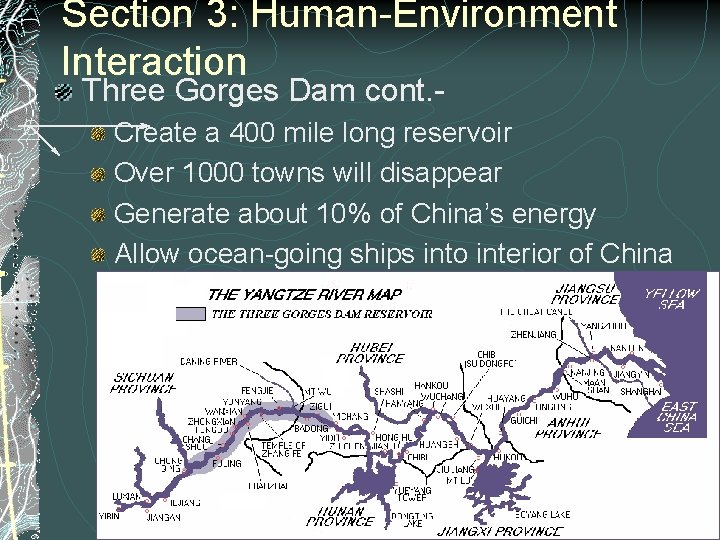
Section 3: Human-Environment Interaction Three Gorges Dam cont. - Create a 400 mile long reservoir Over 1000 towns will disappear Generate about 10% of China’s energy Allow ocean-going ships into interior of China
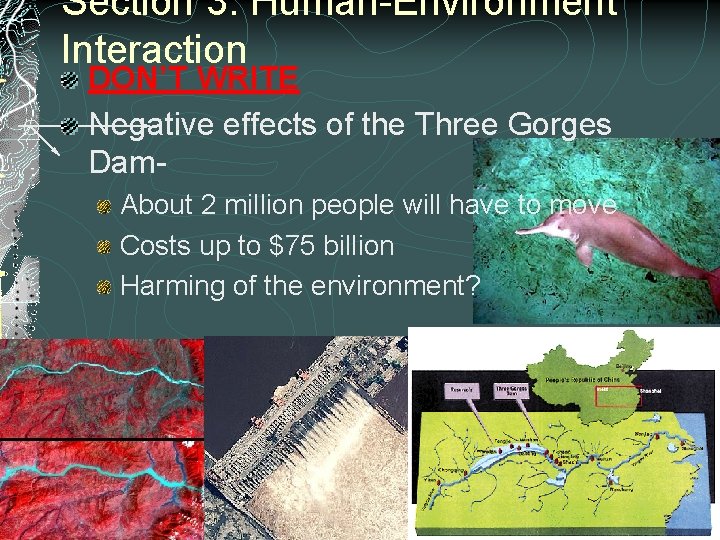
Section 3: Human-Environment Interaction DON’T WRITE Negative effects of the Three Gorges Dam- About 2 million people will have to move Costs up to $75 billion Harming of the environment?
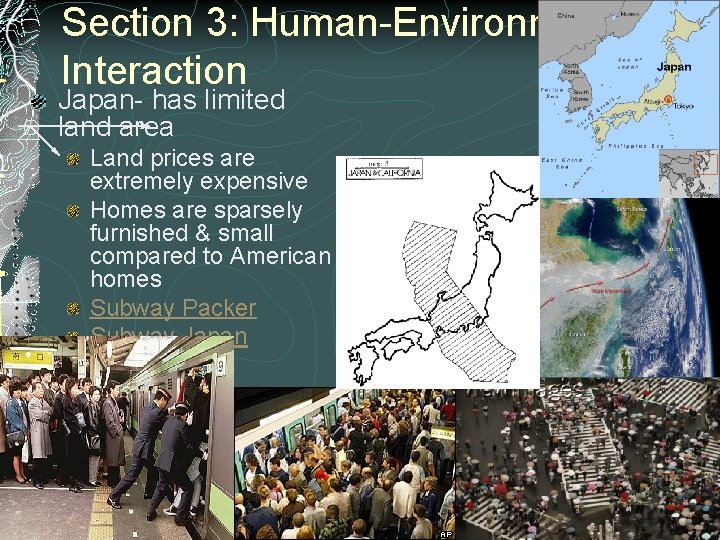
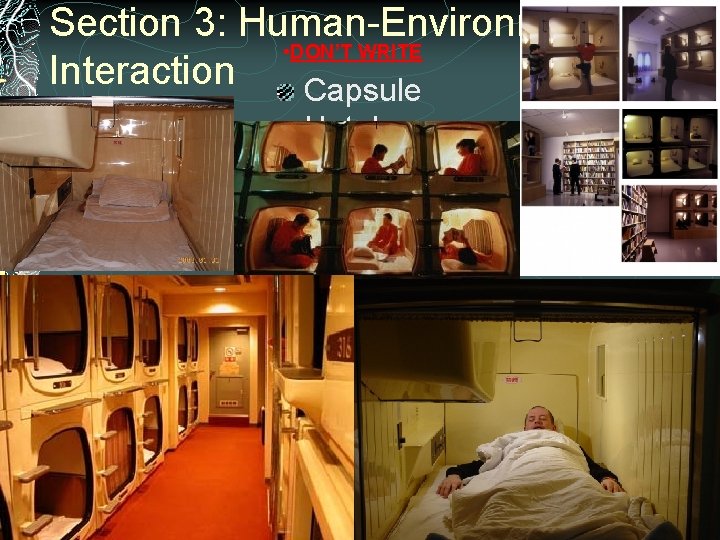
Section 3: Human-Environment Interaction Japan- has limited land area Land prices are extremely expensive Homes are sparsely furnished & small compared to American homes Subway Packer Subway Japan
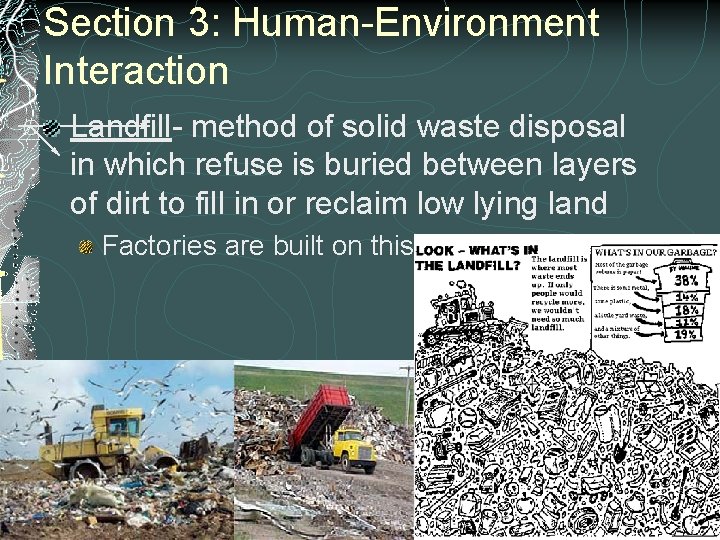
Section 3: Human-Environment Interaction Landfill- method of solid waste disposal in which refuse is buried between layers of dirt to fill in or reclaim low lying land Factories are built on this land
Section 3: Human-Environment • DON’T WRITE Interaction Capsule Hotel
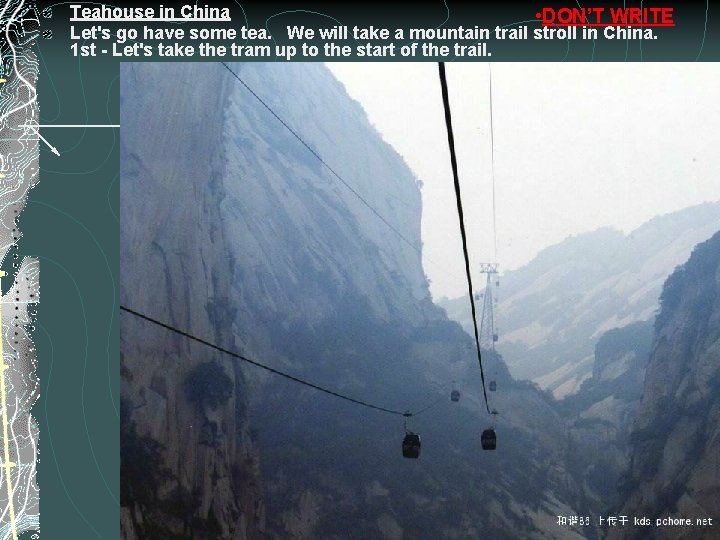
Teahouse in China • DON’T WRITE Let's go have some tea. We will take a mountain trail stroll in China. 1 st - Let's take the tram up to the start of the trail.
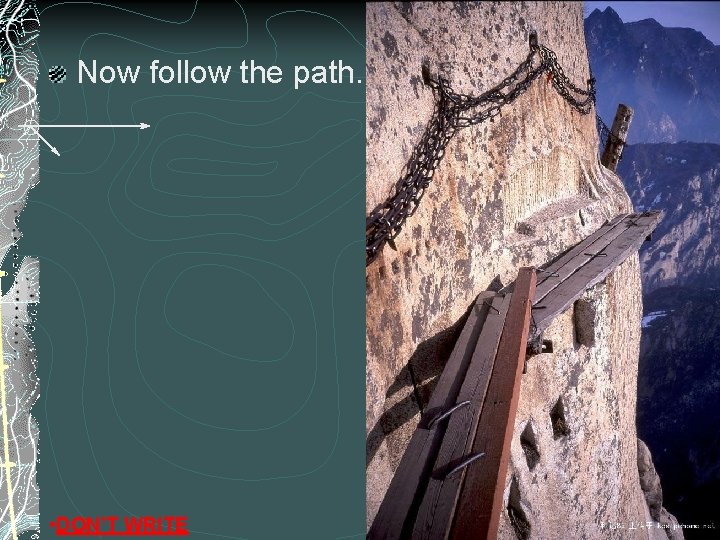
Now follow the path. • DON’T WRITE
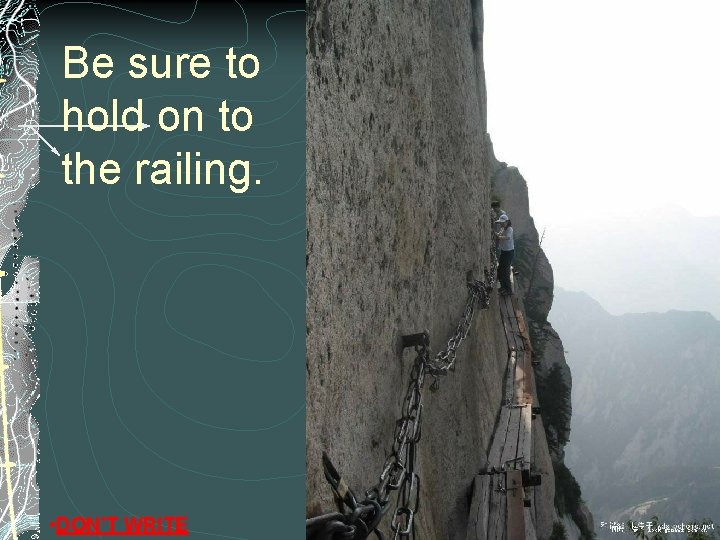
Be sure to hold on to the railing. • DON’T WRITE
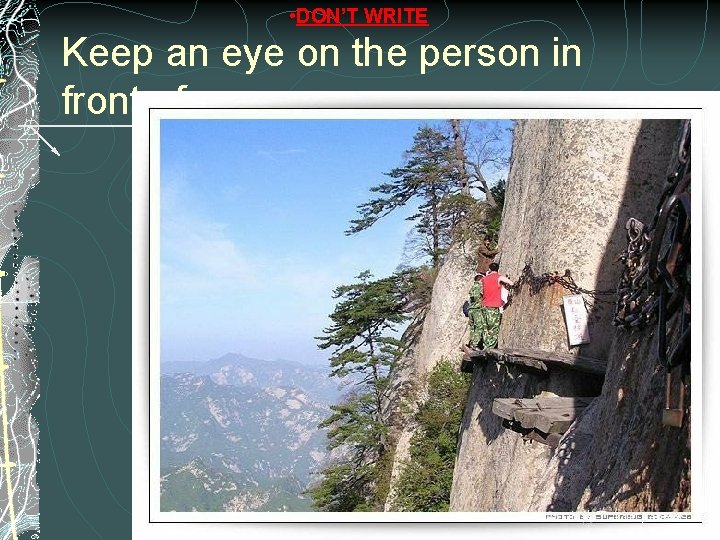
• DON’T WRITE Keep an eye on the person in front of you.
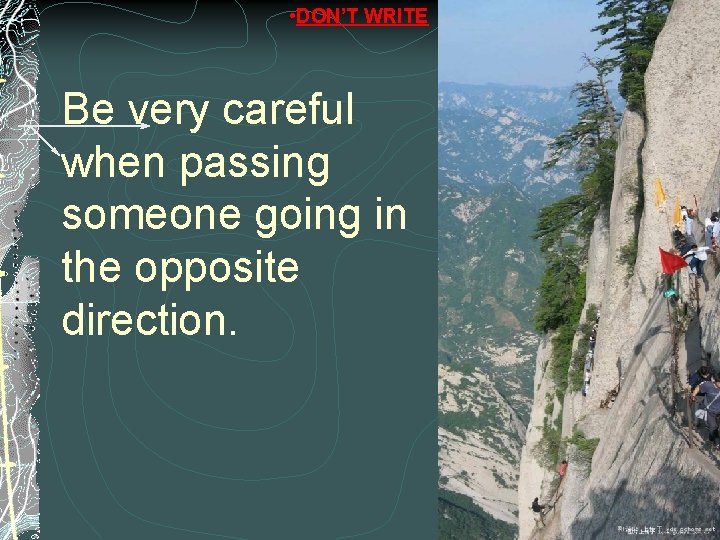
• DON’T WRITE Be very careful when passing someone going in the opposite direction.
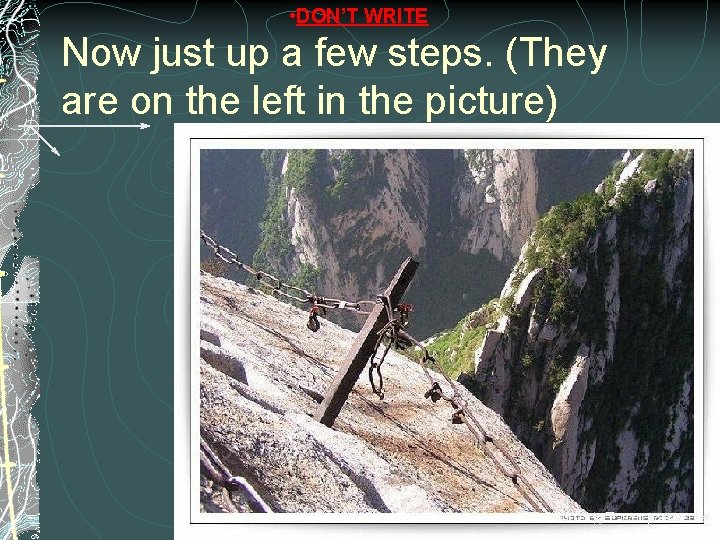
• DON’T WRITE Now just up a few steps. (They are on the left in the picture)
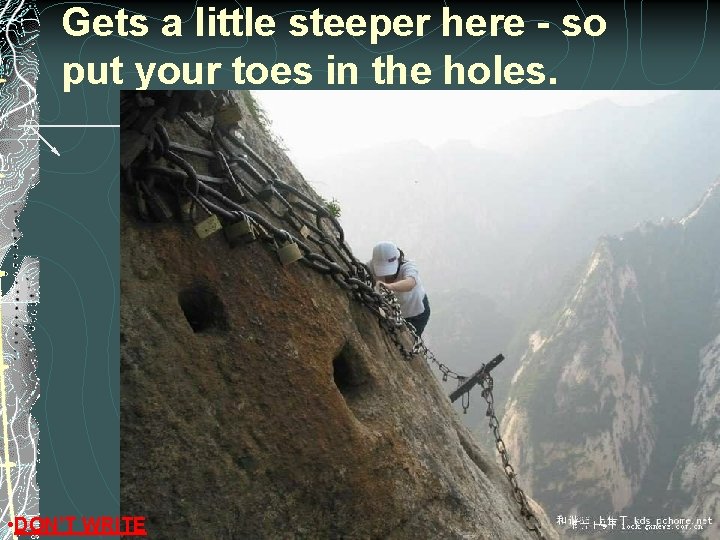
Gets a little steeper here - so put your toes in the holes. • DON’T WRITE
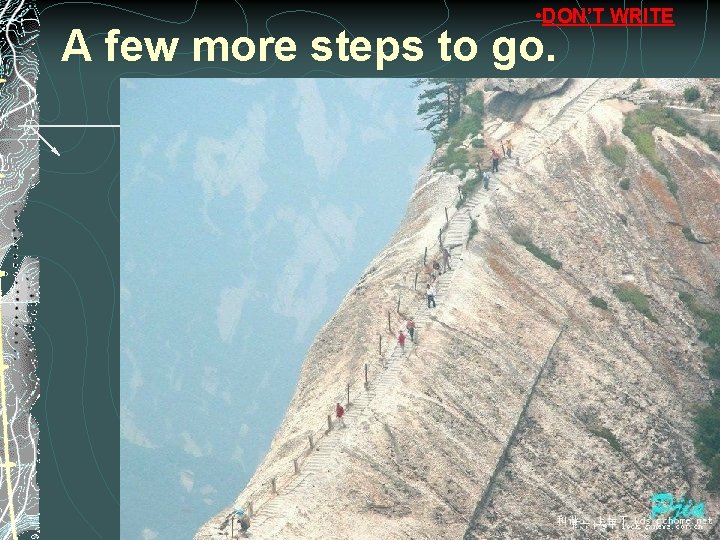
• DON’T WRITE A few more steps to go.
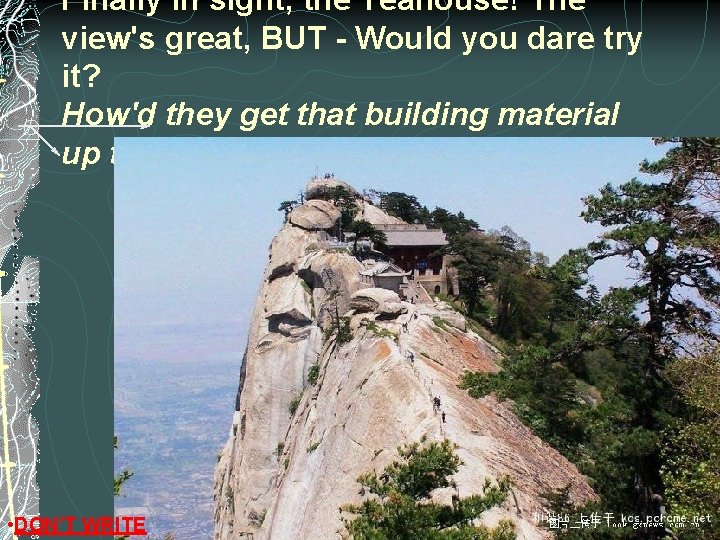
Finally in sight, the Teahouse! The view's great, BUT - Would you dare try it? How'd they get that building material up there? • DON’T WRITE
• DON’T WRITE Wave Pool Skydiving