Chapter 23 Section 2 War With Spain Main
- Slides: 20
Chapter 23, Section 2: War With Spain Main Idea: In 1898, the Spanish-American War launched an age of American imperialism in the Caribbean and the Pacific.
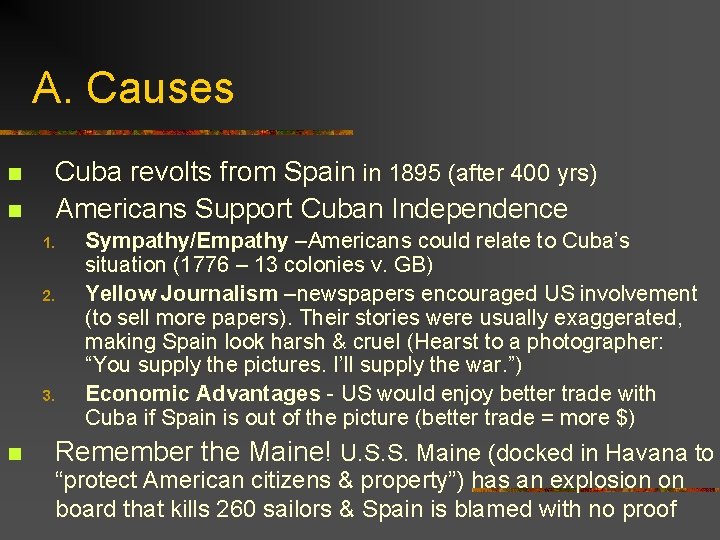
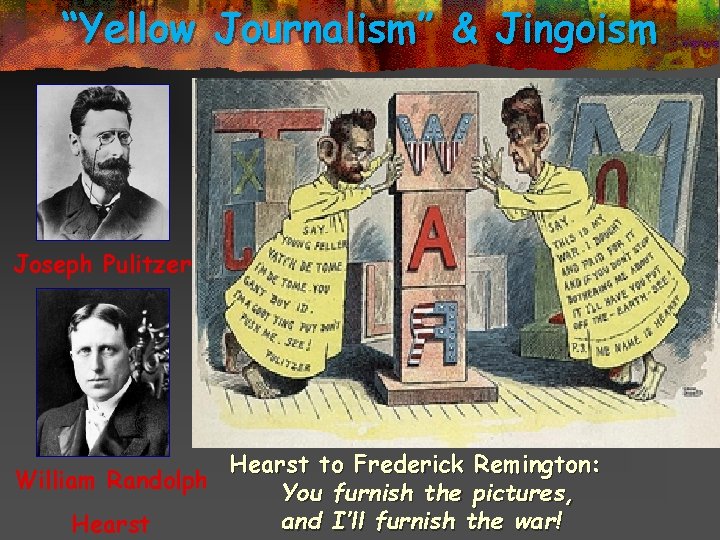
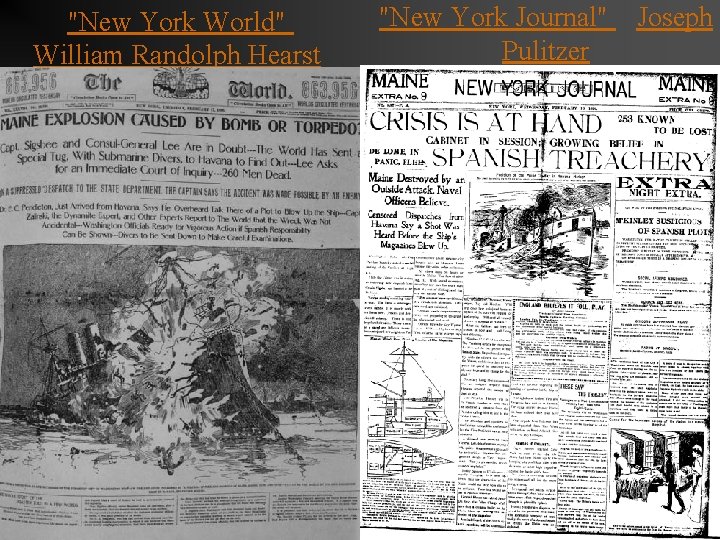
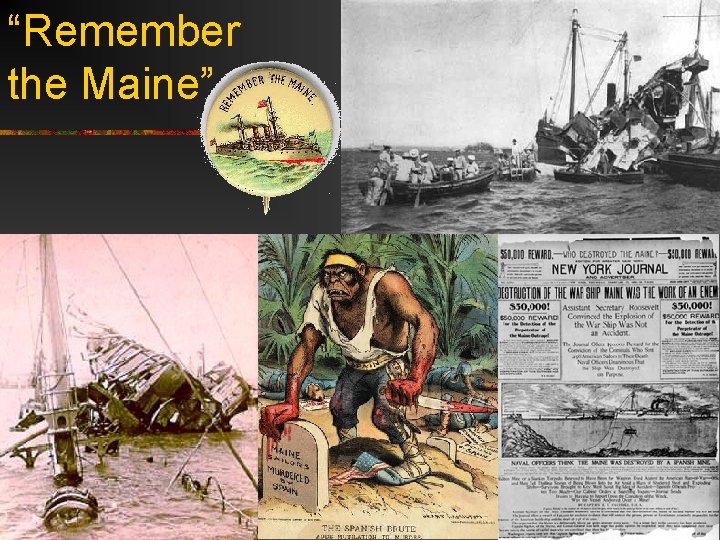
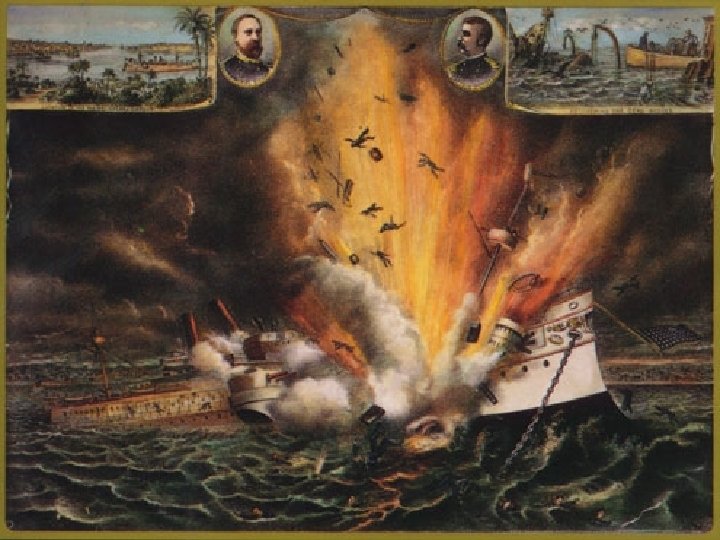
A. Causes n n Cuba revolts from Spain in 1895 (after 400 yrs) Americans Support Cuban Independence 1. 2. 3. n Sympathy/Empathy –Americans could relate to Cuba’s situation (1776 – 13 colonies v. GB) Yellow Journalism –newspapers encouraged US involvement (to sell more papers). Their stories were usually exaggerated, making Spain look harsh & cruel (Hearst to a photographer: “You supply the pictures. I’ll supply the war. ”) Economic Advantages - US would enjoy better trade with Cuba if Spain is out of the picture (better trade = more $) Remember the Maine! U. S. S. Maine (docked in Havana to “protect American citizens & property”) has an explosion on board that kills 260 sailors & Spain is blamed with no proof
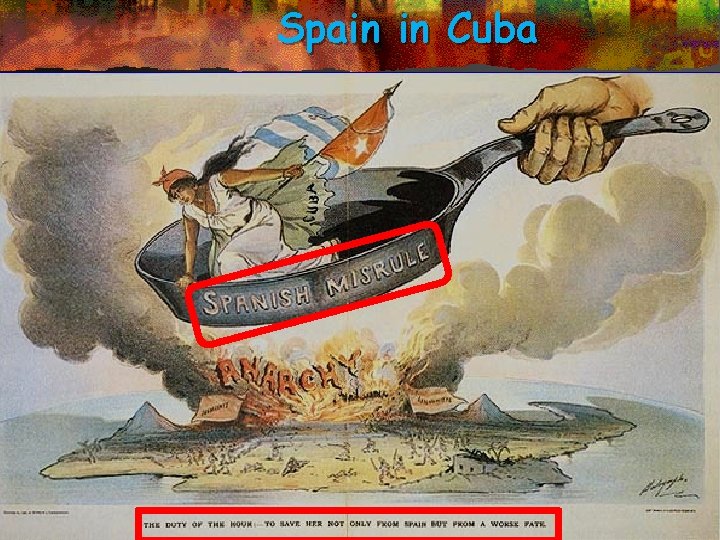
Spain in Cuba
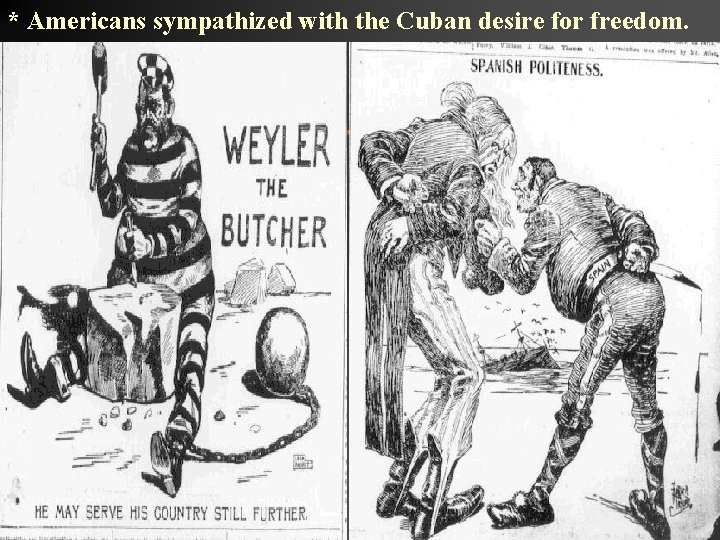
* Americans sympathized with the Cuban desire for freedom.
“Yellow Journalism” & Jingoism Joseph Pulitzer Hearst to Frederick Remington: William Randolph You furnish the pictures, and I’ll furnish the war! Hearst
"New York World" William Randolph Hearst "New York Journal" Pulitzer Joseph
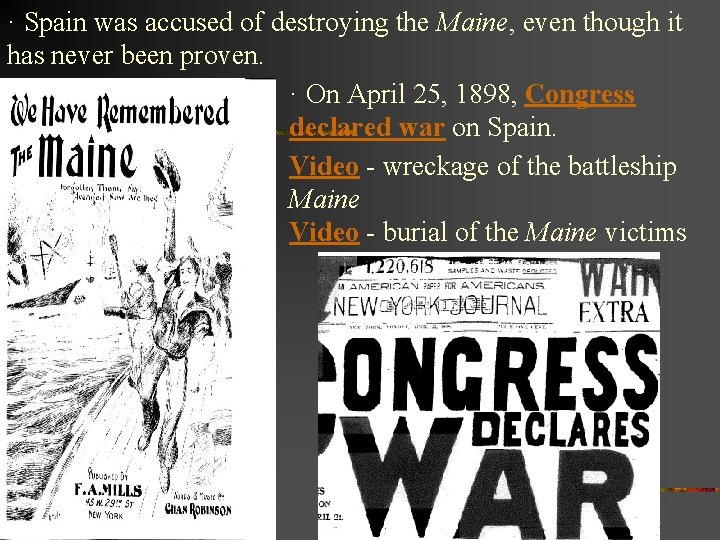
“Remember the Maine”
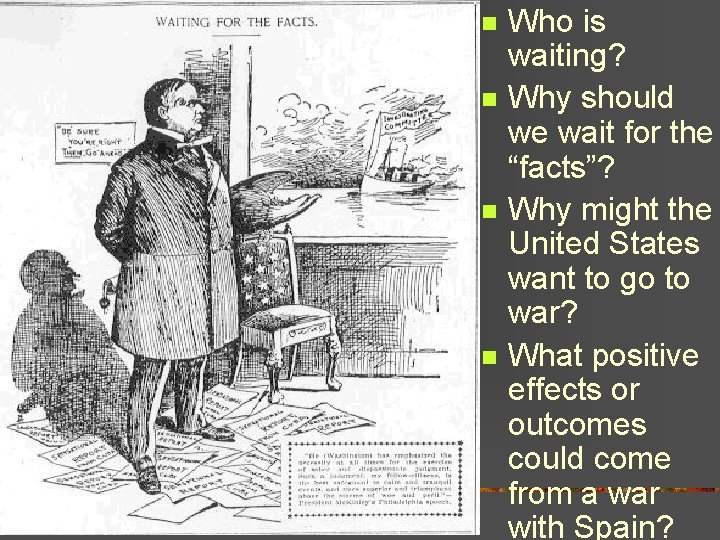
n n Who is waiting? Why should we wait for the “facts”? Why might the United States want to go to war? What positive effects or outcomes could come from a war with Spain?
· Spain was accused of destroying the Maine, even though it has never been proven. · On April 25, 1898, Congress declared war on Spain. Video - wreckage of the battleship Maine Video - burial of the Maine victims
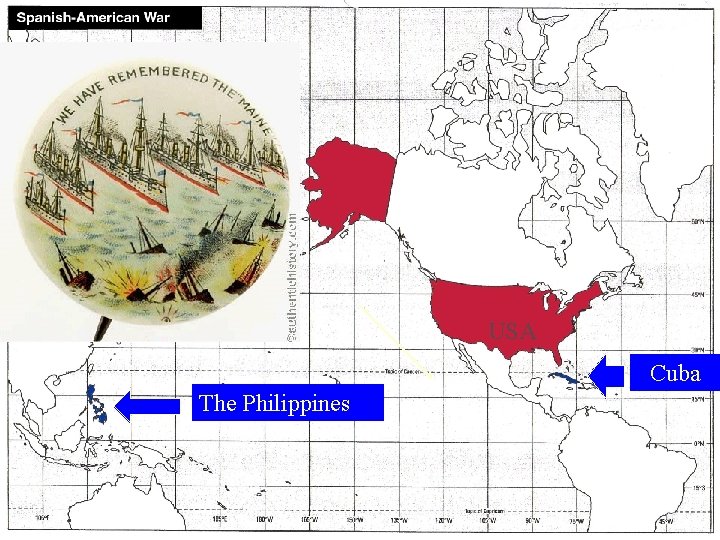
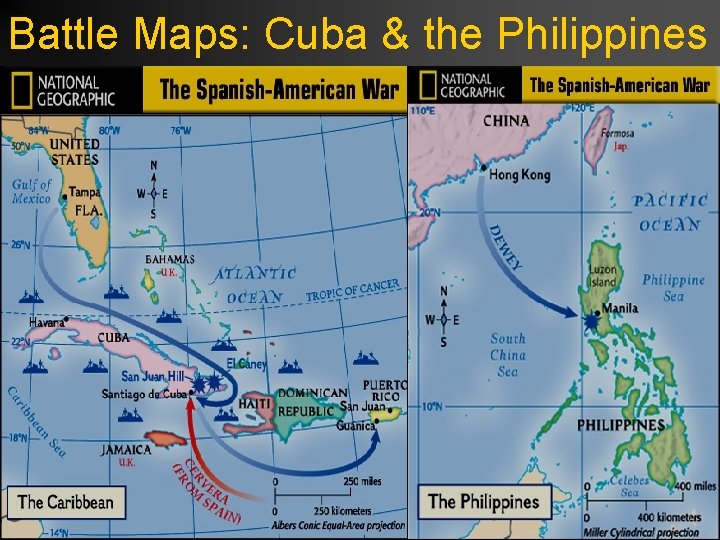
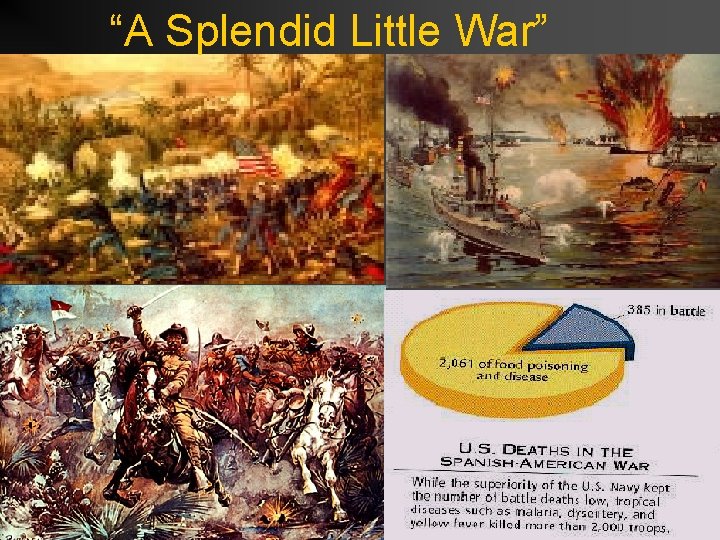
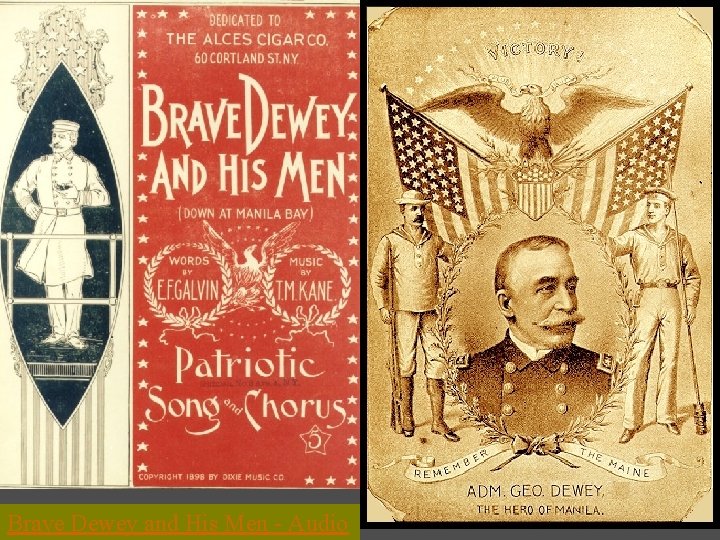
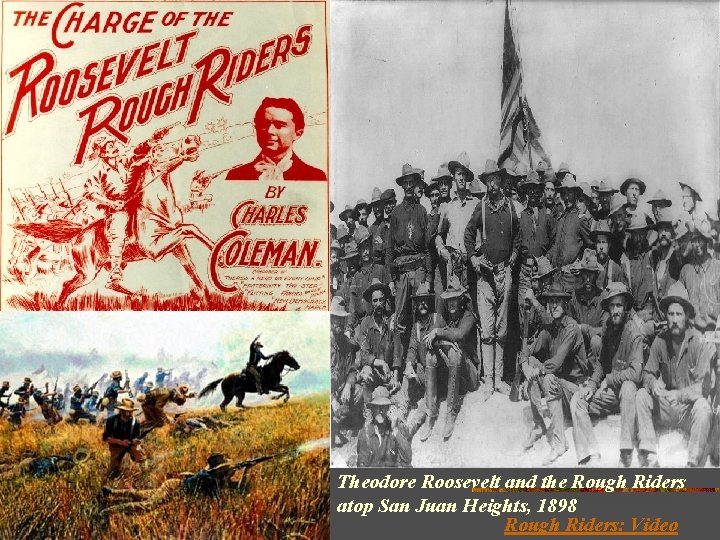
B. Events & People n n Dewey Takes Philippines – Commodore George Dewey smashed Spanish fleet at Manila Bay Fighting in Cuba – US soldiers were poorly supplied (wool, spoiled food, etc); Rough Riders (TR); Buffalo Soldiers (black) Santiago, San Juan Hill, Kettle Hill “A splendid little war. ” – John Hay (3 -4 mos. long, few casualties, gained a lot of land)
USA Cuba The Philippines 12
Battle Maps: Cuba & the Philippines
“A Splendid Little War”
Brave Dewey and His Men - Audio
Theodore Roosevelt and the Rough Riders atop San Juan Heights, 1898 Rough Riders: Video
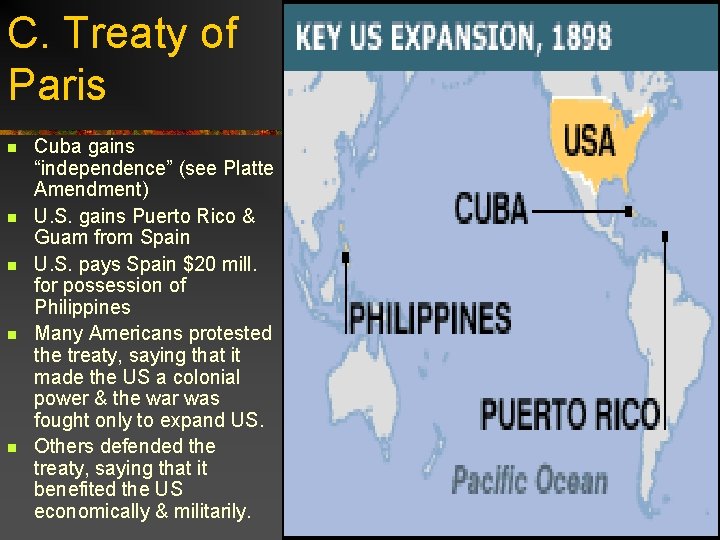
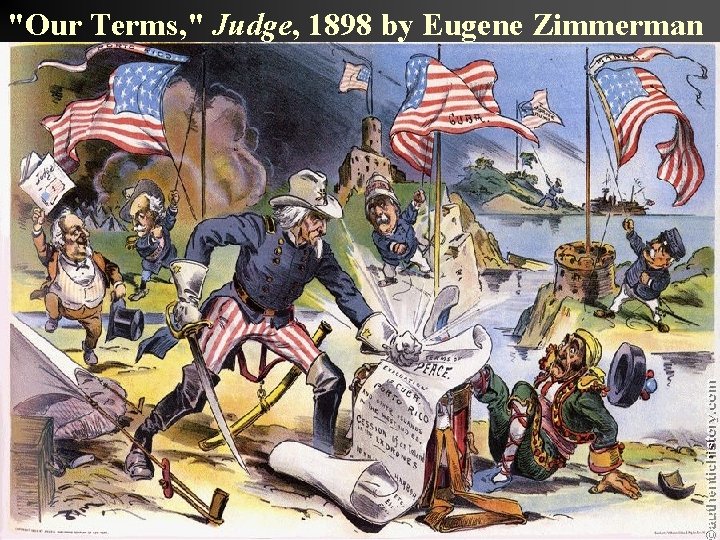
C. Treaty of Paris n n n Cuba gains “independence” (see Platte Amendment) U. S. gains Puerto Rico & Guam from Spain U. S. pays Spain $20 mill. for possession of Philippines Many Americans protested the treaty, saying that it made the US a colonial power & the war was fought only to expand US. Others defended the treaty, saying that it benefited the US economically & militarily.
"Our Terms, " Judge, 1898 by Eugene Zimmerman
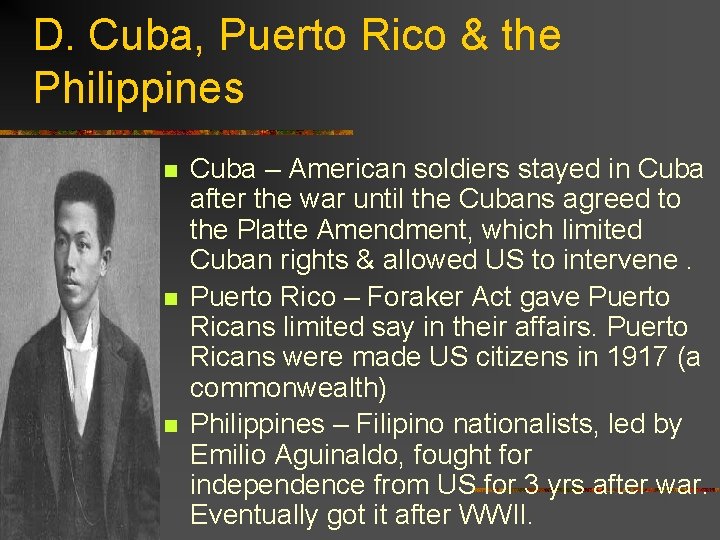
D. Cuba, Puerto Rico & the Philippines n n n Cuba – American soldiers stayed in Cuba after the war until the Cubans agreed to the Platte Amendment, which limited Cuban rights & allowed US to intervene. Puerto Rico – Foraker Act gave Puerto Ricans limited say in their affairs. Puerto Ricans were made US citizens in 1917 (a commonwealth) Philippines – Filipino nationalists, led by Emilio Aguinaldo, fought for independence from US for 3 yrs after war. Eventually got it after WWII.