CHAPTER 17 2 1 Store Layout Design and
- Slides: 31
CHAPTER 17 2 1 Store Layout, Design, and Visual Merchandising CHAPTER 17 Retailing Management 8 e Mc. Graw-Hill/Irwin 17 Copyright © 2012 by Mc. Graw-Hill Companies, Inc. All rights reserved. © The Mc. Graw-Hill Companies, All. The rights reserved.
Store Design Objectives CHAPTER 17 2 1 • Implement Retailer’s strategy • Build Loyalty • Increase Sales on Visits • Control Cost • Legal Considerations—Americans with Disabilities Act • Design Trade-Offs 17 -
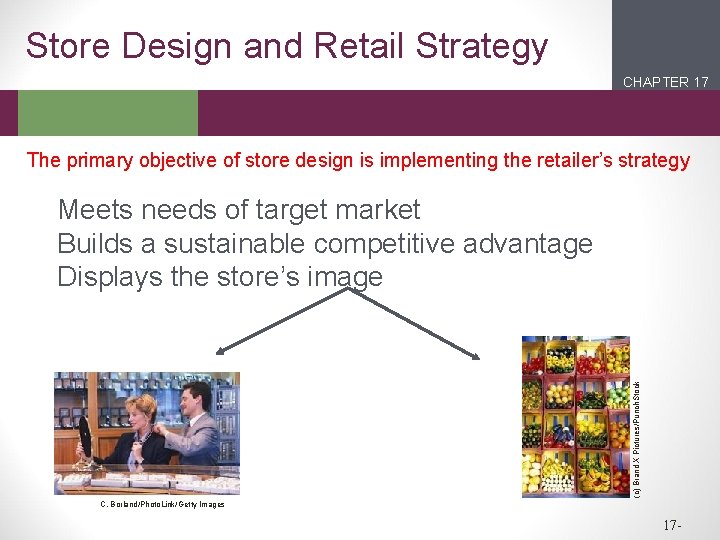
Store Design and Retail Strategy CHAPTER 17 2 1 The primary objective of store design is implementing the retailer’s strategy (c) Brand X Pictures/Punch. Stock Meets needs of target market Builds a sustainable competitive advantage Displays the store’s image C. Borland/Photo. Link/Getty Images 17 -
Build Loyalty CHAPTER 17 2 1 • Store design provides utilitarian benefits when it enables customers to locate and purchase products in an efficient and timely manner with minimum hassle • Store design provides hedonic benefits by offering customers an entertaining and enjoyable shopping experience. H. Wiesenhofer/Photo. Link/Getty Images 17 -
Increase Sales on Visits CHAPTER 17 2 1 • Store design has a substantial effect on which products customers buy, how long they stay in the store, and how much they spend during a visit. 17 -
Control Cost CHAPTER 17 2 1 • Control the cost of implementing the store design and maintain the store’s appearance • Store design influences • Shopping experience and thus sales • Labor costs • Inventory shrinkage 17 -
Legal Considerations CHAPTER 17 2 1 • Americans with Disabilities Act (ADA) • Protects people with disabilities from discrimination in employment, transportation, public accommodations, telecommunications and activities of state and local government • Affects store design as disabled people need “reasonable access” to merchandise and services built before 1993. After 1993, stores are expected to be fully accessible. 17 -
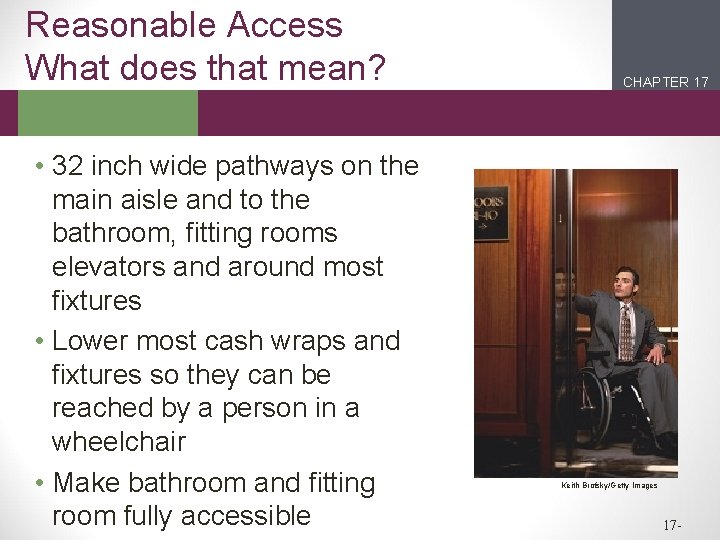
Reasonable Access What does that mean? • 32 inch wide pathways on the main aisle and to the bathroom, fitting rooms elevators and around most fixtures • Lower most cash wraps and fixtures so they can be reached by a person in a wheelchair • Make bathroom and fitting room fully accessible CHAPTER 17 2 1 Keith Brofsky/Getty Images 17 -
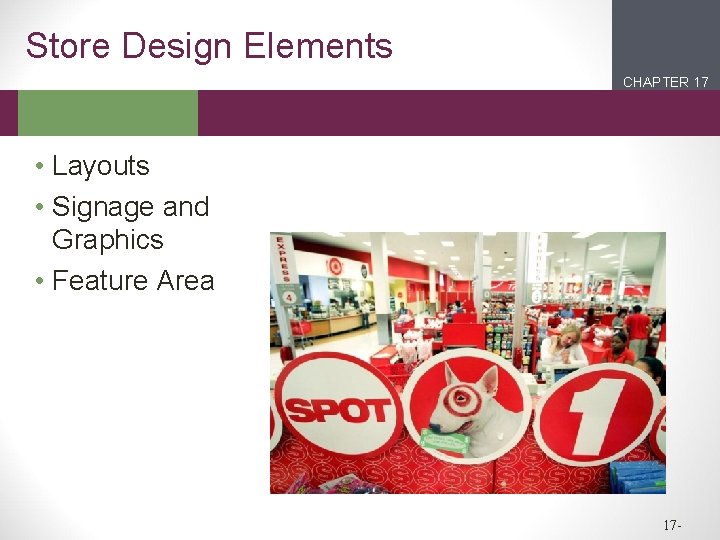
Store Design Elements CHAPTER 17 2 1 • Layouts • Signage and Graphics • Feature Area 17 -
Store Layouts CHAPTER 17 2 1 • To encourage customer exploration and help customers move through the stores • Use a layout that facilitates a specific traffic pattern • Provide interesting design elements • Types of Store Layouts • Grid • Racetrack • Free Form 17 -
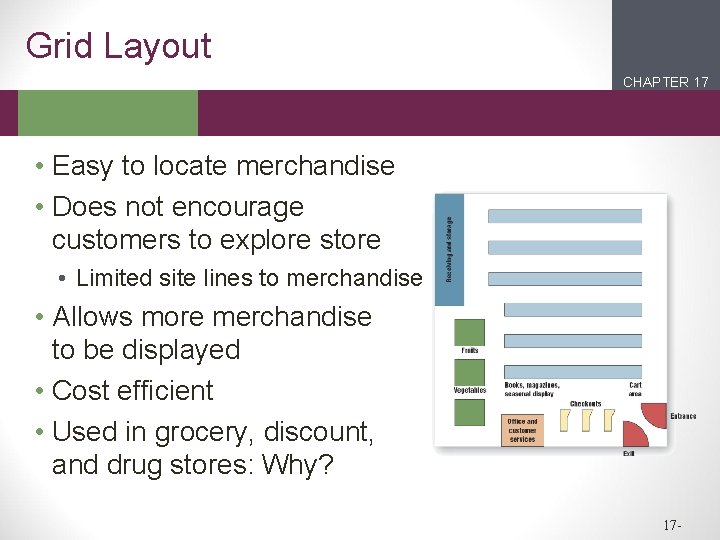
Grid Layout CHAPTER 17 2 1 • Easy to locate merchandise • Does not encourage customers to explore store • Limited site lines to merchandise • Allows more merchandise to be displayed • Cost efficient • Used in grocery, discount, and drug stores: Why? 17 -
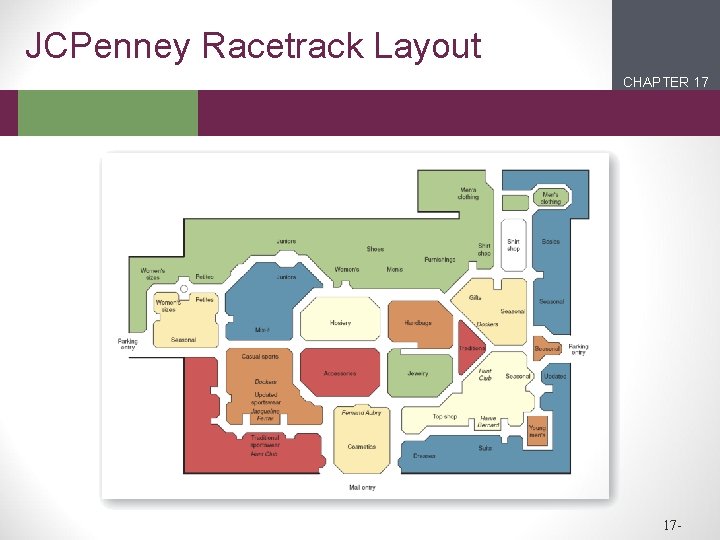
Racetrack Layout (Loop) CHAPTER 17 2 1 • Loop with a major aisle that has access to departments • Draws customers around the store • Provide different viewing angles and encourage exploration, impulse buying • Used in department stores 17 -
JCPenney Racetrack Layout CHAPTER 17 2 1 17 -
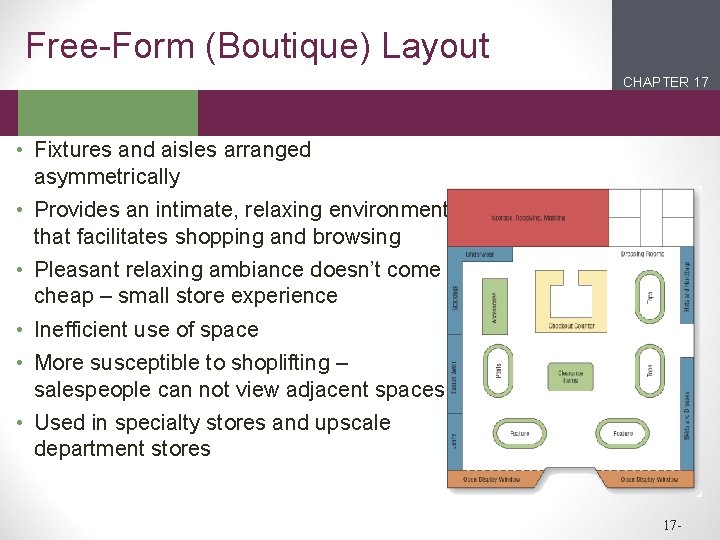
Free-Form (Boutique) Layout CHAPTER 17 2 1 • Fixtures and aisles arranged asymmetrically • Provides an intimate, relaxing environment that facilitates shopping and browsing • Pleasant relaxing ambiance doesn’t come cheap – small store experience • Inefficient use of space • More susceptible to shoplifting – salespeople can not view adjacent spaces. • Used in specialty stores and upscale department stores 17 -
Usage of Signage and Graphics CHAPTER 17 2 1 • Location – identifies the location of merchandise and guides customers • Category Signage – identifies types of products and located near the goods • Promotional Signage – relates to specific offers – sometimes in windows • Point of sale – near merchandise with prices and product information • Lifestyle images – creates moods that encourage customers to shop 17 -
Digital Signage CHAPTER 17 2 1 Visual Content delivered digitally through a centrally managed and controlled network and displayed on a TV monitor or flat panel screen • Superior in attracting attention • Enhances store environment • Provides appealing atmosphere • Overcomes time-to-message hurdle • Messages can target demographics • Eliminates costs with printing, distribution and installing traditional signage 17 -
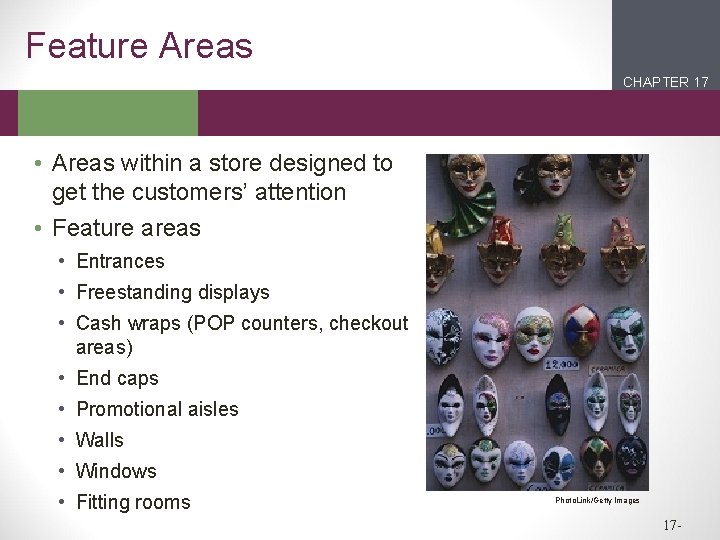
Feature Areas CHAPTER 17 2 1 • Areas within a store designed to get the customers’ attention • Feature areas • Entrances • Freestanding displays • Cash wraps (POP counters, checkout areas) • End caps • Promotional aisles • Walls • Windows • Fitting rooms Photo. Link/Getty Images 17 -
Location of Merchandise Categories CHAPTER 17 2 1 • Impulse merchandise – near heavily trafficked areas • Demand/Destination merchandise – back left-hand corner of the store • Special merchandise – lightly trafficked areas (glass pieces, women’s lingerie) • Adjacencies – cluster complimentary merchandise next to each other 17 -
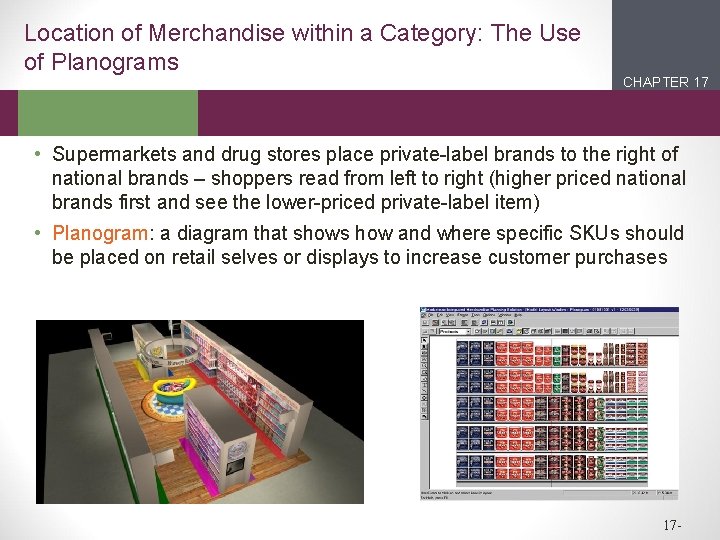
Location of Merchandise within a Category: The Use of Planograms CHAPTER 17 2 1 • Supermarkets and drug stores place private-label brands to the right of national brands – shoppers read from left to right (higher priced national brands first and see the lower-priced private-label item) • Planogram: a diagram that shows how and where specific SKUs should be placed on retail selves or displays to increase customer purchases 17 -
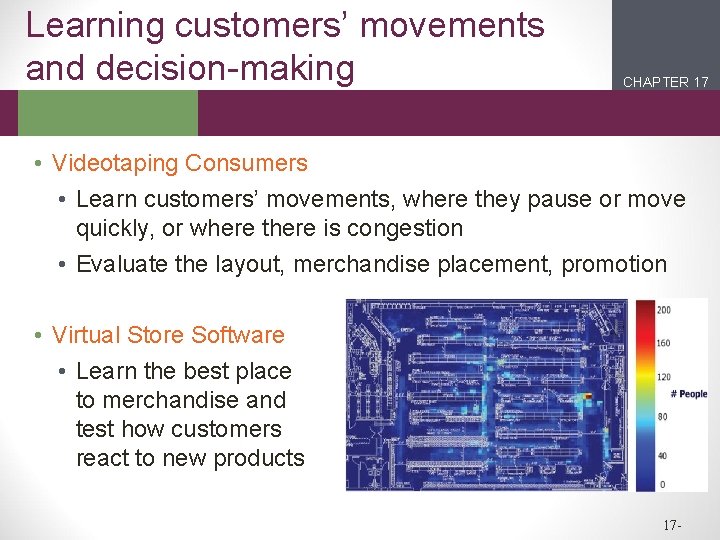
Learning customers’ movements and decision-making CHAPTER 17 2 1 • Videotaping Consumers • Learn customers’ movements, where they pause or move quickly, or where there is congestion • Evaluate the layout, merchandise placement, promotion • Virtual Store Software • Learn the best place to merchandise and test how customers react to new products 17 -
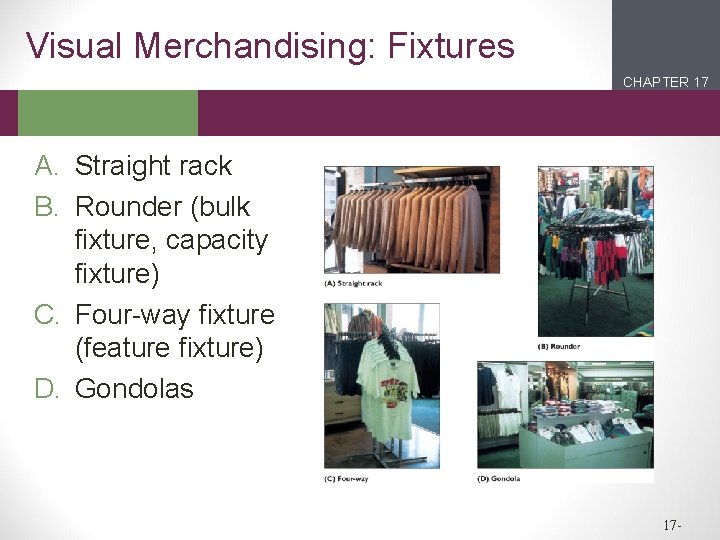
Visual Merchandising: Fixtures CHAPTER 17 2 1 A. Straight rack B. Rounder (bulk fixture, capacity fixture) C. Four-way fixture (feature fixture) D. Gondolas 17 -
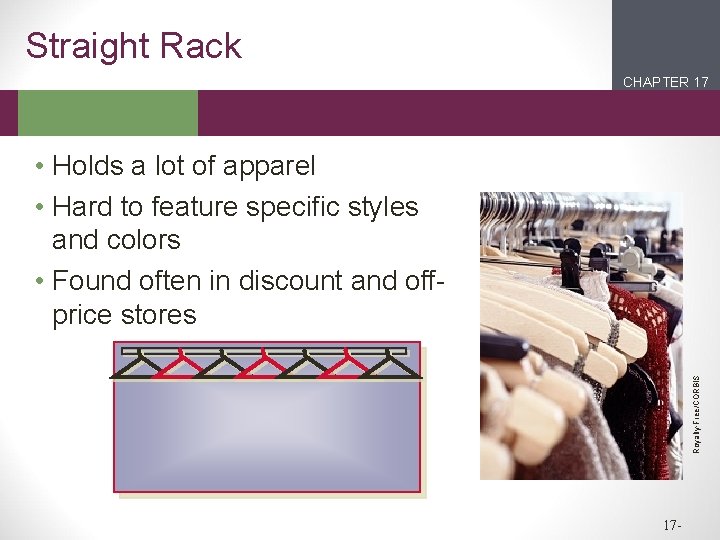
Straight Rack CHAPTER 17 2 1 Royalty-Free/CORBIS • Holds a lot of apparel • Hard to feature specific styles and colors • Found often in discount and offprice stores 17 -
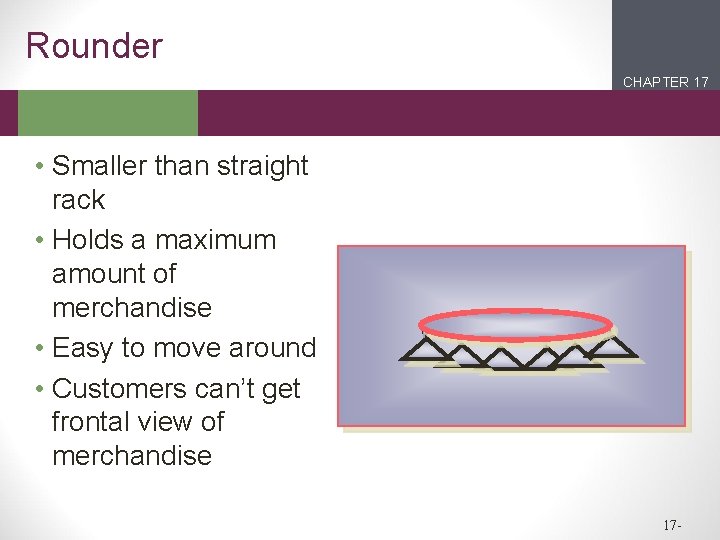
Rounder CHAPTER 17 2 1 • Smaller than straight rack • Holds a maximum amount of merchandise • Easy to move around • Customers can’t get frontal view of merchandise 17 -
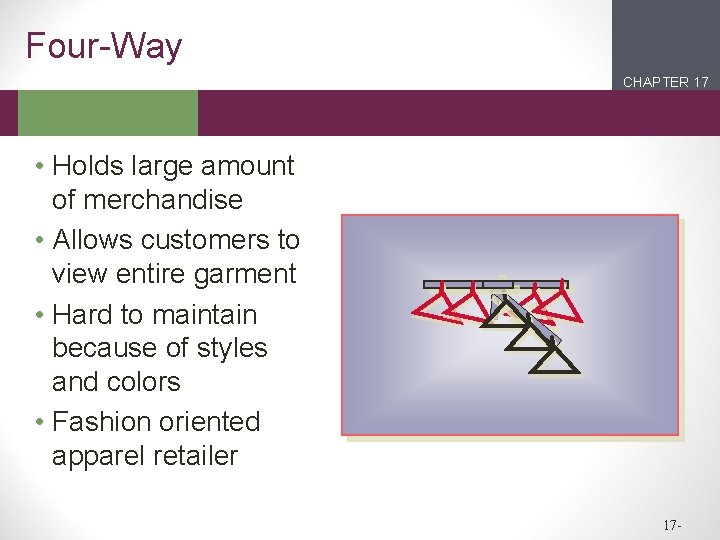
Four-Way CHAPTER 17 2 1 • Holds large amount of merchandise • Allows customers to view entire garment • Hard to maintain because of styles and colors • Fashion oriented apparel retailer 17 -
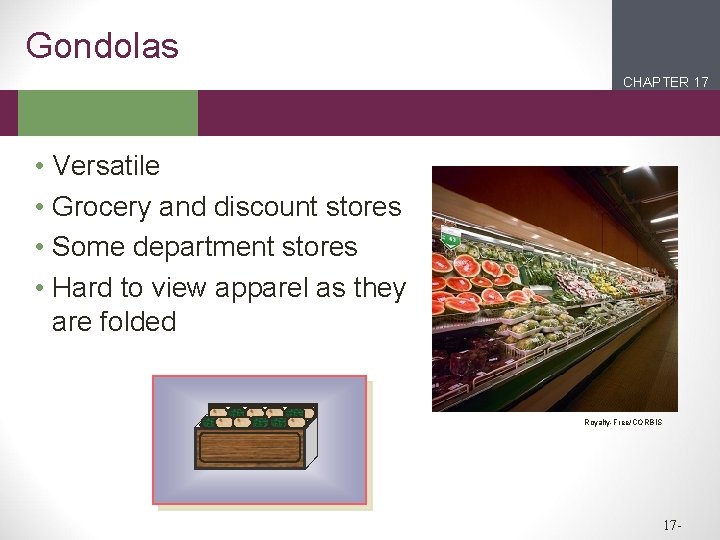
Gondolas CHAPTER 17 2 1 • Versatile • Grocery and discount stores • Some department stores • Hard to view apparel as they are folded Royalty-Free/CORBIS 17 -
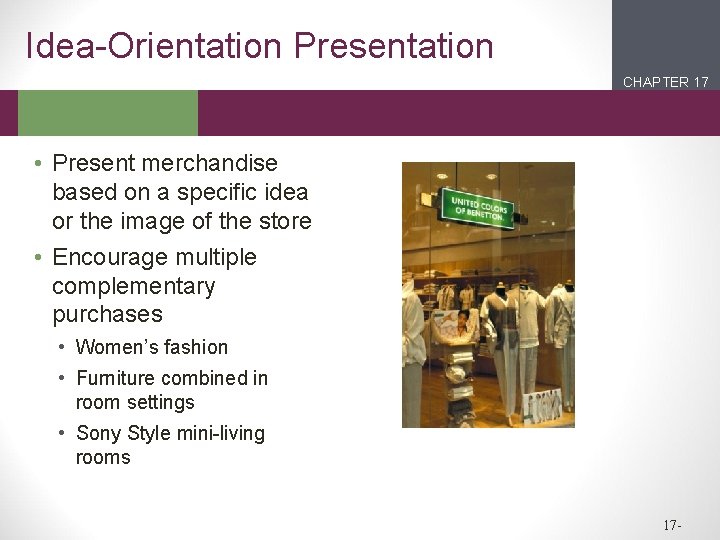
Idea-Orientation Presentation CHAPTER 17 2 1 • Present merchandise based on a specific idea or the image of the store • Encourage multiple complementary purchases • Women’s fashion • Furniture combined in room settings • Sony Style mini-living rooms 17 -
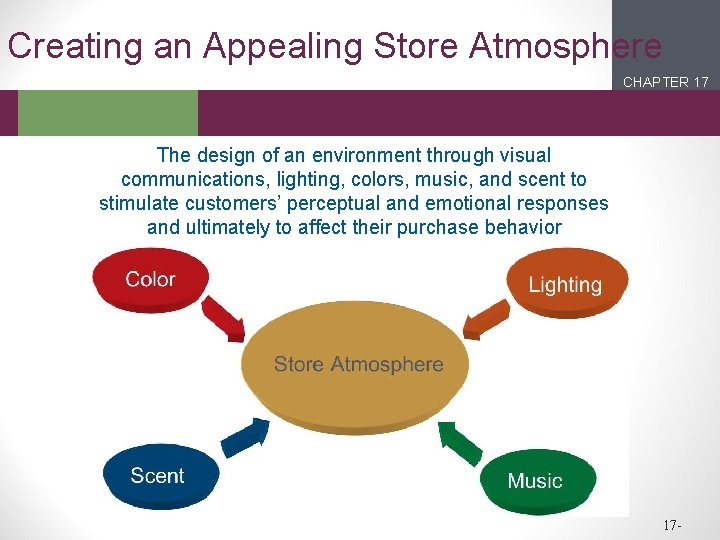
Creating an Appealing Store Atmosphere CHAPTER 17 2 1 The design of an environment through visual communications, lighting, colors, music, and scent to stimulate customers’ perceptual and emotional responses and ultimately to affect their purchase behavior 17 -
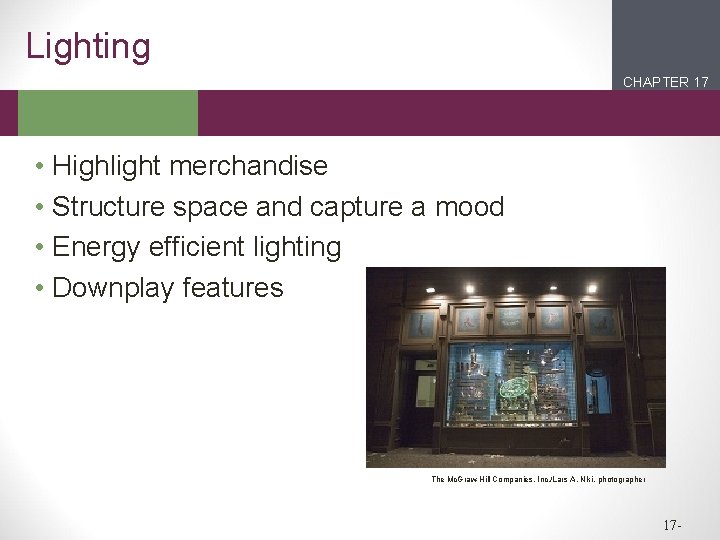
Lighting CHAPTER 17 2 1 • Highlight merchandise • Structure space and capture a mood • Energy efficient lighting • Downplay features The Mc. Graw-Hill Companies, Inc. /Lars A. Niki, photographer 17 -
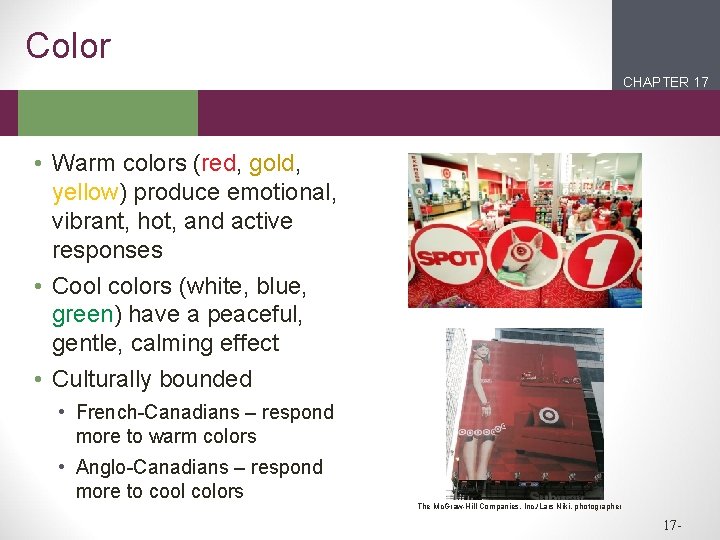
Color CHAPTER 17 2 1 • Warm colors (red, gold, yellow) produce emotional, vibrant, hot, and active responses • Cool colors (white, blue, green) have a peaceful, gentle, calming effect • Culturally bounded • French-Canadians – respond more to warm colors • Anglo-Canadians – respond more to cool colors The Mc. Graw-Hill Companies, Inc. /Lars Niki, photographer 17 -
Music CHAPTER 17 2 1 • Control the pace of store traffic, create an image, and attract or direct consumers’ attention • A mix of classical or soothing music encourage shoppers • to slow down, relax, and take a good look at the merchandise • thus to stay longer and purchase more 17 -
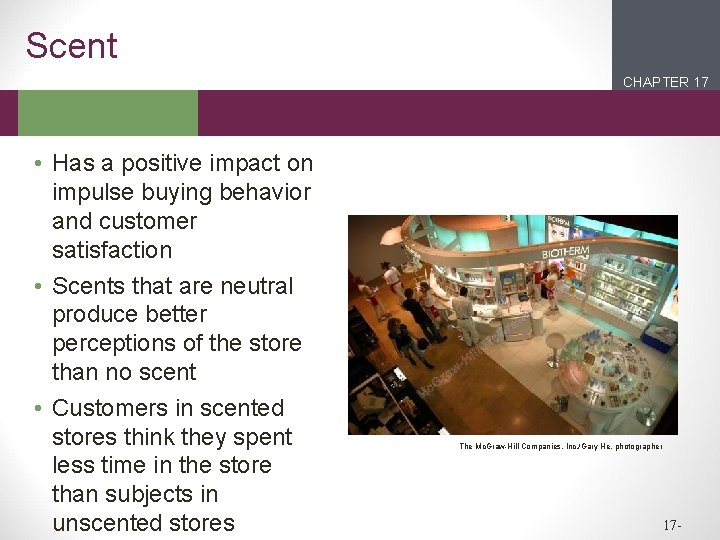
Scent CHAPTER 17 2 1 • Has a positive impact on impulse buying behavior and customer satisfaction • Scents that are neutral produce better perceptions of the store than no scent • Customers in scented stores think they spent less time in the store than subjects in unscented stores The Mc. Graw-Hill Companies, Inc. /Gary He, photographer 17 -