Chapter 15 Cost Control Cost Management Cost estimating
- Slides: 20
Chapter 15 Cost Control
Cost Management • • Cost estimating Cost accounting Project cash flow Company cash flow Direct labor costing Overhead rate costing Others, such as incentives, penalties, and profit-sharing
Cost Control Requirements • • Measure resources consumed Measure status and accomplishments Compare measurements to projections and standards Provide the basis for diagnosis and replanning
Cost Control Requirements (Continued) • Frequent, periodic comparison of actual progress and expenditures to schedules and budgets, both at the time of comparison and at project completion
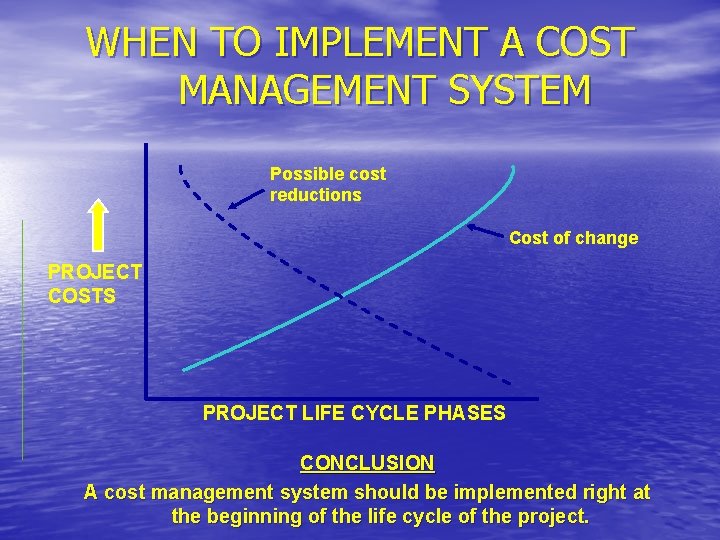
WHEN TO IMPLEMENT A COST MANAGEMENT SYSTEM Possible cost reductions Cost of change PROJECT COSTS PROJECT LIFE CYCLE PHASES CONCLUSION A cost management system should be implemented right at the beginning of the life cycle of the project.
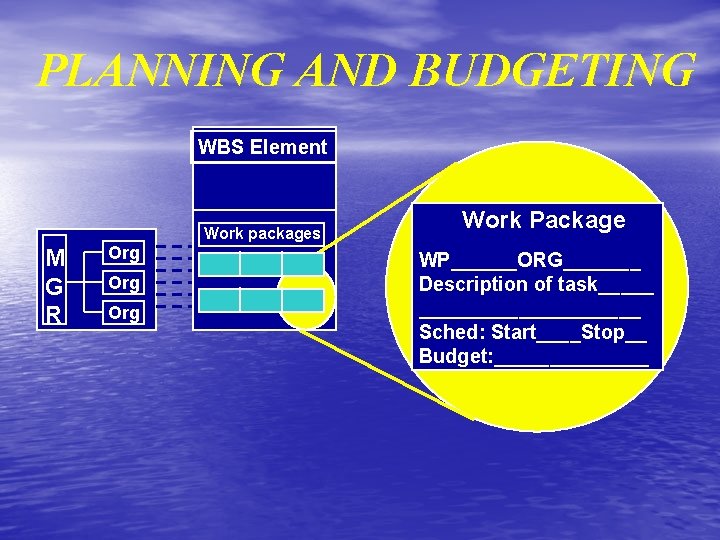
PLANNING AND BUDGETING WBS Element Work packages M G R Org Org Work Package WP______ORG_______ Description of task__________ Sched: Start____Stop__ Budget: _______
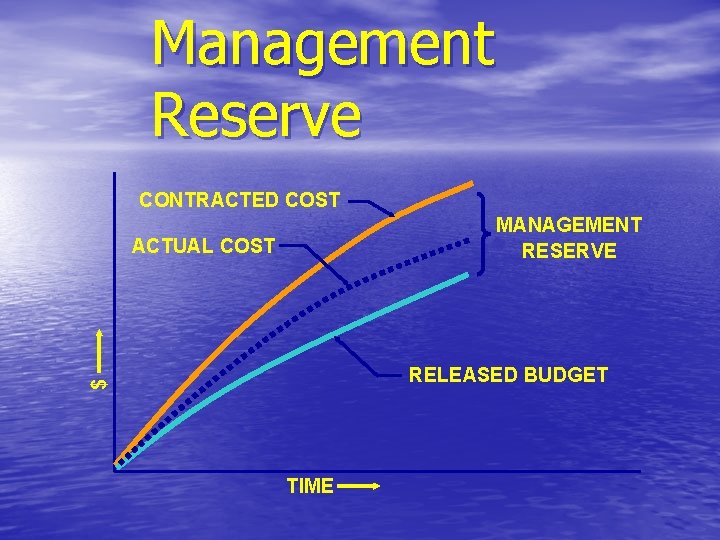
Sources Of Additional Funding • Funded contract change • Management reserve • Undistributed budget (money waiting to be allocated)
Cost Data • • Labor Material Other direct charges Overhead
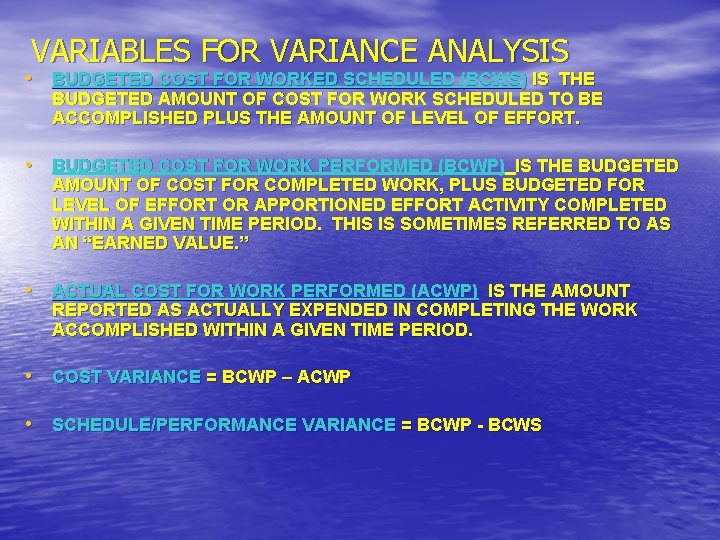
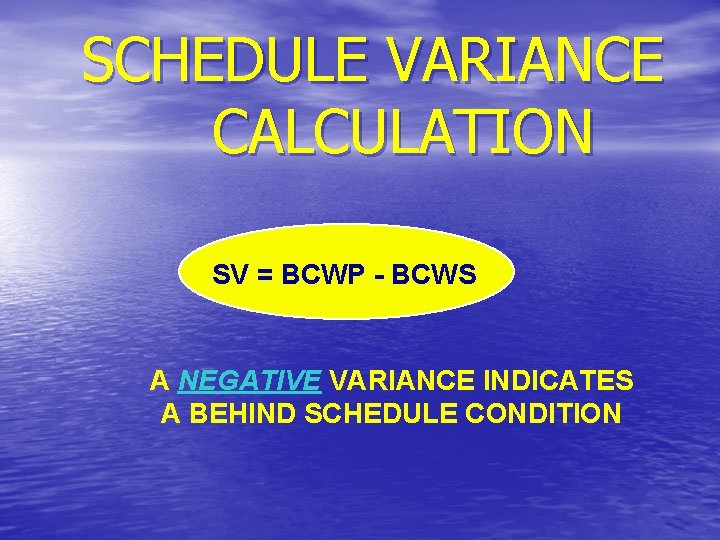
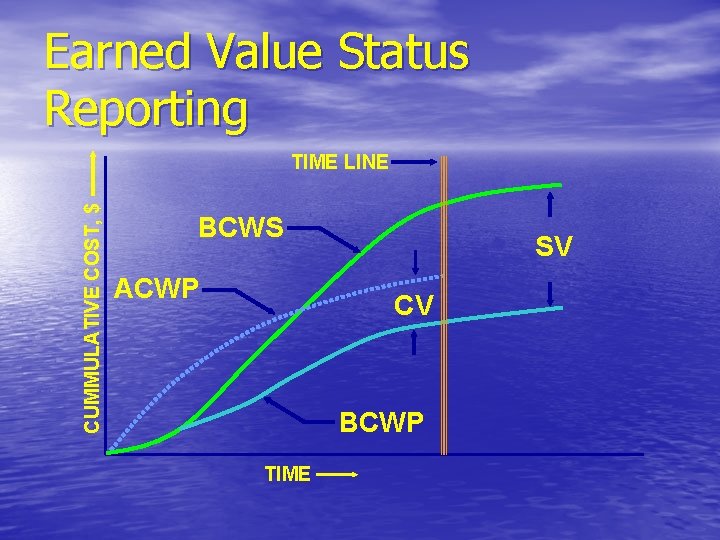
VARIABLES FOR VARIANCE ANALYSIS • BUDGETED COST FOR WORKED SCHEDULED (BCWS) IS THE BUDGETED AMOUNT OF COST FOR WORK SCHEDULED TO BE ACCOMPLISHED PLUS THE AMOUNT OF LEVEL OF EFFORT. • BUDGETED COST FOR WORK PERFORMED (BCWP) IS THE BUDGETED AMOUNT OF COST FOR COMPLETED WORK, PLUS BUDGETED FOR LEVEL OF EFFORT OR APPORTIONED EFFORT ACTIVITY COMPLETED WITHIN A GIVEN TIME PERIOD. THIS IS SOMETIMES REFERRED TO AS AN “EARNED VALUE. ” • ACTUAL COST FOR WORK PERFORMED (ACWP) IS THE AMOUNT REPORTED AS ACTUALLY EXPENDED IN COMPLETING THE WORK ACCOMPLISHED WITHIN A GIVEN TIME PERIOD. • COST VARIANCE = BCWP – ACWP • SCHEDULE/PERFORMANCE VARIANCE = BCWP - BCWS
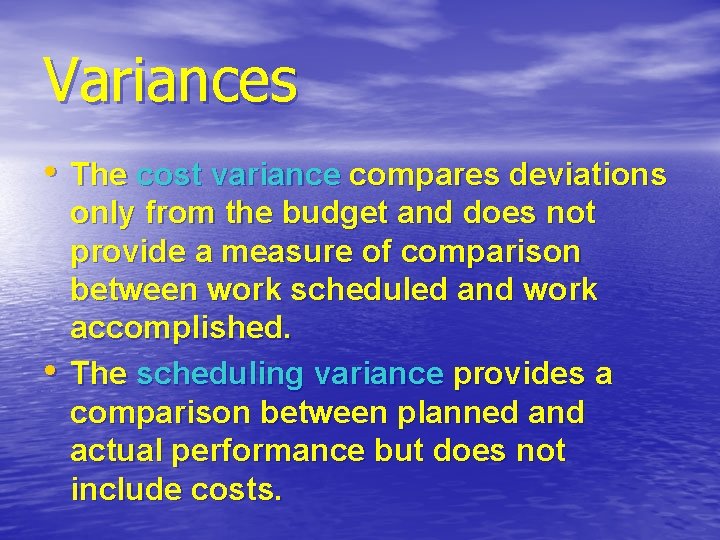
Variances • The cost variance compares deviations • only from the budget and does not provide a measure of comparison between work scheduled and work accomplished. The scheduling variance provides a comparison between planned and actual performance but does not include costs.
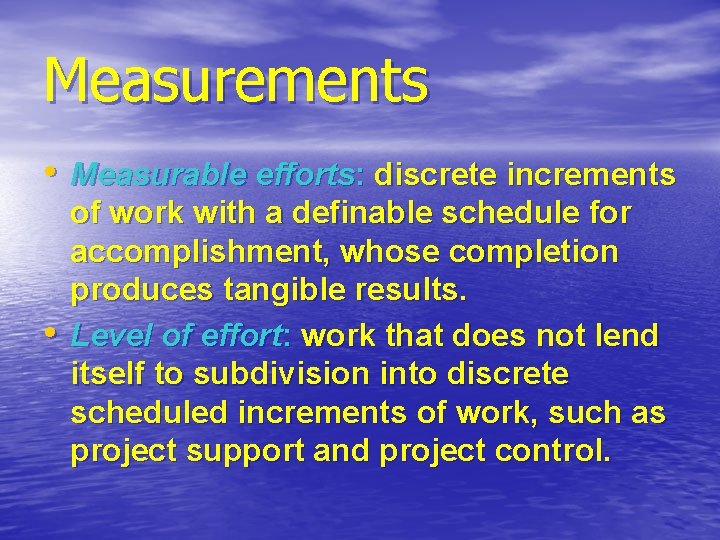
Measurements • Measurable efforts: discrete increments • of work with a definable schedule for accomplishment, whose completion produces tangible results. Level of effort: work that does not lend itself to subdivision into discrete scheduled increments of work, such as project support and project control.
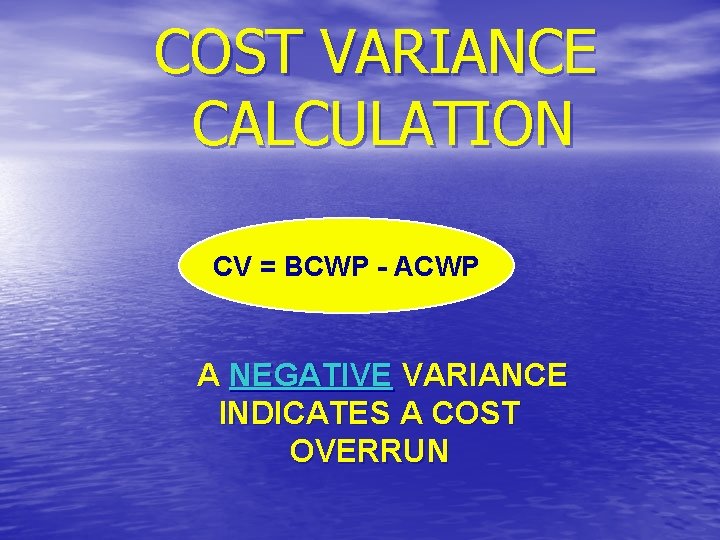
COST VARIANCE CALCULATION CV = BCWP - ACWP A NEGATIVE VARIANCE INDICATES A COST OVERRUN
SCHEDULE VARIANCE CALCULATION SV = BCWP - BCWS A NEGATIVE VARIANCE INDICATES A BEHIND SCHEDULE CONDITION
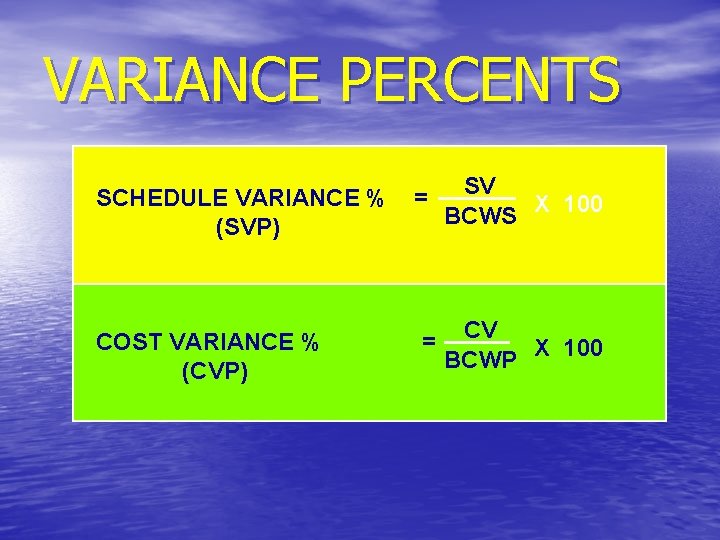
VARIANCE PERCENTS SCHEDULE VARIANCE % (SVP) COST VARIANCE % (CVP) = = SV BCWS X 100 CV BCWP X 100
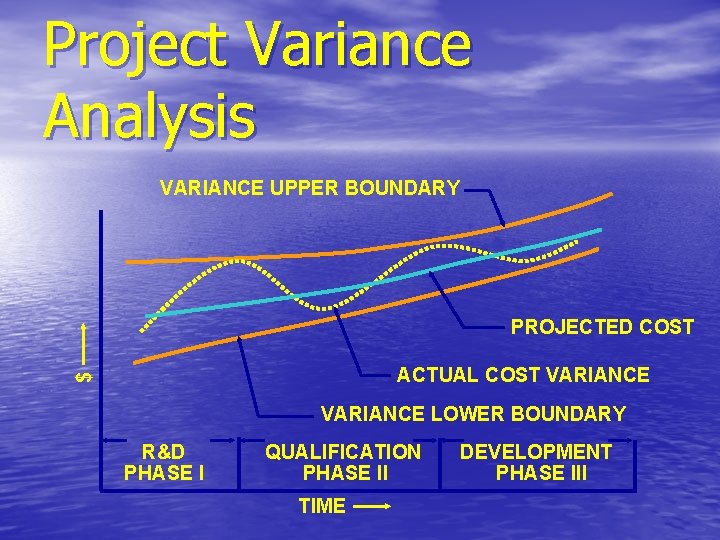
Project Variance Analysis VARIANCE UPPER BOUNDARY PROJECTED COST $ ACTUAL COST VARIANCE LOWER BOUNDARY R&D PHASE I QUALIFICATION PHASE II TIME DEVELOPMENT PHASE III
Management Reserve CONTRACTED COST MANAGEMENT RESERVE ACTUAL COST $ RELEASED BUDGET TIME
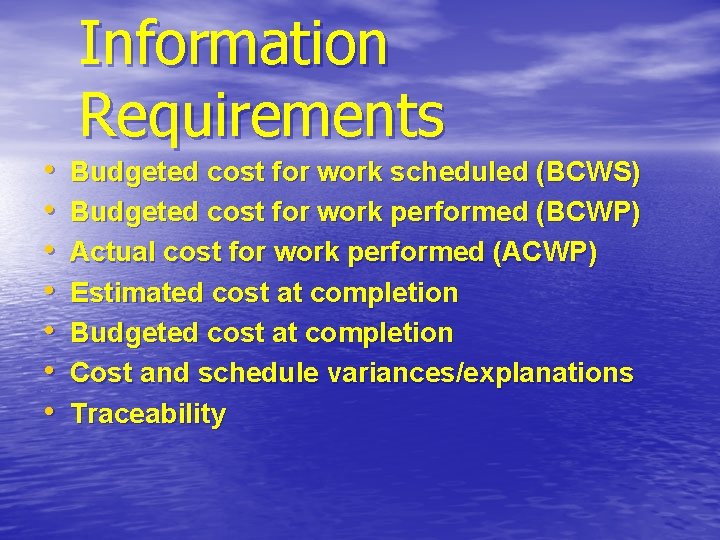
• • Information Requirements Budgeted cost for work scheduled (BCWS) Budgeted cost for work performed (BCWP) Actual cost for work performed (ACWP) Estimated cost at completion Budgeted cost at completion Cost and schedule variances/explanations Traceability
Earned Value Status Reporting CUMMULATIVE COST, $ TIME LINE BCWS ACWP SV CV BCWP TIME
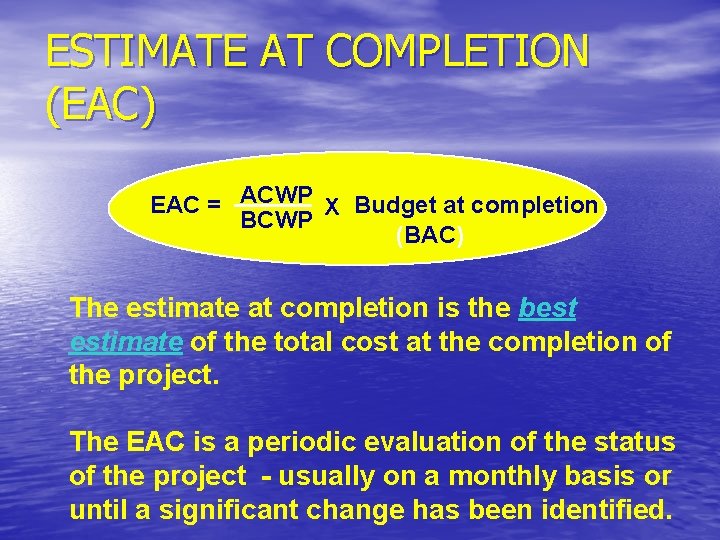
ESTIMATE AT COMPLETION (EAC) EAC = ACWP X Budget at completion BCWP (BAC) The estimate at completion is the best estimate of the total cost at the completion of the project. The EAC is a periodic evaluation of the status of the project - usually on a monthly basis or until a significant change has been identified.
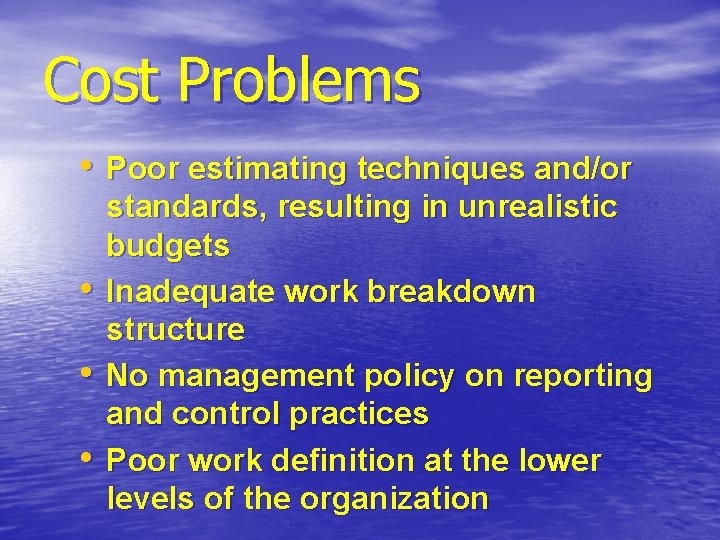
Cost Problems • Poor estimating techniques and/or • • • standards, resulting in unrealistic budgets Inadequate work breakdown structure No management policy on reporting and control practices Poor work definition at the lower levels of the organization