Chapter 12 Do Now Use our mixture of
- Slides: 45
Chapter 12
Do Now • Use our mixture of salt, pepper, and iron, and marbles to come up with a definition for mixtures.
• A mixture is a physical combination of materials that can be separated by physical means. – Elements and compounds are mixed together but are not bonded together. The different materials keep their own properties. Therefore, they can be separated if you know their different properties.
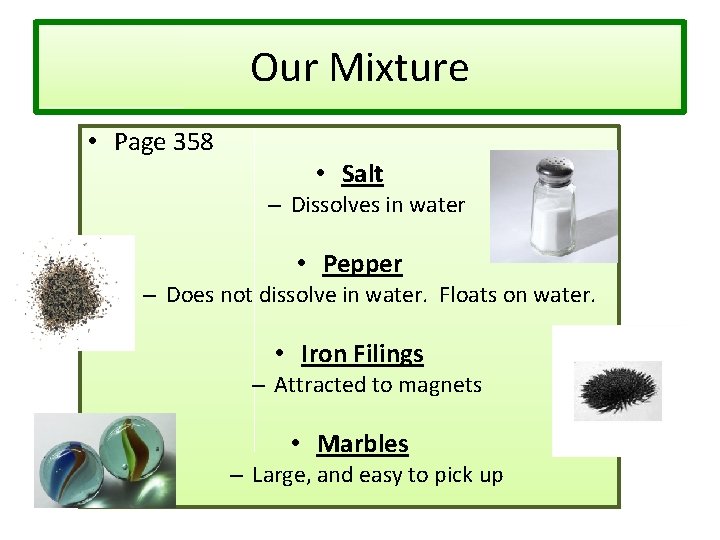
Our Mixture • Page 358 • Salt – Dissolves in water • Pepper – Does not dissolve in water. Floats on water. • Iron Filings – Attracted to magnets • Marbles – Large, and easy to pick up
DO NOW • 1. Think of common everyday mixtures. List a few. • 2. If you pour salt into water or sugar into water, and then stir it up, where does it go? • 3. How is salt in water and the sugar in water different than the mixture we used in class?
When you stir sugar into water… • It breaks apart and dissolves and spreads out throughout the water.
Solutions • A solution is a special mixture in which the substances are spread out evenly and will not settle. – Solute = the substance that dissolves – Solvent = the substance that does the dissolving
“You” climb in a “vent” The sol. Ute goes into the sol. VENT
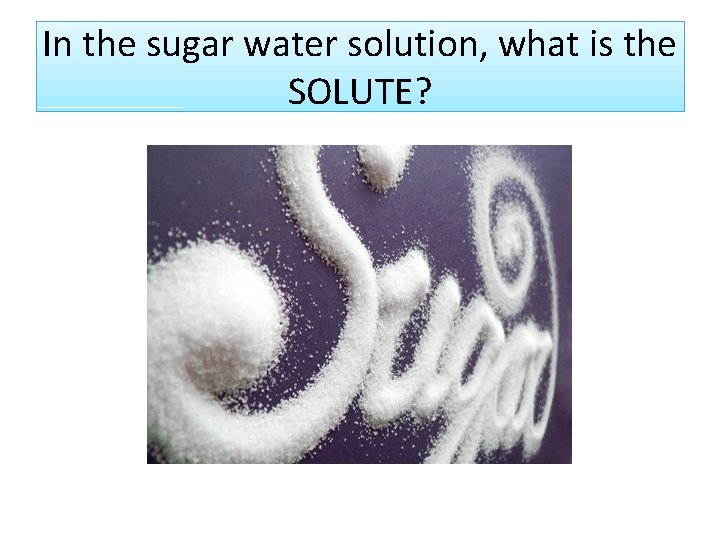
In the sugar water solution, what is the SOLUTE? Sugar
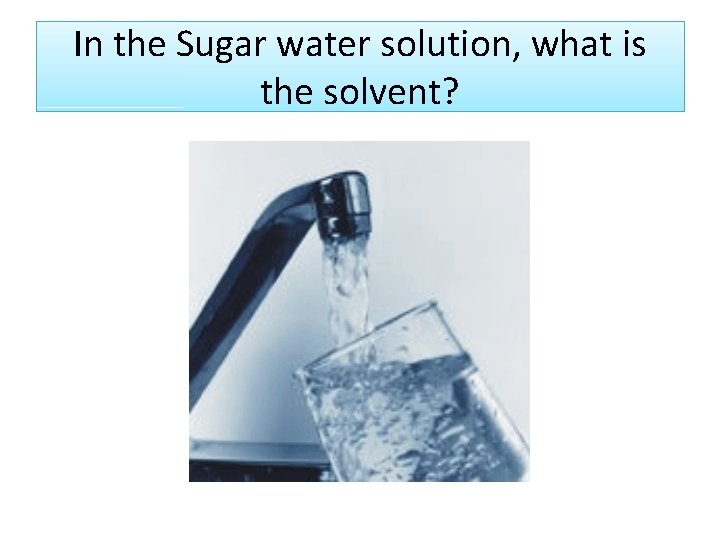
In the Sugar water solution, what is the solvent? Water
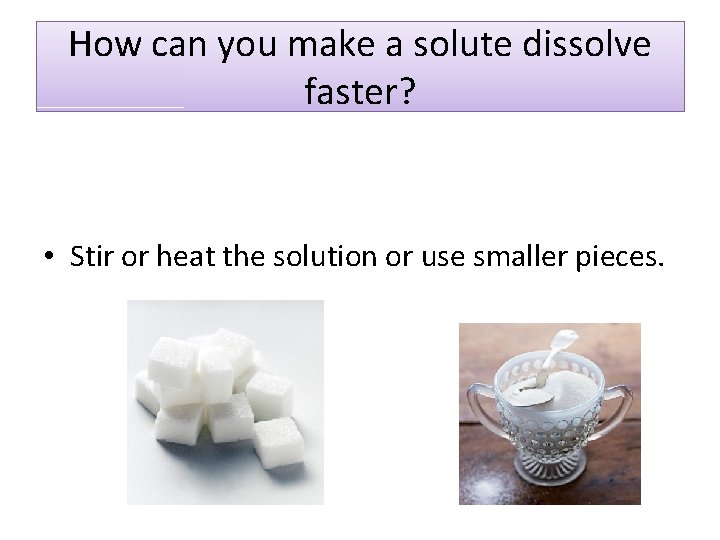
How can you make a solute dissolve faster? • Stir or heat the solution or use smaller pieces.
Lots of things dissolve in water. Therefore, WATER is called the Universal Solvent.
Types of Solutions • 1. Solid in liquid • EX: Salt water, sugar water • 2. Liquid in liquid • EX: water and lemon juice • 3. Gas in liquid • EX: carbon dioxide in water (seltzer)
Solubility describes the amount of a substance that will dissolve in a particular solvent at a given temperature.
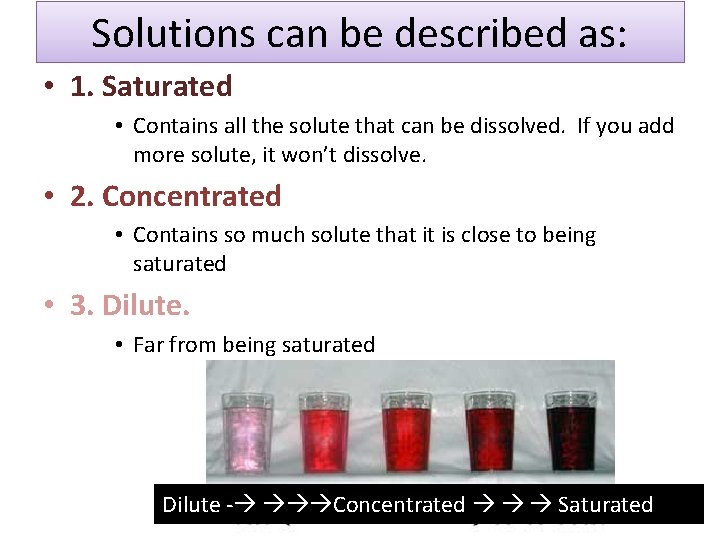
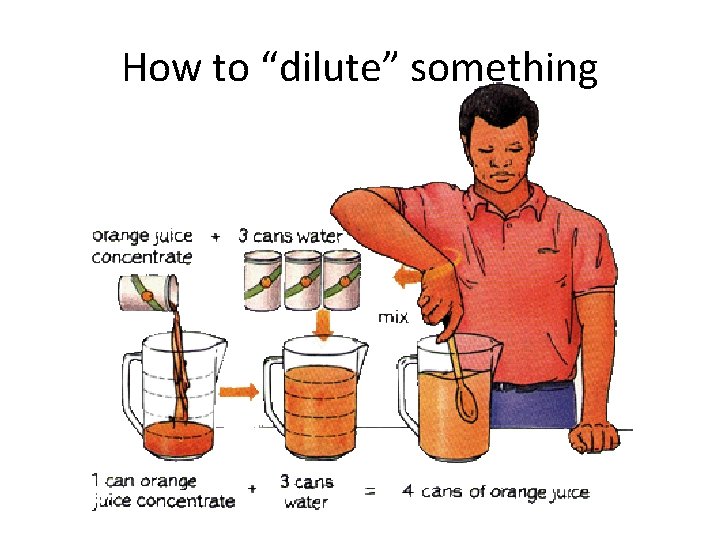
Solutions can be described as: • 1. Saturated • Contains all the solute that can be dissolved. If you add more solute, it won’t dissolve. • 2. Concentrated • Contains so much solute that it is close to being saturated • 3. Dilute. • Far from being saturated Dilute - Concentrated Saturated
How to “dilute” something
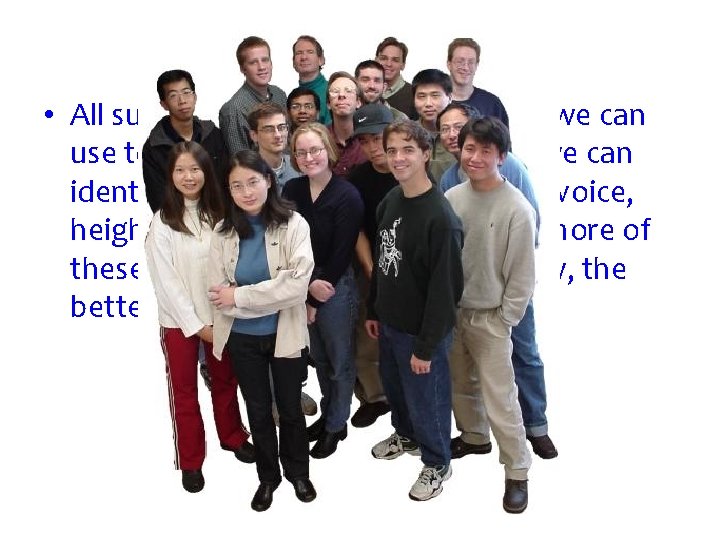
Remember: • All substances have properties that we can use to identify them. For example we can identify a person by their face, their voice, height, finger prints, DNA etc. . The more of these properties that we can identify, the better we know the person.
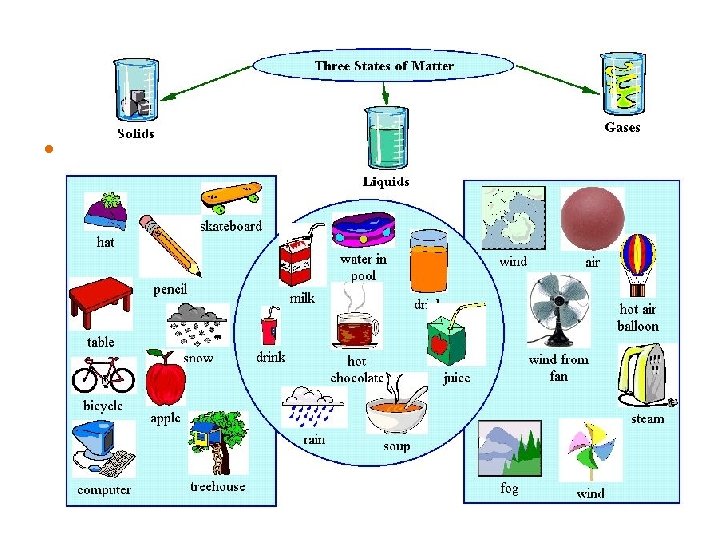
• In a similar way, matter has properties - and there are many of them. There are two basic types of properties that we can associate with matter. These properties are called Physical properties and Chemical properties:
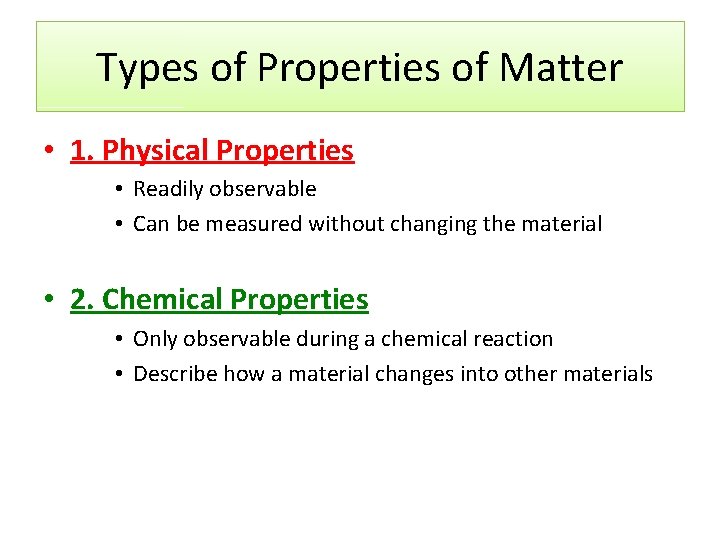
Types of Properties of Matter • 1. Physical Properties • Readily observable • Can be measured without changing the material • 2. Chemical Properties • Only observable during a chemical reaction • Describe how a material changes into other materials
• PHYSICAL PROPERTI ES
Physical Property Examples – – – Color odor mass Volume texture Hardness Appearance melting point boiling point density solubility
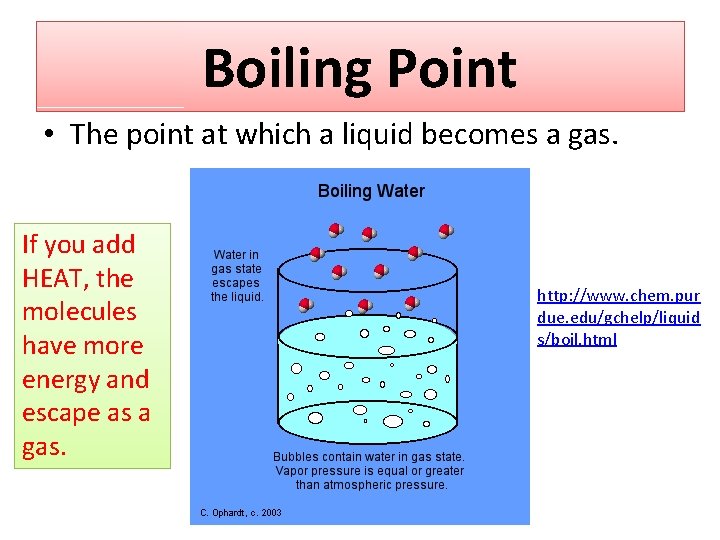
Boiling Point • The point at which a liquid becomes a gas. If you add HEAT, the molecules have more energy and escape as a gas. http: //www. chem. pur due. edu/gchelp/liquid s/boil. html
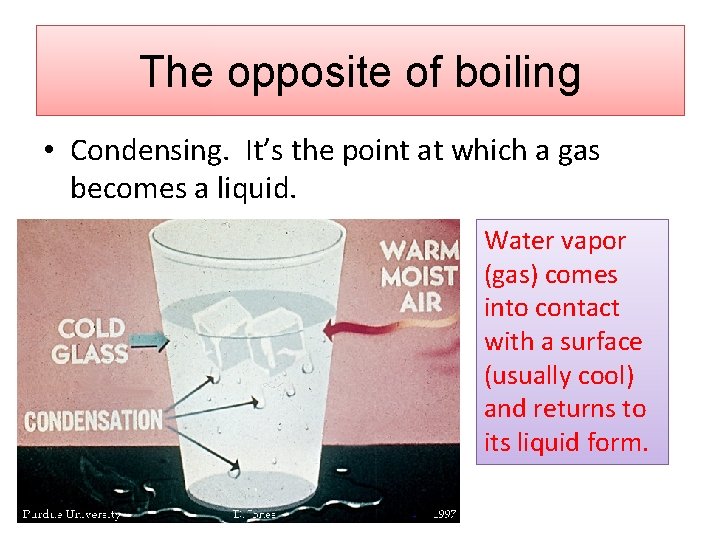
The opposite of boiling • Condensing. It’s the point at which a gas becomes a liquid. Water vapor (gas) comes into contact with a surface (usually cool) and returns to its liquid form.
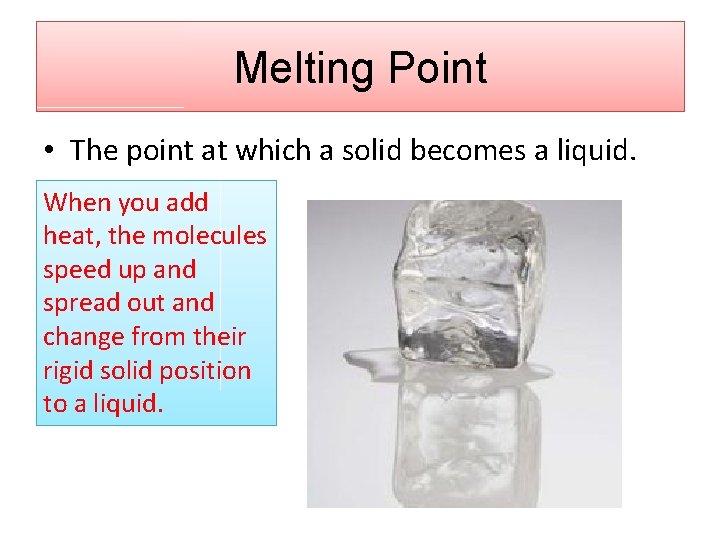
Melting Point • The point at which a solid becomes a liquid. When you add heat, the molecules speed up and spread out and change from their rigid solid position to a liquid.
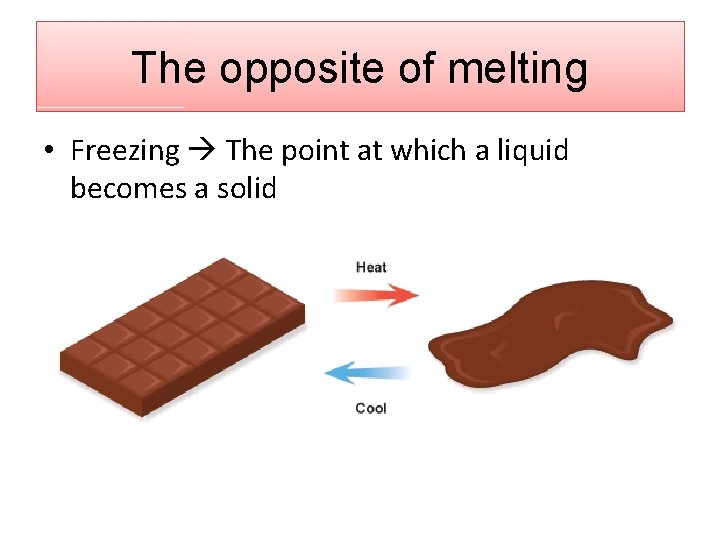
The opposite of melting • Freezing The point at which a liquid becomes a solid
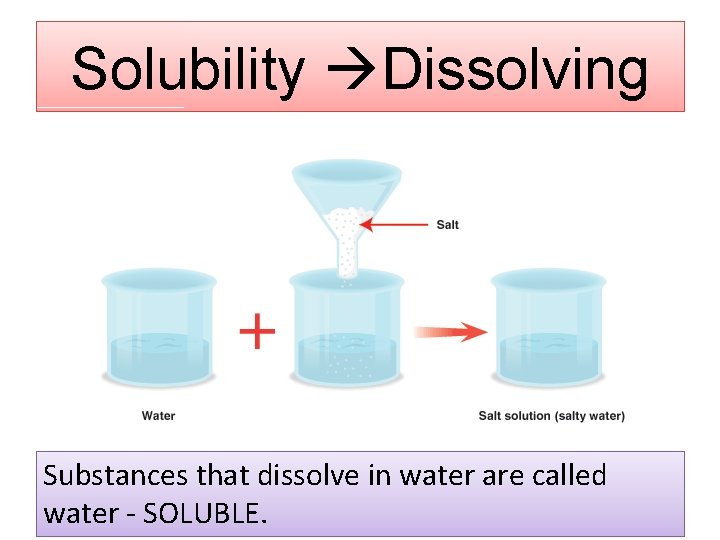
Solubility Dissolving Substances that dissolve in water are called water - SOLUBLE.
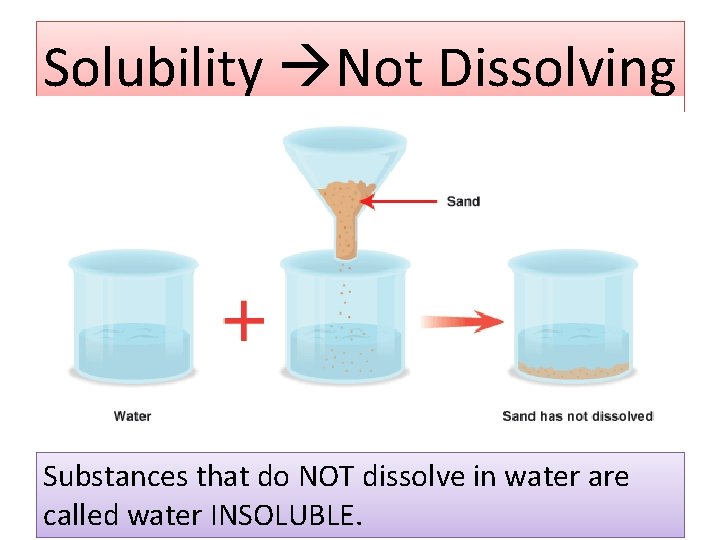
Solubility Not Dissolving Substances that do NOT dissolve in water are called water INSOLUBLE.
• CHEMICAL PROPERTI ES
Chemical Property Examples • • • Combustibility the ability to react with oxygen sensitivity to light acidity / basic radioactivity Reactivity with water
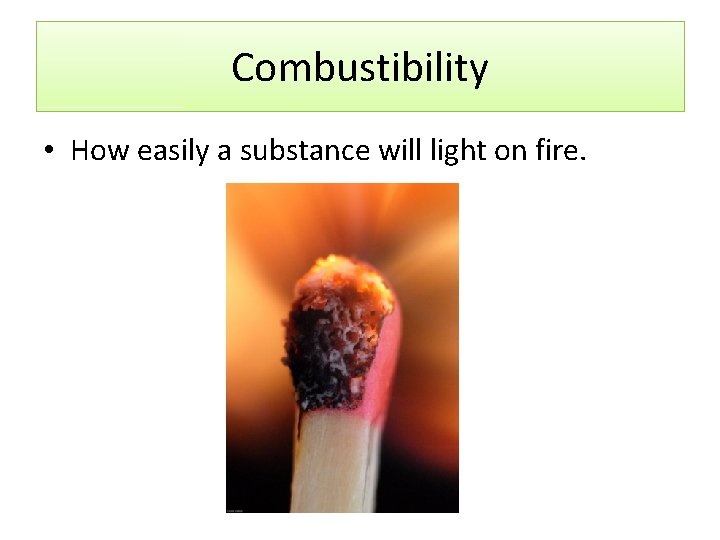
Combustibility • How easily a substance will light on fire.
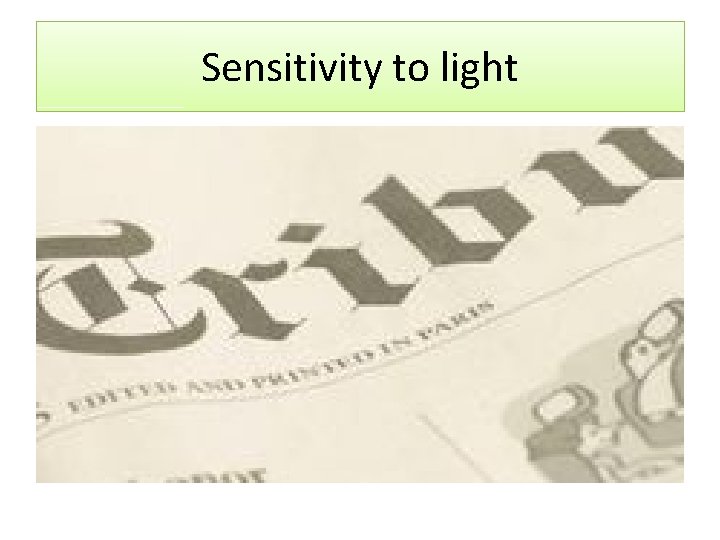
Sensitivity to light
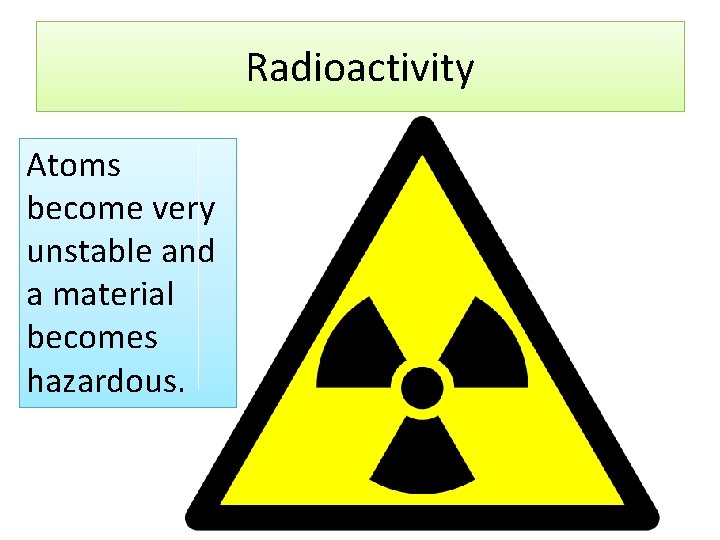
Radioactivity Atoms become very unstable and a material becomes hazardous.
How are Chemical Properties useful? See page 382 They can be used to separate: • mixtures from one another • fossils from rock • metals from ores • elements from solutions
How else are Chemical Properties Useful? • To identify substances – Ex: Acids and bases are 2 common types of substances that react with other materials. – Acids • substances like vinegar and lemon juice • Turn blue litmus paper red – Bases • substances like household cleaners • Turn red litmus paper blue
Object Properties vs Material Properties • A Bar of Gold –
Do Now • Yesterday in our lab, we saw matter change in 2 different ways. • What is the difference between the way matter changes in these situations: – tearing paper in half vs. burning it? – Mixing together sugar, flour , and eggs, and other ingredients VS putting that whole mixture into the oven and baking it to make a cake.
Make 2 columns in your notebook • Title the first column “Physical Changes” • Title the second column “Chemical Changes”
Study Jams! • http: //studyjams. scholastic. com/studyjams/ja ms/science/matter/changes-of-matter. htm
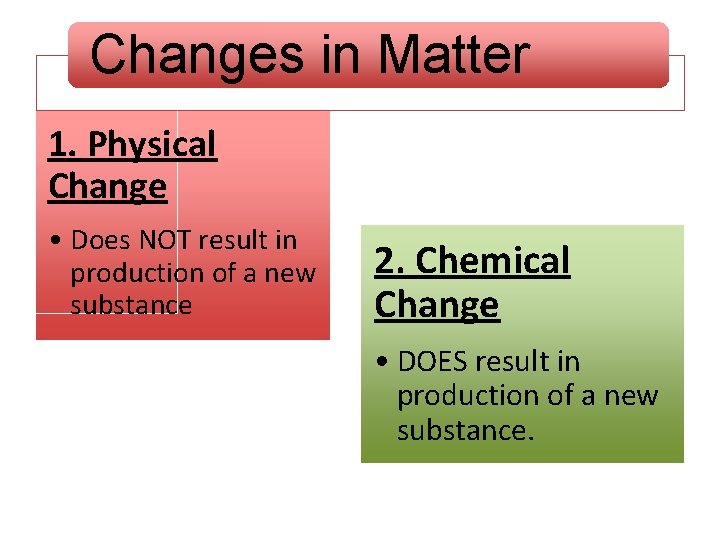
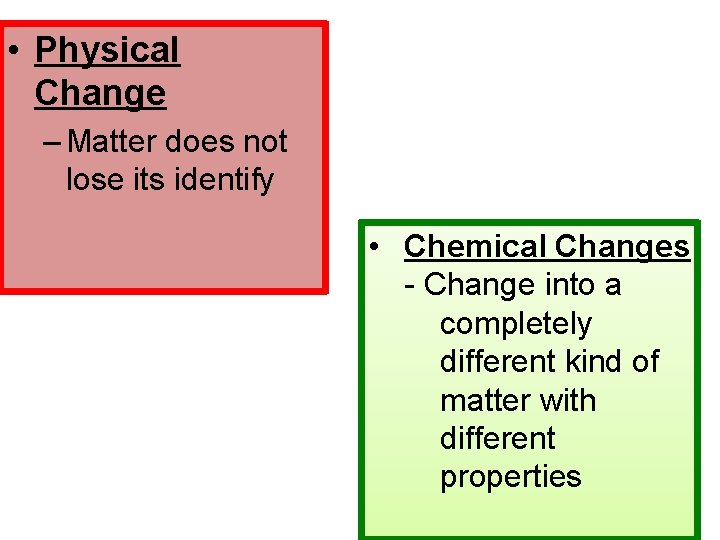
Changes in Matter 1. Physical Change • Does NOT result in production of a new substance 2. Chemical Change • DOES result in production of a new substance.
• Physical Change – Matter does not lose its identify • Chemical Changes - Change into a completely different kind of matter with different properties
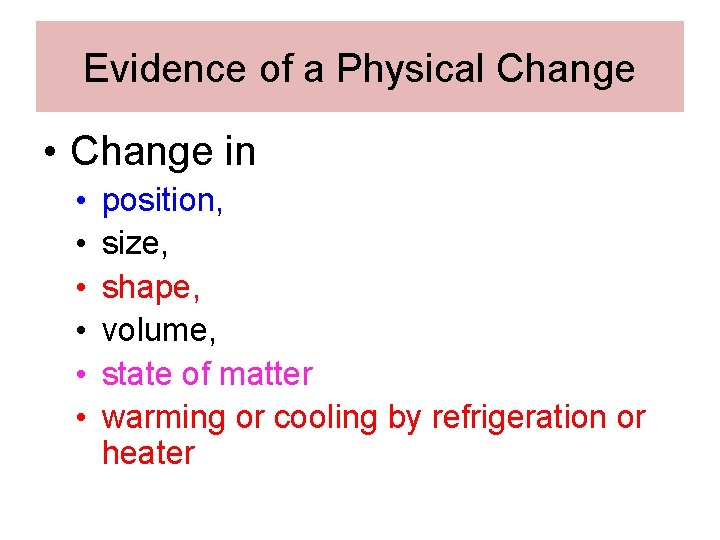
Evidence of a Physical Change • Change in • • • position, size, shape, volume, state of matter warming or cooling by refrigeration or heater
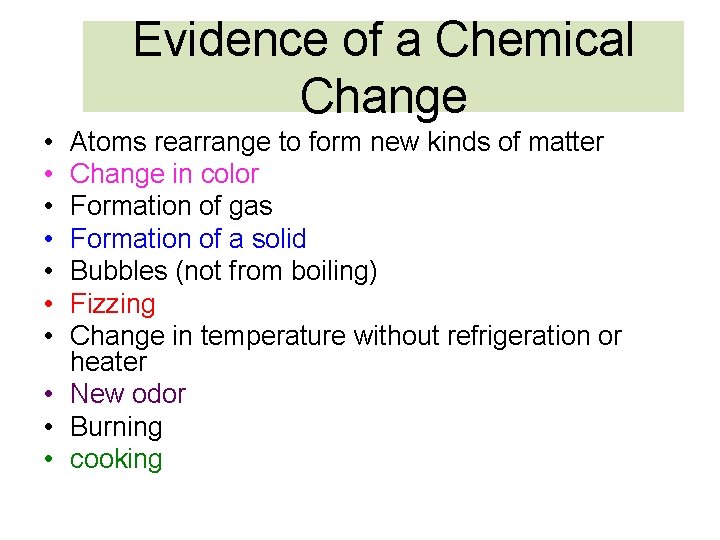
Evidence of a Chemical Change • • Atoms rearrange to form new kinds of matter Change in color Formation of gas Formation of a solid Bubbles (not from boiling) Fizzing Change in temperature without refrigeration or heater • New odor • Burning • cooking
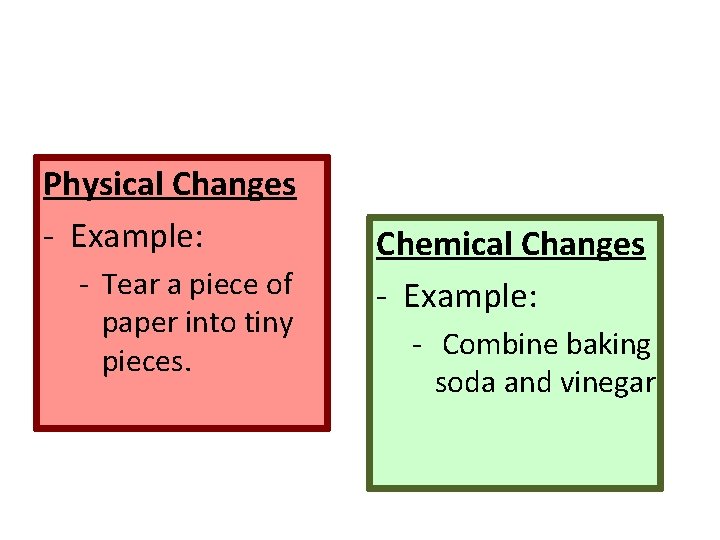
Physical Changes - Example: - Tear a piece of paper into tiny pieces. Chemical Changes - Example: - Combine baking soda and vinegar
Lets Play……………. Name that Change. http: //blogs. canby. k 12. or. us/uploads/harmss/ Chem%20 And%20 Phys%20 Props_Changes. pdf
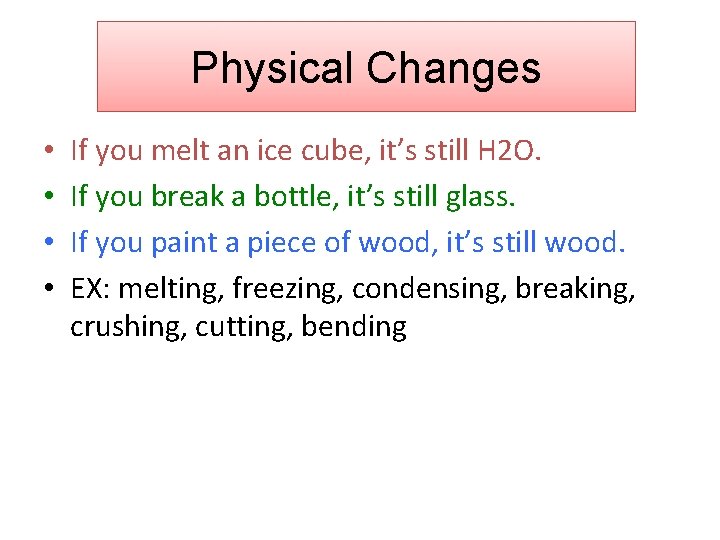
Physical Changes • • If you melt an ice cube, it’s still H 2 O. If you break a bottle, it’s still glass. If you paint a piece of wood, it’s still wood. EX: melting, freezing, condensing, breaking, crushing, cutting, bending