
Adolescence Our youth now love luxury They have
- Slides: 72
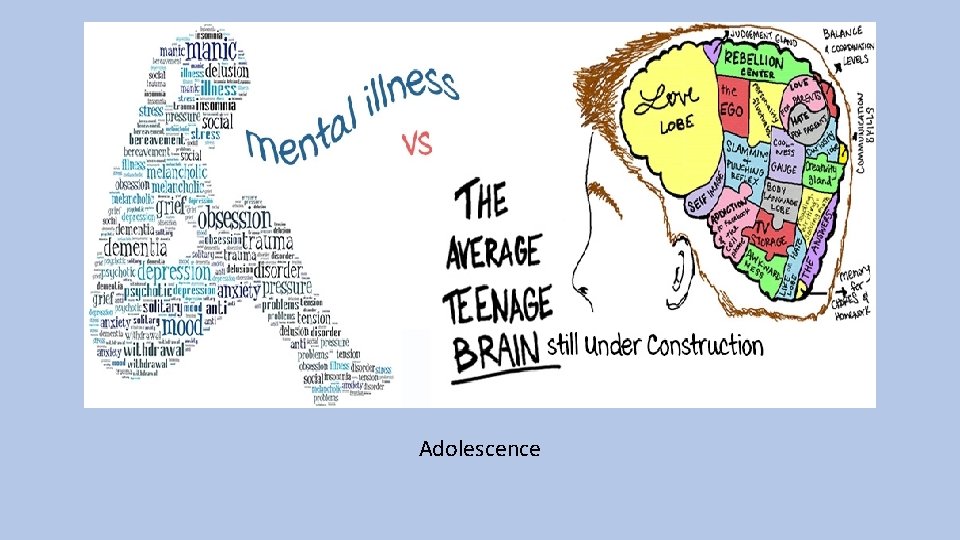
Adolescence
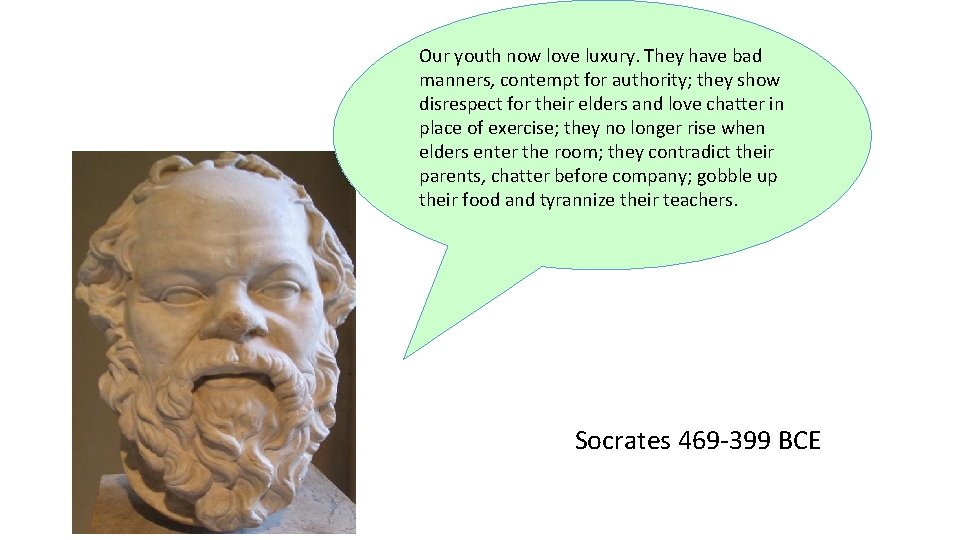
Our youth now love luxury. They have bad manners, contempt for authority; they show disrespect for their elders and love chatter in place of exercise; they no longer rise when elders enter the room; they contradict their parents, chatter before company; gobble up their food and tyrannize their teachers. Socrates 469 -399 BCE
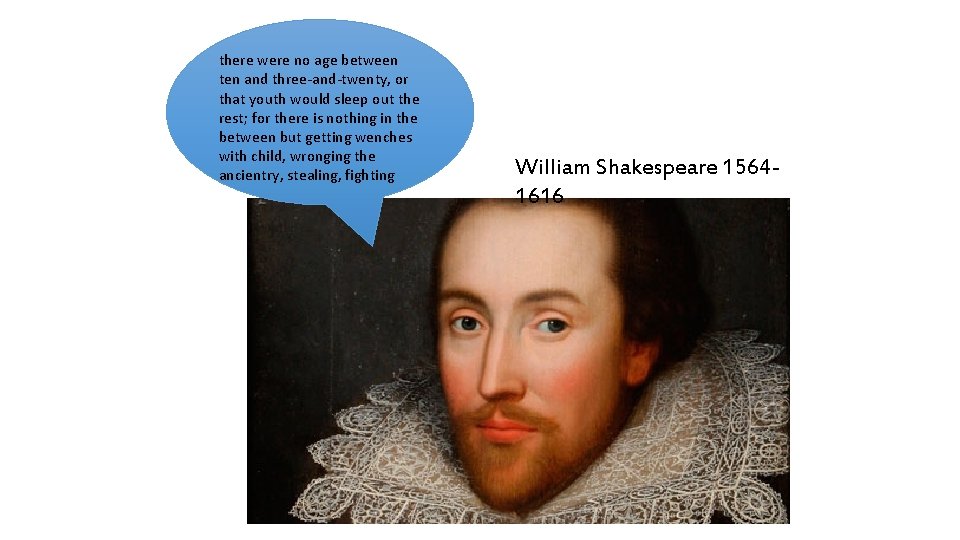
there were no age between ten and three-and-twenty, or that youth would sleep out the rest; for there is nothing in the between but getting wenches with child, wronging the ancientry, stealing, fighting William Shakespeare 15641616
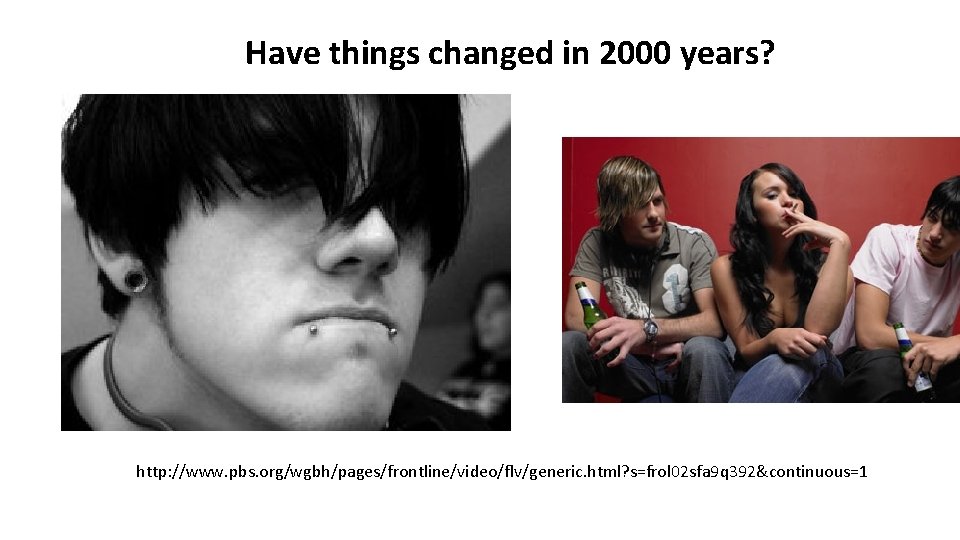
Have things changed in 2000 years? http: //www. pbs. org/wgbh/pages/frontline/video/flv/generic. html? s=frol 02 sfa 9 q 392&continuous=1
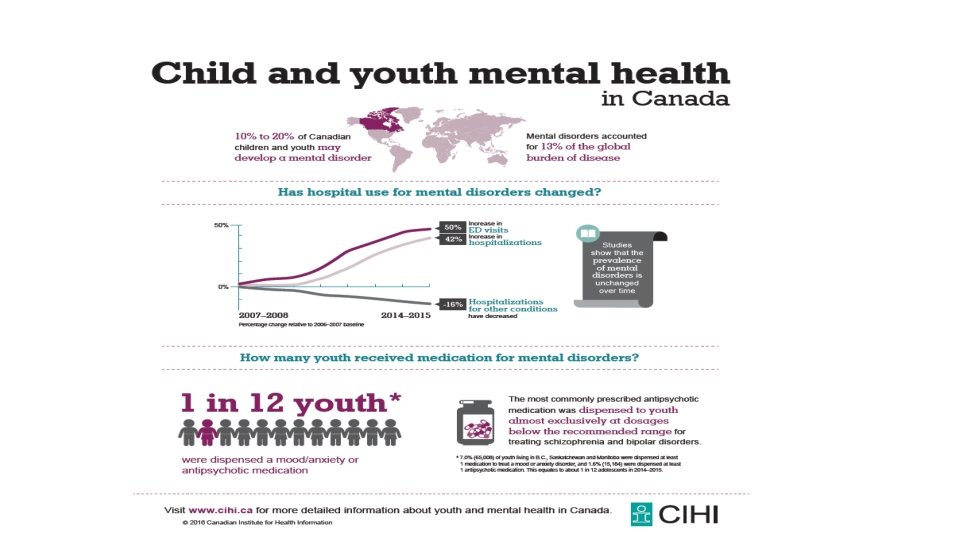
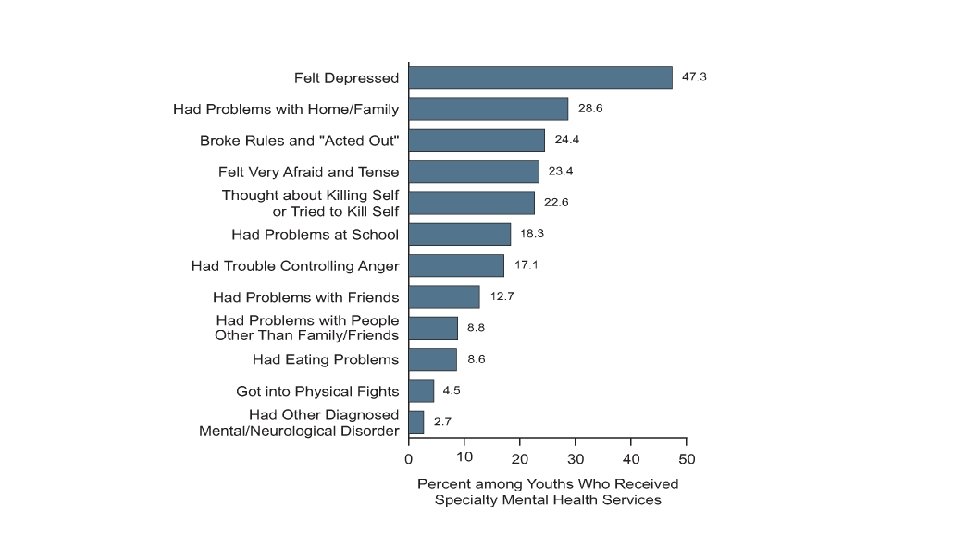
What reasons do adolescents have for seeking mental health supports?
Adolescent Morbidity • Health Paradox • Developmental period of strength and resilience, both physically and cognitively • Yet, morbidity & mortality rates increase 200%
Neurology of Adolescence • Puberty represents a period of synaptic reorganization and brain is more sensitive to experiential input • Synaptogenesis: proliferation of synapses • Myelinization shaping: insulation around synapses • Synaptic pruning: frequently used connections are strengthened, infrequently used connections are eliminated • Developing abilities • Use it or lose it • You are hard-wiring your brain in adolescence. Do you want to hard-wire it for sports and playing music and doing math…or for lying on the couch in front of the tv? (Blakemore & Choudhury, 2006)
Using and Losing It Myelination • Becoming consistent & efficient – 19 to 26 years old • Electrical charge travels 100 x times faster on a myelinated axon than on unmyelinated one • Speeds and smooths signals • Less jumping to unintended neuron • > 200 miles per hour Don’t use it, you lose it • Less dendrites • Less myelination SO messages travel slower • More dendrites/connections + thicker myelination/faster message travels = INTELLIGENCE!
Developing Advanced Reasoning Skills • Advanced reasoning • Options, Possibilities, Logical, Hypothetically, What if? • Abstract reasoning • Can take others’ perspective • Can think about non-concrete things like faith, trust, beliefs, and spirituality • Metacognition • Think about how they feel and what they are thinking • Think about how they think they are perceived by others • Can develop strategies for improving their learning
• Heightened self-consciousness • Believes no one else has experienced feelings/emotions • Tend to become cause-oriented • Tend to exhibit a ‘justice orientation’ • ‘It can’t happen to me’ syndrome • Magical thinking
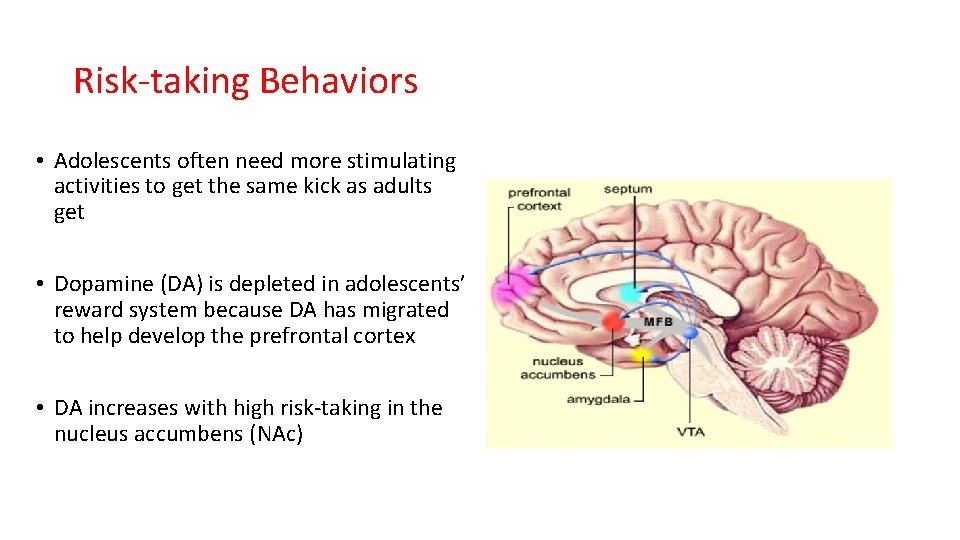
Risk-taking Behaviors • Adolescents often need more stimulating activities to get the same kick as adults get • Dopamine (DA) is depleted in adolescents’ reward system because DA has migrated to help develop the prefrontal cortex • DA increases with high risk-taking in the nucleus accumbens (NAc)
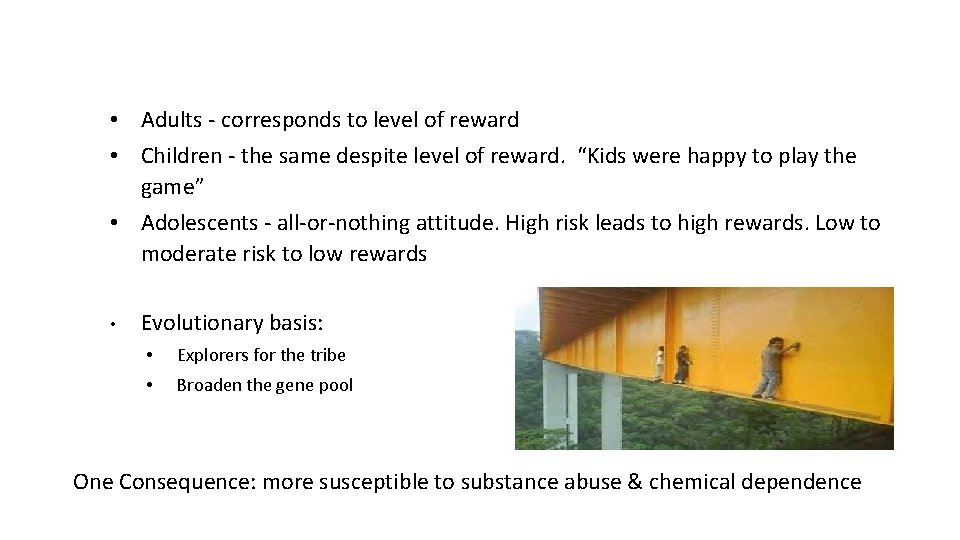
• Adults - corresponds to level of reward • Children - the same despite level of reward. “Kids were happy to play the game” • Adolescents - all-or-nothing attitude. High risk leads to high rewards. Low to moderate risk to low rewards • Evolutionary basis: • Explorers for the tribe • Broaden the gene pool One Consequence: more susceptible to substance abuse & chemical dependence
Gender Differences • Males are wired to act on their emotions rather than work through them with language • Males have more cerebrospinal fluid (CSF) - main purpose of CSF appears to be to cushion the brain in the case of trauma to the cranium • Male brains consistently show more hemispheric asymmetry than female • Male’s left hemisphere looks different from the right; functions more independently • Female’s two hemispheres are essentially indistinguishable either by MRI or at autopsy
• Females under stress - release oxytocin which cuts off connection to amygdala • • • One reason can have a child again; doesn’t let burn into the HC Oxytocin: female more susceptible to caring, nurturing, and connection/bonding Males under stress produce testosterone = ACTION! Adolescent males are nearly twice as likely to report having been in a physical fight and nearly 5 x as likely to have carried a weapon. • When do male brains produce ‘the cuddle hormone’ Oxytocin? •
What Do We Know About Adolescent Sleep Patterns? Night owls to guard the cave, keep the fire going? Many adolescents… • struggle to get up in the morning • claim they are not tired at bedtime • Sleep late on weekends • go to school each day in a ‘fog’ • struggle to concentrate in early morning classes • have difficulty remembering the content in early morning classes
• have difficulty remembering the content in early morning classes • feel drowsy and irritable by mid-afternoon • are regulated by circadian rhythms (the brain’s natural body clock) • differs from those of younger children & those of adults • circadian rhythms of adolescents program them to stay awake longer into the night & to wake up later in the morning
Why Does This Matter? Without adequate sleep, adolescents… • Have a more difficult time holding a focus on the task at hand (class activities & lessons) • Have more difficulty in thinking creatively and solving problems • Are more prone to errors • Are more irritable; less patient • May be more impulsive • Miss out on the consolidation of learning that takes place during sleep
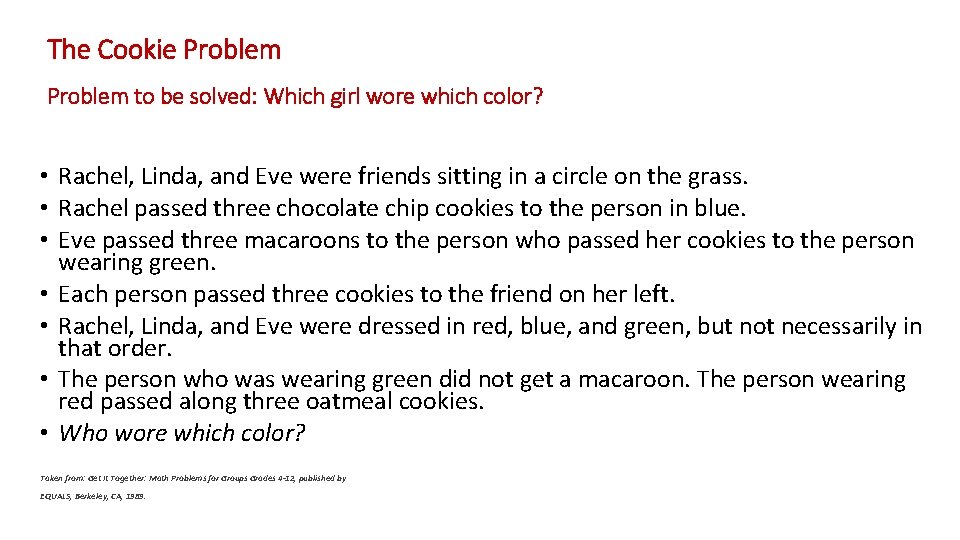
The Cookie Problem to be solved: Which girl wore which color? • Rachel, Linda, and Eve were friends sitting in a circle on the grass. • Rachel passed three chocolate chip cookies to the person in blue. • Eve passed three macaroons to the person who passed her cookies to the person wearing green. • Each person passed three cookies to the friend on her left. • Rachel, Linda, and Eve were dressed in red, blue, and green, but not necessarily in that order. • The person who was wearing green did not get a macaroon. The person wearing red passed along three oatmeal cookies. • Who wore which color? Taken from: Get It Together: Math Problems for Groups Grades 4 -12, published by EQUALS, Berkeley, CA, 1989.
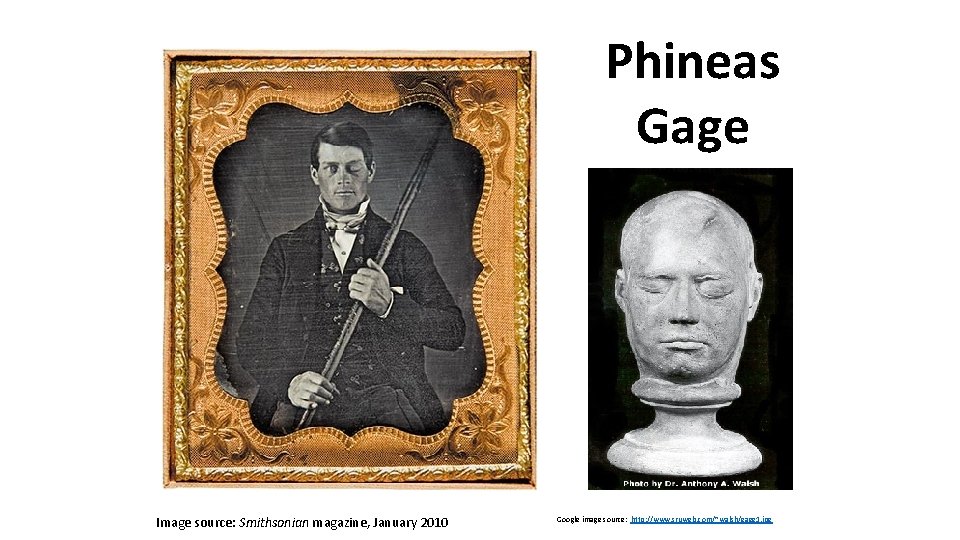
Phineas Gage Image source: Smithsonian magazine, January 2010 Google image source: http: //www. sruweb. com/~walsh/gage 1. jpg
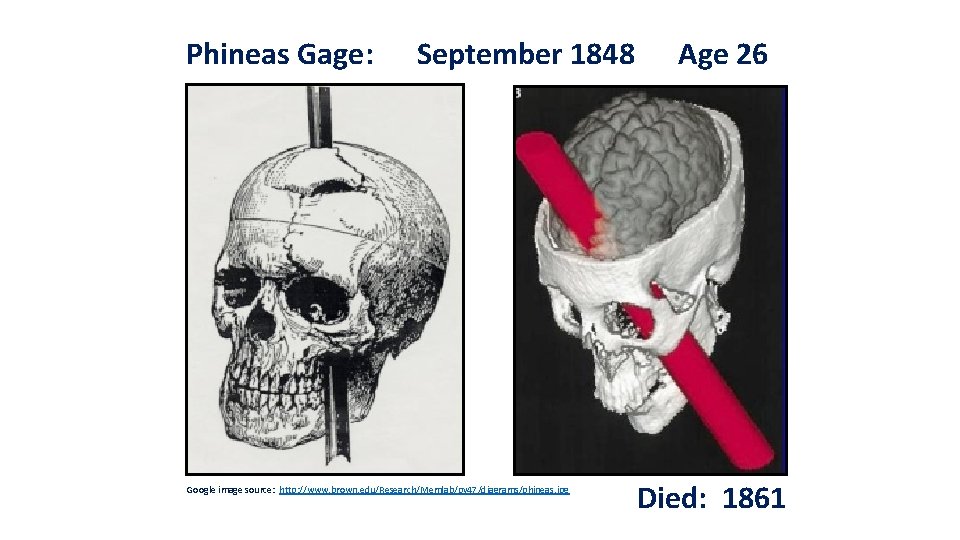
Phineas Gage: September 1848 Google image source: http: //www. brown. edu/Research/Memlab/py 47/diagrams/phineas. jpg Age 26 Died: 1861
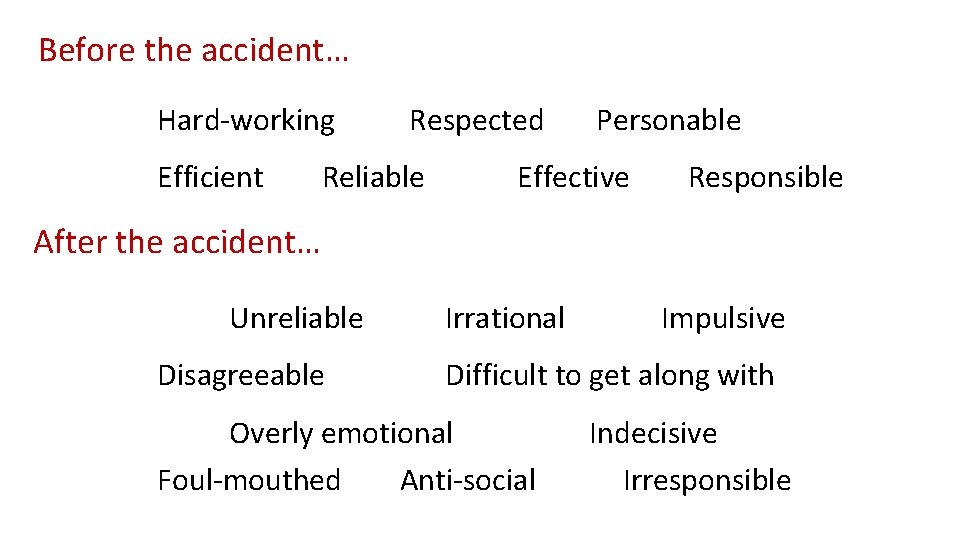
Before the accident… Hard-working Efficient Respected Reliable Personable Effective Responsible After the accident… Unreliable Disagreeable Irrational Impulsive Difficult to get along with Overly emotional Foul-mouthed Anti-social Indecisive Irresponsible
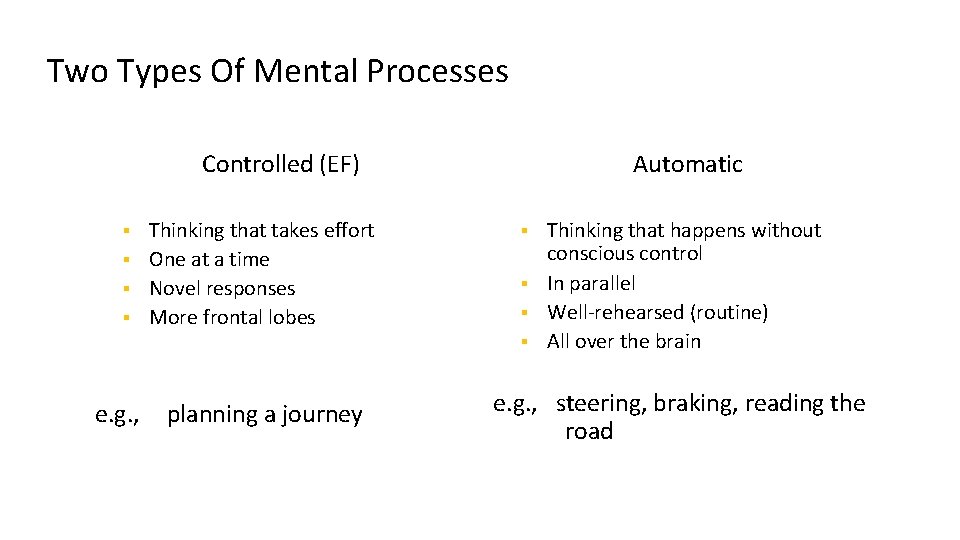
Two Types Of Mental Processes Controlled (EF) Thinking that takes effort § One at a time § Novel responses § More frontal lobes § e. g. , planning a journey Automatic Thinking that happens without conscious control § In parallel § Well-rehearsed (routine) § All over the brain § e. g. , steering, braking, reading the road
Basic Neurological Functions ‘What Happens Now’ § § § § Physiological functions Sensory functions Speech/language Spatial Motor Memory of skills Memory of facts
Basic Executive Functions – ‘How and When’ Round A composition for two or more voices in which each voice enters at a different time with the same melody Row, row your boat Gently down the stream Merrily, merrily Life is but a dream
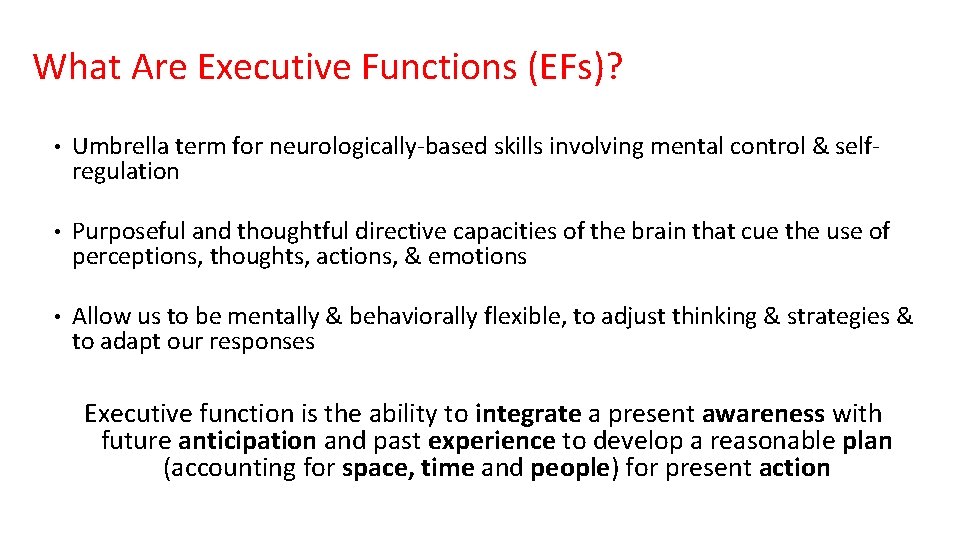
What Are Executive Functions (EFs)? • Umbrella term for neurologically-based skills involving mental control & selfregulation • Purposeful and thoughtful directive capacities of the brain that cue the use of perceptions, thoughts, actions, & emotions • Allow us to be mentally & behaviorally flexible, to adjust thinking & strategies & to adapt our responses Executive function is the ability to integrate a present awareness with future anticipation and past experience to develop a reasonable plan (accounting for space, time and people) for present action
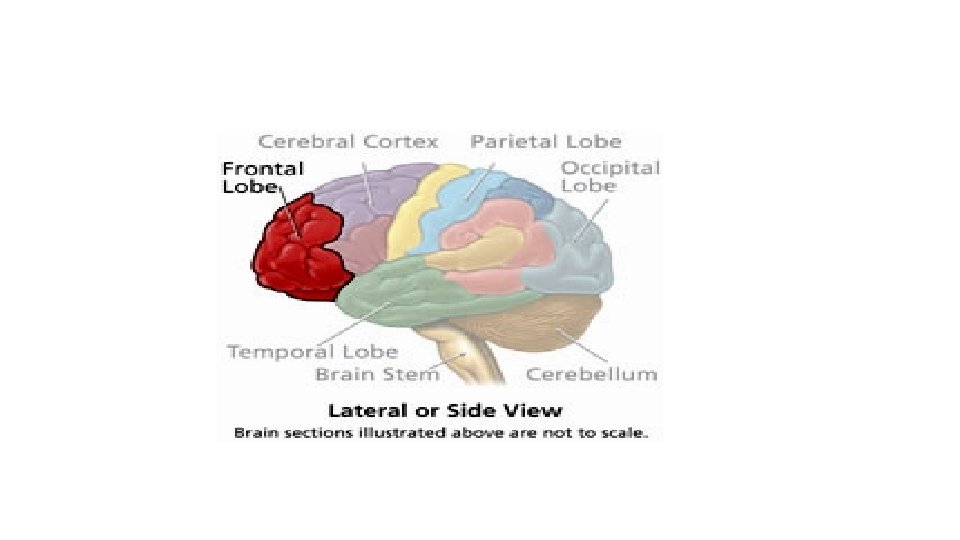
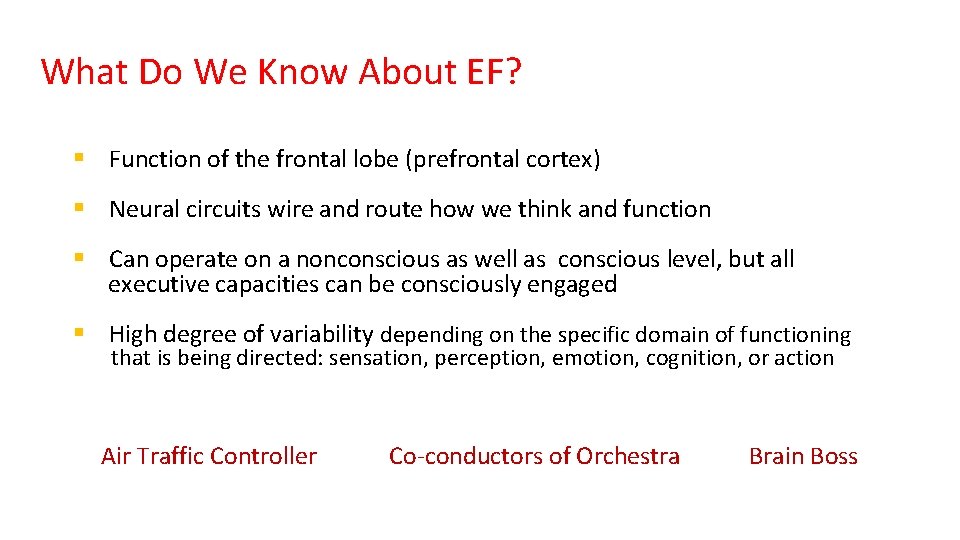
What Do We Know About EF? § Function of the frontal lobe (prefrontal cortex) § Neural circuits wire and route how we think and function § Can operate on a nonconscious as well as conscious level, but all executive capacities can be consciously engaged § High degree of variability depending on the specific domain of functioning that is being directed: sensation, perception, emotion, cognition, or action Air Traffic Controller Co-conductors of Orchestra Brain Boss
How Do EFs Develop? • Developing from the first years of life well into adulthood • Strongly influenced by experience, teaching, environmental expectations • Large developmental shifts are noticeable • Natural maturational delays and lags are observed • Cultural change points (e. g. , educational transitions) serve to highlight EF deficits • Not an implicit process – learned through explicit experiences and practice Good executive control in one domain does not guarantee good executive control in the other domains. Poor control in one domain does not guarantee poor control in the other domains.
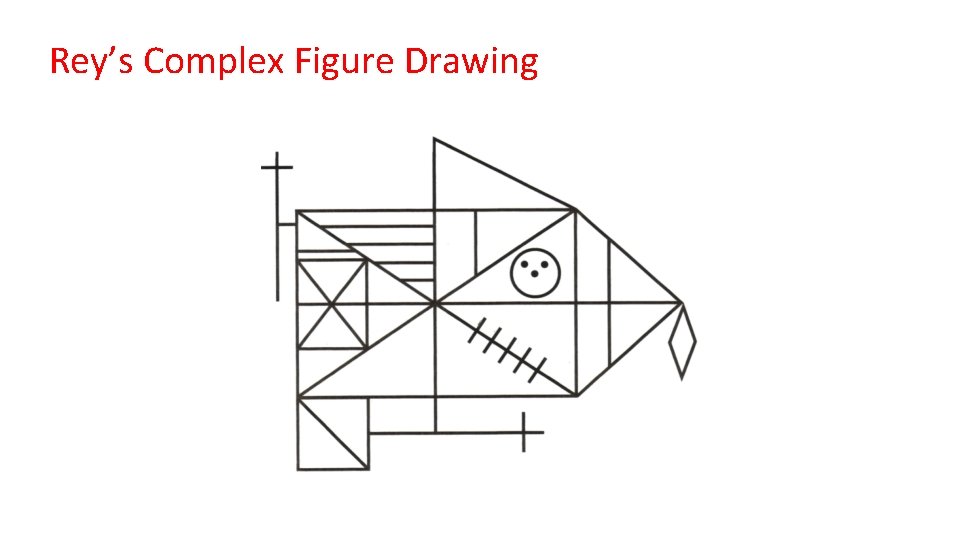
Rey’s Complex Figure Drawing
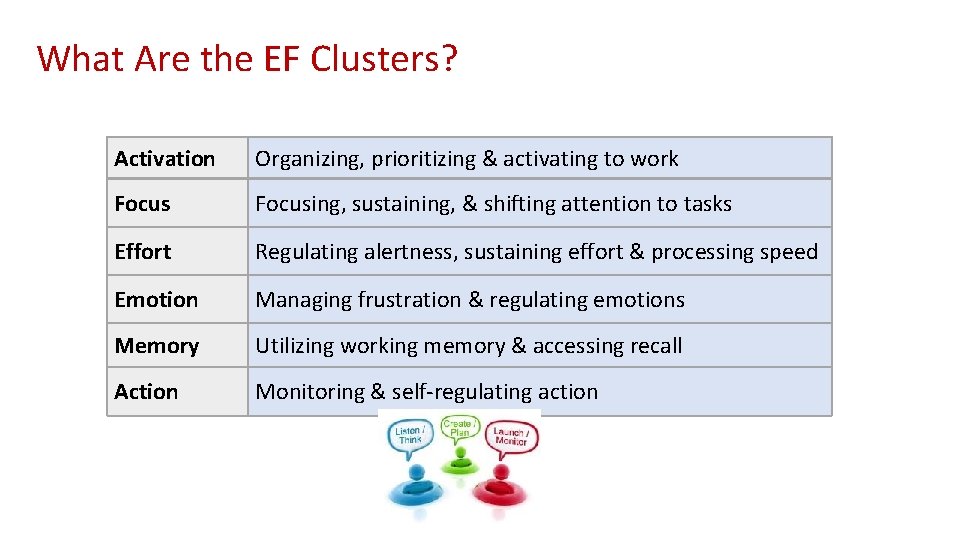
What Are the EF Clusters? Activation Organizing, prioritizing & activating to work Focusing, sustaining, & shifting attention to tasks Effort Regulating alertness, sustaining effort & processing speed Emotion Managing frustration & regulating emotions Memory Utilizing working memory & accessing recall Action Monitoring & self-regulating action
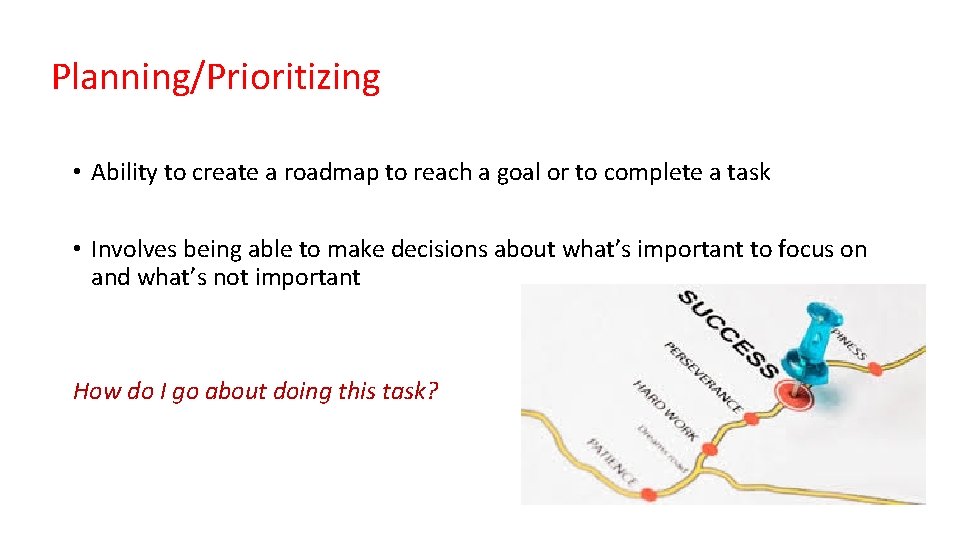
Planning/Prioritizing • Ability to create a roadmap to reach a goal or to complete a task • Involves being able to make decisions about what’s important to focus on and what’s not important How do I go about doing this task?
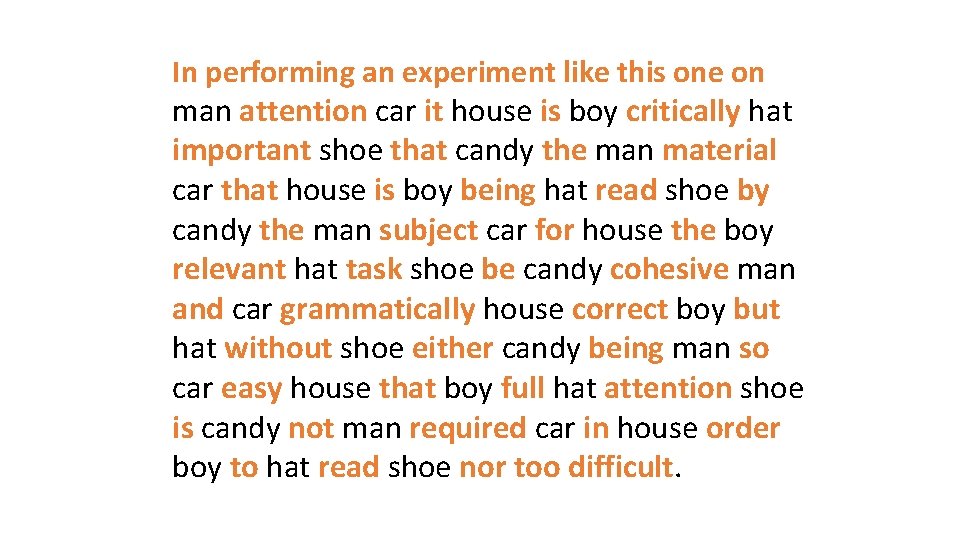
In performing an experiment like this one on man attention car it house is boy critically hat important shoe that candy the man material car that house is boy being hat read shoe by candy the man subject car for house the boy relevant hat task shoe be candy cohesive man and car grammatically house correct boy but hat without shoe either candy being man so car easy house that boy full hat attention shoe is candy not man required car in house order boy to hat read shoe nor too difficult.
• • • 15 year old brain does not have the biological machinery to inhibit impulses in the service of long-range planning One reason teens can “flip out” with a moment’s notice “Adolescents make a lot of decisions that the average 9 yr. old would say [were] a dumb thing to do. ” Ronald E. Dahl, MD, Univ. of Pittsburgh Medical Center, NYAS Magazine 2003
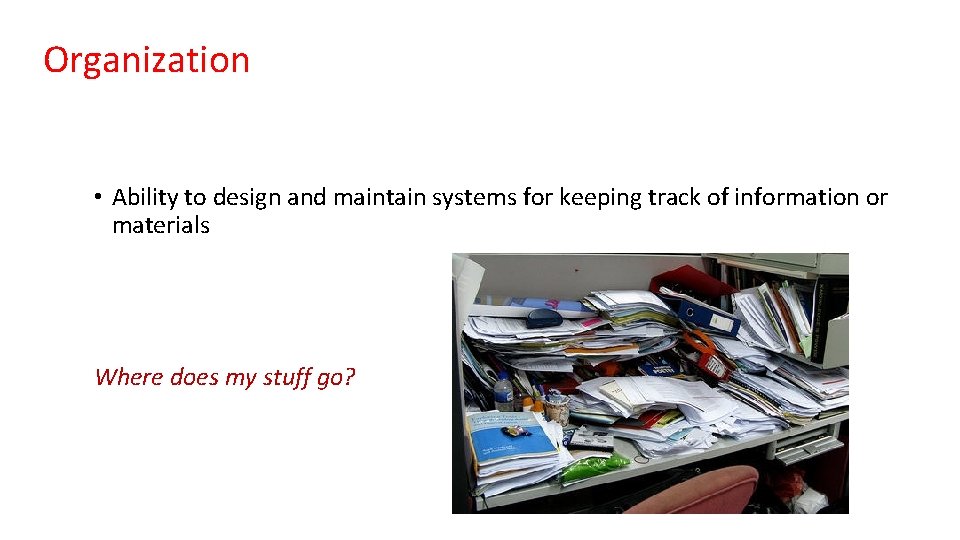
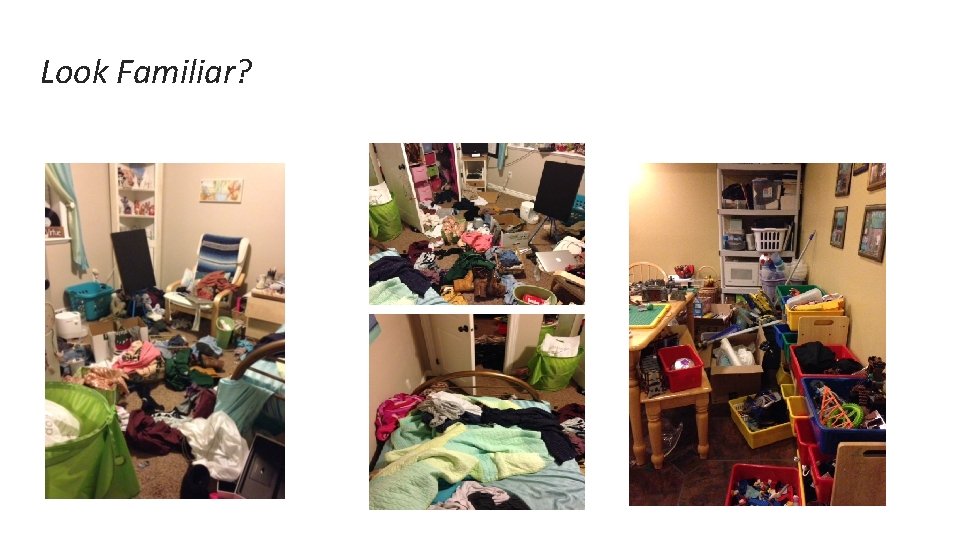
Organization • Ability to design and maintain systems for keeping track of information or materials Where does my stuff go?
Look Familiar?
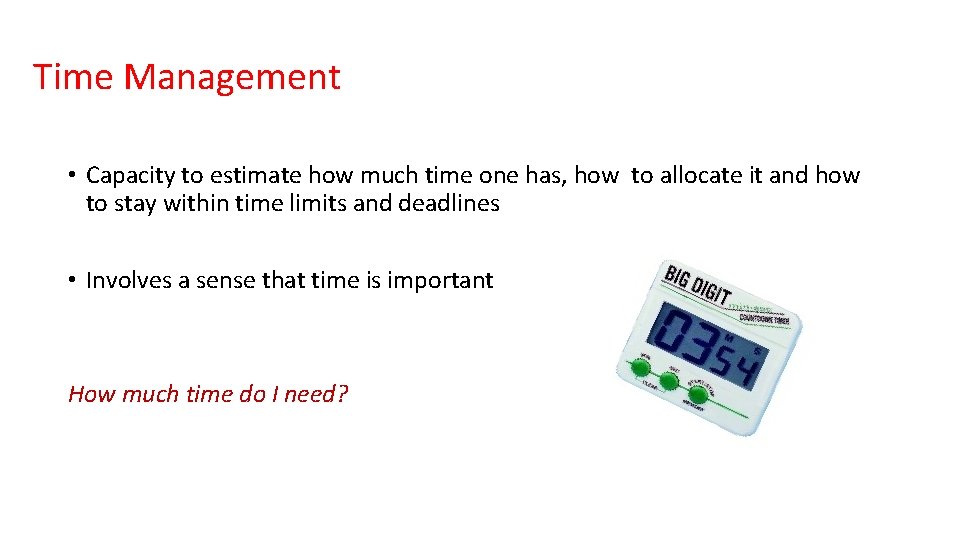
Time Management • Capacity to estimate how much time one has, how to allocate it and how to stay within time limits and deadlines • Involves a sense that time is important How much time do I need?
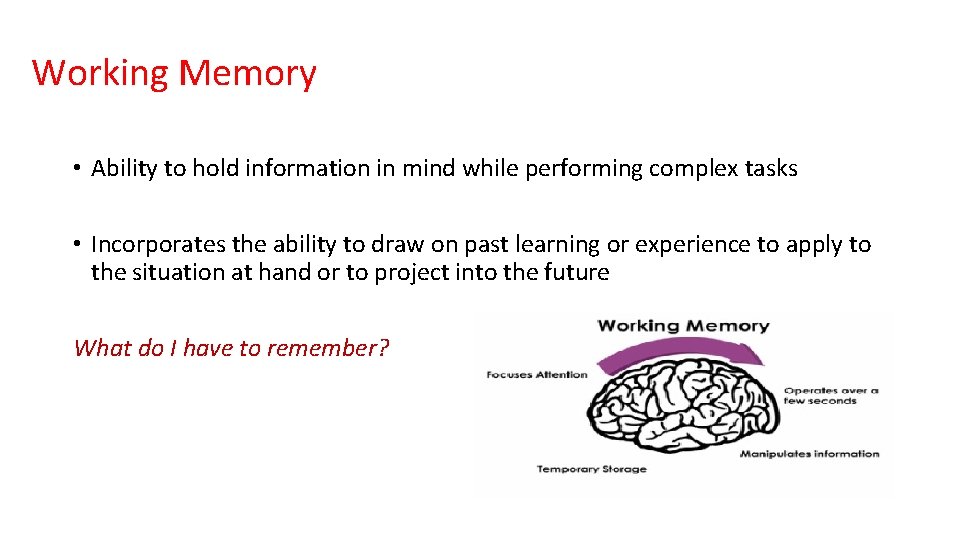
Working Memory • Ability to hold information in mind while performing complex tasks • Incorporates the ability to draw on past learning or experience to apply to the situation at hand or to project into the future What do I have to remember?
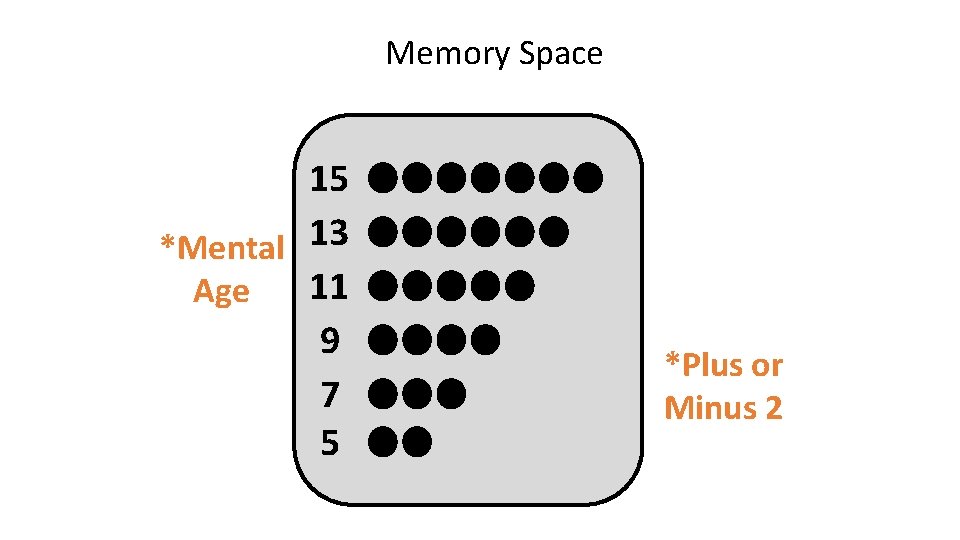
Memory Space 15 *Mental 13 11 Age 9 7 5 *Plus or Minus 2
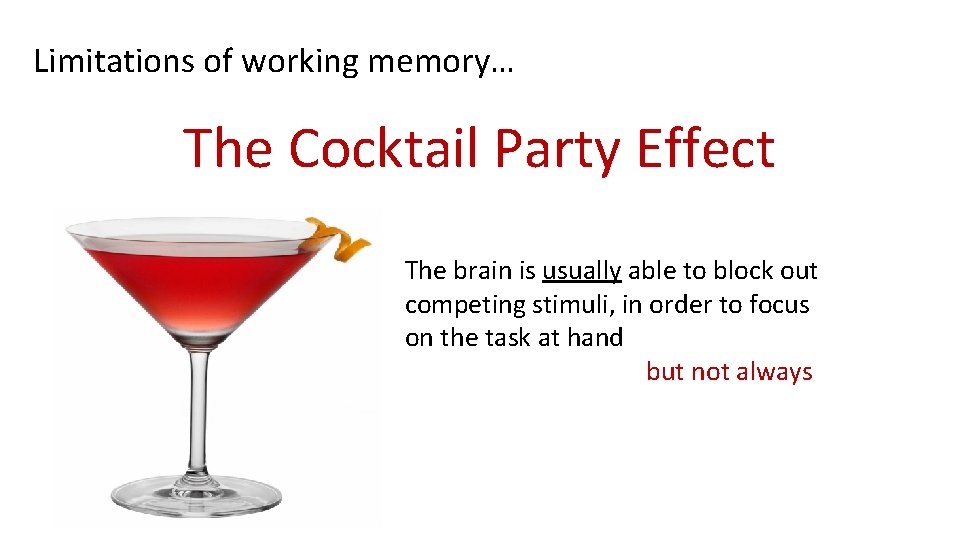
Limitations of working memory… The Cocktail Party Effect The brain is usually able to block out competing stimuli, in order to focus on the task at hand but not always
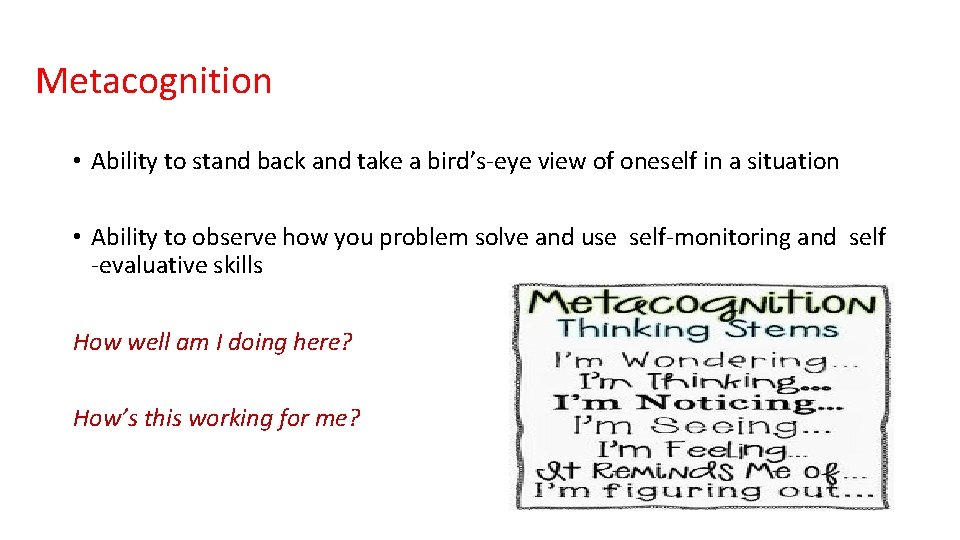
Metacognition • Ability to stand back and take a bird’s-eye view of oneself in a situation • Ability to observe how you problem solve and use self-monitoring and self -evaluative skills How well am I doing here? How’s this working for me?
Puzzles Prime the Brain for Problem Solving When encountering a mental block, take a brain break and focus on a puzzle or word game. Puzzles, word games and brain teasers stimulate activity in the frontal lobe and right hemisphere, making neural connections more flexible for future problem solving.
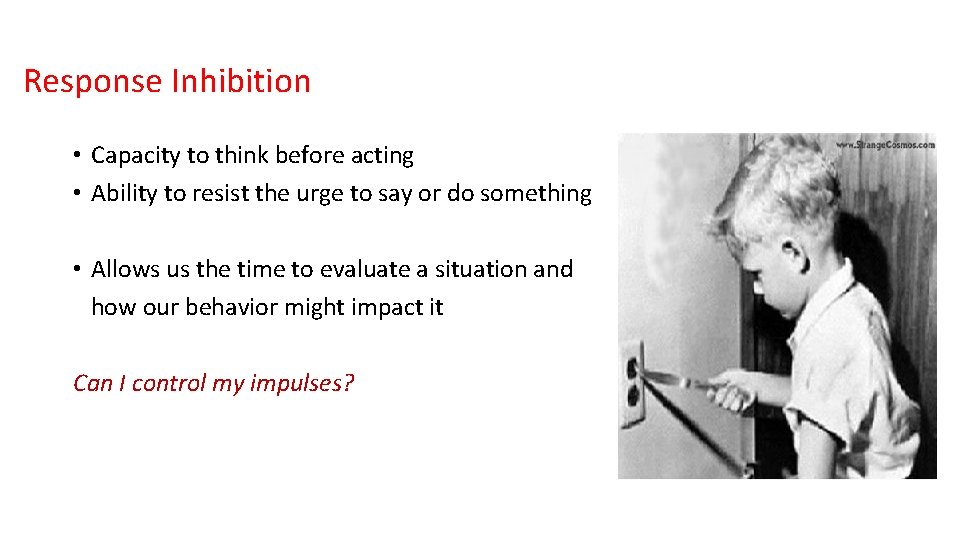
Response Inhibition • Capacity to think before acting • Ability to resist the urge to say or do something • Allows us the time to evaluate a situation and how our behavior might impact it Can I control my impulses?
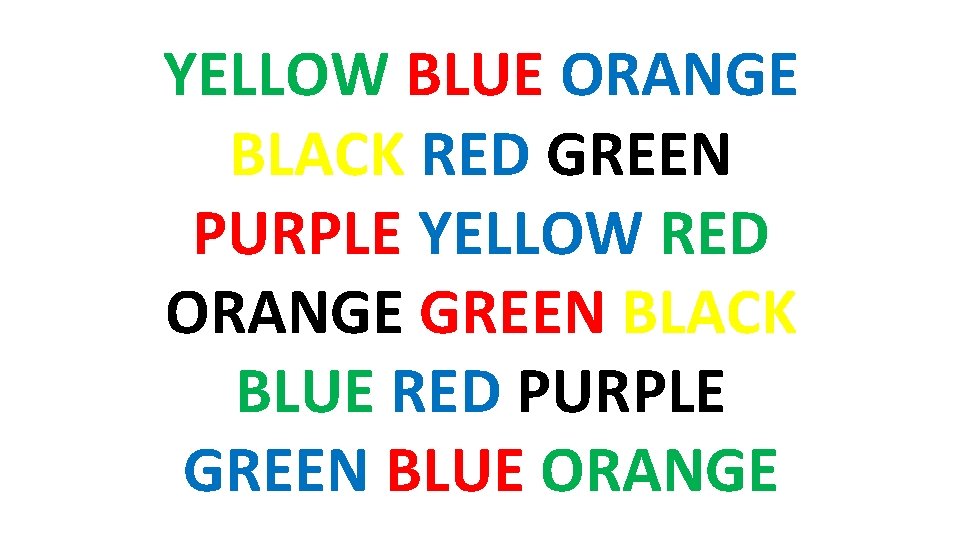
YELLOW BLUE ORANGE BLACK RED GREEN PURPLE YELLOW RED ORANGE GREEN BLACK BLUE RED PURPLE GREEN BLUE ORANGE
Emotional Control • Self-regulation of affect • Ability to manage emotions in order to achieve goals, complete tasks or control and direct behavior Can I control my emotions?
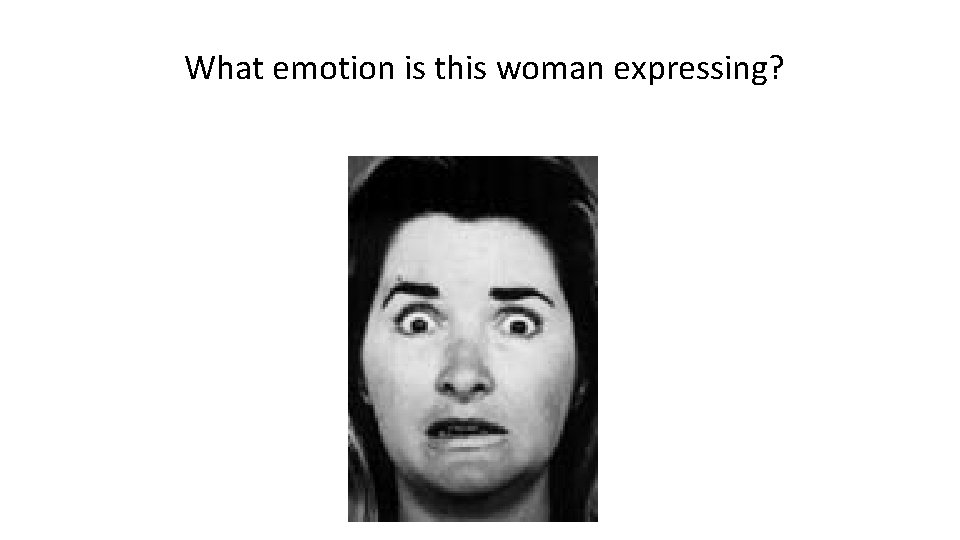
What emotion is this woman expressing?
HOT AND COLD COGNITION • Thoughts and emotions are intertwined – adolescents need to develop a balance between cognitive and affective systems of the brain • COLD cognition refers to thinking under conditions of low emotions and/or arousal • HOT cognition refers to thinking under conditions of strong feelings or arousal • Decisions made under conditions of strong affect are difficult to influence by cool rational thought alone
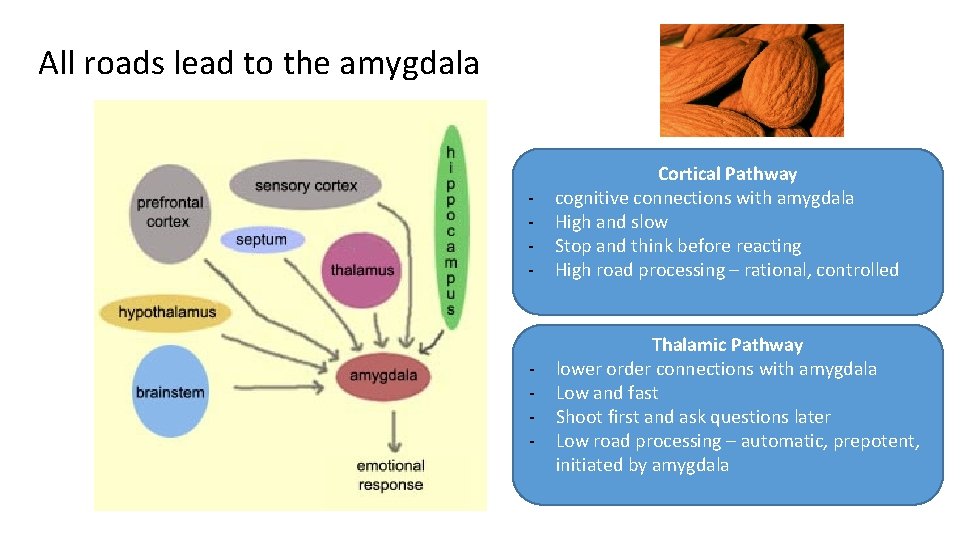
All roads lead to the amygdala - - Cortical Pathway cognitive connections with amygdala High and slow Stop and think before reacting High road processing – rational, controlled Thalamic Pathway lower order connections with amygdala Low and fast Shoot first and ask questions later Low road processing – automatic, prepotent, initiated by amygdala
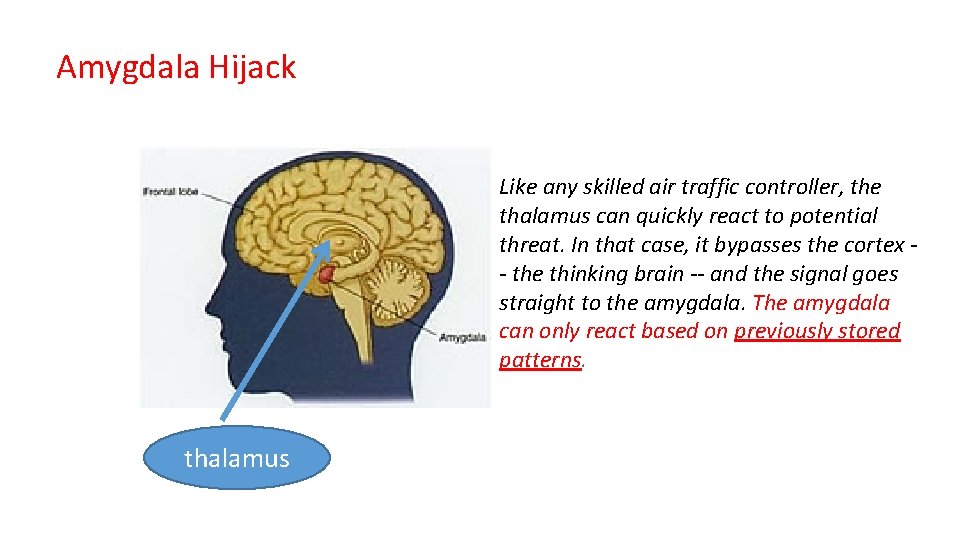
Amygdala Hijack Like any skilled air traffic controller, the thalamus can quickly react to potential threat. In that case, it bypasses the cortex - the thinking brain -- and the signal goes straight to the amygdala. The amygdala can only react based on previously stored patterns. thalamus
Manifestations of ‘Low Road’ Emotional Processing • Limited frustration tolerance • Limited adaptability (these youth become easily ‘stuck’) • Limited alternate thinking skills (small problem solving repertoire) • Reflexive negativity In a nutshell, EFD students become easily swamped by their emotions 52
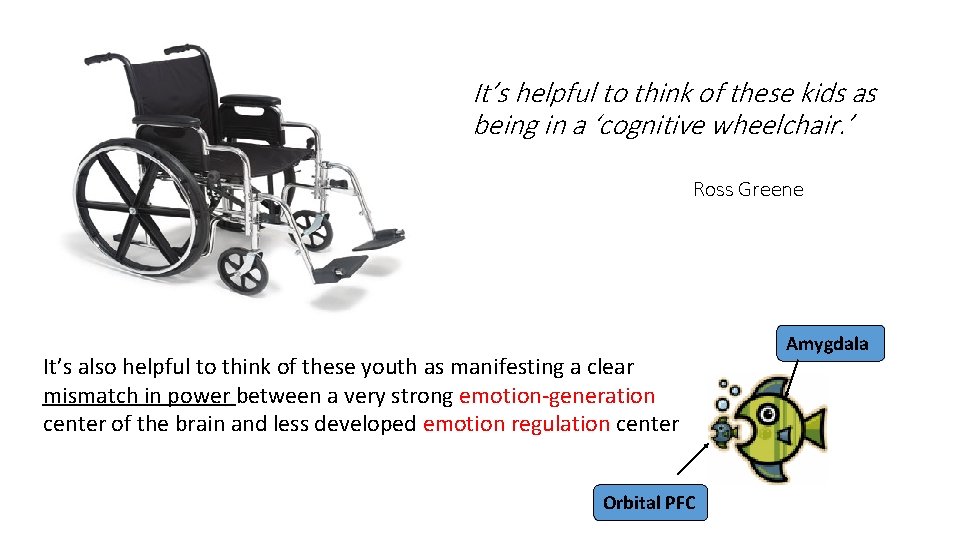
It’s helpful to think of these kids as being in a ‘cognitive wheelchair. ’ Ross Greene It’s also helpful to think of these youth as manifesting a clear mismatch in power between a very strong emotion-generation center of the brain and less developed emotion regulation center Orbital PFC Amygdala
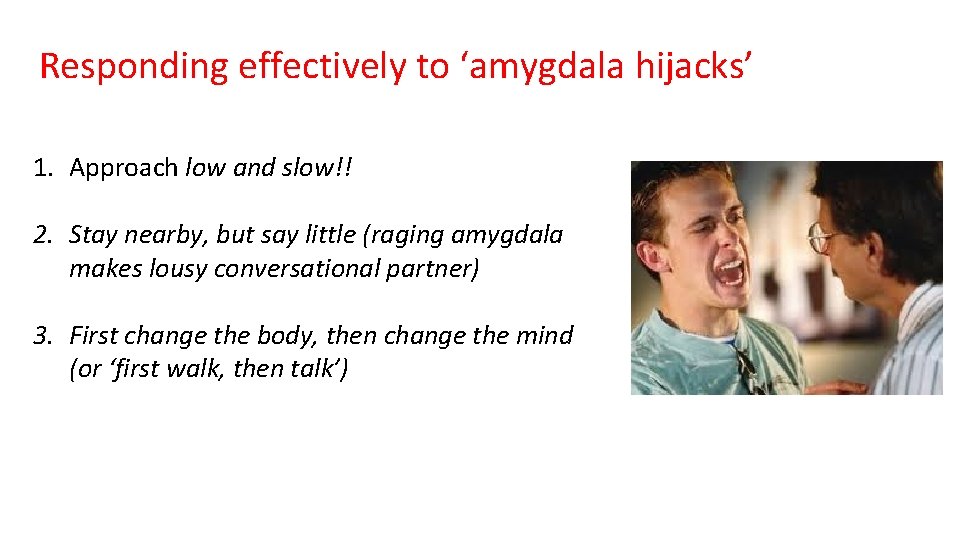
Responding effectively to ‘amygdala hijacks’ 1. Approach low and slow!! 2. Stay nearby, but say little (raging amygdala makes lousy conversational partner) 3. First change the body, then change the mind (or ‘first walk, then talk’)
Sustained Attention • Capacity to attend to a situation or task in spite of distractibility, fatigue or boredom Can I attend to something I may or may not be interested in?
The Brain’s Attention Networks • Maintaining alertness • I’m ready! • Focusing visual & auditory stimuli • Where you look & what you listen to Zoom in! • Executive attention • Inhibiting competing thoughts, emotions, stimuli to complete a task Ignore distractions!
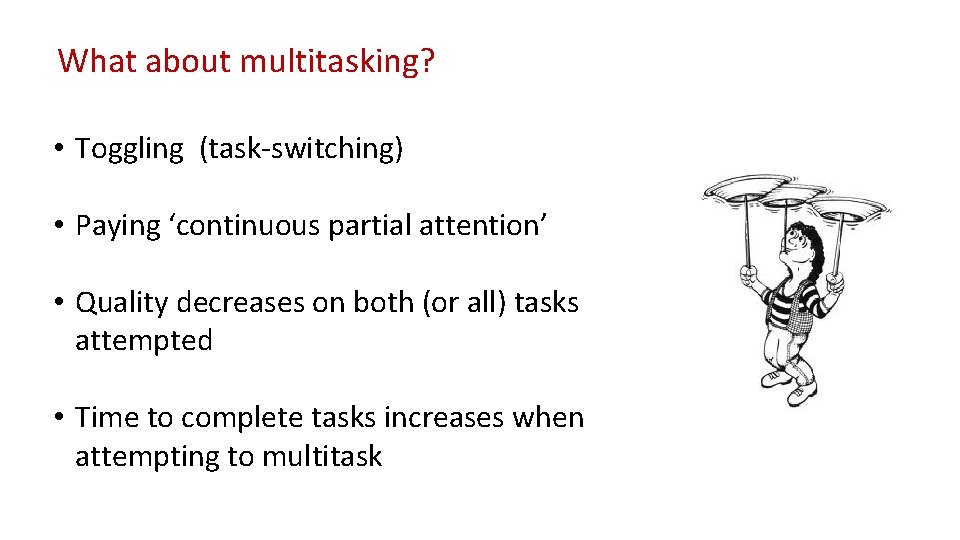
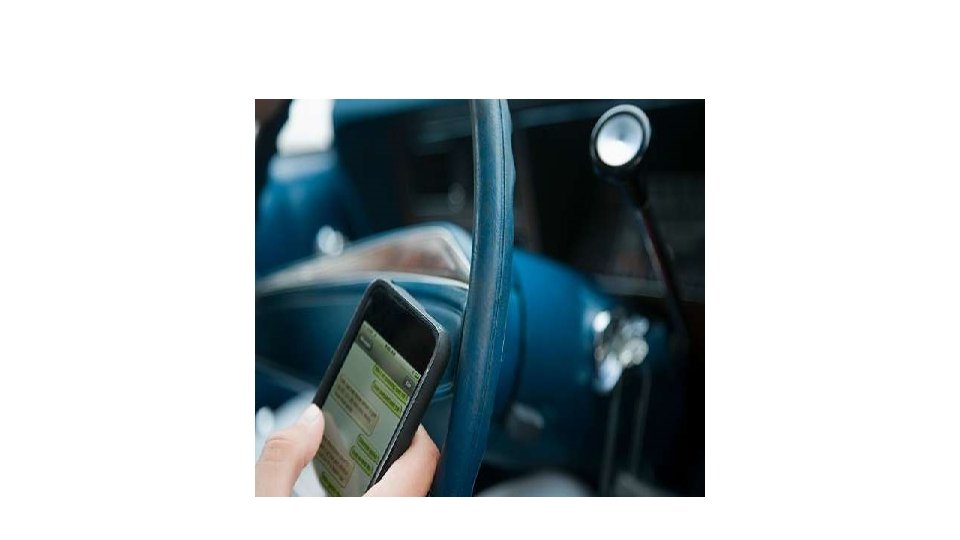
What about multitasking? • Toggling (task-switching) • Paying ‘continuous partial attention’ • Quality decreases on both (or all) tasks attempted • Time to complete tasks increases when attempting to multitask
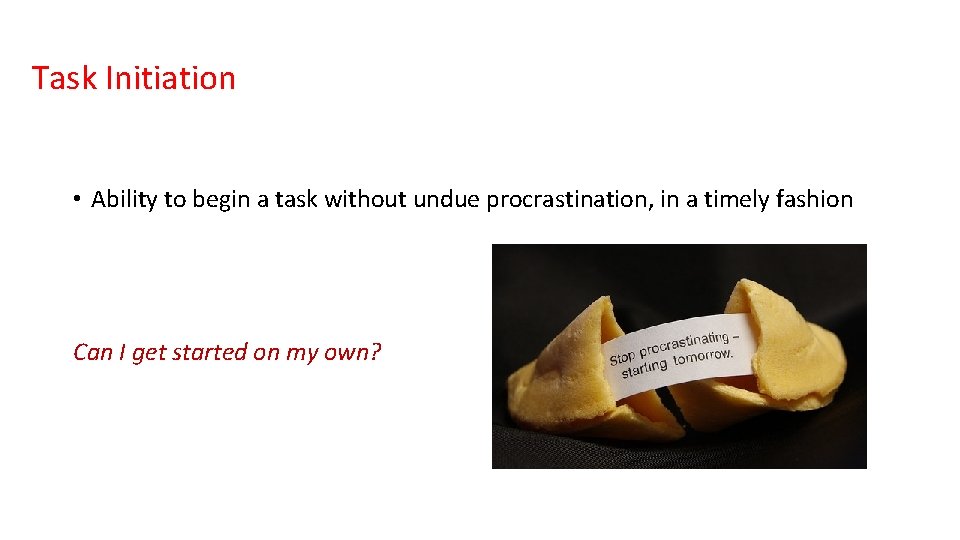
Task Initiation • Ability to begin a task without undue procrastination, in a timely fashion Can I get started on my own?
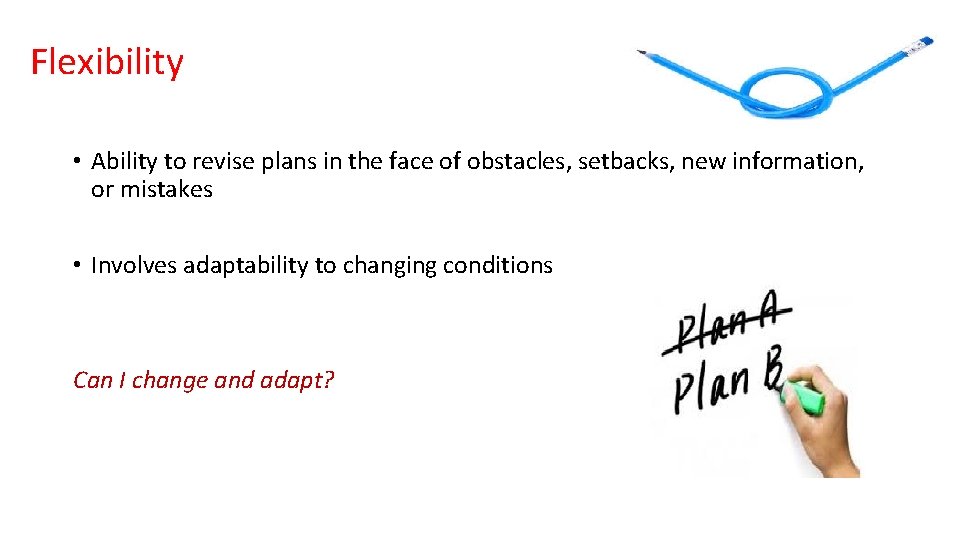
Flexibility • Ability to revise plans in the face of obstacles, setbacks, new information, or mistakes • Involves adaptability to changing conditions Can I change and adapt?
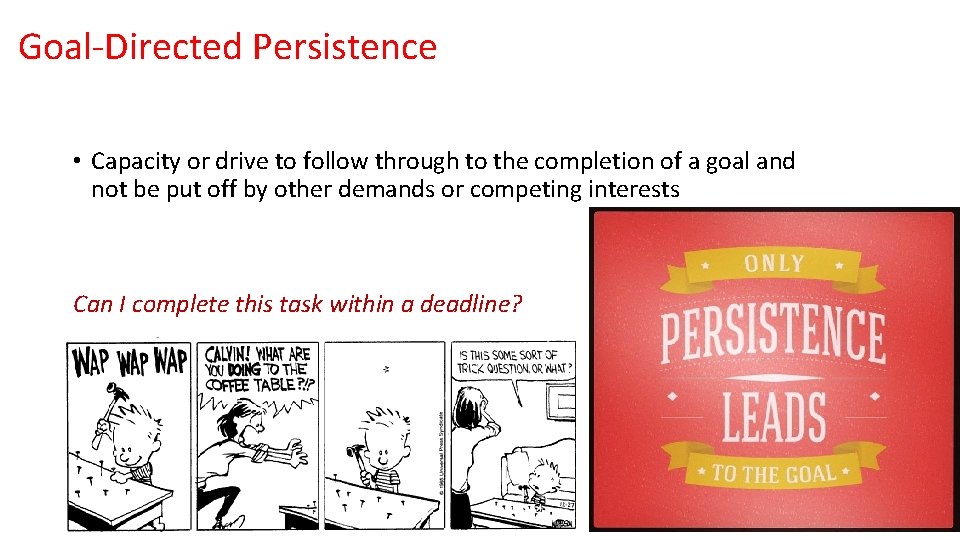
Goal-Directed Persistence • Capacity or drive to follow through to the completion of a goal and not be put off by other demands or competing interests Can I complete this task within a deadline?
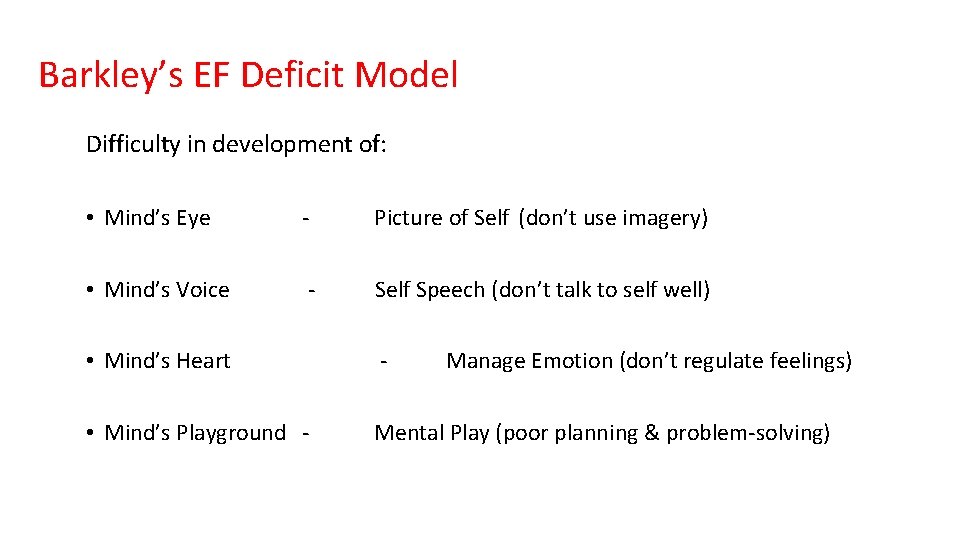
Barkley’s EF Deficit Model Difficulty in development of: • Mind’s Eye - Picture of Self (don’t use imagery) • Mind’s Voice - Self Speech (don’t talk to self well) • Mind’s Heart - Manage Emotion (don’t regulate feelings) • Mind’s Playground - Mental Play (poor planning & problem-solving)
What Are The 5 EFs In Major Life Activities? • Self-Discipline (Inhibition) • Cognitive, behavioral, verbal, emotional • Self-Management to Time • Consideration of past and future consequences before acting; managing self relative to time and deadlines • Self-Organization & Problem-Solving • Innovating, planning possible response options, problem-solving to overcome obstacles to goals, rapid assembly and performance of novel goal-directed behavior • Self-Motivation • Substituting positive goal-supporting emotions for negative goal-destructive ones • Self-Activation & Concentration
What Efs Are Activated? • How did you get here today on time? • What would have happened if 18 th Street was closed due to construction? • Your family wants to eat dinner at 7 and you’re the cook: How do you get the food on the table in time? • Someone cuts you off in a traffic lane: What keeps you from yelling “#**#!%”? • The clock is ticking loudly in the den where you are reading a book, but you don’t hear it. Why? • You walk into a funeral service and immediately begin speaking in a whisper. Why? • You accidentally bump into someone and apologize. Why?
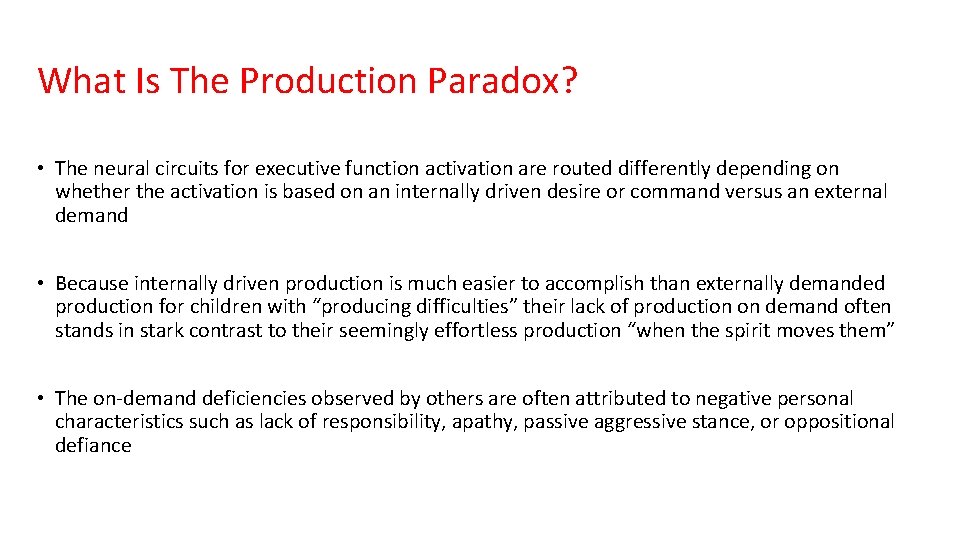
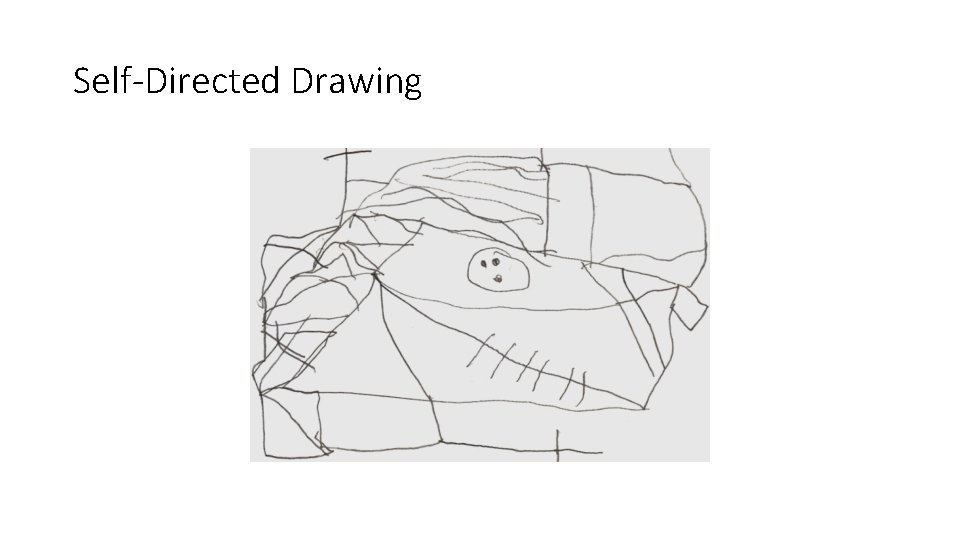
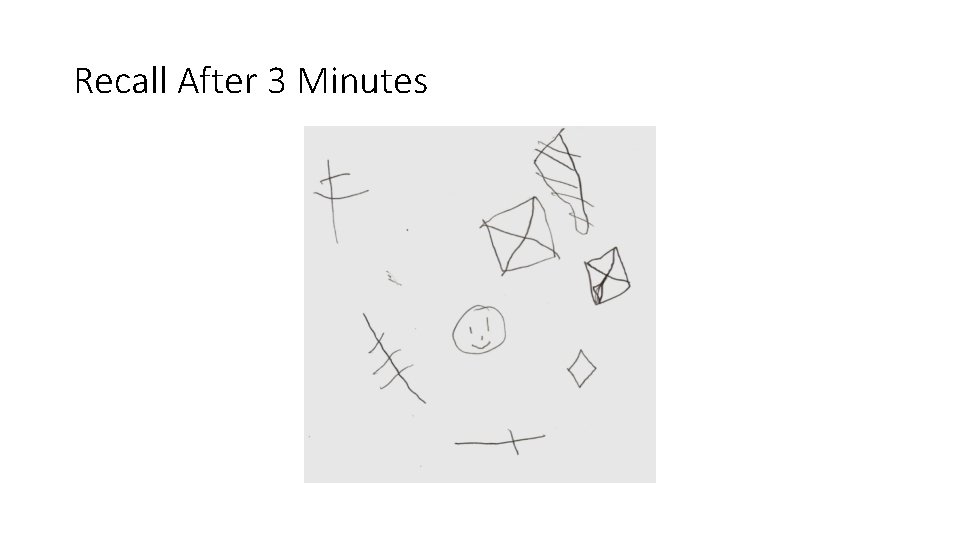
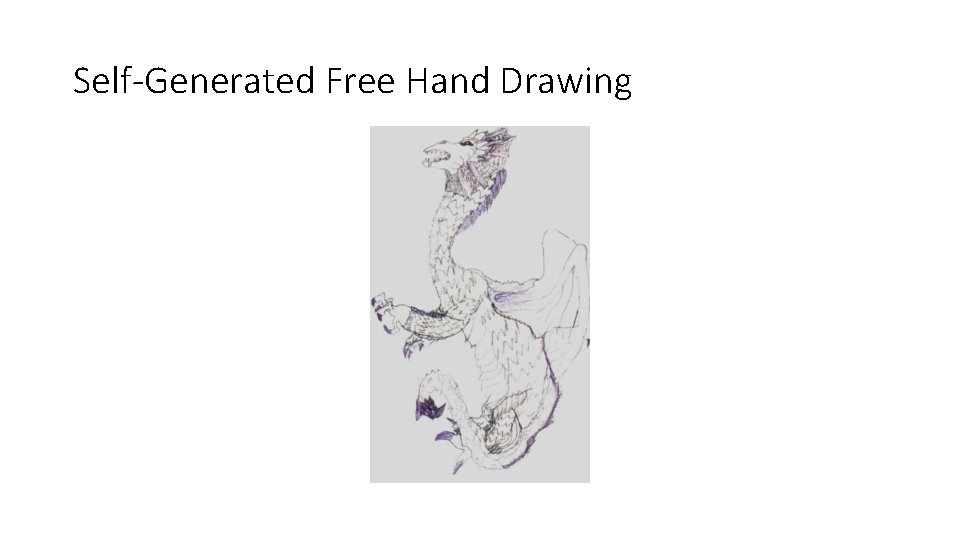
What Is The Production Paradox? • The neural circuits for executive function activation are routed differently depending on whether the activation is based on an internally driven desire or command versus an external demand • Because internally driven production is much easier to accomplish than externally demanded production for children with “producing difficulties” their lack of production on demand often stands in stark contrast to their seemingly effortless production “when the spirit moves them” • The on-demand deficiencies observed by others are often attributed to negative personal characteristics such as lack of responsibility, apathy, passive aggressive stance, or oppositional defiance
Self-Directed Drawing
Recall After 3 Minutes
Self-Generated Free Hand Drawing
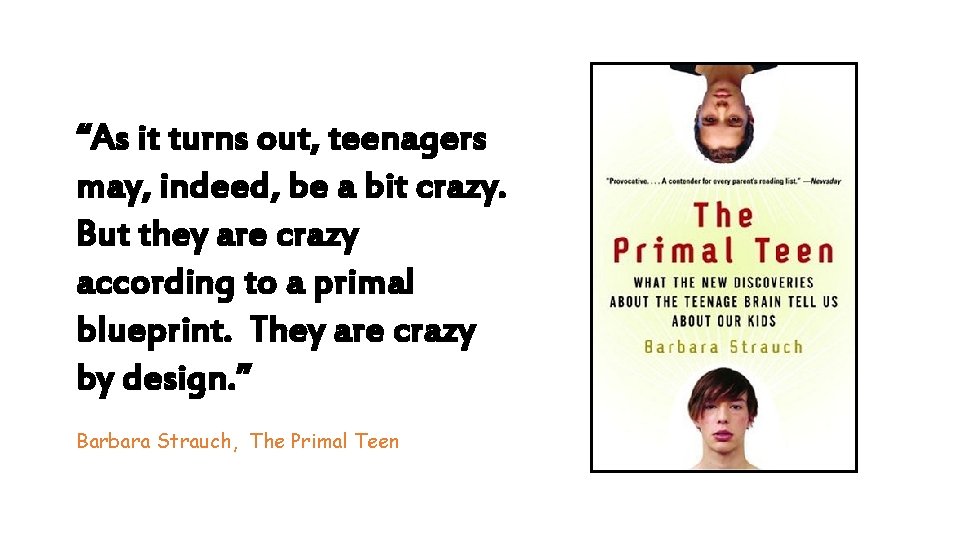
“As it turns out, teenagers may, indeed, be a bit crazy. But they are crazy according to a primal blueprint. They are crazy by design. ” Barbara Strauch, The Primal Teen
• http: //www. math. harvard. edu/~knill/mathmovies/m 4 v/inthenavy_2 8. m 4 v