CE 382 Hydraulic Systems Design pipes pumps and

- Slides: 20
CE 382, Hydraulic Systems Design (pipes, pumps and open channels) Principles of hydraulics 1. Conservation of energy 2. Continuity (conservation of mass) 3. Momentum (balance of forces)
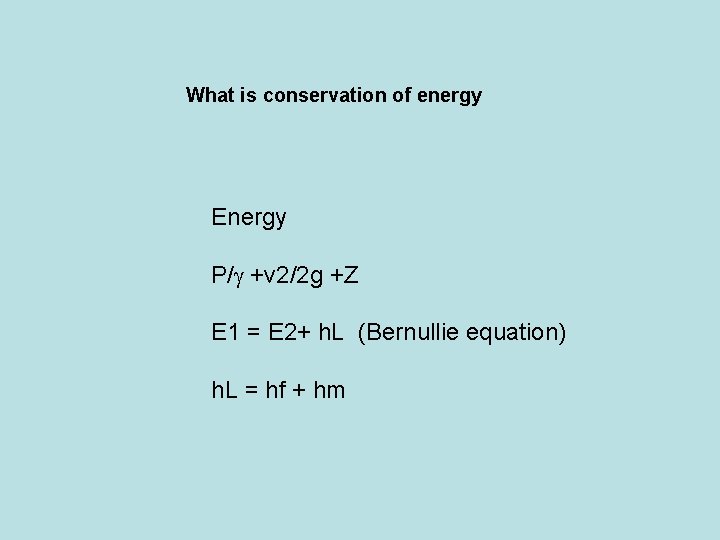
What is conservation of energy Energy P/ +v 2/2 g +Z E 1 = E 2+ h. L (Bernullie equation) h. L = hf + hm
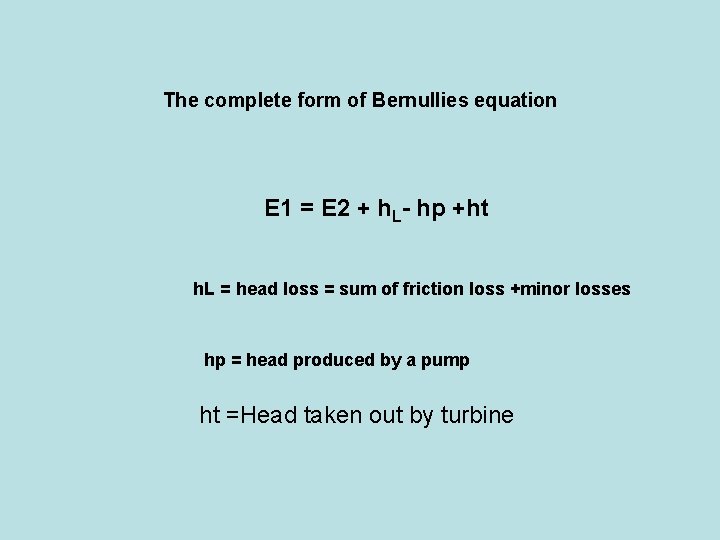
The complete form of Bernullies equation E 1 = E 2 + h. L- hp +ht h. L = head loss = sum of friction loss +minor losses hp = head produced by a pump ht =Head taken out by turbine
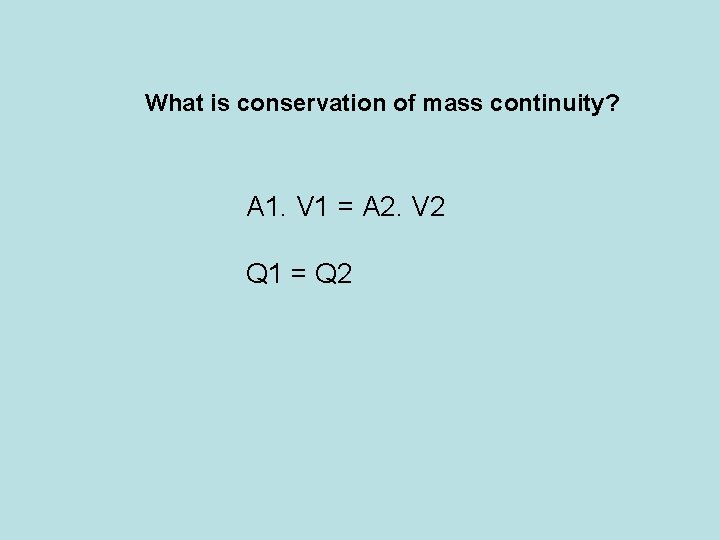
What is conservation of mass continuity? A 1. V 1 = A 2. V 2 Q 1 = Q 2
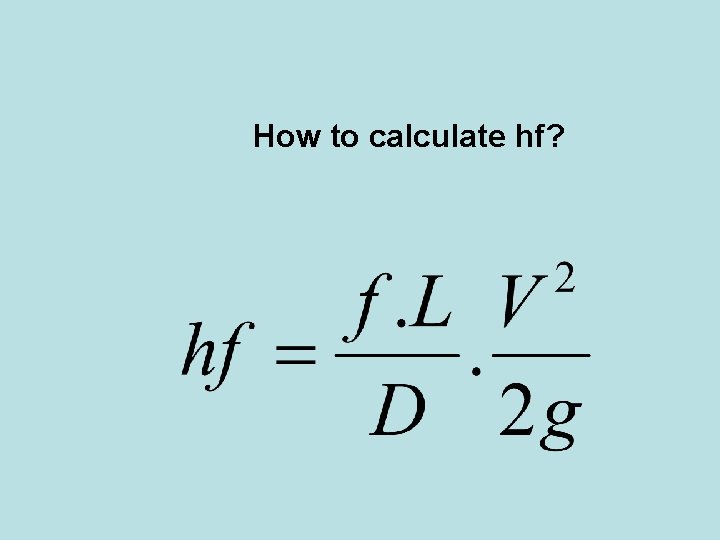
How to calculate hf?
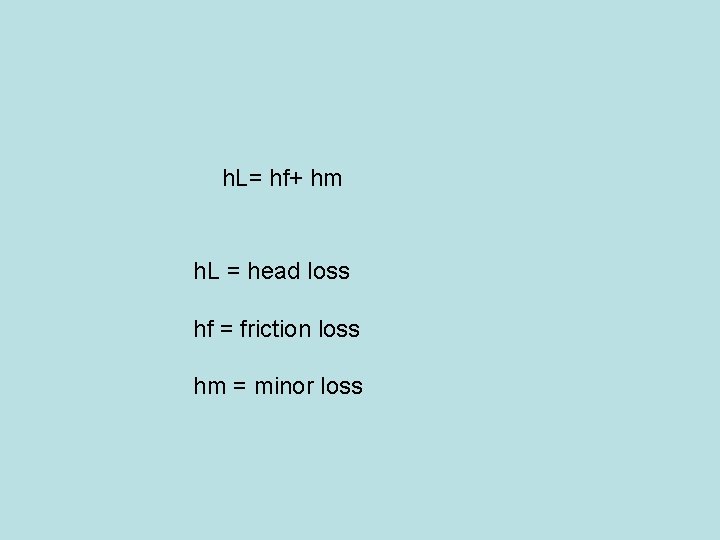
h. L= hf+ hm h. L = head loss hf = friction loss hm = minor loss
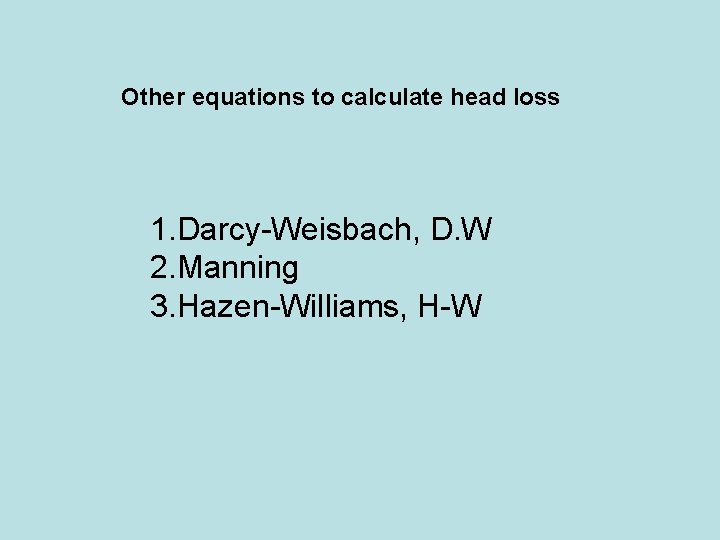
Other equations to calculate head loss 1. Darcy-Weisbach, D. W 2. Manning 3. Hazen-Williams, H-W
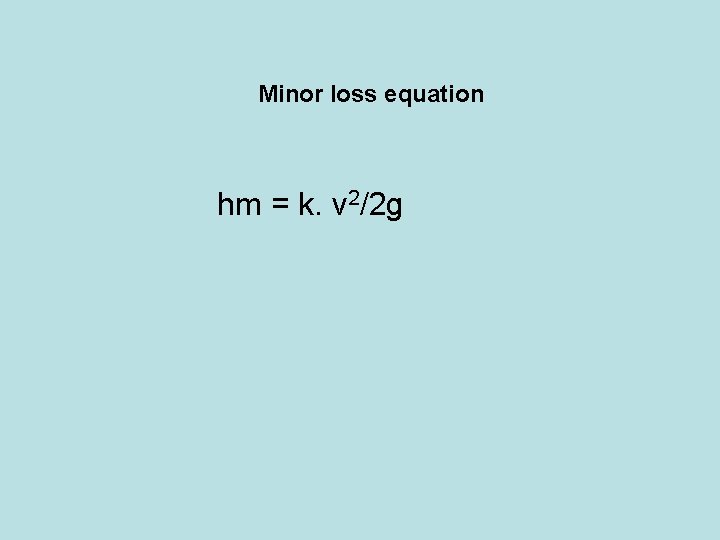
Minor loss equation hm = k. v 2/2 g
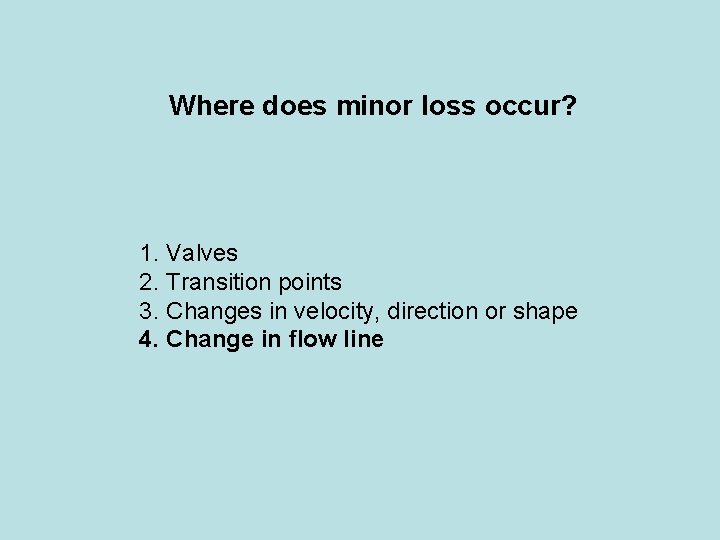
Where does minor loss occur? 1. Valves 2. Transition points 3. Changes in velocity, direction or shape 4. Change in flow line
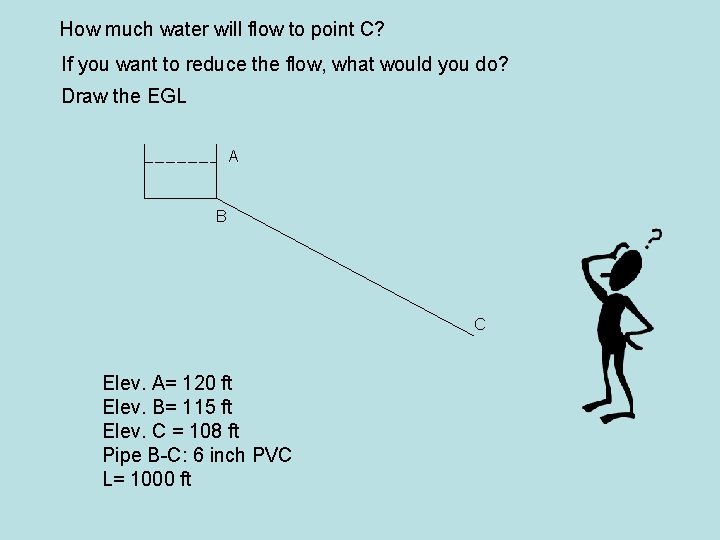
How much water will flow to point C? If you want to reduce the flow, what would you do? Draw the EGL A B C Elev. A= 120 ft Elev. B= 115 ft Elev. C = 108 ft Pipe B-C: 6 inch PVC L= 1000 ft
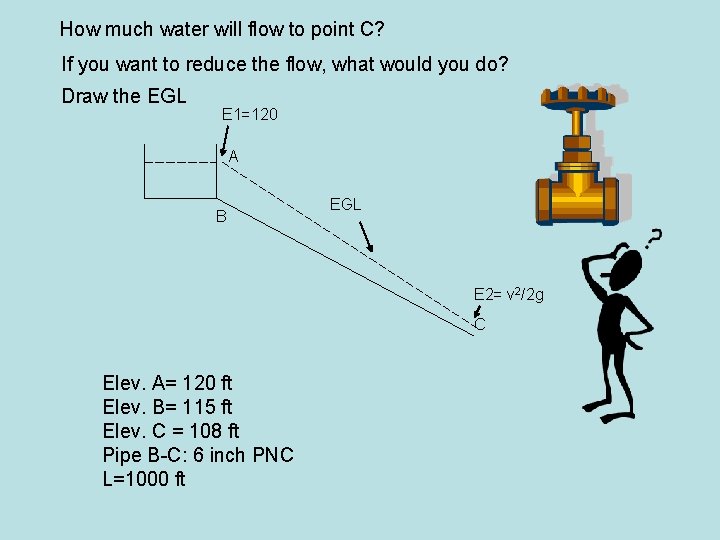
How much water will flow to point C? If you want to reduce the flow, what would you do? Draw the EGL E 1=120 A B EGL E 2= v 2/2 g C Elev. A= 120 ft Elev. B= 115 ft Elev. C = 108 ft Pipe B-C: 6 inch PNC L=1000 ft
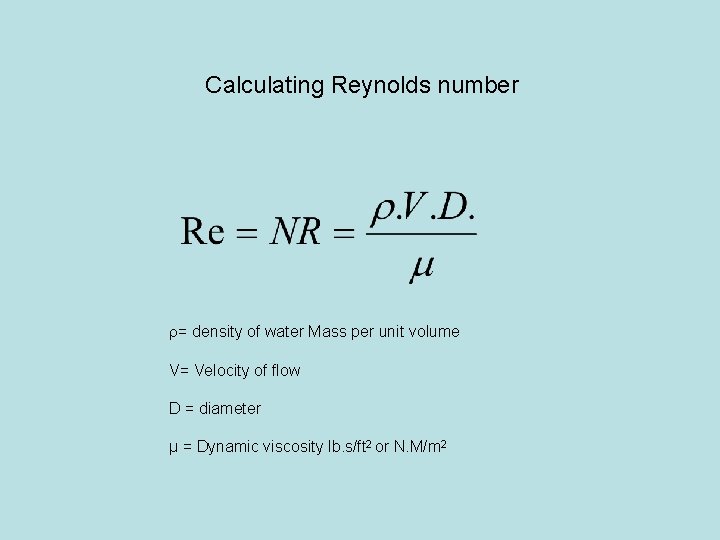
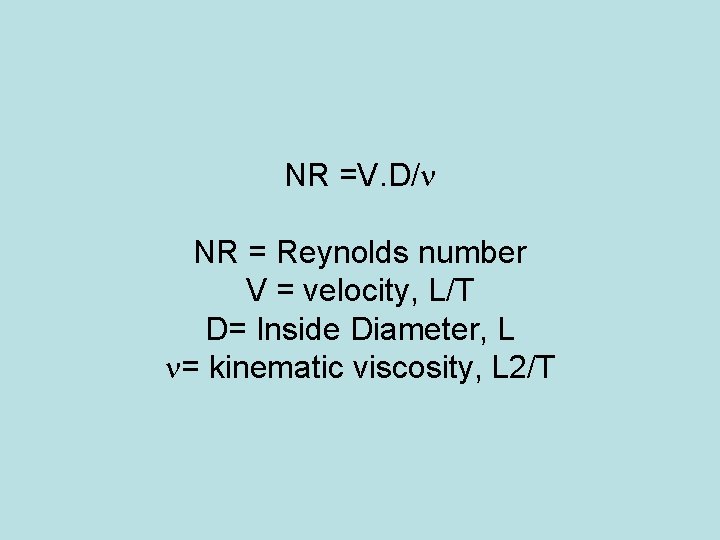
Calculating Reynolds number r= density of water Mass per unit volume V= Velocity of flow D = diameter µ = Dynamic viscosity lb. s/ft 2 or N. M/m 2
NR =V. D/ NR = Reynolds number V = velocity, L/T D= Inside Diameter, L = kinematic viscosity, L 2/T
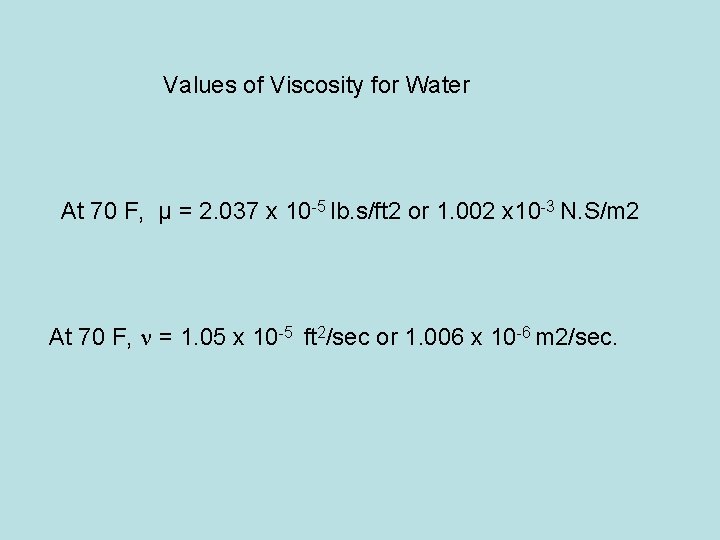
Values of Viscosity for Water At 70 F, µ = 2. 037 x 10 -5 lb. s/ft 2 or 1. 002 x 10 -3 N. S/m 2 At 70 F, = 1. 05 x 10 -5 ft 2/sec or 1. 006 x 10 -6 m 2/sec.
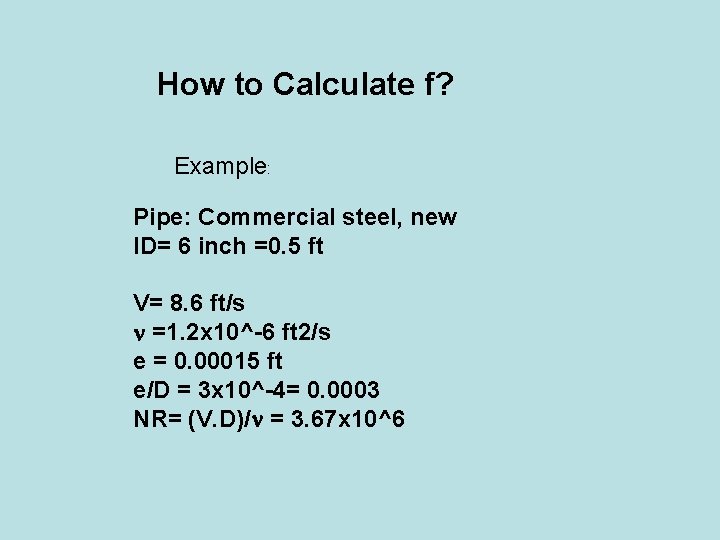
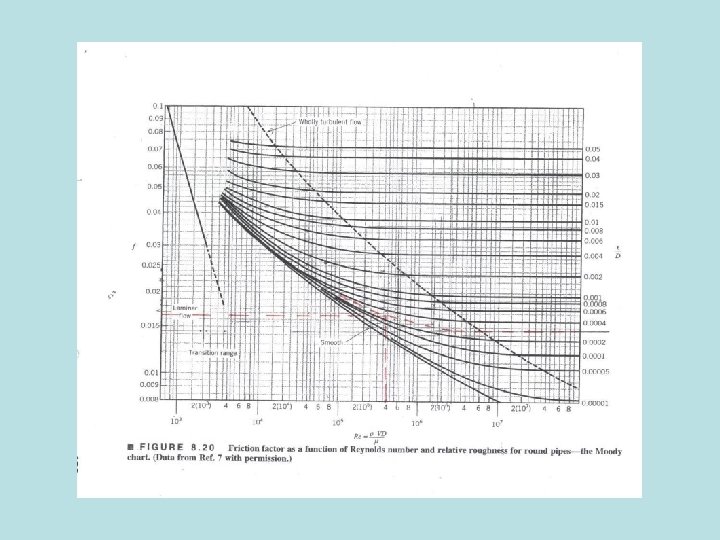
How to Calculate f? Example: Pipe: Commercial steel, new ID= 6 inch =0. 5 ft V= 8. 6 ft/s =1. 2 x 10^-6 ft 2/s e = 0. 00015 ft e/D = 3 x 10^-4= 0. 0003 NR= (V. D)/ = 3. 67 x 10^6
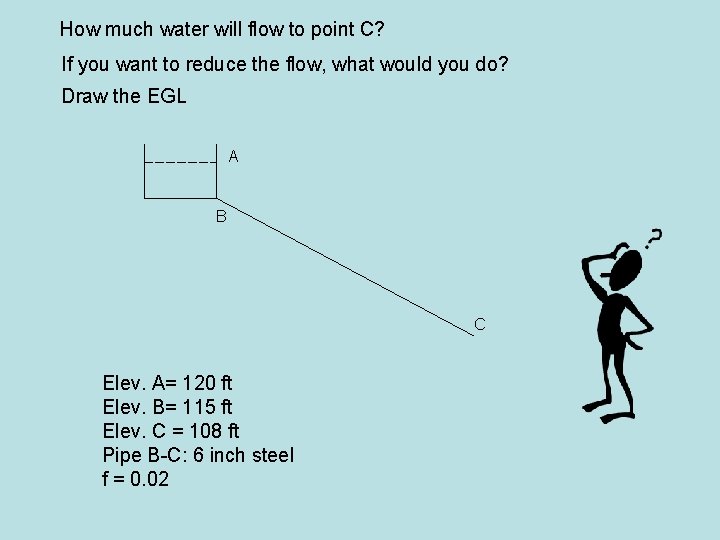
How much water will flow to point C? If you want to reduce the flow, what would you do? Draw the EGL A B C Elev. A= 120 ft Elev. B= 115 ft Elev. C = 108 ft Pipe B-C: 6 inch steel f = 0. 02
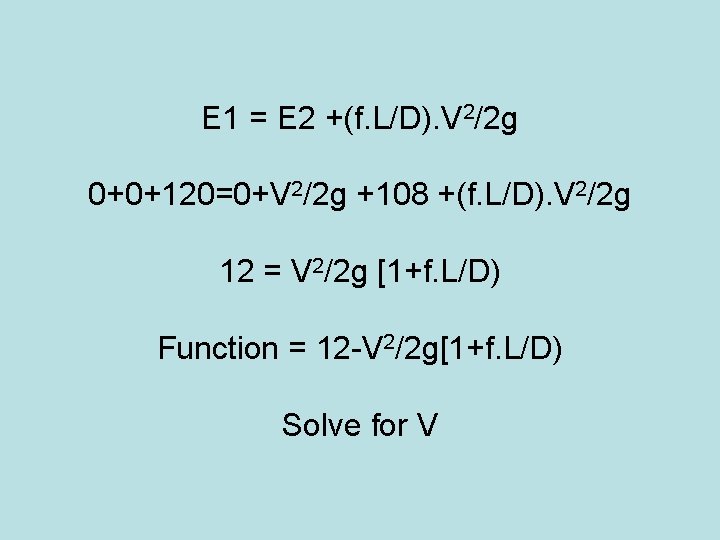
E 1 = E 2 +(f. L/D). V 2/2 g 0+0+120=0+V 2/2 g +108 +(f. L/D). V 2/2 g 12 = V 2/2 g [1+f. L/D) Function = 12 -V 2/2 g[1+f. L/D) Solve for V
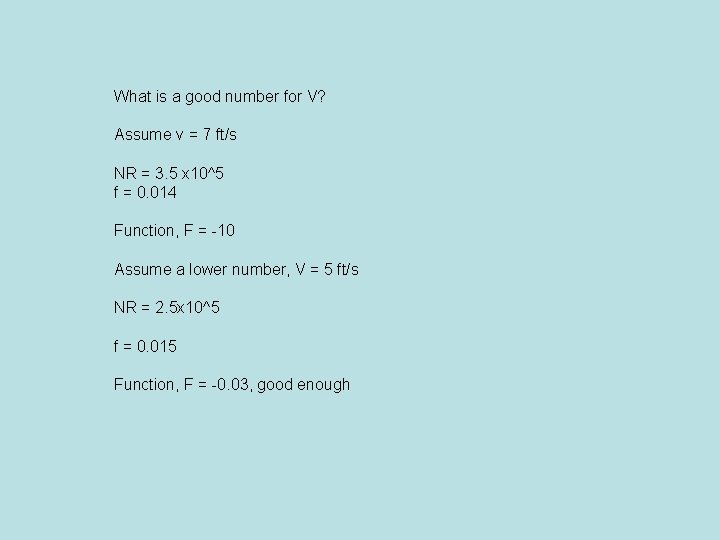
What is a good number for V? Assume v = 7 ft/s NR = 3. 5 x 10^5 f = 0. 014 Function, F = -10 Assume a lower number, V = 5 ft/s NR = 2. 5 x 10^5 f = 0. 015 Function, F = -0. 03, good enough