Care to Lead Aspiring HR Director Programme Action


- Slides: 32
‘Care to Lead’ Aspiring HR Director Programme Action Learning Paul Schanzer & Ian Govier (Facilitators)
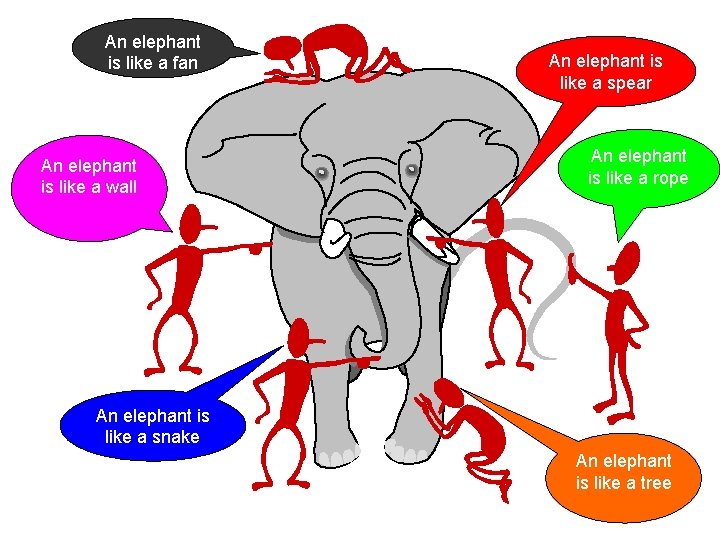
An elephant is like a fan An elephant is like a wall An elephant is like a spear An elephant is like a rope An elephant is like a snake An elephant is like a tree
What is Action Learning? A way of learning from our actions, and what happens to us, and around us, by taking time to question, understand reflect, to gain insight, and consider how to act in the future Weinstein 1999
A continuous process of learning and reflection supported by colleagues, with the intention of getting things done Mc. Gill and Beatty 1998
Action learning is an approach to the development of people in organisations which takes the task as the vehicle for learning. It is based on the premise that there is no learning without action and no sober and deliberate action without learning Pedler 1997
Thus it is that action learning does not pretend to supply the subject with much fresh cognitive knowledge; it is sufficient to help them use more effectively what they already have, and to reinterpret the experiences of yesterday in the light of tomorrow. Reg Revans
Principles of Action Learning • Adults learn best when they are actually involved in their own learning about a current life situation • Adults who voluntarily choose a learning experience usually learn more readily Emblen and Gray 1981
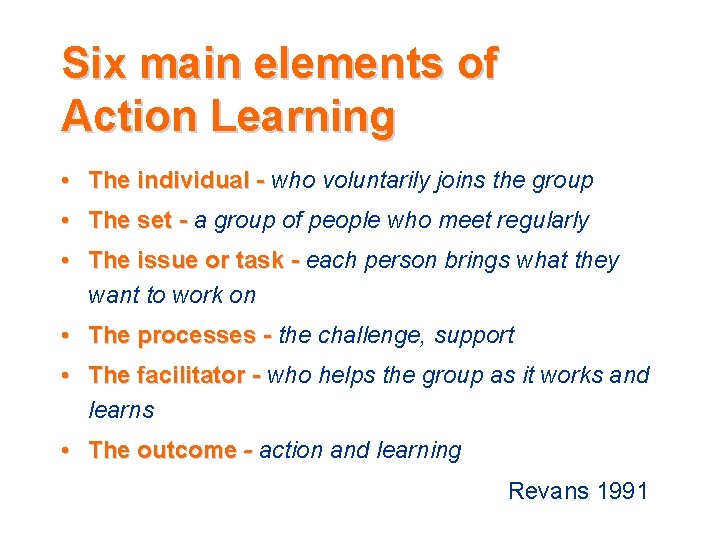
Six main elements of Action Learning • The individual - who voluntarily joins the group The individual - • The set - a The set - group of people who meet regularly • The issue or task - each person brings what they want to work on • The processes - the challenge, support The processes - • The facilitator - who helps the group as it works and The facilitator learns • The outcome - action and learning Revans 1991
What happens during an Action Learning Set ?
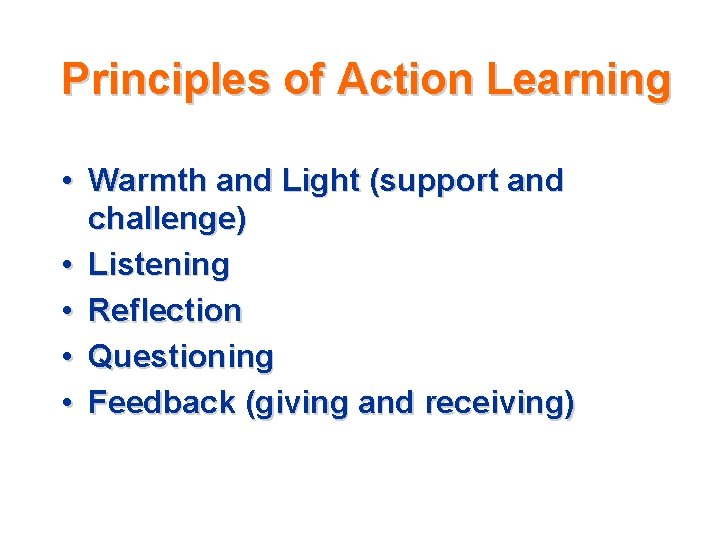
Principles of Action Learning • Warmth and Light (support and challenge) • Listening • Reflection • Questioning • Feedback (giving and receiving)
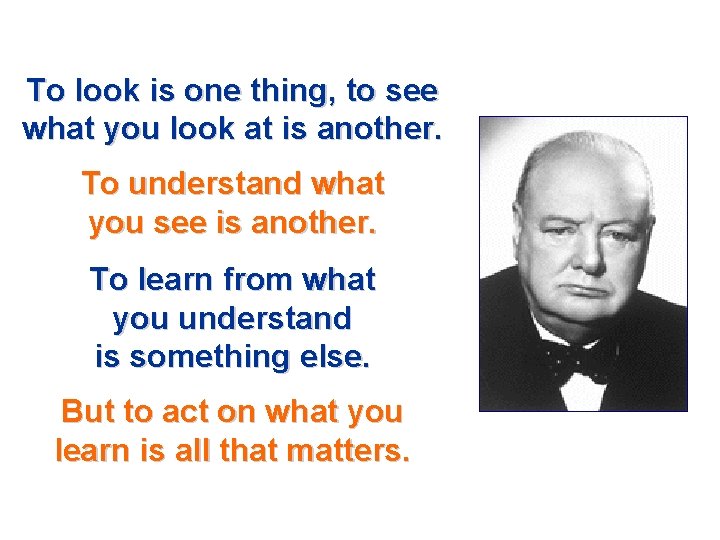
To look is one thing, to see what you look at is another. To understand what you see is another. To learn from what you understand is something else. But to act on what you learn is all that matters.
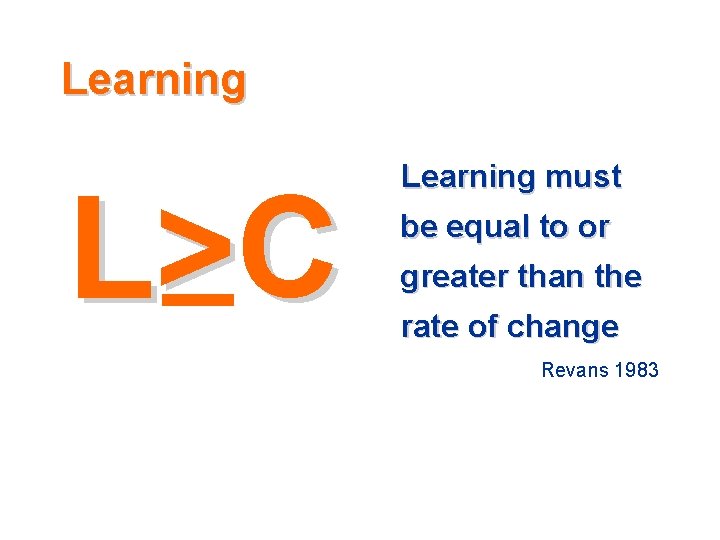
Learning L>C Learning must be equal to or greater than the rate of change Revans 1983
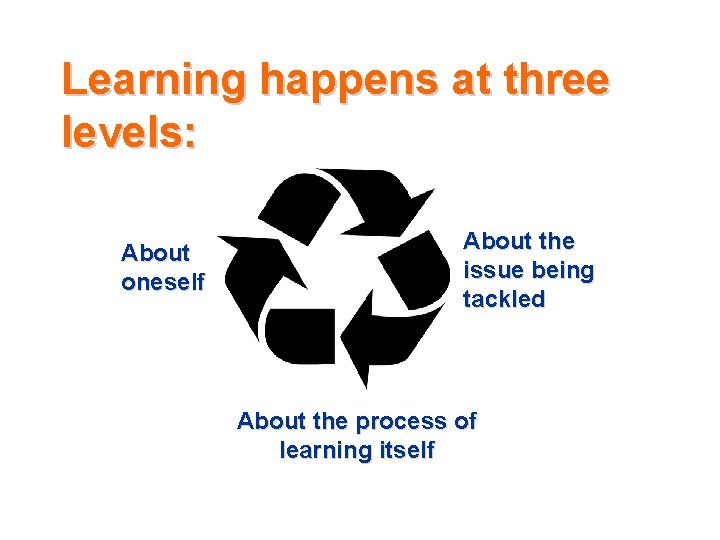
Learning happens at three levels: About oneself About the issue being tackled About the process of learning itself
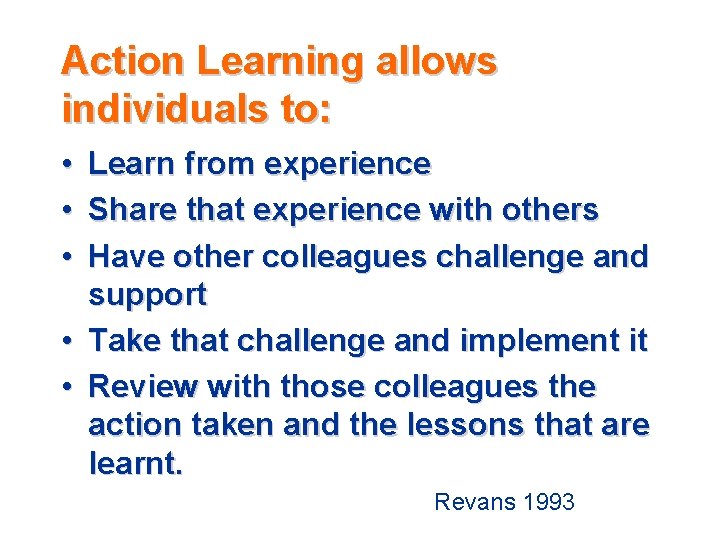
Action Learning allows individuals to: • Learn from experience • Share that experience with others • Have other colleagues challenge and support • Take that challenge and implement it • Review with those colleagues the action taken and the lessons that are learnt. Revans 1993
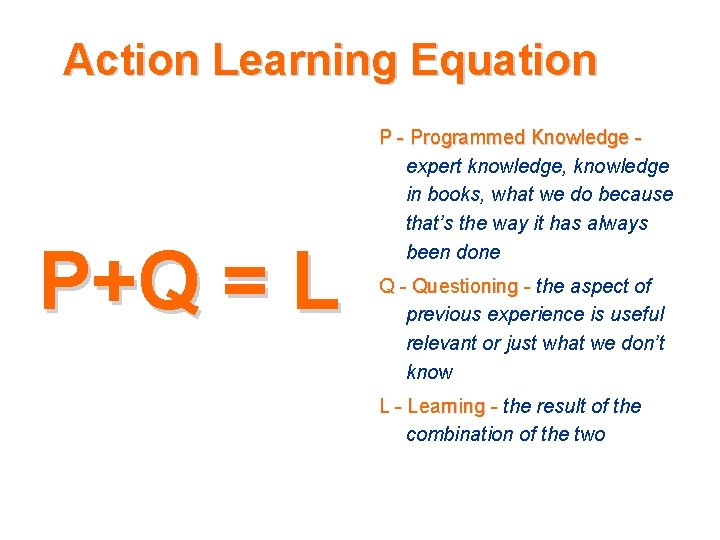
Action Learning Equation P+Q = L P - Programmed Knowledge - expert knowledge, knowledge in books, what we do because that’s the way it has always been done Q - Questioning - the aspect of Q - Questioning - previous experience is useful relevant or just what we don’t know L - Learning - the result of the combination of the two
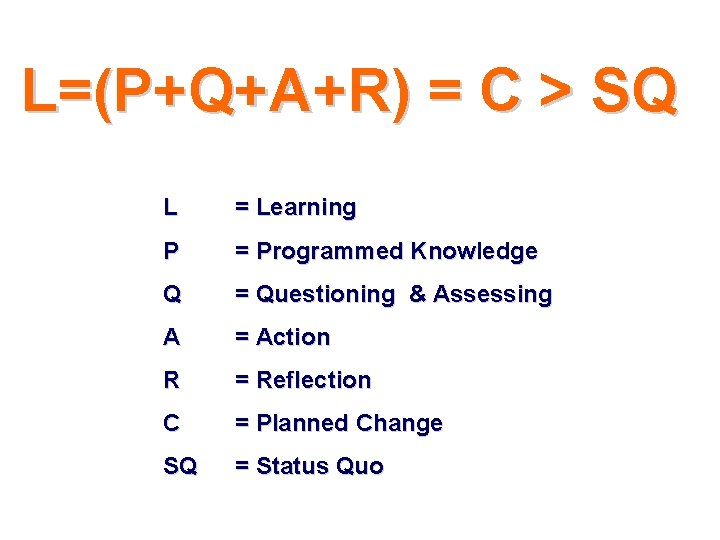
L=(P+Q+A+R) = C > SQ L = Learning P = Programmed Knowledge Q = Questioning & Assessing A = Action R = Reflection C = Planned Change SQ = Status Quo
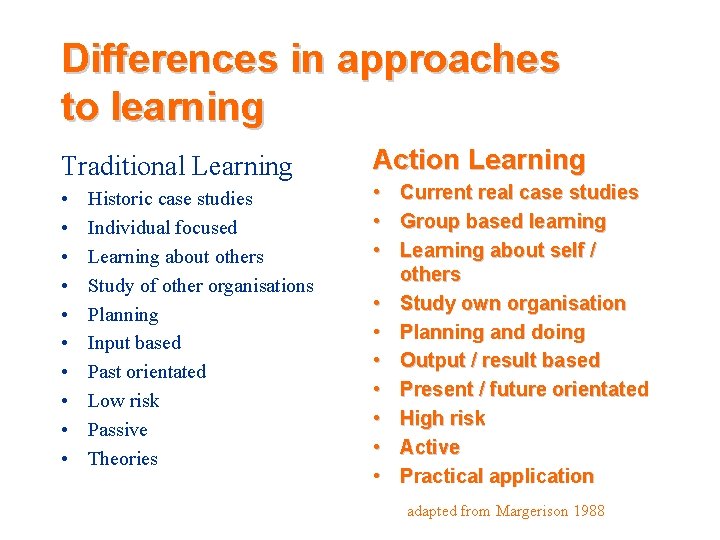
Differences in approaches to learning Traditional Learning Action Learning • • • • Historic case studies Individual focused Learning about others Study of other organisations Planning Input based Past orientated Low risk Passive Theories • • Current real case studies Group based learning Learning about self / others Study own organisation Planning and doing Output / result based Present / future orientated High risk Active Practical application adapted from Margerison 1988
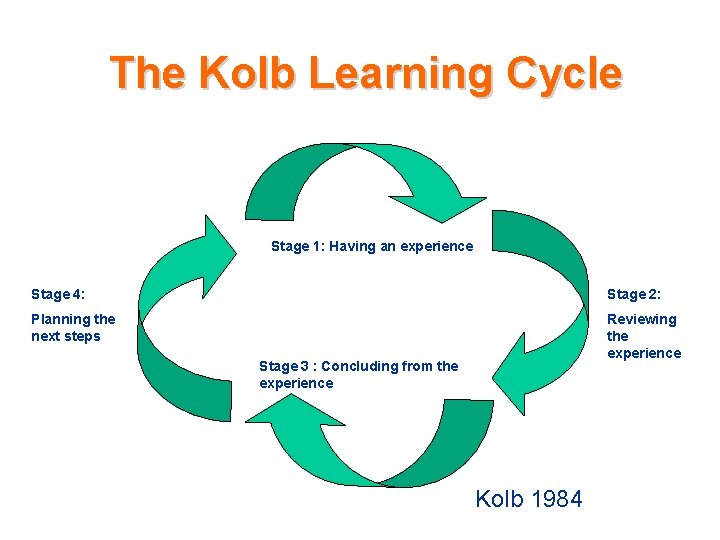
The Kolb Learning Cycle Stage 1: Having an experience Stage 4: Stage 2: Planning the next steps Reviewing the experience Stage 3 : Concluding from the experience Kolb 1984
Benefits of Action Learning • Increased confidence • Increased self awareness • Ability to approach situations from a broader and more political perspective than in the past • More proactive than reactive in problem solving and decision making • More reflective than emotional in tense situations • Better at listening • Move into new jobs more quickly and effectively • Achieve goals faster than expected • Developing and stimulating others in the organisation
Things to avoid in an Action Learning Set: • Imposing your values and opinions on others • Giving advice • Being judgmental • Criticising or trivialising what the person is presenting
Facilitation Questions • • • • Can we stop for a moment and check how we are doing? How do you feel about what is going on? How helpful was that comment? Perhaps it would be more helpful to turn that comment into a question? What questions does that raise? Which question was most helpful and why? Why has everyone ignored … statement? Everyone seems a little tired - shall we take a break for a few moments? Perhaps we should check our ground rules? What are we trying to do here? How can we help…move on? How can we make this set more effective? What does that mean? Is that helpful?
It sounds as though you are feeling…. . How does that make you feel? What do you think is really going on? What do you think would happen if…. ? Do you think that…. ? How would you know if…? What could you do? How can you…. ?
Some ‘Ground Rules’ for consideration • • • Confidentiality Attendance Scheduling Air Space Listening • • • Non-interruption Empathy Open questions Respect Fun!
Action Learning A way of learning from our actions, and what happens to us, and around us, by taking time to question, understand reflect, to gain insight, and consider how to act in the future Weinstein 1999
Final Thoughts
If we always do what we’ve always done… …we’ll always get what we’ve always got!
What am I (are we) going to do differently after today?
If I do nothing about it in 24 hours… …I’ll probably do nothing about it!
and finally…
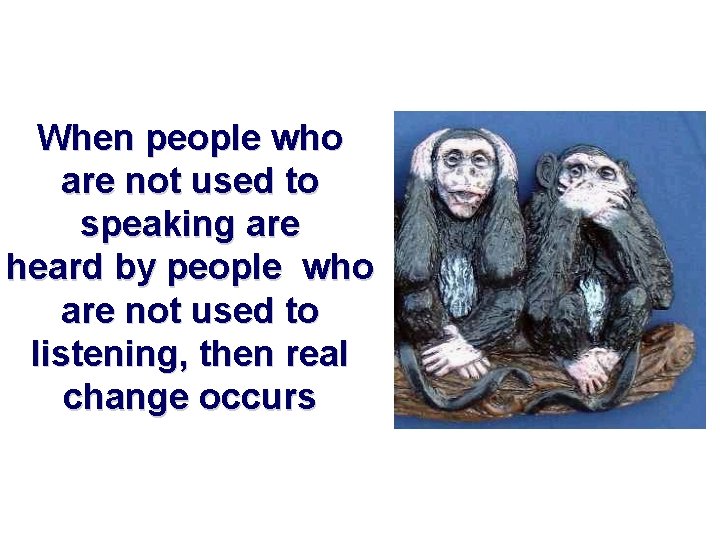
When people who are not used to speaking are heard by people who are not used to listening, then real change occurs
‘Care to Lead’ Aspiring HR Director Programme Thank You Diolch Paul Schanzer & Ian Govier (Facilitators)
Website: www. ctrtraining. co. uk http: //www. ctrtraining. co. uk/resources. php