Care Information Exchange What will the Care Information
- Slides: 13
Care Information Exchange
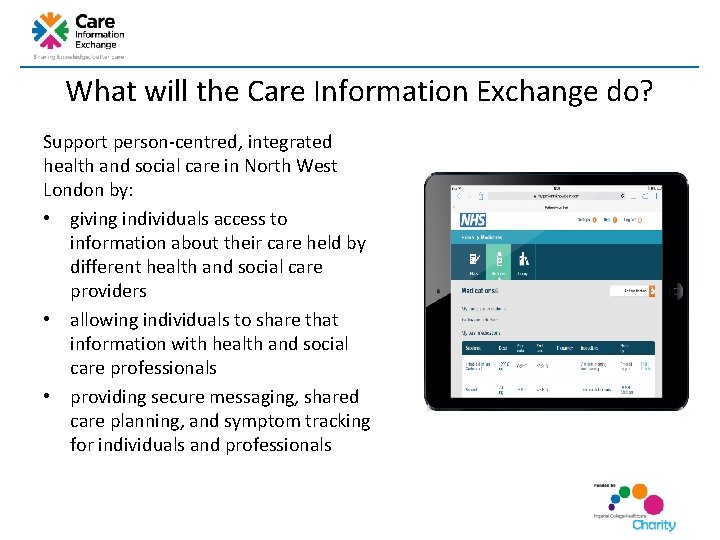
What will the Care Information Exchange do? Support person-centred, integrated health and social care in North West London by: • giving individuals access to information about their care held by different health and social care providers • allowing individuals to share that information with health and social care professionals • providing secure messaging, shared care planning, and symptom tracking for individuals and professionals
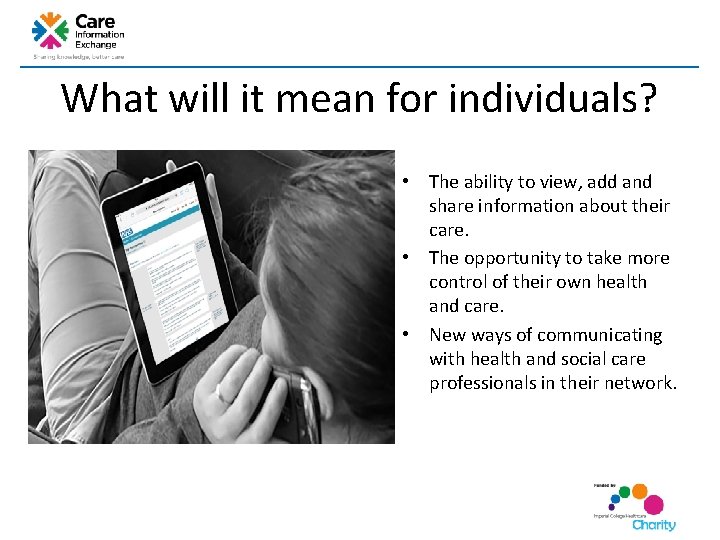
What will it mean for individuals? • The ability to view, add and share information about their care. • The opportunity to take more control of their own health and care. • New ways of communicating with health and social care professionals in their network.
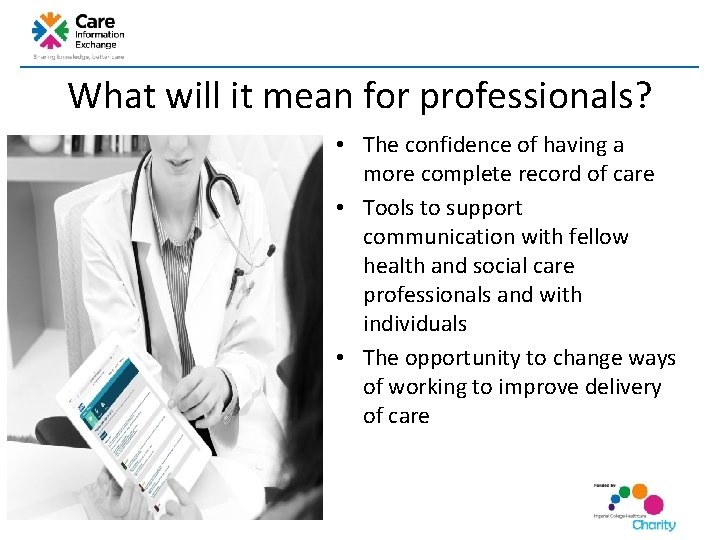
What will it mean for professionals? • The confidence of having a more complete record of care • Tools to support communication with fellow health and social care professionals and with individuals • The opportunity to change ways of working to improve delivery of care
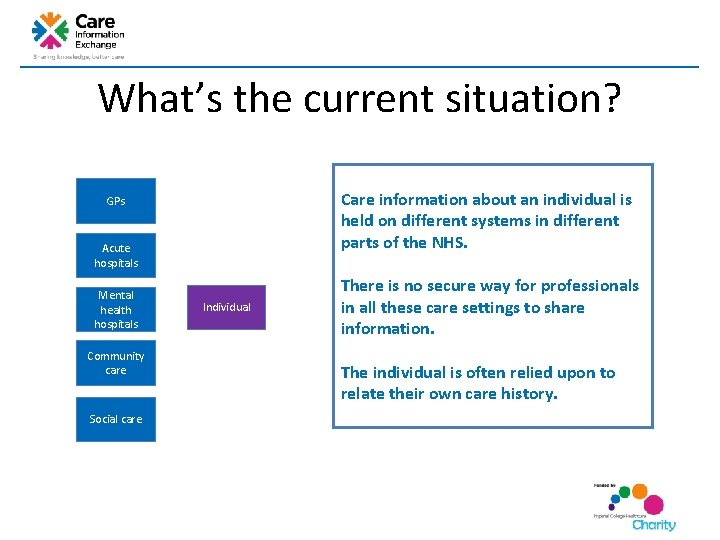
What’s the current situation? Care information about an individual is held on different systems in different parts of the NHS. GPs Acute hospitals Mental health hospitals Community care Social care Individual There is no secure way for professionals in all these care settings to share information. The individual is often relied upon to relate their own care history.
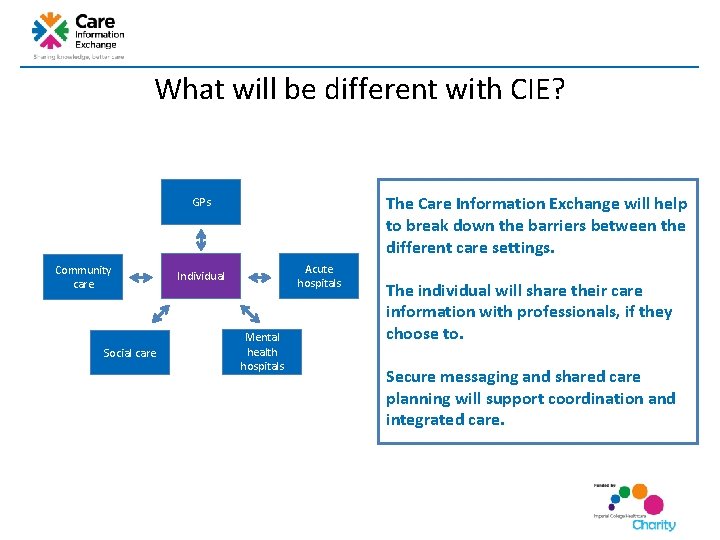
What will be different with CIE? The Care Information Exchange will help to break down the barriers between the different care settings. GPs Community care Social care Acute hospitals Individual Mental health hospitals The individual will share their care information with professionals, if they choose to. Secure messaging and shared care planning will support coordination and integrated care.
Our supplier: Patients Know Best At the heart of the Care Information Exchange is a system provided by Patients Know Best, which is used by around 30 hospitals in the UK. UK Case study Luton and Dunstable University hospital: 2, 840 patients with inflammatory bowel disease. The system allows those stable patients to assess their condition, get help material and communicate with the team. Around 800 have a stable condition and come in for regular appointments. Routine appointments no longer needed. More capacity for patients if condition flares up.
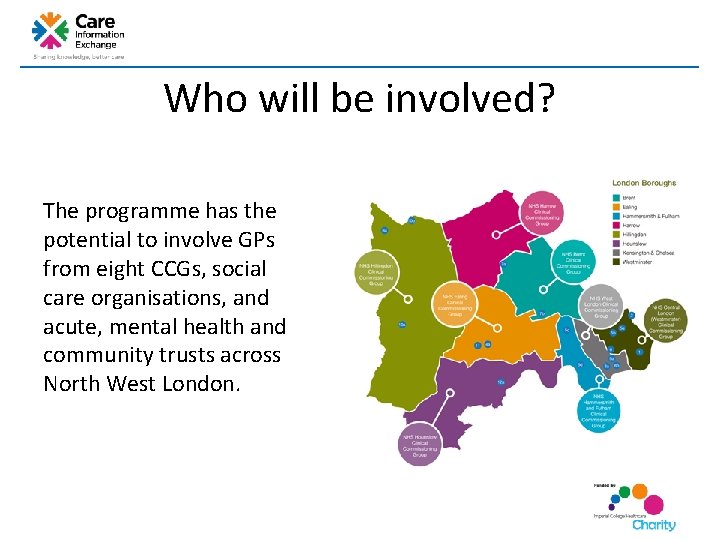
Who will be involved? The programme has the potential to involve GPs from eight CCGs, social care organisations, and acute, mental health and community trusts across North West London.
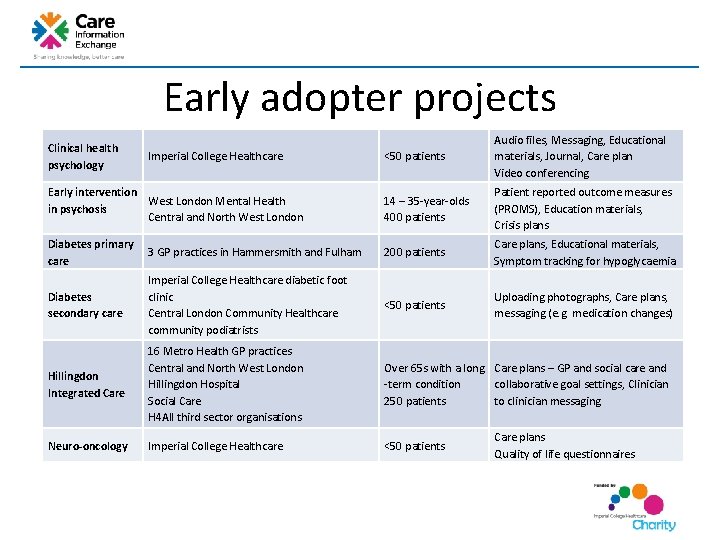
Early adopter projects <50 patients Audio files, Messaging, Educational materials, Journal, Care plan Video conferencing Early intervention West London Mental Health in psychosis Central and North West London 14 – 35 -year-olds 400 patients Patient reported outcome measures (PROMS), Education materials, Crisis plans Diabetes primary 3 GP practices in Hammersmith and Fulham care 200 patients Care plans, Educational materials, Symptom tracking for hypoglycaemia Diabetes secondary care Imperial College Healthcare diabetic foot clinic Central London Community Healthcare community podiatrists <50 patients Uploading photographs, Care plans, messaging (e. g. medication changes) Hillingdon Integrated Care 16 Metro Health GP practices Central and North West London Hillingdon Hospital Social Care H 4 All third sector organisations Over 65 s with a long Care plans – GP and social care and -term condition collaborative goal settings, Clinician 250 patients to clinician messaging Neuro-oncology Imperial College Healthcare <50 patients Clinical health psychology Imperial College Healthcare Care plans Quality of life questionnaires
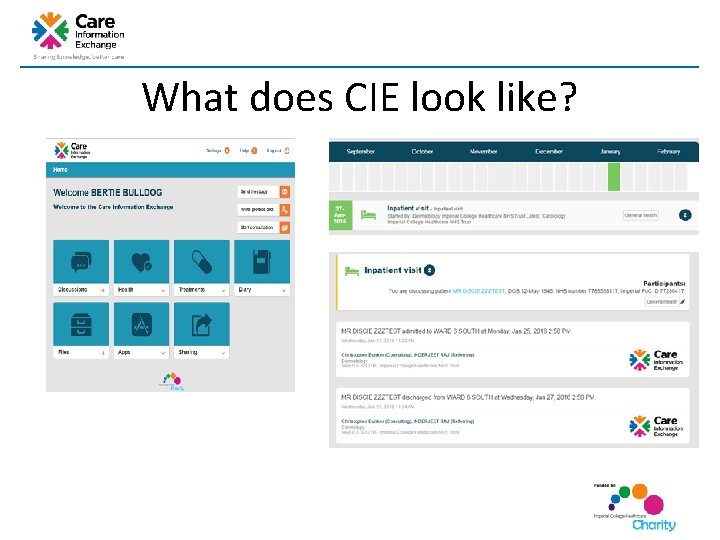
What does CIE look like?
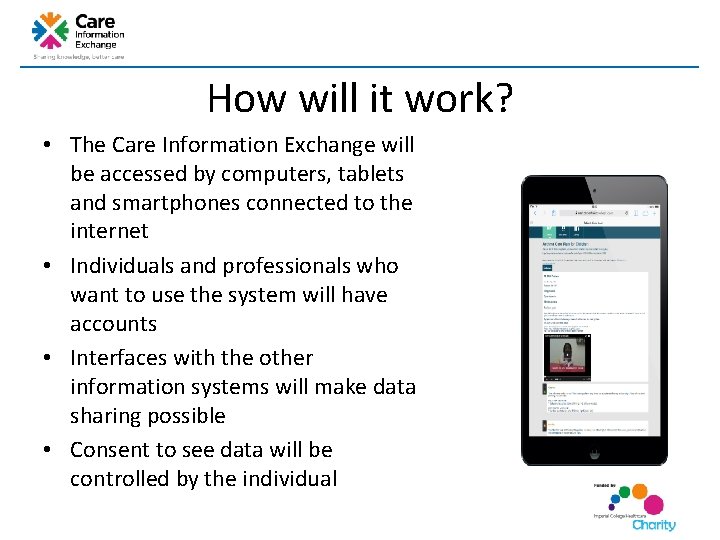
How will it work? • The Care Information Exchange will be accessed by computers, tablets and smartphones connected to the internet • Individuals and professionals who want to use the system will have accounts • Interfaces with the other information systems will make data sharing possible • Consent to see data will be controlled by the individual
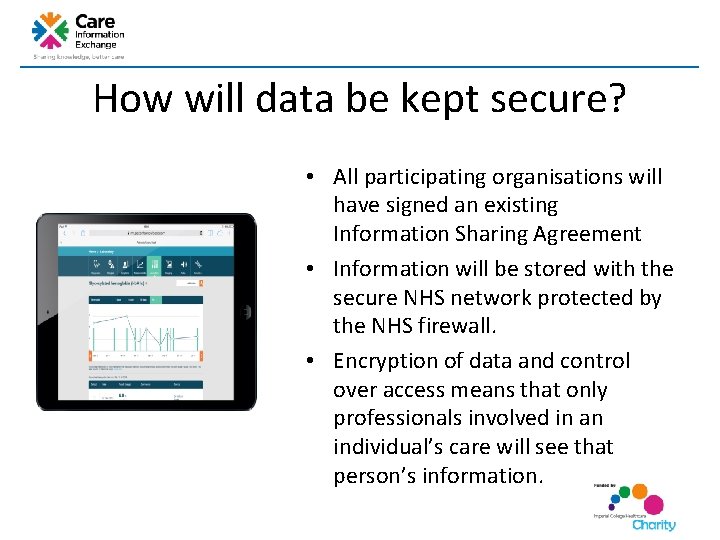
How will data be kept secure? • All participating organisations will have signed an existing Information Sharing Agreement • Information will be stored with the secure NHS network protected by the NHS firewall. • Encryption of data and control over access means that only professionals involved in an individual’s care will see that person’s information.
Q&A What other Trusts in North West London are also using CIE? Great Ormond Street, gastroenterology at St Mark’s, HIV at Chel. West. After Imperial, which will be the next Trusts to contribute data to CIE? Hillingdon Hospitals and London North West Healthcare. When will GP data be available in CIE? We are working with the GP system suppliers Systm. One and EMIS to achieve this. How will patients access CIE? In the pilots patients will be invited by the service team to join CIE. They will access CIE online How will clinicians access CIE? Initially clinicians will access CIE using a separate login. The next step will be a link direct from Cerner into CIE. How will patient queries be handled? Patient queries will be monitored in the pilots. We are seeking to minimise questions through system design, online help and patient communication. PALS will be the central point for questions at Imperial.