Campaign comics session A campaigning session for young
- Slides: 18
Campaign comics session A campaigning session for young people in schools and youth groups.
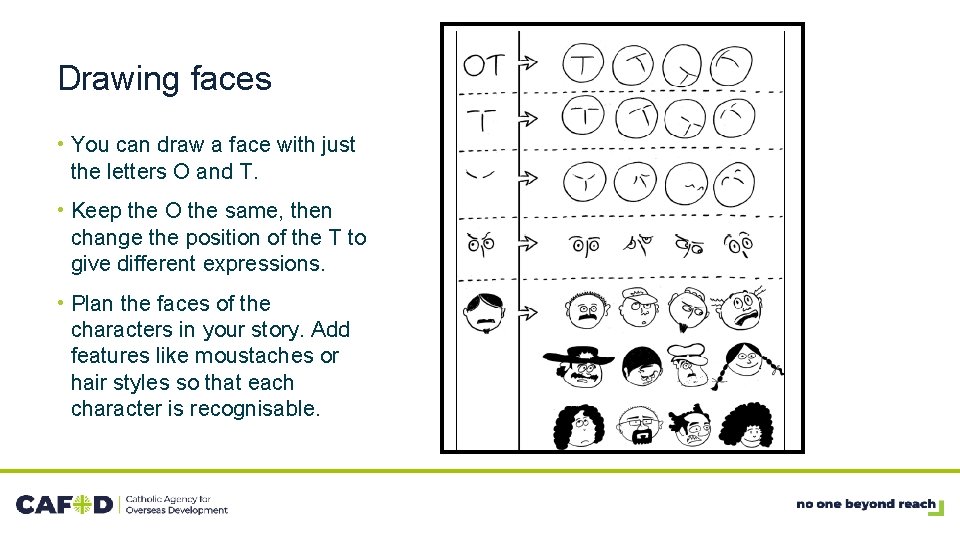
Drawing faces • You can draw a face with just the letters O and T. • Keep the O the same, then change the position of the T to give different expressions. • Plan the faces of the characters in your story. Add features like moustaches or hair styles so that each character is recognisable.
Icebreaker: What’s on your face? Happy Worried Confused Angry
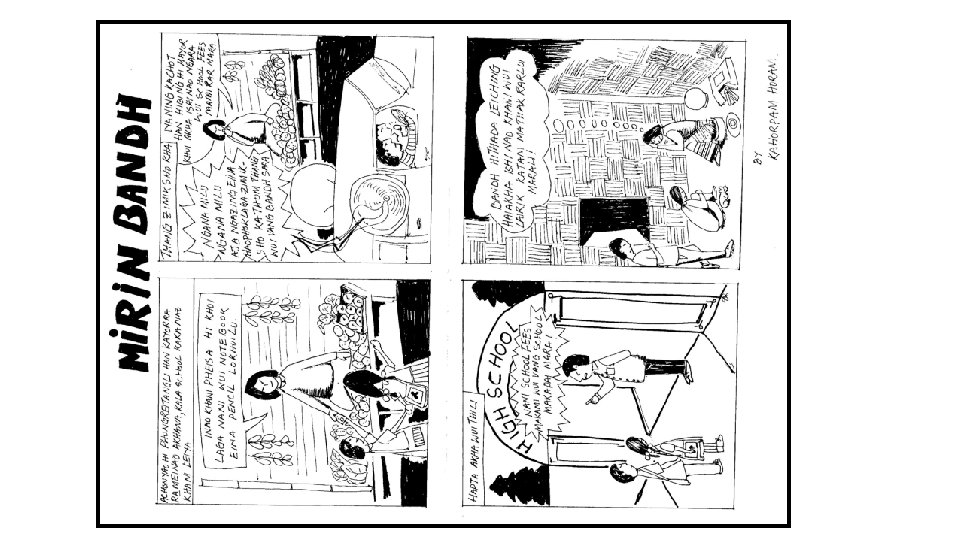
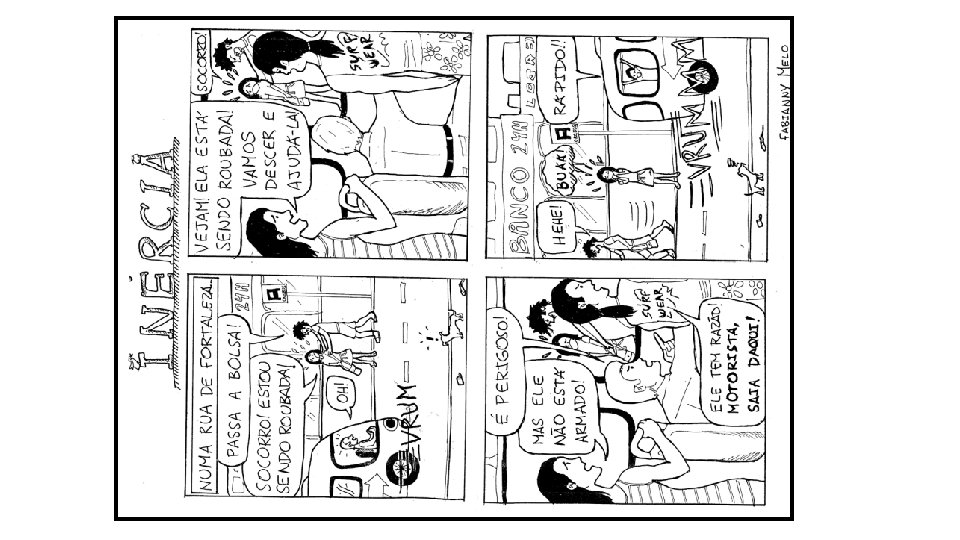
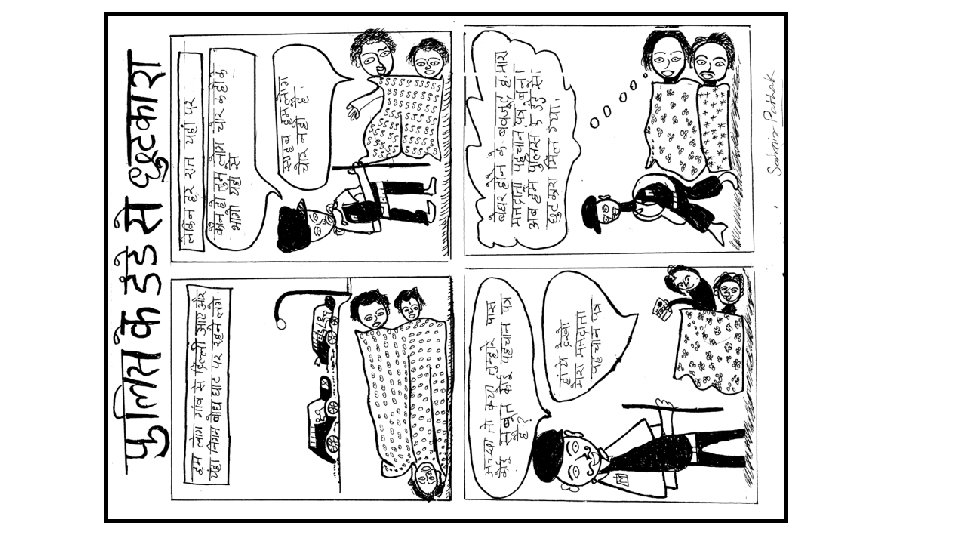
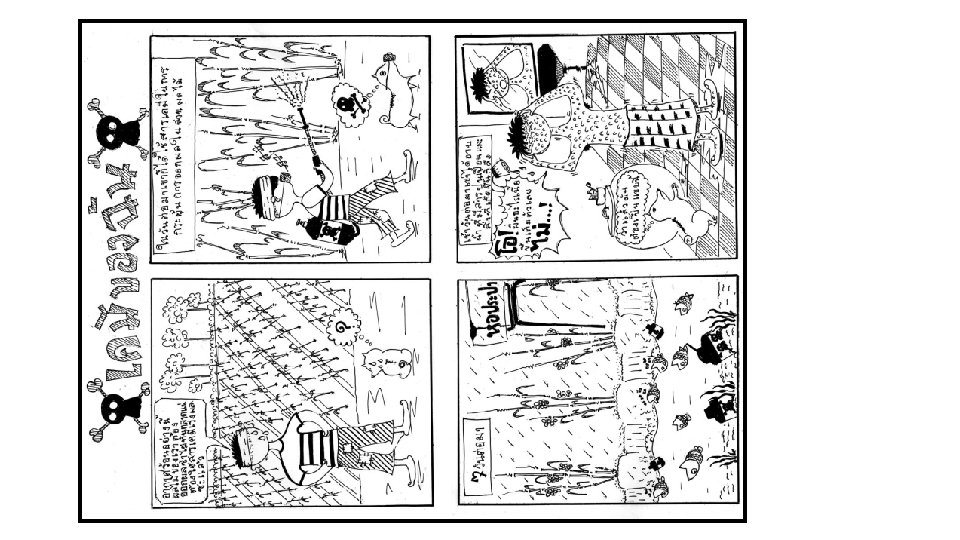
Input: World Comics • A way to campaign. • Used by CAFOD partners in Sri Lanka. • Look at a comic, what message is the artist trying to get across? • What are the benefits of putting your message across through a comic? • What are the drawbacks?
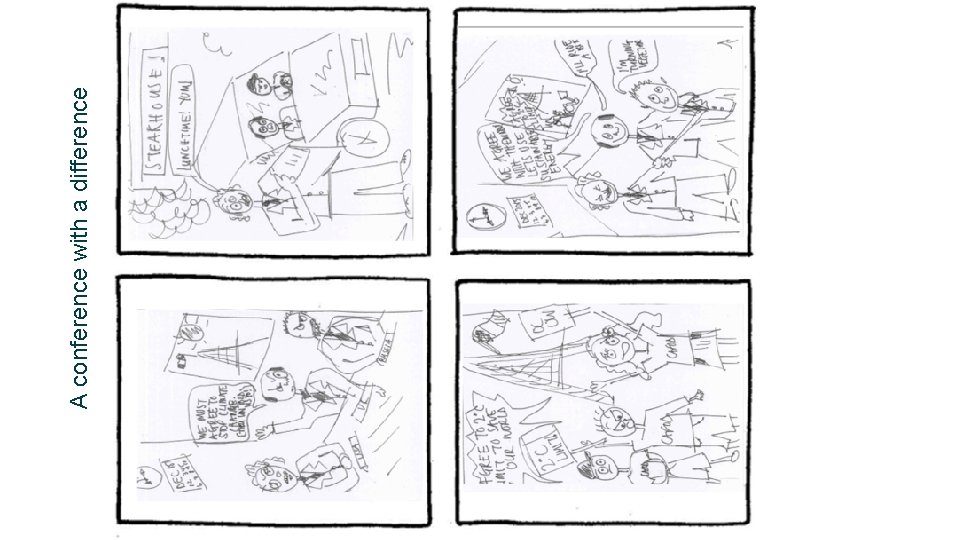
A conference with a difference
What’s the story? • Your story should have a message. • Choose a theme, a specific area of theme and a target audience. • It should have four parts: an introduction, development, a twist and a conclusion. • It should be four to nine sentences long. • For example: My story is on theme of climate change. It will show the benefits of sustainable energy for a community overseas to persuade politicians that solar power is useful and we should use it more. It is based on Veronica’s story from CAFOD’s website.
Example story 1. Veronica lives on a farm in a beautiful area of rural Kenya with lots of sunshine. 2. She wants to be successful when she grows up, so she studies hard at school. 3. But there is no electricity in her area, so she cannot see her books to do her homework in the evening. 4. She won a solar lantern at school, for doing well at school. This means she can now study in the evening. She is pleased as she has some big exams coming up, so she will be fully prepared.
Make a World Comic • Plan what your characters look like on scrap paper. • Draw your cartoon in pencil • Add in speech bubbles or captions. • Check you are happy with your story, go over the pencil lines in ink, and rub out the pencil when the ink is dry. • Add a catchy title. • Share your comics with others in your group.
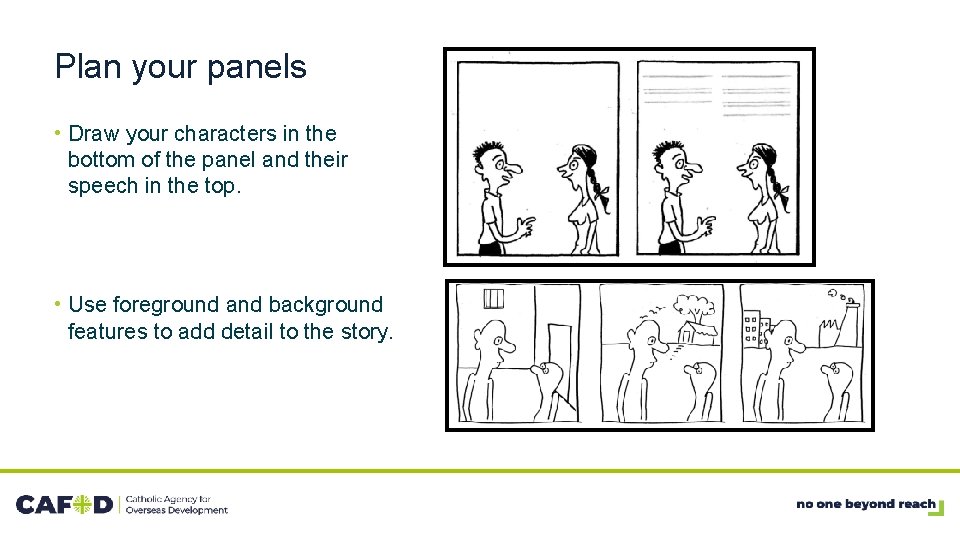
Plan your panels • Draw your characters in the bottom of the panel and their speech in the top. • Use foreground and background features to add detail to the story.
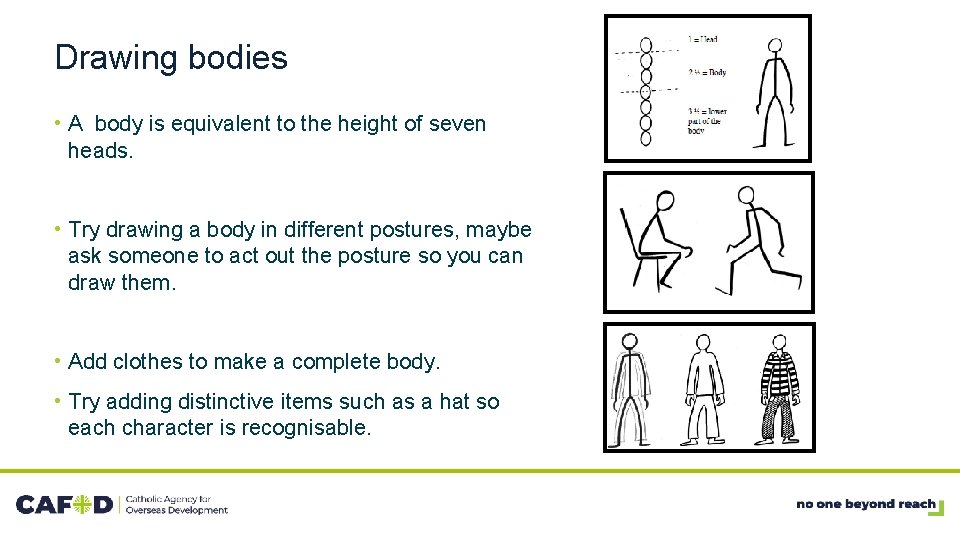
Drawing bodies • A body is equivalent to the height of seven heads. • Try drawing a body in different postures, maybe ask someone to act out the posture so you can draw them. • Add clothes to make a complete body. • Try adding distinctive items such as a hat so each character is recognisable.
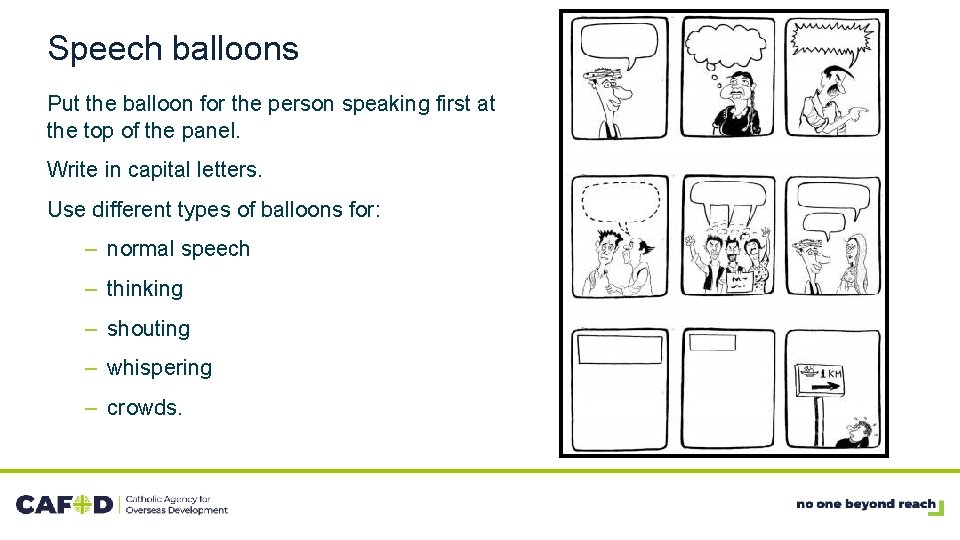
Speech balloons Put the balloon for the person speaking first at the top of the panel. Write in capital letters. Use different types of balloons for: – normal speech – thinking – shouting – whispering – crowds.
Follow up: Share your comics You need to share your comics to get your message out there! You could: – hold an exhibition in your school or parish – email a copy to your local MPs. For example, if climate change is your chosen theme, let them know why you want them to work on climate change. – take photos of any comics and share them through social media, tagging @CAFOD – evaluate the impact of your comics.
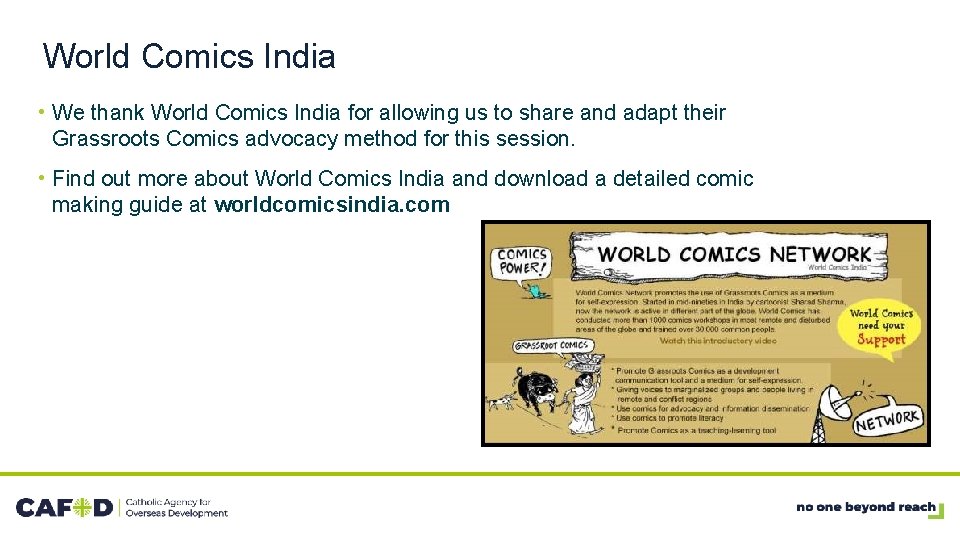
World Comics India • We thank World Comics India for allowing us to share and adapt their Grassroots Comics advocacy method for this session. • Find out more about World Comics India and download a detailed comic making guide at worldcomicsindia. com